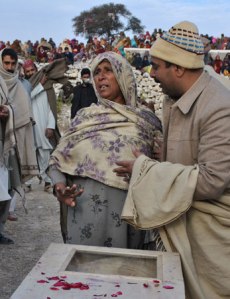
At a time when Pakistan is reeling under all kinds of attacks, the continuation of the democratic political process and the accountability this process entails is critical. On Jan 28, 2013 a copy of a letter to the President of Pakistan from Admiral (rtd.) Fasih Bokhari, the widely respected Chairman of the National Accountability Bureau (NAB) was released to the media. Admiral Bokhari is known to be under pressure from various elements in the judiciary, media, and cartels, and has been threatened repeatedly. At age 71, he is fearless, believing he has nothing to lose. His words to a friend in a private email: Continue reading →
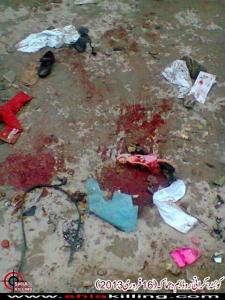
After the blast: Children’s shoes and a doll on the blood-splattered road at Kirani Road, Quetta
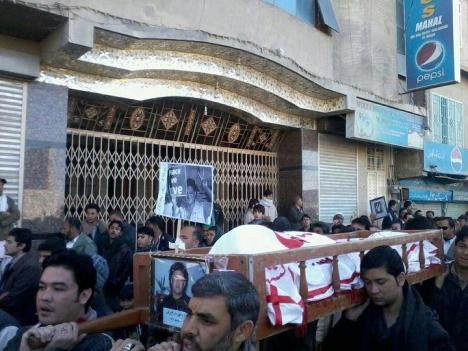
The latest bomb blast in Quetta, again targeting Hazara Shia Muslims – over 800 kg of explosives packed in a water tanker – has killed over 70 people so far including women and children. The casualties have been mounting, with over 150 injured. The Lashkar-e-Jhangvi (LeJ) has again claimed responsibility, barely a month after the blast at Alamdar Road that claimed over 118 lives, including that of our activist friend Irfan Ali, and the unprecedented ‘coffin protest‘ that led to Governor’s Rule in Balochistan.
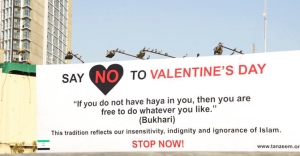
Let’s campaign against love, let hate flourish
The hyper nationalist defenders of Pakistan’s ‘ideology’ can campaign against Valentines Day. Even Pakistan Electronic Media Regulatory Authority, PEMRA, falls in line, dutifully issuing a letter warning TV channels not to promote Valentine’s Day, as it may “injure” the “morality” of our youth (reproduced below). They can instigate campaigns promoting false accusations of blasphemy, spreading confusion and endangering lives. But catch them saying a word against the ongoing target killing of Shia Muslims – Continue reading →
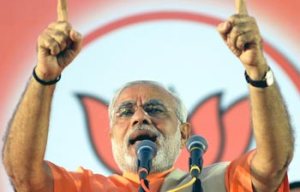
In this important article sent for publication to this blog, Justice Katju argues that those clamouring for Narendra Modi must realise that equal respect and treatment for all communities is the only way forward, and appeals to Indians to not make the same mistake which Germans made in 1933 by electing Hitler. Continue reading →
Guest post:Zohra Yusuf, my first editor at The Star Weekend 1981-82, outlines the birth of the women’s movement in Pakistan
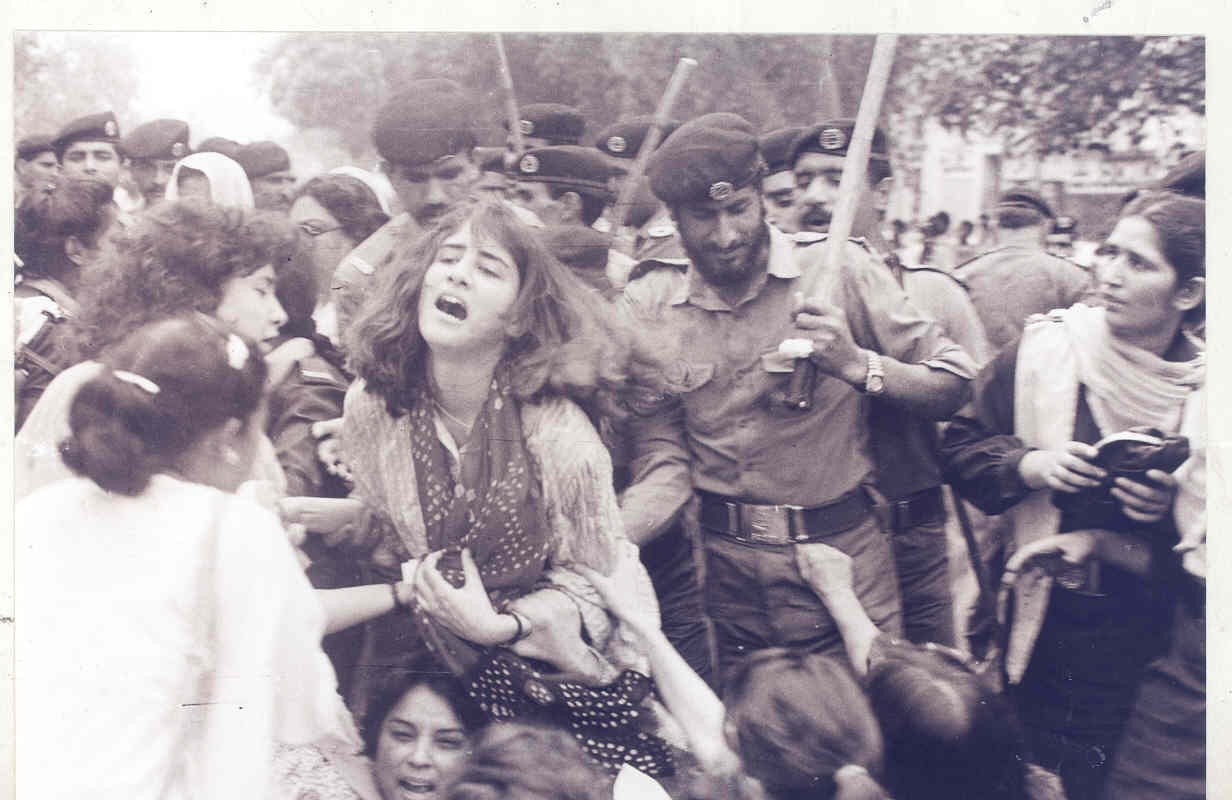
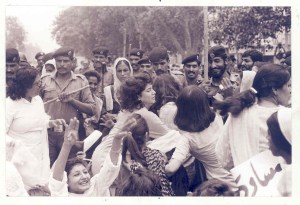
Lahore, Feb 12, 1983: Police brutality on the women’s demonstration against the ‘Law of Evidence’ catapulted the nascent women’s movement into the limelight. Photo: Rahat Ali Dar
“My years with WAF”
By Zohra Yusuf | Article written for a souvenir on WAF’s 25th anniversary, Oct 2006
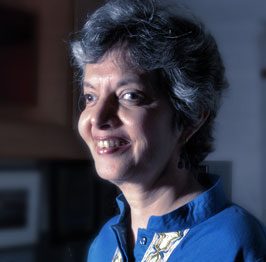
Zohra Yusuf, Newsline photo 2012
Certain memories are etched on the mind. The birth of Women’s Action Forum is, for me, surely among them. It was on an afternoon in September 1981 that Aban Marker (Shirkatgah) called. She told me about the distressed call she had just received from Najma Sadeque (another SG founding member) regarding the case of Fehmida-Allah Bux. Pakistan’s first sentence of death by stoning and public whipping handed down to a couple under the Zina Ordinance of 1979. We had all read about the sentence and in our individual capacities felt deeply disturbed. After a bit of discussion, we decided to call a meeting of all women’s organizations at Aban’s place. The rest, as they say, is history.
The women’s movement was at a nascent stage. Shirkatgah itself was born in 1975, the year the UN dedicated the decade to the cause of women. All Pakistan Women’s Association (APWA), after successfully campaigning for the Family Laws Ordinance 1962, had returned to charitable work. Pakistan Women Lawyers’ Association was also fairly new, as was Tehrik-e-Niswan. The only organization with experience of political work was Pakistan Jamhooriat-Pasand Khwateen (Pakistan Women’s Democratic Front).
I remember to this day the faces of the women around the table that evening when we met at Aban’s. Distressed yet determined. Shirkatgah took the lead in conducting the meeting as it did in the creation of a dynamic platform for Pakistani women to come together in solidarity to challenge the military regime’s anti-women policies. Apart from Aban and Najma, there was Najma Babar, journalist and my colleague at The Star, the Rahman sisters (Ghazala and Humaira) from Tehrik-e-Niswan, Sheema Kirmani – among others from Shirkatgah and other women’s groups. If my memory serves me right, the name Women’s Action Forum was proposed by Humaira and adopted after much debate.
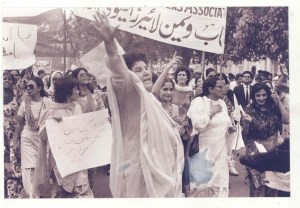
Women’s rights demonstration in Lahore, Feb 12, 1983. Photo: Rahat Ali Dar
The Star Weekend, where I worked in the eighties, became the voice of the women’s movement. Indeed, I must confess that the birth of WAF was partly responsible for my decision to continue working at The Star which, till then, had been primarily an entertainment weekly.
In fact, over a brief period of time, I was accused of making The Star a feminist newspaper. Of course, many WAF members were regular contributors. Najma Sadeque had already been contributing (believe it or not) a weekly television review. She happily gave up the ordeal of watching PTV to write on issues of women’s rights and status. Kausar S.K. passionately wrote on the setback faced by women’s sports as a result of retrogressive policies. Najma Babar frequently reported on women’s political status and Hilda Saeed on violence against women.
Fortunately, the entry of WAFers in journalism coincided with the lifting of direct censorship in January 1982. While self-censorship remained in force, we were able to pull the wool over some eyes by writing between the lines, stepping back when absolutely necessary and returning for more effective assaults. Political journalism was also introduced in The Star at the same time. Several of the columnists who began to write for the newspaper were committed supporters of women’s rights. Among them were Ahmed Bashir and Hussain Naqi. At The Star itself, we found a staunch supporter in the editor, the late G. N. Mansuri.
Feb 12, 1983: Many women’s rights demonstrators were injured and arrested, heavily outnumbered by police. Photo: Rahat Ali Dar
In the eighties, WAF was struggling not only against the discriminatory policies of the Zia regime but for understanding from the society at large, including the media that was, by and large, dismissive of the women’s movement. Even Dawn, which now editorially supports women’s causes, refused to publish reports of and statements by WAF, viewing the organization as an insignificant entity. Often, it was also the butt of sexist jokes. However, it had fairly staunch support from journalists, lawyers and other members of civil society who never hesitated to march with WAF when it took out protest demonstrations on some of the busiest streets of Karachi.
WAF’s strategies in the early years worked. If they did not lead to the repeal of the Hudood Ordinances, they succeeded in watering down the proposed Law of Evidence. Moreover, WAF was quickly gaining world media attention. I remember how elated I felt when the BBC World Service Radio described WAF as the first challenge to the military regime (a highly exaggerated assessment, in retrospect). In fact, WAF put the issue of the status of Pakistani women on the agenda of the global media. Scores of western journalists sought out WAF members to get an insight into the discriminatory laws and their response.
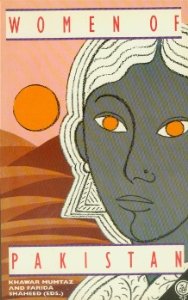
Apart from newspaper articles, the struggle of the eighties spearheaded by WAF, led to the first recorded history of the women’s movement. It inspired (I believe) Farida Shaheed and Khawar Mumtaz to write their seminal book One Step Forward, Two Steps Back.
To a great extent, the struggle for women’s emancipation that WAF embodied released a fair amount of creative energy. Plays related to women’s and other political issues were frequently staged. Leading artistes, including the late Zarina Baloch, showed their support by performing from WAF’s platform. Poets such as Fehmida Riaz, Saeeda Gazdar, Zahida Hina and Attiya Dawood wrote and recited poetry on the theme of the status of women in Pakistan.
The death of General Zia in an air crash brought back Benazir Bhutto from exile. The hopes she instilled in the women of Pakistan (more as a symbol, rather than in substance) were soon dashed shortly after she took over as the first woman Prime Minister of a Muslim country. Perhaps unable to realize their hopes, most of the women associated with WAF formed – or joined – non-governmental organizations. The street-fighting days were over.
Awareness of rights apart, women’s social and legal status has continued to be eroded. So 25 years after the formation of Women’s Action Forum, where is the Pakistani woman today? To borrow from the title of Farida’s and Khawar’s book: “one step forward, two steps back”.
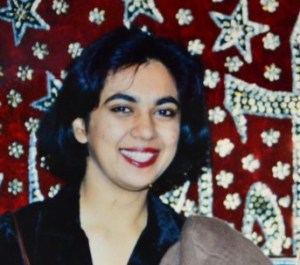
Ayesha Haroon at a friend’s wedding some 20 years ago in Lahore
My obituary of Ayesha Haroon, published in The News on Feb 4, 2013. As one of our friends pointed out, this is the third woman from our lot in The Frontier Post we’ve lost within a year – Maria Del Nevo, Cass Balchin and now, Ayesha.
RIP Ayesha Haroon: Clear-sighted courage, grace and laughter
By Beena Sarwar
Ayesha Haroon, the lively, gutsy former editor of The News Lahore, fought a brave fight for over four years with bone-marrow cancer, succumbing to it on Saturday night in New York. She was just 46. News of her demise has been met with grief and shock by her many friends and colleagues as well as those who only knew her through her clear-headed, courageous columns.Continue reading →
Initiated by Samir Gupta, an Aman ki Asha supporter in New Delhi, this global event on Sunday, Jan. 27 is taking place in different cities at different times around the world. It invites Indians and Pakistanis and those who want peace between the two countries, to come together in their respective cities. The purpose of the vigils is to urge the governments to continue the dialogue, and not give in to the war hype being created by some sections of sections of society. The vigil statement is online at this link (text below)
Cartoon- Sab kuch Live hai by K.B. Abro. Listen to his blog in his voice http://bit.ly/13USxnO
Below, my take on what’s going on in Pakistan, written on Friday for the Sunday edition of The Telegraph, Kolkatta – which published a slightly abridged version titled ‘Anna Hazare, anyone?‘
By Beena Sarwar
So this smooth-talking ‘moderate’ cleric called Tahir-ul Qadri (TUQ, as he has been dubbed on twitter), a dual Canadian-Pakistani national, announces a ‘million man’ long march to Islamabad, calling for changes to the electoral system just as the government’s five-year tenure is ending. He heads over to Pakistan’s capital on Jan 13 to lay siege to the elected government along with thousands of supporters. Continue reading →
From @ChaiSabz (Hadi Zaher), 5.55pm Pakistan time: ‘Victims of Quetta blasts laid to rest. @KhudiAli among them: “Peace we love”. #WEAllAreHazara #RIPKhudiAli’
Photo tweeted by Haider Changezi @Aushpaz: Dear #Pakistan U all came in protest but Gov is deaf, hasn’t announced #ActionAgainstLeJ #WeAreAllHazara
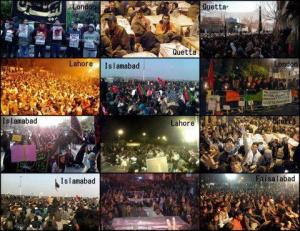
A quick note on the current situation: The past two days and nights have seen inspiring massive, ongoing peaceful protests all across Pakistan in solidarity with the ‘coffin protesters’ at Alamdar Road in Quetta who are refusing to bury their dead until their demands for security are met. The protests finally pushed the PPP government to action – the Balochistan provincial government has been dismissed and Governor Rule imposed in the province, one of the demands of the protestors.Continue reading →
News about the death of two Indian soldiers at the Line of Control in Kashmir on Jan 8 triggered anger in India. Yes, a Pakistani soldier had been killed just two days earlier. But his body had not been mutilated. He had not been beheaded. For that is what Indian reports said, creating hysteria and leading to the beating of war drums: the bodies of their jawans had been mutilated, one of their heads was missing, and Pakistan was responsible (small mercy, authorities asked Indian journalists not to use the word ‘beheaded’ but ‘decapitation’).
India seemed to erupt in a storm of anger, outrage, and indignation, betrayal and hurt, and calls for retaliation against Pakistan. Understandable. Imagine the reaction in Pakistan had it been the other way around.Continue reading →


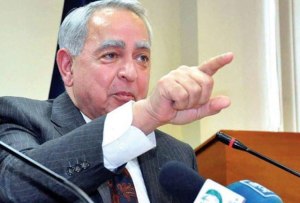 At a time when Pakistan is reeling under all kinds of attacks, the continuation of the democratic political process and the accountability this process entails is critical. On Jan 28, 2013 a copy of a letter to the President of Pakistan from Admiral (rtd.) Fasih Bokhari, the widely respected Chairman of the National Accountability Bureau (NAB) was released to the media. Admiral Bokhari is known to be under pressure from various elements in the judiciary, media, and cartels, and has been threatened repeatedly. At age 71, he is fearless, believing he has nothing to lose. His words to a friend in a private email: Continue reading