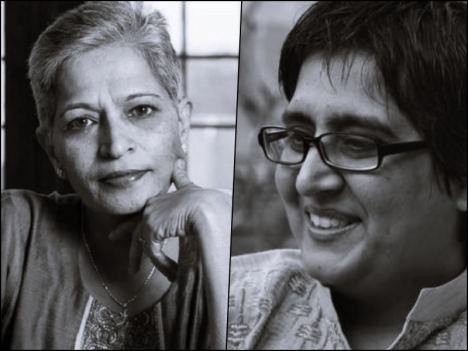
My piece for The Wire on the assassination of journalist Gauri Lankesh in Bengaluru, that reminded me of the target-killing of my friend, activist Sabeen Mahmud in Karachi. I traced the patterns and similarity behind these murders.
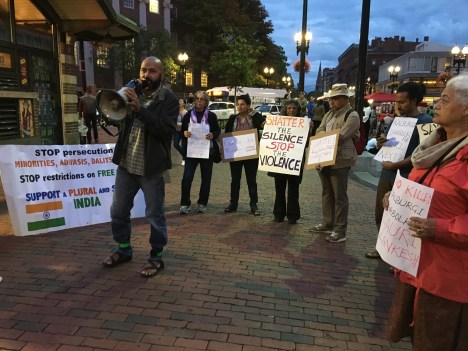
A spoke in the wheel of this “intellecticide” is the ‘anti-intellectual’ nature of the vote for Donald Trump who shares a host of similarities with Modi in India despite differences. The rise of white supremacy in a nation of migrants built after virtually annihilating indigenous populations is a continuation of ongoing racism in the US.
The pendulum swings of history ushers in periods of the rise of the ‘Right’ or the ‘Left’. We are witnessing the rise of the militant Right at this moment with its ensuing bloodshed in India, Pakistan, the US and elsewhere.
But what will continue to rise inexorably, despite bloodshed along the way, are human aspirations to basic rights, equality and justice. There is no going back, no matter how fiercely the chaddis, topis or kluxies fight it.
London Declaration for Pluralism and Democracy in Pakistan October 29, 2016
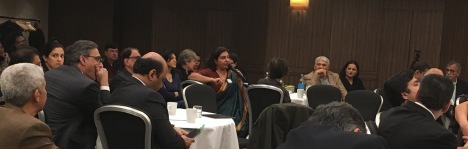
Several prominent liberal, progressive and nationalist intellectuals, human rights and social media activists, and public figures from Pakistan gathered in London for a conference on ‘The Future of Pakistan’ organized under the banner of South Asians Against Terrorism and for Human Rights (SAATH), co-hosted by US-based columnist Dr Mohammad Taqi and former Pakistan ambassador to the United States, Husain Haqqani.
Respect to and solidarity with those who refuse to fall in line with the oppressive narratives peddled by hyper nationalists and security establishments. Sharing a post here by senior journalist Saleem Asmi, former Editor of Dawn and a dear friend of my late father:
Call me unpatriotic, even a traitor if you like, but I must say this straight, without mincing words that we have no right, absolutely no right at all, to condemn what the Indian occupation troops are doing in Kashmir, as long as we are ourselves guilty of committing the same, even worse, crimes in Balochistan. Now look at this: 1) The Indian army has invaded and occupied Kashmir, 2) They brutally oppress the Kashmiri people, and call the freedom fighters ‘terrorists’, 3) We invaded and occupied Balochistan in 1948, 4) We brutally oppress the Baloch people, and call the freedom fighters ‘terrorists’. If anything, we surpass the Indians in kidnapping young Baloch by their thousands without trace. Then their brutally tortured bodies appear under flyovers, by the roads, anywhere.
Very happy to be able to write about some good news – the recovery of Salmaan’s Taseer’s son Shahbaz Taseer, kidnapped nearly five years ago. Wrote this piece on March 8, 2016, for Scroll.in
The best news coming out of Pakistan this week was about the recovery on Tuesday of Shahbaz Taseer, the abducted son of slain Punjab Governor Salmaan Taseer. The businessman, in his early thirties, had been kidnapped in August 2011 as he drove to his office in Lahore.Continue reading →
“Unsilencing Pakistan” was an idea first articulated in 2011. It has been revived following the recent murder of Sabeen Mahmud, who had attempted to create a space where Pakistanis could discuss contentious issues–like the human rights violations in Balochistan–without fear. Can Pakistan’s intellectuals and human rights activists survive the “intellecticide” being perpetrated?
By Beena Sarwar
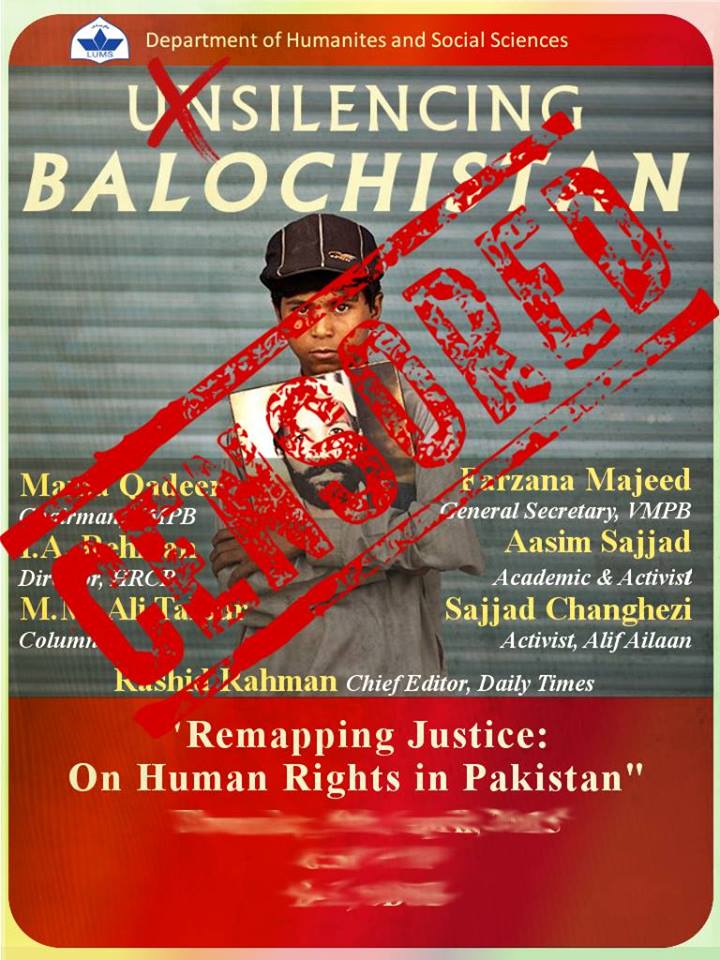
When the prestigious Lahore University of Management Sciences (LUMS) announced that it was organising a seminar titled “Un-Silencing Balochistan” on 9 April 2015, it reminded me of the “Unsilencing Pakistan” initiative of the summer of 2011.Continue reading →
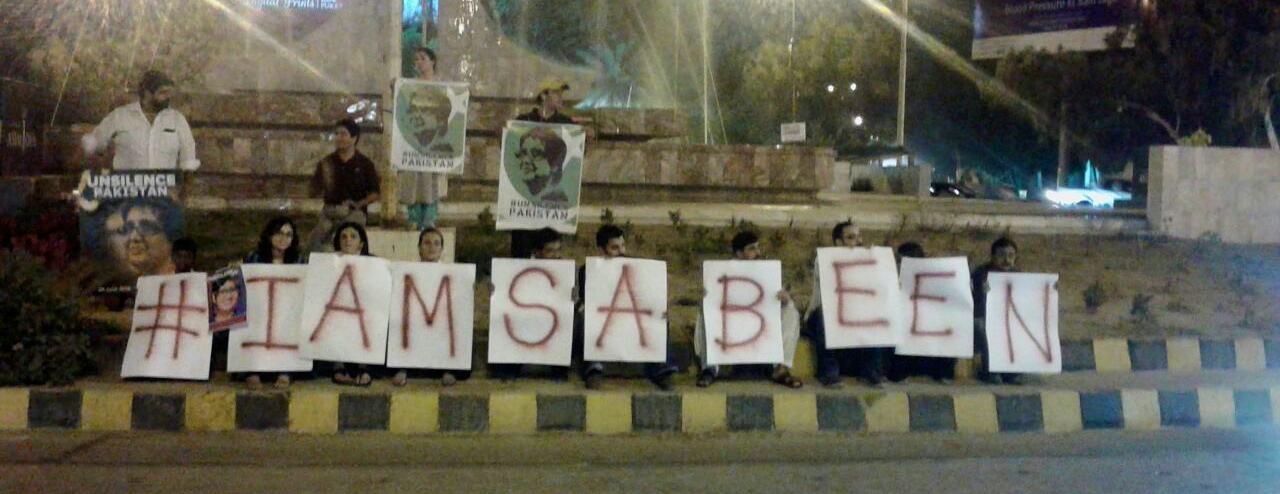
Daily vigil for Sabeen Mahmud in Karachi, 8-9 pm at Do Talwar
Protestors holding daily public protest vigils in Karachi demanding justice for Sabeen Mahmud hold placards calling to #unsilencePakistan and end the culture of impunity. Today’s vigil, marking give months of the Peshawar Army School massacre, also incorporates the carnage at Safoora Chowk in Karachi where armed men in police uniforms killed 45 of the 60 Ismailis on a bus.
Protestors at the Fifth Global Vigil this weekend in various cities are demanding an end to impunity and against terrorism in Pakistan.
Karachi – 16th May – assemble at Danish Gah, Punjab Chowrangi at 5:30pm and march to Do Talwar.
Islamabad – 16th May – 5.30 pm at Press Club
Boston – 16th May – 4 pm – Boston Common (near the fountain by the Part St. T)
Toronto/Mississauga – 6 pm, 7880 Keele Street, Unit #14, Vaughan, ON L4K 4G7
London – 17th May – 3-5 pm in front of Pakistan High Commission
Below, an extract from something I wrote recently about the Unsilencing Balochistan events in Islamabad, Lahore and Karachi:
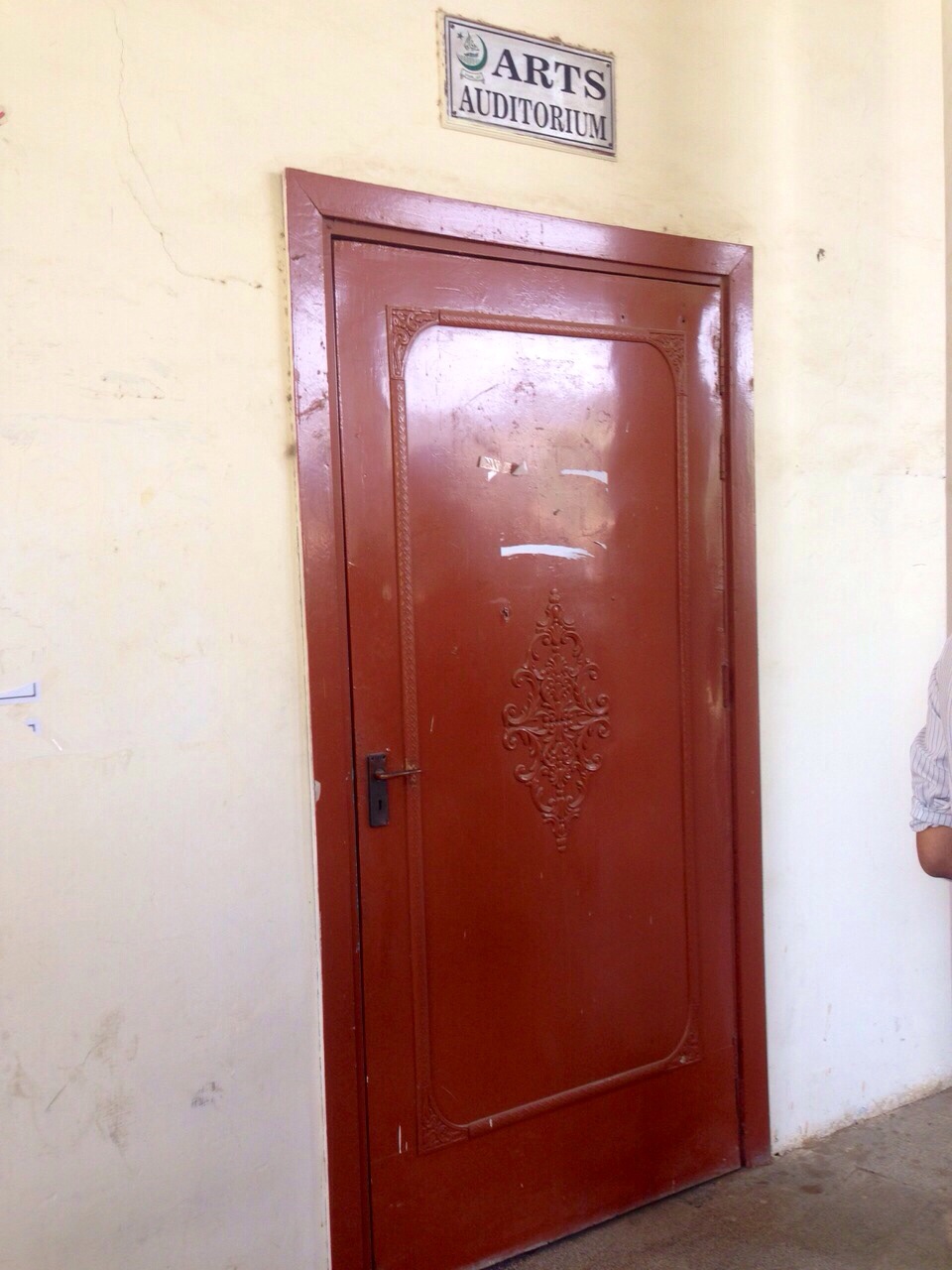
The KU administration locked the door of the Arts Auditorium to prevent the seminar from taking place…
The signs of hope I saw in 2011 included the unprecedented number of people speaking out. These voices have increased in number, demanding accountability for the violence and urging the government to address Balochistan’s long-standing grievances about economic and political disenfranchisement, and human rights abuses.
…It is not so easy to silence people any more. On 11 April, three days after the Balochistan seminar was cancelled at LUMS, it was held at Kuch Khaas, a popular gallery-café in Islamabad, featuring only one of the original speakers, Mir Mohammad Ali Talpur, a columnist and Baloch rights activist. Talpur also addressed students at LUMS a few days later, on 15 April (audio, in English, here). Both these well attended events were followed by another one in Karachi, on 24 April, hosted by Sabeen Mahmud at T2F (partial transcript of the event here). Shot dead that night, Sabeen joins the ongoing, and lengthy list of Pakistan’s enlightenment martyrs.
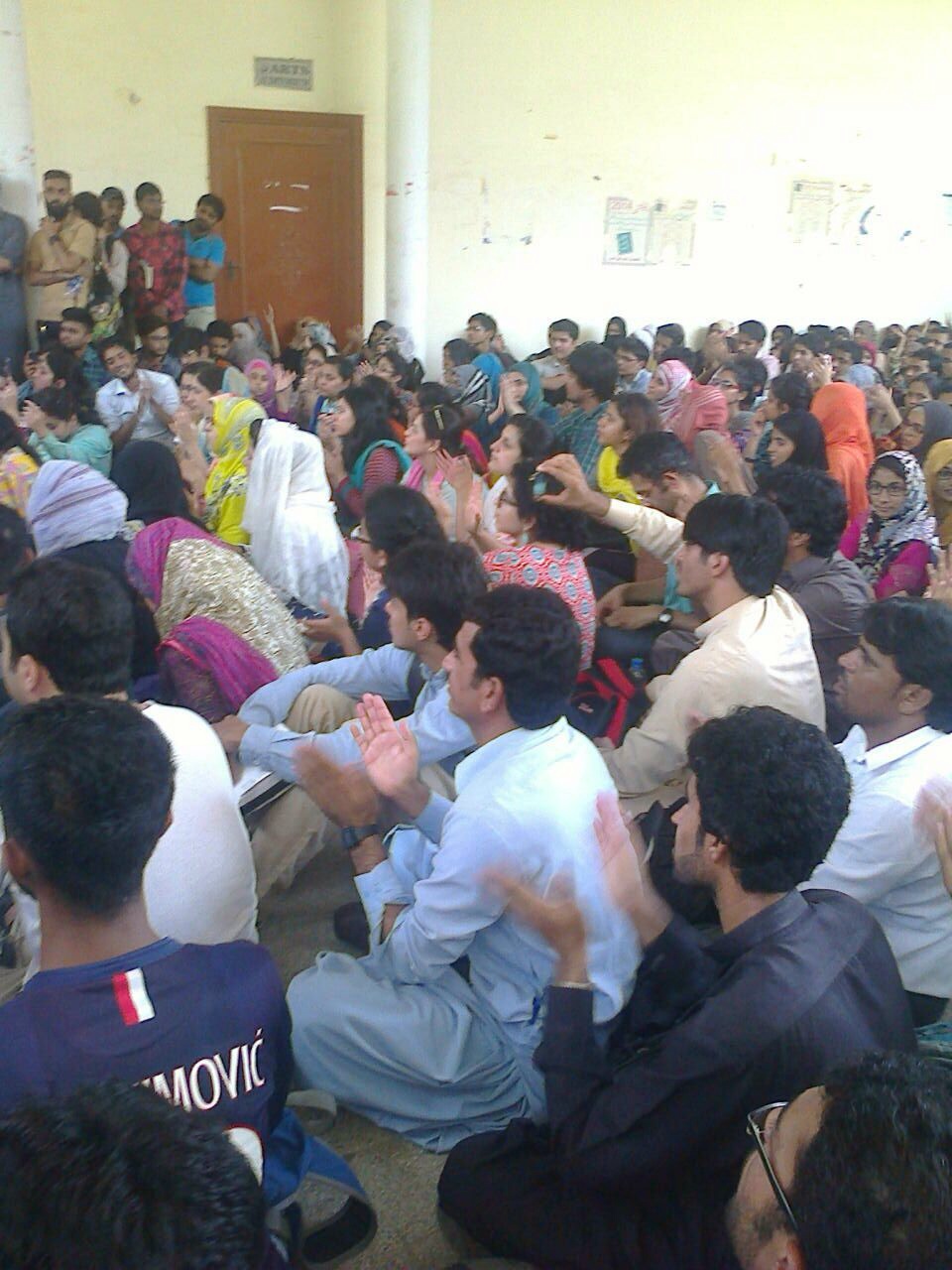
…but the students and faculty went ahead with the event, crowding the lobby in front of the locked door. May 6, 2015.
But less than two weeks after Sabeen’s murder, a larger event on the issue was held on 6 May, organised by Karachi University Teachers Against War and Oppression. The event had been announced weeks earlier and the organisers went ahead with it despite threats and intimidation, even after the university management, apparently on its own accord – perhaps following the lead of the private university LUMS that had backed down, and frightened by Sabeen Mahmud’s murder — revoked permission for the event. The administration blocked outsiders from entering university premises and locked the auditorium of the Arts Lobby where the seminar was to be held.
Students and faculty defiantly crowded the hallway and held the seminar anyway, outside the locked auditorium. They sneaked in members of the public in their own transport. The presenters who had been refused permission at LUMS, and who had spoken at Sabeen’s T2F, addressed this gathering (Audio of the proceedings here).
STATEMENT OF CONCERNED FACULTY MEMBERS AND STUDENTS OF LUMS REGARDING THE DECISION TO CANCEL THE TALK ON BALOCHISTAN IN KARACHI UNIVERSITY SCHEDULED TO BE HELD WEDNESDAY 6 MAY, 2015:
We, concerned students, alumni and faculty members of LUMS, deeply deplore the decision by the Karachi University administration to cancel the talk on Balochistan titled “Baloch Missing Persons and The Role of State and Society”, planned tomorrow Wednesday 6 May 2015 at Karachi University. This decision comes on the heels of the cancellation of the LUMS roundtable on “Un-Silencing Balochistan”, scheduled to be held on 9 April, and the tragic killing of Ms. Sabeen Mahmud, director of the café T2F in Karachi, right after a debate on the very same issue on 24 April on the premises of T2F. Continue reading →
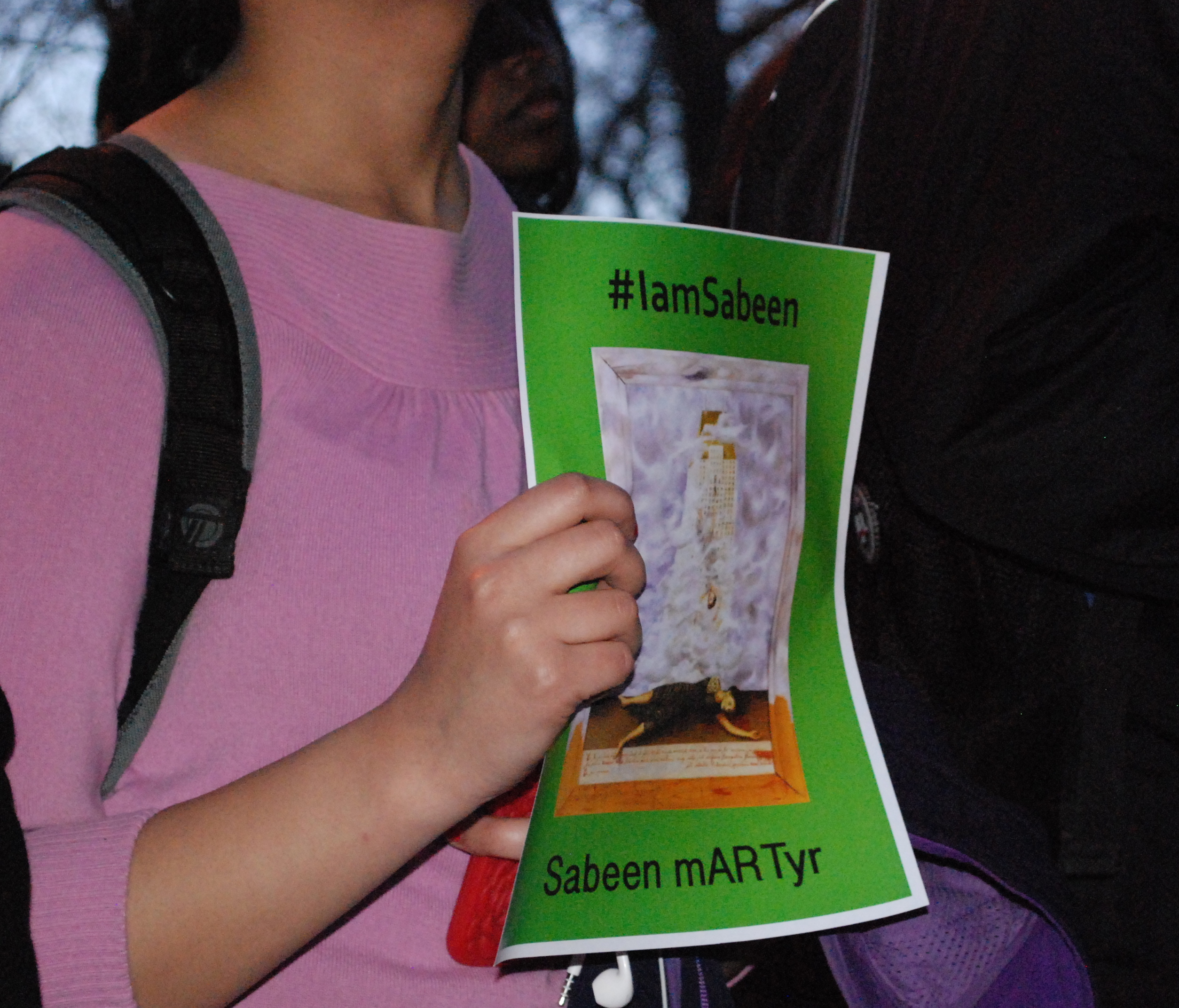
Vigil for Sabeen in Harvard Yard, April 28, 2015. Poster designed by Erum Sattar shows a painting by Frida Kahlo whom Sabeen loved, with a word play on “mARTyr” she would have enjoyed. Photo: Ken Shulman
In the summer of 2011, young academic Nosheen Ali, and journalists Sahar Habib Ghazi and Malik Siraj Akbar approached me to work on a new initiative they called “Unsilencing Pakistan” that aimed to make an online record of all the journalists, activists, and thinkers in Pakistan who have been harassed, tortured, and/or executed. I had written at the time about those killed as ‘enlightenment martyrs’, part of an ongoing intellecticide. The “Unsilencing Pakistan” idea included a statement that we got several progressive voices to endorse — Sabeen Mahmud among them (see below). We weren’t able to take the idea forward then but the concept remains critically important as Sabeen’s murder a week ago reminds us. I was also reminded by my friend Huma’s Facebook post today about the vigil for Sabeen uses the term #unsilencePakistan; and by the seminar titled Unsilencing Balochistan that was canceled at LUMS but held at T2F after which Sabeen was killed. Continue reading →
Below, some of the widespread condemnation and protest vigils against the cowardly murder of human rights activist and upholder of free speech Sabeen Mahmud, shot dead in Karachi on the night of April 24, 2015 after she hosted a conversation on human rights violations in Balochistan. Just published: Tanqeed’s partial transcript of the discussion. No, Sabeen was not a separatist, nor did she condone violence by anyone, whether in the name of nationalism, ethnicity, religion, or honour. She was a firm believer in open, civil dialogue. The best tribute we can pay to her is to keep her legacy alive by continuing to speak up and keep the dialogue going.
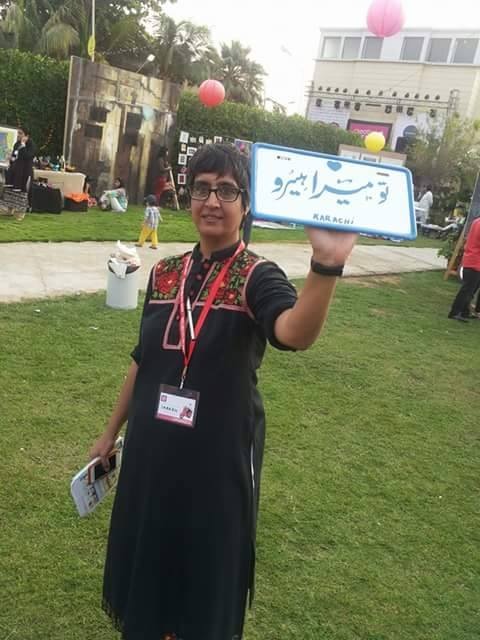
Sabeen: delighted to find an old Karachi car number plate reading, “Tu Mera Hero” (you’re my hero) at the “Creative Karachi” festival, fund-raiser for T2F, 2014. Photo by Mohsin Sayeed
Vigils and protests for our slain comrade and friend Sabeen Mahmud are taking place in different cities of Pakistan and around the world. Anyone is welcome to submit online responses to the blog Sabeen Mahmud: A Tribute.
In Boston, students have organized a vigil for Sabeen on Tuesday, April 28, 7.30 pm at the John Harvard statue in Harvard Yard (Facebook Event). In Pakistan, friends are meeting at Press Clubs in Karachi, Lahore and Islamabad to register their protest.
Bring an apple. Or a Beatles or Steve Jobs poster. Or Farida Kahlo or Farida Khanum, Faiz, Farid Ayaz… all the things she loved. Black armbands. She loved strong visual statements.


 London Declaration for Pluralism and Democracy in Pakistan





 Journeys to democracy