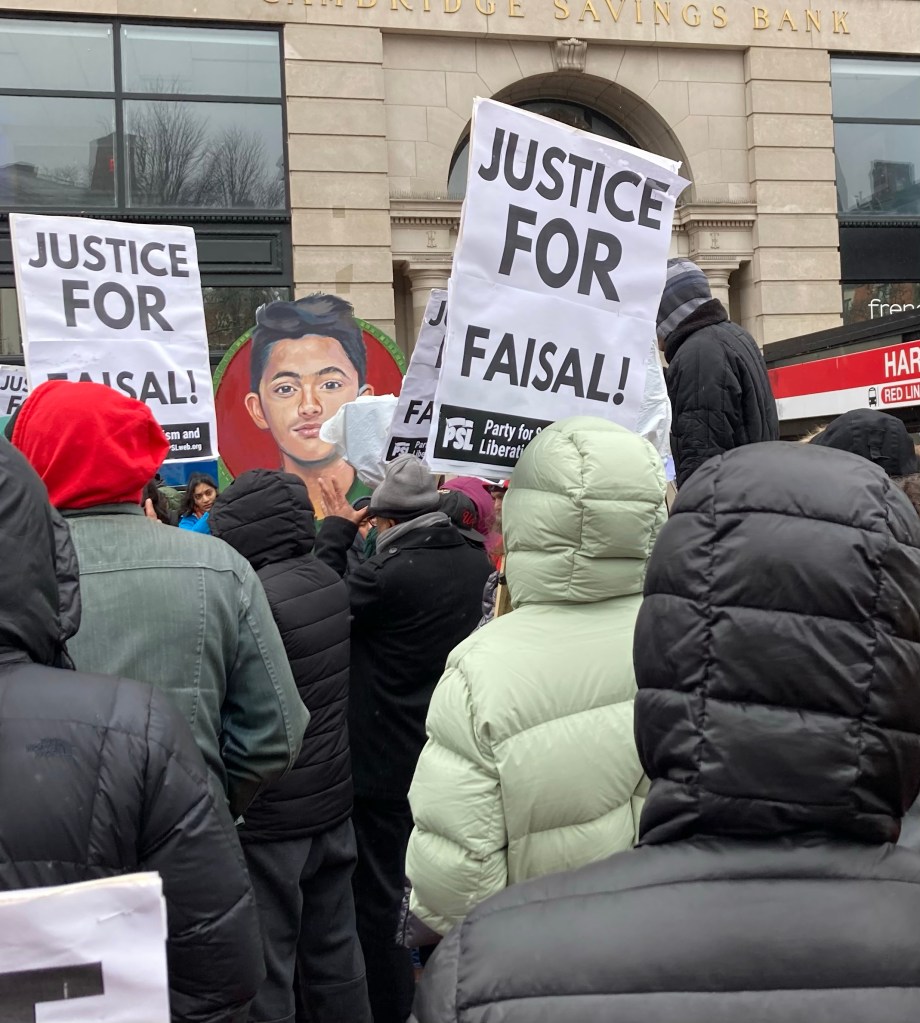
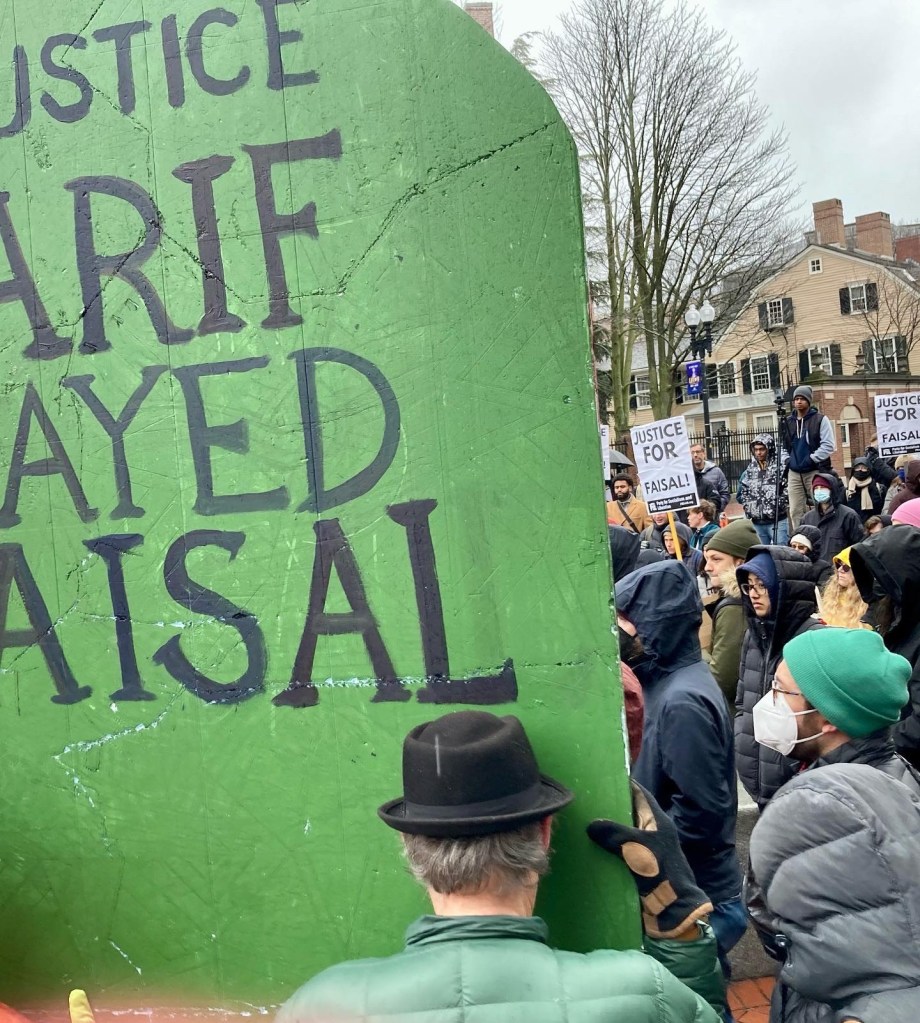
#JusticeforFaisal demo at Harvard Square, 14 Jan 2023. Photos: Beena Sarwar
The summer of 2020 saw massive Black Lives Matter protests across the USA. Although these protests have largely died down, a small group has continued to demonstrate in Cambridge MA, standing at the corner of Prospect and Broadway streets every Friday afternoon. No media outlet has picked up the story of these peaceful demonstrators holding up BLM signs, including: ‘All lives matter but not all lives are threatened with racist violence’.
In Spring 2022, one of my students at Emerson College did a video report on these Stand-outers as they call themselves. It includes comments from two of the group’s members, retired pediatrician Dr. Alan Meyers and history professor Dr. Tom Johnson (erroneously mentioned as Robinson in the video) on why they continue demonstrating. Report below, shared with the student’s permission:
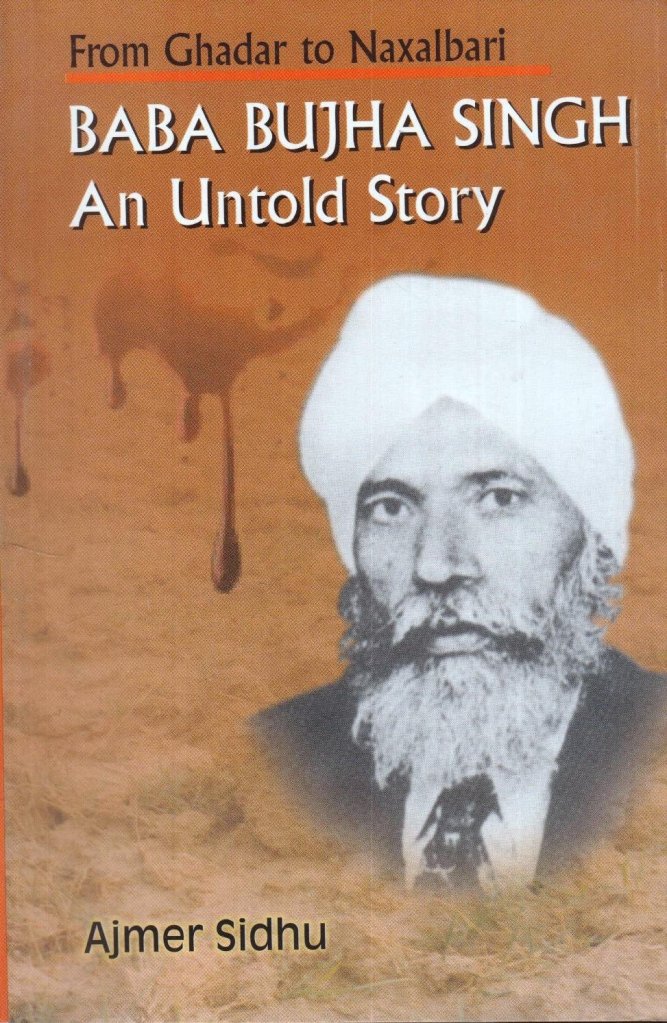
Sharing below an informative, moving and insightful piece by friend Jaspal Singh in Cambridge commemorating the fiftieth anniversary of Baba Bujha Singh’s extrajudicial murder in Punjab, India. The story is reflected in other instances of police brutality elsewhere too. And so is his comment on democracy. He regularly dispatches his ‘Reflections’ to friends via email; a list I feel privileged to be on. Over to Jaspal ji:
With rising racial tensions in the USA exacerbated by bigots like Trump and easy availability of weapons, I wanted to share my friend Jaspal Singh’s recent ‘Reflections’ that he emailed to a few friends from his base in Cambridge MA (visuals added). Also see this post by Partha Banerjee, an activist friend in New York City, on the racism of South Asians (he talks about Indians but it applies equally to others in the region) and the need to contexualise injustice and violence and demand “justice for all the sufferers” and “punishment for all the criminals”.
#Edhism #BlackLivesMatter #Kashmir #Police We could all use a bit more humanity. A powerful little story shared on Facebook by the Andover Police Department about what happens when we see each other as human beings first.
REFLECTIONS
July 10,2016
By Jaspal Singh
A wave of protests against police brutality has engulfed the US. Thousands of people have come out in the streets against the killing of black men by police in several cities. In Dallas Texas, a sniper killed five police officers.People are demanding that these police officers who are killing black men with impunity , be brought to justice and be punished. The Black Lives Matter movement has highlighted the plight of the black people in the US.They can be killed by the law enforcement officers without any accountability as black lives are not considered to have any value. Every year hundreds of black men are killed in police shootings and nothing comes out of it, no police officer is punished. People are incensed against this kind of impunity.Continue reading →
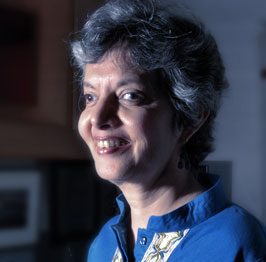
Guest post:Zohra Yusuf, my first editor at The Star Weekend 1981-82, outlines the birth of the women’s movement in Pakistan
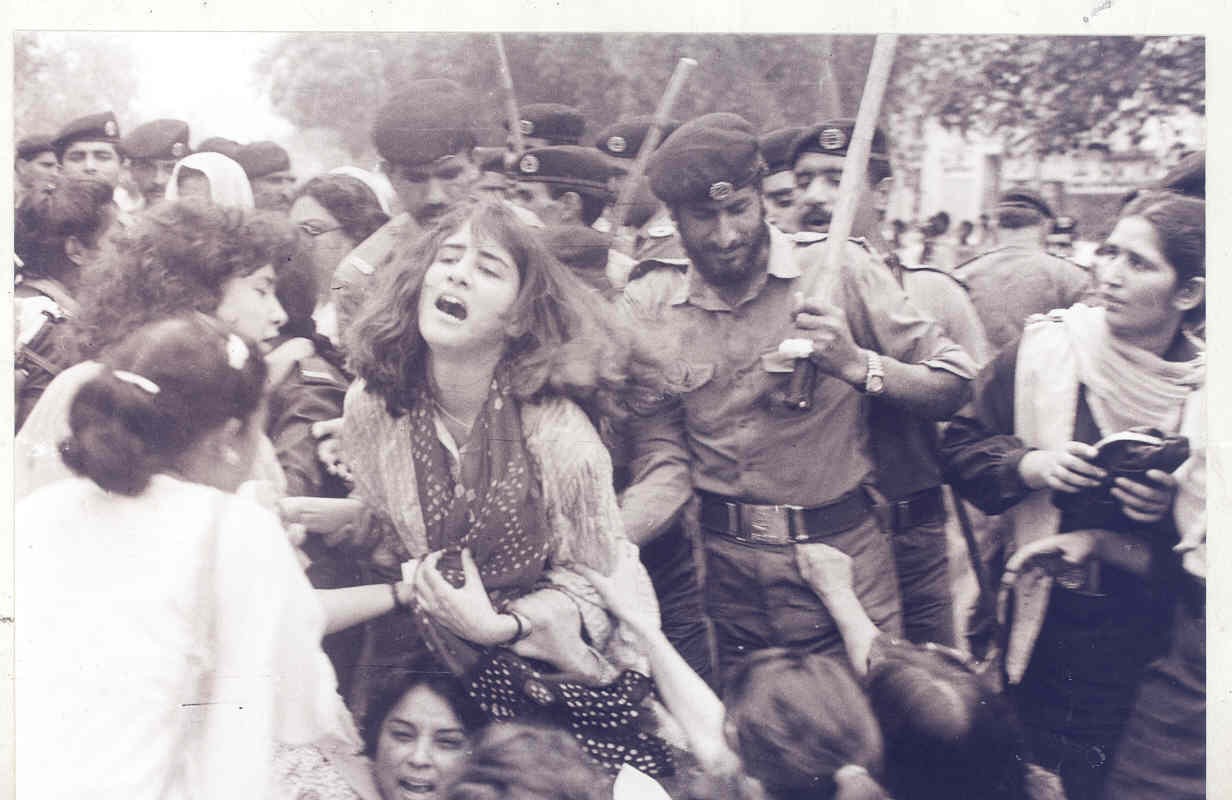
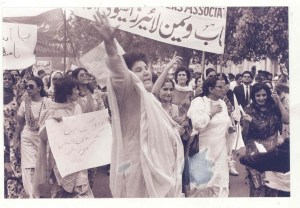
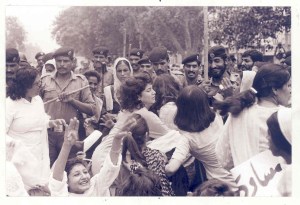
Lahore, Feb 12, 1983: Police brutality on the women’s demonstration against the ‘Law of Evidence’ catapulted the nascent women’s movement into the limelight. Photo: Rahat Ali Dar
“My years with WAF”
By Zohra Yusuf | Article written for a souvenir on WAF’s 25th anniversary, Oct 2006
Zohra Yusuf, Newsline photo 2012
Certain memories are etched on the mind. The birth of Women’s Action Forum is, for me, surely among them. It was on an afternoon in September 1981 that Aban Marker (Shirkatgah) called. She told me about the distressed call she had just received from Najma Sadeque (another SG founding member) regarding the case of Fehmida-Allah Bux. Pakistan’s first sentence of death by stoning and public whipping handed down to a couple under the Zina Ordinance of 1979. We had all read about the sentence and in our individual capacities felt deeply disturbed. After a bit of discussion, we decided to call a meeting of all women’s organizations at Aban’s place. The rest, as they say, is history.
The women’s movement was at a nascent stage. Shirkatgah itself was born in 1975, the year the UN dedicated the decade to the cause of women. All Pakistan Women’s Association (APWA), after successfully campaigning for the Family Laws Ordinance 1962, had returned to charitable work. Pakistan Women Lawyers’ Association was also fairly new, as was Tehrik-e-Niswan. The only organization with experience of political work was Pakistan Jamhooriat-Pasand Khwateen (Pakistan Women’s Democratic Front).
I remember to this day the faces of the women around the table that evening when we met at Aban’s. Distressed yet determined. Shirkatgah took the lead in conducting the meeting as it did in the creation of a dynamic platform for Pakistani women to come together in solidarity to challenge the military regime’s anti-women policies. Apart from Aban and Najma, there was Najma Babar, journalist and my colleague at The Star, the Rahman sisters (Ghazala and Humaira) from Tehrik-e-Niswan, Sheema Kirmani – among others from Shirkatgah and other women’s groups. If my memory serves me right, the name Women’s Action Forum was proposed by Humaira and adopted after much debate.
Women’s rights demonstration in Lahore, Feb 12, 1983. Photo: Rahat Ali Dar
The Star Weekend, where I worked in the eighties, became the voice of the women’s movement. Indeed, I must confess that the birth of WAF was partly responsible for my decision to continue working at The Star which, till then, had been primarily an entertainment weekly.
In fact, over a brief period of time, I was accused of making The Star a feminist newspaper. Of course, many WAF members were regular contributors. Najma Sadeque had already been contributing (believe it or not) a weekly television review. She happily gave up the ordeal of watching PTV to write on issues of women’s rights and status. Kausar S.K. passionately wrote on the setback faced by women’s sports as a result of retrogressive policies. Najma Babar frequently reported on women’s political status and Hilda Saeed on violence against women.
Fortunately, the entry of WAFers in journalism coincided with the lifting of direct censorship in January 1982. While self-censorship remained in force, we were able to pull the wool over some eyes by writing between the lines, stepping back when absolutely necessary and returning for more effective assaults. Political journalism was also introduced in The Star at the same time. Several of the columnists who began to write for the newspaper were committed supporters of women’s rights. Among them were Ahmed Bashir and Hussain Naqi. At The Star itself, we found a staunch supporter in the editor, the late G. N. Mansuri.
Feb 12, 1983: Many women’s rights demonstrators were injured and arrested, heavily outnumbered by police. Photo: Rahat Ali Dar
In the eighties, WAF was struggling not only against the discriminatory policies of the Zia regime but for understanding from the society at large, including the media that was, by and large, dismissive of the women’s movement. Even Dawn, which now editorially supports women’s causes, refused to publish reports of and statements by WAF, viewing the organization as an insignificant entity. Often, it was also the butt of sexist jokes. However, it had fairly staunch support from journalists, lawyers and other members of civil society who never hesitated to march with WAF when it took out protest demonstrations on some of the busiest streets of Karachi.
WAF’s strategies in the early years worked. If they did not lead to the repeal of the Hudood Ordinances, they succeeded in watering down the proposed Law of Evidence. Moreover, WAF was quickly gaining world media attention. I remember how elated I felt when the BBC World Service Radio described WAF as the first challenge to the military regime (a highly exaggerated assessment, in retrospect). In fact, WAF put the issue of the status of Pakistani women on the agenda of the global media. Scores of western journalists sought out WAF members to get an insight into the discriminatory laws and their response.
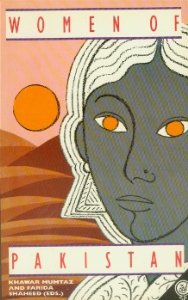
Apart from newspaper articles, the struggle of the eighties spearheaded by WAF, led to the first recorded history of the women’s movement. It inspired (I believe) Farida Shaheed and Khawar Mumtaz to write their seminal book One Step Forward, Two Steps Back.
To a great extent, the struggle for women’s emancipation that WAF embodied released a fair amount of creative energy. Plays related to women’s and other political issues were frequently staged. Leading artistes, including the late Zarina Baloch, showed their support by performing from WAF’s platform. Poets such as Fehmida Riaz, Saeeda Gazdar, Zahida Hina and Attiya Dawood wrote and recited poetry on the theme of the status of women in Pakistan.
The death of General Zia in an air crash brought back Benazir Bhutto from exile. The hopes she instilled in the women of Pakistan (more as a symbol, rather than in substance) were soon dashed shortly after she took over as the first woman Prime Minister of a Muslim country. Perhaps unable to realize their hopes, most of the women associated with WAF formed – or joined – non-governmental organizations. The street-fighting days were over.
Awareness of rights apart, women’s social and legal status has continued to be eroded. So 25 years after the formation of Women’s Action Forum, where is the Pakistani woman today? To borrow from the title of Farida’s and Khawar’s book: “one step forward, two steps back”.
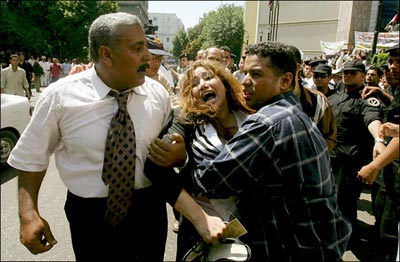
Egypt is the second biggest recipient of American aid and military hardware, long used by the Mubarak regime to brutalise the people. The Egyptian police are even more brutal than in Pakistan. Watching the situation now on Al Jazeera livestream, when the police have been forced to retreat before the might of the people, I remembered the time some years back when they humiliated and stripped women protestors in public – I posted a message out to my yahoogroup back in May 2005 Eyewitness testimonies: Molestation of Democracy in Egypt. Around the world people observed solidarity with the protestors in Egypt, responding to a call to wear black on Jun 1, 2005. I later wrote this article, posted to my yahoogroup as Personal Political: Women, public space, Cairo and Lahore – copied below. Imagine if there had been twitter and facebook then…Continue reading →