Peace, like democracy, is a process, not an event

Extract from an interview about the Islamabad peace talks — before they ‘collapsed’ — and a visit to ancient archaeological sites in Sindh

I spoke to the eminent Indian journalist Arfa Khanum Sherwani on Saturday about the peace talks then taking place in Islamabad. She published the interview on her YouTube channel on Sunday — with several cuts since everything had, as she said, changed overnight. I tried to represent our peace constituency.
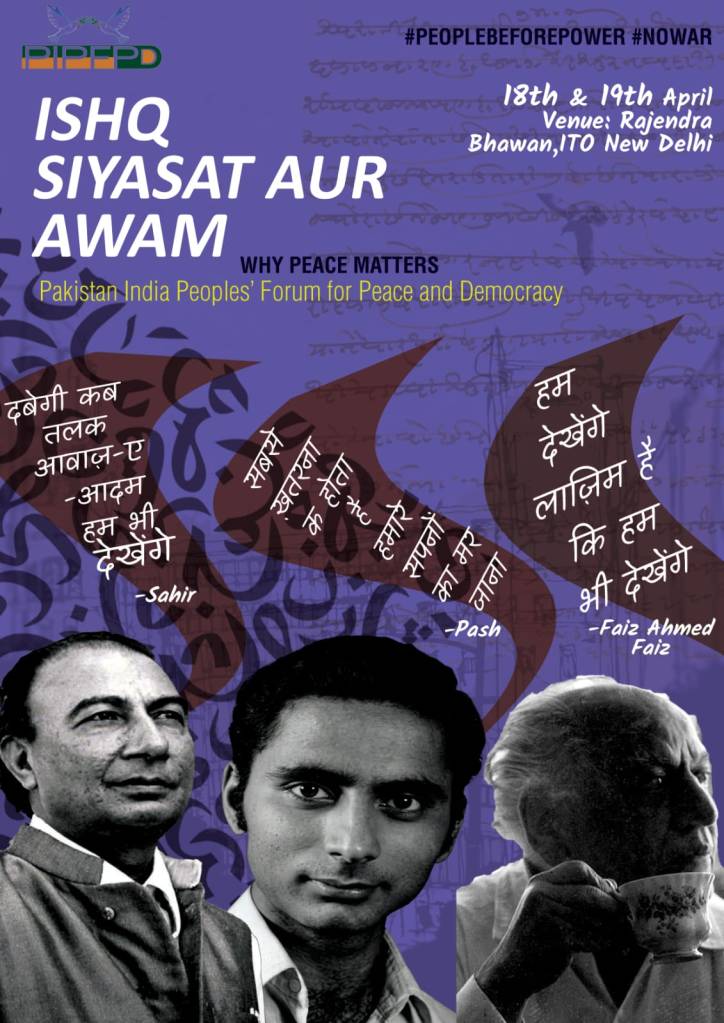
Poster for the upcoming PIPFPD National Convention in Delhi. Peacemongers zindabaad

One of the cuts was about a Pakistan India Forum for Peace and Democracy (PIPFPD) webinar on Friday, which I refer to when mentioning the maturity of the Indians I heard “yesterday“. Here’s a recording of that seminar “Counting the costs of conflict – why peace matters” — most of it is in English. This webinar precedes PIPFPD’s upcoming National Convention, ‘Ishq, Siyasat aur Awam’ (Love, politics and the people), being held in Delhi, 18–19th April.

We need to amplify these voices of wisdom and courage.

A field trip to Chaukandi, Makli, Thatta, Bhambore

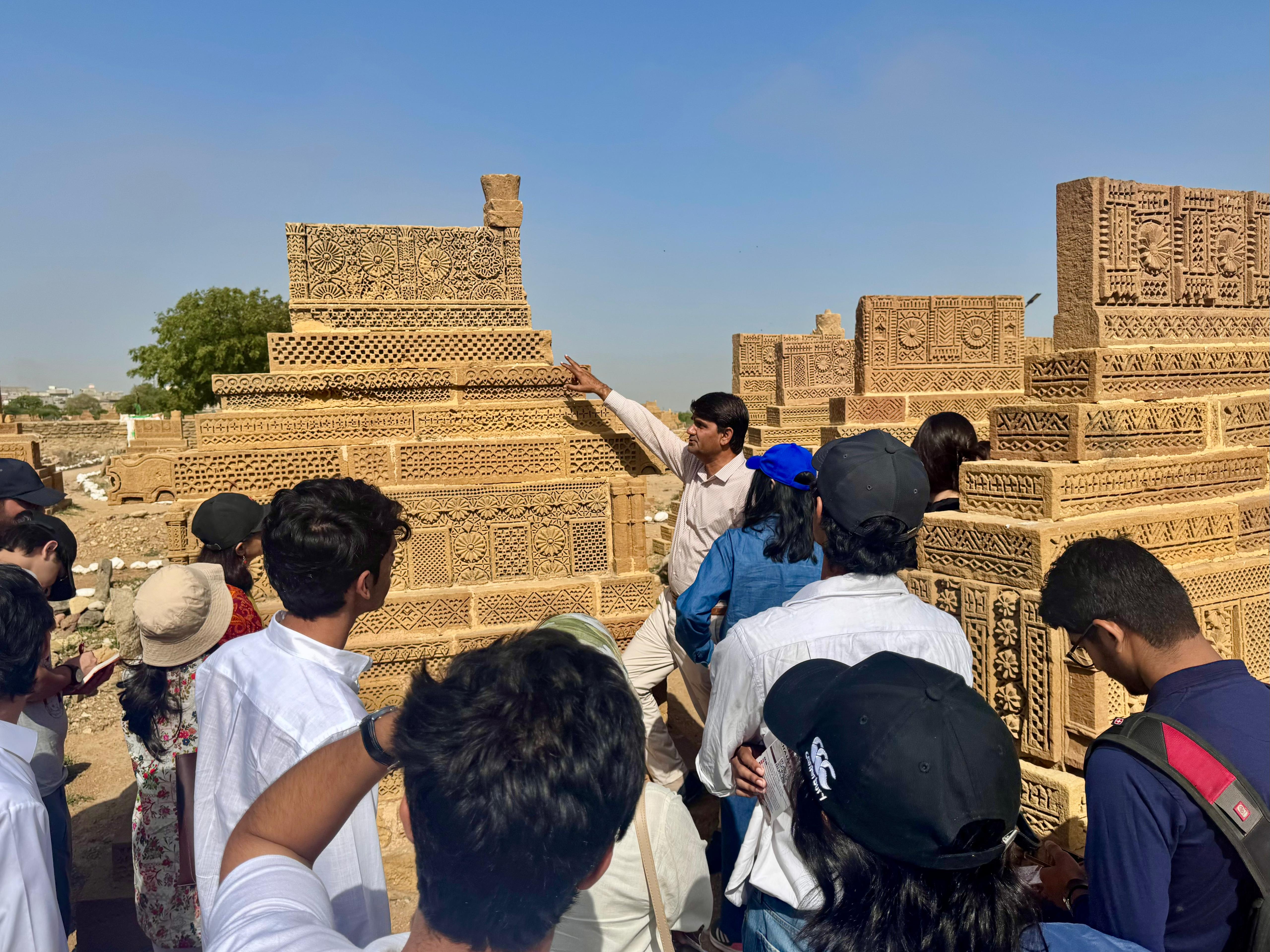
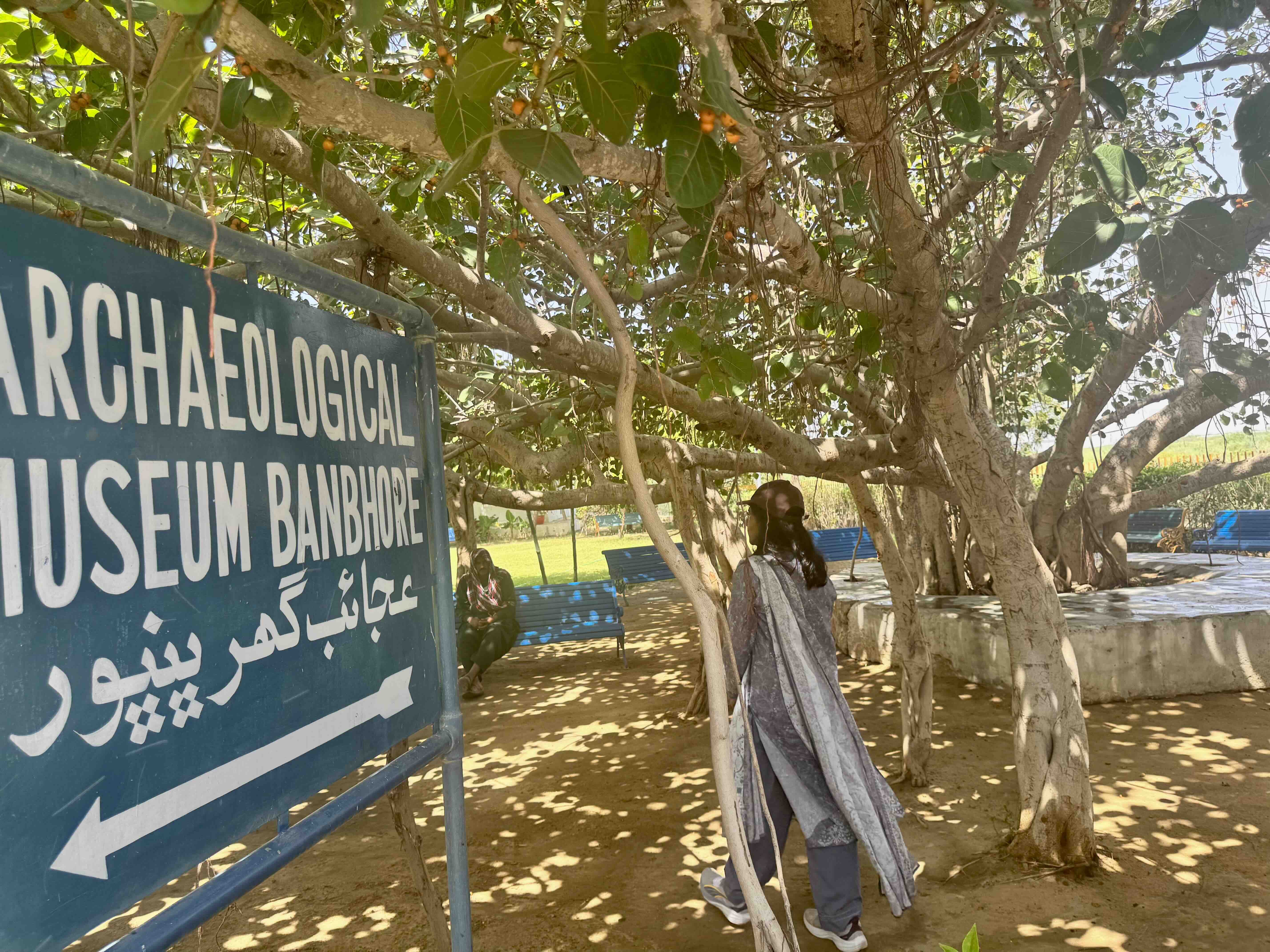
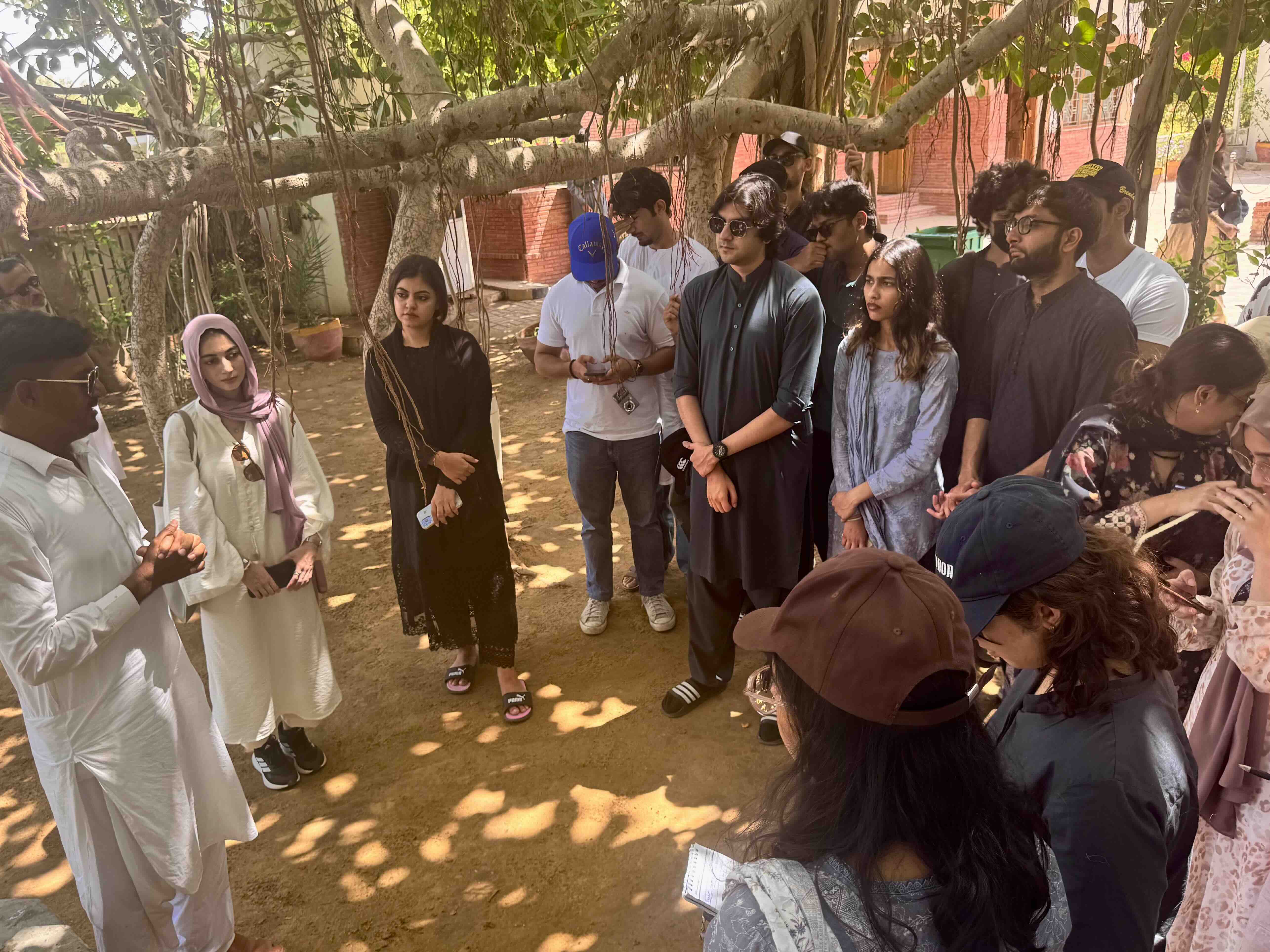
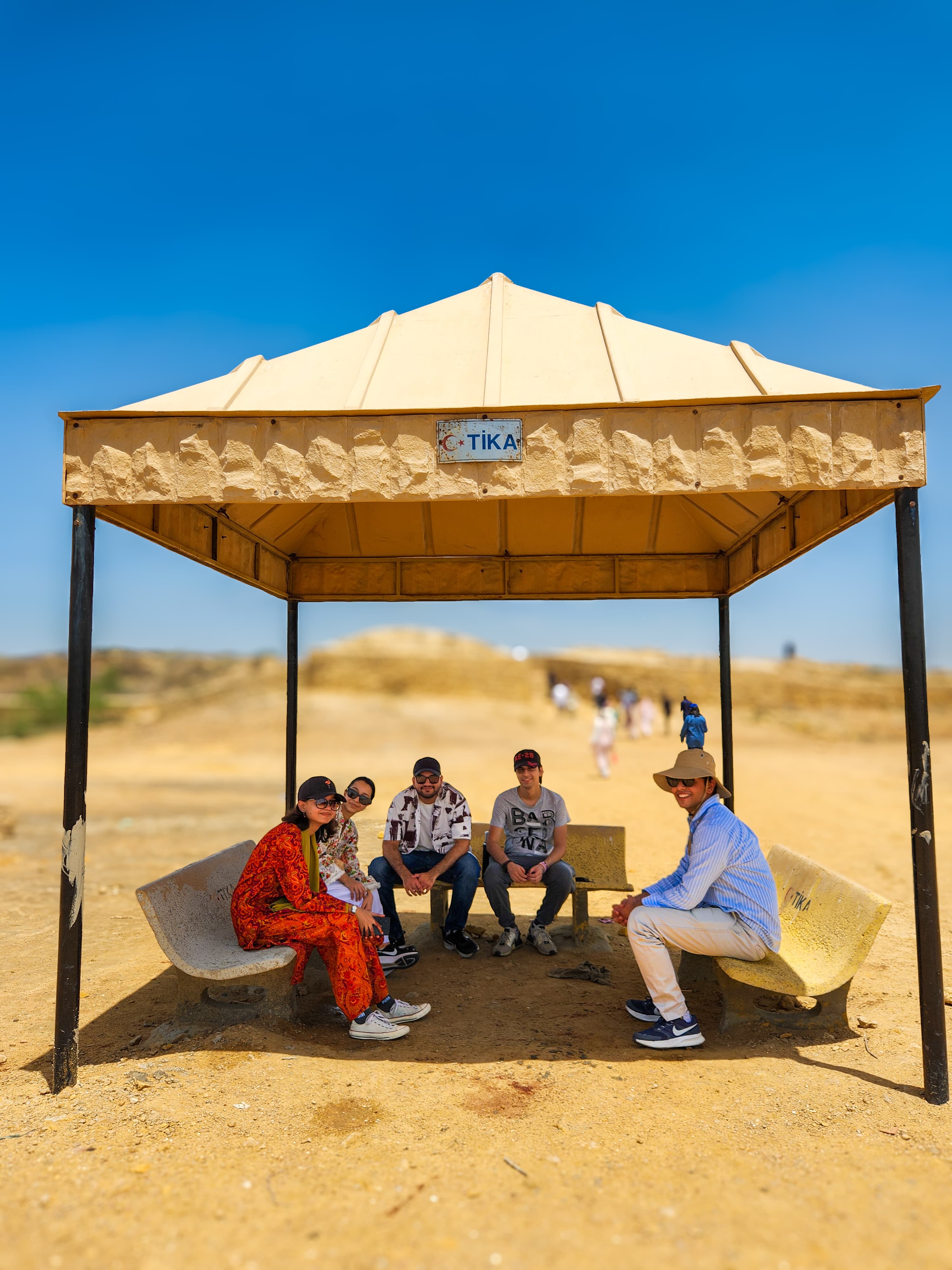
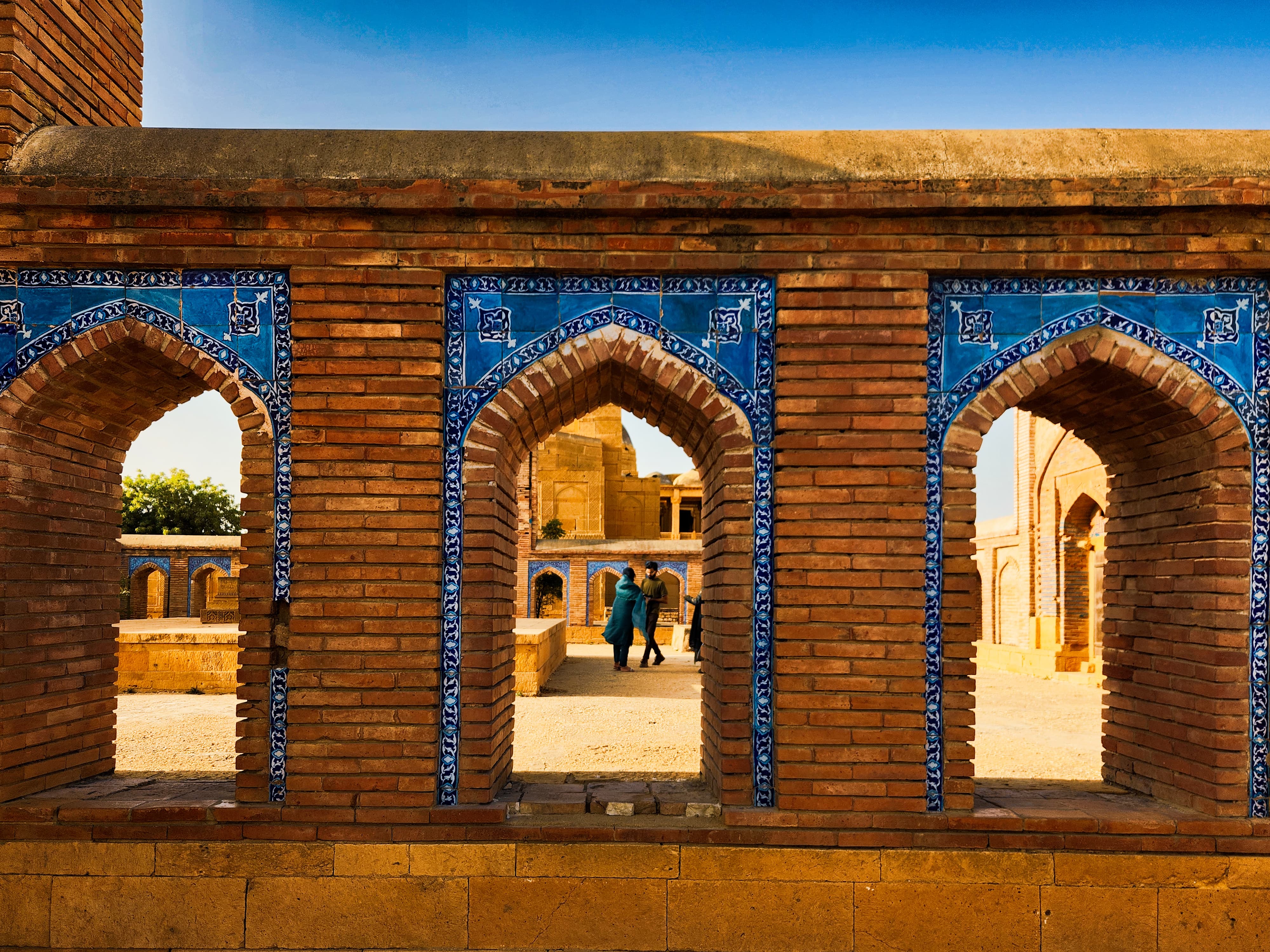
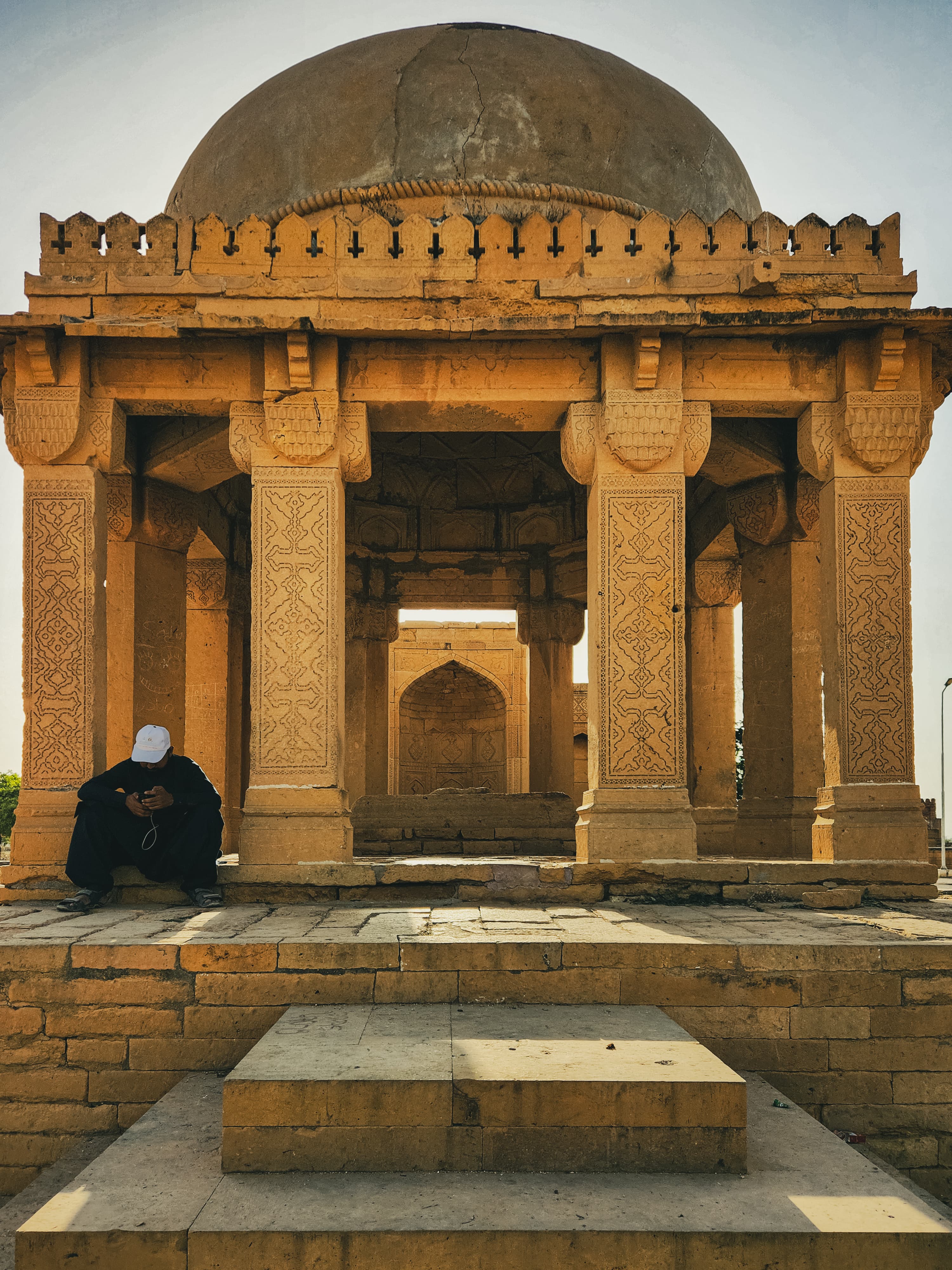
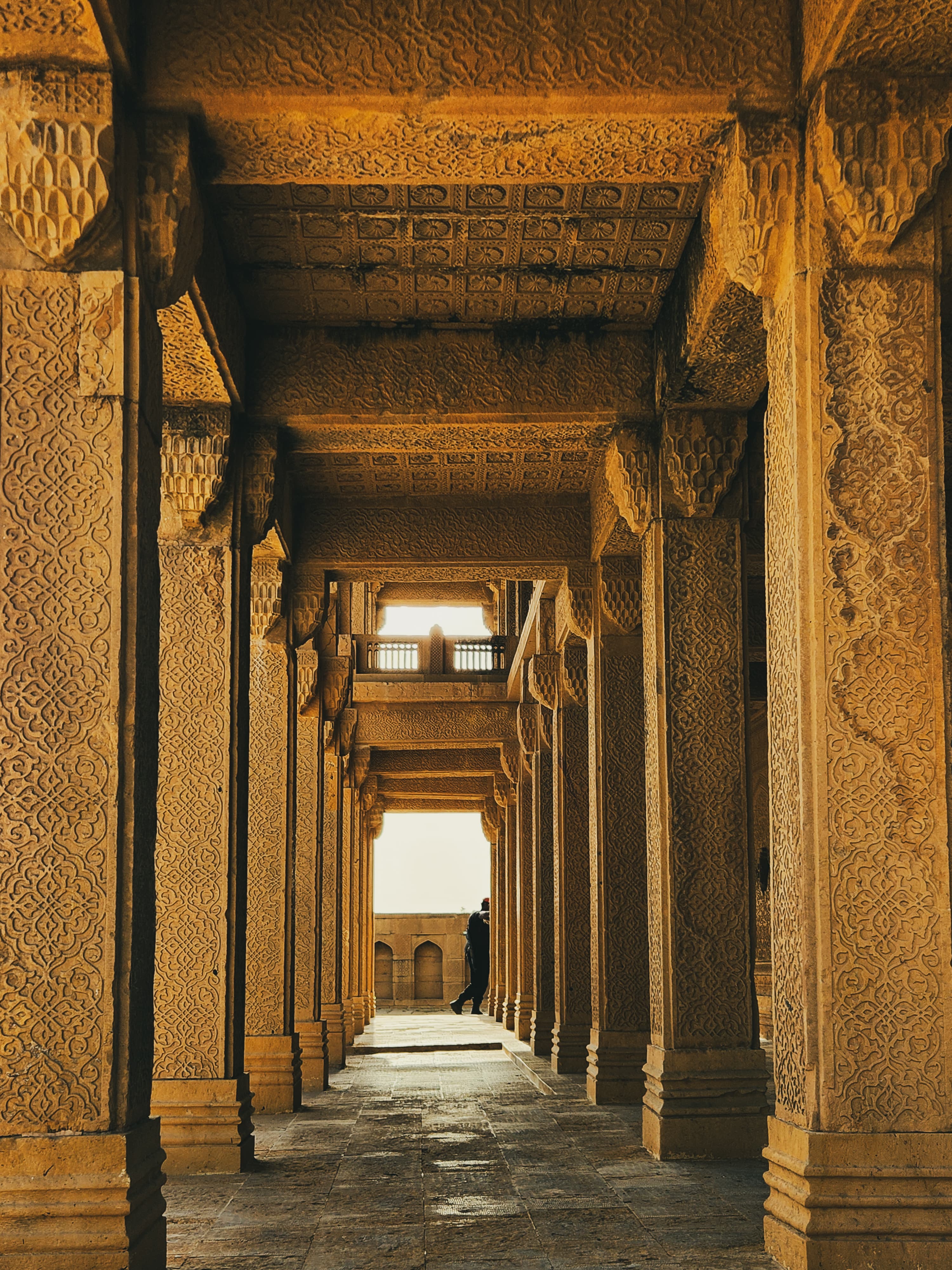
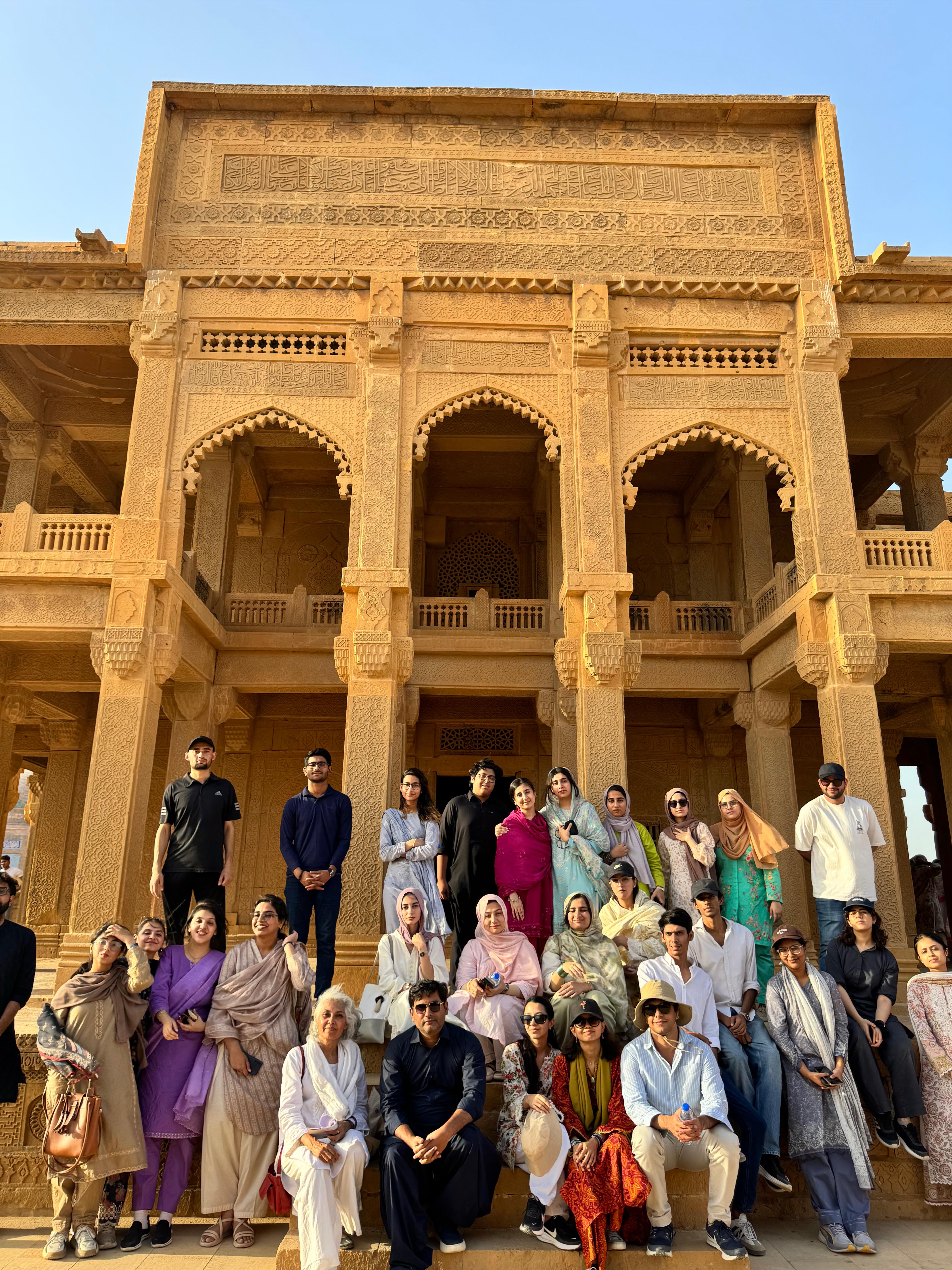
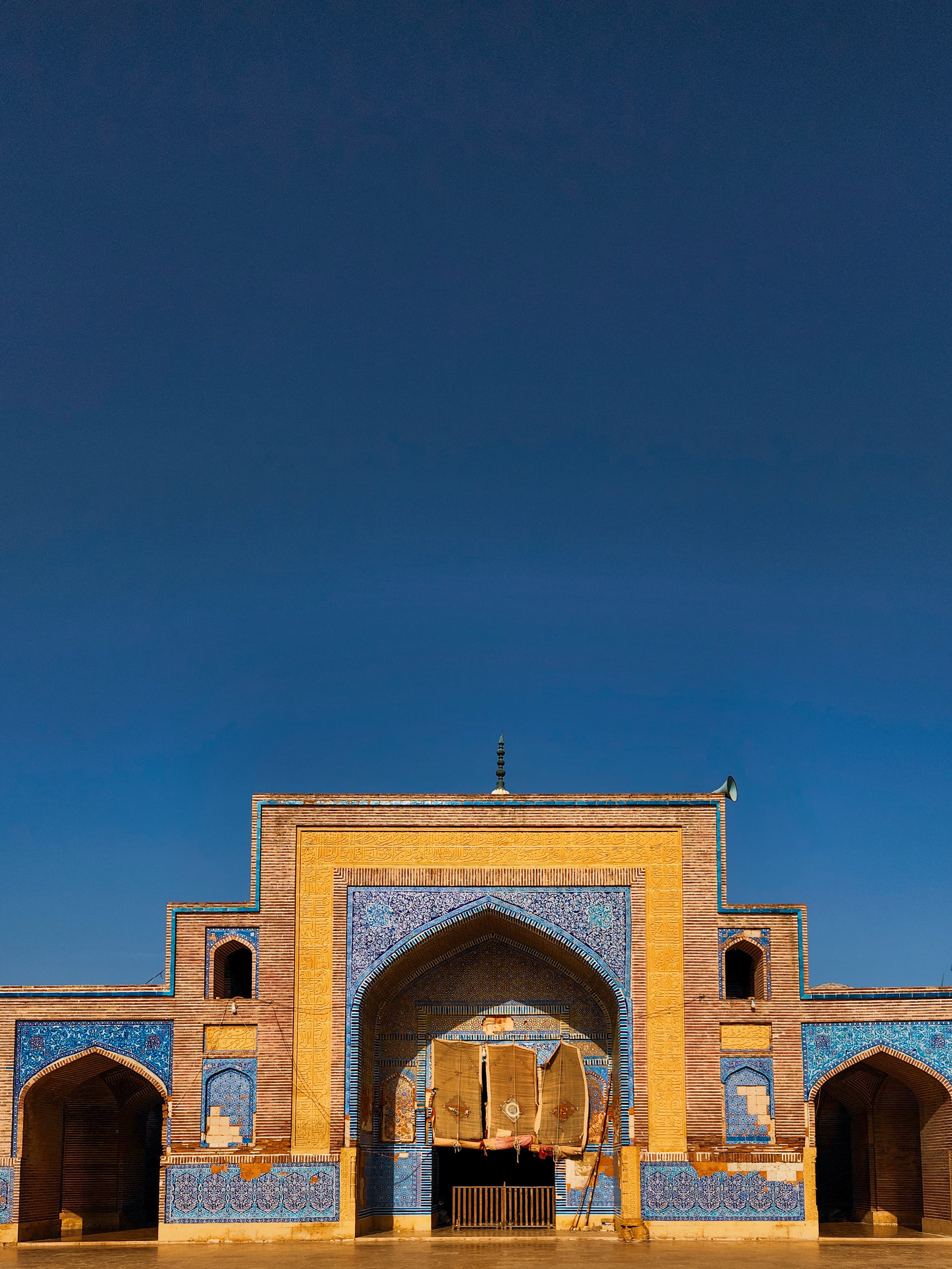
On Sunday, I took some 50 students from the Insitute of Business Administration, Karachi University where I’m teaching this semester, on a field trip to ancient archaeological sites in Sindh — the necropolises of Chaukandi and Makli (a UNESCO site) with their stunning stone carvings and tile work; the Shah Jehan Mosque in Thatta – one of the coolest (literally) and possibly most beautiful mosques in the world; and ruins of Bhambore (also known as Bhanbore), Muhammad Bin Qasim is believed to have landed, on the banks of the then mighty River Indus which has since changed its course.

A plaque by the site of a mosque in Bhambore terms it the first mosque in South Asia. I had always heard that the first mosque in the region lies in Kerala. An online search reveals that according to tradition, the Kerala mosque was established in 629 AD, while the Bhambore mosque (727 AD) is the first “archaeologically verified” one.

It was inspiring to see how the Sindh Archaeology Department is managing these sites, and the dedication and passion of the employees. There’s always room for improvement but let’s give credit where it’s due.
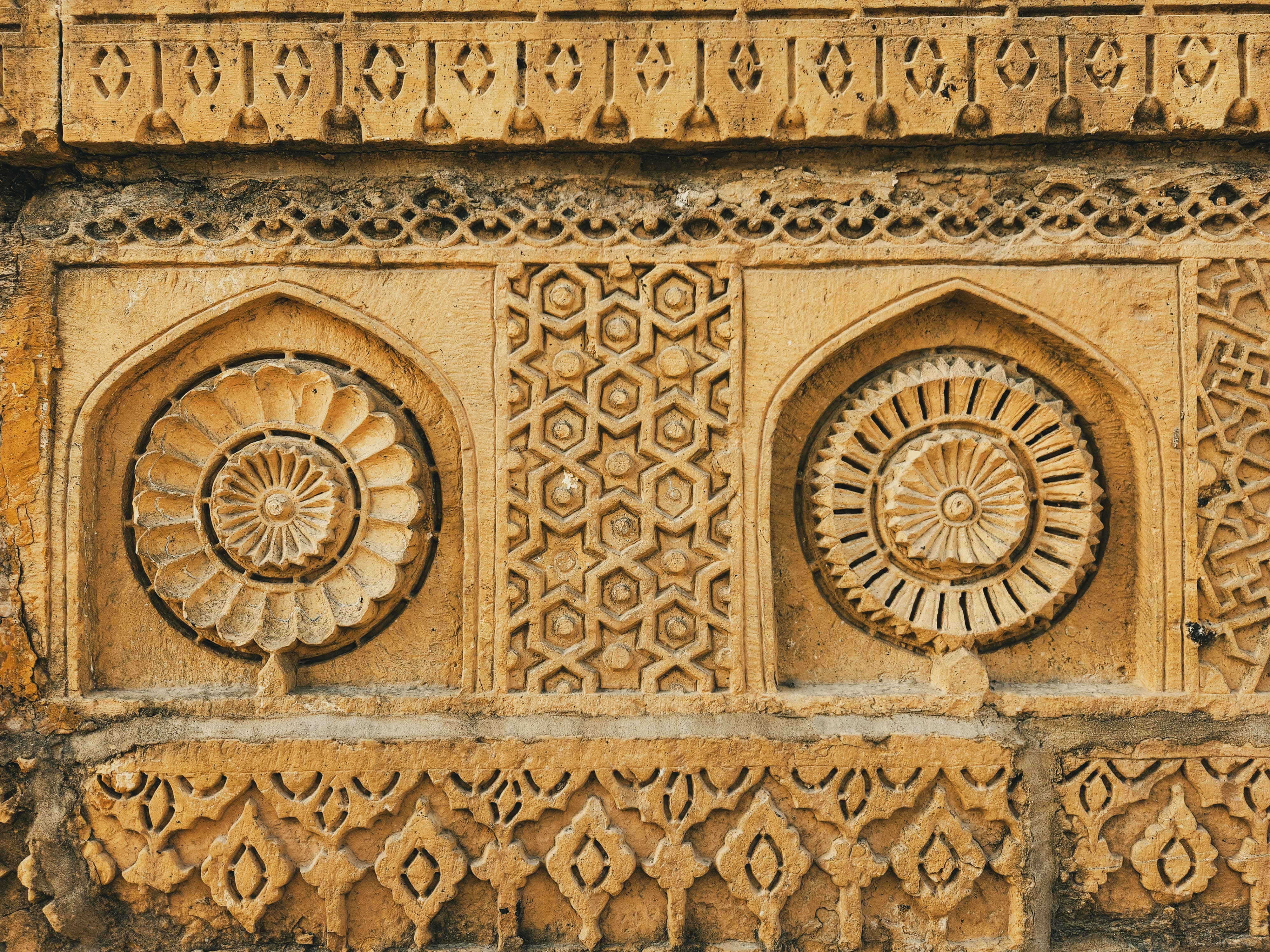
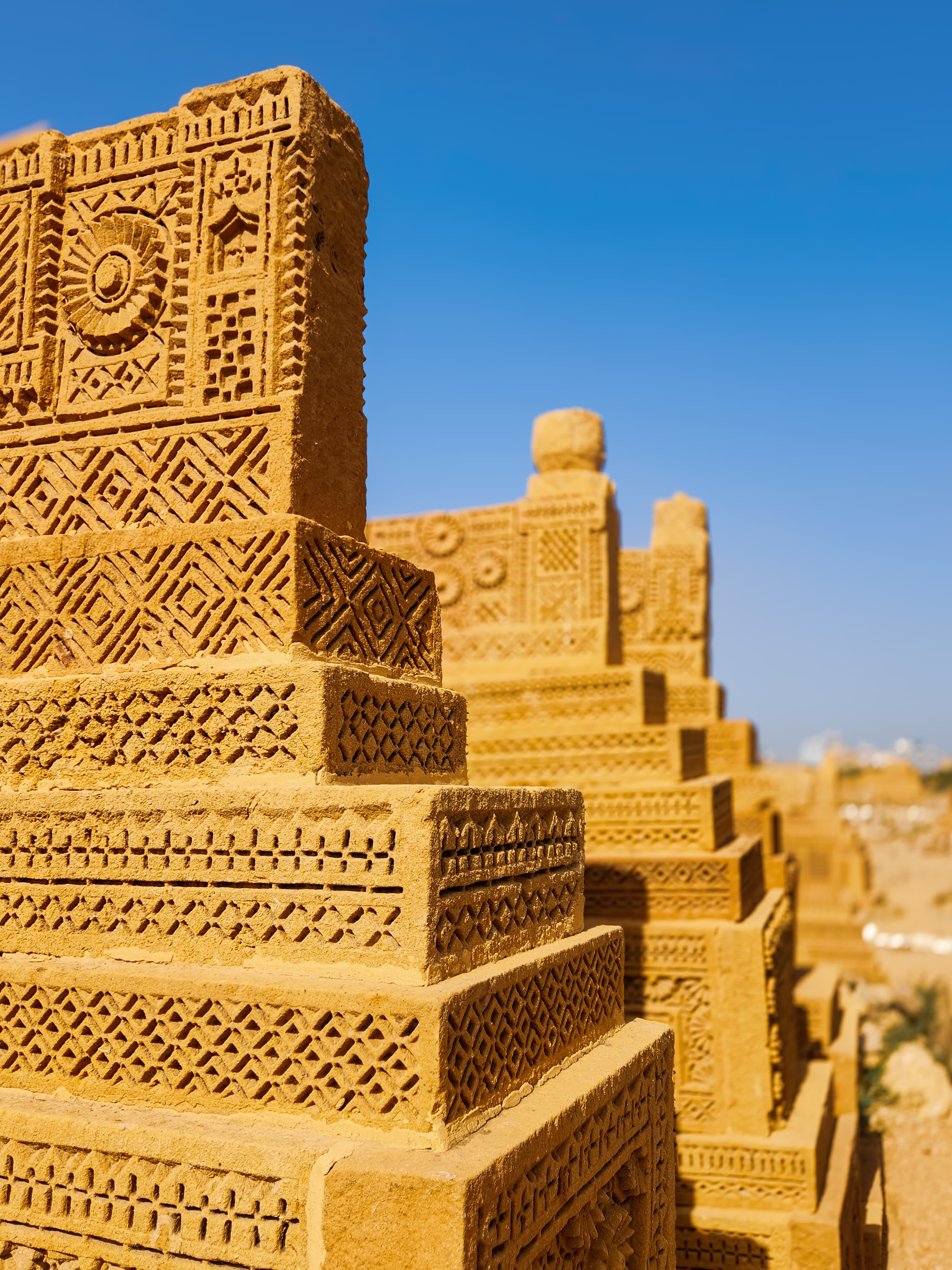
Curation of photos on a public instagram page by an IBA student

https://www.instagram.com/p/DXEK0sKioWa/?igsh=OWdvMDRjdjJuNGJ5

(ends)

The unfulfilled creative promise and potential of Southasia through art and film

Among the insights gained during the panel discussion after the exhibition walkthrough and documentary screening was the similarity between the creative arts and good journalism: Both involve masses of research, and are rooted in being exploratory, observational, and non-judgmental, rather than agenda-driven.

Personal Political

By Beena Sarwar / Sapan News

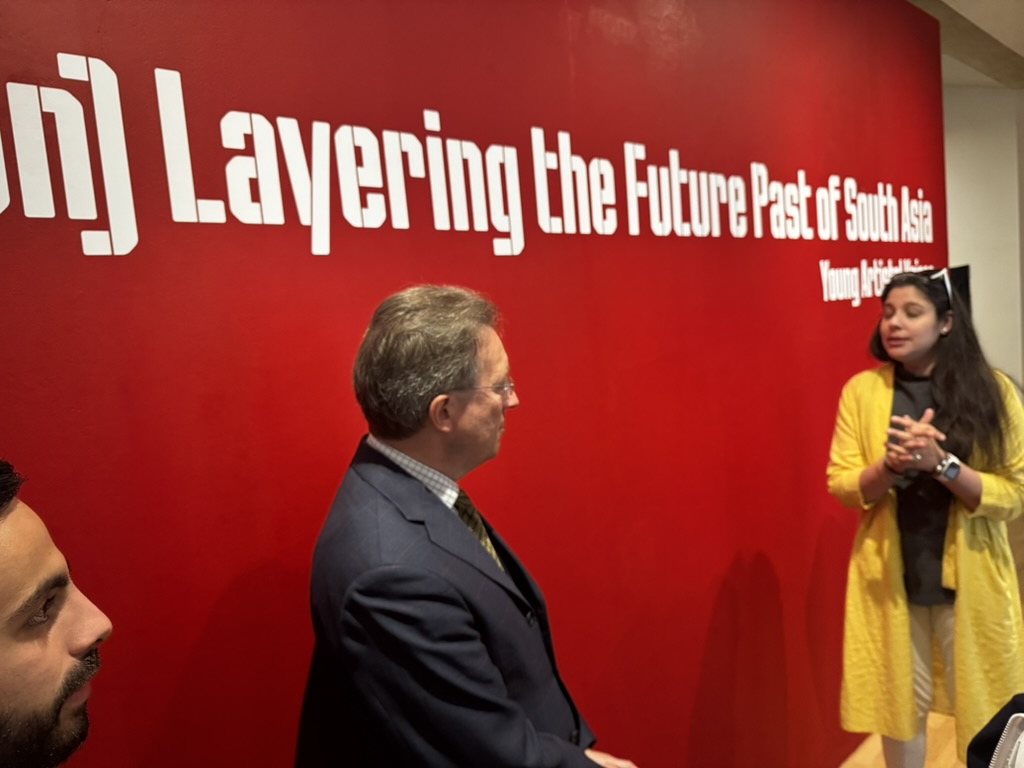
Manmeet K. Walia introducing the (Un)Layering the future past of South Asia: Young artists’ voices‘ exhibit as part of a special event organised by the Bloomsbury Institute London last week. Photo by Beena Sarwar.

The idea of a ‘Young Southasian Artists’ exhibition struck a chord when acclaimed Lahore-based artist and educator Salima Hashmi mentioned it some years ago, after writer and curator Manmeet K. Walia from New Delhi approached her about it.

Salima Hashmi, known for her creativity and longstanding commitment to peace, democracy and human rights, is also a founder member and advisor for the Southasia Peace Action Network which nearly 90 of us launched online in March 2021. Her lifetime of hard work, struggle, and consistency stand apart from the legacy she inherited from her illustrious father, the celebrated poet Faiz Ahmed Faiz.

When Prof. Hashmi and Ms. Walia presented their then under-production show at the Faiz Festival in Lahore, 2024, what stood out was the creativity and courage they were showcasing.

Continue reading

Re-visiting Eqbal Ahmad’s book launch at Harvard with Noam Chomsky

A message from the journalist Amitabh Pal about a mutual friend, David Barsamian of Alternative Radio in Colorado reminded me of this piece originally published in The News on Sunday, 8 Oct. 2006, about an event with Noam Chomsky where I first met David. The article is still all-too relevant, but the link no longer works so I’m sharing the piece here without any changes; just added some hyperlinks and photos.

Essential reading – and doing: Eqbal Ahmad

Book launch: The Selected Writings of Eqbal Ahmad, Cambridge, September 28, 2006.

Beena Sarwar

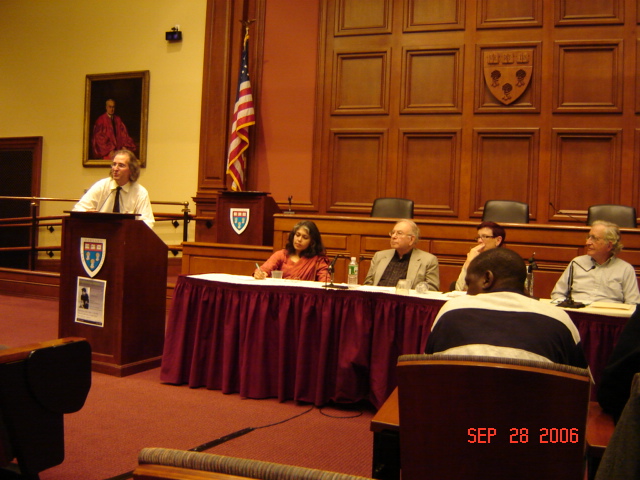
John Trumbour addressing the event. Panel: Beena Sarwar, Stuart Schaar, Margaret Cerullo, Noam Chomsky. Photo: Courtesy MAPA.

When Venezuelan president Hugo Chavez in his address to the UN on Sept 20, held up a copy of Noam Chomsky’s Hegemony or Survival: America’s Quest for Global Dominance (2003) and recommended it as essential reading to understand contemporary world politics, he could have been talking about The Selected Writings of Eqbal Ahmad, for which Chomsky, Eqbal’s long-time friend, wrote the foreword. Chavez identified “the hegemonic pretension of the North American imperialism” as “the greatest threat on this planet” to the survival of the human race.

The book that Jack launched (at HLS)

Chomsky also gave the main address for this collection of Eqbal Ahmad’s writings (Columbia University Press, 2006) at the book’s launch in Cambridge, USA, on September 28. John Trumpbour and Emran Qureshi of the Labor & Worklife Program at the Harvard Law School, who organised the event, didn’t publicise the event too aggressively because of the hype Chavez had generated for Chomsky.

The hall did get quite full, but they didn’t have to turn anyone away at the door. The venue may have had something to do with this. Chomsky, a linguistics professor now retired from the neighbouring MIT, is rarely invited to Harvard. Harvard Law School professor Alan Dershowtiz criticises Chomsky for being too “black and white” but often has to concede the basic truth of the points Chomsky makes.

Continue reading

Remembering Doc: The importance of civil discourse and the art of listening

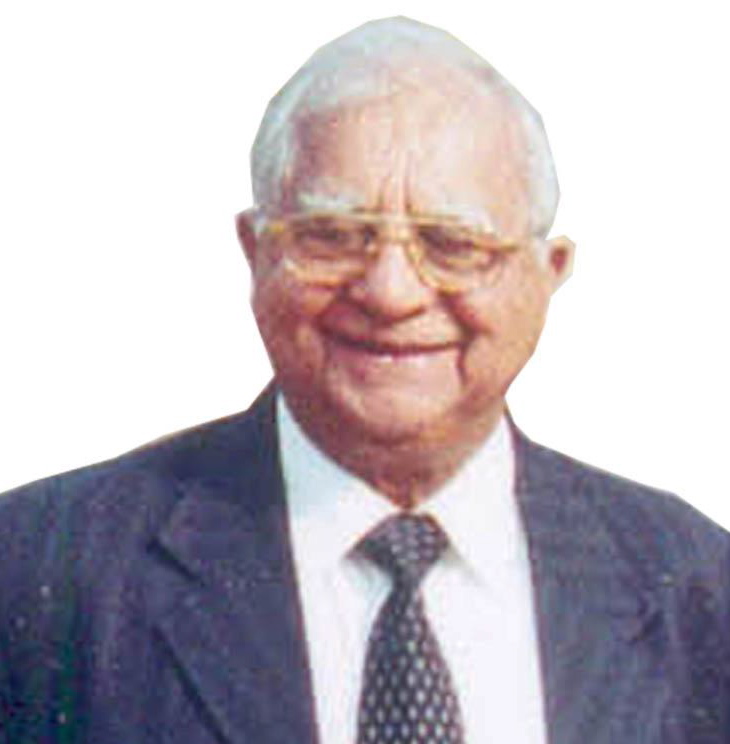
At a small gathering last year, our friend S. Ali Jafari read his essay in Urdu about my father, whom he called “Doc”. His son Salman videotaped the reading, which forms the basis of this 14-minute video I edited for 26 May 2019, ten years after Dr M. Sarwar passed away peacefully at home in Karachi, at age 79.

Continue reading

In New York, a unique India-Pakistan art exhibit

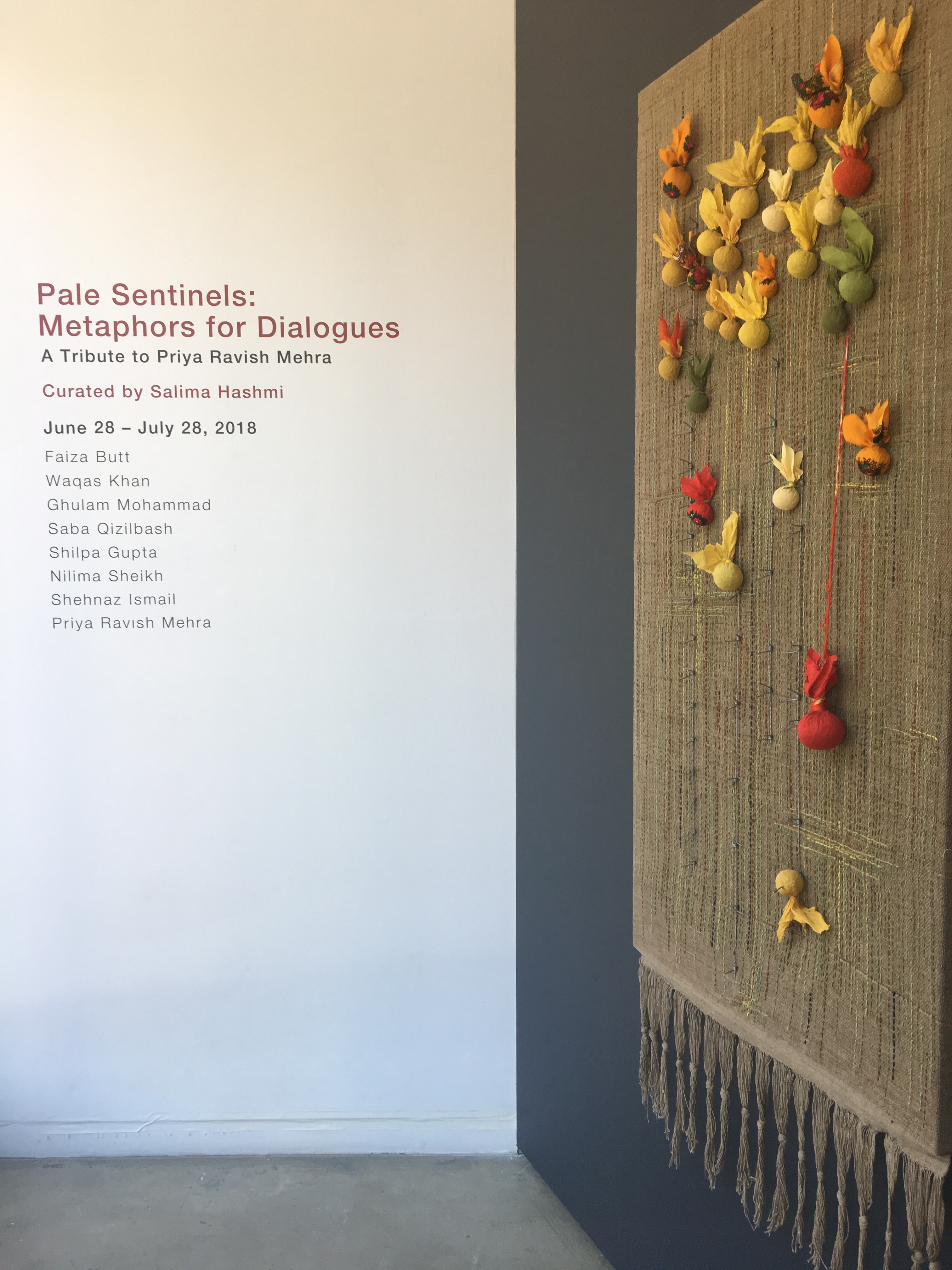
I wrote this after attending the opening of a powerful group exhibition of Pakistani and Indian artists in New York; published in The News on Sunday and Aman Ki Asha. The show is up until 28 July; must-see if you’re in the area.

In New York, a unique India-Pakistan art exhibit

entrance

Exhibit entrance: Shehnaz Ismail: What have they done to my land? 2018, Natural dyes hand woven fabric embroidered with natural dyed yarn, lentils and Tulsi seeds. Steel barbed wire, 63 x 29 in

Pale Sentinels: Metaphors for Dialogues
Curated by Salima Hashmi
June 28 – July 28, 2018
Aicon Gallery, 35 Great Jones St., New York.

A thought-provoking Pakistan-India art exhibition that opened 28 June in New York City has its genesis in a conversation last year in Lahore, between an Indian origin professor in his avatar as an art gallery owner and a Pakistani artist.

Continue reading

Amateur theatre group from Pakistan tours USA with Partition stories

My article on Islamabad-based group Theatre Wallay’s theatre project ‘Dagh Dagh Ujala’ (This Stained Dawn), that toured the US recently, published in Scroll.in today – Partition retold: A Pakistani theatre group dramatises survivor stories to shatter myths. Below, the unabridged version filed on Oct. 26.

DaghDagh Ujala-Isbd

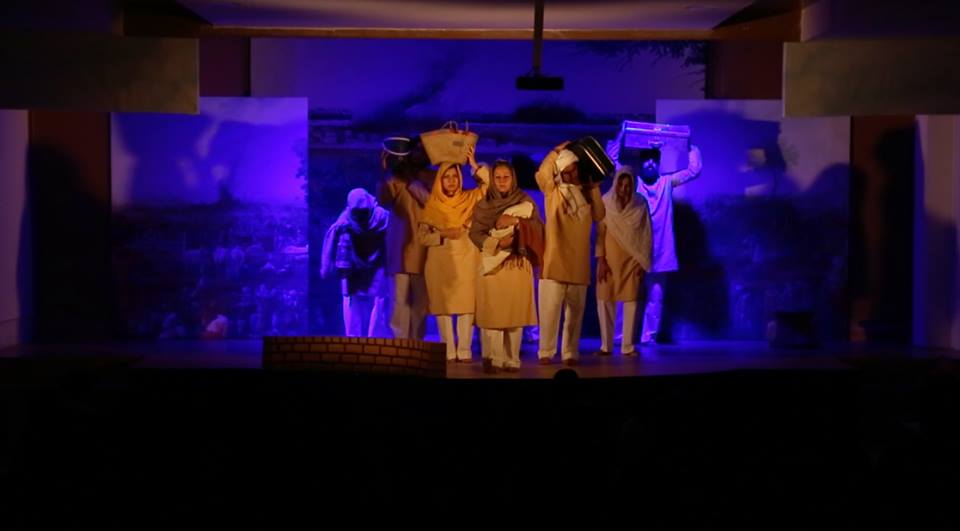
Scene from the play, Islamabad performance. Photo courtesy: Fizza Hasan

Beena Sarwar

An amateur theatre group in Pakistan has started its tour of the USA with a dramatisation of Partition stories based on interviews of Partition-survivors by group members.

The play’s title Dagh Dagh Ujala’ (This Stained Dawn) refers to the first words of the Urdu poem ‘Subh-e-Azadi’ (Dawn of Freedom) by the acclaimed poet Faiz Ahmed Faiz. Penned in 1947 on the eve of India’s Independence from British rule and its bloody partition, the poem is popular on both sides of the border. Continue reading

The ‘Bulbul-e-Kashmir’ sings for Indo-Pak peace

This personal blog post is dedicated to an inspiring couple in Mumbai and to the editor who introduced us: May our tribe increase.

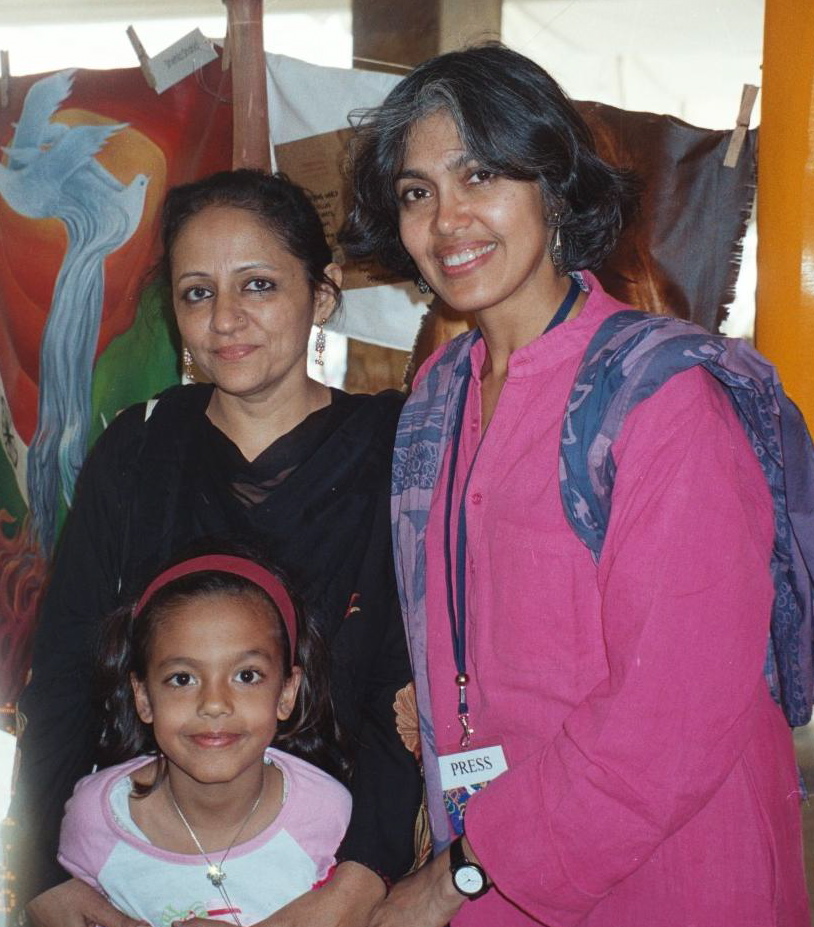
Enduring ties: Seema Sehgal at PIPFPD, Karachi, 2003, with me and my daughter Maha. Photo by Ved Bhasin.

I met Seema Sehgal in Karachi, in December 2003 at the 6th Joint Convention of the Pakistan India Forum for Peace and Democracy (PIPFPD). Ved Bhasin, the respected Editor of The Kashmir Times, Jammu, introduced us. “Seema,” he said, “is known as the Bulbul-e-Kashmir (Nightingale of Kashmir).”

Ved Bhasin: Shukriya

The petite and unassuming Mumbai-based ghazal singer from Jammu has none of the airs one might expect from a performer of her calibre. She is not only an amazing artist, but she also has a deep and abiding interest in Urdu poetry and in Indo-Pak peace. When relations plummeted between the two countries following the nuclear tests of May 1998, Seema dedicated her new album ‘Sarhad’ to peace between the India and Pakistan. Continue reading

Jashne Faiz – CFD Resolution

Karachi, you were wonderful tonight. Photo: Sabeen Mahmud

April 17: Karachi, you were wonderful tonight. Great event, attended by about 30,000 people. See the text of the resolution (long version as well as short version read out in the plenary) at the Citzens for Democracy blog.

Congratulations to the CFD team for making this happen. This is our Pakistan.

Personal Political: Faiz and ‘Anthems of Resistance’

Published in The News on Sunday yesterday: The power of ideas

Andy McCord responding to a question at the Faiz panel. Photo: Beena Sarwar


by Beena Sarwar

I am no great expert on Faiz but his poetry speaks to me, touches my heart just as much as it does every other liberal, progressive, secular-minded person I know. Perhaps his poetry, with its universal messages about truth and justice, sorrows and joys that are just simply human messages, also touches some hearts that are not progressive and secular.

There’s also a personal connection that was put in context last weekend at a discussion on Faiz at panel organised at the Left Forum (formerly the Socialist Scholars Conference that became an annual event starting in 1981). I was roped into moderating it after the original moderator David Barsamian, the well-known radio producer and journalist (and fluent Urdu speaker), couldn’t make it at the last minute. Continue reading

PWA 75th Anniversary: Fifth Progressive Writers Conference, Birmingham

5th Progressive Writers Conference – Birmingham: Celebrate the 75th Anniversary of Progressive Writers Association (PWA) – Progressive Writers Association UK in collaboration with South Asian Peoples Forum and Indian Workers Association cordially invites you to a public meeting to celebrate the 75th Anniversary of Progressive Writers Association (PWA). Saturday, 18 September 2010…

Continue reading