

It’s been a while since I posted anything to my blog or Substack. Been juggling a lot, plus working on a piece I began writing some days after attending the South Asia Literature and Arts (SALA) festival in the Bay Area a couple of weeks ago. While that percolates, I want to share three related stories — about the ‘let her fly’ concept from a wonderful book, girl gymnasts from an underprivileged area of Karachi, and how a little girl’s question helped change the gender balance in the Pakistan Air Force.
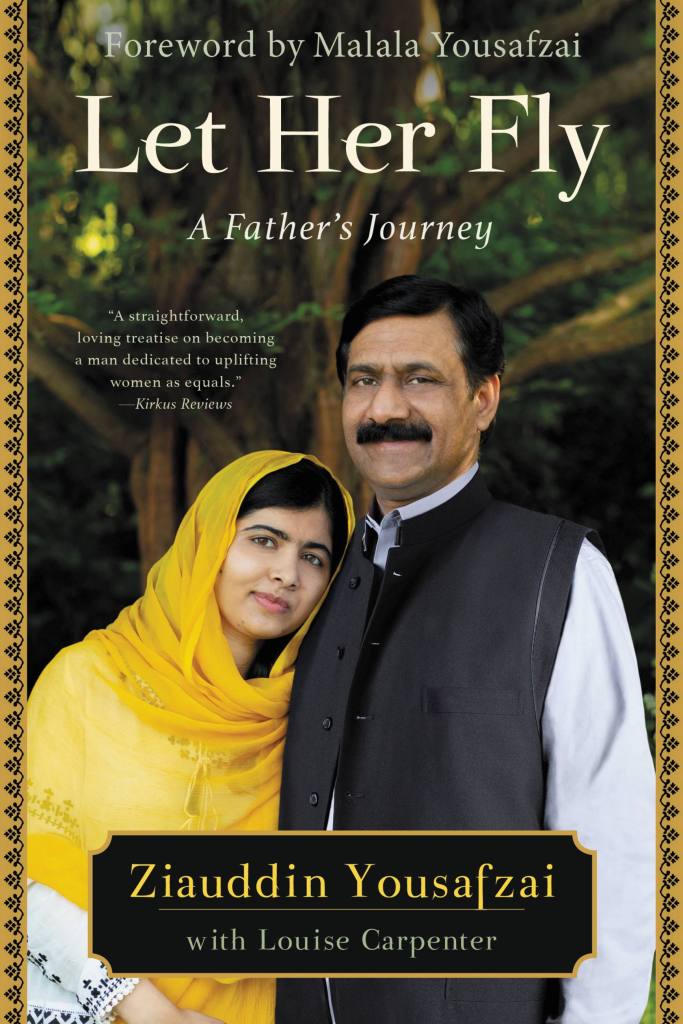
The educationist Ziauddin Yousafzai’s book ‘Let her Fly’ about his journey, which includes his famous daughter Malala — is, in my view, a must-read for anyone interested in education, gender rights, and bridge-building. One of the lessons in it is about how persisting with your own vision and holding on to your authentic self without aggression towards those who don’t agree with you or even those who attack you – something we try to embody at Southasia Peace and our syndicated features service Global Southasia.
It’s a book I’ve assigned my journalism students at Emerson, and last semester at IBA Karachi, since I first heard about it in 2018, when I heard Ziauddin Yousafzai speak at a class at Harvard that the professor kindly allowed me to sit in on.
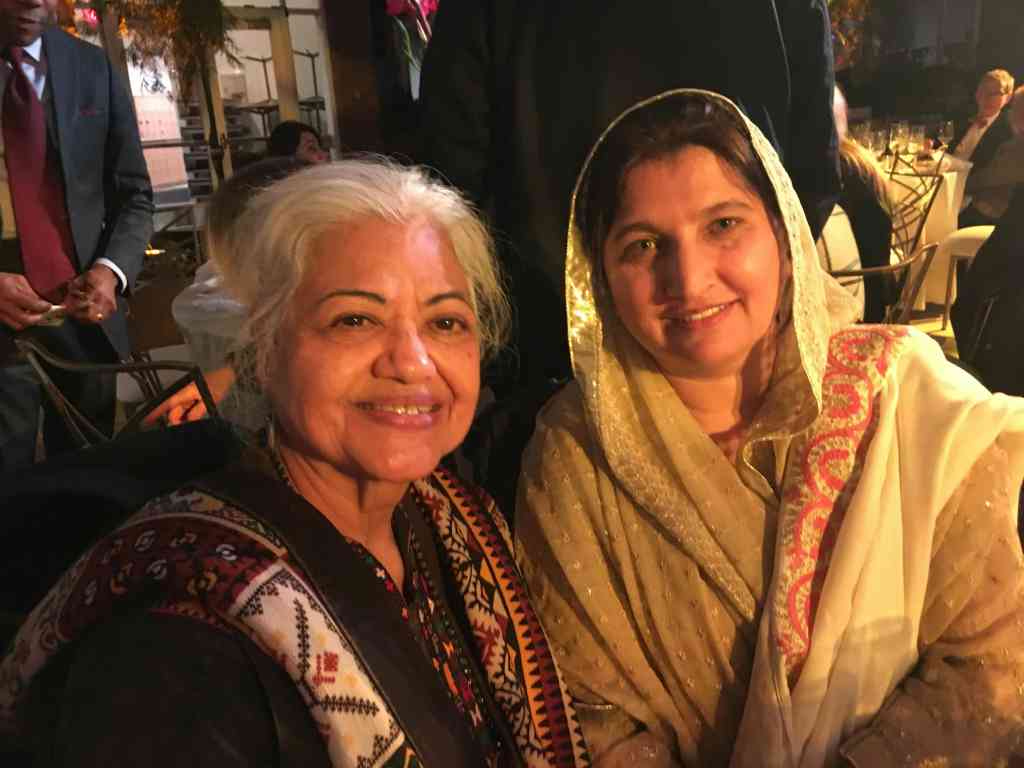
The second is the Tribeca documentary, The Gymnasts of Fisherman Colony, about on the girl gymnasts of Machar Colony, near Lyari, Karachi, with whom the human rights lawyer Tahera Hasan has been working for years – someone I’ve long admired for her courage and commitment. I saw the girls in action at the Indus Valley School in Karachi, May, 2023, and was blown away (sharing a couple of photos below)
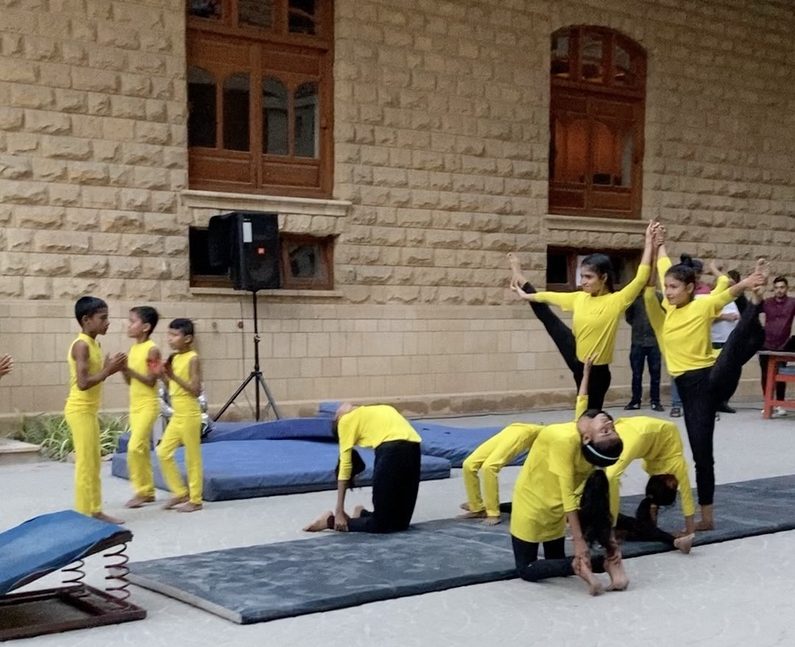
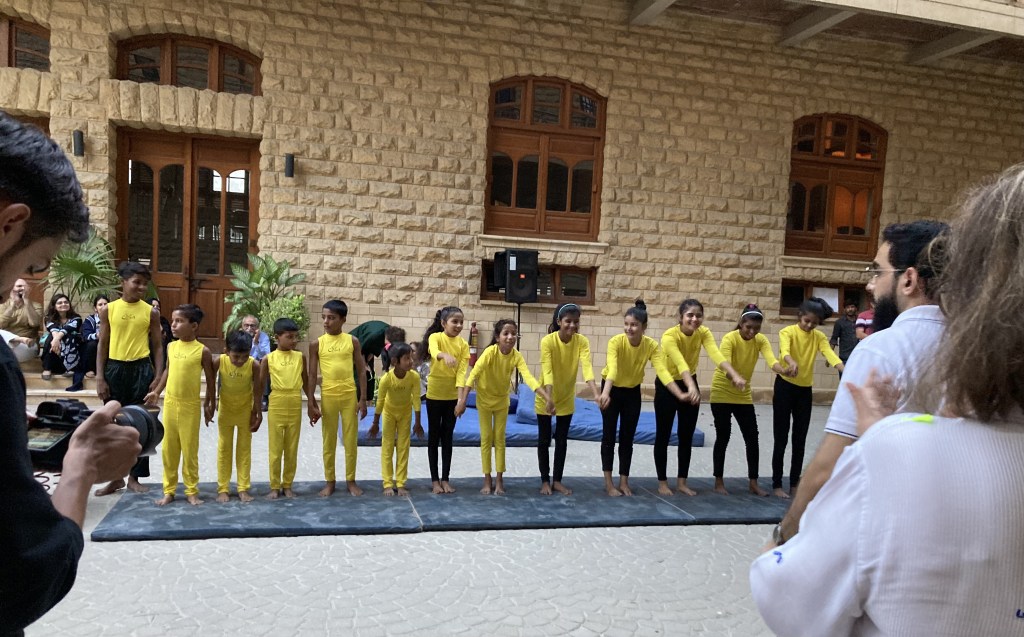
The film is directed by three-time Emmy-Award winning filmmaker, Habiba Nosheen and Executive Produced by Malala among others, filmed in a place where girls and sport rarely mix. For a list of screenings in cities around the U.S. and Canada go to this link. For free tickets to the Q&A Screenings in NY, LA, San Francisco, San Rafael, Boston, fill in the form here (thanks Mitra Kalita, URL Media for the opportunity). Trailer below.
The third is an article below by someone I am privileged to have met earlier this year in Islamabad, Air Cdre Pervez Akhtar Khan, who retired from the Pakistan Air Force in 2003. We had been in touch with since I tracked him down after his Facebook post “Salute Across the Skies” went viral – it was a tribute to an Indian Air Force pilot who had died in a crash during an air show in Dubai in November 2025. He has since written a couple of pieces for our syndicated features service Global Southasia.
Here’s another piece he wrote, shared via WhatsApp recently, that I found informative and moving. Republished here with permission.
Fly, My Girl, Fly
How a little girl’s question helped change an Air Force tradition
By Air Cdre Pervez Akhtar Khan (Retd), Pakistan Air Force
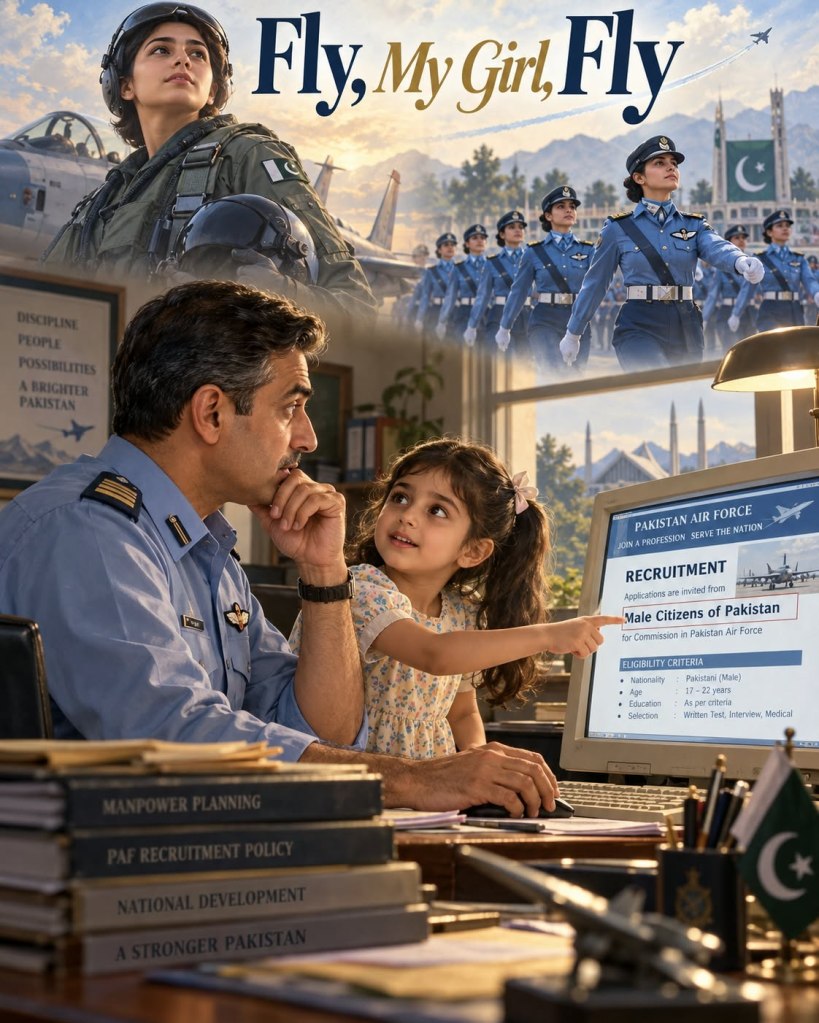
I was sitting before my computer, preparing a recruitment advertisement for the General Duty Pilot branch of the Pakistan Air Force. One familiar line read: “Male Citizens of Pakistan.”
Suddenly, a little voice came from behind my chair. “Papa, why only male citizens?”
It was my five-year-old daughter, Hadia.
I responded like a good bureaucrat, explaining PAF regulations, physical requirements, the hazards of fighter flying and the demands of military service.
She was unimpressed. “But Papa, I can do all that too!”
Each explanation invited another question. I gradually realised that I was defending a blanket exclusion without having seriously examined its justification.
Finally, I put my arms around her, kissed her head and promised that when she grew up, she too would have the opportunity to fly a fighter aircraft in Pakistan’s skies.
She believed me completely.
With a little sigh of happiness, she hopped and skipped into the next room to engage in kushtee—wrestling—with her older brother, Zulu Khan.
For her, the matter was settled.
For me, the work had just begun.
The Algerian experience
Between 1979 and 1981, I served as a flying instructor at the Algerian Air Force Academy.
Our squadron included women cadets training to become military pilots. Two remain particularly vivid in my memory: Souab Kasoul and Hakima Abdessamad. Their assigned instructors were my Pakistani coursemates, although I had opportunities to fly with both.
They were capable young aviators. Kasoul later survived a serious MiG landing accident and returned to flying, while Hakima particularly impressed me with her flying abilities.
Their induction had been a political decision, opposed by some within the Algerian Air Force. The objections concerned physical suitability, operational demands, marriage and childbearing.
These were not all imaginary difficulties. Aviation imposes unforgiving physical and technical requirements. Kasoul’s accident itself illustrated the importance of cockpit ergonomics.
But there was a distinction between legitimate operational limitations and assumptions that excluded women simply because they were women.
Algeria had demonstrated that the barriers were not necessarily insurmountable. Hadia’s question gave that lesson a personal urgency.
Changing the rules
As Director Recruitment, I recommended beginning with the PAF’s ground branches rather than fighter aviation.
Fighter pilots constitute only a fraction of an air force. Engineering, logistics, administration, psychology, education and numerous other professions are equally essential.
My first argument was constitutional. Pakistan’s Constitution recognised equality before the law and envisaged women’s participation in national life.
I warned that one day a qualified Pakistani woman might challenge the words “Male Citizens Only” before the Supreme Court. What would be our justification?
My colleagues raised concerns about marriage, pregnancy, maternity, postings and career continuity.
I did not dismiss them. Such issues required careful operational and administrative arrangements. Professional standards could not be compromised, nor could the cultural realities of our society simply be wished away.
But neither should these difficulties become permanent excuses for exclusion.
My approach was gradual, practical and intended to produce lasting change.
I also advocated permanent commissions so that women could pursue full professional careers and advance within their respective branches.
The first women inducted under the initiative were psychologists. Other branches followed.
Two successive Chiefs of Air Staff supported the effort: Air Chief Marshal Farooq Feroze Khan and Air Chief Marshal Abbas Khattak, the latter particularly enthusiastically.
Without their support, and the cooperation of many others, the initiative might never have progressed beyond discussion.
“Better than the boys!”
A day before the first batch of women officers was to receive its commissions at a separate ceremony, I telephoned the Air Officer Commanding at the PAF Academy.
“How are the girls doing?” I asked.
“Better than the boys!” came the reply.
“Then why are we commissioning them separately? Why not include them in the main graduation parade?”
At the next graduation, women stood shoulder to shoulder with their male counterparts on the main parade square.
Today, nobody considers this remarkable.
But normality has a history.
It took more than amended regulations to make that scene possible. We had to overcome institutional habits, cultural reservations and deeply held assumptions.
Seven minutes with Benazir Bhutto
On 7 September 1996, the PAF hosted an outdoor dinner at its Golf Club, attended by President Farooq Leghari and Prime Minister Benazir Bhutto.
The Prime Minister appeared surprised to see women officers wearing Air Force blue in the reception line. They belonged to ground branches, although their insignia could perhaps have been mistaken for flying wings.
Air Chief Marshal Abbas Khattak called me over and introduced me as the Group Captain who had initiated the debate leading to their induction.
He then moved away to attend to other guests.
Benazir Bhutto asked me:
“What inspired or motivated you to think of inducting women into the PAF?”
I told her about my Algerian experience.
She seemed a little disappointed. Perhaps, as the first woman Prime Minister of a Muslim-majority country, she had expected me to cite her example.
A more diplomatic officer might have recognised the opportunity!
Nevertheless, we continued talking for seven or eight minutes, standing in the middle of a circle of senior military officers. She listened with evident interest.
Later, someone asked me in Punjabi: “Kee gallan ho rahiyaan sun?” (What were you two discussing so earnestly?)
Earlier, the Prime Minister had pointed out clouds gathering behind the Margalla Hills to the Air Chief. Her observation proved prescient.
Midway through the outdoor presentation, a thunderstorm swept across the venue, forcing us to move to the main mess building on the hill.
It was an evening difficult to forget.
Beyond the cockpit
Women pilots joined the PAF later, attracting deserved public attention. But the more fundamental reform was the opening of professional careers across the service.
The PAF’s experience also contributed to the broader expansion of women’s opportunities in Pakistan’s armed forces. The Army and Navy subsequently widened participation in additional branches, building on their existing traditions of women’s service.
This was never simply about women becoming fighter pilots.
It concerned opportunity and choice for more than half of Pakistan’s population.
Not every woman wishes to become a pilot, engineer, soldier or scientist. The important thing is that she should have the opportunity to pursue her chosen profession, provided she meets its legitimate requirements.
The promise
Hadia never became a fighter pilot. Asthma prevented her from following that particular dream.
Instead, she pursued another calling. Today, she is Dr Hadia Akhtar Khan, Assistant Professor of Anthropology at the University of Lethbridge, Alberta, Canada.
Sometimes I return in my thoughts to that afternoon: the computer screen, the recruitment advertisement, my bureaucratic explanations and a little girl who refused to be convinced.
I remember her absolute faith in her father’s promise, her sigh of happiness, and the way she skipped away to wrestle with her brother.
Many people contributed to the changes that followed: the Air Chiefs who supported the initiative, the officers who implemented it, the instructors who trained the women, and above all the women who proved their abilities.
No lasting institutional change belongs to one individual.
But I remain grateful that a five-year-old girl’s question encouraged me to challenge something I had long taken for granted.
She never flew a fighter aircraft. Yet, in her own way, she helped open the skies for other daughters of Pakistan.
I had made her a promise.
I believe I kept it.
Fly, my girl, fly.
The sky was never meant for boys alone.
That’s all for now folks. And Lula won!
Filed under: Art and activism, Education, Gender, Human rights, Pakistan | Tagged: Activism, democracy, Human rights, Pakistan, philosophy, poetry, Politics, Religion, writing |


Leave a Reply