Remembering Shahab Ahmed

IMG_8355

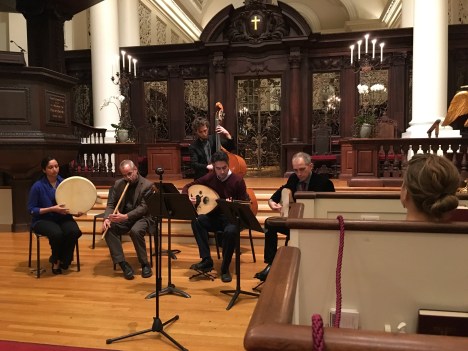
The Orkestra Marhabba: haunting Turkish sama’a music. 

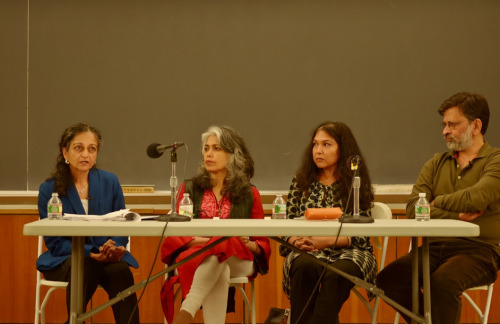
Colleagues, students, family and friends of the late Shahab Ahmed gathered on Nov 15  evening at an elegant and dignified memorial where speakers remembered him as a friend, a brother, a scholar, a poet, a translator and a seeker of Truth (his first book, What is Islam? has just been published).  Continue reading

Pakistani scholar Nasser Hussain laid to rest

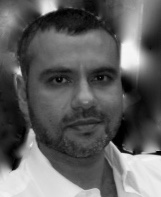
Nasser HussainSo sorry to have to share this news, about the younger brother of a childhood friend. Obituary below. Also see this article by one of his former students that so elegantly sums up his passions in life.
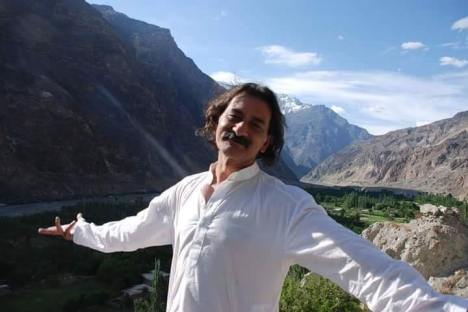
BOSTON: Karachi-born Nasser Hussain, professor of law, jurisprudence and social thought at Amherst College, USA, passed away in the early hours of Nov 9 after an extended illness, at the residence of his brother Omar Hussain in the Boston area. He was 50.

Scholars, friends and family from around the world including his elderly mother Sultana Hussain from Karachi, gathered for his funeral on Friday. His father Captain (Retd.) Tajammul Hussain, Pakistan Navy, passed away in January 2014. Continue reading

Haider, jigar, are you at peace now?

Haider in Gilgit-fb pageMy article on a journalist, activist, humanist, friend, eternal optimist and conflicted human being who left us forever recently. Illustrations by Feica. Scroll.in published a slightly abbreviated version titled ‘Journalist, optimistic rebel who stood up to General Zia’s excesses’, breaking the text up with sub-heads that I’ve used in the full text below. Their intro: “Haider Rizvi was a Pakistani journalist and activist who passed away in Lahore on October 29. His three-decade-long journalistic career began in Pakistan. He moved to the US in the mid-1990s and covered the United Nations, before returning to Pakistan in 2013 and taking up a job as a lecturer. He was 52.”
Continue reading

‘More Than My Religion’: Reclaiming the narrative

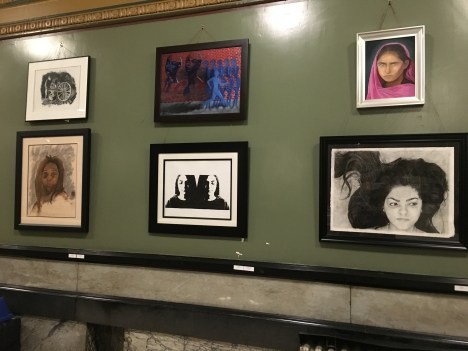
imageMy article for The News on Sunday, Nov 8, 2015 on the ‘More Than My Religion’ (Oct 8-Nov 17) at City Hall, Providence RI – a unique exhibition showcasing art by American Muslims that aims to break stereotypes and build bridges — and help the homeless. Continue reading

A Spanish love song from Quetta

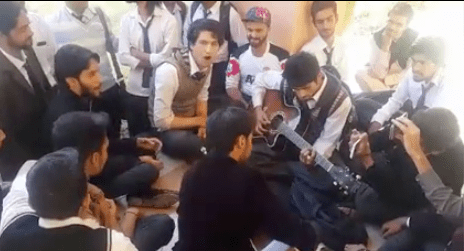
Still from the video of an impromptu performance by students in Quetta

Still from the cellphone video of an impromptu performance by students in Quetta.

This little music video just made my day when a friend sent it to me yesterday: a Spanish love song by his cousin Hamza Khan, with co-singer Syed Zaryab and guitarist Naveed Ahmed. Students at Balochistan University of Information Technology Engineering and Management Sciences, BUITEMS, a leading private university in Quetta, they are also members of the Artists’ League Quetta (ALQ), a platform for the arts started by fellow student and self-taught dancer Farrukh Shaikh earlier this year. The group includes students from different departments in the University – including girls.

Continue reading

Amateur theatre group from Pakistan tours USA with Partition stories

My article on Islamabad-based group Theatre Wallay’s theatre project ‘Dagh Dagh Ujala’ (This Stained Dawn), that toured the US recently, published in Scroll.in today – Partition retold: A Pakistani theatre group dramatises survivor stories to shatter myths. Below, the unabridged version filed on Oct. 26.

DaghDagh Ujala-Isbd

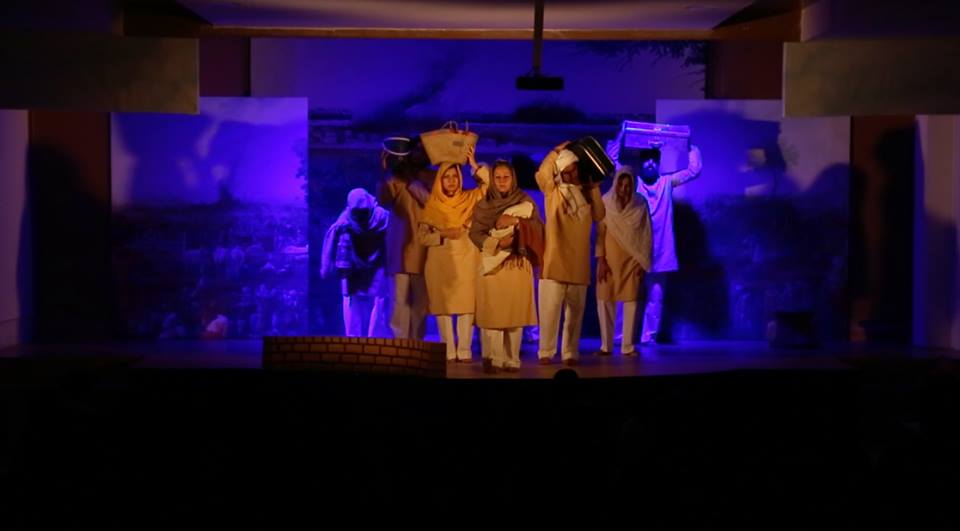
Scene from the play, Islamabad performance. Photo courtesy: Fizza Hasan

Beena Sarwar

An amateur theatre group in Pakistan has started its tour of the USA with a dramatisation of Partition stories based on interviews of Partition-survivors by group members.

The play’s title Dagh Dagh Ujala’ (This Stained Dawn) refers to the first words of the Urdu poem ‘Subh-e-Azadi’ (Dawn of Freedom) by the acclaimed poet Faiz Ahmed Faiz. Penned in 1947 on the eve of India’s Independence from British rule and its bloody partition, the poem is popular on both sides of the border. Continue reading

‘Brain drain’ — a blessing or a curse?

Brain drain — Blessing or curse?
Read the full article here, as well as the accompanying pieces by Raza Rumi and others.

Lift the goodwill: Indians, Pakistanis find creative ways to protest hate, violence, bigotry

Dunkin' Donuts sign in Islamabad with the Pakistani and Indian flags: peace meals

Dunkin’ Donuts sign in Islamabad with the Pakistani and Indian flags: peace meals

The right-wing Shiv Sena’s recent vigilante actions targeting Pakistani musicians, sportspeople, and diplomats in Mumbai have led to embarrassment and widespread condemnation in India, and of course to the right-wing in Pakistan gleefully pointing fingers at India.

There have also been compassionate and creative responses from Pakistanis, who have all too often suffered the poison of bigotry and injection of religion into politics.  After a Pakistani family had to spend the night on the footpath in Mumbai because they lacked the requisite papers (Form C) allowing them to stay in a hotel, Pakistani entrepreneur Iqbal Latif responded by offering free meals to Indians visiting Pakistan at his Dunkin’ Donuts franchises. His gesture was widely reported and drew a massive response in India.

A friend in India points out that the hyped up anti-Pakistan protests are a predictable forerunner to the upcoming state elections in Bihar and Uttar Pradesh that are critical for the ruling coalition in particular. That may well be the case, but meanwhile, Indians are also finding ways to creatively and peacefully express their distaste for bigotry and hooliganism. After the Sena successful blocked respected Pakistani musician Ghulam Ali’s concert in Mumbai, one Indian made a painting that he tweeted:  Continue reading

The real cost of conflict in South Asia

My article on the symposium I attended last week at University of Texas, Dallas, published in Aman ki Asha

The real cost of conflict in South Asia

Peacetalks symposium: Raza Rumi, Pritpal Singh, Amitabh Pal, Nyla Ali Khan. Photo by Beena Sarwar

By Beena Sarwar

Born in the Rawalpindi area in 1943, Suresh Bakshi was about four years old when his family left their ancestral home after Partition in 1947. But he still remembers and has strong feelings for the place where he was born.

These feelings created a powerful conflict when, as an Indian Army soldier, he fought in the 1965 war against Pakistan. Continue reading

Rahul Roy: Addressing “masculinities” through film

My blog post for Harvard South Asia Institute on Rahul Roy’s documentary film series on ‘masculinities’
Filmmaker Rahul Roy, right, captures in his films the nuances, masculinities and realities in a slice of urban life over the years.

Filmmaker Rahul Roy, right, captures in his films the nuances, masculinities and realities in a slice of urban life over the years. Photo: Ashima Duggal

By Beena Sarwar

Indian filmmaker Rahul Roy first met and began filming four young men in 1999 for his documentary film When four friends meet, interacting with them and filming for about two years in the Delhi slum where they live. He stays in touch with the four – Sanjay, Sanju, Kamal and Bunty – over the years and 12 years later, returns to do a sequel titled Till we meet again. Continue reading