As the newly-sworn in United States President Joseph Biden begins his tenure, he has a lot of salvaging to do from the wreckage left by his predecessor.
One of the more disturbing messages arising out of the attack by violent pro-Trump insurrectionists at the US Capitol on January 6 involved frightening threats to a free press. Scrawled on a door at the building were the words: “Murder the Media.”
That pithy, vile phrase represented the raw culmination of five years of rhetorical attacks by Donald Trump and his political allies against critical media coverage.
The doors to the U.S. Capitol right now, as members of the mob that stormed it a couple of hours ago file out, without police escorts or handcuffs: "Murder the Media." They don't like that we've been watching and reporting, and will continue to do so. pic.twitter.com/qtqNR26uMd
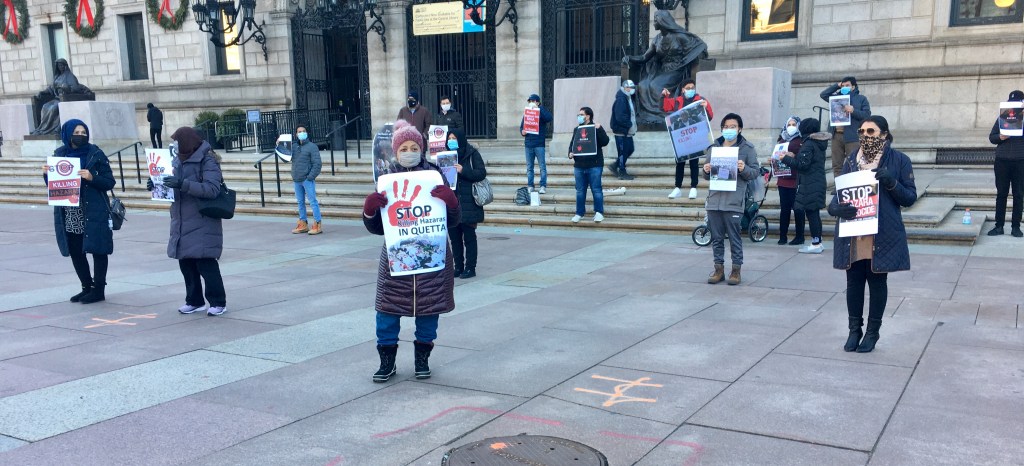
#BostonWithHazara: Silent vigil at Copley Square in below freezing temperature. My mother Zakia Sarwar in the middle with her pink pom pom hat.
PERSONAL POLITICAL
Even as media attention focused on the goings on at America’s capital where protestors shocked the world by storming the Capitol Building (nothing shocking for Pakistanis used to such attempts to subvert democracy) another drama — tragedy rather — unfolded in Quetta, Pakistan.
This too is not new. The target killings. The silent, and the not-so-silent protests. Standing in front of the Boston Public Library at Copley Square in the freezing cold, in solidarity with the Hazara protestors who are also out there in below freezing temperatures of Quetta.
There have been over 300,000 Covid-related deaths this year in the USA alone, and the numbers are still rising as many deniers refuse to take basic precautions like wearing masks. Asymptomatic carriers — no signs of illness — can be infected and infect others. The second wave is well under way. So many losses.
Here’s a recent oped by pediatricians in the Boston area, pleading for the public to stay home: We’re Pediatricians In A Pandemic. We Shouldn’t Be Taking Care Of Your Grandparents. A new confusing disease they’re seeing is multisystem inflammatory syndrome in children, MIS-C. In Karachi, Dr Darayus Gazder at Ziauddin Hospital describes the same thing, seeing children “who post-COVID develop multisystem inflammatory syndrome, which is worse than adult onset COVID” (emphasis mine).
This has been a hard and heavy year. #Gratitude for all we still have. #Hope#Love
Tweet after hearing of another tragedy in the family: Sajid Rizwan Ansari, 36, died in his sleep of a heart attack
So many personal losses this year. Grateful to have spent time with friends and loved ones in Pakistan last winter. Several have since departed this world. There’s sadness also about the departure of some whom I hadn’t seen in years, like my second cousin Khalid Afzal in London, an early victim of Covid-19. In Allahabad, family friend and mentor Comrade Ziaul Haq (Munnan Chacha) passed on in November, joining his wife Dr Rehana who departed a week after his 100th birthday barely a month earlier. My mother’s college friend Inkesar Nawaz died suddenly in Lahore of a heart attack.
Saleem Asmi: Portrait by Sharjil Baloch, 2014-2015.
By Beena Sarwar
His old friend S. M. Shahid termed Saleem Asmi a ‘Marxist Sufi’ in his compilation of biographical essays, ‘Living Souls: Memories’. Asmi Sahib would typically brush aside the accolades that came his way, not because he didn’t appreciate himself but because he had no false pride, false humility, or a shred of hypocrisy.
I can imagine his chuckle at the couplet by his favourite poet initially chosen by family and friends to inscribe on his gravestone:
Ye masaail-e-tassawuf, ye tera byan Ghalib Tujhey hum vali samajhtalay jo na baada khwar hota
The way you talk of philosophy Ghalib, the mystical way you explain it You would have been considered a saint yourself, had your drinking been less.
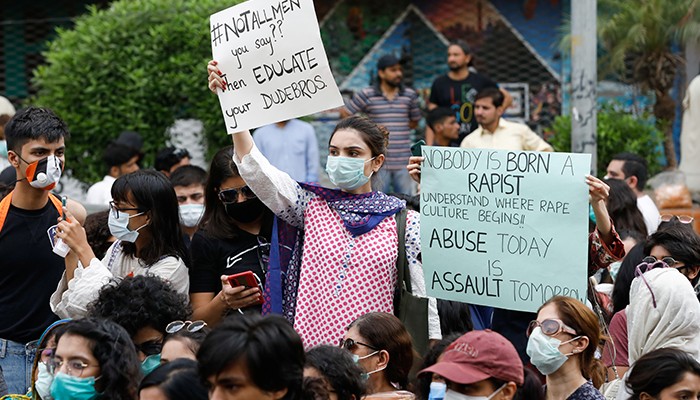
Protest in Karachi over the ‘motorway gang rape’ incident. 12 September 2020. Reuters photo.
I haven’t updated this site for a while, caught up with teaching two journalism courses at Emerson College this semester – prepping for the courses, training for the unprecedented online situation, then assignment-setting, student feedback, grading – it’s been hard to do much else. But when Mehr Mustafa at The News on Sunday asked me to contribute to their special report on rape culture, I couldn’t refuse. Was up till 3 am to meet the deadline for the piece – The outrage culture masks a landscape of pervasive abuse (TNS Special Report, 27 September 2020).
They asked me to define ‘rape culture’ as a lens to view the issue as a social/political construct rather than individual/isolated events, and to address the systematic nature of sexual violence. That rang some bells. Among the things it got me thinking about was systemic oppression – visible in the racial injustice in the USA highlighted over recent months. I revisited the piece I did last year, Moving towards a cycle of healing, focusing on the need for preventive rather than reactive measures and the concept of restorative rather than retributive justice (thanks Anita Wadhwa and Dina Kraft for expanding on my understanding of this). And just found my 2012 post: We must move beyond outrage against selected rape cases.
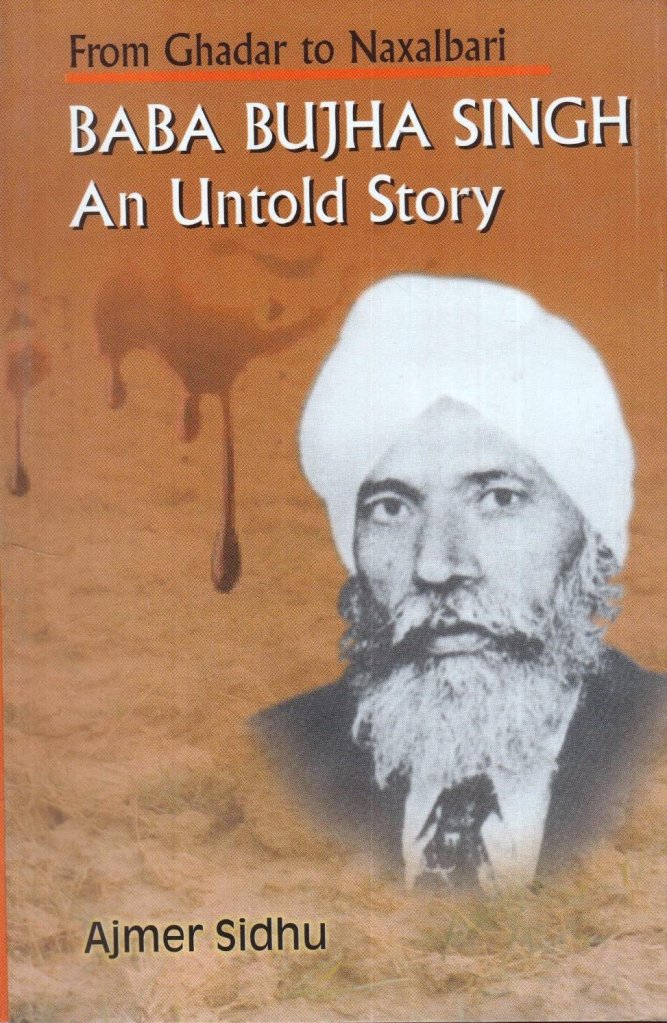
Sharing below an informative, moving and insightful piece by friend Jaspal Singh in Cambridge commemorating the fiftieth anniversary of Baba Bujha Singh’s extrajudicial murder in Punjab, India. The story is reflected in other instances of police brutality elsewhere too. And so is his comment on democracy. He regularly dispatches his ‘Reflections’ to friends via email; a list I feel privileged to be on. Over to Jaspal ji:
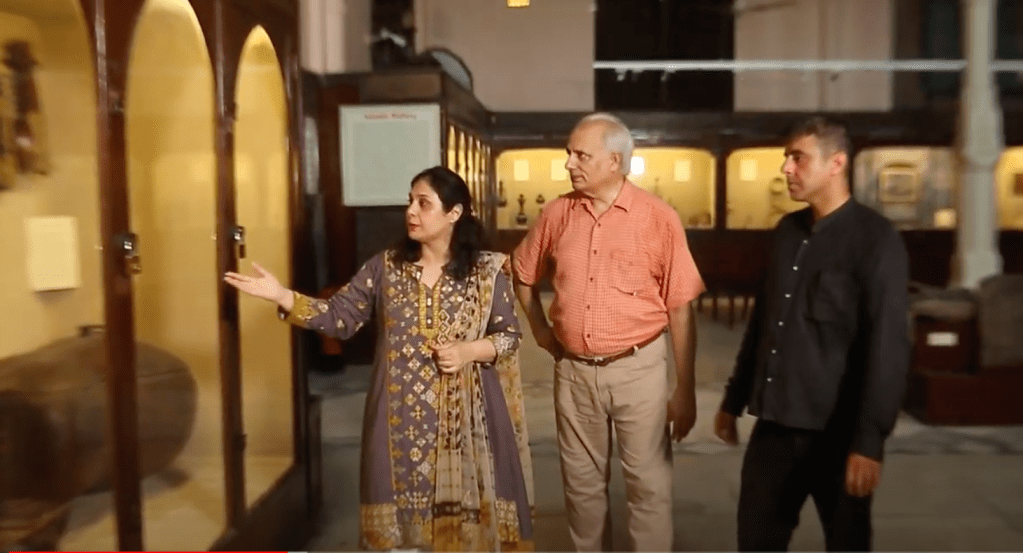
Sumaira Samad, Shahid Nadeem, Anwar Akhtar at Lahore Museum (screengrab)
Anwar Akhtar is a Pakistan-origin cultural activist based in London who started The Samosa many years ago — think cross-culture, activism, media, teaching. We had met several years ago and reconnected recently when he reached about his intriguingly titled documentary, Pakistan’s Best Kept Secret. I invited him to write about it for Aman Ki Asha. Sharing the documentary, as well as his piece, here:
The Pakistan-India People’s Forum for Peace and Democracy (PIPFPD) has begun a series of online discussions aimed at reclaiming the people’s narrative. The PIPFPD The page has several video excerpts from these and other discussions.Below reports on both discussions by Neel Kamal, published in Times of India and Aman Ki Asha.
Updated screenshot of my piece in Washington Post. Editors replaced the earlier photo after…
…I conveyed the feedback that he doesn’t normally wear a ‘topi’ (religious skull cap) and this photo highlighted religiosity in Pakistan which is not relevant to the topic.
But even if he is granted bail now – after over 100 days of being denied his liberty and that too at a time of Covid — this will be a minor victory achieved at a huge cost, not only for Rahman, but also for media freedom and democracy in Pakistan.
This is a follow up to my earlier post about physicians of Pakistani and Indian origin, already in the frontlines of the Covid19 battle in the US, stepping up in the war against a longer-running pandemic, racism. We know that racism is not limited to the US. In our home countries in South Asia, it is expressed as casteism and oppression of vulnerable communities.