‘Democracy in Debt: Sri Lanka Beyond the Headlines’ wins two awards at Jalgaon International Film Festival
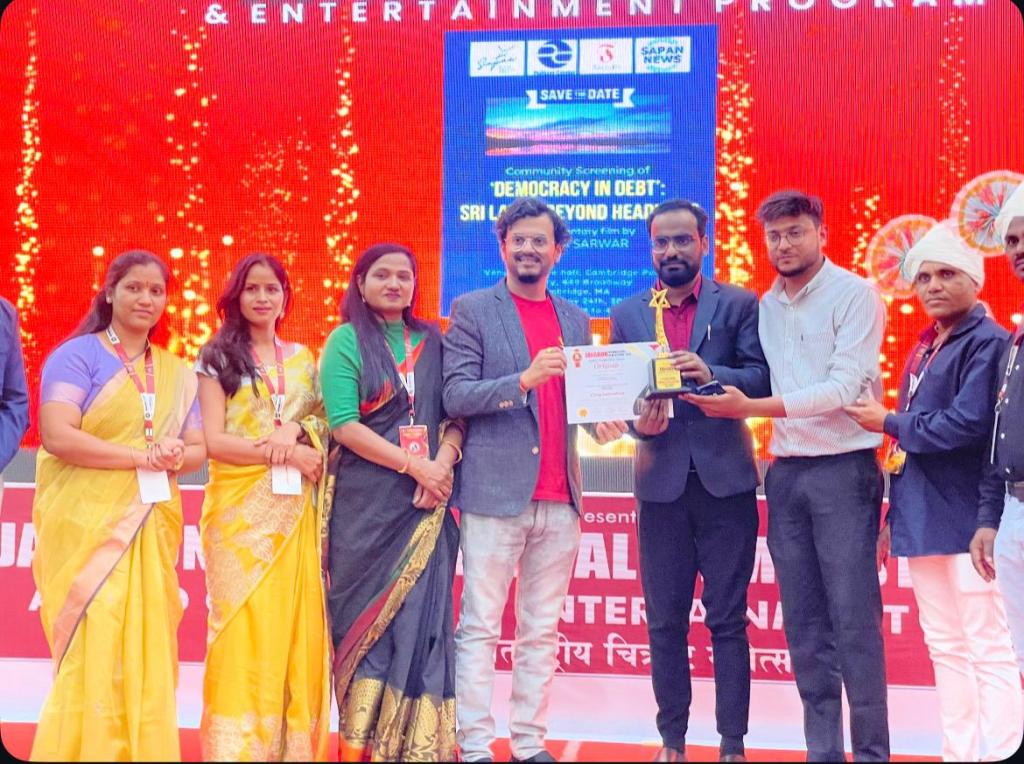
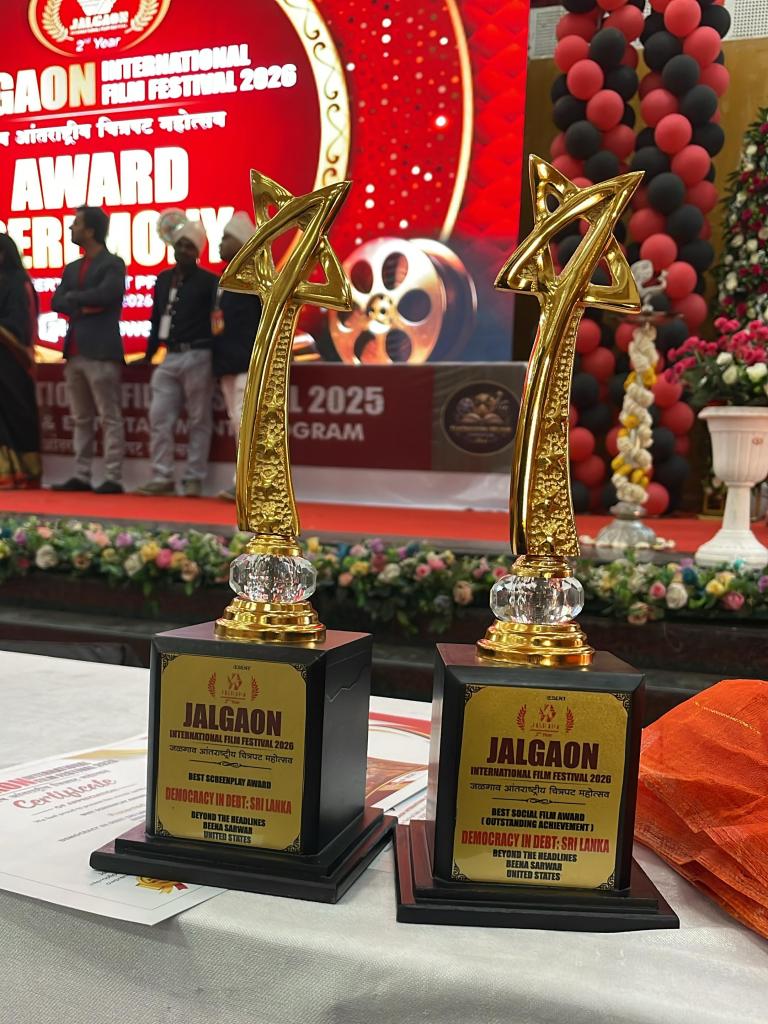
The world is in turmoil. And we can still celebrate that our Pulitzer Center-supported documentary ‘Democracy in Debt: Sri Lanka Beyond the Headlines’ received two awards at the Second Jalgaon International Film Festival, in Aurangabad (now Chhatrpati Sambhajinagar), India. at a ceremony on Sunday, 1 March 2026, for Best Social Film (Outstanding Achievement), and Best Screenplay.
The 24-minute film explores the situation two years after the island nation’s economic collapse. We filmed at a remote, ancient village (puranagama) in Sri Lanka’s North-Central Province, talking to farmers, teachers, and school children, then to policy makers, economists and then Prime Minister in the capital Colombo.
Educational and political activist Mirza Dawood Azad and engineer Shoeb Shah receiving the awards on behalf of Sapan. Photo: Supplied
Guest post: A personal tribute to Karamat Ali (19 August 1945 – 20 June 2024) by Mandira Nayar in Delhi, for Sapan News
Karamat Ali was many things but for Mandira Nayar he was always the person who returned her grandfather Kuldip Nayar to Lahore, where he was born and which he considered home. The relationship between them defies labels but it has a bond that is deep and unbreakable, stronger than many relationships with names, she writes:
There are many words for friendship. Arabic has twelve. You can choose from friendships of different shades — the intense saqeeb, a true friend; sameer, someone who you like to have a conversation with, or the casual zameel, an acquaintance.
Announcement from Pakistan India People’s Forum for Peace and Democracy for an online memorial
Memorial meeting at Arts Council of Pakistan, Karachi, for Karamat Ali
Comrades at the Human Rights Commission of Pakistan in Lahore remember Karamat Ali
English has just the one — a bland ‘friend’. The short dost (friend) in Hindustani encompasses in its tiny frame a sort of bro-code for the intense relationship that Hindi film songs refer to, between Maana Dey’s ‘Yaari hai Imaan’ (My friend is my faith) to Sholay’s anthem ‘Yeh Dosti Hum Nahi toRe.nge‘ (This friendship we will never abandon).
‘Dost’
So I struggle to find a word to describe the relationship between Karamat Ali, labour leader, peace activist, revolutionary, lover of music, and my grandfather Kuldip Nayar, journalist, peace-activist and fellow dreamer. And by extension, my relationship with Karamat Sahib.
This relationship without a name has a bond that is deep and unbreakable, stronger than many relationships with names.
Karamat Ali was many things but for me he was always the person who returned my grandfather to the home he was born in.
I have known Rob Vreeken for over 30 years, since we met in Amsterdam in the early 1990s. He worked at the leading Dutch daily newspaper De Volkskrant, that we visited — women journalists from Pakistan, Sri Lanka, India, and Indonesia, in The Netherlands on a month-long fellowship. I have lost contact with the other fellows but Rob and I stayed in touch on email.
The last time we actually met was when he traveled to Pakistan as a foreign correspondent, soon after my daughter was born. He visited our home in Karachi and met my family, thoughtfully bringing along a baby gift. He has also been very supportive of my ventures, from Aman ki Asha, to the Southasia Peace Action Network and Sapan News, , the media outlet I started in August 2021.
Since ‘retiring’ from De Volkskrant a few years ago, Rob has been the paper’s Istanbul correspondent. After the Oct. 7 attacks, he also reported from Israel and the West Bank.
November 11, 2023: Rob Vreeken with Palestinian activist Saleh Diab in East Jerusalem. Photo by Faiz Abu Rmeleh
In November, he shared some photos which I thought would be interesting for my students at Emerson College, where I taught a Global Journalism course last fall. He subsequently shared his experiences with my students, who really appreciated his insights – like, it’s okay to say “I (or we) don’t know” rather than rushing to provide opinion or information, and the importance of acknowledging mistakes that we as journalists and human beings make.
I’m sharing Rob’s first piece written specially for Sapan News. It is a clear and fair analysis of the ICJ hearings at the Hague that he watched live from Istanbul.
You can see the photos I shared with my class in a slideshow embedded in his piece at the Sapan News website. The article, like all our features, is available for syndication with due credit to Sapan News – http://www.sapannews.com.
Lawyer Vusi Madonsela (left)of the South Africa legal team; looking at him Tal Becker (right), head of Israeli team. Photo by Rob Vreeken, Istanbul.
Check out the Sapan News website and contribute to help support nonprofit journalism. All contributions are tax-deductible, thanks to Sapan News’ fiscal sponsor Tasveer.
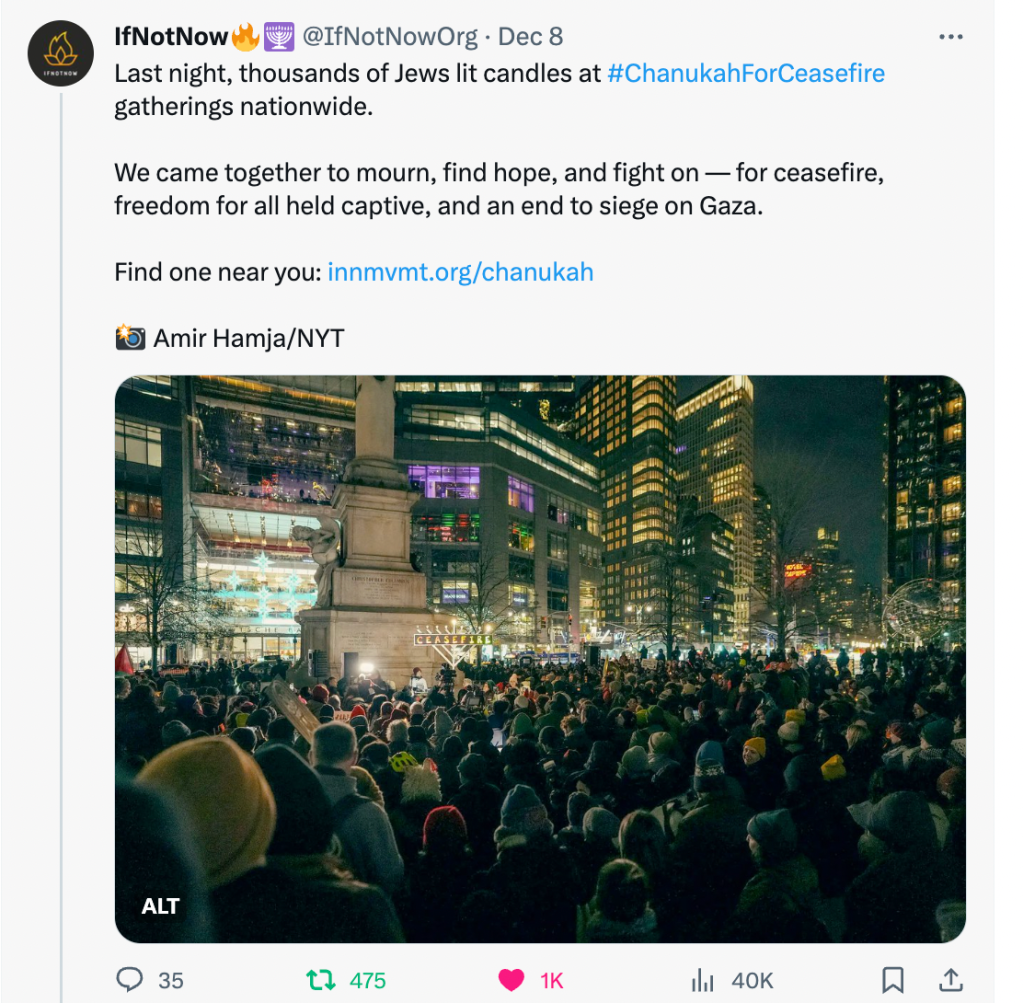
Greetings to those observing Hanukah and salute to those participating in #ChanukahForCeasefire demonstrations around the United States. Thousands of Jews have been lighting candles at #ChanukahForCeasefire gatherings, coming together “to mourn, find hope, and fight on — for ceasefire, freedom for all held captive, and an end to siege on Gaza,” says IfNotNow, a movement of American Jews “organizing for equality, justice, and a thriving future for all: our neighbors, ourselves, Palestinians, and Israelis.” To find one near you, go to: https://innmvmt.org/chanukah.
Such actions, and those of thousands including high school students marching around the world to call for #ceasefirenow, provide hope in a world that feels heavy. It is unbearable to think of the thousands killed, maimed and displaced in conflict areas, especially children.
Public opinion worldwide is clearly for #CeasefireNow, calls being ignored by those who could stop the bombing that continues to claim lives. What can we do? Hold on to ourselves and do what we can, where we can, when we can. Inform ourselves, share information – double-check before sharing so we don’t pass on #fakenews — donate to causes, participate in public actions.
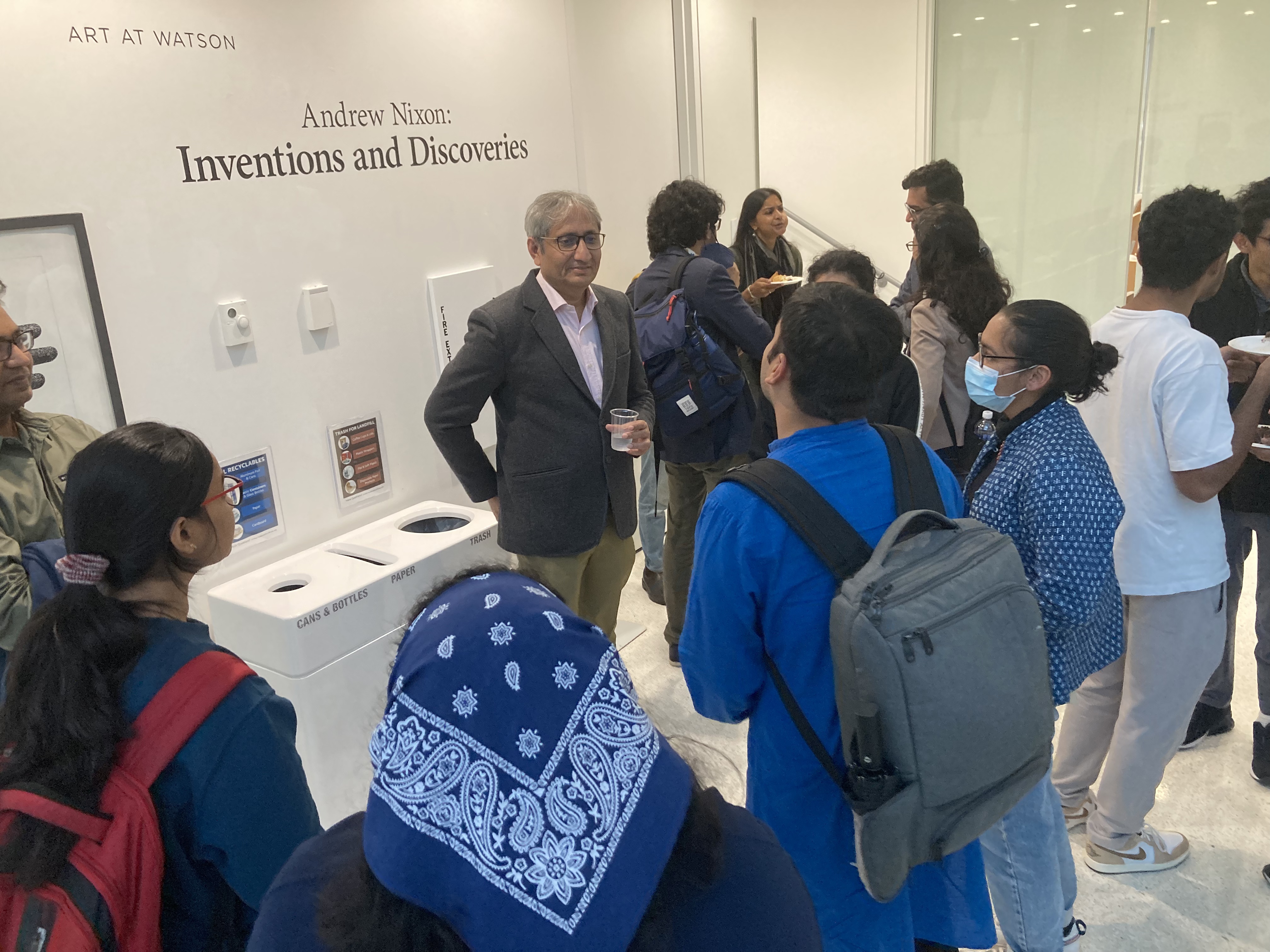
The day the popular Indian journalist Ravish Kumar spoke at Harvard, Oct. 2, happened to mark Gandhi Jayanti, Mahatama Gandhi’s birth anniversary. A day that social media users celebrated Gandhi-ji’s murder was and glorified his murderer on X, formerly Twitter, noted Kumar, talking in Hindi to students and community members filling the nearly 150-seater auditorium.
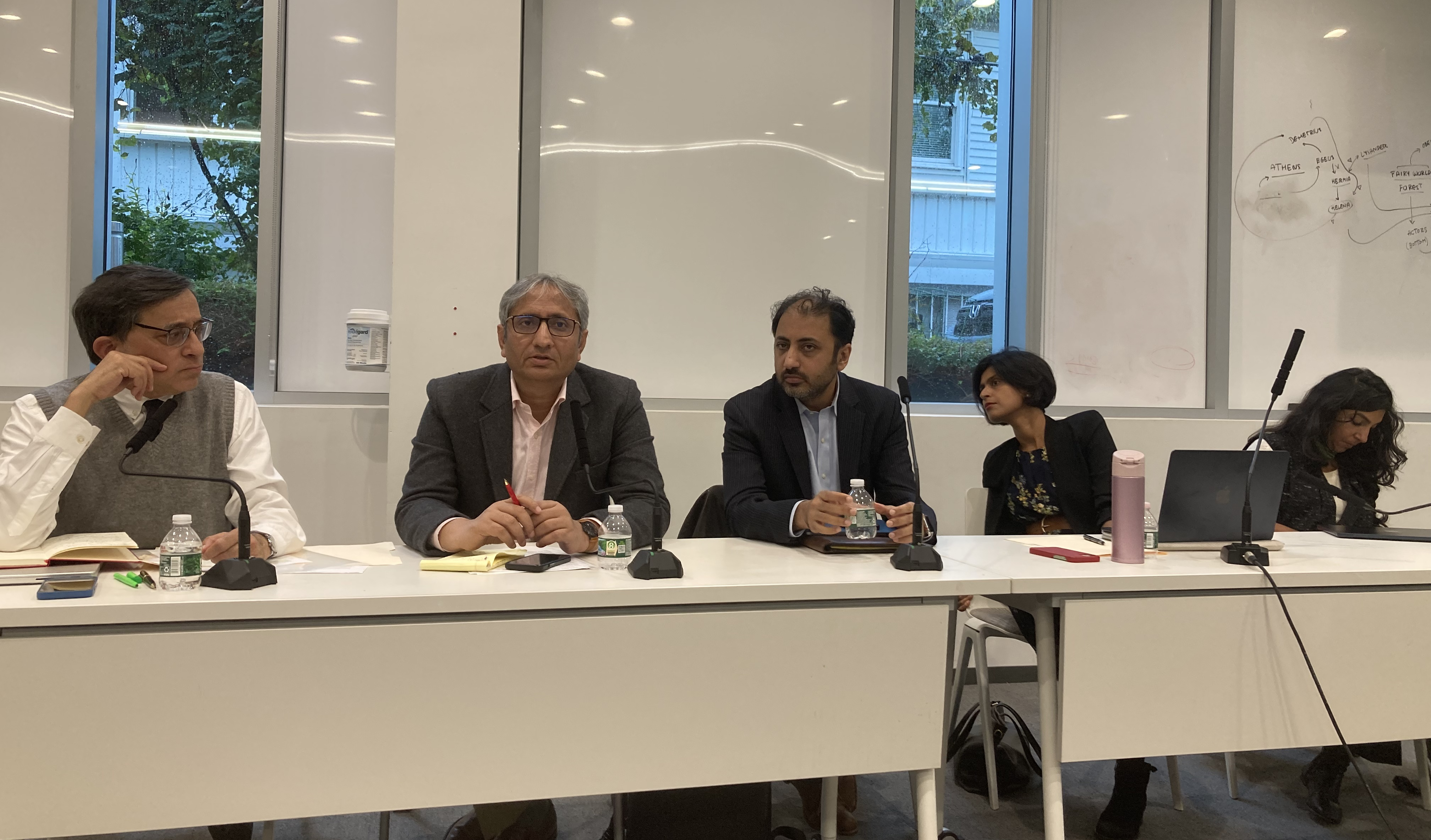
Ashutosh Varshney, Director of the Saxena Center for Contemporary South Asia at Brown University; Ravish Kumar; Wall Street Journal columnist Sadanand Dhume; Brown University faculty Poulami Roychowdhury and Prerna Singh. Photo: Beena Sarwar
Students throng Ravish Kumar after his talk at Brown University.
Photo: Beena Sarwar
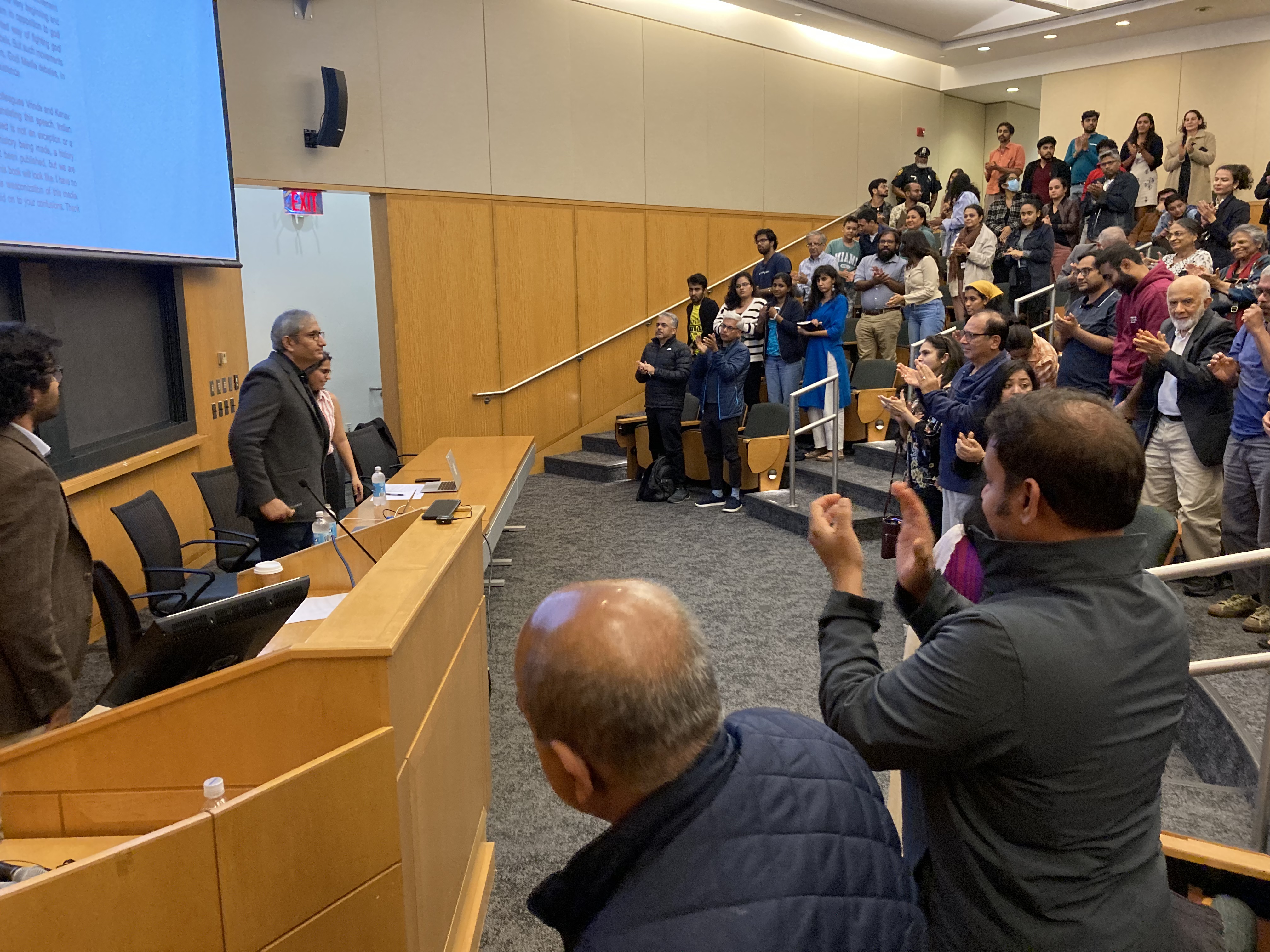
Standing ovation for Ravish Kumar after his talk at Harvard. Photo: Beena Sarwar
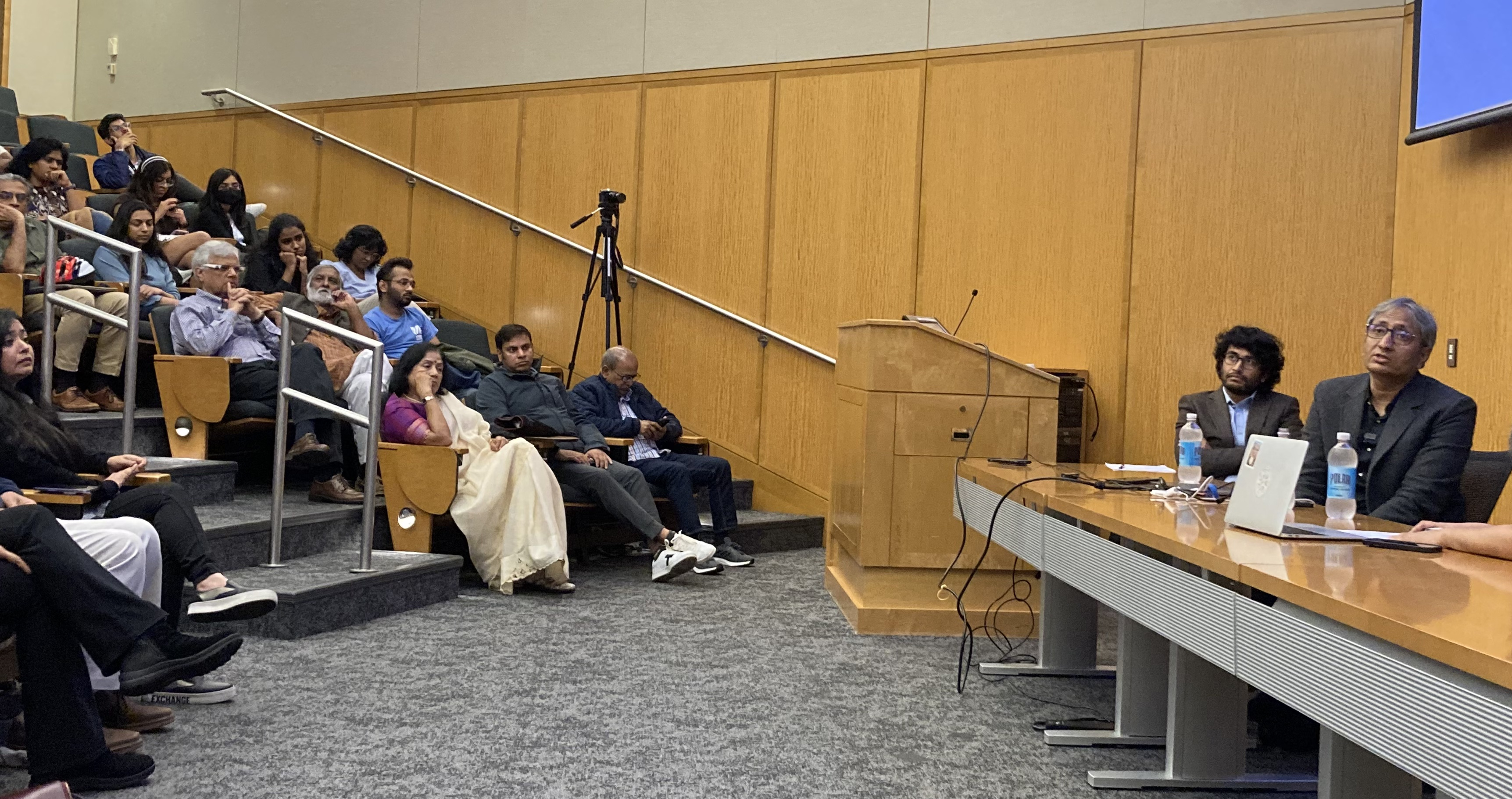
Discussion after the talk at Harvard. Not all questions were answered but as Ravish said, it’s important to ask them. Photo: Beena Sarwar
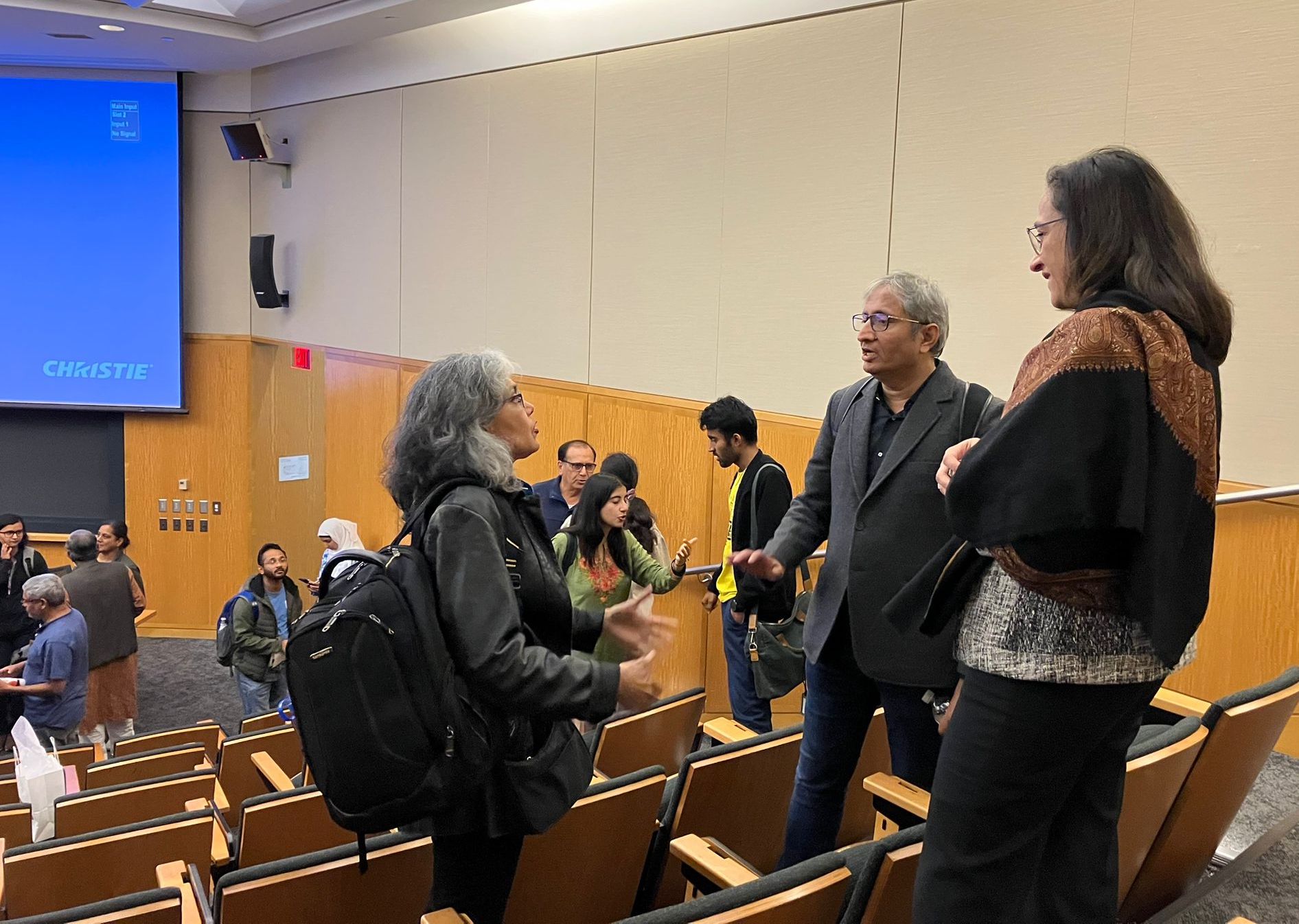
Talking to Ravish Kumar after the event, with Dr Deeba Husain from India. Photo: Rajeev Soneja
Ravish Kumar famously resigned from NDTV last November after its hostile takeover by Asia’s richest man Gautam Adani known to be close to Prime Minister Narendra Modi. While Kumar still has a huge viewership on YouTube – his channel has garnered over 7 million subscribers so far – it is an insecure platform, as he knows. The recently released documentary While We Watched (available on PBS) features Kumar, but as he also acknowledges, there are many others standing for journalistic values and ethics in India.
An FIR (first investigation report) was lodged against NewsClick in August, the day after a poorly-sourced New York Times report alleging that it had received funding from a network spreading “Chinese propaganda”.
The detained journalists included junior employees – and if they were being detained “simply because you believe that NewsClick is getting Chinese funds then a very wrong precedent is being set,” to quote prominent TV anchor Rajdeep Sardesai.
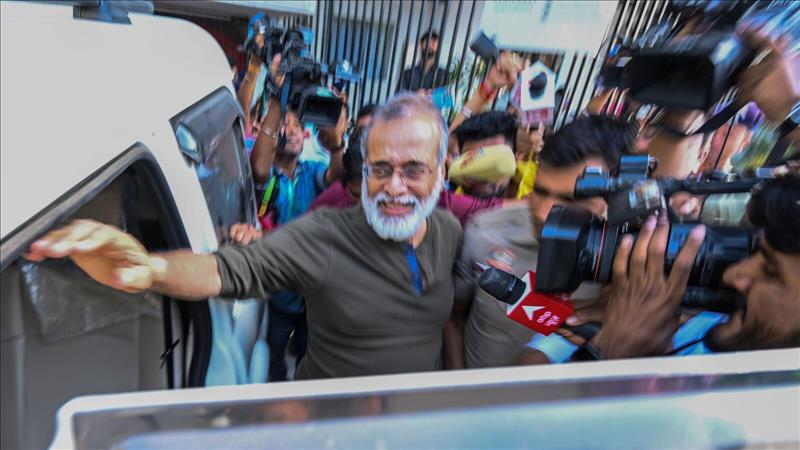
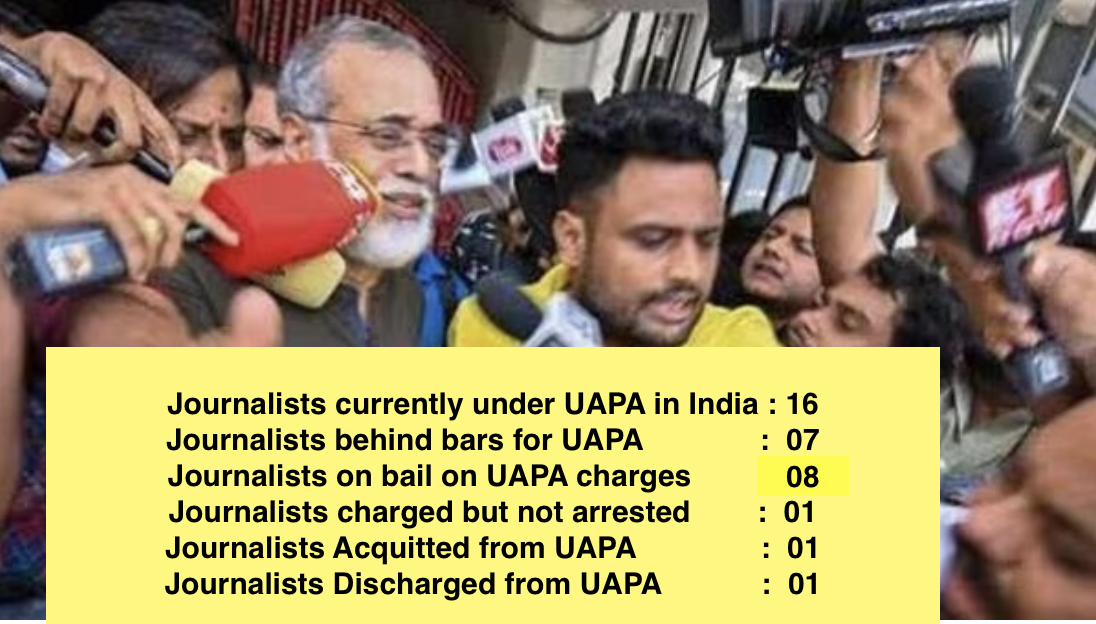
Newsclick founder and chief editor Prabir Purkayastha, and Amit Chakravarty, who heads the portal’s human resources section, were arrested under the draconian Unlawful Activities (Prevention) Act (UAPA). Since 2010, as many as 16 journalists have been charged under the UAPA, reports the Free Speech Collective, India, in a post that lists them, with details of those out on bail, the seven still behind bars, and others.
NewsClick founder and chief editor Prabir Purkayastha arrested. Photo credit: Raj K Raj/Hindustan Times via Getty Images, published by Amnesty International.
“In India, 16 journalists under UAPA ; seven behind bars” – image courtesy the Free Speech Collective, India
There is a huge pushback in India against these heavy handed tactics, which those in other countries are familiar with.
Below, the text of a joint letter by several journalists’ organisations to the Chief Justice of India:
Hello all, check out the work we’re doing at Sapan News, providing behind-the-headlines information with context and nuance, and syndicating pieces out to a growing media network.
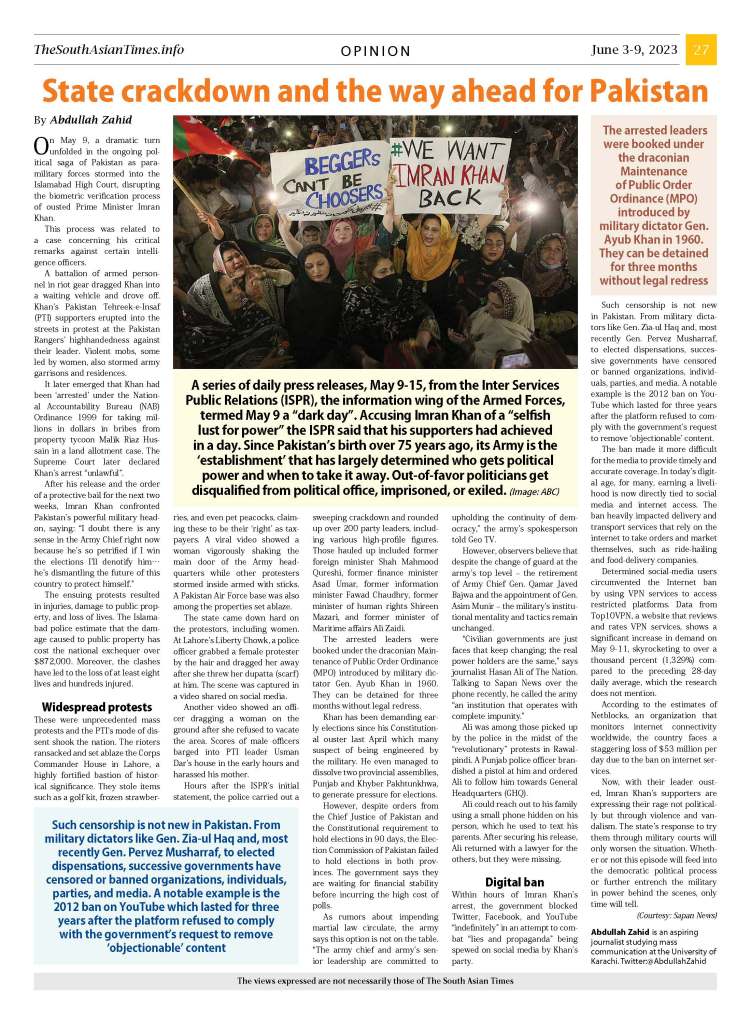
Sapan News syndicated feature in The South Asia Times, page 27, 3-9 June.
NOTE: If you like/support our work, please contribute what’s possible – no amount is too big or too small. Will be so grateful. We need to raise $15k by year end at a minimum. You can make tax-free donations at this link.
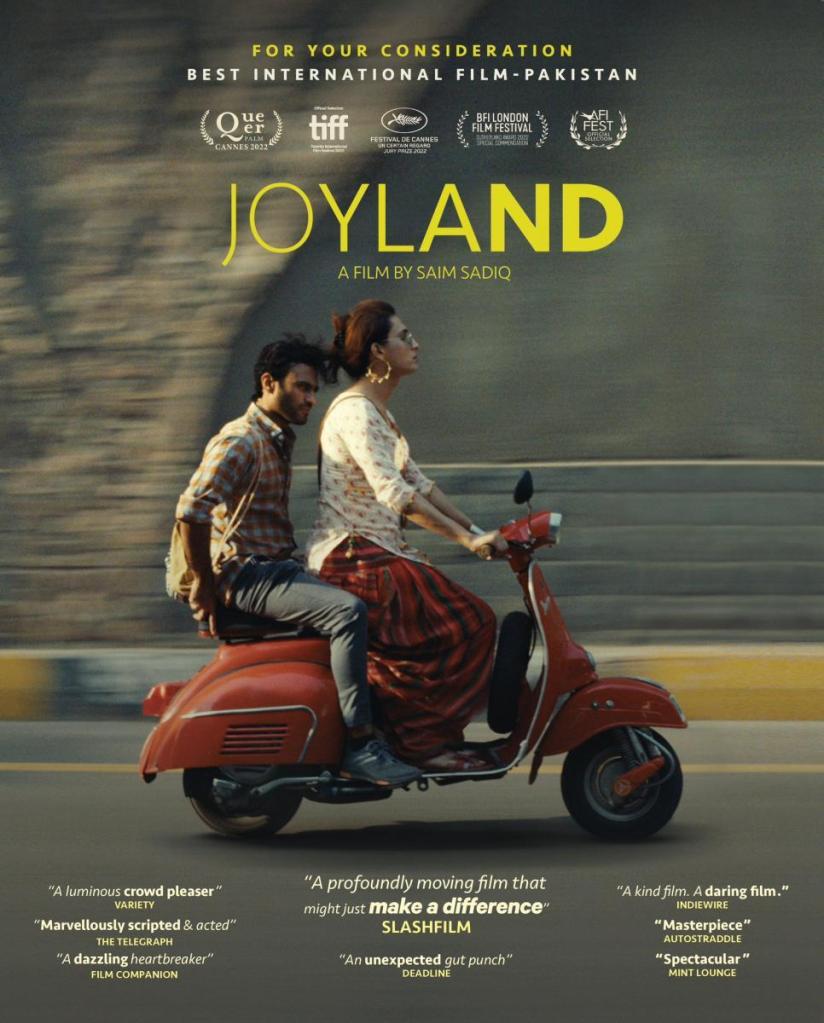
Joyland poster
On another note, I saw the banned-unbanned-censored (still banned in Punjab?) Joyland in Karachi a few weeks ago, and it haunted me – and my cousins who I saw it with – for days. This is the first feature film from Pakistan to screen at Cannes where it won two awards.
“What began as a small independent production among friends at Columbia University’s graduate film program became one of the year’s biggest success stories in world cinema — and a ground-breaking film about queer desire in a traditional Muslim society” reports NPR.
The film is showing at Coolidge Corner Theatre in the Boston area this week– writer-director Saim Sadiq has said the cuts made for the film’s showing in Pakistan were insignificant but I am curious to see the uncensored version.
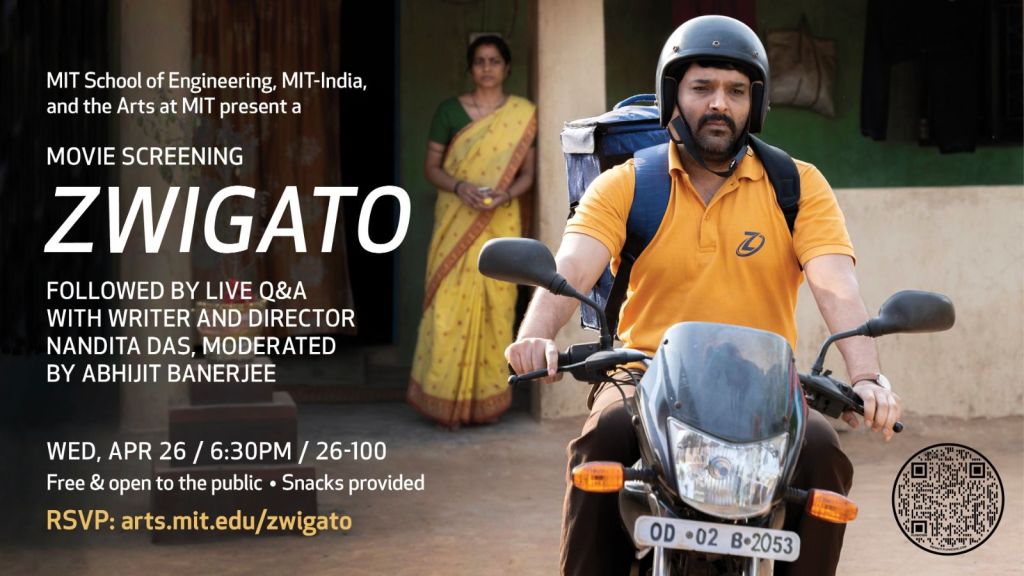
A film I saw recently and enjoyed was Nandita Das’ Zwigato, that she showed in person at various cities in the US.
Even on the small screen I found it thought-provoking and beautifully done, with many layers, a great commentary on the changing society, its challenges and opportunities. Sensitively depicted relationships, humanity, and aspirations. Great poetry and soundtrack, with many nuggets and vignettes sprinkled throughout. The end credits with animations are particularly creative and a story in themselves.
This is the third feature film by Nandita Das that I’ve seen, after Firaaq and Manto. Each of them a labour of love, executed with courage and clarity.
Interesting that the posters for both films feature two-wheelers…
Ending on a sad note – the triple train crash in India that has claimed nearly 300 lives. As expected, authorities are trying to pass it off as ‘human error’ rather than admit to the systematic problems with the railways or the government’s financial choices.
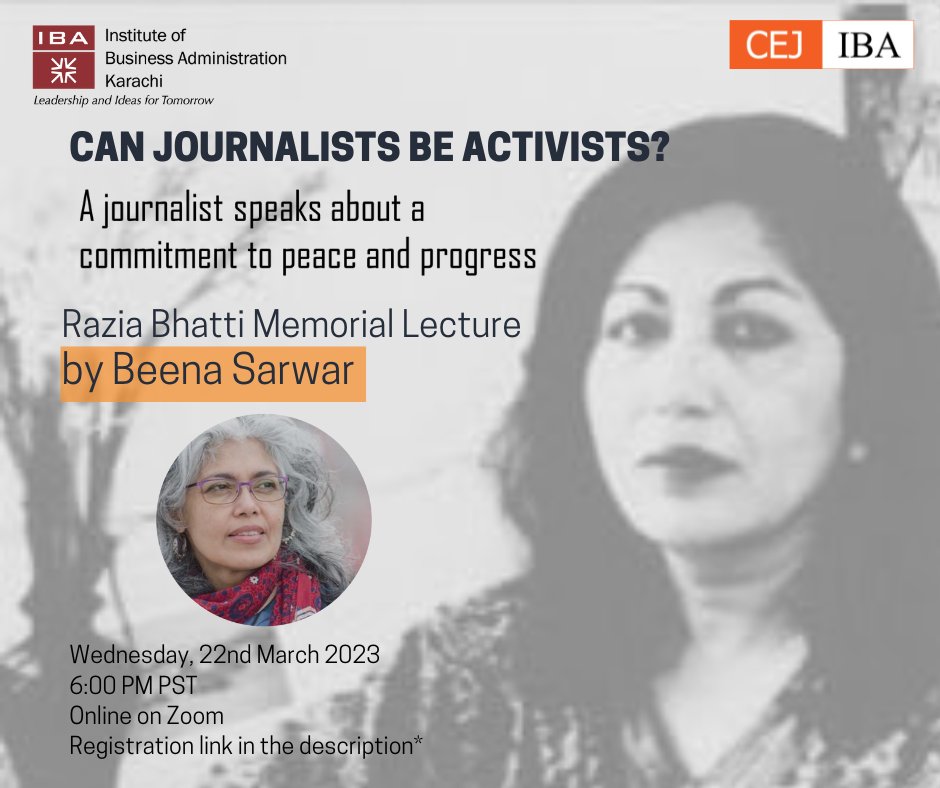
Following up from my earlier post, here’s the video recording of the Razia Bhatti Memorial Lecture 2023 I delivered online recently for the Center of Excellence in Journalism at IBA, Karachi.
Honoured and humbled to be invited to present this year’s Razia Bhatti Memorial Lecture, named for someone who remains a role model for so many journalists and women, someone I knew personally and admired greatly.
Time: Wednesday, March 22, 2023 06:00 PM (Pakistan)
Agenda
5:50 – 6pm Producer at CEJ to admit registered attendees
6:00 pm: Amber Shamsie, CEJ director, – Welcome and introduction to Razia Bhatti Memorial Lecture lecture series
6:05 pm: Remarks by Dr Akbar Zaidi, IBA Executive Director
Some steps in a journey sparked by India and Pakistan’s nuclear tests in 1998
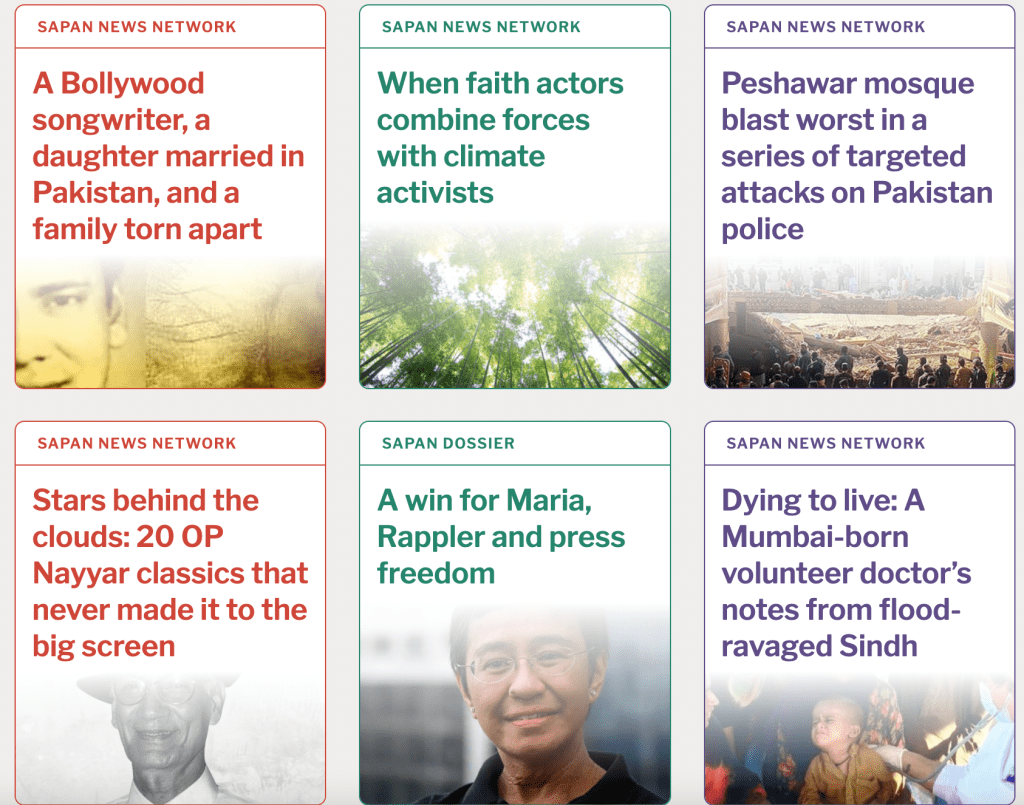
Screenshot from Sapan News site, designed by Aekta Kapoor.
Inspired by email updates from Isa Daudpota and Harsh Kapoor of South Asia Citizen’s Wire (SACW) after India and Pakistan tested nuclear weapons, I too had begun a bcc email list. This developed into my beena-issues Yahoo-group in 1998 but I had begun to post more irregularly after 2009 when I started a WordPress blog, Journeys to Democracy. Yahoo shut down its Groups platform a couple of years ago.
Now, as I work on developing a new media entity, Sapan News Network syndicated features which emerged from Sapan, the Southasia Peace Action Network (thanks to Aekta Kapoor for the beautiful website), SubStack seems like a good place to revive something like the Yahoo-group community feel. But then there’s also Medium where I have over 2.4K subscribers. All very confusing. Welcome feedback and suggestions.
Exploring a way of looking inwards, confronting my own demons, and competing with my own best self
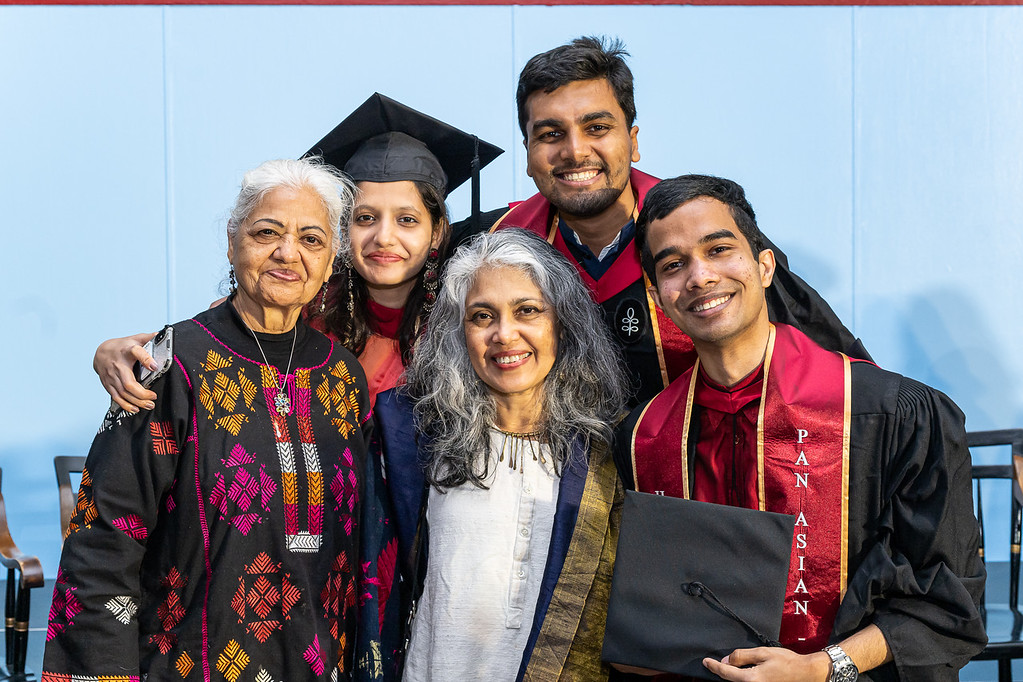
My keynote commencementspeech at the first AAPIDA – Asian Pacific Islander Desi-American – affinity graduation, Harvard University, 23 May 2022
With my mother Prof. Zakia Sarwar, plus Harvard School of Education graduatesafter the ceremony: Najwa Maqbool and Nishant Singh from India, and Nigel Gray from Sri Lanka.Their families couldn’t make it so we were glad to be there for them. Photo: Lipofskyphoto.com
Beena Sarwar, video and text of speech below. Also published in Sapan News Network






 Journeys to democracy