In the wake of Myanmar’s deadliest day so far, over 100 killed by security forces on Saturday, including children, some at protests, others in their own homes, friends in Kathmandu speak for many around the world with their statement of support for the people of Myanmar and appeal to their government to act.
“You messed with the wrong generation”… Feb 12, 2021 protest. Reuters photo
Citizens’ Appeal for of Myanmar’s People against Repression by the Military
andDemand for Government of Nepal to Act
Kathmandu, 28 March 2021
We undersigned citizens of Nepal are proud of the Myanmar people’s valorous stand for democracy, appalled by the murderous suppression by the Tatmadaw military, and distressed by the lack of adequate response from the governments of South Asia and globally.
Sharing here a piece I wrote published in The Wire and later in Aman Ki Asha about a poor man from a tiny village on the India-Pakistan border who went missing in 2008. For nine years his family didn’t know where he was. But his government knew for four years before the family learnt from another released prisoner that their loved one was in a prison across the border.
Under-trial for three years, he then served a five-year conviction – but remained imprisoned for three more years while the government dawdled over verifying his nationality.
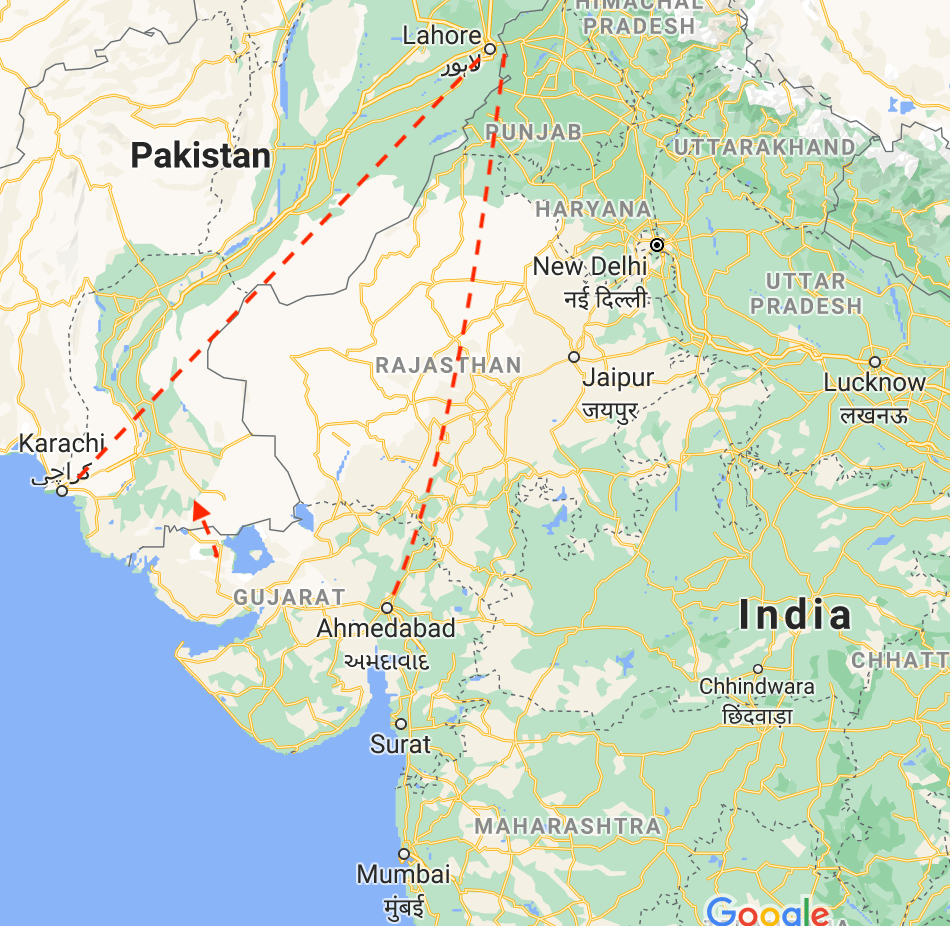
When they finally repatriated him at the end of January this year following court orders, he was made to travel 1000 km upcountry, then wait for three more days at a border town until police from his home state went to bring him back, another 1000 km downcountry. Here’s a map I made about his enforced travels:
Ismail Sama’s short journey across the border (small arrow) – and his long journey home. Fisherfolk caught violating the maritime border also have to endure this when imprisoned on the other side.
Here’s a follow up story by Gopal B. Kateshiya, ‘Coming back is second birth for me’: Kutch man returns home after 13 years in Pakistan jail, The Indian Express. Extract: “A scorpion stung me and I felt giddy. I lost my direction. Next morning, around 10.30 am, Pakistan rangers caught me, telling me I had intruded into their country. They took me to hospital and after my condition improved, they handed me over to Inter Services Intelligence (ISI),” said Ismail, son of a farmer.
Ismail Sama with his family: Reunited and it feels so good. Photo: Courtesy Indian Express.
Thirteen years is a long time. The story would be remarkable if it was a one-off but sadly, such incidents are not rare.
<p value="<amp-fit-text layout="fixed-height" min-font-size="6" max-font-size="72" height="80">Here's a report published some years ago which outlines some of the main problems (PDF). Here’s a report published some years ago which outlines some of the main problems (PDF).
As the newly-sworn in United States President Joseph Biden begins his tenure, he has a lot of salvaging to do from the wreckage left by his predecessor.
One of the more disturbing messages arising out of the attack by violent pro-Trump insurrectionists at the US Capitol on January 6 involved frightening threats to a free press. Scrawled on a door at the building were the words: “Murder the Media.”
That pithy, vile phrase represented the raw culmination of five years of rhetorical attacks by Donald Trump and his political allies against critical media coverage.
The doors to the U.S. Capitol right now, as members of the mob that stormed it a couple of hours ago file out, without police escorts or handcuffs: "Murder the Media." They don't like that we've been watching and reporting, and will continue to do so. pic.twitter.com/qtqNR26uMd
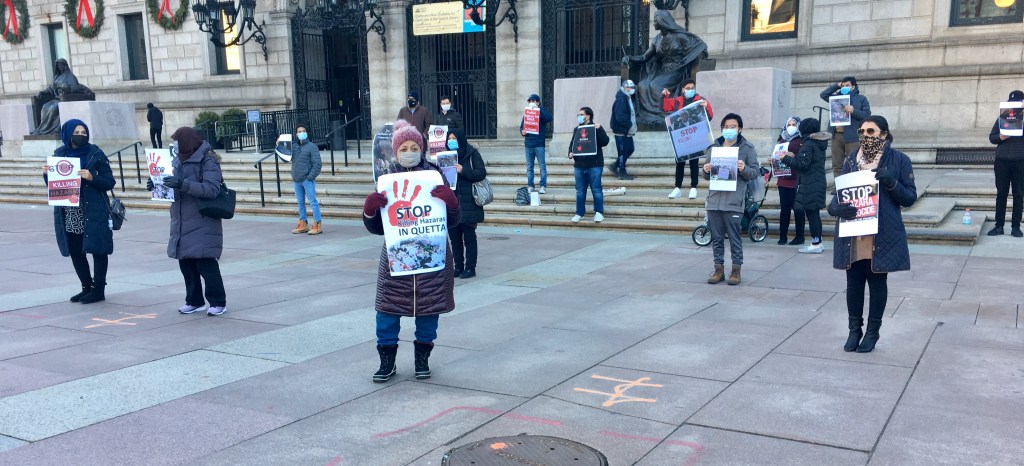
#BostonWithHazara: Silent vigil at Copley Square in below freezing temperature. My mother Zakia Sarwar in the middle with her pink pom pom hat.
PERSONAL POLITICAL
Even as media attention focused on the goings on at America’s capital where protestors shocked the world by storming the Capitol Building (nothing shocking for Pakistanis used to such attempts to subvert democracy) another drama — tragedy rather — unfolded in Quetta, Pakistan.
This too is not new. The target killings. The silent, and the not-so-silent protests. Standing in front of the Boston Public Library at Copley Square in the freezing cold, in solidarity with the Hazara protestors who are also out there in below freezing temperatures of Quetta.
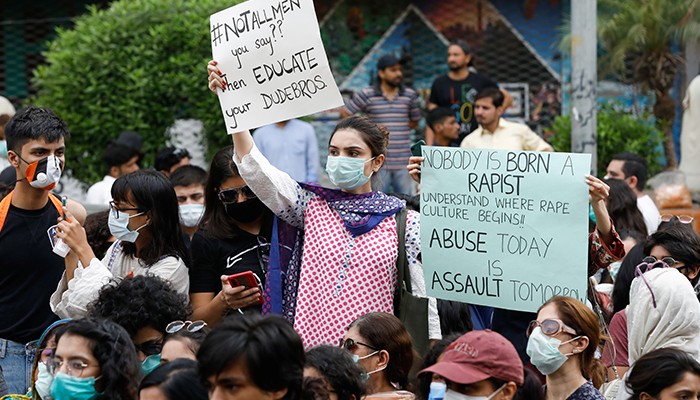
Protest in Karachi over the ‘motorway gang rape’ incident. 12 September 2020. Reuters photo.
I haven’t updated this site for a while, caught up with teaching two journalism courses at Emerson College this semester – prepping for the courses, training for the unprecedented online situation, then assignment-setting, student feedback, grading – it’s been hard to do much else. But when Mehr Mustafa at The News on Sunday asked me to contribute to their special report on rape culture, I couldn’t refuse. Was up till 3 am to meet the deadline for the piece – The outrage culture masks a landscape of pervasive abuse (TNS Special Report, 27 September 2020).
They asked me to define ‘rape culture’ as a lens to view the issue as a social/political construct rather than individual/isolated events, and to address the systematic nature of sexual violence. That rang some bells. Among the things it got me thinking about was systemic oppression – visible in the racial injustice in the USA highlighted over recent months. I revisited the piece I did last year, Moving towards a cycle of healing, focusing on the need for preventive rather than reactive measures and the concept of restorative rather than retributive justice (thanks Anita Wadhwa and Dina Kraft for expanding on my understanding of this). And just found my 2012 post: We must move beyond outrage against selected rape cases.
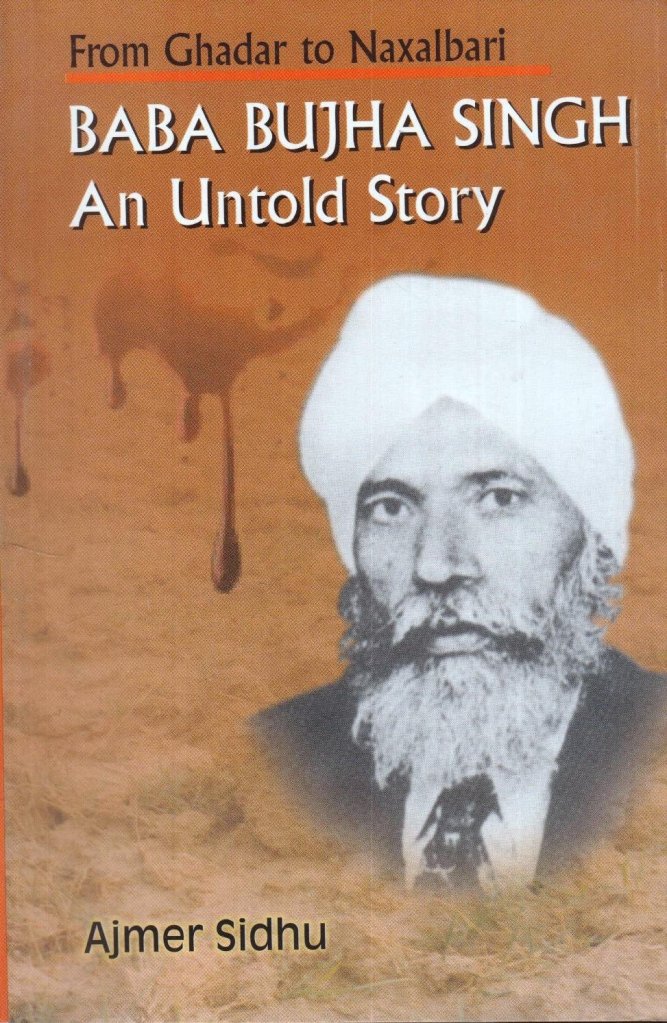
Sharing below an informative, moving and insightful piece by friend Jaspal Singh in Cambridge commemorating the fiftieth anniversary of Baba Bujha Singh’s extrajudicial murder in Punjab, India. The story is reflected in other instances of police brutality elsewhere too. And so is his comment on democracy. He regularly dispatches his ‘Reflections’ to friends via email; a list I feel privileged to be on. Over to Jaspal ji:
The Pakistan-India People’s Forum for Peace and Democracy (PIPFPD) has begun a series of online discussions aimed at reclaiming the people’s narrative. The PIPFPD The page has several video excerpts from these and other discussions.Below reports on both discussions by Neel Kamal, published in Times of India and Aman Ki Asha.
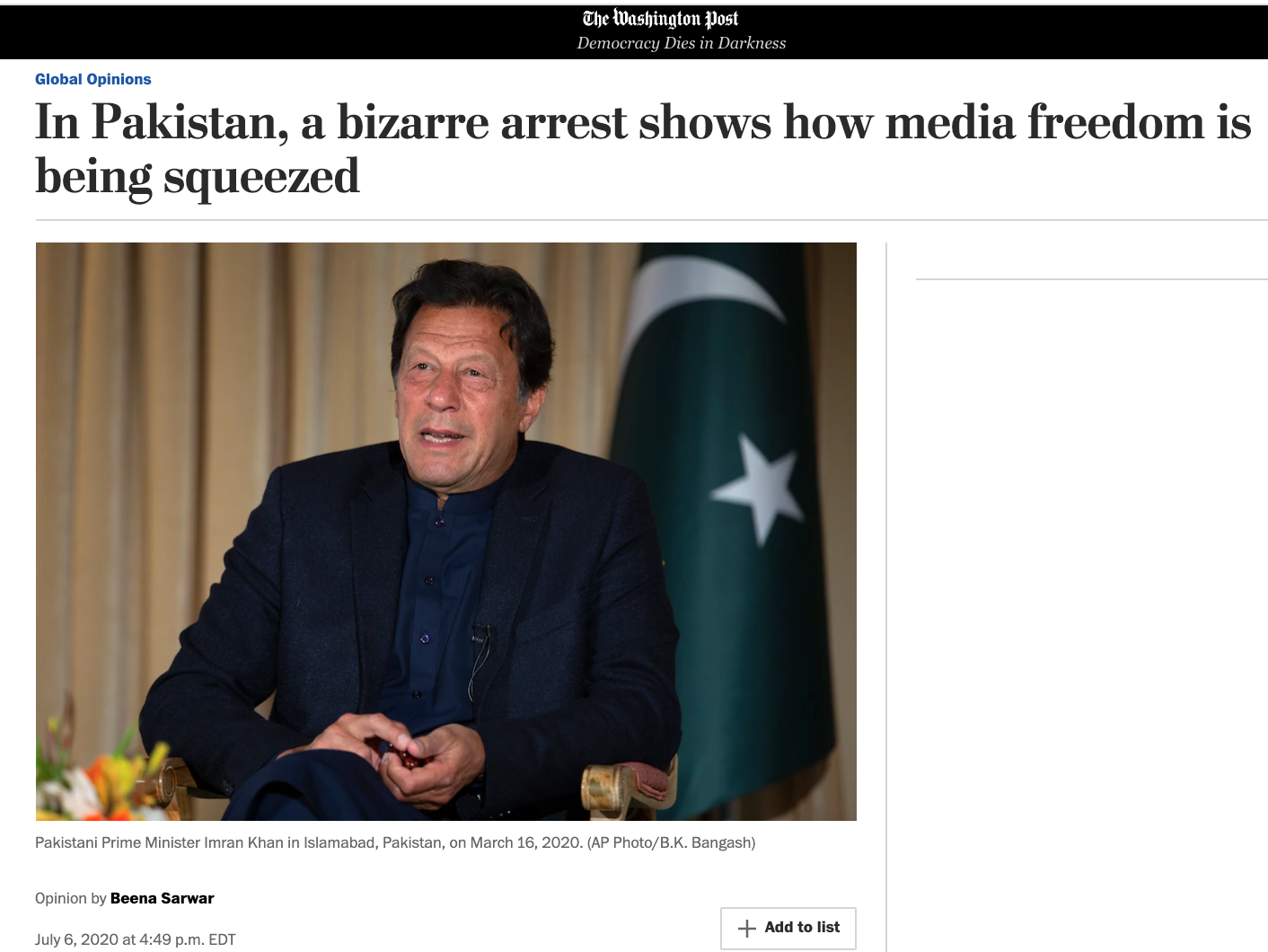
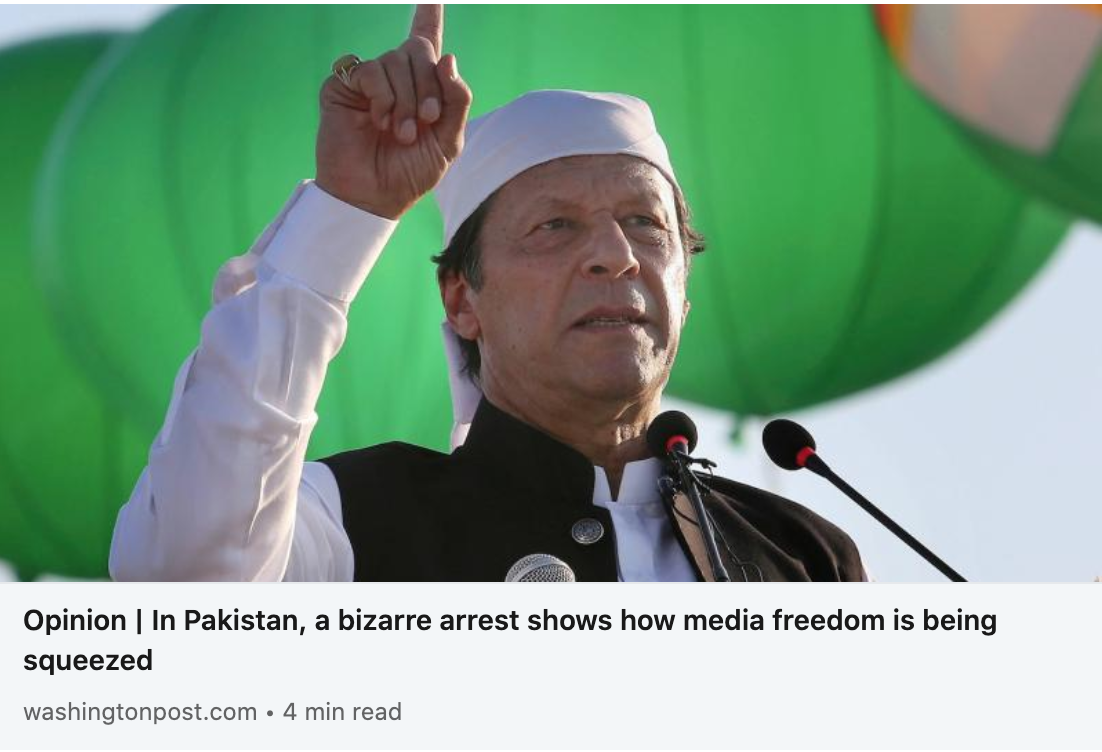
Updated screenshot of my piece in Washington Post. Editors replaced the earlier photo after…
…I conveyed the feedback that he doesn’t normally wear a ‘topi’ (religious skull cap) and this photo highlighted religiosity in Pakistan which is not relevant to the topic.
But even if he is granted bail now – after over 100 days of being denied his liberty and that too at a time of Covid — this will be a minor victory achieved at a huge cost, not only for Rahman, but also for media freedom and democracy in Pakistan.
This is a follow up to my earlier post about physicians of Pakistani and Indian origin, already in the frontlines of the Covid19 battle in the US, stepping up in the war against a longer-running pandemic, racism. We know that racism is not limited to the US. In our home countries in South Asia, it is expressed as casteism and oppression of vulnerable communities.
Greg White on the many knees on our necks, and the need to keep on keeping on…
Last night, I caught up over the phone with an old and dear friend, Greg White in Chicago who heads a tuition-free public education charter school system with 12 branches, opening a 13th in DC soon. Greg is the first Black or African American friend I made within days of my arrival in the USA as an international student at Brown University in 1982. As a sophomore and Minority Peer Counselor in my dorm, Greg became a mentor and guide who went on to obtain an MBA at Harvard Business School. He now heads a tuition-free public elementary school system. Read below his powerful letter to their 500 employees, a moving message inspired by Martin Luther King. It comes straight from the heart.
Greg’s words resonate with the universal fight against oppression, in America and elsewhere. Keeping populations poor and deprived of education is the surest way of continuing systemic oppression. Read his letter below.