Our Pulitzer Center-supported documentary ‘Democracy in Debt: SriLanka Beyond the Headlines’ has just been selected by the Pune Short Film Festival 2025, June 2. It has also been selected for the Asian Talent International Film Fest 2025, Oct. 5, in Ahmednagar, Maharashtra, and was earlier screened at the Fifth Kerala Short Film Festival 2025, held in March.
Trailer: ‘Democracy in Debt: Sri Lanka Beyond the Headlines’
More good news
Our peace appeal for India and Pakistan to Stop Hostilities posted by the Southasia Peace Action Network or Sapan just after the war broke out reached more than 5,000 signatures in the first 48 hours. It had reached nearly 7,500 signatories but the number inexplicably dropped so now we are just over 7,000. In this vitiated atmosphere where jingoism dominates the airwaves and social media, this is no small number. Let’s keep on the pressure for these two nuclear-powered neighbours to talk.
It has been a decade since we lost Sabeen Mahmud to a targeted attack in Karachi and since we lost Shayan “Poppy” Afzal Khan to cancer. It is also 20 years since the pioneering environmental journalist Saneeya Hussain died in Brazil. Their peacemongering legacies live on.
Personal Political Beena Sarwar / Sapan News
On 24 April 2015, a valiant crusader for peace, social justice, creativity and human dignity was killed in Karachi. That tragedy ten years ago deprived a mother of her only child, and many of us of a dear friend.
Social entrepreneur Sabeen Mahmud, 40, was driving home with her mother Mahenaz next to her. A motorcyclist approached while they were stopped at a red light, and shot Sabeen at point blank range. She died on the spot.
Sabeen. Photo by Zaheer Alam Kidvai.
Mahenaz at Creative Karachi Festival 2016: Sabeen would hate for any of us to give up. Photo: Beena Sarwar
A poster with Sabeen’s photo at Creative Karachi Festival, 2016, Alliance Francaise. Photo: Beena Sarwar
Pakistan: Countrywide demonstrations for Sabeen, 2015
Protest for Sabeen in Delhi, 2015. File photo
I had known Sabeen since she was a teenager. We were comrades together in several peace initiatives – part of a large, cross-border tribe of ‘peacemongers’ as I call our community.
Wrote this piece a couple of weeks ago, on one of Pakistan’s most versatile composers who continues to produce a genre embedded in Southasian traditional music, to get the younger generation to appreciate classical poetry and music — and provide a platform for new talent. A Sapan News syndicated feature also published in other outlets.
Personal Political By Beena Sarwar / Sapan News
Arshad Mahmud in Such Gup, PTV, 1970s. Screenshot.
Will there be singing In dark times? Yes, there will be singing About dark times
— Bertolt Brecht, Germany, 1939
Arshad Mahmud is one of Pakistan’s most prolific and talented composers, the man whose music launched singing sensations like Nayyar Noor and Tina Sani.
He made his debut with the children’s television show Akkar Bakkar, 1972, along with Nayyara Noor and the pioneering puppeteer Farooq Qaiser, produced by Shoaib Hashmi, then an economics professor at Government College (now University) Lahore.
Behind the ustad (teacher) Hashmi’s booming voice, gruff manner and handlebar moustache was a brilliant writer and satirist who went on to write and produce the groundbreaking, now legendary satirical television shows Such Gup and Tal Matol. We would use these as the titles of Shoaib Hashmi’s columns for The Frontier Post later and The News on Sunday that I edited in Lahore, starting in the 1990s. His daughter Mira Hashmi has uploaded many of the videos to her YouTube channel.
The recent disbanding of Facebook and Instagram’s third-party factchecking programme has raised fears about the kind of news and information that will shape public discourse. Whatever facts or non-facts get pushed out, it is up to us, citizens who are news producers and consumers through our social media apps, to be the change. The Social and Digital Media Ethics Code and Pledge, an initiative by Sapan News, is a step in this direction.
This makes it all the more important for those of us who strive to uphold these principles and who value facts over opinion, to buckle down and do what we can to “hold the line,” to use the words of Filipina journalist Maria Ressa.
That is why we at Sapan News last year initiated a Social and Digital Media Ethics and Responsibility Pledge, which provides guidelines with resources to help social media and digital media users enhance their credibility. Endorse here
Boats on Dututwewa at sunset. Photo by Ben Samarasinghe
The lakes, paddy fields and forests of the ancient village of Dutuwewa are a world away from Colombo’s high-rises and colonial buildings. As elsewhere, decisions taken by ‘old men’ in the corridors of power impact life here, just as these rural voters will impact politics nationally
PERSONAL POLITICAL FROM DUTUWEWA WITH LOVE
By Beena Sarwar
Times are tough and it’s hard to make ends meet. A refrain heard from just about anyone in my home country Pakistan where the rupee has dropped to around 300 to the dollar. This is now comparable to the rupee in Sri Lanka, recovering from the biggest economic crash in its history.
Stories of hardship echo from the island nation’s largest city Colombo to the farming heartlands around Anuradhapura district, a little over 200 km to the north-east. At the core of Anuradhapura lies the irrigation tank called Dutuwewa which sustains several villages.
Sri Lanka’s rural landscape is dotted with as many as 14,000 such large and small irrigation lakes, known as wewas, built by kings thousands of years ago.
A nearly five-hour drive on surprisingly good roads – testament to the rural infrastructure built after the end of the 26-year long civil war 15 years ago – brings us to the serene lakes, lush paddy fields and dense forests of Dutuwewa. A world away from the corridors of power and the glittering, air conditioned, high-rises of Colombo and its historic colonial buildings left behind by 500 years of colonizers – the Dutch, the Portuguese and the British.
A village school in a forest
The din of crickets from the surrounding forest forms the backdrop to everything in Dutuwewa. The headmistress of the Palugollagama government school, who gives only her initials and last name, I. R. Ekanayake, is an ‘old girl’ who taught at schools around the district for 26 years and was posted to her alma mater as principal four years ago. There are two vice principals, 36 teachers and 506 students.
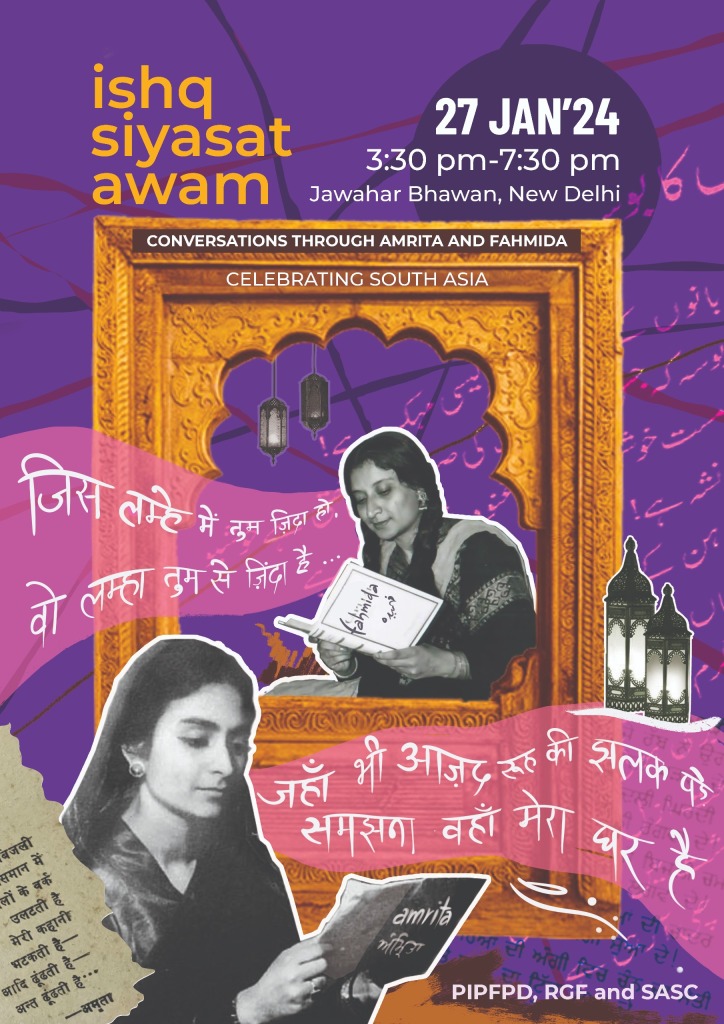
Radical love, epitomised by the late Amrita Pritam and Fahmida Riaz is ‘one of the seeds of the revolutionary thought process’, to quote the Pakistan India People’s Forum for Peace and Democracy (PIPFPD) stalwarts who organised the event – Vijayan MJ, Tapan Bose, and Dr Syeda Hameed. Their consistent work over the decades for peace and justice is truly inspirational, and I feel privileged to know them personally.
I was also privileged to know one of the late poets personally, Fahmida ‘Khala’ (aunt) to me, who was close to my father Dr. M. Sarwar. He led the Democratic Students Federation (DSF), Pakistan’s first student movement while at Dow Medical College in Karachi, 1949-54.
I’ve uploaded archives about the movement here: drsarwar.wordpress.com. Principles of that struggle continue to show the way, like the importance of coming together across divides for a minimum common agenda. For DSF, it was student rights. For Sapan, it’s Southasia Peace. We need it now, for the sake of the people of the region, and beyond.
The Videos section of the Dr Sarwar blog includes a playlist of video clipsfrom the event held at the Karachi Arts Council in January 2010 to commemorate DSF and the student movement, a few months after my father passed on.
Compered by the actor Rahat Kazmi, the event featured speeches from young activists, students, and academics like Amar Sindhu, Alia Amirali,Ali Cheema, and Varda Nisar, as well as veterans like I.A. Rehman, besides the singer Tina Sani, Taimur Rahman and his band Laal, and Fahmida Riaz.
Fahmida Khala recited her poem ‘Palwashey Muskurao’ (Palvasha, smile), dedicated to daughter of late Afzal Bangash of the Mazdoor Kissan Party (Workers’ and Peasants’ Party), and the followers of other late leftist leaders. They may no longer be on this earth, but their principles and aspirations for human rights and dignity continue to show the way.
Seasons greetings despite the sadness, and excerpts from a Sapan Alliance newsletter sent out a few days ago on Substack
Joy is also a form of defiance. Dancers: A greeting card I made some years ago (pastel and water colour), repurposed for Southasiapeace.com and Sapannews.com.
In times that can feel dark and dismal, some good news and exciting updates.
Meet Sapan News — a unique media outlet that aims to cover and connect Southasia, the Indian Ocean and diaspora. That goes behind the headlines, connects communities, academics, activists, and more. Creating space for understanding, empathy and nuance.
In November, Sapan News qualified for NewsMatch, a philanthropic fund helping nonprofit newsrooms like ours in the U.S. Contributions made by year-end will get matched up to $15,000. Gratitude to our community that has stepped up to meet this challenge.
Those wanting to chip in are welcome – here’s the donate link for tax-deductible contributions.
A 100 new donors will secure a $1,000 bonus, and monthly donations initiated this month will get matched x12!
Thank you for your support. It means so much – and together, we are stronger.
Collaborations: Hello, Central Desi!
Sapan News is proud to partner with Central Desi, a dynamic news portal that started as a newsletter to cover all things ‘desi’ (Southasian) in New Jersey. Kudos to journalist Ambreen Ali for growing her passion project into a news org that won a major grant, enabling them to hire reporting fellows. Sapan News has much to learn from this initiative.
Excited for the second anniversary event up this Sunday, hosted by the amazing Khushi Kabir in Dhaka, taking forward the legacy of our late friend Kamla Bhasin at Sangat.
We’ll review what we’ve done over the past two years – the collaborations, the discussions, the film club and more. Taking up all kinds of cross-cutting and cutting-edge topics. It’s been thought-provoking, inspiring, and fun.
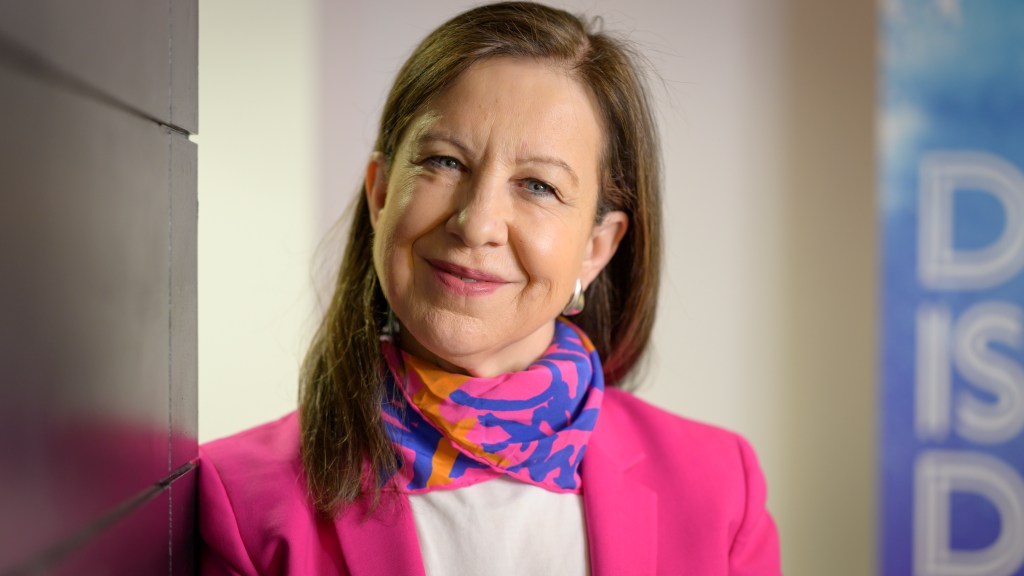
We will honour the inspiring journalist Lyse Doucet for her humanitarian reporting, an award initiated by Dr Tayyaba Hasan presenting it from the Sapan platform. Dr Hasan heads the Hasan Laboratory at Harvard Medical School – the bio at the link does not convey why she is doing this — you’ll have to tune in to find out.
Sapan honours Lyse Doucet: A lifetime of humanitarian reporting.Photo: Amanda Benson
Following up from my earlier post, here’s the video recording of the Razia Bhatti Memorial Lecture 2023 I delivered online recently for the Center of Excellence in Journalism at IBA, Karachi.
Some steps in a journey sparked by India and Pakistan’s nuclear tests in 1998
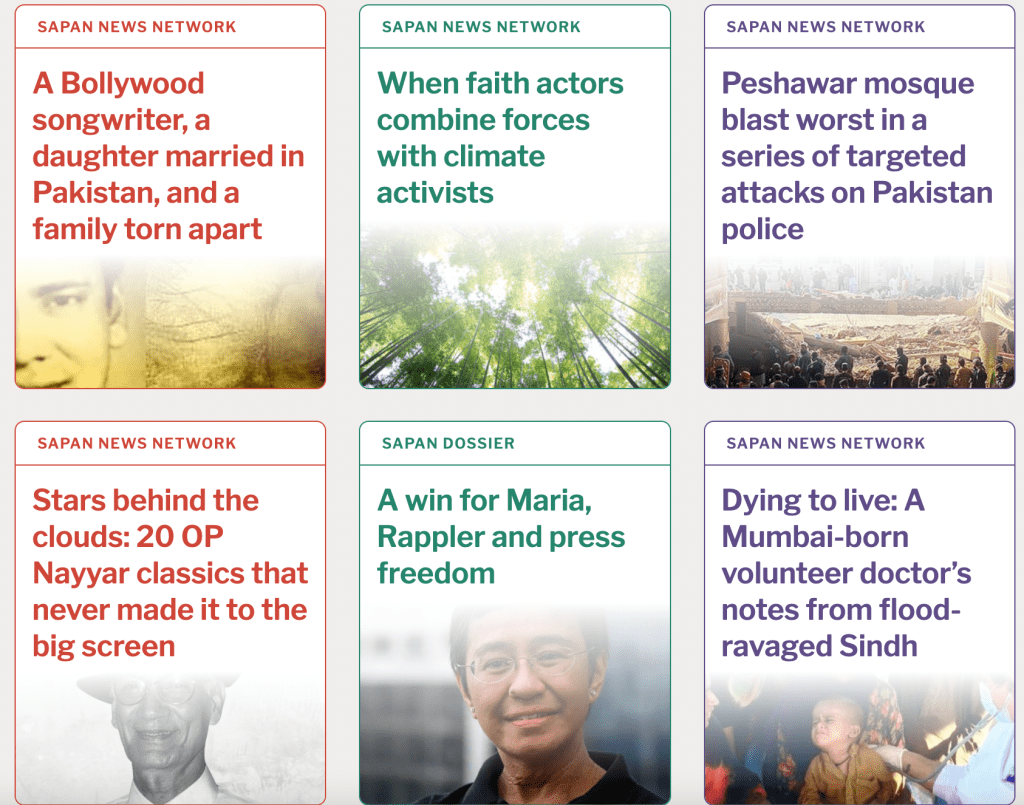
Screenshot from Sapan News site, designed by Aekta Kapoor.
Inspired by email updates from Isa Daudpota and Harsh Kapoor of South Asia Citizen’s Wire (SACW) after India and Pakistan tested nuclear weapons, I too had begun a bcc email list. This developed into my beena-issues Yahoo-group in 1998 but I had begun to post more irregularly after 2009 when I started a WordPress blog, Journeys to Democracy. Yahoo shut down its Groups platform a couple of years ago.
Now, as I work on developing a new media entity, Sapan News Network syndicated features which emerged from Sapan, the Southasia Peace Action Network (thanks to Aekta Kapoor for the beautiful website), SubStack seems like a good place to revive something like the Yahoo-group community feel. But then there’s also Medium where I have over 2.4K subscribers. All very confusing. Welcome feedback and suggestions.





 Journeys to democracy