Seasons greetings despite the sadness, and excerpts from a Sapan Alliance newsletter sent out a few days ago on Substack
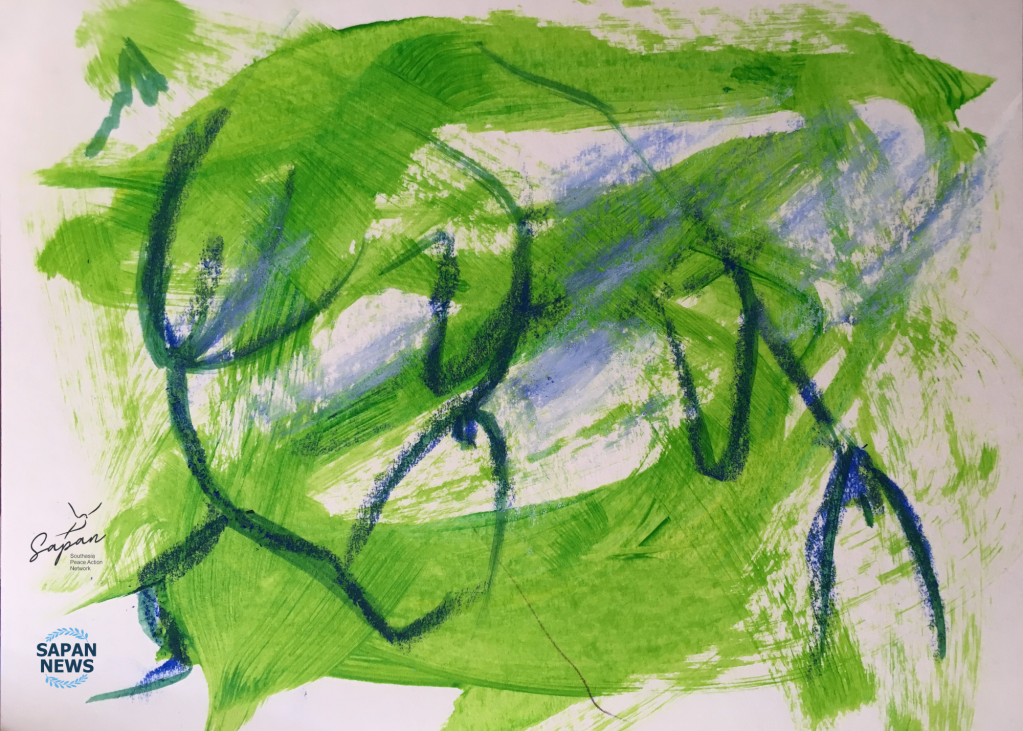
Joy is also a form of defiance. Dancers: A greeting card I made some years ago (pastel and water colour), repurposed for Southasiapeace.com and Sapannews.com.
In times that can feel dark and dismal, some good news and exciting updates.
Meet Sapan News — a unique media outlet that aims to cover and connect Southasia, the Indian Ocean and diaspora. That goes behind the headlines, connects communities, academics, activists, and more. Creating space for understanding, empathy and nuance.
In November, Sapan News qualified for NewsMatch, a philanthropic fund helping nonprofit newsrooms like ours in the U.S. Contributions made by year-end will get matched up to $15,000. Gratitude to our community that has stepped up to meet this challenge.
Those wanting to chip in are welcome – here’s the donate link for tax-deductible contributions.
A 100 new donors will secure a $1,000 bonus, and monthly donations initiated this month will get matched x12!
Thank you for your support. It means so much – and together, we are stronger.
Collaborations: Hello, Central Desi!
Sapan News is proud to partner with Central Desi, a dynamic news portal that started as a newsletter to cover all things ‘desi’ (Southasian) in New Jersey. Kudos to journalist Ambreen Ali for growing her passion project into a news org that won a major grant, enabling them to hire reporting fellows. Sapan News has much to learn from this initiative.
A message from the journalist Amitabh Pal about a mutual friend, David Barsamian of Alternative Radio in Colorado reminded me of this piece originally published in The News on Sunday, 8 Oct. 2006, about an event with Noam Chomsky where I first met David. The article is still all-too relevant, but the link no longer works so I’m sharing the piece here without any changes; just added some hyperlinks and photos.
Essential reading – and doing: Eqbal Ahmad
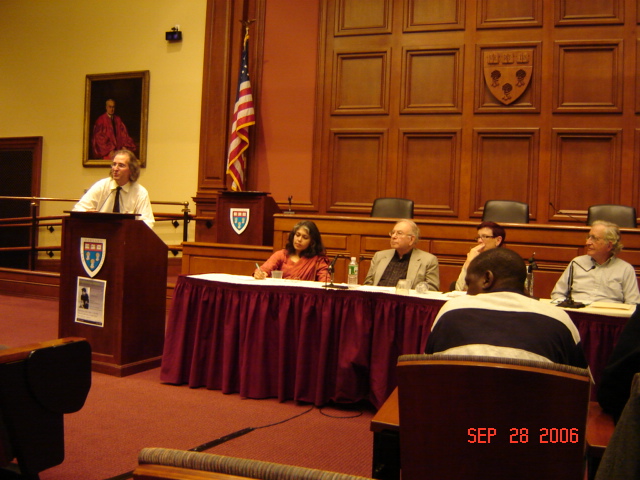
Book launch: The Selected Writings of Eqbal Ahmad, Cambridge, September 28, 2006.
Beena Sarwar
John Trumbour addressing the event. Panel: Beena Sarwar, Stuart Schaar, Margaret Cerullo, Noam Chomsky. Photo: Courtesy MAPA.
When Venezuelan president Hugo Chavez in his address to the UN on Sept 20, held up a copy of Noam Chomsky’s Hegemony or Survival: America’s Quest for Global Dominance (2003) and recommended it as essential reading to understand contemporary world politics, he could have been talking about The Selected Writings of Eqbal Ahmad, for which Chomsky, Eqbal’s long-time friend, wrote the foreword. Chavez identified “the hegemonic pretension of the North American imperialism” as “the greatest threat on this planet” to the survival of the human race.
The book that Jack launched (at HLS)
Chomsky also gave the main address for this collection of Eqbal Ahmad’s writings (Columbia University Press, 2006) at the book’s launch in Cambridge, USA, on September 28. John Trumpbour and Emran Qureshi of the Labor & Worklife Program at the Harvard Law School, who organised the event, didn’t publicise the event too aggressively because of the hype Chavez had generated for Chomsky.
The hall did get quite full, but they didn’t have to turn anyone away at the door. The venue may have had something to do with this. Chomsky, a linguistics professor now retired from the neighbouring MIT, is rarely invited to Harvard. Harvard Law School professor Alan Dershowtiz criticises Chomsky for being too “black and white” but often has to concede the basic truth of the points Chomsky makes.
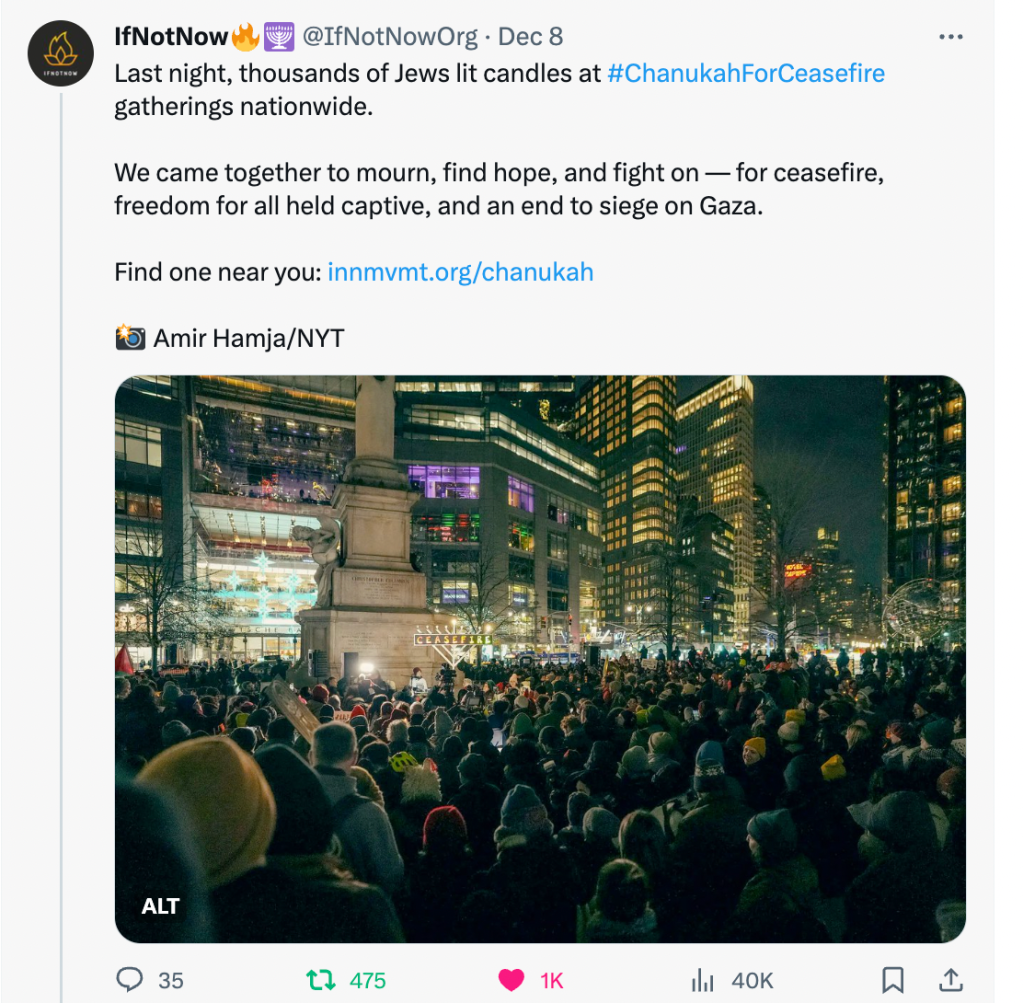
Greetings to those observing Hanukah and salute to those participating in #ChanukahForCeasefire demonstrations around the United States. Thousands of Jews have been lighting candles at #ChanukahForCeasefire gatherings, coming together “to mourn, find hope, and fight on — for ceasefire, freedom for all held captive, and an end to siege on Gaza,” says IfNotNow, a movement of American Jews “organizing for equality, justice, and a thriving future for all: our neighbors, ourselves, Palestinians, and Israelis.” To find one near you, go to: https://innmvmt.org/chanukah.
Such actions, and those of thousands including high school students marching around the world to call for #ceasefirenow, provide hope in a world that feels heavy. It is unbearable to think of the thousands killed, maimed and displaced in conflict areas, especially children.
Public opinion worldwide is clearly for #CeasefireNow, calls being ignored by those who could stop the bombing that continues to claim lives. What can we do? Hold on to ourselves and do what we can, where we can, when we can. Inform ourselves, share information – double-check before sharing so we don’t pass on #fakenews — donate to causes, participate in public actions.
I woke up on Wednesday morning wondering if people would take time out to be still for 10-15 min on the same day, to collectively visualise peace, to engage in prayer, meditation, or just breathe and be calm in the midst of strife and violence. And maybe that stillness, if echoed by around the world on the same day will have an effect.
This developed into the global virtual vigil by Southasia Peace Action Network, or Sapan, taking place this Sunday across different time zones. We asked people to spare 10 minutes to #be4peace, in their own way, anytime between 10am-12 noon in their own time zones.
Old friend and fellow peacemonger Mazher Hussain in Hyderabad, India, who runs the Confederation of Voluntary Associations, India, activated his contacts. Interfaith scholar and activist Urmi Chanda in Mumbai made a visual, tweaked by another volunteer, Srinivas at COVA.
#be4peace image by Urmi Chanda: The watermelon as a symbol of resistance.
By Saturday night, over 40 organisations had endorsed the call, along with dozens of peacemongers around the world, from Australia to the U.S. west coast. We even got pledges from Tel Aviv, France, and Croatia. See list of public endorsements at the Sapan website.
On another note, I am thrilled that the latest Sapan News features includes a piece by Rumi Nagpal, a high school student in Colombo on learnings from an uprising and his late grandmother who was a theatre artist. And Rajeev Soneja in Boston shares his take on India-Pakistan cricket drawing from a great archive of cricket books, with some historic photos shared by my old friend, news photographer Rahat Ali Dar in Lahore.
Lastly, sharing below a compilation of what I’ve been reading and watching, in no particular order.
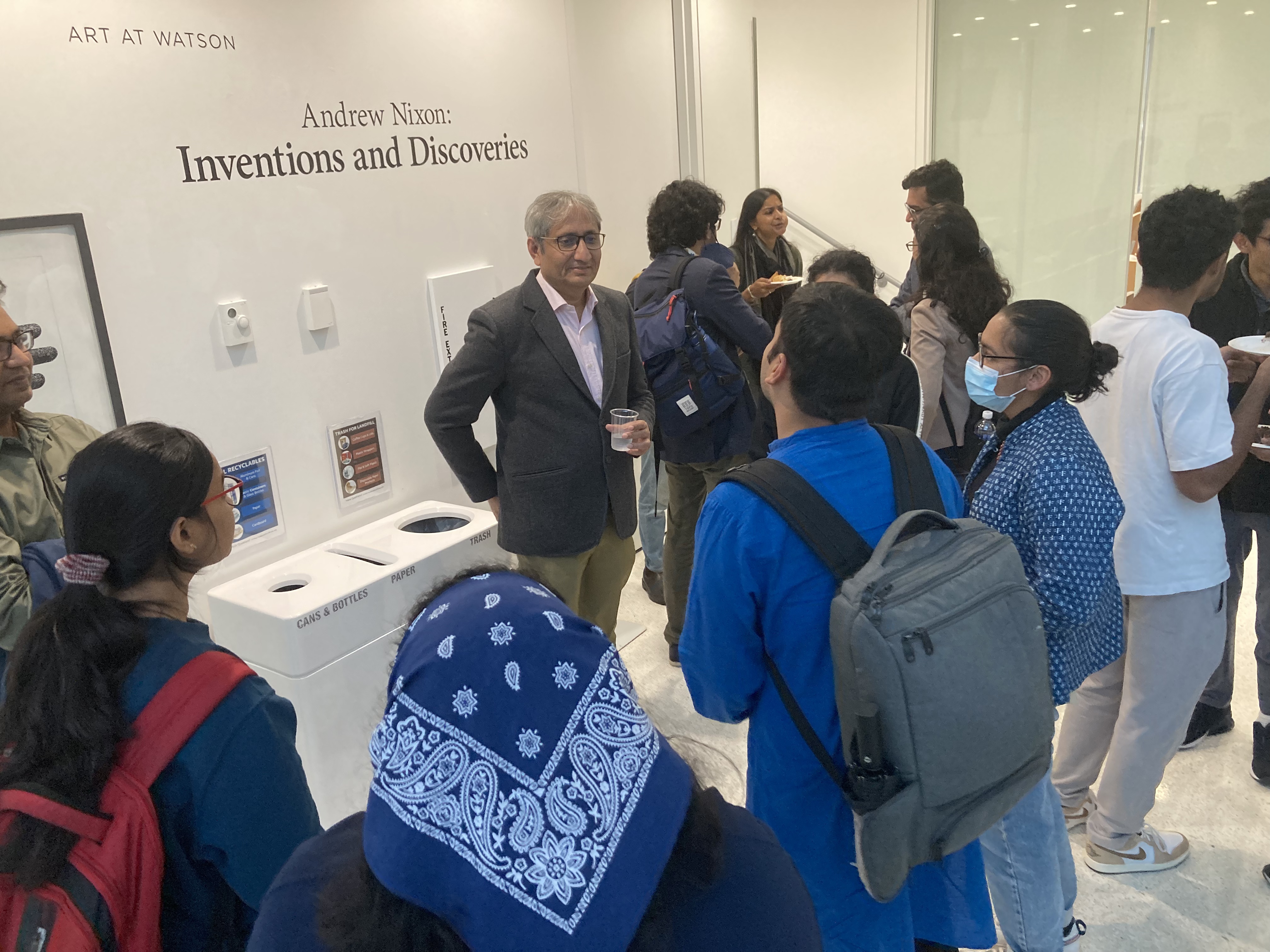
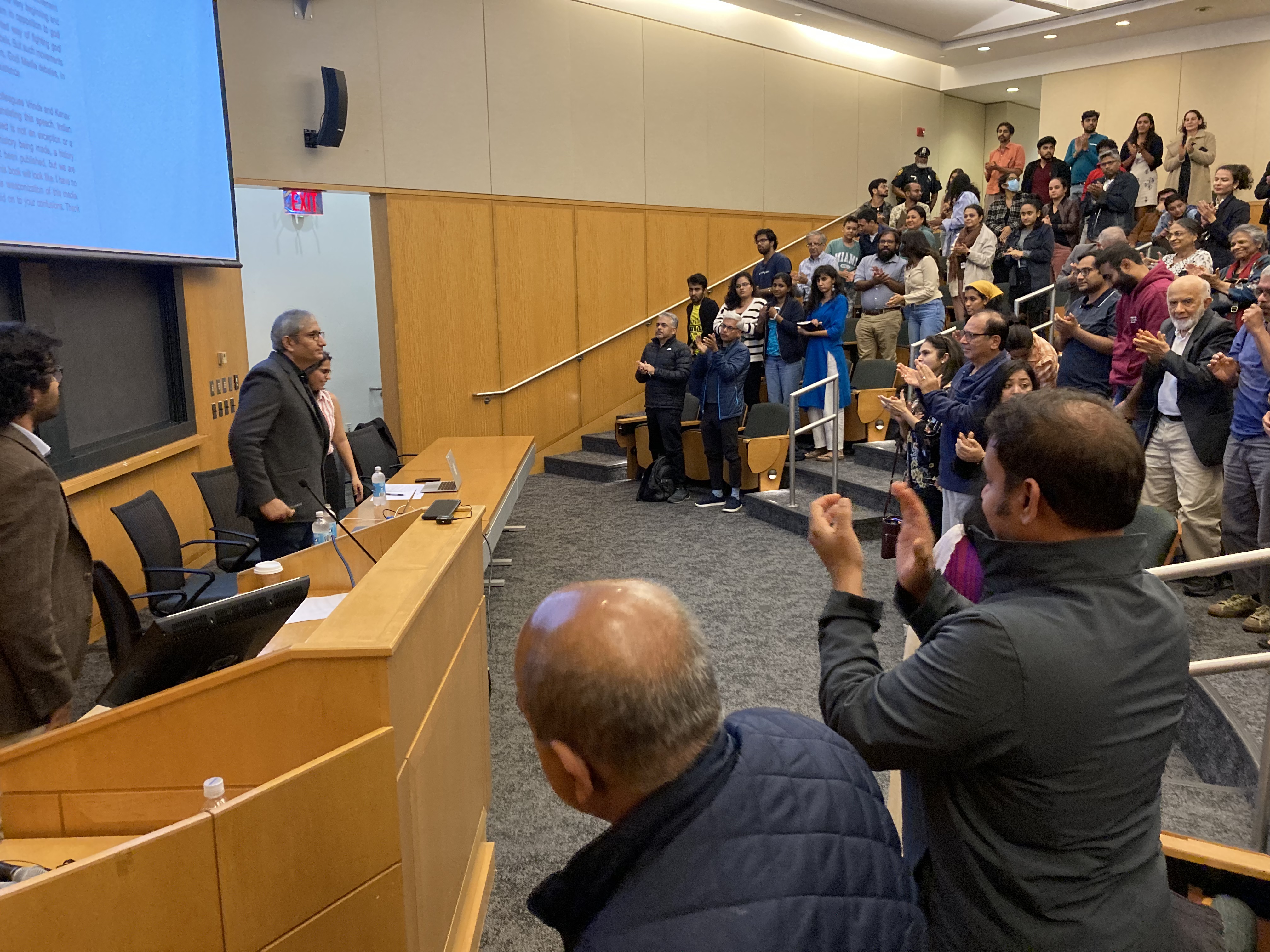
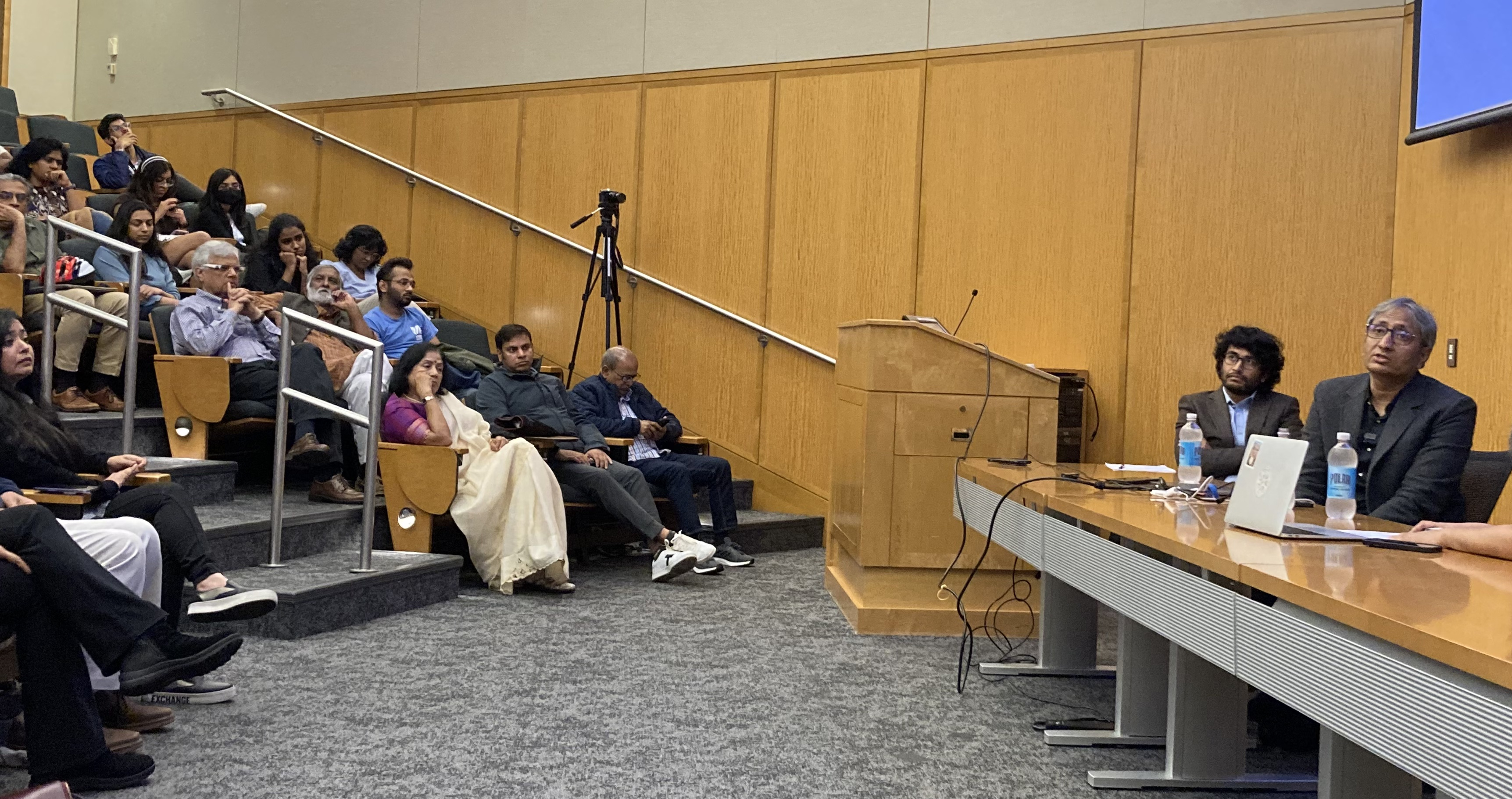
The day the popular Indian journalist Ravish Kumar spoke at Harvard, Oct. 2, happened to mark Gandhi Jayanti, Mahatama Gandhi’s birth anniversary. A day that social media users celebrated Gandhi-ji’s murder was and glorified his murderer on X, formerly Twitter, noted Kumar, talking in Hindi to students and community members filling the nearly 150-seater auditorium.
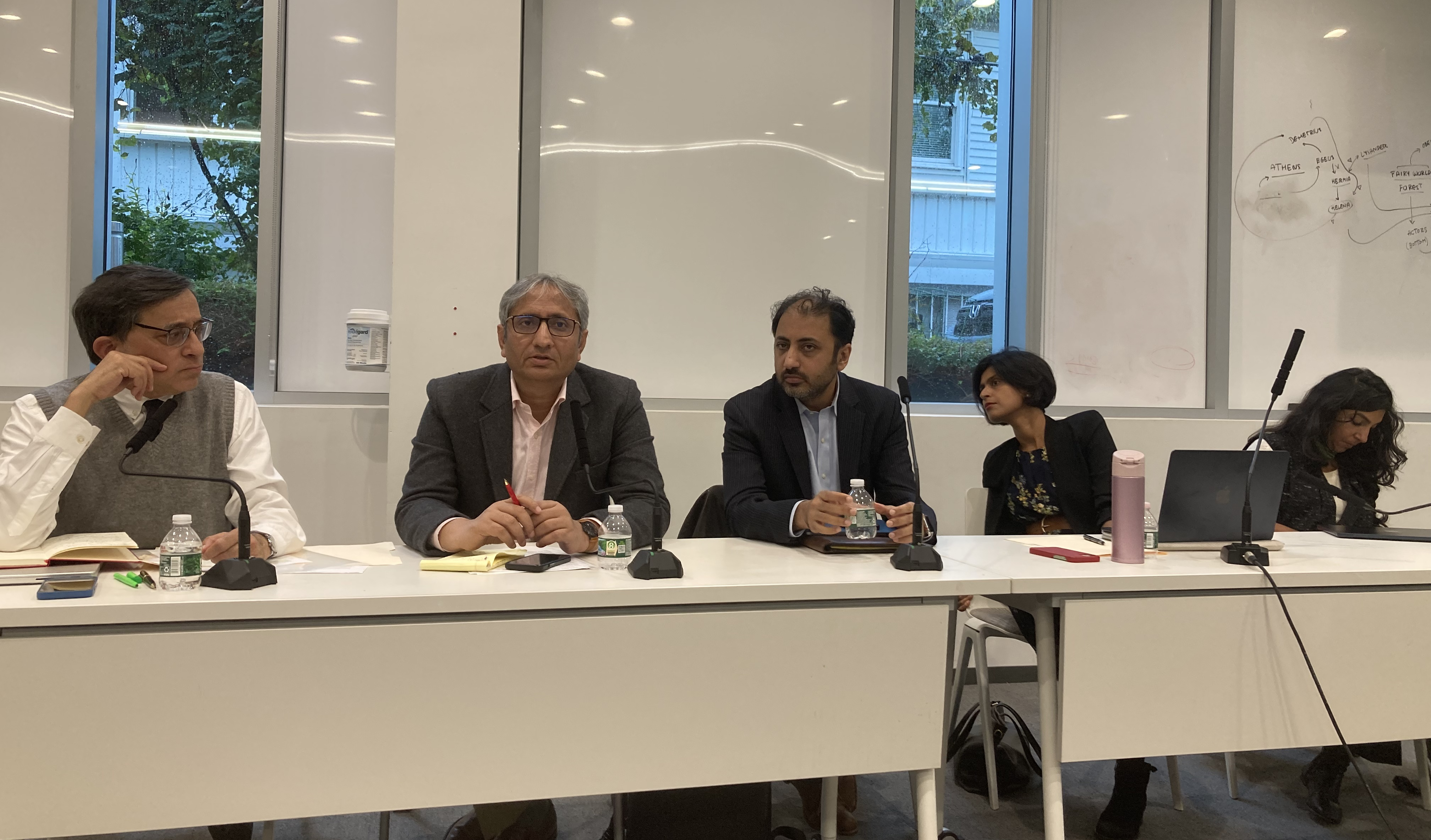
Ashutosh Varshney, Director of the Saxena Center for Contemporary South Asia at Brown University; Ravish Kumar; Wall Street Journal columnist Sadanand Dhume; Brown University faculty Poulami Roychowdhury and Prerna Singh. Photo: Beena Sarwar
Students throng Ravish Kumar after his talk at Brown University.
Photo: Beena Sarwar
Standing ovation for Ravish Kumar after his talk at Harvard. Photo: Beena Sarwar
Discussion after the talk at Harvard. Not all questions were answered but as Ravish said, it’s important to ask them. Photo: Beena Sarwar
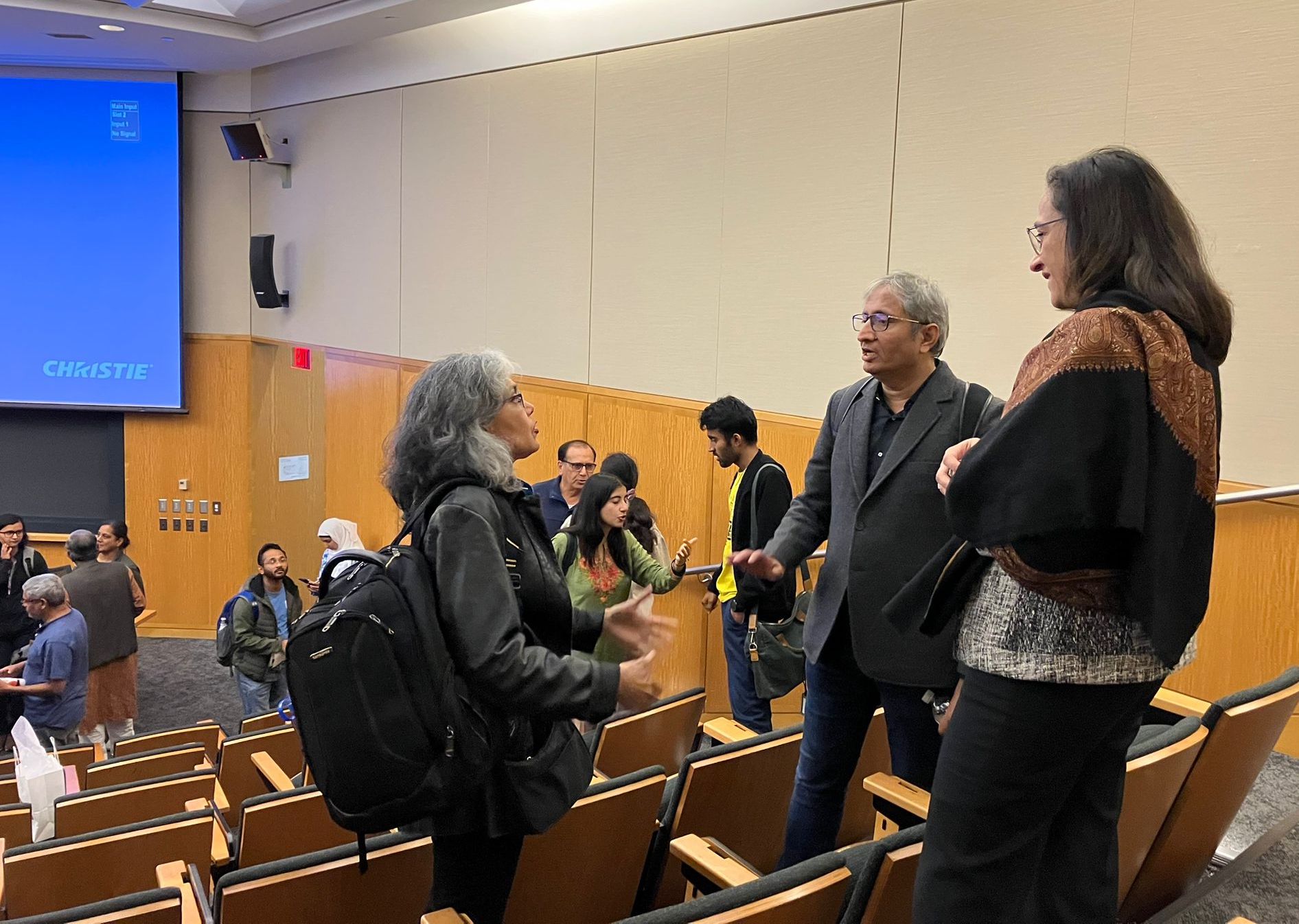
Talking to Ravish Kumar after the event, with Dr Deeba Husain from India. Photo: Rajeev Soneja
Ravish Kumar famously resigned from NDTV last November after its hostile takeover by Asia’s richest man Gautam Adani known to be close to Prime Minister Narendra Modi. While Kumar still has a huge viewership on YouTube – his channel has garnered over 7 million subscribers so far – it is an insecure platform, as he knows. The recently released documentary While We Watched (available on PBS) features Kumar, but as he also acknowledges, there are many others standing for journalistic values and ethics in India.
An FIR (first investigation report) was lodged against NewsClick in August, the day after a poorly-sourced New York Times report alleging that it had received funding from a network spreading “Chinese propaganda”.
The detained journalists included junior employees – and if they were being detained “simply because you believe that NewsClick is getting Chinese funds then a very wrong precedent is being set,” to quote prominent TV anchor Rajdeep Sardesai.
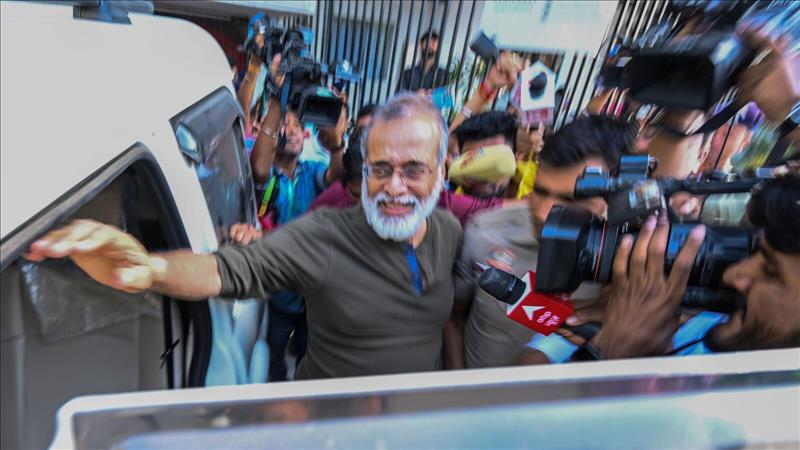
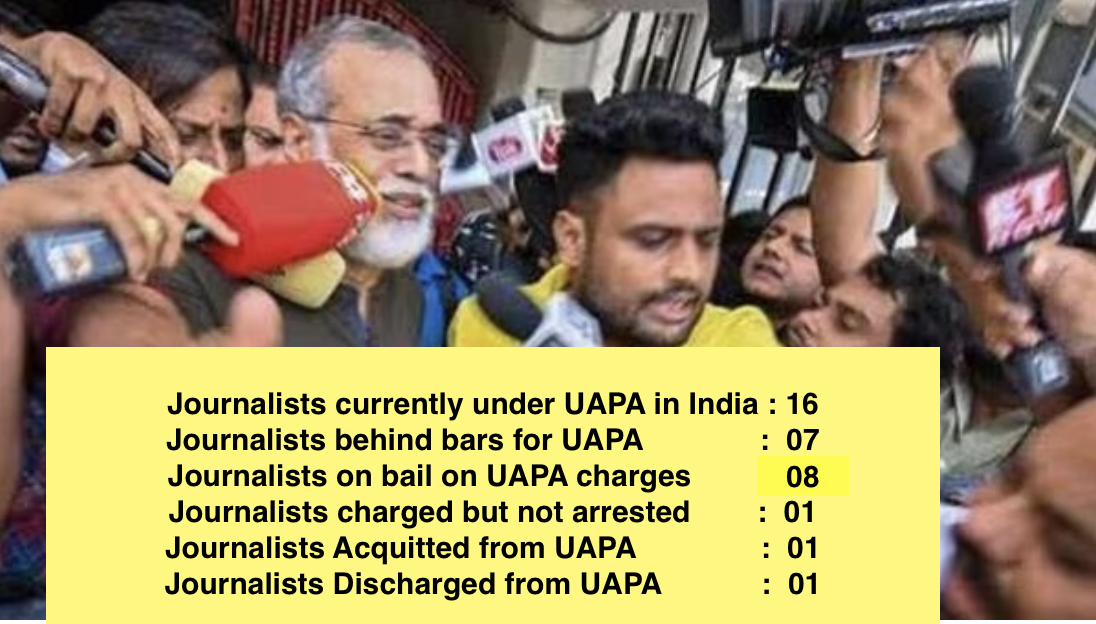
Newsclick founder and chief editor Prabir Purkayastha, and Amit Chakravarty, who heads the portal’s human resources section, were arrested under the draconian Unlawful Activities (Prevention) Act (UAPA). Since 2010, as many as 16 journalists have been charged under the UAPA, reports the Free Speech Collective, India, in a post that lists them, with details of those out on bail, the seven still behind bars, and others.
NewsClick founder and chief editor Prabir Purkayastha arrested. Photo credit: Raj K Raj/Hindustan Times via Getty Images, published by Amnesty International.
“In India, 16 journalists under UAPA ; seven behind bars” – image courtesy the Free Speech Collective, India
There is a huge pushback in India against these heavy handed tactics, which those in other countries are familiar with.
Below, the text of a joint letter by several journalists’ organisations to the Chief Justice of India:
Last month, another Indian fisherman incarcerated in Pakistan died while waiting to be repatriated. A young man in his thirties. Why he was held in the first place makes no sense to me, and to a lot of other people. India and Pakistan routinely detain each others fisherfolk. In doing so, they defy international law, deny the incarcerated men consular access in violation of their own laws, hold them in prison for months if not years (a costly enterprise), then take months to verify the identities of those who have served their terms, so that they remain imprisoned even after completing their sentences. I asked my friend Jatin Desai in Mumbai to write about this for Sapan News, the syndicated features I started a couple of years ago. We ended up doing the piece together. I’m sharing our article below, published in Sapan News, as well as in several other publications.Still relevant, and urgent for the authorities to take up. Please share widely.
The suffering continues: No relief in sight for Indian, Pakistani fishermen
Another Indian fisherman died while in detention in Pakistan. Such deaths in custody routinely take place on either side. Pakistan and India routinely arrest and imprison each others’ fisherfolk for crossing an invisible maritime border. This should not be happening. Meanwhile, both countries must urgently at least revive the Joint Judicial Committee for cross-border prisoners
By Jatin Desai and Beena Sarwar
Passport photo of Jagdish Mangal, who died while waiting to be repatriated. Photo: Courtesy Edhi Foundation
If 99 Indian fishermen incarcerated in Pakistani prisons had been repatriated last month as agreed, Jagdish Mangal might still be alive.
Mangal was among the several Indian fishermen arrested by Pakistan’s Maritime Security Agency in February 2020 and detained in Malir prison, Karachi. He was 35 years old from Nana Vada, Gujarat.
Pakistan was to repatriate 99 Indian fishermen on 3 July, but this never happened for unexplained reasons. Mangal died on August 6 of ‘natural causes’ according to the medical certificate.
The attacks on the Christian community in Jaranwala near Faisalabad (former Lyallpur) are among a long string of such violence instigated by extremist elements seeking power in the name of religion in Pakistan. I co-wrote this article for Sapan News with a young reporter in Karachi who was initially only reporting on Pakistan’s first Minority Rights March. Then Jaranwala happened. We now present a longish read putting the violence in context and tracking the trajectory of a turning point in the state’s responses, with a couple of inputs from India
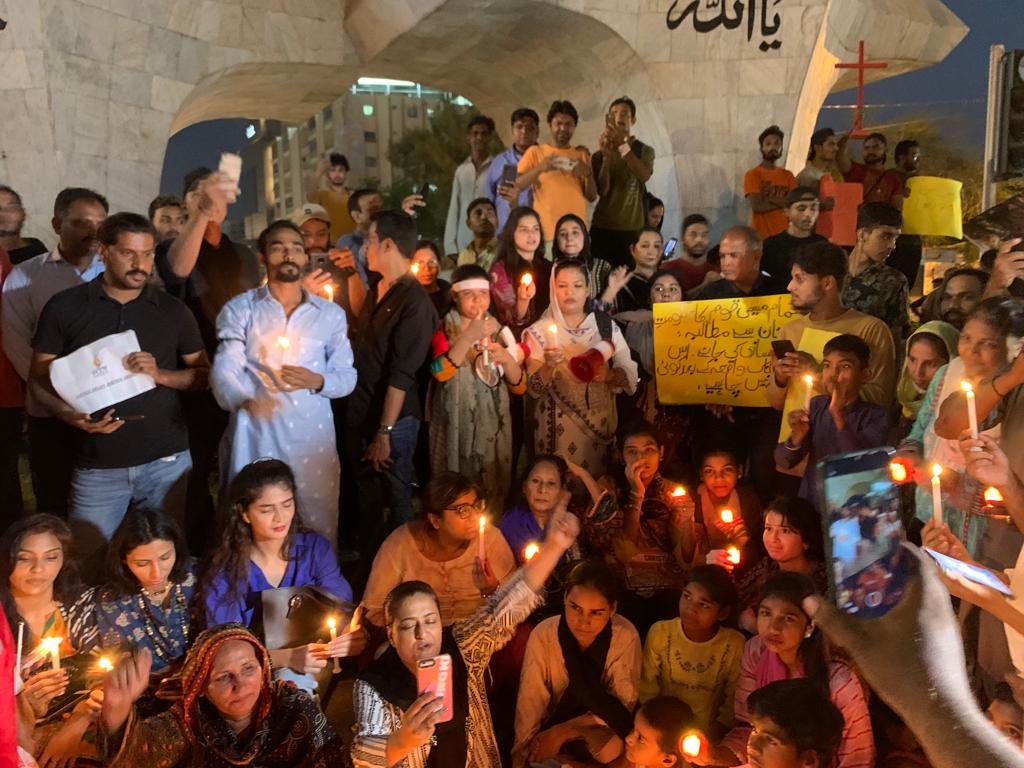
Karachi protest at Teen Talwar, 19 August 2023. Photo: Abdullah Zahid
Karachi protest at Teen Talwar, 19 August 2023. Photo: Abdullah Zahid
“Manzoor Masih – will be remembered!… The Christians of Shanti Nagar – will be remembered!… Rimsha Masih – will be remembered!… ”
Activist and dancer Sheema Kermani led the chanting, evoking the names of a long list of Pakistani Christian individuals and communities targeted by extremist elements in the name of religion over the years.
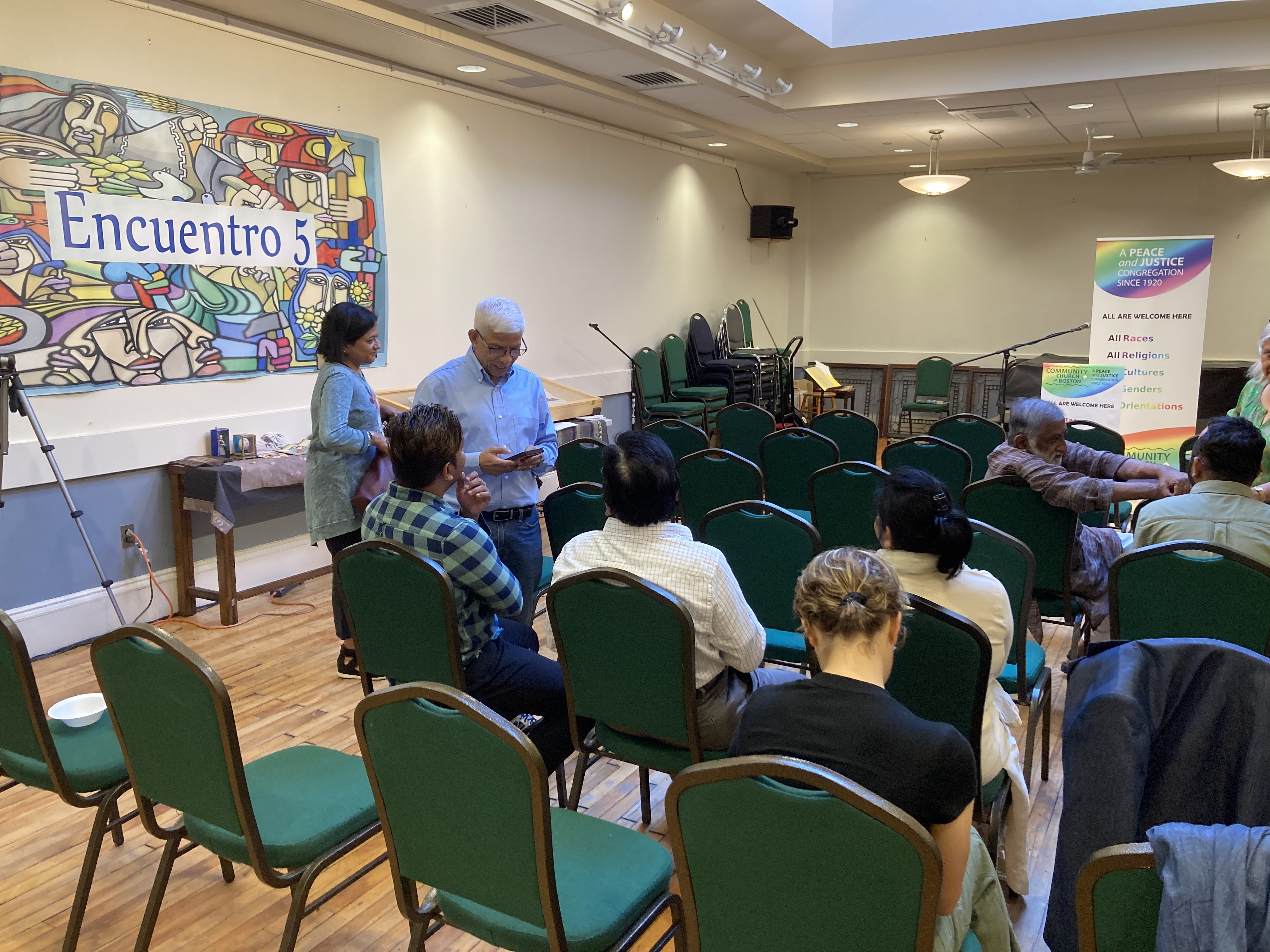
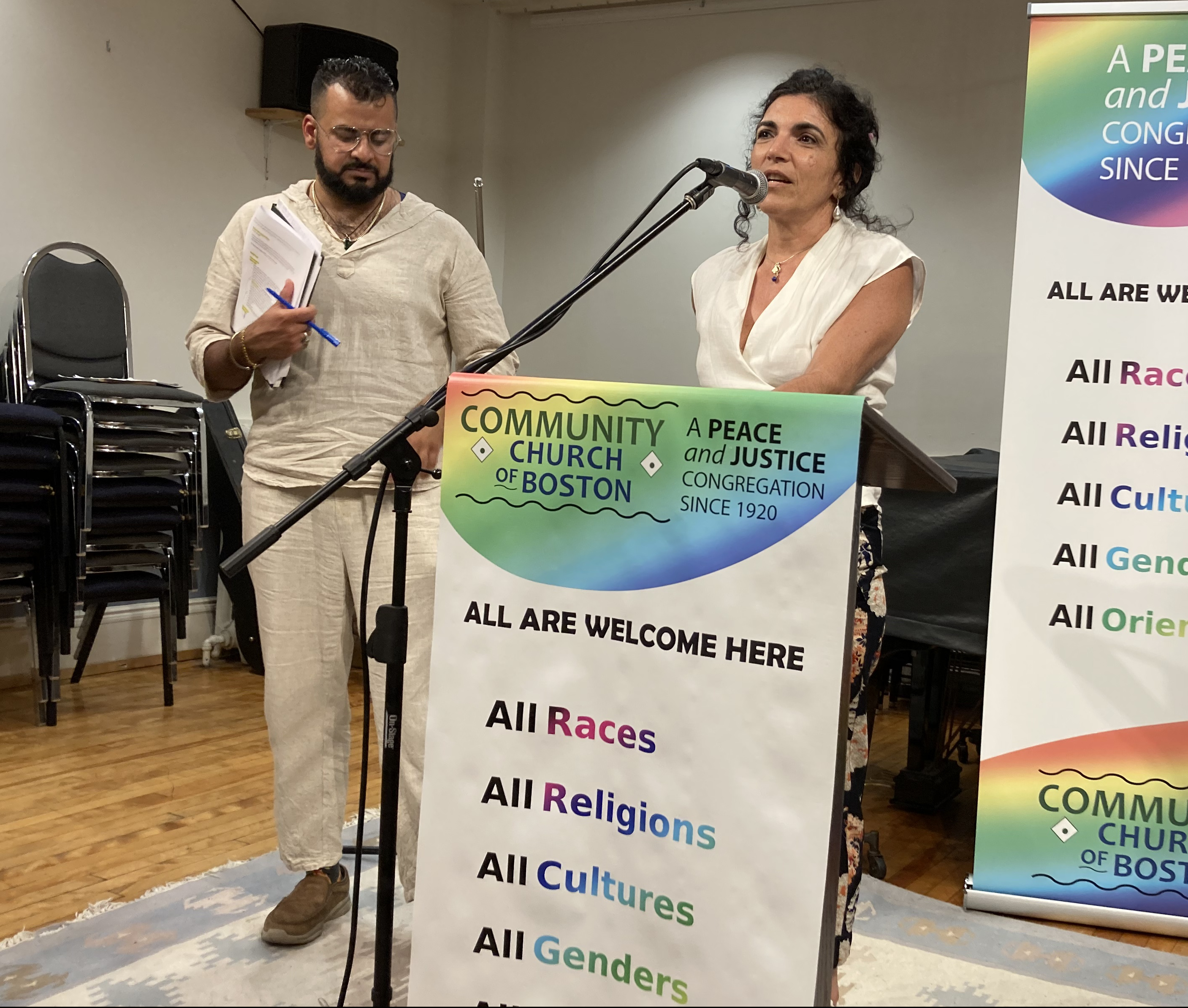
The goal was to talk about challenges faced by interfaith/inter caste couples and families and how to create inclusion across castes and religious divides.
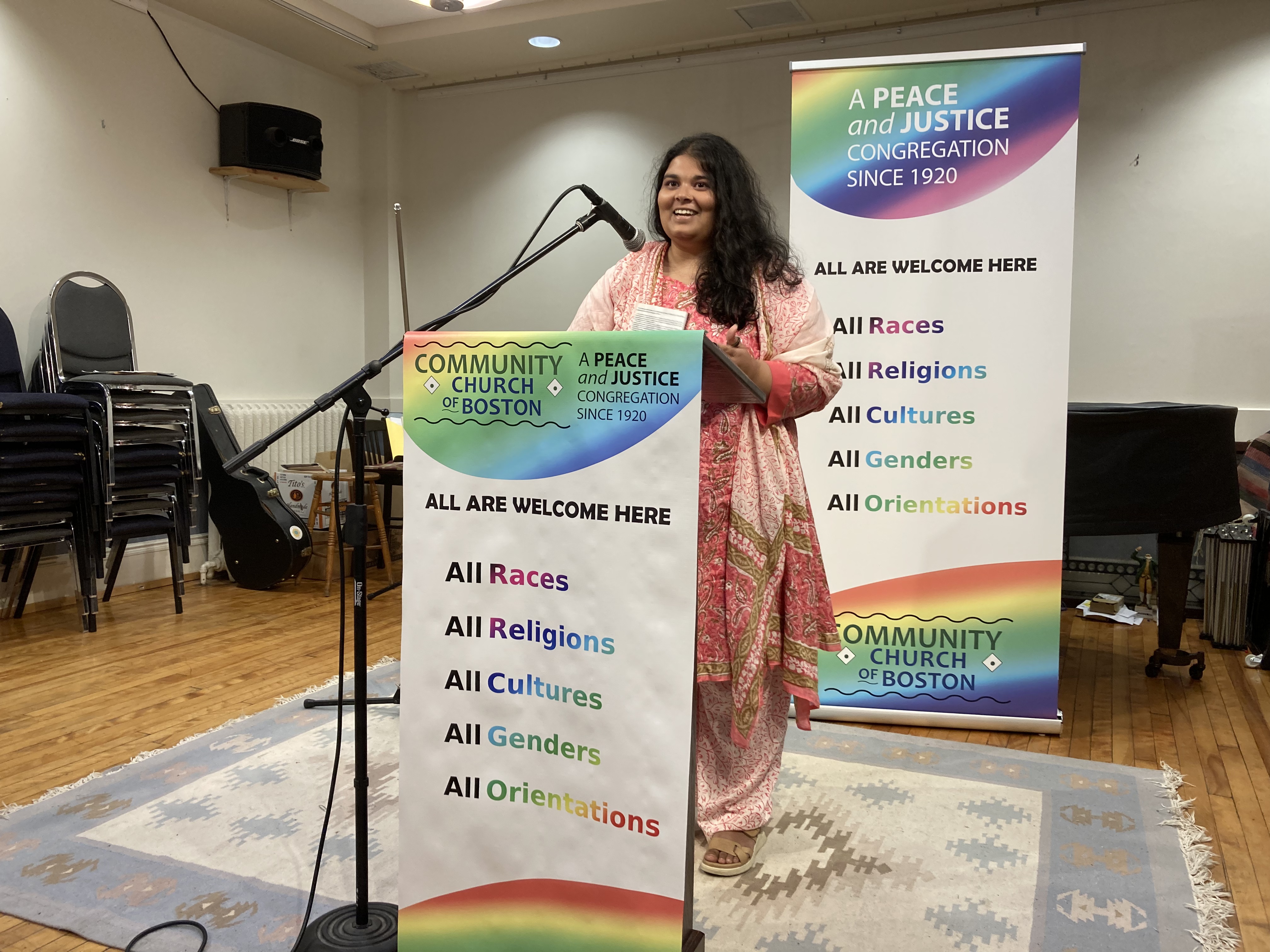
I was invited to represent Sapan, as well as its local partner, the Boston South Asian Coalition. Introducing the speakers was Manisha Sharma of BSAC, also part of the Sapan network – see the lovely piece on qawwali she wrote for Sapan News.
Inter-religious or inter-caste marriage is against the social dogma around Southasia, as she noted. “In India, only 5% marriages are inter-caste or inter-religious.” Many of these couples, including gay and queer couples are subjected to tremendous social, family, and psychological pressures or lose their lives in what are called ‘honour killings’.
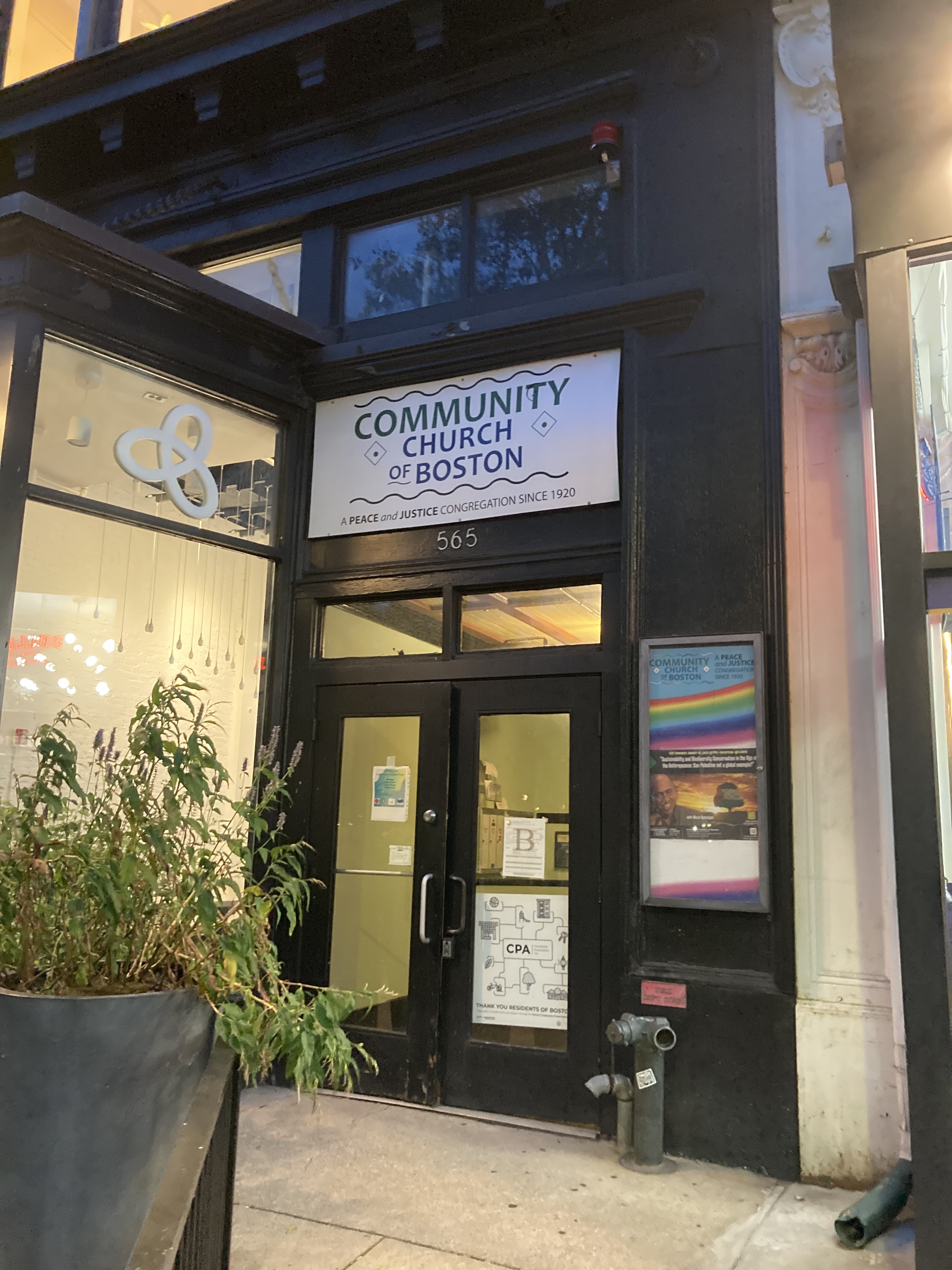
Entrance to the Community Church of Boston: A welcoming space tucked between shops at Copley Square: Promoting “Universal religion” Photo: Beena Sarwar
Setting up for the event. Sapan fiscal sponsor Encuentro-5 (e5) banner in background. Photo: Beena Sarwar
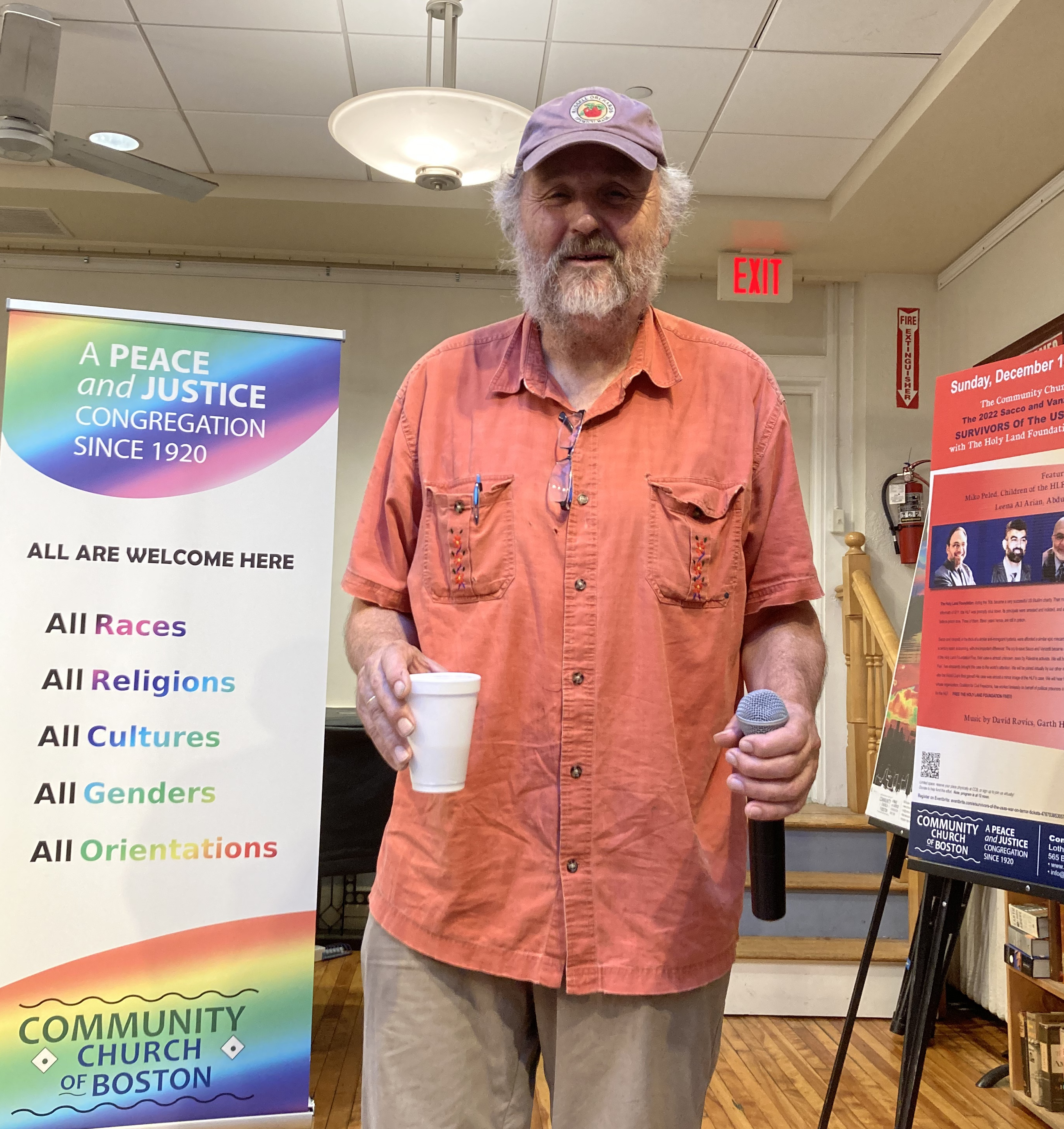
Community Church of Boston coordinator Dean Stevens: Celebrating love, combatting hate and bigotry. Photo: Beena Sarwar
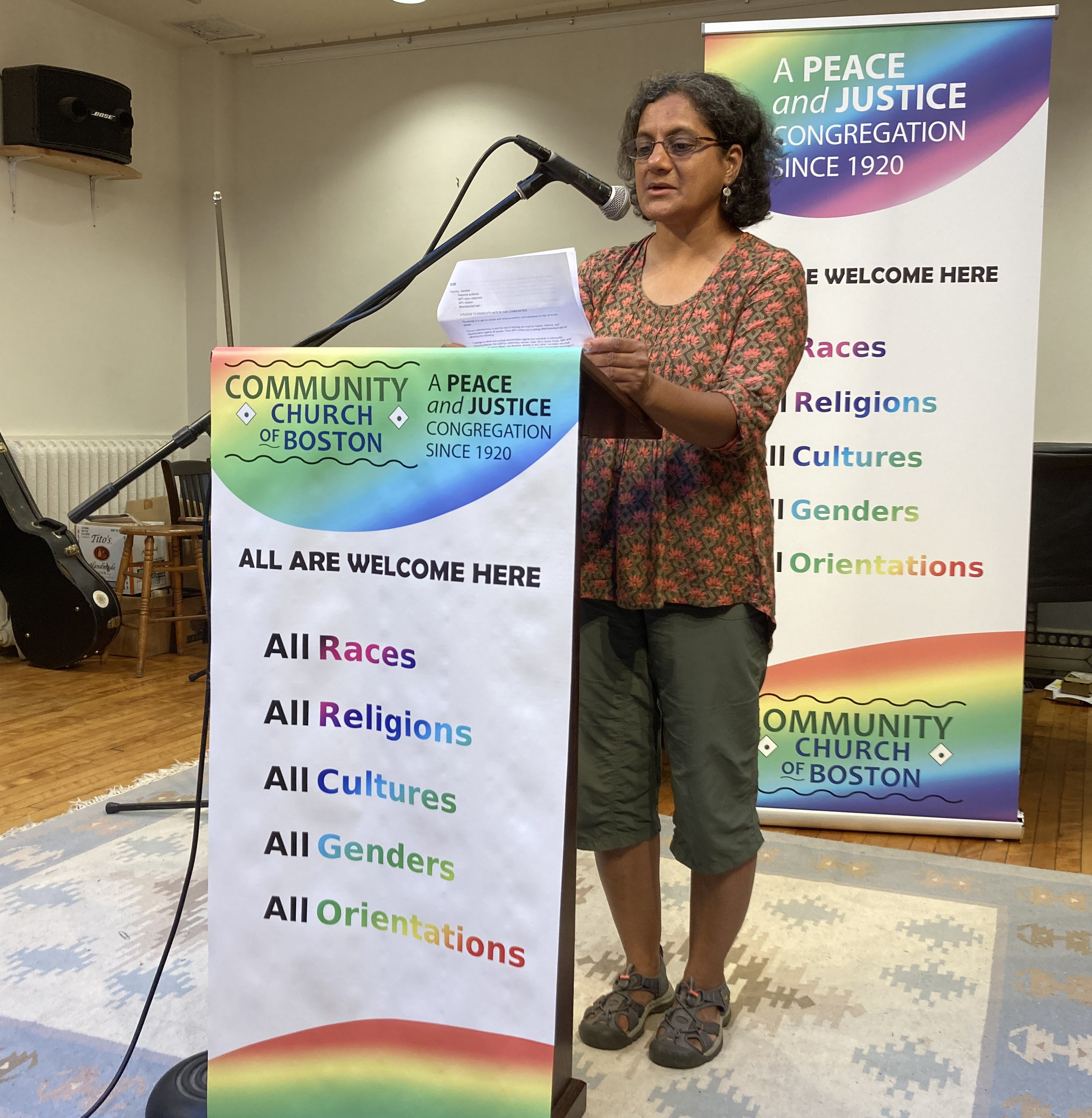
Manisha introducing the speakers and elegantly tying.threads together. Photo: Beena Sarwar
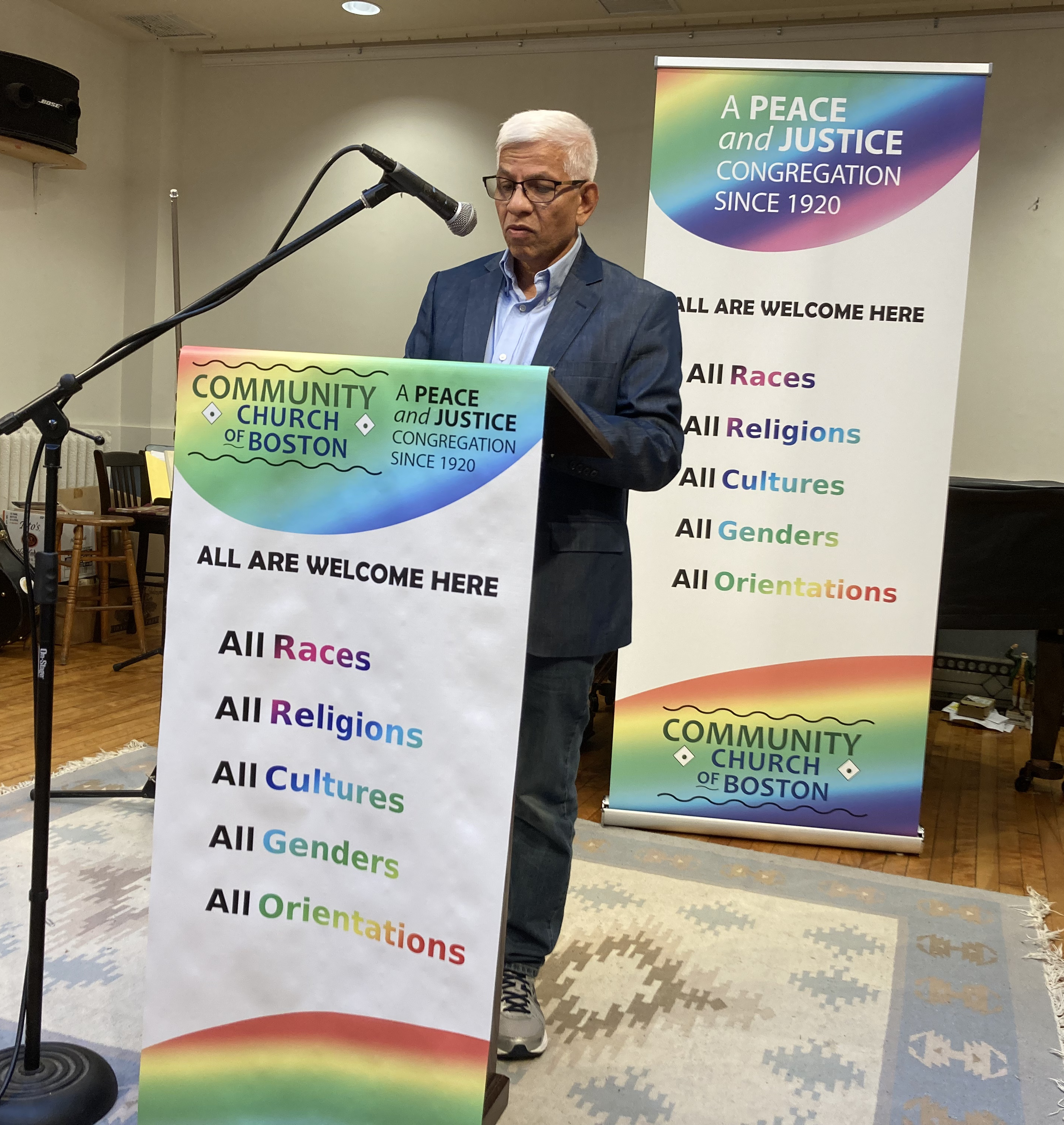
Sanjay Bhagat, a founding member of Boston Study Group: the only Ambedkarite organization in the New England area
Tamana Syed: Bestselling author, poet, Public Health program coordinator. Check her bio https://linktr.ee/tasyed and book ‘Falcon and the Dove’. Photo: Beena Sarwar
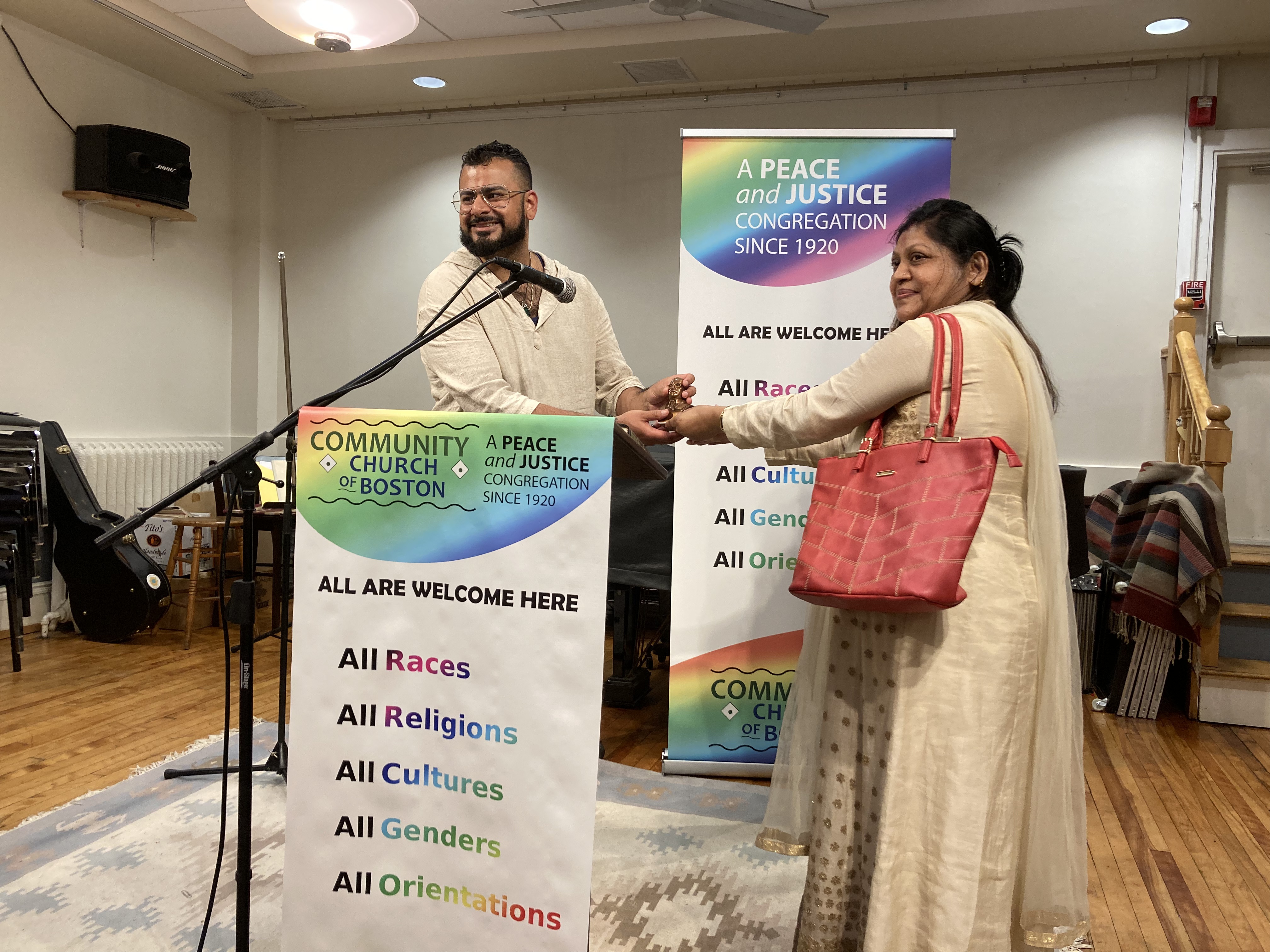
Boston Study Group representatives presenting a bust of Dr Ambedkar to Kandil of Muslims for Progressive Values for his contributions to the cause of interfaith harmony. Photo: Beena Sarwar
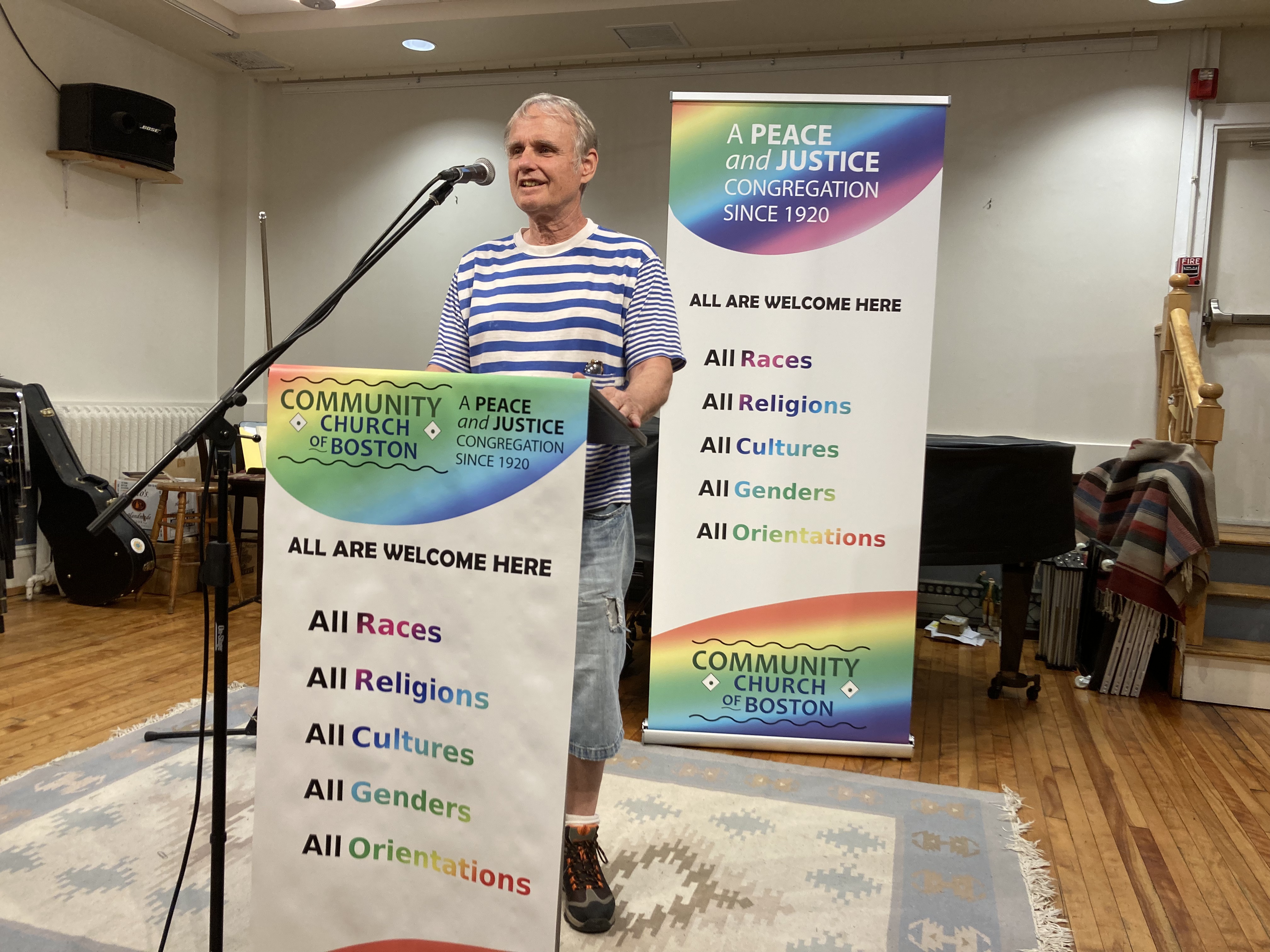
John announcing the upcoming Community Church annual meetup, “a celebration of people’s power, the world, and their resilience”. Photo: Beena Sarwar
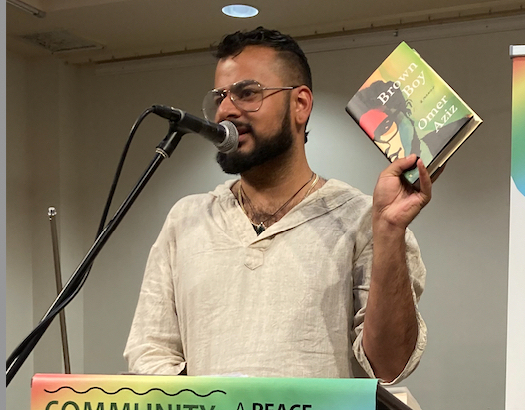
Community announcement: Omar Aziz’s book just-published book Brown Boy. Photo: Beena Sarwar
Journalist Sussen announcing the screening of a documentary ‘Five men of Fidel’ coming up on 26 July. Photo: Beena Sarwar
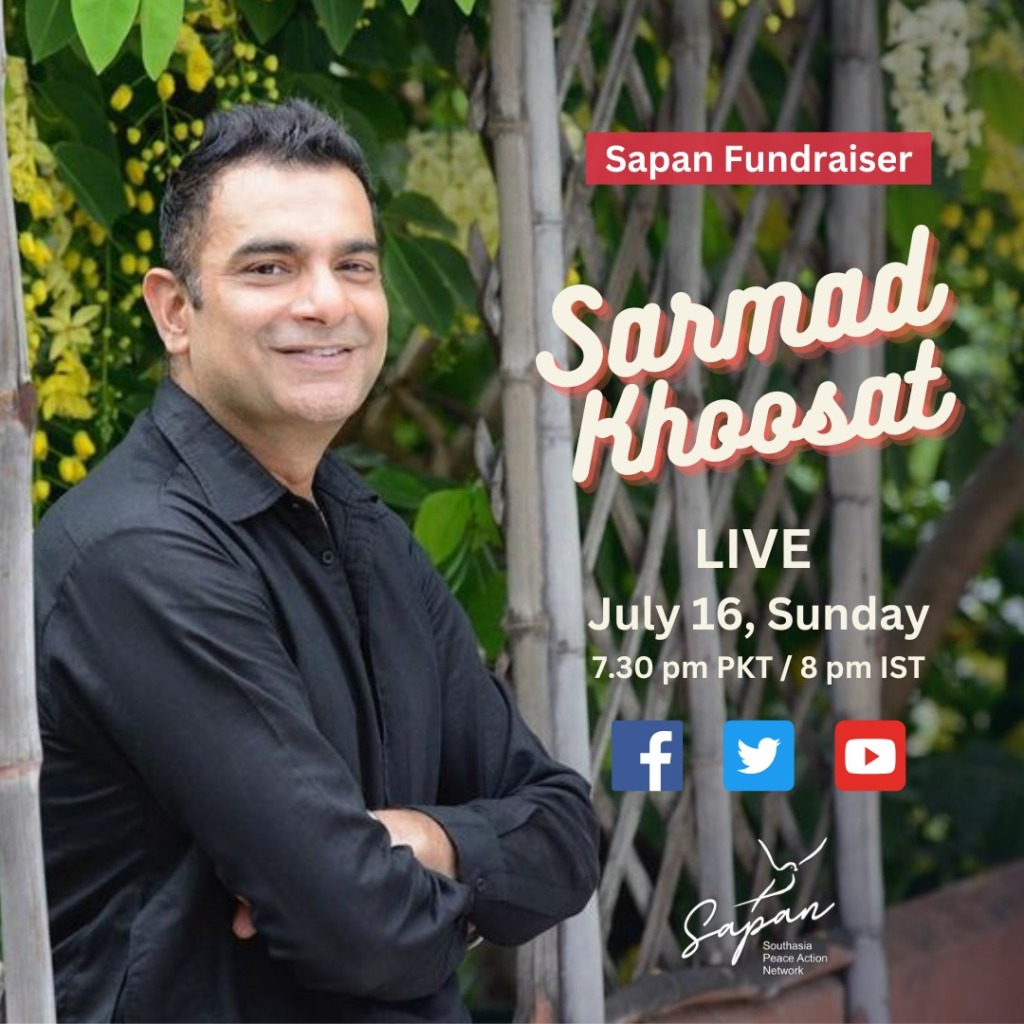
Exciting update: Sarmad Khoosat will allow us to share his great feature film Zindagi Tamasha with friends donating $50 or more to the Sapan fundraiser on Sunday. I saw the film at its U.S. premiere at the Indie Meme Film Festival 2021. This is a wonderful opportunity to watch this groundbreaking, controversial feature film – limited time availability.
A compilation of offerings from our Sapan network, including my latest venture Sapan News syndicated features. Together, we aim to further the narrative of regionalism, peace, and dialogue. What can you do? Read on
Visual: Aekta Kapoor/Sapan
Delighted to have acclaimed actor and director Sarmad Khoosat join us Sunday July 16 for Sapan’s first fundraiser, hosted by poet Dr Arvinder Chamak in Amritsar. Sarmad will be in conversation with the wonderful journalists Malinda Seneviratne in Colombo, Mandira Nayar in Delhi; and Lubna Jerar in Karachi.
A compilation of offerings from our Sapan network, including my latest venture Sapan News syndicated features. Together, we aim to further the narrative of regionalism, peace, and dialogue. What can you do? Read on
Visual: Aekta Kapoor/Sapan
Delighted to have acclaimed actor and director Sarmad Khoosat join us Sunday July 16 for Sapan’s first fundraiser, hosted by poet Dr Arvinder Chamak in Amritsar. Sarmad will be in conversation with the wonderful journalists Malinda Seneviratne in Colombo, Mandira Nayar in Delhi; and Lubna Jerar in Karachi.











 Journeys to democracy