The recent disbanding of Facebook and Instagram’s third-party factchecking programme has raised fears about the kind of news and information that will shape public discourse. Whatever facts or non-facts get pushed out, it is up to us, citizens who are news producers and consumers through our social media apps, to be the change. The Social and Digital Media Ethics Code and Pledge, an initiative by Sapan News, is a step in this direction.
This makes it all the more important for those of us who strive to uphold these principles and who value facts over opinion, to buckle down and do what we can to “hold the line,” to use the words of Filipina journalist Maria Ressa.
That is why we at Sapan News last year initiated a Social and Digital Media Ethics and Responsibility Pledge, which provides guidelines with resources to help social media and digital media users enhance their credibility. Endorse here
COMMUNITY INVITE: If you are in the Boston area, you are invited to a screening of my documentary film ‘Democracy in Debt: Sri Lanka Beyond the Headlines’ (25 min), followed by a discussion, at the Cambridge Public Library on Sunday 24 November, 2-4 pm. If you are not here or unable to join, please tell people you know who might like to:
‘Democracy in Debt: Sri Lanka Beyond the Headlines’ A film by Beena Sarwar Sunday 24 November, 2-4 pm At Cambridge Public Library.
Trailer: ‘Democracy in Debt: Sri Lanka Beyond the Headlines’
The film will be followed by a discussion moderated by Pratyush Bharati of the Boston South Asian Coalition. Discussants include Bangladesh origin activist Hayat Imam of the Massachusetts Peace Action, Sri Lankan human rights lawyer Thyagi Ruwapathirana, a fellow at the Harvard Law School, and the filmmaker Beena Sarwar, a journalist and peace activist from Pakistan.
Those wishing to watch the film through the Global Community Screenings series are welcome to participate by filling in the form at this link.
Support non-profit journalism. Help Sapan News meet its NewsMatch challenge and raise $15,000 by year end. All donations to Sapan News are tax-deductible.
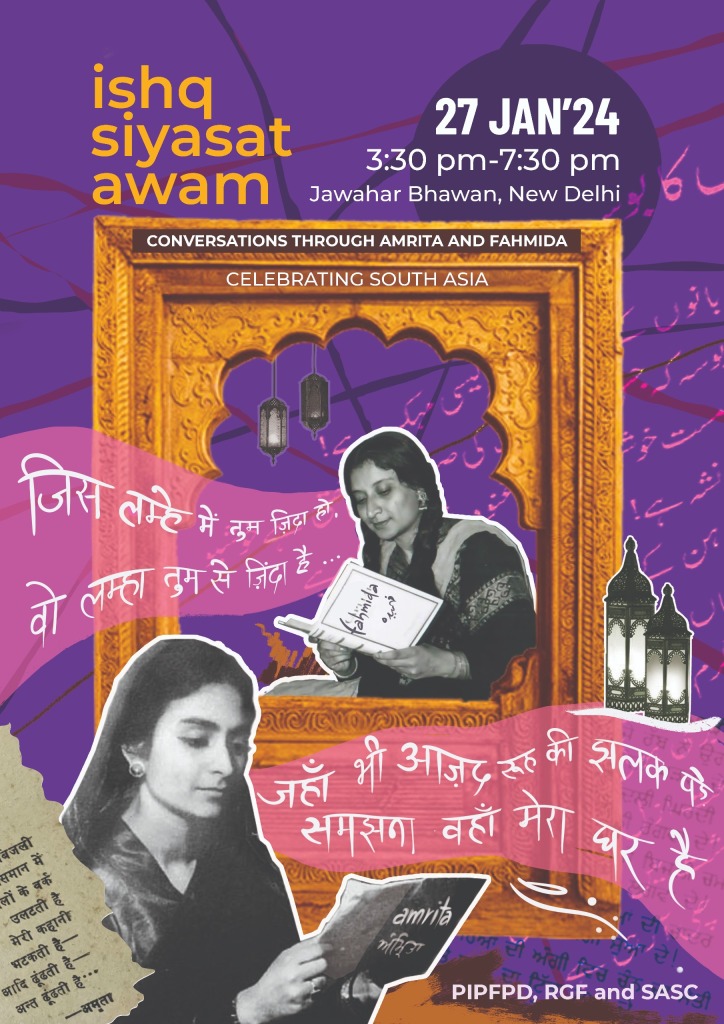
Radical love, epitomised by the late Amrita Pritam and Fahmida Riaz is ‘one of the seeds of the revolutionary thought process’, to quote the Pakistan India People’s Forum for Peace and Democracy (PIPFPD) stalwarts who organised the event – Vijayan MJ, Tapan Bose, and Dr Syeda Hameed. Their consistent work over the decades for peace and justice is truly inspirational, and I feel privileged to know them personally.
I was also privileged to know one of the late poets personally, Fahmida ‘Khala’ (aunt) to me, who was close to my father Dr. M. Sarwar. He led the Democratic Students Federation (DSF), Pakistan’s first student movement while at Dow Medical College in Karachi, 1949-54.
I’ve uploaded archives about the movement here: drsarwar.wordpress.com. Principles of that struggle continue to show the way, like the importance of coming together across divides for a minimum common agenda. For DSF, it was student rights. For Sapan, it’s Southasia Peace. We need it now, for the sake of the people of the region, and beyond.
The Videos section of the Dr Sarwar blog includes a playlist of video clipsfrom the event held at the Karachi Arts Council in January 2010 to commemorate DSF and the student movement, a few months after my father passed on.
Compered by the actor Rahat Kazmi, the event featured speeches from young activists, students, and academics like Amar Sindhu, Alia Amirali,Ali Cheema, and Varda Nisar, as well as veterans like I.A. Rehman, besides the singer Tina Sani, Taimur Rahman and his band Laal, and Fahmida Riaz.
Fahmida Khala recited her poem ‘Palwashey Muskurao’ (Palvasha, smile), dedicated to daughter of late Afzal Bangash of the Mazdoor Kissan Party (Workers’ and Peasants’ Party), and the followers of other late leftist leaders. They may no longer be on this earth, but their principles and aspirations for human rights and dignity continue to show the way.
A message from the journalist Amitabh Pal about a mutual friend, David Barsamian of Alternative Radio in Colorado reminded me of this piece originally published in The News on Sunday, 8 Oct. 2006, about an event with Noam Chomsky where I first met David. The article is still all-too relevant, but the link no longer works so I’m sharing the piece here without any changes; just added some hyperlinks and photos.
Essential reading – and doing: Eqbal Ahmad
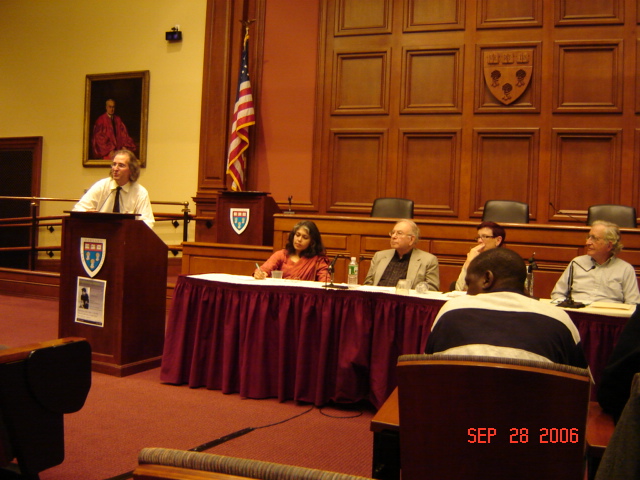
Book launch: The Selected Writings of Eqbal Ahmad, Cambridge, September 28, 2006.
Beena Sarwar
John Trumbour addressing the event. Panel: Beena Sarwar, Stuart Schaar, Margaret Cerullo, Noam Chomsky. Photo: Courtesy MAPA.
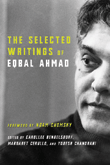
When Venezuelan president Hugo Chavez in his address to the UN on Sept 20, held up a copy of Noam Chomsky’s Hegemony or Survival: America’s Quest for Global Dominance (2003) and recommended it as essential reading to understand contemporary world politics, he could have been talking about The Selected Writings of Eqbal Ahmad, for which Chomsky, Eqbal’s long-time friend, wrote the foreword. Chavez identified “the hegemonic pretension of the North American imperialism” as “the greatest threat on this planet” to the survival of the human race.
The book that Jack launched (at HLS)
Chomsky also gave the main address for this collection of Eqbal Ahmad’s writings (Columbia University Press, 2006) at the book’s launch in Cambridge, USA, on September 28. John Trumpbour and Emran Qureshi of the Labor & Worklife Program at the Harvard Law School, who organised the event, didn’t publicise the event too aggressively because of the hype Chavez had generated for Chomsky.
The hall did get quite full, but they didn’t have to turn anyone away at the door. The venue may have had something to do with this. Chomsky, a linguistics professor now retired from the neighbouring MIT, is rarely invited to Harvard. Harvard Law School professor Alan Dershowtiz criticises Chomsky for being too “black and white” but often has to concede the basic truth of the points Chomsky makes.
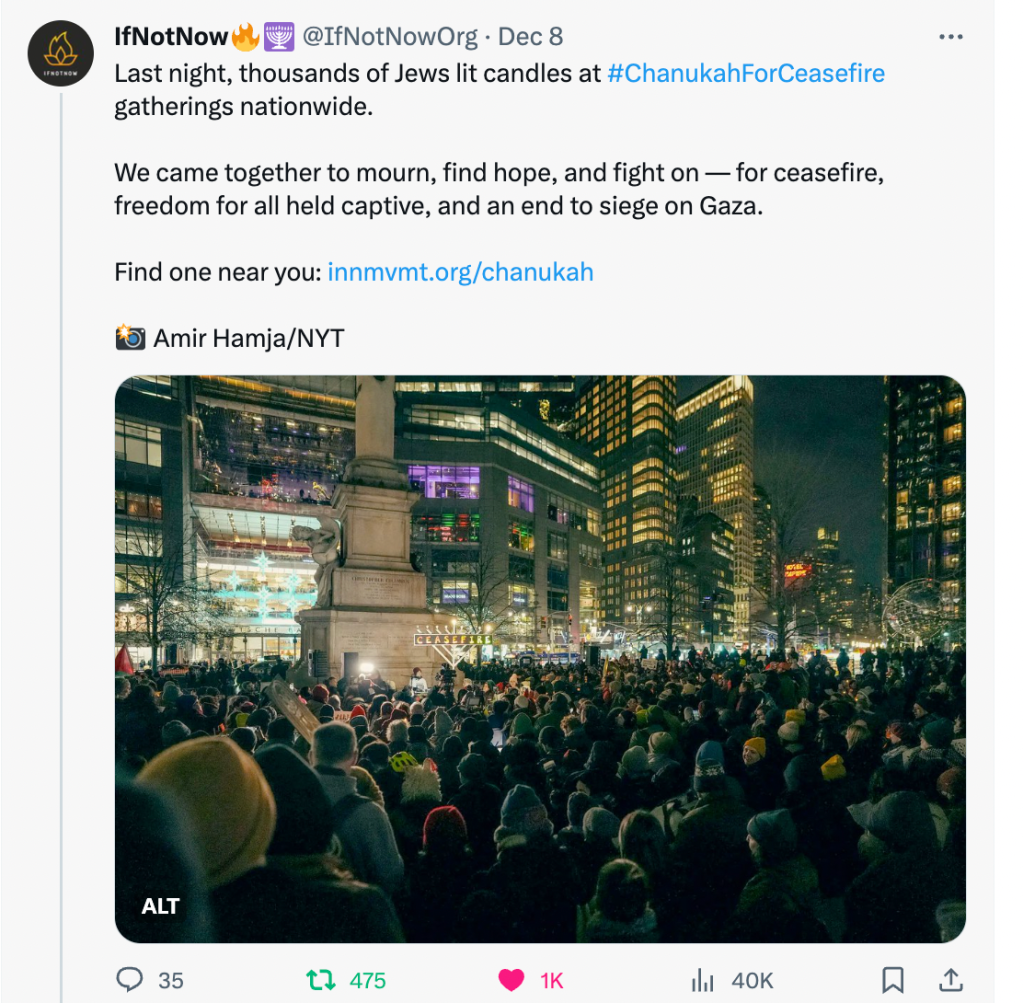
Greetings to those observing Hanukah and salute to those participating in #ChanukahForCeasefire demonstrations around the United States. Thousands of Jews have been lighting candles at #ChanukahForCeasefire gatherings, coming together “to mourn, find hope, and fight on — for ceasefire, freedom for all held captive, and an end to siege on Gaza,” says IfNotNow, a movement of American Jews “organizing for equality, justice, and a thriving future for all: our neighbors, ourselves, Palestinians, and Israelis.” To find one near you, go to: https://innmvmt.org/chanukah.
Such actions, and those of thousands including high school students marching around the world to call for #ceasefirenow, provide hope in a world that feels heavy. It is unbearable to think of the thousands killed, maimed and displaced in conflict areas, especially children.
Public opinion worldwide is clearly for #CeasefireNow, calls being ignored by those who could stop the bombing that continues to claim lives. What can we do? Hold on to ourselves and do what we can, where we can, when we can. Inform ourselves, share information – double-check before sharing so we don’t pass on #fakenews — donate to causes, participate in public actions.
I woke up on Wednesday morning wondering if people would take time out to be still for 10-15 min on the same day, to collectively visualise peace, to engage in prayer, meditation, or just breathe and be calm in the midst of strife and violence. And maybe that stillness, if echoed by around the world on the same day will have an effect.
This developed into the global virtual vigil by Southasia Peace Action Network, or Sapan, taking place this Sunday across different time zones. We asked people to spare 10 minutes to #be4peace, in their own way, anytime between 10am-12 noon in their own time zones.
Old friend and fellow peacemonger Mazher Hussain in Hyderabad, India, who runs the Confederation of Voluntary Associations, India, activated his contacts. Interfaith scholar and activist Urmi Chanda in Mumbai made a visual, tweaked by another volunteer, Srinivas at COVA.
#be4peace image by Urmi Chanda: The watermelon as a symbol of resistance.
By Saturday night, over 40 organisations had endorsed the call, along with dozens of peacemongers around the world, from Australia to the U.S. west coast. We even got pledges from Tel Aviv, France, and Croatia. See list of public endorsements at the Sapan website.
On another note, I am thrilled that the latest Sapan News features includes a piece by Rumi Nagpal, a high school student in Colombo on learnings from an uprising and his late grandmother who was a theatre artist. And Rajeev Soneja in Boston shares his take on India-Pakistan cricket drawing from a great archive of cricket books, with some historic photos shared by my old friend, news photographer Rahat Ali Dar in Lahore.
Lastly, sharing below a compilation of what I’ve been reading and watching, in no particular order.
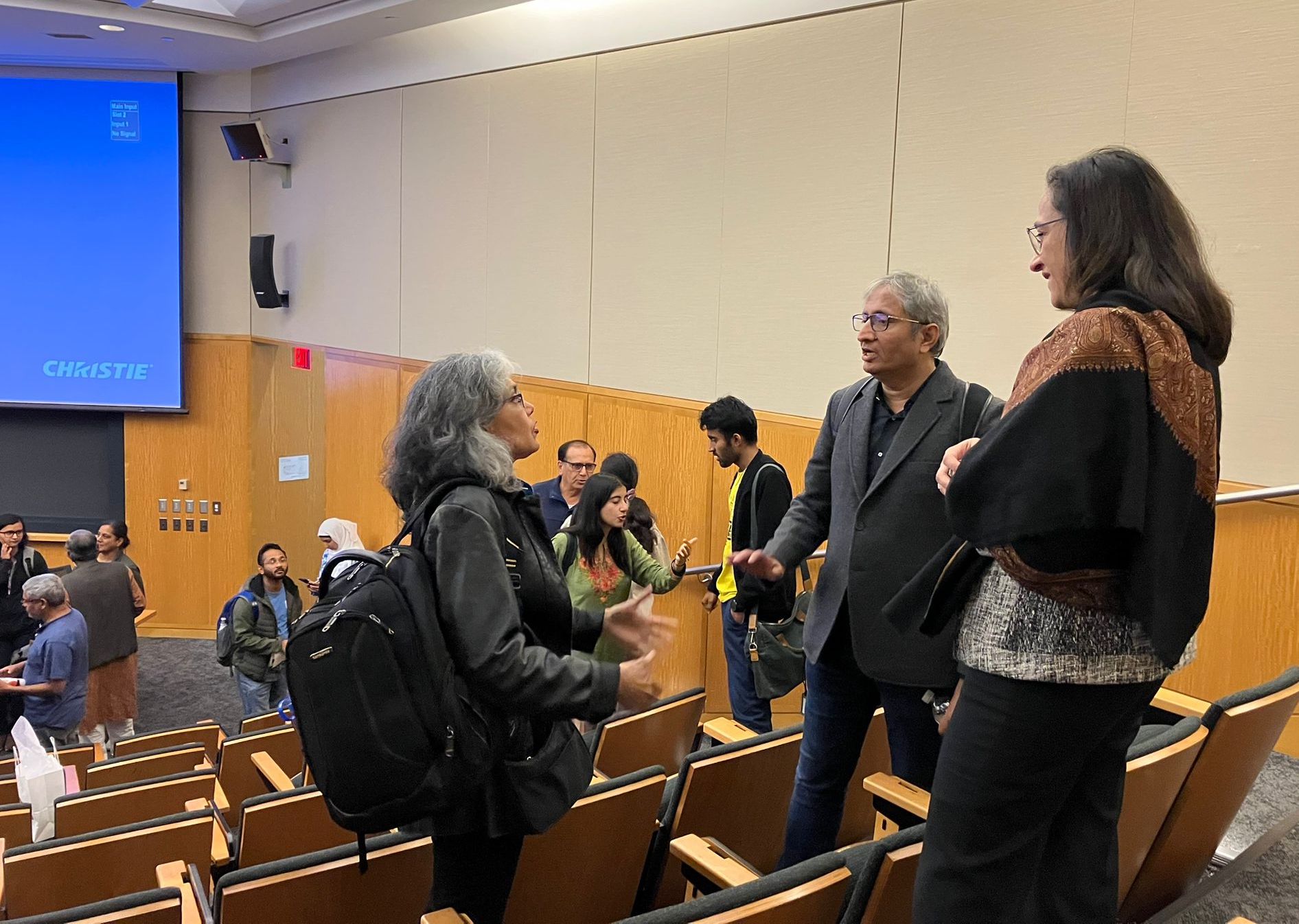
The day the popular Indian journalist Ravish Kumar spoke at Harvard, Oct. 2, happened to mark Gandhi Jayanti, Mahatama Gandhi’s birth anniversary. A day that social media users celebrated Gandhi-ji’s murder was and glorified his murderer on X, formerly Twitter, noted Kumar, talking in Hindi to students and community members filling the nearly 150-seater auditorium.
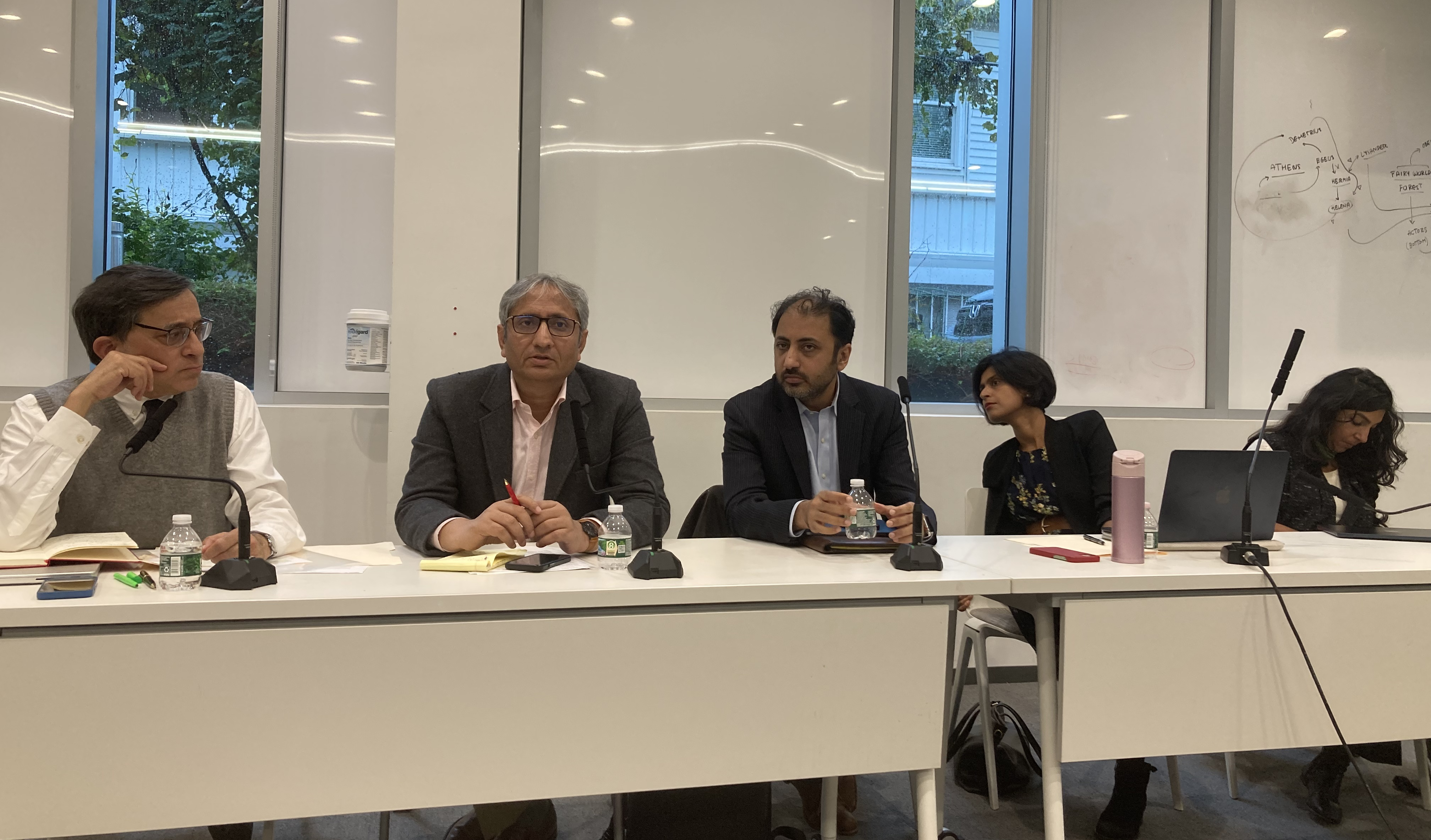
Ashutosh Varshney, Director of the Saxena Center for Contemporary South Asia at Brown University; Ravish Kumar; Wall Street Journal columnist Sadanand Dhume; Brown University faculty Poulami Roychowdhury and Prerna Singh. Photo: Beena Sarwar
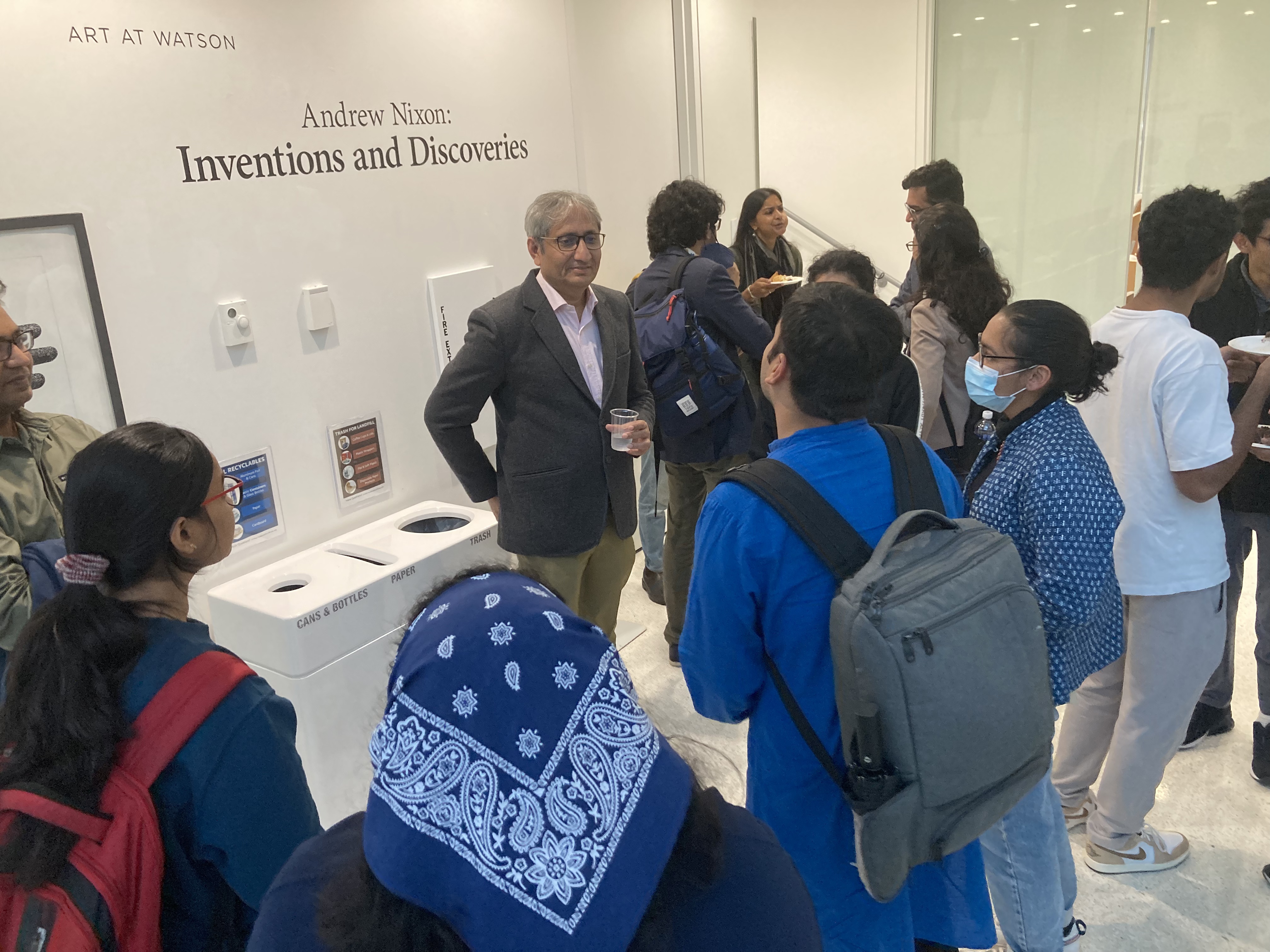
Students throng Ravish Kumar after his talk at Brown University.
Photo: Beena Sarwar
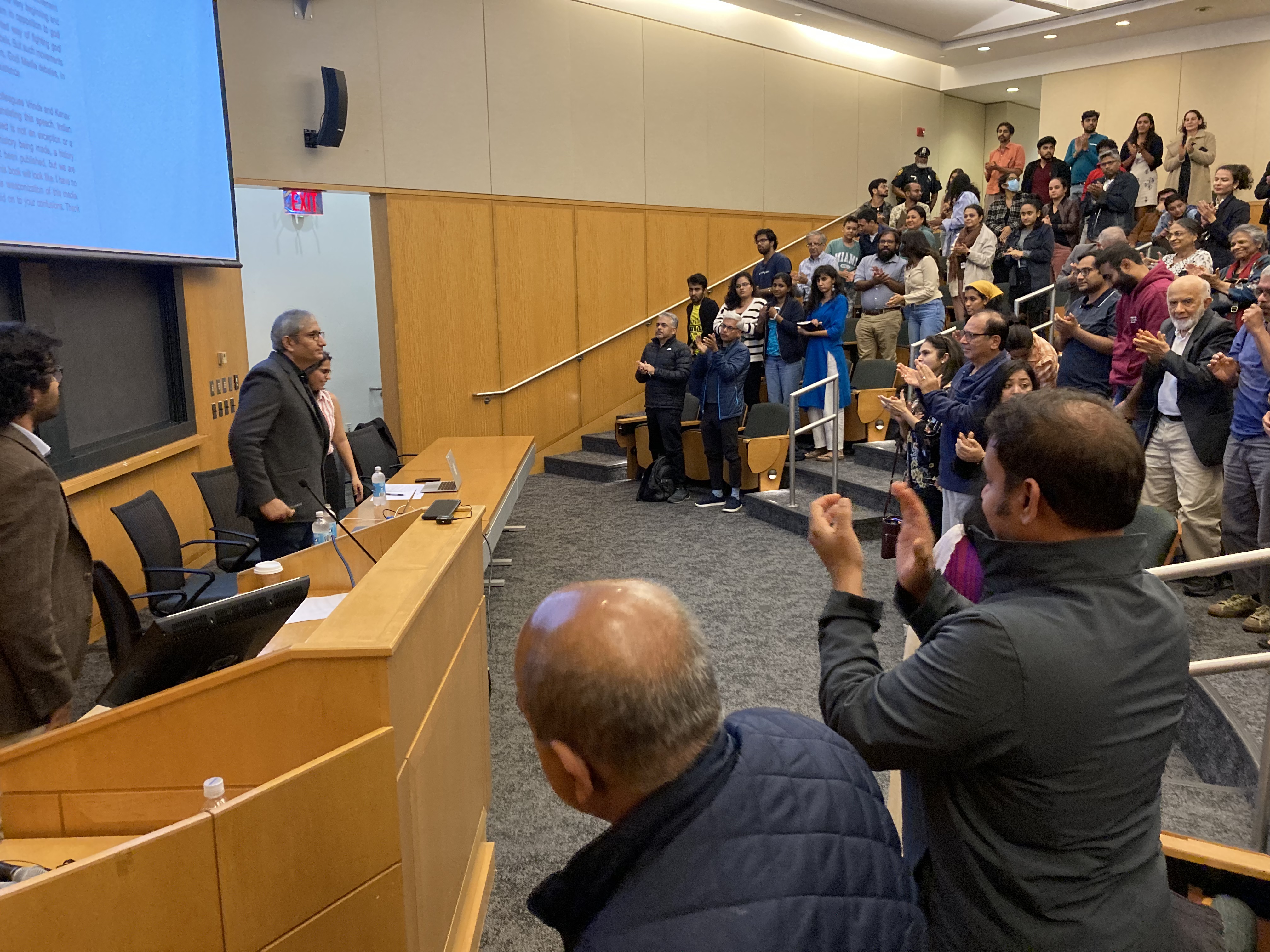
Standing ovation for Ravish Kumar after his talk at Harvard. Photo: Beena Sarwar
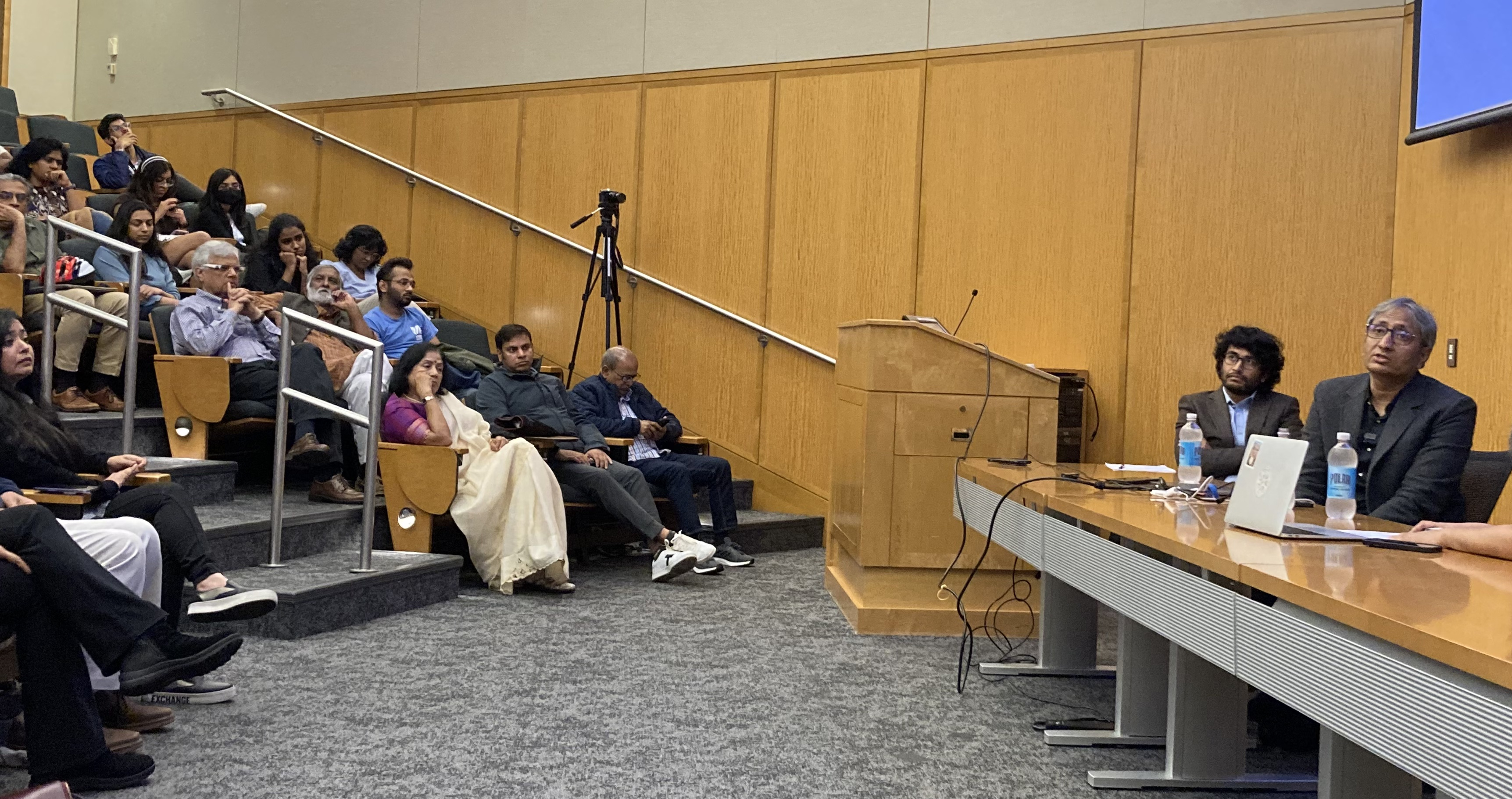
Discussion after the talk at Harvard. Not all questions were answered but as Ravish said, it’s important to ask them. Photo: Beena Sarwar
Talking to Ravish Kumar after the event, with Dr Deeba Husain from India. Photo: Rajeev Soneja
Ravish Kumar famously resigned from NDTV last November after its hostile takeover by Asia’s richest man Gautam Adani known to be close to Prime Minister Narendra Modi. While Kumar still has a huge viewership on YouTube – his channel has garnered over 7 million subscribers so far – it is an insecure platform, as he knows. The recently released documentary While We Watched (available on PBS) features Kumar, but as he also acknowledges, there are many others standing for journalistic values and ethics in India.
An FIR (first investigation report) was lodged against NewsClick in August, the day after a poorly-sourced New York Times report alleging that it had received funding from a network spreading “Chinese propaganda”.
The detained journalists included junior employees – and if they were being detained “simply because you believe that NewsClick is getting Chinese funds then a very wrong precedent is being set,” to quote prominent TV anchor Rajdeep Sardesai.
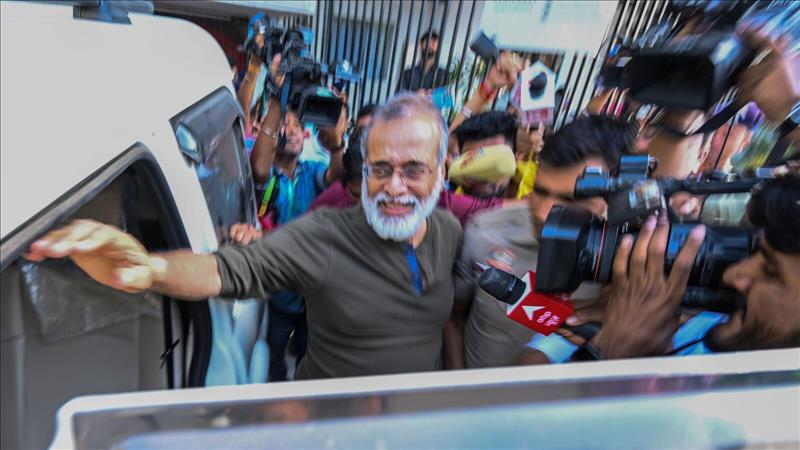
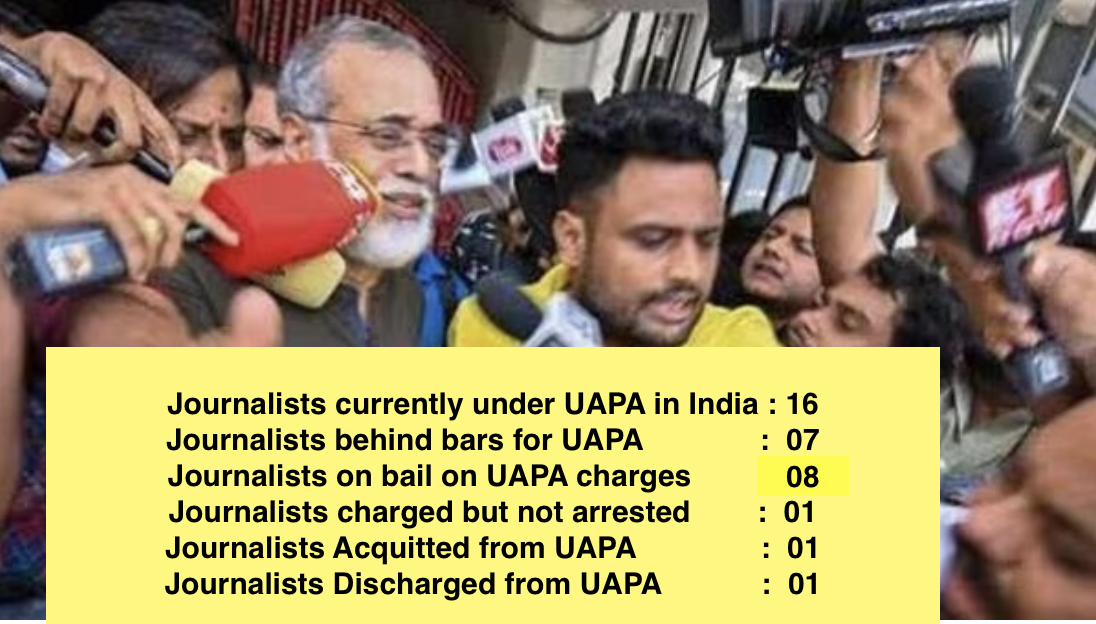
Newsclick founder and chief editor Prabir Purkayastha, and Amit Chakravarty, who heads the portal’s human resources section, were arrested under the draconian Unlawful Activities (Prevention) Act (UAPA). Since 2010, as many as 16 journalists have been charged under the UAPA, reports the Free Speech Collective, India, in a post that lists them, with details of those out on bail, the seven still behind bars, and others.
NewsClick founder and chief editor Prabir Purkayastha arrested. Photo credit: Raj K Raj/Hindustan Times via Getty Images, published by Amnesty International.
“In India, 16 journalists under UAPA ; seven behind bars” – image courtesy the Free Speech Collective, India
There is a huge pushback in India against these heavy handed tactics, which those in other countries are familiar with.
Below, the text of a joint letter by several journalists’ organisations to the Chief Justice of India:
The attacks on the Christian community in Jaranwala near Faisalabad (former Lyallpur) are among a long string of such violence instigated by extremist elements seeking power in the name of religion in Pakistan. I co-wrote this article for Sapan News with a young reporter in Karachi who was initially only reporting on Pakistan’s first Minority Rights March. Then Jaranwala happened. We now present a longish read putting the violence in context and tracking the trajectory of a turning point in the state’s responses, with a couple of inputs from India
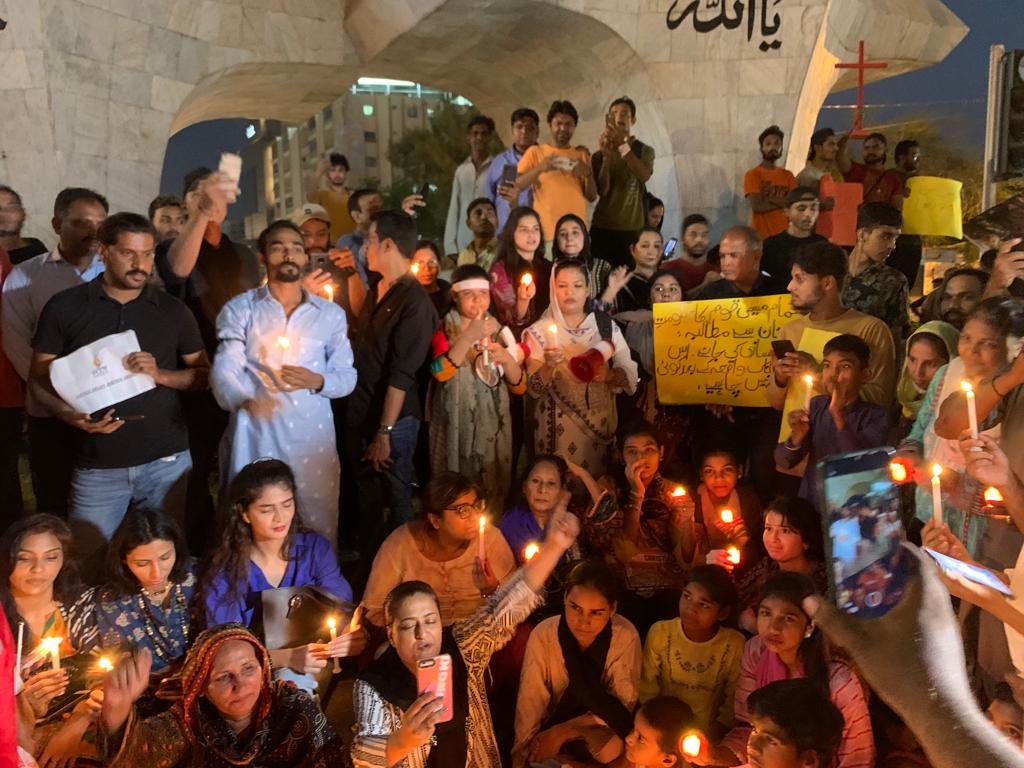
Karachi protest at Teen Talwar, 19 August 2023. Photo: Abdullah Zahid
Karachi protest at Teen Talwar, 19 August 2023. Photo: Abdullah Zahid
“Manzoor Masih – will be remembered!… The Christians of Shanti Nagar – will be remembered!… Rimsha Masih – will be remembered!… ”
Activist and dancer Sheema Kermani led the chanting, evoking the names of a long list of Pakistani Christian individuals and communities targeted by extremist elements in the name of religion over the years.
Excited for the second anniversary event up this Sunday, hosted by the amazing Khushi Kabir in Dhaka, taking forward the legacy of our late friend Kamla Bhasin at Sangat.
We’ll review what we’ve done over the past two years – the collaborations, the discussions, the film club and more. Taking up all kinds of cross-cutting and cutting-edge topics. It’s been thought-provoking, inspiring, and fun.
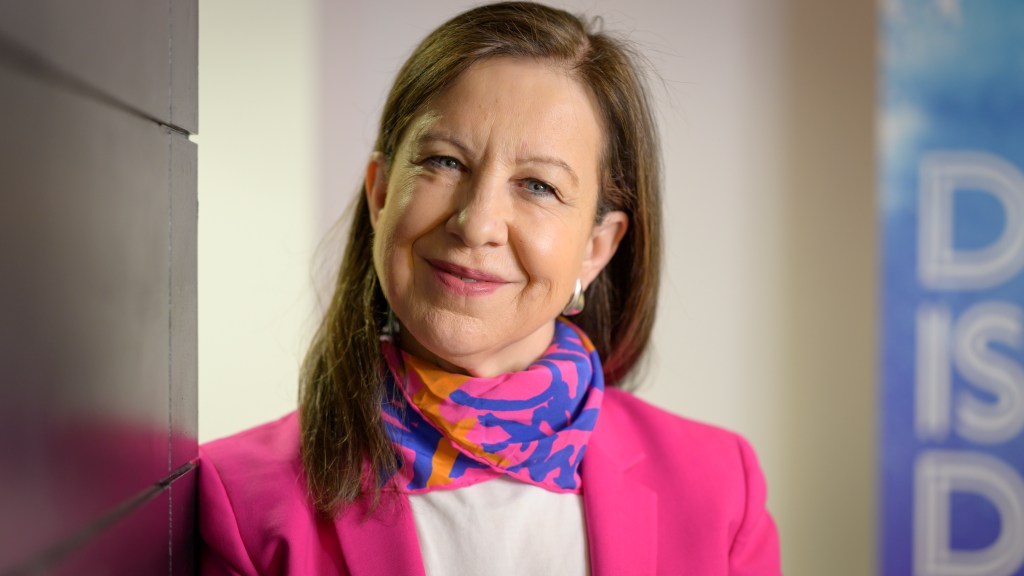
We will honour the inspiring journalist Lyse Doucet for her humanitarian reporting, an award initiated by Dr Tayyaba Hasan presenting it from the Sapan platform. Dr Hasan heads the Hasan Laboratory at Harvard Medical School – the bio at the link does not convey why she is doing this — you’ll have to tune in to find out.
Sapan honours Lyse Doucet: A lifetime of humanitarian reporting.Photo: Amanda Benson
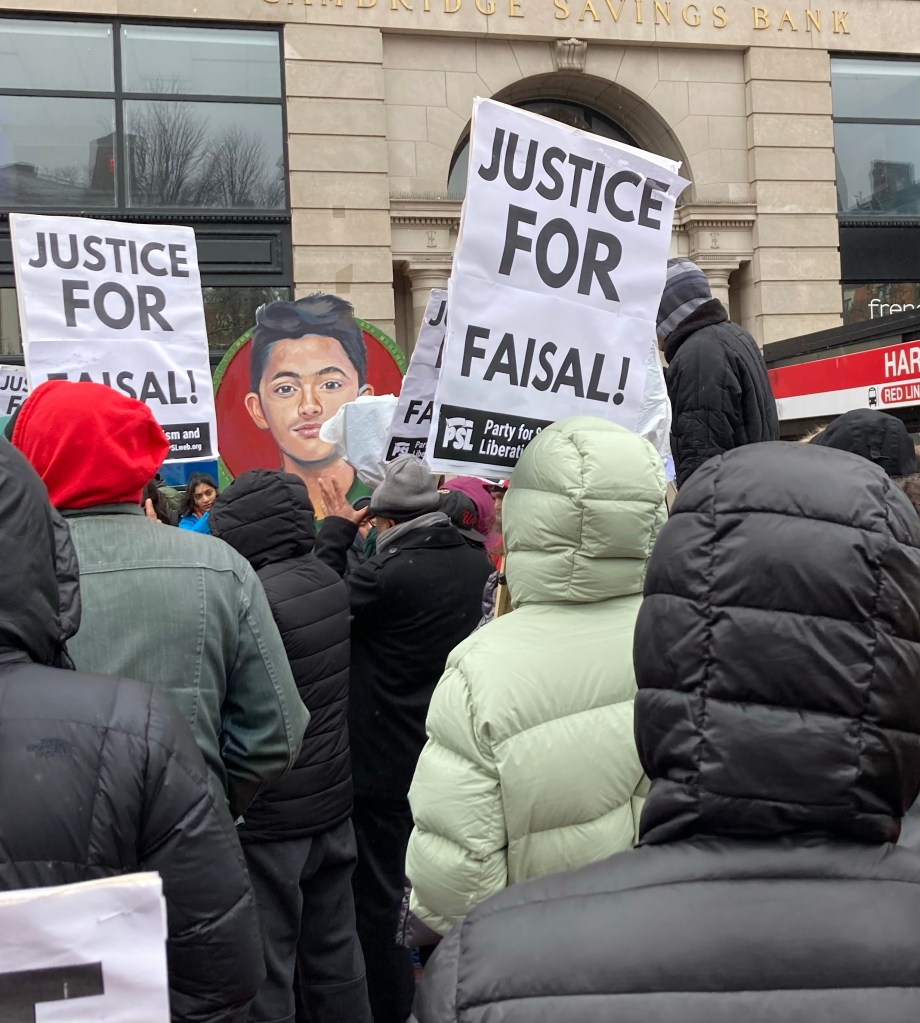
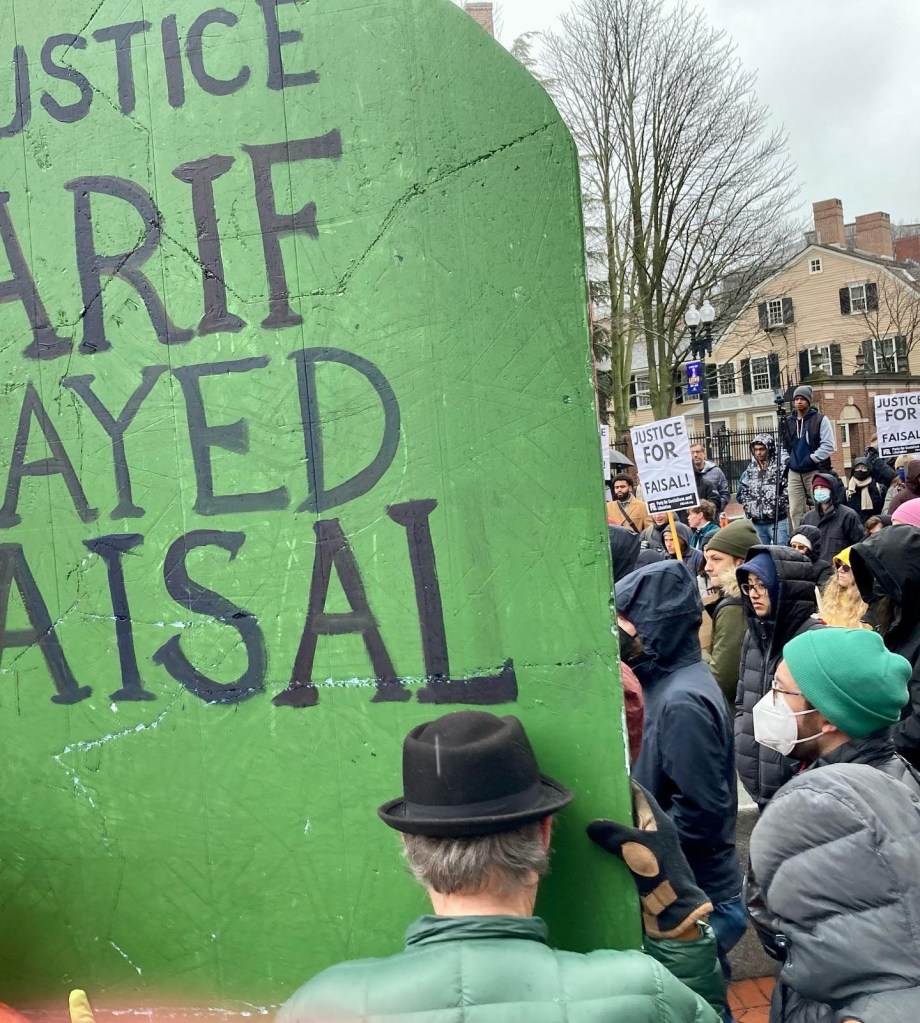
#JusticeforFaisal demo at Harvard Square, 14 Jan 2023. Photos: Beena Sarwar
The summer of 2020 saw massive Black Lives Matter protests across the USA. Although these protests have largely died down, a small group has continued to demonstrate in Cambridge MA, standing at the corner of Prospect and Broadway streets every Friday afternoon. No media outlet has picked up the story of these peaceful demonstrators holding up BLM signs, including: ‘All lives matter but not all lives are threatened with racist violence’.
In Spring 2022, one of my students at Emerson College did a video report on these Stand-outers as they call themselves. It includes comments from two of the group’s members, retired pediatrician Dr. Alan Meyers and history professor Dr. Tom Johnson (erroneously mentioned as Robinson in the video) on why they continue demonstrating. Report below, shared with the student’s permission:






 Journeys to democracy