TODAY, 11 am ET/8 pm Pakistan timeSapan will host a writing workshop with my old friend Mohsin Tejani from Karachi, and his friend Lee Krishnan from Mumbai. They met 25 years ago at the Andover Breadloaf Writing Academy where they are both trainers. Since they’re here again, they offered to do this workshop in person. People can also join online with children, parents, grandparents, significant others, friends or on their own. Details here:Writing Together, Across Borders.
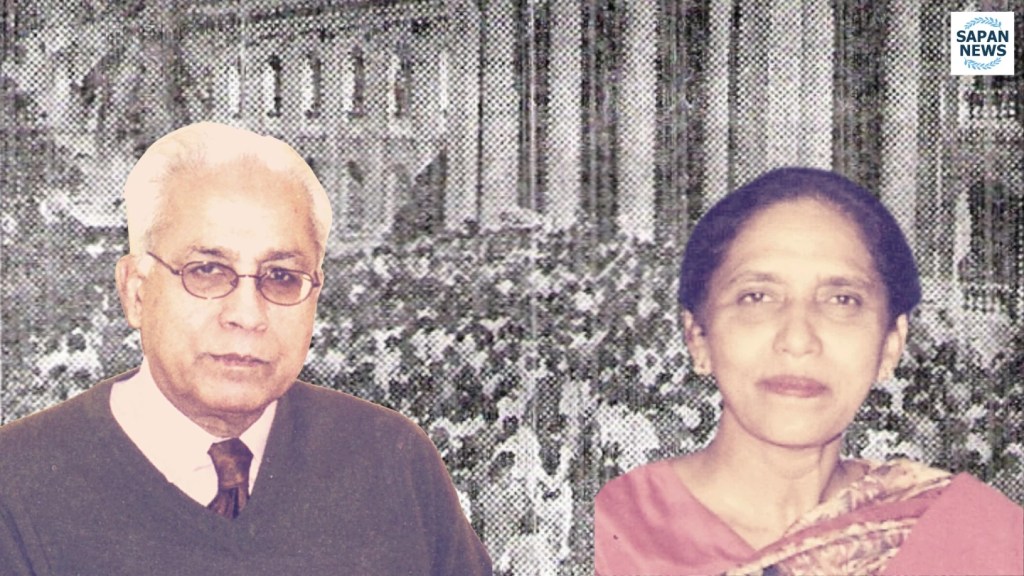
OBITUARY: The legacy of a decades-old connection between social worker Shahida Haroon (1937-2023) and economist Eric Rahim (1928-2023) endures through the ongoing struggle for student rights, economic justice and democracy in Pakistan
Demands Day at D.H. Science College, 07 Jan. 1953, Eric Rahim, Shahida Haroon Saad. Collage by Aekta Kapoor/Sapan News
It was while trying to reach Eric Rahim in Glasgow this week to inform him of my aunt Shahida Haroon’s passing in Karachi that I learnt he too was no more.
A respected journalist and economist, Uncle Eric as I called him, had passed away peacefully at home on 2 May 2023, aged 94. He was a mentor to my father Dr M. Sarwar (1929-2009), and Shahida, who departed this earth on 25 June, at 87.
Shahida did her Master’s in economics from Karachi University in 1958, a subject she didn’t enjoy or do well in. When she went to Punjab University for a second Master’s in social work, encouraged by her brothers Akhtar, 11 years older, and Sarwar, eight years older, Akhtar asked his friend Eric Rahim to look after her. It was Eric, then a columnist at The Pakistan Times, who met Shahida at the train station after her overnight journey.
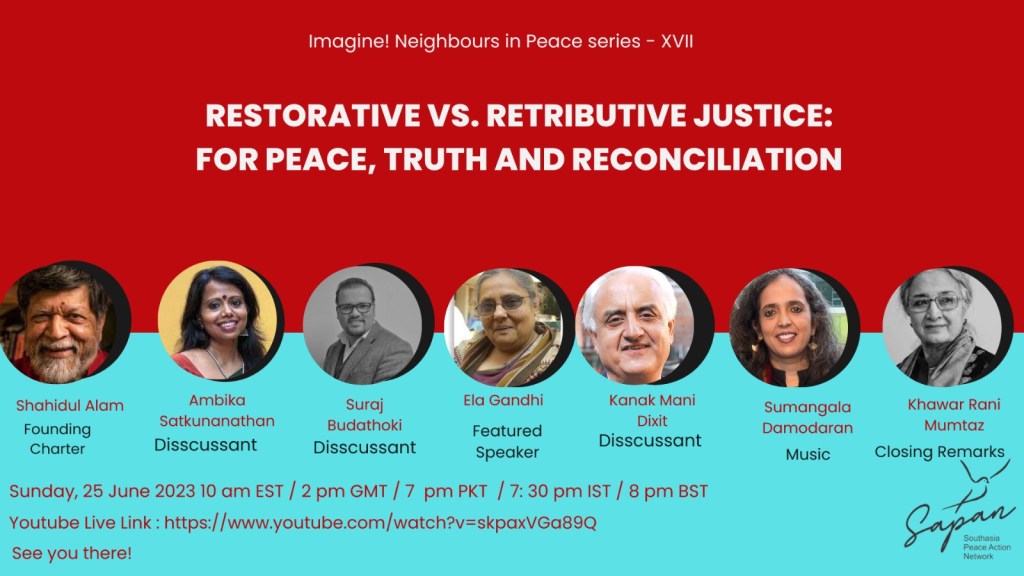
Hello all, I’m excited to be moderating this discussion on Sunday 25 June, 10 am ET/7 pm PKT
Register on Zoom, or tune into YouTube live to join us.
Look forward to the discussion and inputs from renowned photographer Shahidul Alam, Sri Lankan human-rights advocate Ambika Satkunanathan; Nepali journalist and democracy activist Kanak Mani Dixit; and Bhutanese human-rights activist Suraj Budathoki. Plus a cultural performance from Indian economist and musician Sumangala Damodaran and closing remarks from acclaimed feminist Khawar ‘Rani’ Mumtaz.
Another obituary I wish I didn’t have to write. Farewell Zia sahib. What a life – and what a contribution to the arts and progressive thinking, with your immaculate performances and recitations. Thanks to The Wire editors for pushing me to write this piece, sent out as a Sapan News Network syndicated feature to several publications.
Zia Mohyeddin: An unparalleled orator. Photo: Courtesy Dr. Ghulam Nabi Kazi, Flickr
Born: 30 June (or 20 December) 1931, Lyallpur; Passed on: 13 February 2023, Karachi
The great Zia Mohyeddin was already a legend when I first interacted with him as an adult in the mid-1990s. He had recently moved to Lahore where I then lived at Lakshmi Mansion at Regal Chowk. I was working on the launch of weekly The News on Friday, a brainchild of my editor the multi-talented Imran Aslam who revered Zia sahib.
Both were alumni of the prestigious Government College Lahore and its GCDC, the Government College Drama Club. Knowing my family’s connection to Zia sahib, Imran asked me to approach him for a weekly column.
Pakistan’s progressive movement revolved largely around the great poet Faiz Ahmed Faiz, whose work Zia Mohyeddin so eloquently recited in his signature style, his distinctive, gravelly voice setting him apart from others. As part of the same circle, Zia sahib, born in 1931 in then Lyallpur (Faisalabad), Punjab, knew my father Dr M. Sarwar who led Pakistan’s first nationwide student movement, the Democratic Students Federation, 1948-54.
Exploring a way of looking inwards, confronting my own demons, and competing with my own best self
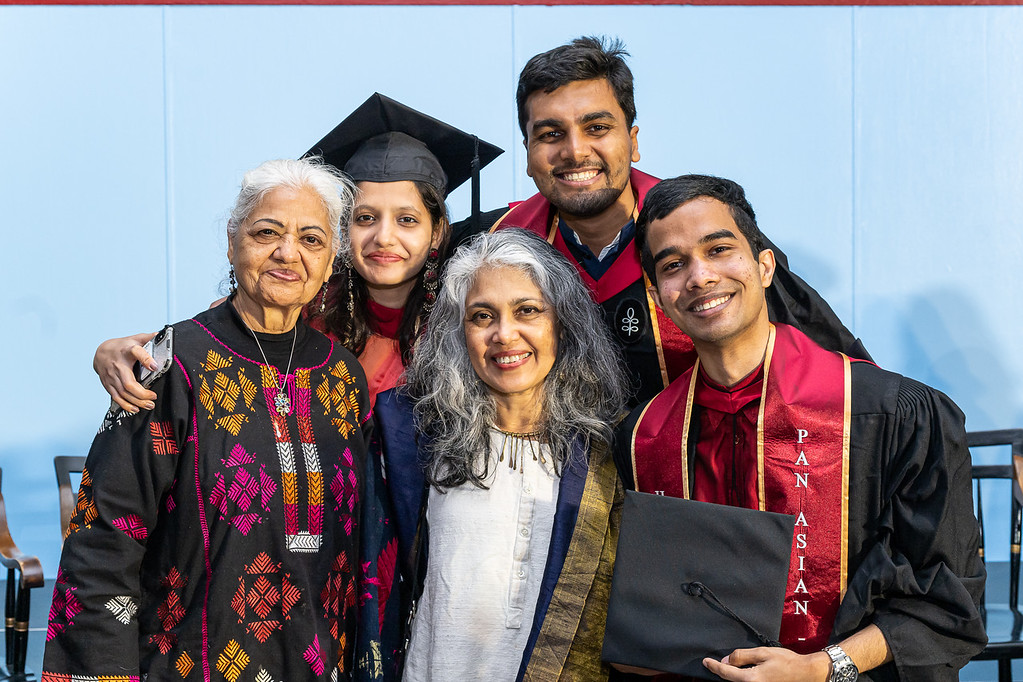
My keynote commencementspeech at the first AAPIDA – Asian Pacific Islander Desi-American – affinity graduation, Harvard University, 23 May 2022
With my mother Prof. Zakia Sarwar, plus Harvard School of Education graduatesafter the ceremony: Najwa Maqbool and Nishant Singh from India, and Nigel Gray from Sri Lanka.Their families couldn’t make it so we were glad to be there for them. Photo: Lipofskyphoto.com
Beena Sarwar, video and text of speech below. Also published in Sapan News Network
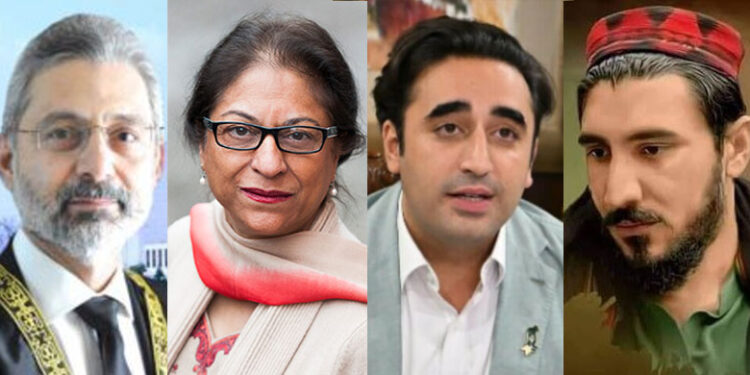
Justice Qazi Faez Isa, late Asma Jahangir, Bilawal Bhutto Zardari, Manzoor Pashteen: Collage by The Friday Times/Naya Daur
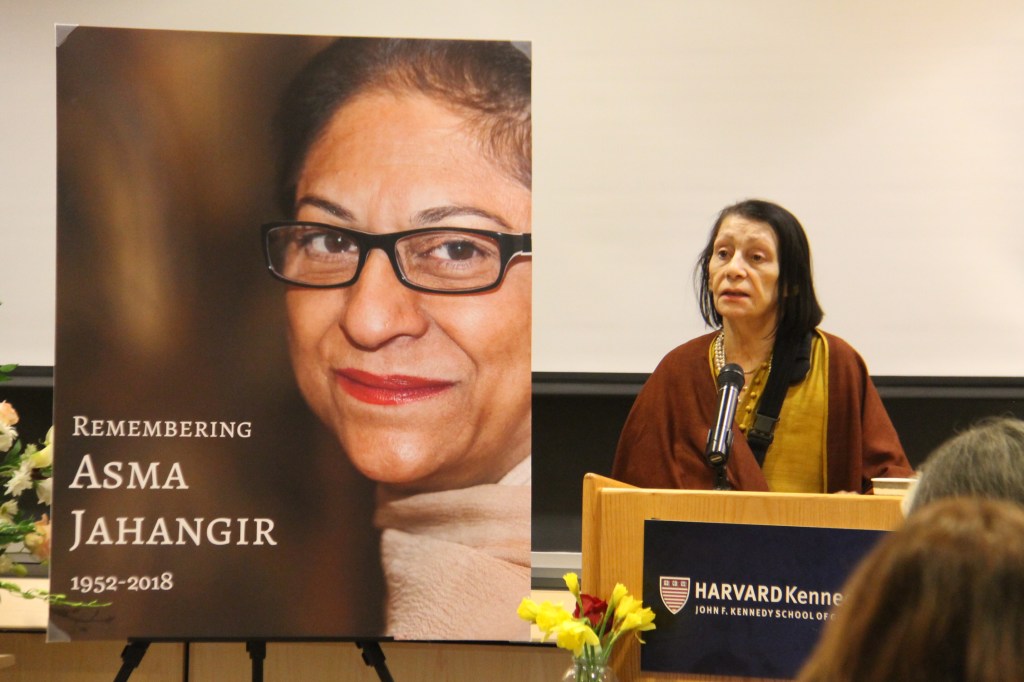
Sharing four recent offerings from Sapan News Network – the most recent one in full below, pegged on the Fourth Asma Jahangir Conference in Lahore, on the ‘ ‘Crisis of Constitutionalism in South Asia’, that I’m thrilled to have co-authored by aspiring young journalist Abdullah Zahid, published in The Friday Times/Naya Daur, South Asia Monitor and other media outlets. Plus three other recent syndicated features:
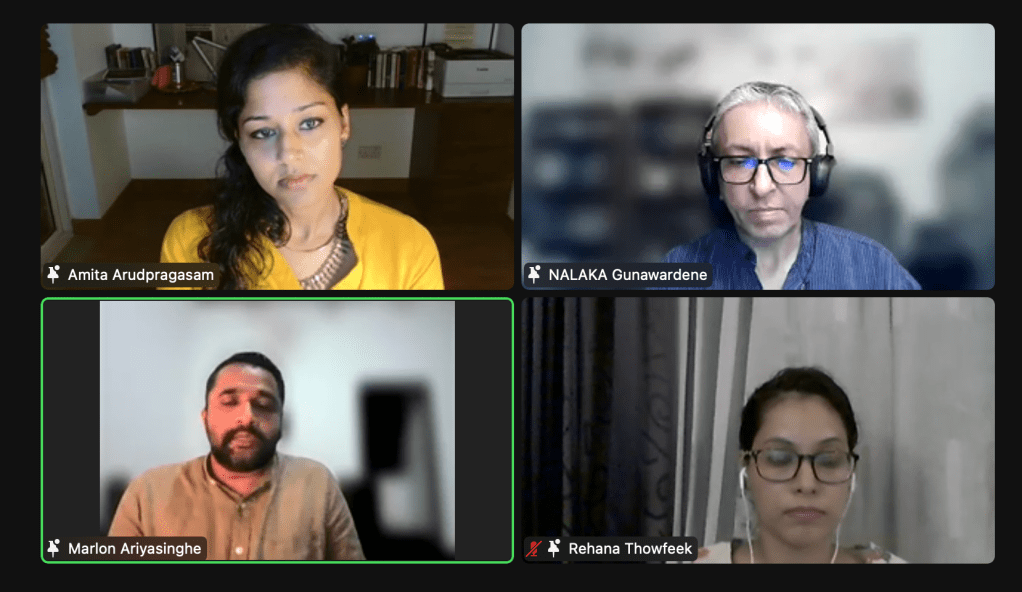
We cannot be at peace when our neighbours suffer. The main discussants on Sri Lanka’s ongoing crisis were not the ‘usual suspects’. A cautionary tale: Lessons from Sri Lanka’s cascading, multiple crises – report by Pragya Narang on a complicated issue with lessons for Southasian nations.
A teach-in on Sri Lanka’s ongoing crisis, with eminent thought leaders Amita Arudpragasam, Nalaka Gunawardene, Marlon Ariyasinghe, Rehana Thowfeek.
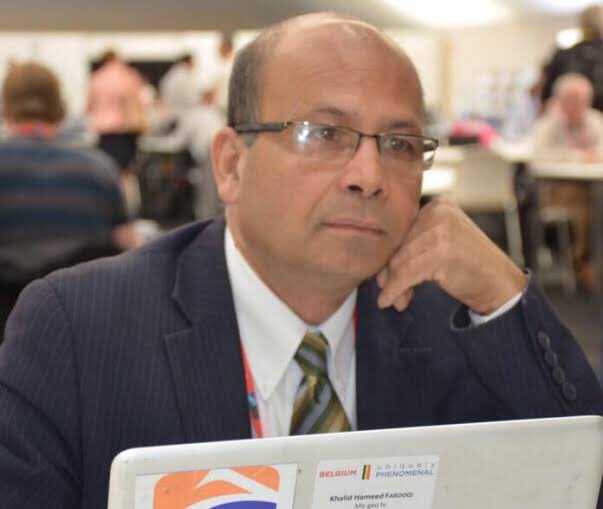
Two wonderful colleagues and friends departed this world rather suddenly within days of each other last month, leaving behind multitudes to mourn their loss — and celebrate their lives: Khalid Hameed Farooqui, Geo News correspondent in Brussels, 7 May, and Editor The News Talat Aslam, 25 May. We honoured both at the In Memoriam section of the Southasia Peace or Sapan event on the last Sunday of May, along with others.
Khalid Hameed Farooqui: A lifetime of politics, journalism, and activism in Europe and Pakistan.
Talat Aslam: His tweets @Titojourno gathered a fan following for his posts on politics, food, film, music and nocturnal wanderings in Karachi.
The tribute to Khalid by European Commission chief spokesperson Eric Mamer in a press briefing shortly after Khalid’s passing speaks for the respect he inspired amongst colleagues and political figures:
Tribute given to Geo’s senior correspondent Khalid Hameed Farooqui – who passed away last weekend – by European Commission. What brilliant praise. pic.twitter.com/xFZRZ3yDNX
Friend Saifullah Saify in Amsterdam organised a wonderful online tribute for Khalid, with tributes from personalities like Farhatullah Babar, and journalists Hamid Mir, Asma Shirazi, Munizae Jahangir, Amber Rahim Shamsi, Murtaza Solangi, Mazhar Abbas, Raza Rumi, Nazir Leghari – see video clips at this playlist on his YouTube channel.
Sharing below my piece on Tito, as friends and family called Talat, one of three articles carried by The News on Sunday in a full page tribute. The two other remembrances, by colleagues Zia ur Rehman and Gulraiz Khan, are online here. My piece includes a couple of my illustrations for Tito’s columns in The Star 1986-88.
: Remembering two gems, stellar journalists and old friendsContinue reading →
Sharing personal memories of the brilliant Sara Suleri whose genre-defying book Meatless Days inspired generations of writers, feminists, memoirists and dislocated Southasians. Thanks Ailia Zehra at The Friday Times for asking me to write this piece.Published as a Sapan syndicated feature in TFT, The Wire, Geo TV blog, South Asia Monitor and The Print – shared here with additional pix and links.
February 2018: Sara Suleri pays tribute to Asma Jahangir. Photo: Beena Sarwar.
PERSONAL-POLITICAL
By Beena Sarwar
March 25, 2022, Sapan News Service:
“Aur bataiye” – tell me more, a polite invitation to keep talking. I can hear her voice, perhaps naturally husky, made deeper with years of cigarette smoking and perhaps more recently with pain and other medications.
She’d send her love to Pakistan whenever I’d call before flying out from Boston, where we had both ended up around ten years ago – she after retiring as Professor Emeritus of English from Yale University. I had transplanted myself from my home city Karachi where I was editing Aman Ki Asha, hope for peace – between India and Pakistan.
“Dream on!” I hear Sara say. And yet, she agrees, it’s important to keep going. She’s also a hundred percent supportive of our push for a regional approach – the South Asia Peace Action Network, or Sapan, the more recent endeavour, launched last year with a wonderful group of inter-generational, cross-border peacemongers.
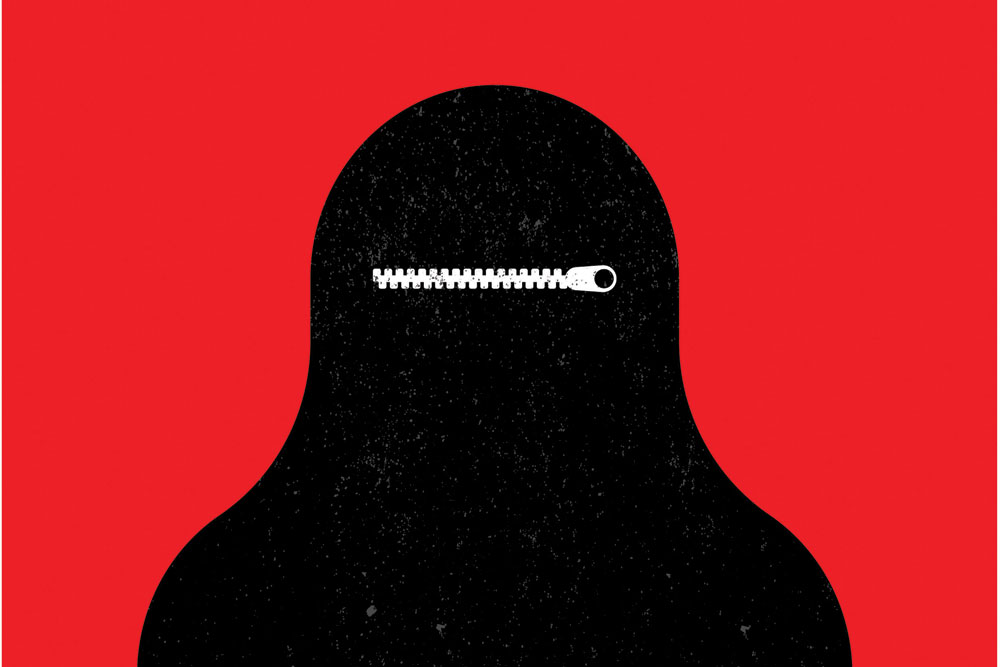
I was initially hesitant to add my two bits to the ‘hijab row’ in India about which so much has already been written. But I’m glad I did – gained a lot of insights and info that I tried to share with a wider audience. Thanks to Ullekh NP, Executive Editor at Open Magazine in India for prodding me. Published 25 Feb with the headline Hijab Row in India: Just Like Us, with a powchaerful illustration copied below. I’m thrilled that my SAWM sisters, the South Asian Women in Journalism, liked it enough to share it on their website under Article of the Day category.Posting the essay below with materials not used in the Open article, including my 1983(or was it ’82?)piece in The Star with my own illustrations, HUNDRED AND ONE USES OF A CHADDAR, and link to Fahmida Riaz reciting her poem.
Illustration by Saurabh Singh for Open Magazine
WOMEN ACROSS SOUTH Asia and beyond have for centuries loosely covered their heads and bosoms, regardless of religion, shielding themselves from unrelated men as well as from the hot sun.
Those entering the work force in urban areas have been quicker to shed traditional attire. Those who find these changes threatening sometimes find ways to keep women in their place. Religion offers a convenient pretext.
The more conservative Muslim women in South Asia also traditionally wore a burqa, more all-enveloping than a chaddar or dupatta. My grandmother in Allahabad, U.P., used to wear a brown burqa that she discarded eventually in Karachi.
Growing up in Pakistan under the military dictatorship of Gen. Ziaul Haq, 1977-88, women like me have first-hand experience of such tactics. We watch in horror as shadows of the ZIa dark years seem to spread across the border into India.
Gurdwara Darbar Sahib Kartarpur: Bringing people together. Image credit: Facebook/@syed.alli
Dozens of Indians and Pakistanis with ancestral roots in Chakwal will meet up mid-week at Kartarpur Darbar Sahib in Pakistan, taking advantage of the visa-free corridor inaugurated in November 2019 by Prime Minister Imran Khan for Baba Guru Nanak Dev’s 550th birthday celebrations.
Delhi-based Rotarian Anil Ghai, whose own family has strong connections to Chakwal since before Partition in 1947, will lead the Indian delegation.
The family had to flee with whatever belongings they could take, in a Dakota aircraft, remember area natives. Ghai’s visit to Pakistan in 1996 had led to rekindling those ties.
The establishment of Chakwal International Group about six months gave momentum to the upcoming ground-breaking meeting planned for Wednesday, 23 February.
“Everyone is welcome, they do not have to be Rotarians,” says Mohammed “Mo” Ayyaz, a Rotarian in London who is also from Chakwal and one of the driving forces behind the initiative.