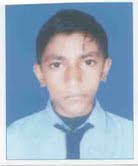
Hope for young Ateeq, a real life ‘Ramchand Pakistani’

Below, a report I wrote on Feb 23, published in The News aman ki asha page of Feb 24 (see accompanying report ‘Prisoners of archaic laws‘ by Rabia Ali), shortly before 12-year old Ateeq’s hearing in Amritsar on Feb 26 – which Asma Jahangir and I.A. Rehman of the Human Rights Commission of Pakistan managed to attend.

12-year old Ateeq from Lahore, currently in the Juvenile Jail in Hoshiarpur, India

Here is an update from Asad Jamal in Lahore on Feb 26:
Release orders were passed for the 12 years old Pakistani boy in Indian Juvenile (Hoshiarpur) Prison after Asma Jahangir appeared in the Juvenile Court in Amritsar today. Now the Pakistan authorities have to complete procedural matters and bring the boy back home. Asma Jahangir met the boy in Amritsar and found him traumatised. She had taken video film of the boy’s father as well some clothes for him. Local lawyers/activists arranged and distributed sweets after the court order. Continue reading

Dolphin-watching, Karachi, and the fishermen’s lament

PERSONAL POLITICAL article written on Jan 26, 2010, published in The News on Sunday Footloose page Feb 7, as ‘Wild, pure magic of malhars’

Photo by MAHA SARWAR SHAHID, age 13

Beena Sarwar

Out on a fishing boat under a clear blue early morning sky to go dolphin watching, the violence, squabbles and tensions that mark daily life fade into irrelevance – including the recent tensions arising from the Indian Premier League’s refusal to bid for Pakistani cricketers.

We cruise the sparkling azure waters of the Arabian Sea parallel to the lengthy sand spit (imaginatively called ‘Sandspit’) along the Karachi coast. About five kilometres out to sea, we can still clearly see the recreational ‘huts’ that dot Sandspit beach. As we pass another fishing boat, the crews exchange greetings – just as highway truckers and bus drivers do. Continue reading

HAITI: How and why Pakistanis can help

Excerpts from appeal and joint statement by Todd Shea and Ethan Casey at the Alive and Well in Pakistan blog, addressed to Pakistani-Americans:

The aftermath of the October 8, 2005 earthquake was Pakistan’s finest moment. The nation’s citizens, government, military, and expatriates stepped up together and contributed money, material, time, professional skills and other resources to alleviate the suffering of the survivors of the devastating quake that killed more than 80,000 people.

The 7.0 earthquake that struck Haiti on January 12 has devastated that small, desperately poor country at least as much as the 2005 earthquake devastated Pakistan. Pakistan has resources that Haiti lacks – like a competent, patriotic army and an affluent expatriate community. Continue reading

India and Pakistan: Bridging the gap

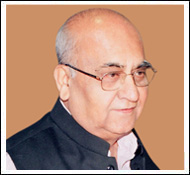
RK Mishra

RK Mishra Memorial Lecture by Maj Gen Mahmud Ali Durrani

Excerpts below, complete text at http://tinyurl.com/md-mishra – thanks to Renuka Mishra whom I met in Kabul. See also ‘Ex-NSA for ‘candid talks’ between Indo-Pak security agencies’, Iftikhar Gilani’s report on the event in Daily Times, Sept 6, 2009.

Pakistan’s National Security Adviser till January 2009, former Ambassador to the USA, active in peace initiatives between India and Pakistan (he’s known as “General Shanti” in India, author of several books and studies – was closely associated with the well known Indian journalist, thinker, and parliamentarian RK Mishra who passed away earlier this year. He delivered the first RK Mishra Memorial Lecture in Delhi on Sept 8, 2009 –

India and Pakistan:  Bridging the gap

'General Shanti' at IIC, New Delhi

'General Shanti' at IIC, New Delhi

In his talk, Gen. Durrani suggested, among other things, opening up the visa regime between our two countries; allowing broadcast of TV programs from one country to the other; setting up a joint “lndo-Pak  “Arid Agriculture Research Centre”; including agriculture as a major component of the composite dialogue; cooperating in areas like water, coal, wind and solar energy; and supporting “any solution which is acceptable to the majority of the Kashmiris. The bottom line – Kashmir for the Kashmiris.”

Continue reading

Video Journalism Movement: ‘Milne do’ – Let Kashmiris meet (documentary, 7 min)

film stillMy 7 min documentary on the importance of people-to-people contact, for Video Journalism Movement – ‘Milne Do’ – Let Kashmiris meet

MUSIC:
Composition and voice – Seema Anil Sehgal
Lyrics – ‘Guftugu band na ho’ by Ali Sardar Jafri

CAMERA: Shehrbano Saiyid & Jibran Jawaid

NON-LINEAR EDITING: Abdul Wahab & Mirza Waseem, IndieVisuals, Karachi

NOTE: This documentary was made for the Video Journalism Movement, a new media website launched Oct 5, 2009 – they take cartoons and short documentaries/features. Details at http://www.vjmovement.com.

Cartoonists and video journalists can also email editorial desk with ideas: journalists@vjmovement.com

For further information, contact VJM Marketing Director Stacey Griffin at sgriffin@vjmovement.com

Give the one-upmanship a rest (or, ‘Don’t knock it’)

My column for monthly Hardnews, India – (I preferred my headline below to the one they gave, ‘Knock, knock… Don’t knock it’)

PERSONAL POLITICAL
Give the one-upmanship a rest

Beena Sarwar

“Let them stew in their own mess, we are better off without them.” Sound familiar? I heard such sentiments voiced recently on three instances – and it reminded me of the globally resented American tendency for self-enrichment and self-aggrandisement, never mind the rest of the world.

The first instance was when I was on a ‘phono’ from Karachi to New Delhi for Newsx TV. Among the studio guests was G. Parthasarthy, whose outlook towards Pakistan reminded me of Vir Sanghvi and Tavleen Singh’s – ‘What’s the point of talking to Pakistan?’ ‘We are not the same people…’

Continue reading

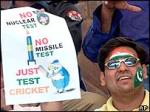
‘No nuclear test, no missile test, just test cricket’

Cricket fanCongratulations Pakistan. Ok, so it wasn’t a test match – but is cricket a surrogate war between India and Pakistan – or a shared love that can help transcend animosities? Just found this article I wrote in March 2005, my column Personal Political published in The News op-ed and the Indian weekly Tehelka… Not much has changed since then.

Below, the version published in Tehelka, April 5, 2005

Cricket and the Peace Constituency

Ordinary Pakistanis and Indians are happy to recognise each other A Pakistani Girl Promoting Peace between Pakistan and India

Beena Sarwar

Will he, won’t he, will he, won’t he…?” Yes, he will, confirmed the Indian Prime Minister’s Office on March 15, ending the speculation by announcing that General Pervez Musharraf would visit India for a one-day match in Delhi on April 17. Musharraf had made it clear that he would make the visit if invited — and everyone was waiting to see whether the invitation would be extended.

Continue reading

Neighbours in peace – or pieces?

My monthly column for Hardnews, India, August 2009 – http://www.hardnewsmedia.com/2009/07/3122. Also published in The News on Sunday, August 9, 2009

Karachi, July 26 2009

Personal Political

Neighbours in peace — or pieces?

Beena Sarwar

The auditorium was full of women from far-flung, poor localities of Karachi. One of them plonked herself next to me in the second row along with her daughters, a toddler and a six-year old. A gigantic banner featuring a photo of the late activist Nirmala Deshpande formed the backdrop to an array of speakers from India and Pakistan seated behind a long table on the platform. ‘PROMOTING PEACE IN SOUTH ASIA AND REMEMBERING NIRMALA DIDI DESHPANDE’ it read.

Mumtaz, the young Pahstun mother next to me, had studied up till the eighth grade, unlike most of the other women present. The toddler nuzzled against her to breastfeed from time to time.

The speakers included prominent Urdu writer Zahida Hina, peace activist and educationist from Lahore Syed Diep, parliamentarians from  the PPP and MQM and Indian activist Sandeep Pandey from Lucknow, journalist Jatin Desai from Mumbai, and Kavita Srivastava of the Peoples Union of Civil Liberties (PUCL) from Jaipur. Two other Indians weren’t given ‘clearance’ from Islamabad in time for the visit, meant to further the aims of a joint signature campaign for peace launched earlier this year.

Mumtaz and the other women, mostly wives of daily wage labourers, had been brought there by various ‘bajis’, women activists working in their areas. “I don’t understand everything they’re saying,” Mumtaz told me, “But I know they are talking about the need for peace between India and Pakistan. That is what we all want.”

Her immediate concern was to feed her family. “Maybe if these two countries stop fighting, our lot will improve,” she said optimistically.

“Let the people meet, all other matters will sort out,” a cyclist told Sandeep Pandey and other peace marchers who went from Delhi to Multan in 2005, demanding that the governments of India and Pakistan resolve all matters of dispute through dialogue.

Such basic wisdom is at odds with the justifications for continued animosity presented by ‘intellectuals’ on either side of the border. “India/Pakistan wants to destroy us”; “Stop appeasing India/Pakistan”; “There is no point in talking to them”.

If we listen to this babble of voices whose sole aim seems to be to present their own country’s case as better than the other’s, we’ll never get anywhere. There is an old saying in our part of the world, ‘Taali donoN haathoN se bajti hai’ – it takes two hands to clap.

Let’s stop these blame games and accept that there are problems on either side – of varying degrees and natures, and try and understand the complexities of the problems.

Those with access to the Internet have increased the potential for such understanding. But because we’re not used to talking to each other, the un-moderated exchanges posted on blogs are often crass and offensive. Direct interaction involving basic civility and an open mind is more meaningful.

Some time back, a Mumbaikar emailed saying, “Frankly, with Pakistan itself is in such a mess (Lal Masjid, Swat valley, Taliban, regular suicide attacks and of course the numerous Muslim organisations ranting about Jehad), do you really feel safe in your own country? And the most amusing thing is when Pakistan tells that India is its enemy number one. Wait for a few more years, am sure the Taliban will take over Pakistan. And what pains us, is what did we do to Pakistan. Kargil was Musharaf’s misadventure.”

I replied, yes, Pakistan is in a mess, due largely to the continual disruption of the political process, with no democratically elected government being allowed to complete its terms. “This is the biggest difference between India and us, and what I most envy about your country”.

Still, women do get around here too, carry on with their work and their lives. And at least elements within Pakistan’s establishment no longer consider India as enemy number one.

Kargil was indeed Musharraf’s misadventure. Many of us spoke out against it (were labelled as Indian agents). Pakistan’s military must be accountable and answerable to elected civilian governments. This will only happen if the political process is allowed to continue.

Rocky as politics in Pakistan currently are, with a floundering democratic process, it is only more democracy on a sustained and continuous level that will in the long run yield positive results.

(ends)

See also:

‘HRCP urges Pakistan, India to resume prisoner swap, stop arrests for minor violations’, Aug 5, 2009 – http://hrcpblog.wordpress.com/2009/08/06/hrcp-urges-pakistan-india-to-resume-prisoner-swap-stop-arrests-for-minor-violations/

Why not hang Sarabjit Singh, March 2008

http://www.chowk.com/articles/why-not-hang-surabjit-singh-Beena-Sarwar.htm

PAKISTAN-INDIA: The frog who reached the top

Photo: Nicolas Reu/Caters News Agency

Photo: Nicolas Reu

PAKISTAN-INDIA: The winning frog’s approach just might work…

The Indian media is gunning for Prime Minister Manmohan Singh for his stand regarding the need for dialogue with Pakistan, just as the Pakistani media is gunning for the Pakistani leadership for their insistence on dialogue with India (going against long years of conditioning).

Reminds me of the little frog who made it to the top in a pole-climbing competition amidst the din of the crowd below cat-calling and yelling nasty comments. 

Unlike the other frogs who kept dropping out, he couldn’t hear the people yelling that he would never make it.

He was deaf. 

Peace please, musically

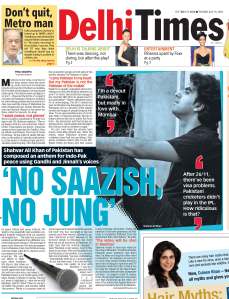
No Saazish No Jung - Times of India, July14-09-

No Saazish No Jung - Times of India, July14-09-

Shahvar Ali Khan: “No Saazish, No Jung”

In January I posted out information to my  yahoogroup about a joint signature campaign between Indians and Pakistanis, and also a note from a Lahori who loves Mumbai, Shahvar Ali Khan

(A Lahori’s love for Mumbai; Pk-India joint signature campaign – http://groups.yahoo.com/group/beena-issues/message/1028)com/

Recently, Shahvar wrote, composed and sang a song “No Saazish, No Jung” (no conspiracy, no war) – which you can download at – http://www.shahvaralikhan.com/

I’m thrilled that it’s getting some media attention even without a video. There was a piece in Instep, The News on Sunday, Pakistan on July 06, 2009, and this piece in Times of India, July 14, 2009 – ‘Now a song for Indo-Pak peace’ –
http://tinyurl.com/TOI-Shahvar

Below, text of the Press Trust of India report of July 7, 2009 published in Indian papers:

Pak singer puts Gandhi, Jinnah together in appeal for peace

Islamabad (PTI): A Pakistani singer has combined the voices of Mahatma Gandhi, Mohammad Ali Jinnah, Benazir Bhutto and US President Barack Obama in a new song that makes an impassioned plea for peace in the region.

Shahvaar Ali Khan’s “No Saazish, No Jung” is a peace anthem that tells “mullahs” and “foreigners” to leave his country alone.

Mullayae na kar tung, oo guraya na kar tung, meino rahen dae malang, mein nach nach kai larni yae jang de nal jang (Don’t bother me mullahs/Don’t bother me foreigners/Let me remain a free spirit/I will dance away and fight your war),” goes the song in Punjabi that combines a hard rock guitar riff with a folksy backing.

Khan, 25, said he plans to make a video based on the song. “I plan to shoot the video in Mumbai so that it will be an India-Pakistan peace initiative,” he said.

He is in touch with several Indian directors and is also looking for sponsors and TV channels to back the video so that it can be ready for release by the time Pakistan and India celebrate their independence days on August 14 and 15 respectively.

The song combines excerpts from speeches by Gandhi, Jinnah, Bhutto and Obama.

The voice of Gandhi can be heard intoning “…in the midst of death life persists, in the midst of untruth truth persists, in the midst of darkness light persists”.