Seasons greetings despite the sadness, and excerpts from a Sapan Alliance newsletter sent out a few days ago on Substack
Joy is also a form of defiance. Dancers: A greeting card I made some years ago (pastel and water colour), repurposed for Southasiapeace.com and Sapannews.com.
In times that can feel dark and dismal, some good news and exciting updates.
Meet Sapan News — a unique media outlet that aims to cover and connect Southasia, the Indian Ocean and diaspora. That goes behind the headlines, connects communities, academics, activists, and more. Creating space for understanding, empathy and nuance.
In November, Sapan News qualified for NewsMatch, a philanthropic fund helping nonprofit newsrooms like ours in the U.S. Contributions made by year-end will get matched up to $15,000. Gratitude to our community that has stepped up to meet this challenge.
Those wanting to chip in are welcome – here’s the donate link for tax-deductible contributions.
A 100 new donors will secure a $1,000 bonus, and monthly donations initiated this month will get matched x12!
Thank you for your support. It means so much – and together, we are stronger.
Collaborations: Hello, Central Desi!
Sapan News is proud to partner with Central Desi, a dynamic news portal that started as a newsletter to cover all things ‘desi’ (Southasian) in New Jersey. Kudos to journalist Ambreen Ali for growing her passion project into a news org that won a major grant, enabling them to hire reporting fellows. Sapan News has much to learn from this initiative.
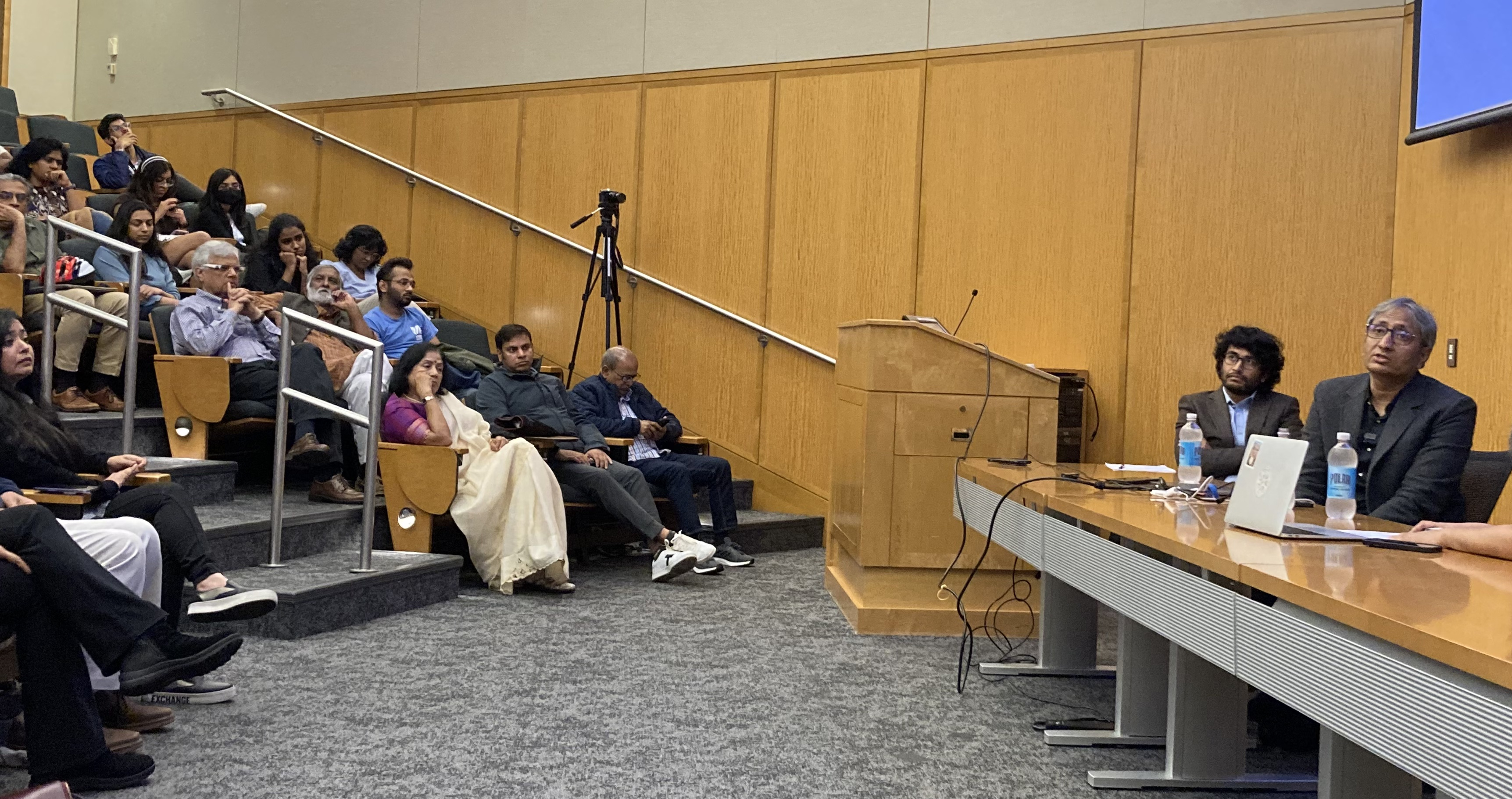
The day the popular Indian journalist Ravish Kumar spoke at Harvard, Oct. 2, happened to mark Gandhi Jayanti, Mahatama Gandhi’s birth anniversary. A day that social media users celebrated Gandhi-ji’s murder was and glorified his murderer on X, formerly Twitter, noted Kumar, talking in Hindi to students and community members filling the nearly 150-seater auditorium.
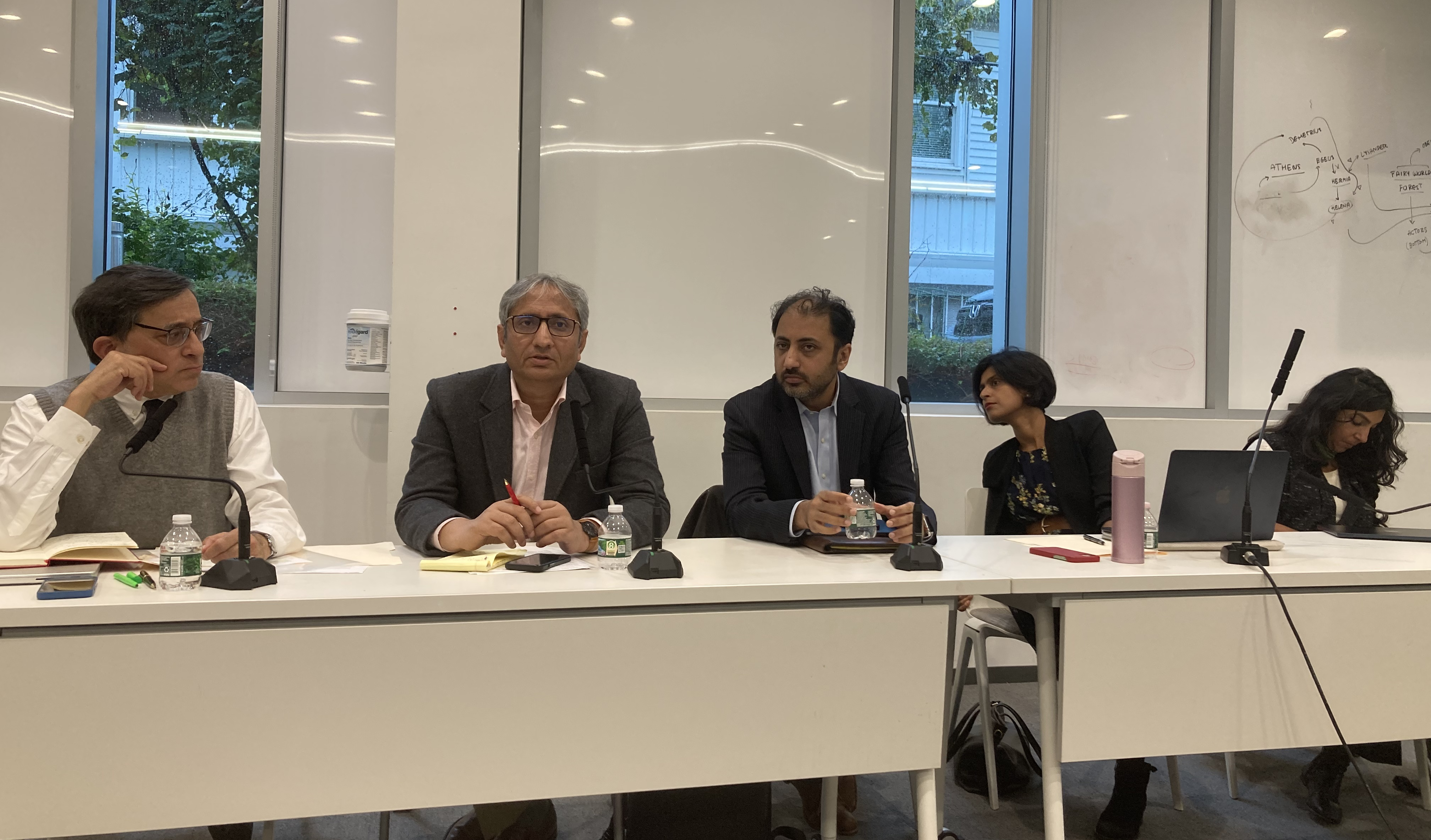
Ashutosh Varshney, Director of the Saxena Center for Contemporary South Asia at Brown University; Ravish Kumar; Wall Street Journal columnist Sadanand Dhume; Brown University faculty Poulami Roychowdhury and Prerna Singh. Photo: Beena Sarwar
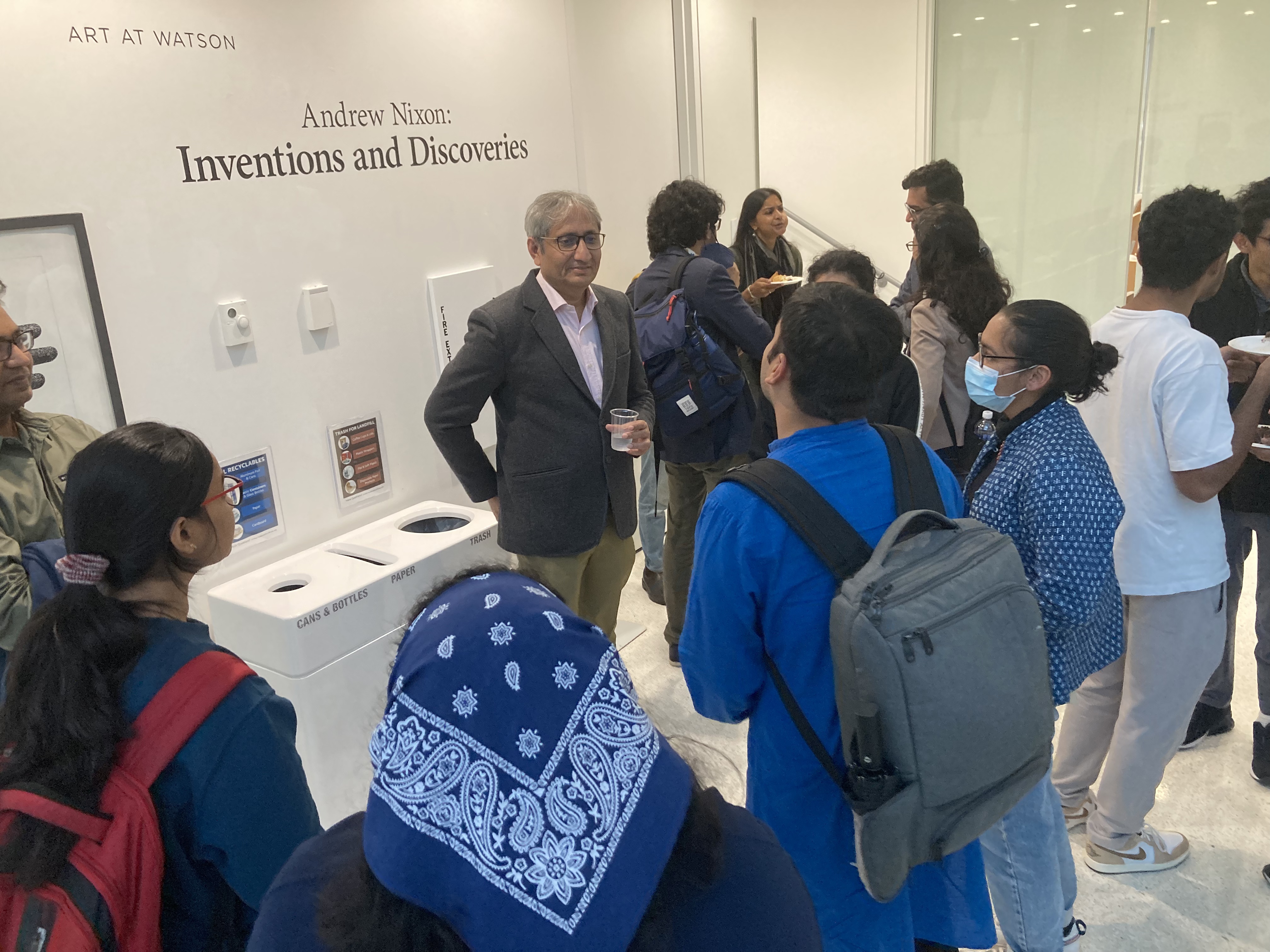
Students throng Ravish Kumar after his talk at Brown University.
Photo: Beena Sarwar
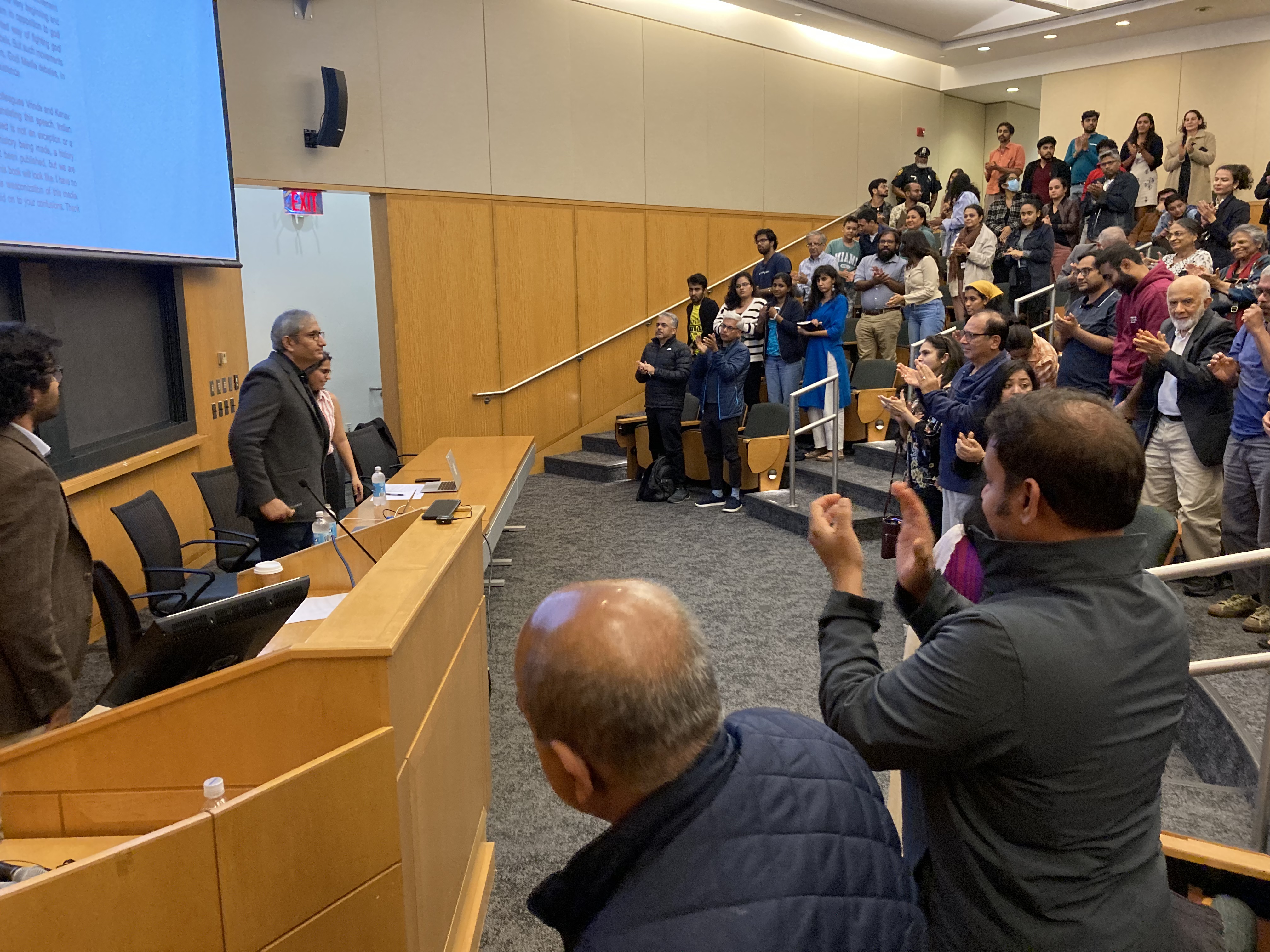
Standing ovation for Ravish Kumar after his talk at Harvard. Photo: Beena Sarwar
Discussion after the talk at Harvard. Not all questions were answered but as Ravish said, it’s important to ask them. Photo: Beena Sarwar
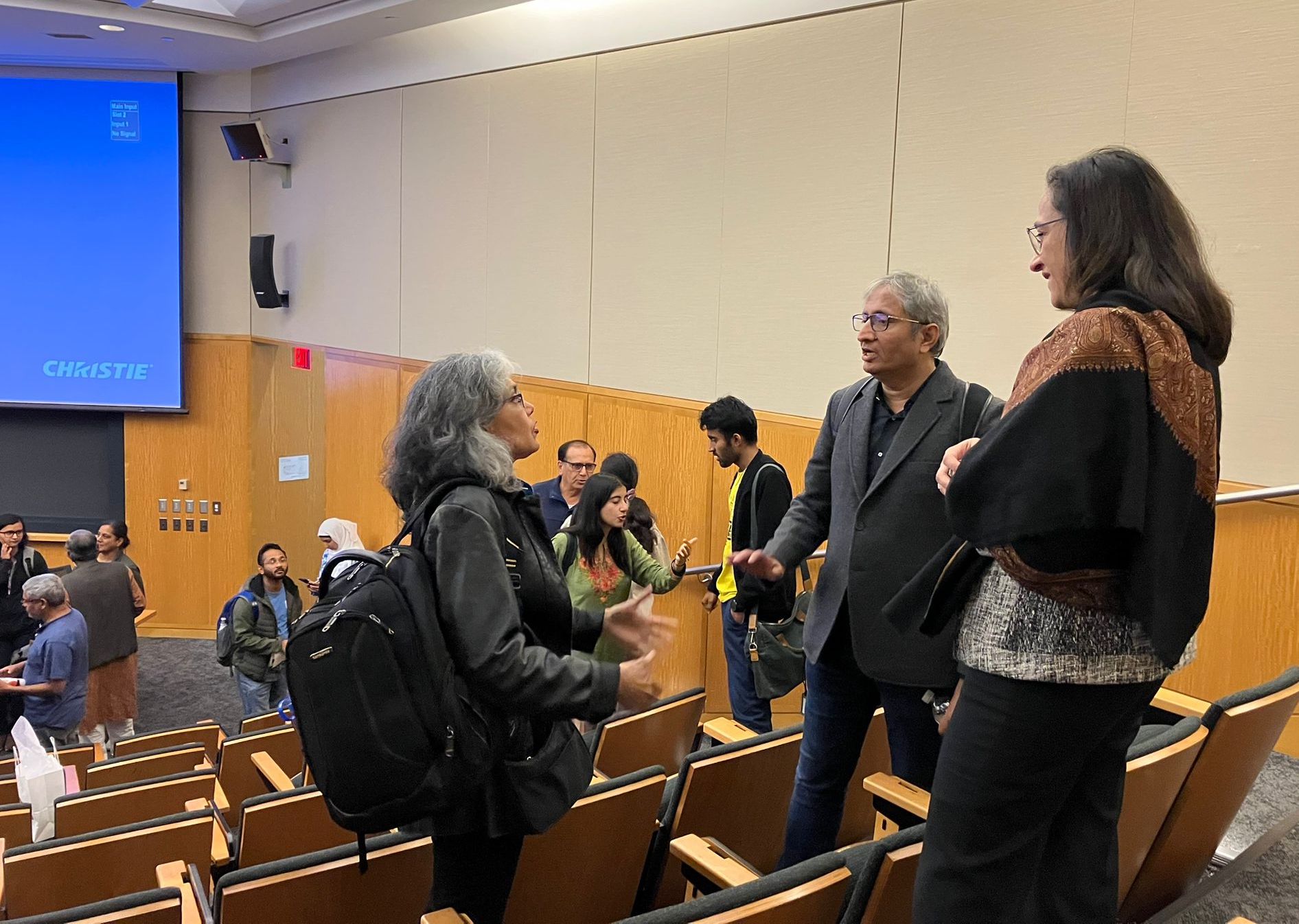
Talking to Ravish Kumar after the event, with Dr Deeba Husain from India. Photo: Rajeev Soneja
Ravish Kumar famously resigned from NDTV last November after its hostile takeover by Asia’s richest man Gautam Adani known to be close to Prime Minister Narendra Modi. While Kumar still has a huge viewership on YouTube – his channel has garnered over 7 million subscribers so far – it is an insecure platform, as he knows. The recently released documentary While We Watched (available on PBS) features Kumar, but as he also acknowledges, there are many others standing for journalistic values and ethics in India.
An FIR (first investigation report) was lodged against NewsClick in August, the day after a poorly-sourced New York Times report alleging that it had received funding from a network spreading “Chinese propaganda”.
The detained journalists included junior employees – and if they were being detained “simply because you believe that NewsClick is getting Chinese funds then a very wrong precedent is being set,” to quote prominent TV anchor Rajdeep Sardesai.
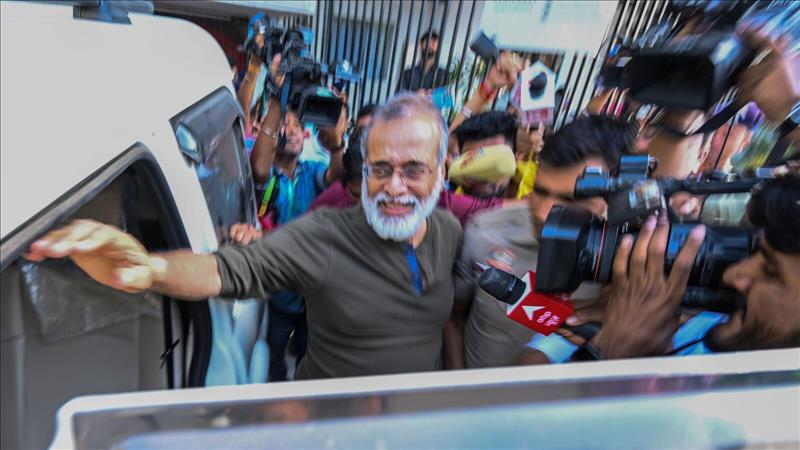
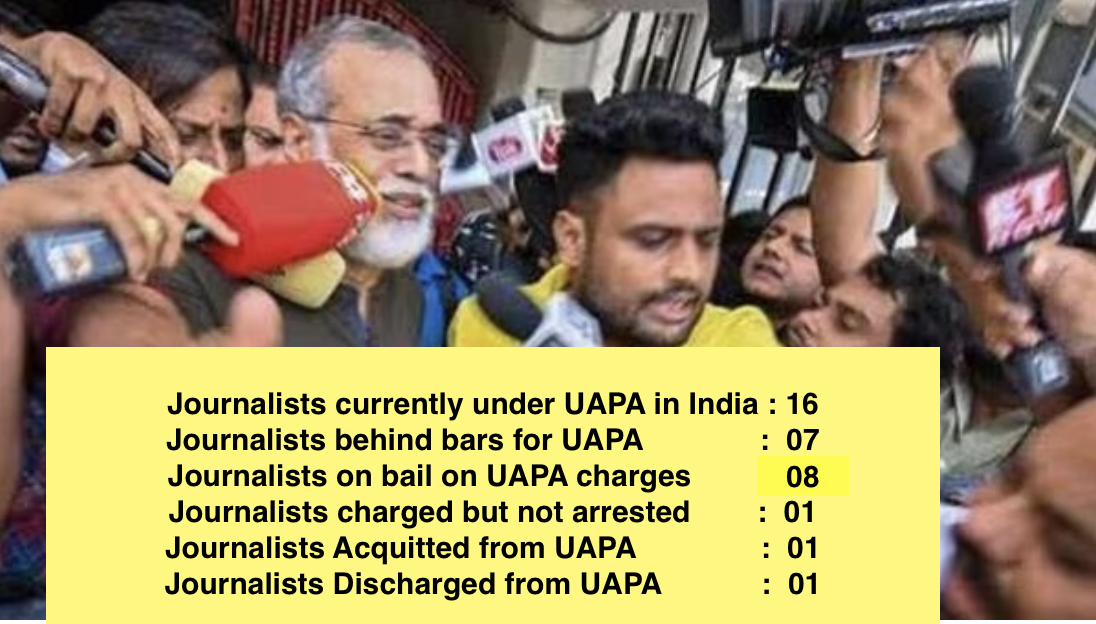
Newsclick founder and chief editor Prabir Purkayastha, and Amit Chakravarty, who heads the portal’s human resources section, were arrested under the draconian Unlawful Activities (Prevention) Act (UAPA). Since 2010, as many as 16 journalists have been charged under the UAPA, reports the Free Speech Collective, India, in a post that lists them, with details of those out on bail, the seven still behind bars, and others.
NewsClick founder and chief editor Prabir Purkayastha arrested. Photo credit: Raj K Raj/Hindustan Times via Getty Images, published by Amnesty International.
“In India, 16 journalists under UAPA ; seven behind bars” – image courtesy the Free Speech Collective, India
There is a huge pushback in India against these heavy handed tactics, which those in other countries are familiar with.
Below, the text of a joint letter by several journalists’ organisations to the Chief Justice of India:
Last month, another Indian fisherman incarcerated in Pakistan died while waiting to be repatriated. A young man in his thirties. Why he was held in the first place makes no sense to me, and to a lot of other people. India and Pakistan routinely detain each others fisherfolk. In doing so, they defy international law, deny the incarcerated men consular access in violation of their own laws, hold them in prison for months if not years (a costly enterprise), then take months to verify the identities of those who have served their terms, so that they remain imprisoned even after completing their sentences. I asked my friend Jatin Desai in Mumbai to write about this for Sapan News, the syndicated features I started a couple of years ago. We ended up doing the piece together. I’m sharing our article below, published in Sapan News, as well as in several other publications.Still relevant, and urgent for the authorities to take up. Please share widely.
The suffering continues: No relief in sight for Indian, Pakistani fishermen
Another Indian fisherman died while in detention in Pakistan. Such deaths in custody routinely take place on either side. Pakistan and India routinely arrest and imprison each others’ fisherfolk for crossing an invisible maritime border. This should not be happening. Meanwhile, both countries must urgently at least revive the Joint Judicial Committee for cross-border prisoners
By Jatin Desai and Beena Sarwar
Passport photo of Jagdish Mangal, who died while waiting to be repatriated. Photo: Courtesy Edhi Foundation
If 99 Indian fishermen incarcerated in Pakistani prisons had been repatriated last month as agreed, Jagdish Mangal might still be alive.
Mangal was among the several Indian fishermen arrested by Pakistan’s Maritime Security Agency in February 2020 and detained in Malir prison, Karachi. He was 35 years old from Nana Vada, Gujarat.
Pakistan was to repatriate 99 Indian fishermen on 3 July, but this never happened for unexplained reasons. Mangal died on August 6 of ‘natural causes’ according to the medical certificate.
The attacks on the Christian community in Jaranwala near Faisalabad (former Lyallpur) are among a long string of such violence instigated by extremist elements seeking power in the name of religion in Pakistan. I co-wrote this article for Sapan News with a young reporter in Karachi who was initially only reporting on Pakistan’s first Minority Rights March. Then Jaranwala happened. We now present a longish read putting the violence in context and tracking the trajectory of a turning point in the state’s responses, with a couple of inputs from India
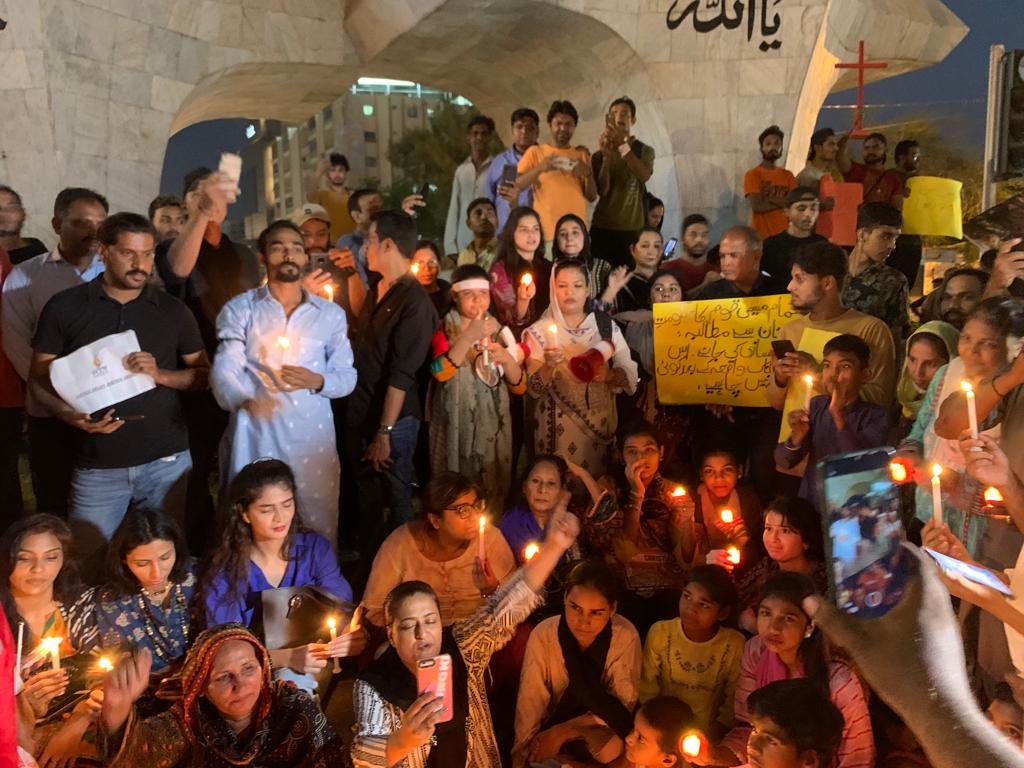
Karachi protest at Teen Talwar, 19 August 2023. Photo: Abdullah Zahid
Karachi protest at Teen Talwar, 19 August 2023. Photo: Abdullah Zahid
“Manzoor Masih – will be remembered!… The Christians of Shanti Nagar – will be remembered!… Rimsha Masih – will be remembered!… ”
Activist and dancer Sheema Kermani led the chanting, evoking the names of a long list of Pakistani Christian individuals and communities targeted by extremist elements in the name of religion over the years.
A compilation of offerings from our Sapan network, including my latest venture Sapan News syndicated features. Together, we aim to further the narrative of regionalism, peace, and dialogue. What can you do? Read on
Visual: Aekta Kapoor/Sapan
Delighted to have acclaimed actor and director Sarmad Khoosat join us Sunday July 16 for Sapan’s first fundraiser, hosted by poet Dr Arvinder Chamak in Amritsar. Sarmad will be in conversation with the wonderful journalists Malinda Seneviratne in Colombo, Mandira Nayar in Delhi; and Lubna Jerar in Karachi.
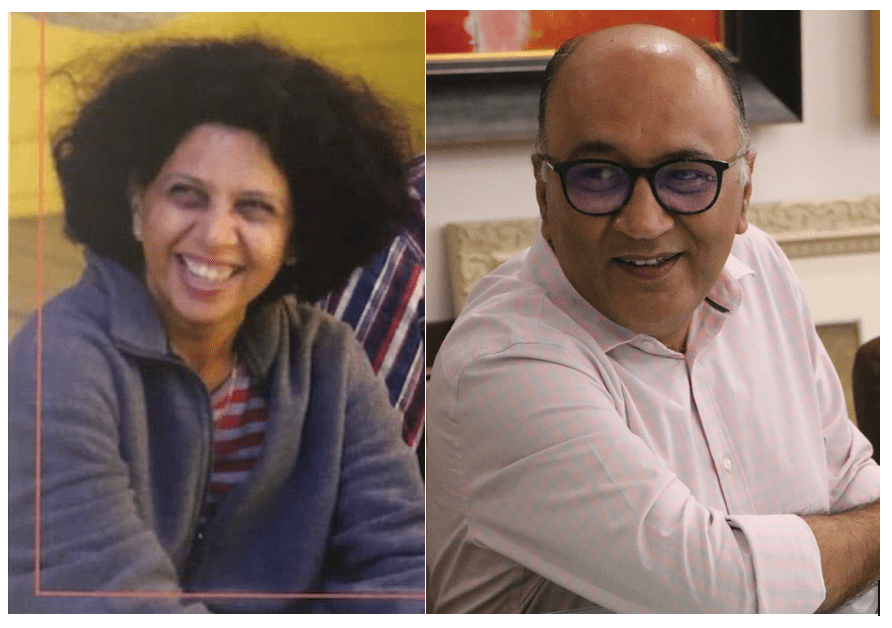
Lee Krishnan in Mumbai, Mohsin Tejani in Karachi: Breadloaf friends, great synergy. Photos: supplied.
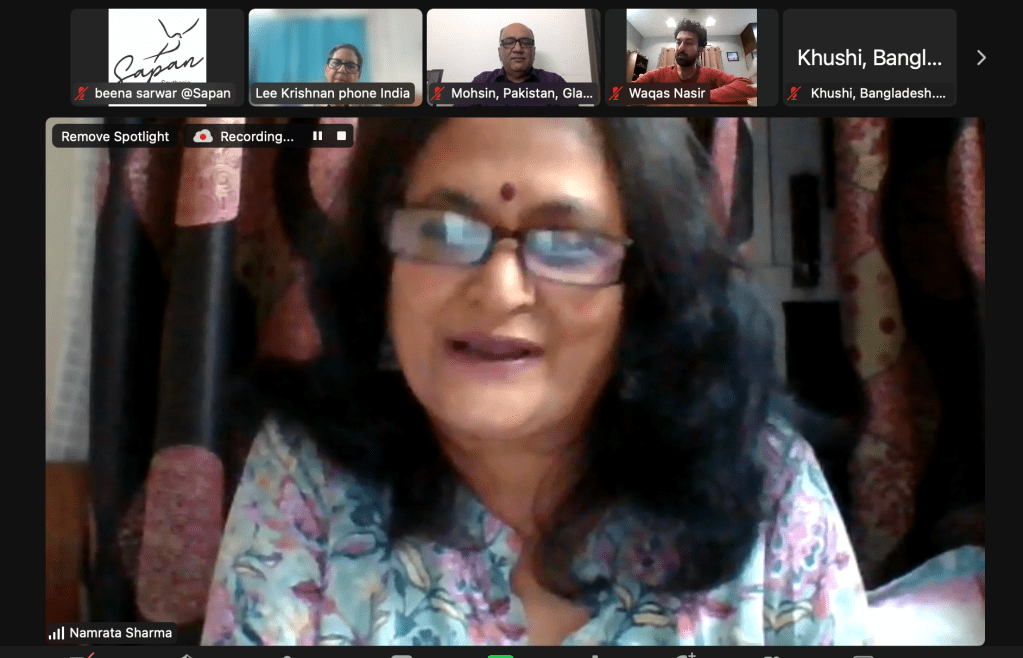
Really enjoyed this Sapan online family writing workshop by educators and teacher trainers Mohsin Tejani in Karachi and Lee Krishnan in Mumbai, hosted by the amazing Khushi Kabir in Dhaka, joined by educationist and writer Benislos Thushan in Jaffna – looking dramatic due to a power cut, just before dashing off for an overnight bus to Colombo. Human rights activist and physician Fauzia Deeba from Quetta now in New Jersey talked about the floods in Pakistan and shared the In Memoriam section designed by a young journalist Sushmita Preetha in Dhaka. Senior journalist Namrata Sharma in Kathmandu delivered the heart warming closing remarks that the piece starts with.
Namrata Sharma: “Who and how can anyone say that Southasia is divided?” – screenshot from the workshop.
Lovely writeup on it by young agriculturist-researcher-educationist M. Waqas Nasir in Lahore, published as a Sapan News Network syndicated piece in several media outlets. Read it here: Divided by borders, united by aspirations. This piece and the event would not have been possible without the efforts of data analyst and researcher Priyanka Singh in New Delhi. Both she and Waqas are Sapan founder members.
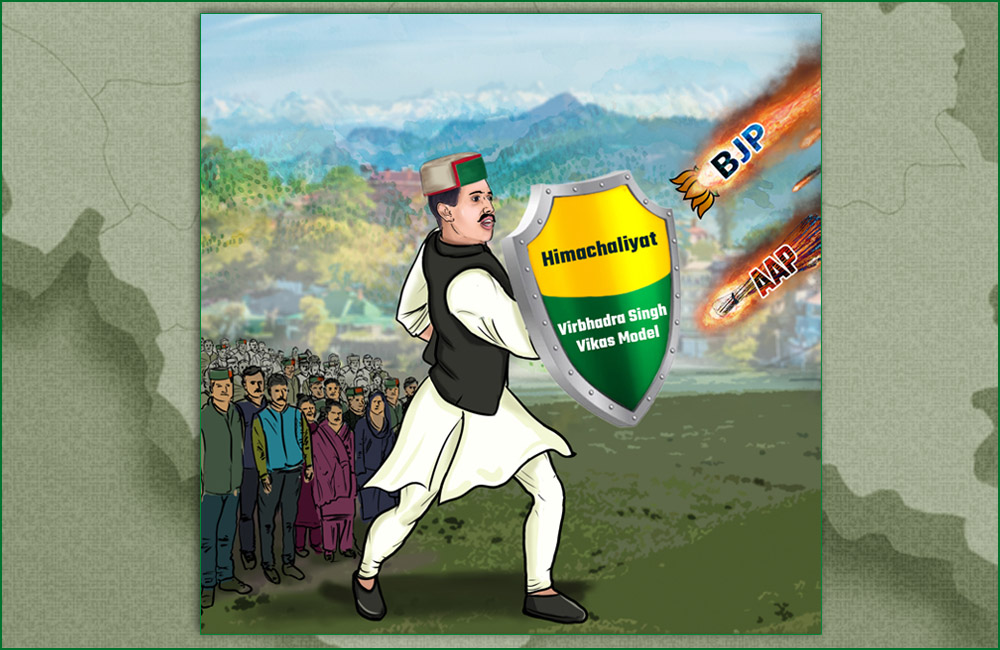
I’m also happy to share this piece young lawyer Vishal Sharma in Shimla, also a Sapan founder member. I love how hard and patiently he worked on the article, taking in feedback from various friends to shape it into what it became. I also learnt a lot by working with him on it, especially the idea of ‘Himachaliyat’ which reminds me of ‘Kashmriyat’ – promoting pluralism and peace. Published in Himachal Watcher. Read it here: A young leader’s activism may be a gamechanger for the Congress in Himachal‘. Vishal had the visual specially made by an artist friend.
Vikramaditya Singh uses the shield of “Himachaliyat” and “Virbhadra Singh Vikas Model” to counter political rivals. Visual by artist Deepak Saroj in Noida
Flood survivors and volunteers at Shahdadkot. Photo: Courtesy Rubina Chandio via the Flood Relief Work WhatsApp group.
It is moving to see how many on the ground, as well as across the region and beyond, are stepping up to help those hit by the floods in any way they can.
At our online Southasia Peace Action Network, Sapan, meetings and in personal messages, Indian friends in particular have expressed their anguish and desire to help. Many are frustrated by being unable to contribute financially as I mentioned in my last post, Floods in Pakistan: Many eager to help held back by restrictions.
The YouTube video below has friends Dr Amna Buttar and Dr Geet Chainani talking about the realities on the ground in disaster-hit areas and why as an Indian origin physician in the US, Geet wants to go back to Sindh to help with flood relief. Sabyn Zaidi remembers how Geet worked in medical camps during the 2010 floods. On the first day she saw 172 patients, without breaks. There were no restrooms, no food, no electricity; there were bugs and insects. When it got dark, she worked with the light from cell phone lights and torches brought by the villagers.
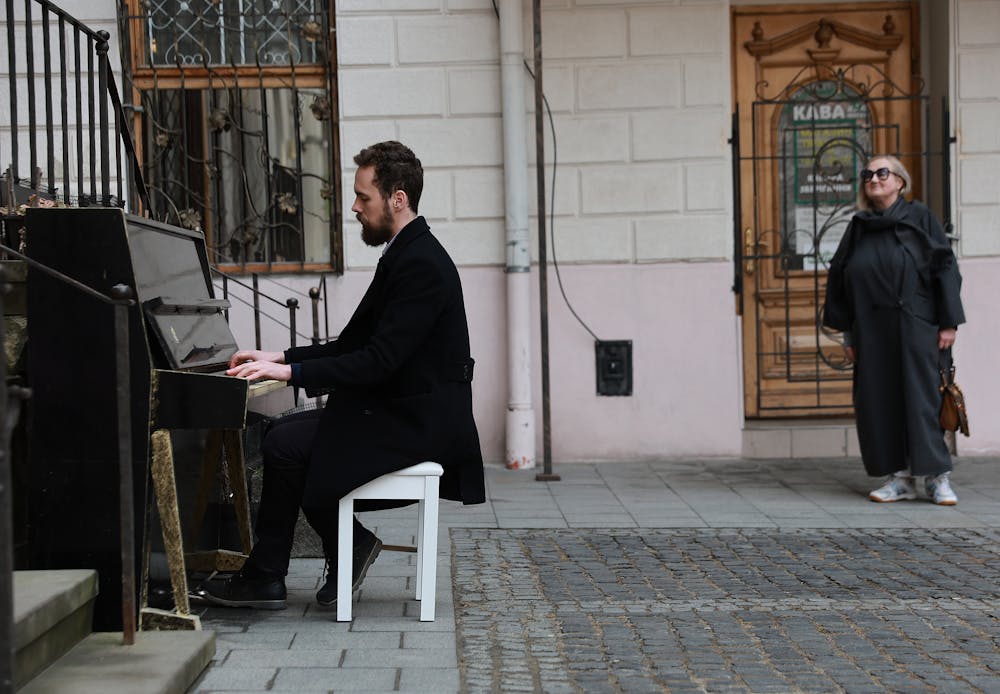
The “piano man,” a war refugee, became one of the symbols of resistance emerging from conflict. Photo by Joe Raedle/Getty Images, Lviv, Ukraine, March 29, 2022.
It’s a dream, and aspiration. To quote Gulzar’s beautiful poem, “Ankhon ko visa nahi lagta, sapnoN ke sarhad koi nahiN” (Eyes don’t need a visa, dreams don’t have frontiers)
So there’s this dream: Southasia is a region with soft borders, like the European Union, or like the Southasia region itself was, prior to 1965.
We’ve long been calling for dialogue to be uninterrupted and uninterruptible. The call for soft borders and allowing people-to-people contact takes this further. Letting people meet, travel, and trade will benefit the region economically, as well as reduce misunderstandings and violent extremism.
Check out the list of demands – we know it’s a long shot, but we desis are used to bargaining – sign and share this online petition, coordinated by the Southasia Peace Action Network or Sapan. As of today, over 36,000 signatures and counting. Help us reach 50,000.
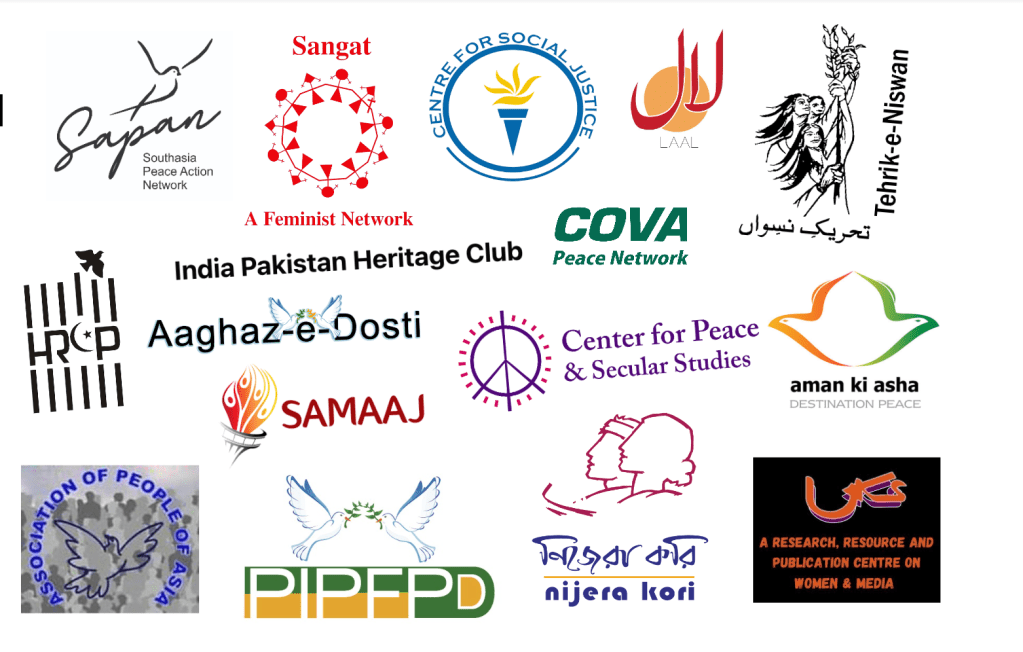
Here’s a compilation of the organisations collaborating on this so far. More are joining. Each person counts, like the drops that make up the ocean.
We may not attain the dream in our lifetime but let’s not let that stop us from trying.
Logos of participating organisations. Being updated on the petition site as more join.
The petition is addressed to the prime ministers and foreign offices of India, Pakistan and Bangladesh. Nepal and Sri Lanka allow visa-on-arrival. This is how it starts:
“This August marks 75 years since India gained independence from the British colonists and was simultaneously partitioned as the new country of Pakistan was born. In 1971, there was further independence and partition as East Pakistan became Bangladesh. These momentous events are marked with much blood and pain.
“It is time to heal the pain. Let people meet, “milne do”. Let us ‘reclaim Southasia’, to quote the late journalist I.A. Rehman.
“It is essential to allow people-to-people contact in order to fulfil the objectives of SAARC, the South Asian Association for Regional Cooperation which aims to “promote the welfare of the peoples of South Asia” in all ways possible and to enable the peoples of the region to “live in dignity and to realise their full potential”.
Over 30 organizations around Southasia and beyond have endorsed a joint statement about cross-border prisoners initiated and coordinated by Sapan, the Southasia Peace Action Network, calling for the humane treatment of cross-border prisoners and to decriminalise inadvertent illegal border crossings.
All three had served their sentences but remained in custody on ‘the other side’. Compounding the tragedy, there are terrible delays in the repatriation of the bodies of such fisherfolk, notes the statement.
The statement also draws attention to some teenagers who remain incarcerated in juvenile centers in India, mostly without any contact with their families. One has already served his sentence but remains incarcerated. Details below – Statement text and endorsements:
Arrested fisherfolk in custody across the border, far from home, no consular access until after sentence is over, often kept in custody even after serving their sentences. File photo. Getty images









 Journeys to democracy