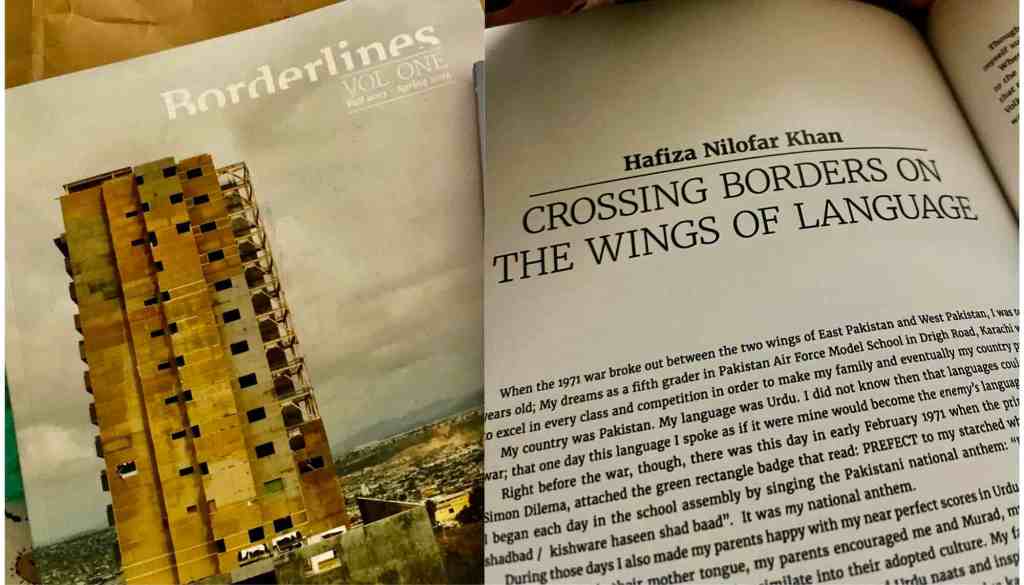
It was only as an adult long after 1971 that I learnt about the internment camps where Bengalis in then West Pakistan had been detained. My source was an essay titled ‘Crossing Borders on the Wings of Language’, by Hafiza Nilofar Khan, in Borderlines, Vol. 1 (2014), an anthology published by Voices Breaking Boundaries, my sister Sehba Sarwar’s nonprofit in Houston (now archived at the University of Houston).
The ten-year-old Hafiza whose father is in the Pakistan Air Force and proud of her prowess in Urdu suddenly finds herself and her family in the situation that Lahore-based historian Ilyas Chatta details in his recently published book Citizens to Traitors: Bengali Internment in Pakistan 1971-1974 (Cambridge University Press, 2025).
It has been a decade since we lost Sabeen Mahmud to a targeted attack in Karachi and since we lost Shayan “Poppy” Afzal Khan to cancer. It is also 20 years since the pioneering environmental journalist Saneeya Hussain died in Brazil. Their peacemongering legacies live on.
Personal Political Beena Sarwar / Sapan News
On 24 April 2015, a valiant crusader for peace, social justice, creativity and human dignity was killed in Karachi. That tragedy ten years ago deprived a mother of her only child, and many of us of a dear friend.
Social entrepreneur Sabeen Mahmud, 40, was driving home with her mother Mahenaz next to her. A motorcyclist approached while they were stopped at a red light, and shot Sabeen at point blank range. She died on the spot.
Sabeen. Photo by Zaheer Alam Kidvai.
Mahenaz at Creative Karachi Festival 2016: Sabeen would hate for any of us to give up. Photo: Beena Sarwar
A poster with Sabeen’s photo at Creative Karachi Festival, 2016, Alliance Francaise. Photo: Beena Sarwar
Pakistan: Countrywide demonstrations for Sabeen, 2015
Protest for Sabeen in Delhi, 2015. File photo
I had known Sabeen since she was a teenager. We were comrades together in several peace initiatives – part of a large, cross-border tribe of ‘peacemongers’ as I call our community.
I began writing this piece some time ago, after watching Ava DuVernay’s ‘Origin’ at a friend’s place in Chicago – appropriate because that’s where Dr. King did a lot of his activism. Today seemed like a good time to finish it.
There is more awareness about systemic racism, caste oppression, and gender rights than ever before but we have a long way to go to achieve the dream of equality, justice and human dignity embodied by Dr. Martin Luther King. Those who fear change will continue to fight it. The struggle continues
Personal Political By Beena Sarwar / Sapan News
The third Monday of January, which falls this year on the 20th, is a federal holiday in the U.S., in honour of Dr. Martin Luther King Jr.’s birthday. Born on 15 January 1929, Dr King was assassinated on 4 April 1968. A bill passed by Congress led to his birthday being commemorated as a federal holiday on the third Monday in January since 1986.
The U.S. Presidential Inauguration also takes place on 20 January. This will mark the third time ever for a president to take the oath of office on the holiday designated for Dr Martin Luther King – the earlier two were President Bill Clinton and President Barack Obama.
Dr King’s children have urged supporters to hear what President Trump has to say, even if they do so later.
The ideals of equality, justice, human dignity, and peace that Dr King stood for remain relevant, opposed by those threatened by these concepts.
A photo of a photo from the Martin Luther King, Jr. Memorial Center in Atlanta, Georgia, by Matt Lemmon.Continue reading →
Hello friends – I’m still in Boston, waiting for permission to visit India. The WISCOMP Saahas (courage) awards ceremony I wanted to attend on 16 December is over, but I am still like to go and visit my friends and family, and show my Sri Lanka documentary at various places including the Bangalore International Center, the IIC, Delhi, and in Chennai – police in all three cities have given clearance as far as I know.
Sharing the edited version of the WISCOMP awards ceremony below – they had taken it offline to edit out the Afghan and Bangladeshi activists who were kept anonymous. Don’t miss the inspirational speeches by the awardees and thoughtprovoking documentary on the courageous journalist Patricia Mukhim from India’s North-East (I love her singing in it and now I know where her love for plants and nature comes from).
Here is a report about the event in The Wire – I’m delighted they used a photo of featuring the wonderful community of Southasia Peace Action Network (Sapan) Peacemongers who joined my dear friend and colleague, journalist Mandira Nayar on stage after she accepted the award on my behalf from Dr Syeda Hameed, a Sapan founder member and advisor. It was wonderful and moving to see Aekta Kapoor, Ruchira Gupta (also a Saahas awardee), Parshu Narayan, Reema Amin, and the veteran peace activist O.P. Shah from Kolkata come together – thank you WISCOMP for inviting them.
Other wonderful members of our community were present but remained seated, like the inspirational activist Harsh Mander of Carvan-e-Mohabbat, poet and writer Sagari Chhabra, and journalist and activist Rita Manchanda.
Mukta Lall, daughter of the poet Jagannath Azad, was also present but had to leave before my name was called. We’ve been been in communication with for years but never met. It was Mukta ji who provided me with a scan of her father’s Urdu poem that served as Pakistan’s first national anthem – well documented, although there is no official record.
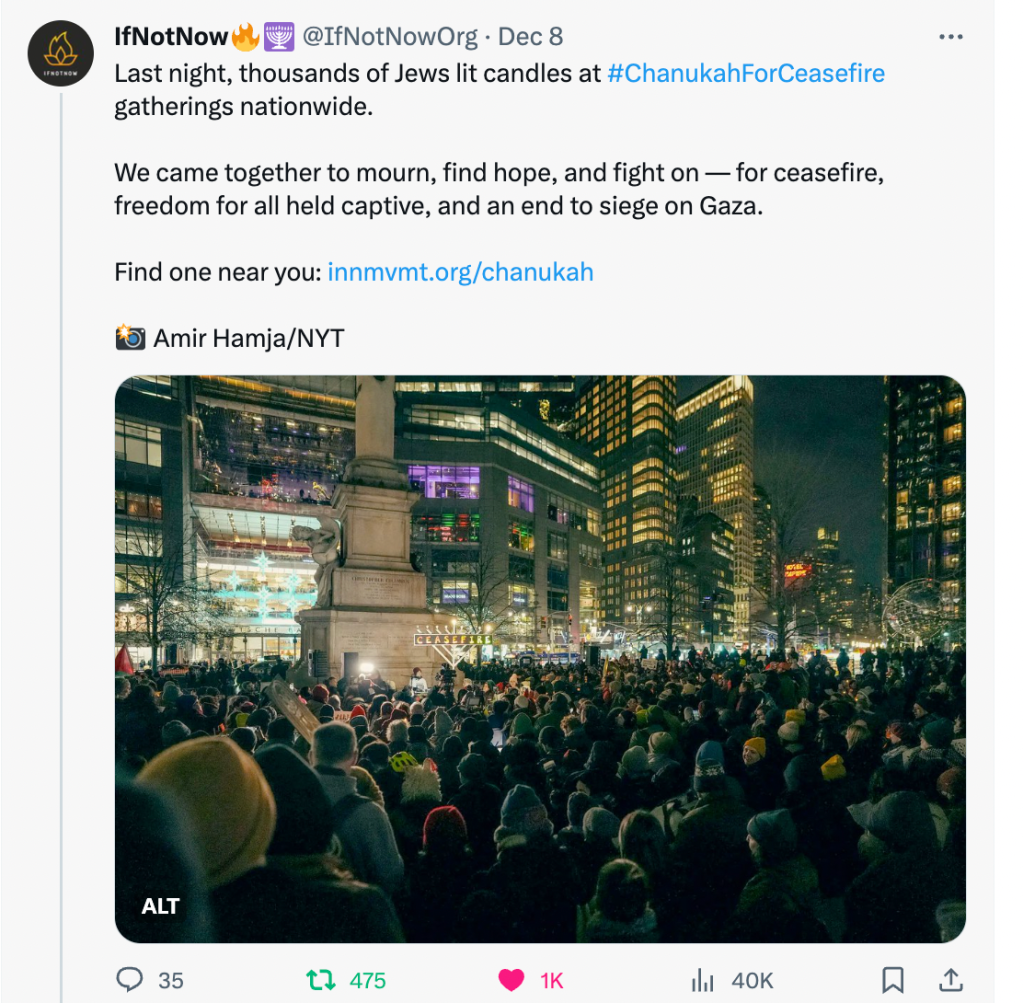
Greetings to those observing Hanukah and salute to those participating in #ChanukahForCeasefire demonstrations around the United States. Thousands of Jews have been lighting candles at #ChanukahForCeasefire gatherings, coming together “to mourn, find hope, and fight on — for ceasefire, freedom for all held captive, and an end to siege on Gaza,” says IfNotNow, a movement of American Jews “organizing for equality, justice, and a thriving future for all: our neighbors, ourselves, Palestinians, and Israelis.” To find one near you, go to: https://innmvmt.org/chanukah.
Such actions, and those of thousands including high school students marching around the world to call for #ceasefirenow, provide hope in a world that feels heavy. It is unbearable to think of the thousands killed, maimed and displaced in conflict areas, especially children.
Public opinion worldwide is clearly for #CeasefireNow, calls being ignored by those who could stop the bombing that continues to claim lives. What can we do? Hold on to ourselves and do what we can, where we can, when we can. Inform ourselves, share information – double-check before sharing so we don’t pass on #fakenews — donate to causes, participate in public actions.
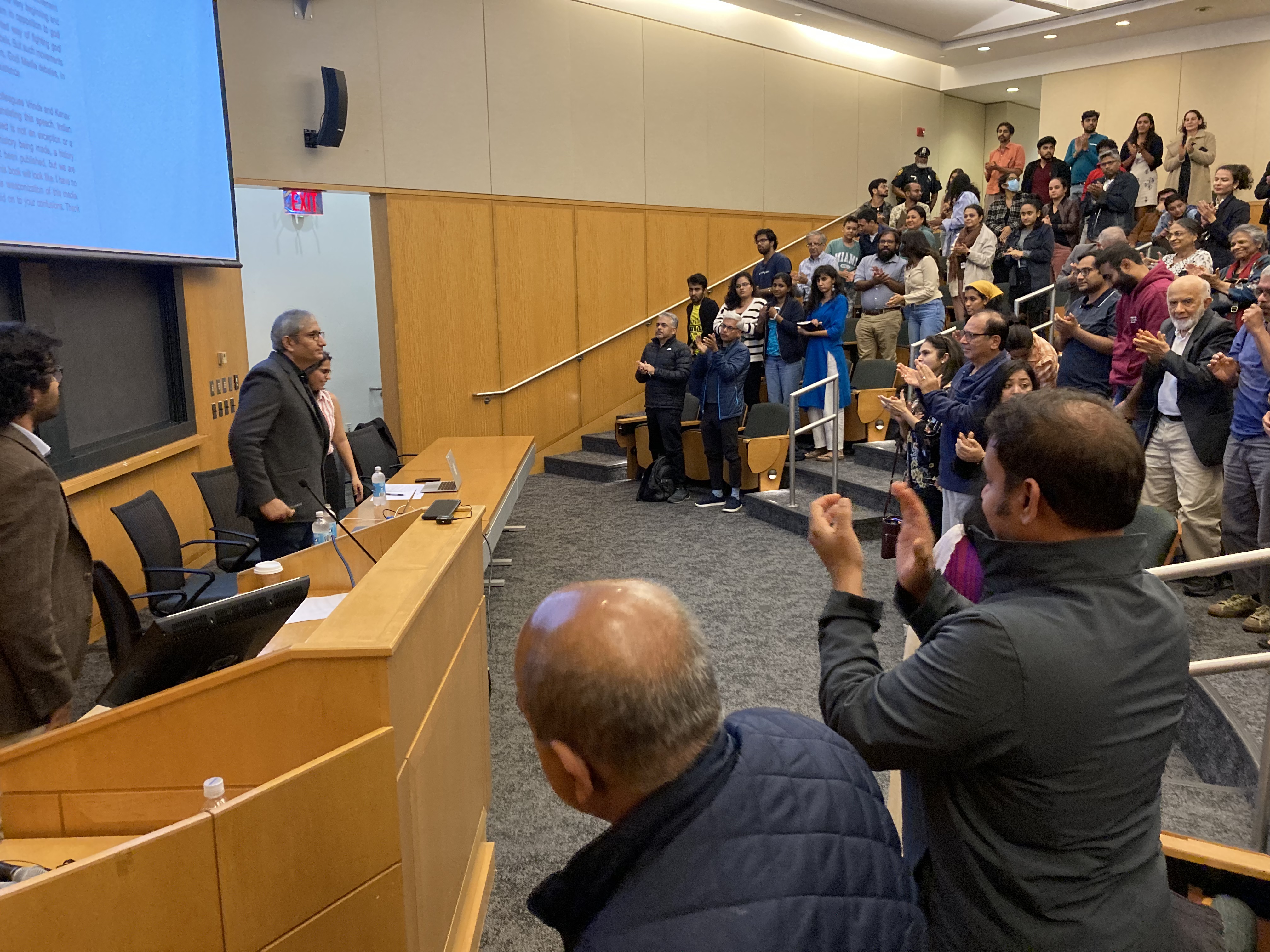
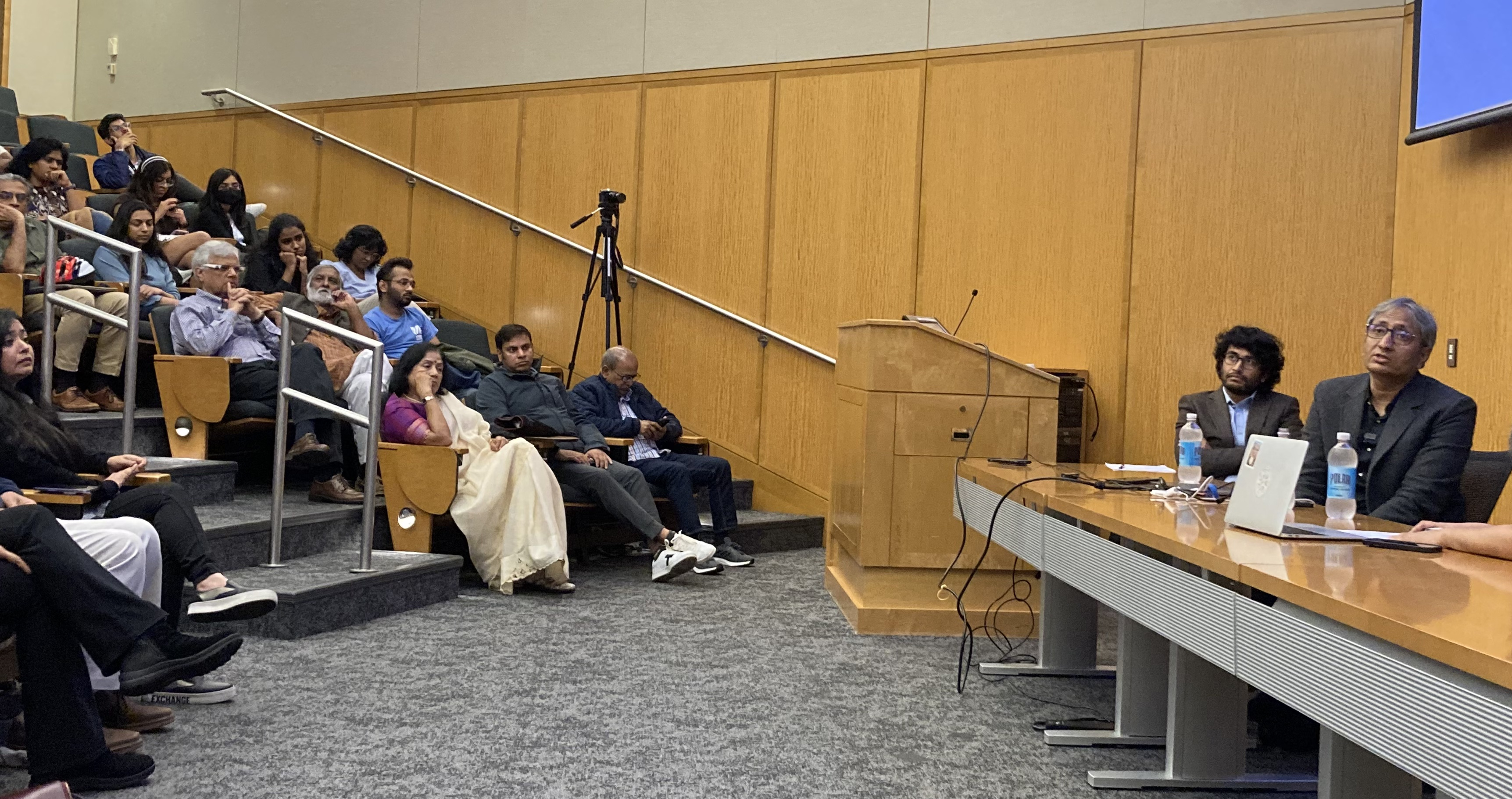
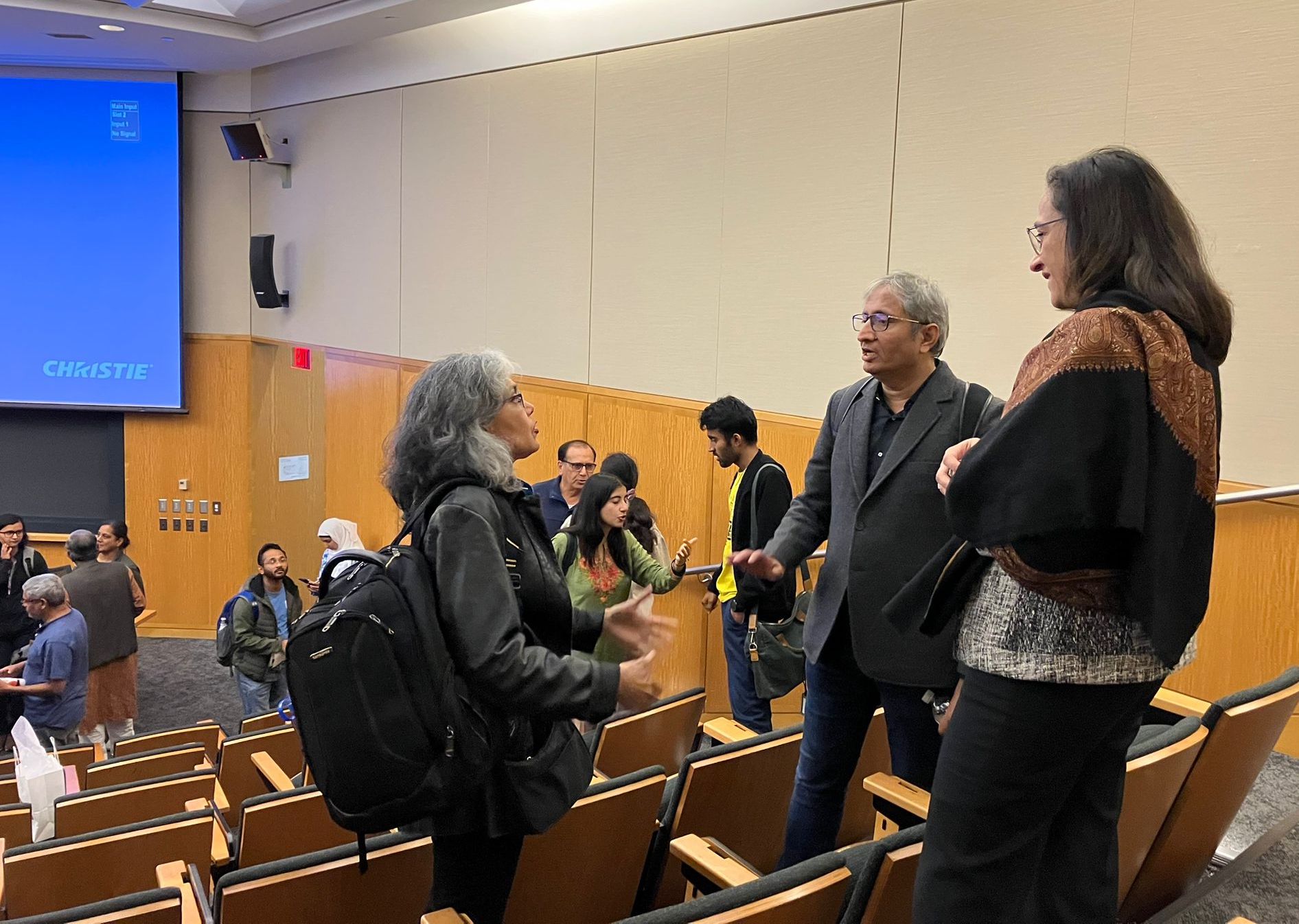
The day the popular Indian journalist Ravish Kumar spoke at Harvard, Oct. 2, happened to mark Gandhi Jayanti, Mahatama Gandhi’s birth anniversary. A day that social media users celebrated Gandhi-ji’s murder was and glorified his murderer on X, formerly Twitter, noted Kumar, talking in Hindi to students and community members filling the nearly 150-seater auditorium.
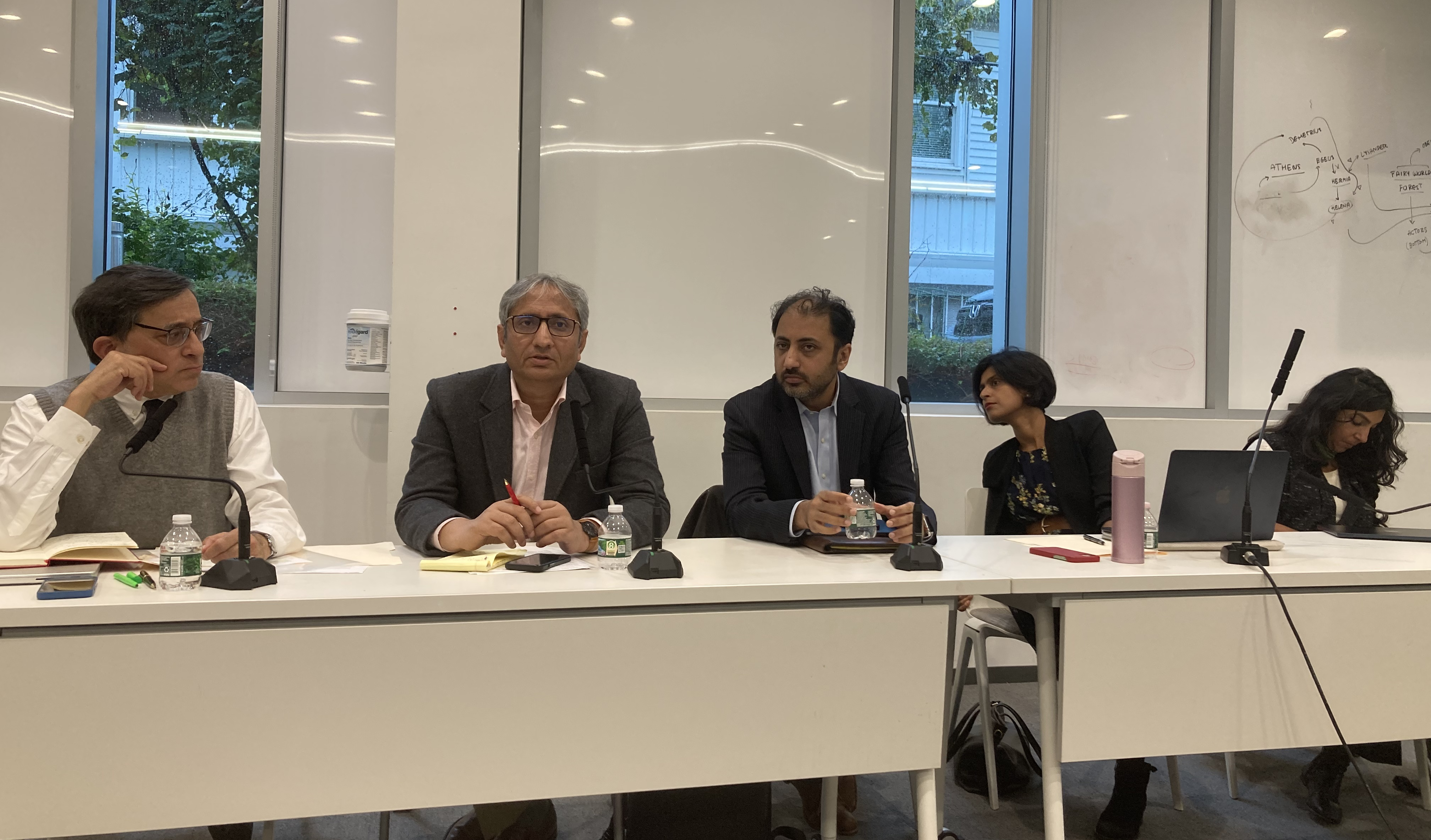
Ashutosh Varshney, Director of the Saxena Center for Contemporary South Asia at Brown University; Ravish Kumar; Wall Street Journal columnist Sadanand Dhume; Brown University faculty Poulami Roychowdhury and Prerna Singh. Photo: Beena Sarwar
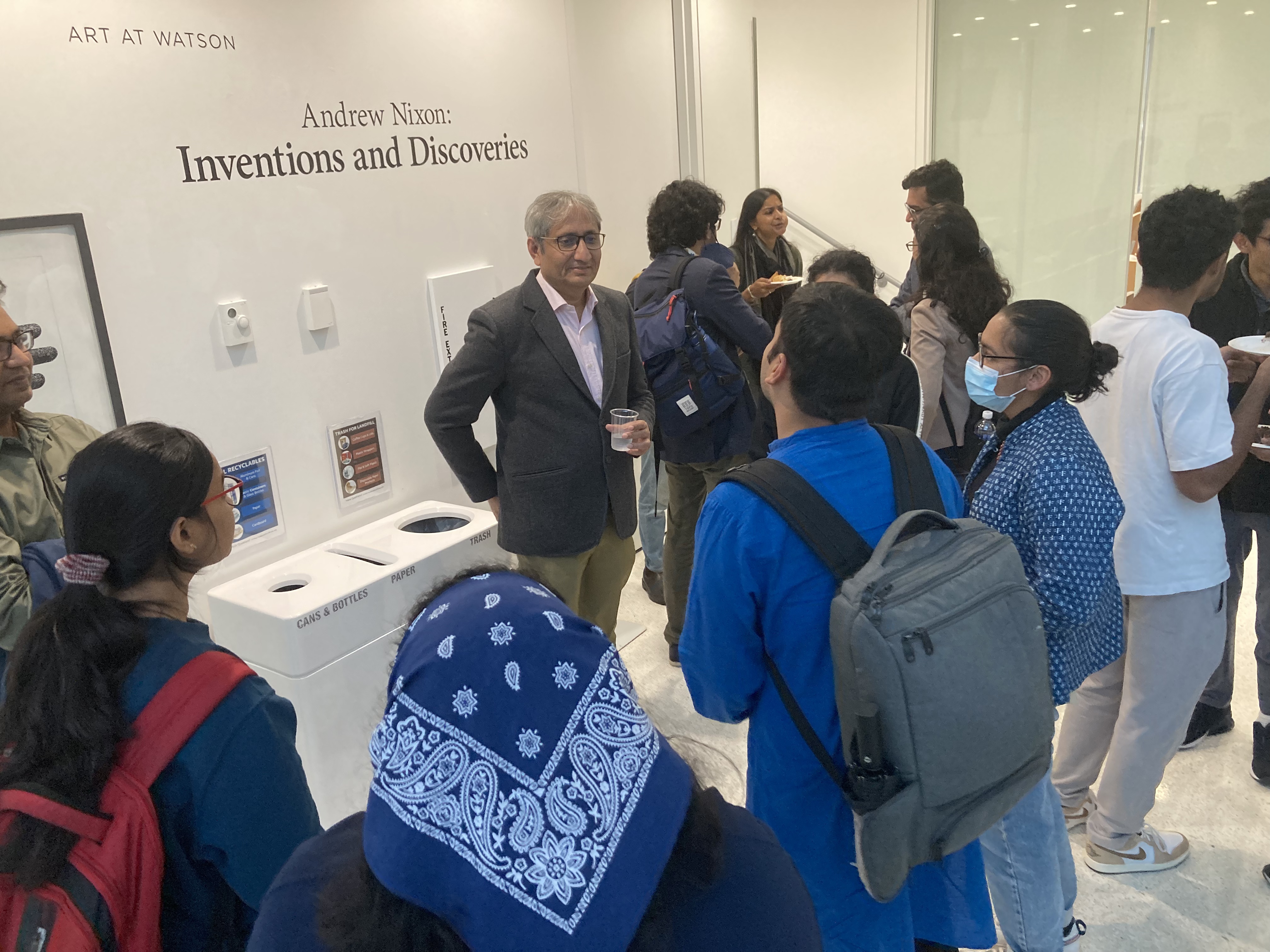
Students throng Ravish Kumar after his talk at Brown University.
Photo: Beena Sarwar
Standing ovation for Ravish Kumar after his talk at Harvard. Photo: Beena Sarwar
Discussion after the talk at Harvard. Not all questions were answered but as Ravish said, it’s important to ask them. Photo: Beena Sarwar
Talking to Ravish Kumar after the event, with Dr Deeba Husain from India. Photo: Rajeev Soneja
Ravish Kumar famously resigned from NDTV last November after its hostile takeover by Asia’s richest man Gautam Adani known to be close to Prime Minister Narendra Modi. While Kumar still has a huge viewership on YouTube – his channel has garnered over 7 million subscribers so far – it is an insecure platform, as he knows. The recently released documentary While We Watched (available on PBS) features Kumar, but as he also acknowledges, there are many others standing for journalistic values and ethics in India.
An FIR (first investigation report) was lodged against NewsClick in August, the day after a poorly-sourced New York Times report alleging that it had received funding from a network spreading “Chinese propaganda”.
The detained journalists included junior employees – and if they were being detained “simply because you believe that NewsClick is getting Chinese funds then a very wrong precedent is being set,” to quote prominent TV anchor Rajdeep Sardesai.
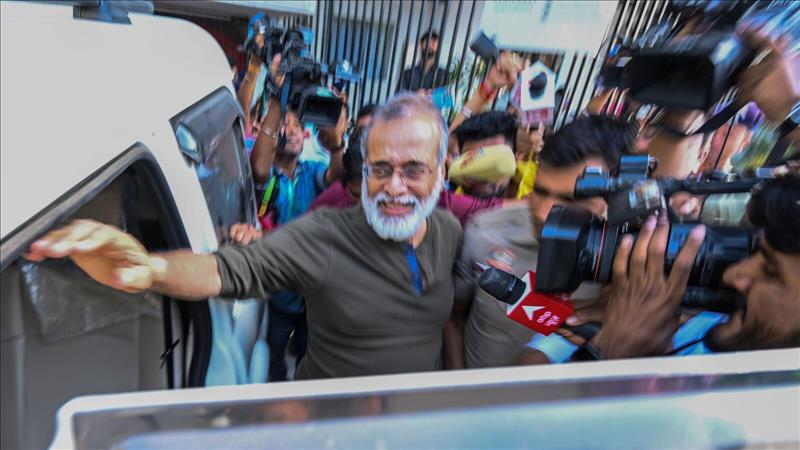
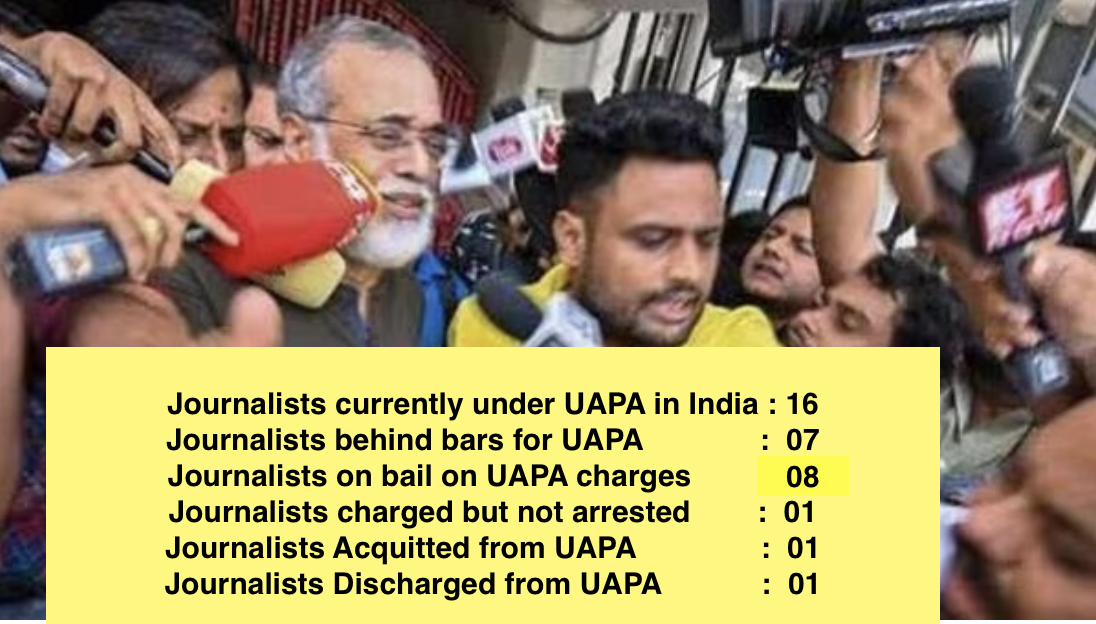
Newsclick founder and chief editor Prabir Purkayastha, and Amit Chakravarty, who heads the portal’s human resources section, were arrested under the draconian Unlawful Activities (Prevention) Act (UAPA). Since 2010, as many as 16 journalists have been charged under the UAPA, reports the Free Speech Collective, India, in a post that lists them, with details of those out on bail, the seven still behind bars, and others.
NewsClick founder and chief editor Prabir Purkayastha arrested. Photo credit: Raj K Raj/Hindustan Times via Getty Images, published by Amnesty International.
“In India, 16 journalists under UAPA ; seven behind bars” – image courtesy the Free Speech Collective, India
There is a huge pushback in India against these heavy handed tactics, which those in other countries are familiar with.
Below, the text of a joint letter by several journalists’ organisations to the Chief Justice of India:
A compilation of offerings from our Sapan network, including my latest venture Sapan News syndicated features. Together, we aim to further the narrative of regionalism, peace, and dialogue. What can you do? Read on
Visual: Aekta Kapoor/Sapan
Delighted to have acclaimed actor and director Sarmad Khoosat join us Sunday July 16 for Sapan’s first fundraiser, hosted by poet Dr Arvinder Chamak in Amritsar. Sarmad will be in conversation with the wonderful journalists Malinda Seneviratne in Colombo, Mandira Nayar in Delhi; and Lubna Jerar in Karachi.
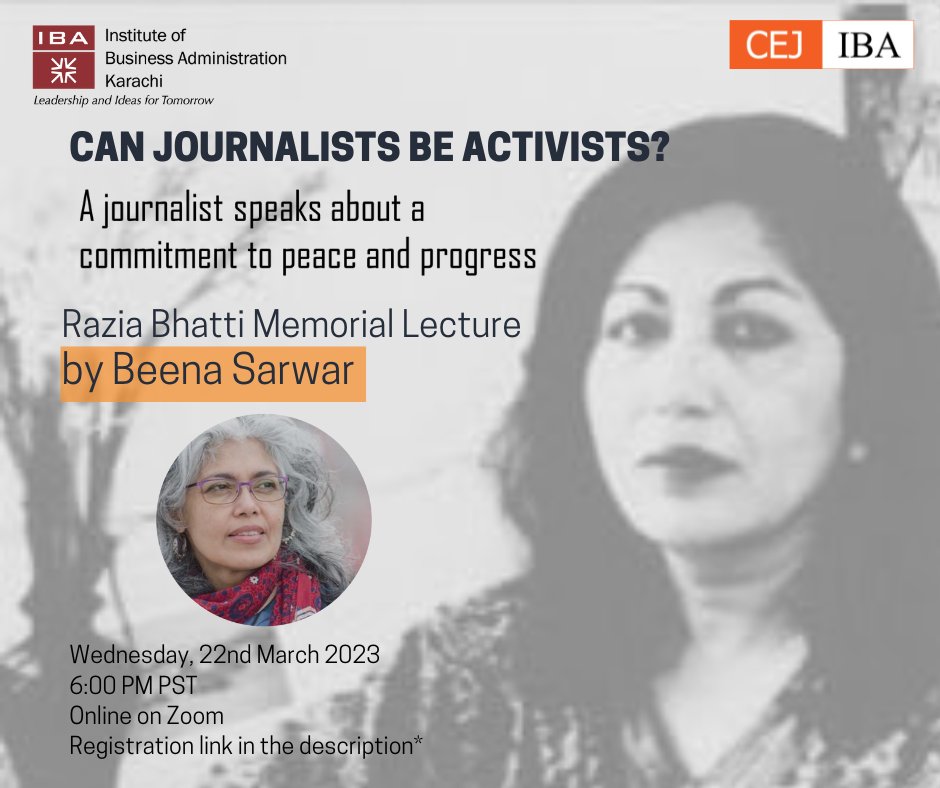
Honoured and humbled to be invited to present this year’s Razia Bhatti Memorial Lecture, named for someone who remains a role model for so many journalists and women, someone I knew personally and admired greatly.
Time: Wednesday, March 22, 2023 06:00 PM (Pakistan)
Agenda
5:50 – 6pm Producer at CEJ to admit registered attendees
6:00 pm: Amber Shamsie, CEJ director, – Welcome and introduction to Razia Bhatti Memorial Lecture lecture series
6:05 pm: Remarks by Dr Akbar Zaidi, IBA Executive Director
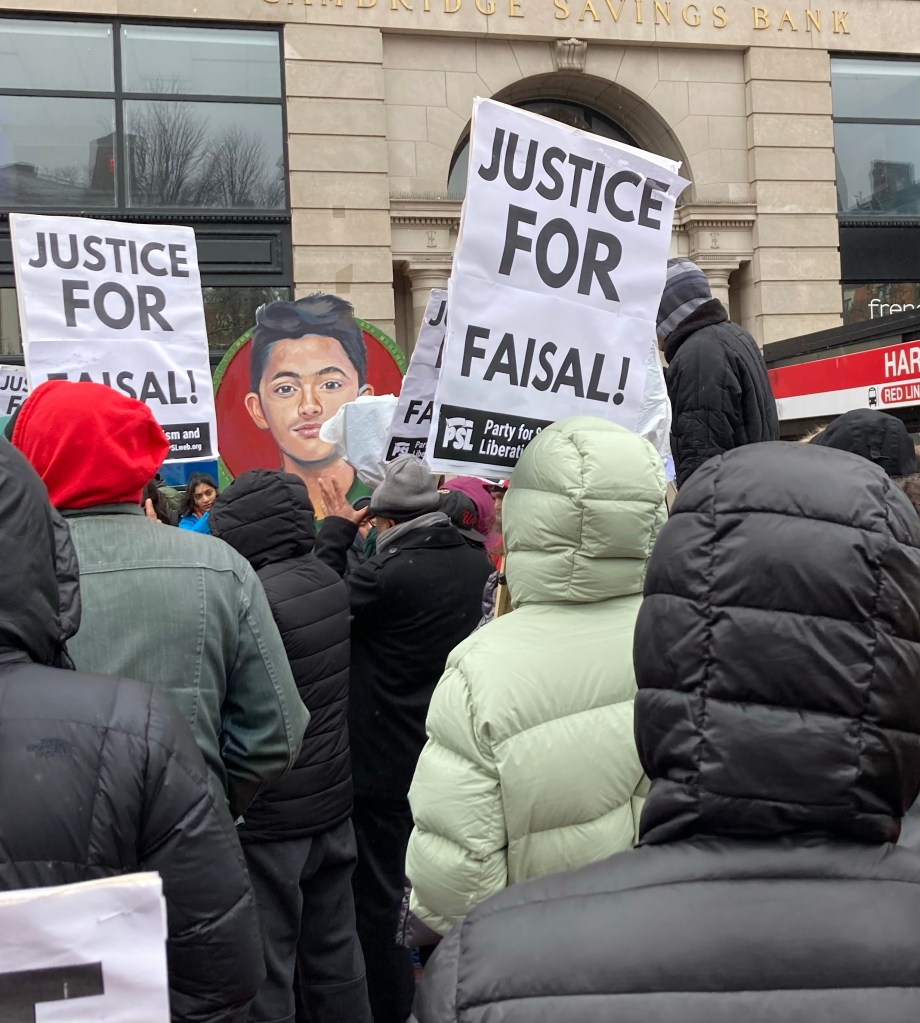
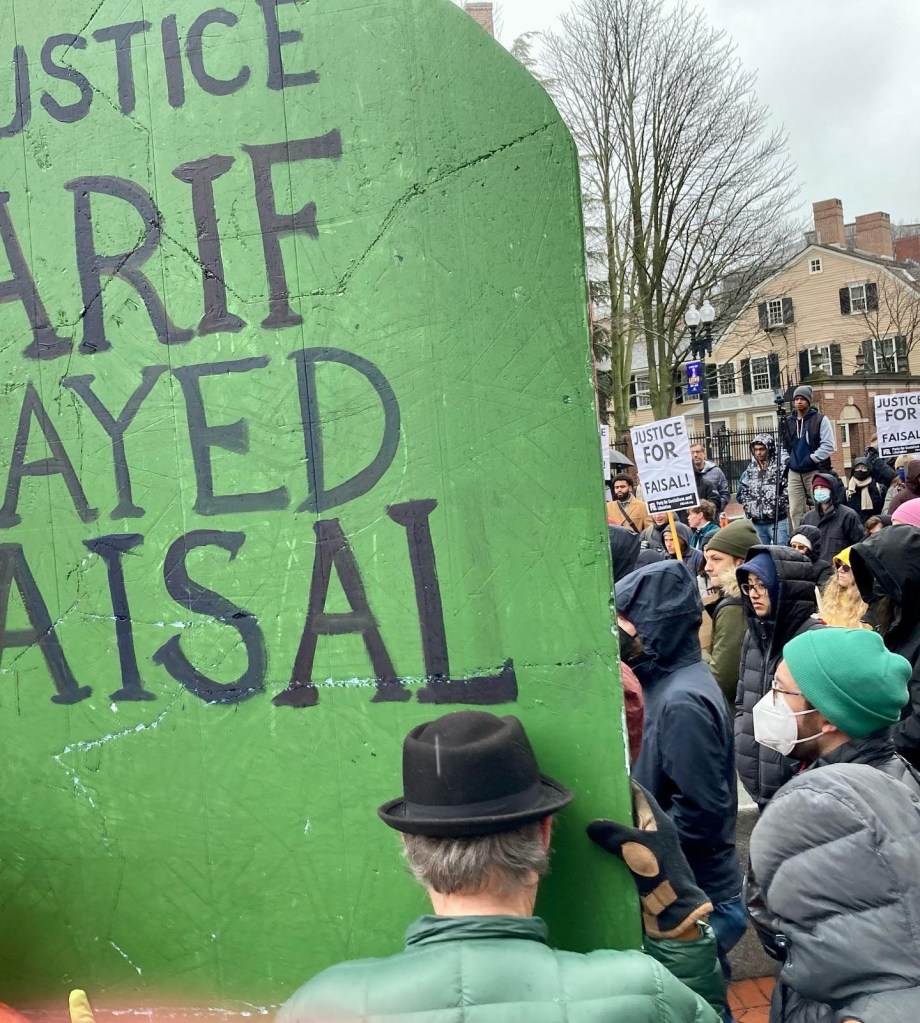
#JusticeforFaisal demo at Harvard Square, 14 Jan 2023. Photos: Beena Sarwar
The summer of 2020 saw massive Black Lives Matter protests across the USA. Although these protests have largely died down, a small group has continued to demonstrate in Cambridge MA, standing at the corner of Prospect and Broadway streets every Friday afternoon. No media outlet has picked up the story of these peaceful demonstrators holding up BLM signs, including: ‘All lives matter but not all lives are threatened with racist violence’.
In Spring 2022, one of my students at Emerson College did a video report on these Stand-outers as they call themselves. It includes comments from two of the group’s members, retired pediatrician Dr. Alan Meyers and history professor Dr. Tom Johnson (erroneously mentioned as Robinson in the video) on why they continue demonstrating. Report below, shared with the student’s permission:
The latest Sapan News syndicated feature, by Ramon Magsaysay awardee Dr Sandeep Pandey on the difference between the release of convicts in Rajiv Gandhi’s assassination case and those convicted in the Bilkis Bano case. He argues that the premature release of one set of convicts cannot be used to justify another — one was set free by the courts, while administrative decree was behind the other. One poses no threat to the victim’s family, while the other has sent witnesses into hiding.







 Journeys to democracy