A still from the offending show – it was difficult to find one that didn’t reveal the victims’ faces.
As if there aren’t enough human rights violations in Pakistan, sections of the media have joined the ranks of the violators, accosting individuals on the streets, barging into private homes, accusing people of being gay or bullying them to prove otherwise. The show, part of a vigilante series sensationally titled Khufia (Secret), was broadcast on Dec 15 on a new channel called Abb Takk – here is the programme link (if you can bear to watch). These vigil-aunties can do this because the people they target are poor and resourceless, with no armed security guards. (Here’s the link to the PEMRA feedback formand the Abb Takk email address: md@abbtakk.tvif you want to register your complaint. Please do share a copy with Citizens for Free and Responsible Media, at this link). My article on the issue in The News, Pakistan and Hardnews, India. More below. Continue reading →
Letter from Citizens for Free and responsible Media, Pakistan, emailed to top executives of Dunya TV News, Mr. Mian Amer Mahmood, Mr Naveed Kashif, and Mr Sami Abrahim, signed by prominent journalists, academics, and professionals in support of Dr Pervez Hoodbhoy
Screenshot from the show
Dear Dunya News,
We are writing to express our concern about the shameful incident at your TV channel on Oct 26, 2013, in which the anchor Kamran Shahid allowed his guest Prof. Pervez Hoodbhoy to be abused and shouted at by another guest, violating Dunya News’ own code of conduct for anchors that is supposed to be monitored by a three-member editorial Board.Continue reading →
Sad to see the polarisation and vitriol that passes for journalism in Pakistan. It may be so elsewhere too, but the manipulation and attempted humiliation of Dr Pervez Hoodbhoy in the name of religion and patriotism — for his defense of Malala Yusufzai — is low by any standards. Scroll down for his account about how the TV host withheld from him the identities of the other guests, the theme of the show and in the end, turned off his audio.
Regardless of Dr Hoodbhoy’s terming the Dunya TV anchor Kamran Shahid and his guest as liars, what’s clear is that Shahid smirkingly ‘allowed’ a guest on his show to shout down and abuse Dr Hoodbhoy, clearly enjoying the situation. In the end he announced (falsely) that Dr Hoodbhoy had ‘left’ the show. Not surprising. Shahid has a history of untruths as well as encouraging such abusive exchanges (it’s all about ratings, innit?). Here’s something about his show on Express TV last year, that was (like this one) not only unbefitting to any respectable current affairs programme, but also fanning the flames of conflict in already-burning Balochistan.Continue reading →
The following Press Note from Justice Markandey Katju, Chairman, Press Council of India,dated 6.3.2013, sent for publication to this blog, is also relevant to other countries, including Pakistan:
Re: False implication of Muslims in cases of Bomb Blasts, etc.
I have today received the following letter of Mr. Wajahat Habibullah, Chairman, National Commission for Minorities, New Delhi:Continue reading →
Guest post:Zohra Yusuf, my first editor at The Star Weekend 1981-82, outlines the birth of the women’s movement in Pakistan
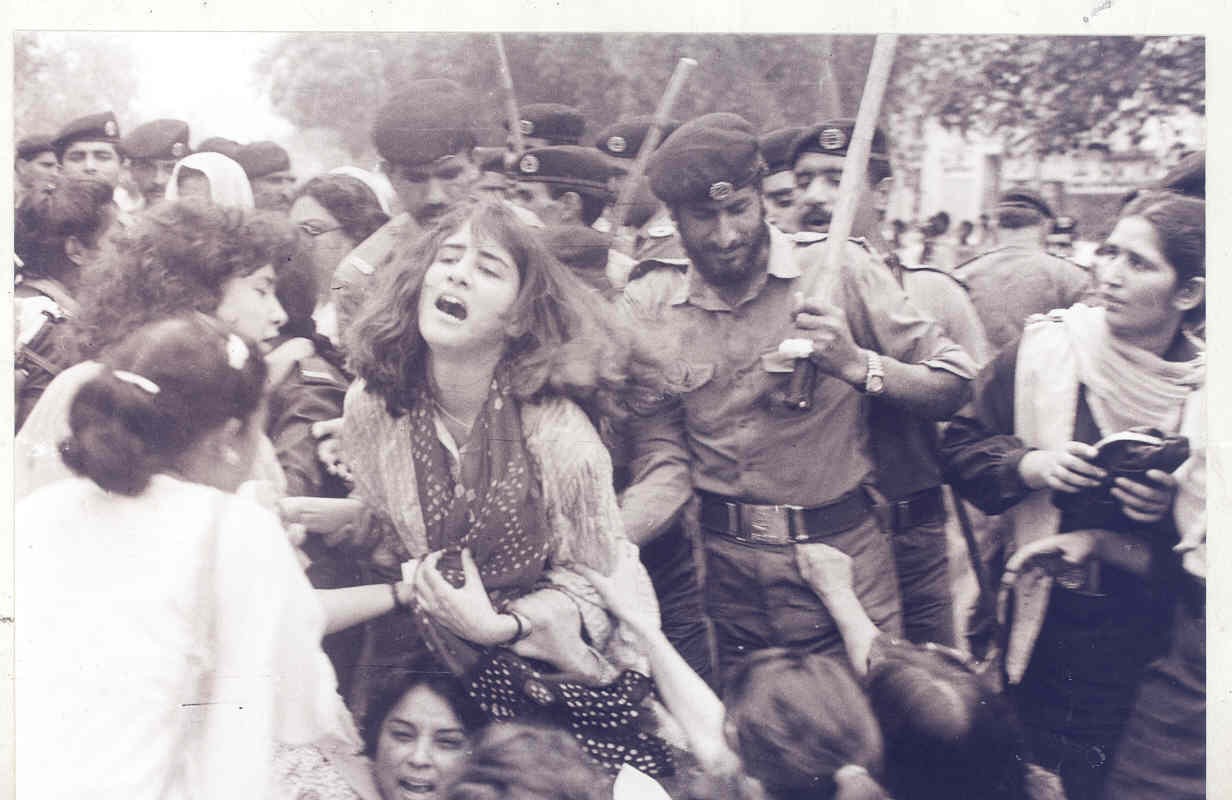
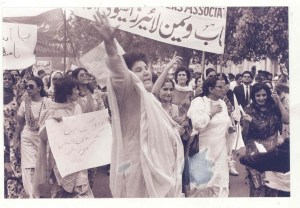
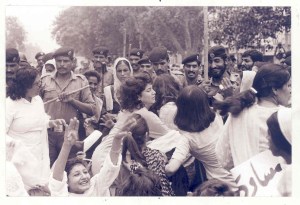
Lahore, Feb 12, 1983: Police brutality on the women’s demonstration against the ‘Law of Evidence’ catapulted the nascent women’s movement into the limelight. Photo: Rahat Ali Dar
“My years with WAF”
By Zohra Yusuf | Article written for a souvenir on WAF’s 25th anniversary, Oct 2006
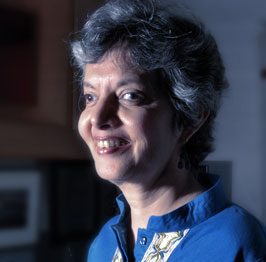
Zohra Yusuf, Newsline photo 2012
Certain memories are etched on the mind. The birth of Women’s Action Forum is, for me, surely among them. It was on an afternoon in September 1981 that Aban Marker (Shirkatgah) called. She told me about the distressed call she had just received from Najma Sadeque (another SG founding member) regarding the case of Fehmida-Allah Bux. Pakistan’s first sentence of death by stoning and public whipping handed down to a couple under the Zina Ordinance of 1979. We had all read about the sentence and in our individual capacities felt deeply disturbed. After a bit of discussion, we decided to call a meeting of all women’s organizations at Aban’s place. The rest, as they say, is history.
The women’s movement was at a nascent stage. Shirkatgah itself was born in 1975, the year the UN dedicated the decade to the cause of women. All Pakistan Women’s Association (APWA), after successfully campaigning for the Family Laws Ordinance 1962, had returned to charitable work. Pakistan Women Lawyers’ Association was also fairly new, as was Tehrik-e-Niswan. The only organization with experience of political work was Pakistan Jamhooriat-Pasand Khwateen (Pakistan Women’s Democratic Front).
I remember to this day the faces of the women around the table that evening when we met at Aban’s. Distressed yet determined. Shirkatgah took the lead in conducting the meeting as it did in the creation of a dynamic platform for Pakistani women to come together in solidarity to challenge the military regime’s anti-women policies. Apart from Aban and Najma, there was Najma Babar, journalist and my colleague at The Star, the Rahman sisters (Ghazala and Humaira) from Tehrik-e-Niswan, Sheema Kirmani – among others from Shirkatgah and other women’s groups. If my memory serves me right, the name Women’s Action Forum was proposed by Humaira and adopted after much debate.
Women’s rights demonstration in Lahore, Feb 12, 1983. Photo: Rahat Ali Dar
The Star Weekend, where I worked in the eighties, became the voice of the women’s movement. Indeed, I must confess that the birth of WAF was partly responsible for my decision to continue working at The Star which, till then, had been primarily an entertainment weekly.
In fact, over a brief period of time, I was accused of making The Star a feminist newspaper. Of course, many WAF members were regular contributors. Najma Sadeque had already been contributing (believe it or not) a weekly television review. She happily gave up the ordeal of watching PTV to write on issues of women’s rights and status. Kausar S.K. passionately wrote on the setback faced by women’s sports as a result of retrogressive policies. Najma Babar frequently reported on women’s political status and Hilda Saeed on violence against women.
Fortunately, the entry of WAFers in journalism coincided with the lifting of direct censorship in January 1982. While self-censorship remained in force, we were able to pull the wool over some eyes by writing between the lines, stepping back when absolutely necessary and returning for more effective assaults. Political journalism was also introduced in The Star at the same time. Several of the columnists who began to write for the newspaper were committed supporters of women’s rights. Among them were Ahmed Bashir and Hussain Naqi. At The Star itself, we found a staunch supporter in the editor, the late G. N. Mansuri.
Feb 12, 1983: Many women’s rights demonstrators were injured and arrested, heavily outnumbered by police. Photo: Rahat Ali Dar
In the eighties, WAF was struggling not only against the discriminatory policies of the Zia regime but for understanding from the society at large, including the media that was, by and large, dismissive of the women’s movement. Even Dawn, which now editorially supports women’s causes, refused to publish reports of and statements by WAF, viewing the organization as an insignificant entity. Often, it was also the butt of sexist jokes. However, it had fairly staunch support from journalists, lawyers and other members of civil society who never hesitated to march with WAF when it took out protest demonstrations on some of the busiest streets of Karachi.
WAF’s strategies in the early years worked. If they did not lead to the repeal of the Hudood Ordinances, they succeeded in watering down the proposed Law of Evidence. Moreover, WAF was quickly gaining world media attention. I remember how elated I felt when the BBC World Service Radio described WAF as the first challenge to the military regime (a highly exaggerated assessment, in retrospect). In fact, WAF put the issue of the status of Pakistani women on the agenda of the global media. Scores of western journalists sought out WAF members to get an insight into the discriminatory laws and their response.
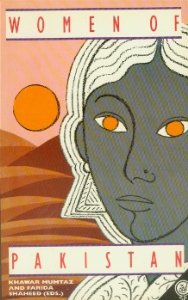
Apart from newspaper articles, the struggle of the eighties spearheaded by WAF, led to the first recorded history of the women’s movement. It inspired (I believe) Farida Shaheed and Khawar Mumtaz to write their seminal book One Step Forward, Two Steps Back.
To a great extent, the struggle for women’s emancipation that WAF embodied released a fair amount of creative energy. Plays related to women’s and other political issues were frequently staged. Leading artistes, including the late Zarina Baloch, showed their support by performing from WAF’s platform. Poets such as Fehmida Riaz, Saeeda Gazdar, Zahida Hina and Attiya Dawood wrote and recited poetry on the theme of the status of women in Pakistan.
The death of General Zia in an air crash brought back Benazir Bhutto from exile. The hopes she instilled in the women of Pakistan (more as a symbol, rather than in substance) were soon dashed shortly after she took over as the first woman Prime Minister of a Muslim country. Perhaps unable to realize their hopes, most of the women associated with WAF formed – or joined – non-governmental organizations. The street-fighting days were over.
Awareness of rights apart, women’s social and legal status has continued to be eroded. So 25 years after the formation of Women’s Action Forum, where is the Pakistani woman today? To borrow from the title of Farida’s and Khawar’s book: “one step forward, two steps back”.
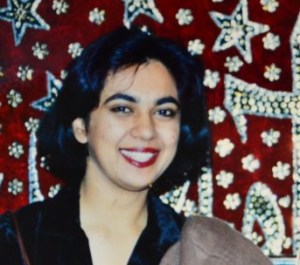
Ayesha Haroon at a friend’s wedding some 20 years ago in Lahore
My obituary of Ayesha Haroon, published in The News on Feb 4, 2013. As one of our friends pointed out, this is the third woman from our lot in The Frontier Post we’ve lost within a year – Maria Del Nevo, Cass Balchin and now, Ayesha.
RIP Ayesha Haroon: Clear-sighted courage, grace and laughter
By Beena Sarwar
Ayesha Haroon, the lively, gutsy former editor of The News Lahore, fought a brave fight for over four years with bone-marrow cancer, succumbing to it on Saturday night in New York. She was just 46. News of her demise has been met with grief and shock by her many friends and colleagues as well as those who only knew her through her clear-headed, courageous columns.Continue reading →
The behind-the-scenes footage leaked from Dunya TV’s ‘interview’ of Malik Riaz conducted by Meher Bokhari and Mubashir Lucman on June 13, 2012 has exposed the corruption of these so-called journalists. Their clear connivance with the interviewee in order to make themselves look blameless is a disgrace to the profession. We commend the whistleblower who leaked this footage and exposed their reality, which is all the more shocking given their self-righteous public stands.We demand:Continue reading →
The Citizens for Free and Responsible Media, Pakistan, has sent an email to the Editors of The News and Jang regarding an unethical, false and irresponsible report about Ali Dayan’s testimony before the US congressional hearing on Balochistan, in response to a private member’s proposed resolution in the House of Representatives. Text of the email posted in a Note in the CFRM facebook page; also copy-pasted below. (Note: Contrary to the impression given in some sections of the media in Pakistan, the U.S. has not passed any ‘bill’ on Balochistan; even if such a bill does pass, it will have no legally binding status unless it is debated and presented for a vote in the form of a bill that would need to pass through both the lower house and the senate). Continue reading →
Kamran Shahid of Express TV sent the following email to Citizens for Free and Responsible Media in response to CFRM’s letter on the Pakistani media and Balochistan that was also emailed to him. Both are posted on the CFRM facebook page. I do wonder what about the letter he found “factually incorrect and harassing” and on what basis he has threatened legal action. Many of the names provided in the letter are well known public figures, should be easy enough to find their addresses if he really wants to.
> From: kamran shahid <kamran.shahid@expressnews.tv> > Date: Wed, Feb 22, 2012 at 12:37 AM > Subject: Re: Citizens for Free and Responsible Media statement on the media and Balochistan > To: C4FRM Pakistan <c4frmpk@gmail.com> > Kindly send your Names and addresses, so that on the basis of your factually incorrect and rather harassing mail, a legal notice will be served > to you in 24 hours. > *** This Message Has Been Sent Using BlackBerry Internet Service from Mobilink ***
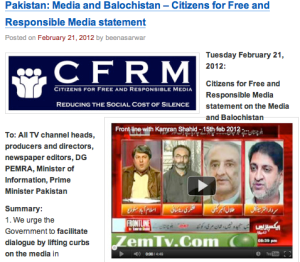
Citizens for Free and Responsible Media statement on the Media and Balochistan
To: All TV channel heads, producers and directors, newspaper editors, DG PEMRA, Minister of Information, Prime Minister Pakistan
Summary:
1. We urge the Government to facilitate dialogue by lifting curbs on the media in Balochistan.
2. We call upon the media in Pakistan to address the situation in Balochistan with sensitivity, empathy and fairness and to facilitate a civil discourse.
3. We demand a public apology from Kamran Shahid, the producers of Frontline, Express TV, Barrister Saif and APML and all channels to boycott Mr Saif until he apologises publicly for his remarks. We also urge the APML as a responsible political party to apologise for his excesses.