India trip, the ‘attack’ and some articles

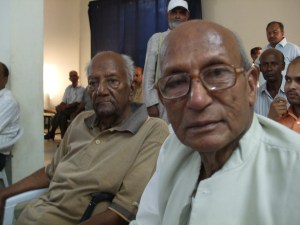
Allahabad Chapter of PIPFPD: Comrade Kameshwar Prashad Agarwal

No disruptions at the Allahabad Chapter of PIPFPD, attended, among others, by Comrade Kameshwar Prashad Agarwal

Hello everyone, have been traveling with limited access to internet, hence the silence.

I was among the journalists at a panel discussion ‘Does media jingoism fan tensions between India and Pakistan?’ organised by Forum of Media Professionals at the India International Centre in New Delhi on April 15. The event got a lot of play because of misreporting.

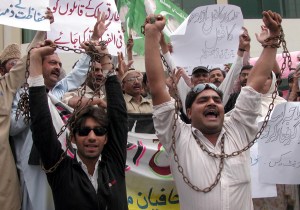
The Indian media hyped up a minor disruption, reporting that the Pakistani journalists in the panel were ‘attacked’ or ‘roughed up’. The Pakistani media picked up on the photos and subsequently there were condemnations and even demonstrations in Pakistan about the ‘attack’.

To set the record straight, no one was roughed up or attacked. One man did disrupt the meeting – but very briefly, from the back of the auditorium. The organisers had turned away 3-4 men who refused to sign the register – he must have sneaked in. The discussion was half over when he stood up and started shouting anti-Pakistan, pro-war slogans (someone sitting near him said he’d just come in). The organisers pushed him out. TV cameramen and photographers followed.

Most papers and channels used photos and footage of the scuffle outside, rather than focusing on the discussion inside, which continued, despite the noise we could hear outside for a couple of minutes. The interruption lasted for maybe a minute or so. The discussion started at 10 am and continued till 1.30 pm. It turned out that he was from the Sri Ram Sene, the same group that tried to prevent Valentines Day celebrations in India, to whom thousands of people sent ‘pink chaddis’ in response.

The incident demonstrated what we had been talking about, that TV, being a visual medium, focuses on images rather than words. Hence their running after the scuffle rather than focusing on the discussion. This is the nature of the beast. Those keen to tame it might try organizing mass emails, letters and phone calls to demand meaningful change.

Here is Rahimullah Yusufzai’s article on the incident – `The good, the bad and the ugly’, The News, Apr 21, 2009 <http://tinyurl.com/dxtuo3>

Our visit also involved several other interactions with the media. Rahimullah Yusufzai, the veteran reporter from Peshawar was the most sought after for his views on Talibanisation, living as he does in the heart of the storm. Here is the link to a full page ‘idea exchange’ published April 19, a forum that The Indian Express regularly holds: “I don’t think we have reached a stage when the Taliban will take over Pakistan” – <http://tinyurl.com/dzeyc9>

I showed some of my documentaries at a meeting of the Allahabad chapter of the Pakistan-India Peoples Forum for Peace and Democracy (PIPFPD) and at the Delhi Press Club, organised by Youth4Peace. Here are links to a couple of reports on the Press Club screening:

‘In Pakistan, change has to come from within, says journalist’ -Indian Express, Apr 20, 2009 – <http://tinyurl.com/covts7>

`Pak journalist’s short take on women’s rights’, Mail Today, Apr 20, 2009 – <http://tinyurl.com/cmb7ey>

More later

“No Sazish, No Jang” (No Conspiracy, No War) – a peace song

A young friend, Shahvar Ali Khan in Lahore has composed a song for which he recently launched the audio.  The MP3 is downloadable. Video coming soon.

Download and listen to Mulla na kar tang…. (Mulla, stop bugging us!) at
\”No Sazish, No Jang\” (No Conspiracy, No War) by Shahvar Ali Khan

It is a worthy effort in the midst of total madness, as Asad Jamal in Lahore says.

Some thoughts on ‘Swat flogging video’

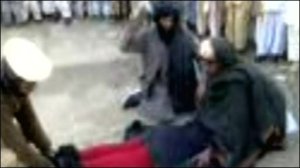
Girl being flogged: Still from the cell phone video circulated on the Internet and broadcast (repeatedly) on the private channels

Girl being flogged: Still from the cell phone video circulated on the Internet and broadcast (repeatedly) on the private channels

The ‘Swat flogging video’ has made headlines all over. Zubeida Mustafa in her excellent article in Dawn today, ‘A catalyst for change? analyses the reasons why

This para jumped out at me: “The Swat flogging video has brought people face to face with the reality of the emergence of extremism in the name of Islam. It has brought to the surface the paradoxes that had until now been swept under the carpet for expediency’s sake. The video has forced difficult choices on the people compelling them to at least think about issues that affect them very personally.”

Zia’s children, by Ayesha Siddiqa in The News, April 05, 2009 highlights the issue of ‘Islamic law’ or ‘Sharia’. She references the recent book by Tahir Wasti ‘Application of Islamic Criminal Law in Pakistan: Sharia in Practice’. Wasti, as she points out, has experience of both Islamic law and British common law. “This is the first detailed research enlisting the ramifications of the application of sharia law in Pakistan. tracing the historical roots of this phenomenon”.

For those who haven’t followed the issue or seen the video (warning, it’s graphic) check out Declan Walsh’s initial report on the issue in The Guardian, April 2, 2009 (two days before TV channels in Pakistan picked it up):

http://tinyurl.com/ck9wf9

Re: my own take – I’ve been swamped with the final editing of another documentary I’m making, but wrote something on the issue the other day that I will share after publication.

Chicago, Shahidul and ‘Three Cups of Tea’

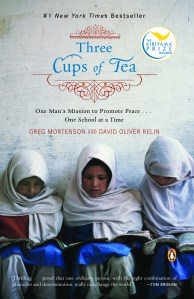
Three Cups of Tea_Mech.indd

Published in Hardnews, New Delhi,April 2, 2009

PERSONAL POLITICAL

Beena Sarwar

I love how connections sometimes just ‘happen’, criss-crossing the world, spanning generations, borders and continents. This particular stream traverses Pakistan’s early progressive struggle to Chicago, an inspiring book by an American who recently received Pakistan’s highest civilian honour, and a Bangladeshi photographer who came to Pakistan to document that moment.

In Chicago for a seminar in May 2007, I stayed with Danial Noorani. He is active with Apna Ghar, a domestic violence shelter for immigrant, primarily South Asian women. His late parents Malik and Mumtaz Noorani were close friends of my parents, active in the Communist Party and city goings-on. Tall jovial Malik Uncle ran a publishing house. ‘Jan-e-Man Phuphi’ (as we called the bright-eyed Mumtaz Noorani because of the endearment she used for us children) was active with Anjuman Jamhooriat Pasand Khawateen (Democratic Women’s Association, headed by Tahira Mazhar Ali, still going strong in Lahore).

There is some symbolism about meeting their son in Chicago. I remembered hearing of Dr Eqbal Ahmad’s disappointment when he found a monument to a policeman rather than the Chicago workers demonstrating for the eight hour day were killed by police fire in 1886. Ironically, the US does not observe May 1 as Labour Day.

Before I left, Danial gave me a paperback titled ‘Three Cups of Tea’ by someone I had vaguely heard of, Greg Mortenson. I couldn’t put it down. It is mandatory reading for anyone interested in education, Pakistan and the ‘war on terror’.

Mortenson builds schools in Pakistan’s remotest areas. The book, co-authored by David Oliver Relin, is sub-titled One Man’s Mission to Promote Peace . . . One School at a Time’– a mission as endangered by the ‘taliban’ as by the militaristic policies of the US and Pakistani governments operating without a political roadmap.

It started in 1993, when Mortenson was recuperating in atiny, unmapped village, Korphe, after being injured while climbing the world’s second highest mountain K2 in the Karakorams. Shocked that the village ‘school’ was a patch of land where children sat in the open scratching their lessons with sticks on the ground, he vowed to build them a school.

Back in the US, he saved rent by sleeping in his car and not taking his girlfriend out to dinner. Not surprisingly, they broke up. Mortenson kept trying to raise funds, manually typing letters to seek help. Two years later he was back at Korphe with a truck-load of building materials.

But he was in for a shock. The villagers told him that they first needed a bridge across the ravine that isolated them. Mortenson nearly went off in a huff. Then he thought about it and realised they were right. An important lesson for aid organizations: ask people what they want and need instead of giving them what you think they should have.

Besides making Korphe more accessible to the world, the bridge enabled the village women to make short trips to visit family on the other side rather than investing days as they used to. And yes, the school was also built. Mortenson has since helped to build some 78 schools in Pakistan (and Afghanistan), providing education to over 28,000 children, including 18,000 girls.

The second part of the book tells a grimmer story: the impact of the mushrooming Wahabi madrassahs and the ‘war on terror’ following ‘9-11’. Mortenson recalls an invitation to the Pentagon to talk about his work, only to realise that they’re not really interested. If they listened to him, perhaps the world would be in less of a mess.

Last August, the Pakistan government announced that Pakistan’s highest civil award, Sitara-e-Pakistan (“Star of Pakistan”) would go to Mortenson for his courage and humanitarian effort to promote education, and literacy in rural areas. The Bangladeshi photographer Shahidul Alam mentioned it when we met last month in Kathmandu. He flew in from Bangladesh especially to record the moment. On March 23rd, 2009, he was in Islamabad with friends of Mortenson watching the awards ceremony live on television.

These are, as Salma Hasan Ali wrote on Shahidul’s blog, “kernels of hope that remind us that all will not be lost to violence and a distorted mindset.”

(ends)

PAKISTAN: Another Terror Attack For TV Cameras

beena-22

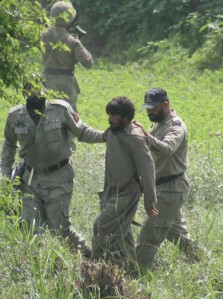
A Taliban militant, part of the group that attacked a police academy near Lahore, being led away by troops. Photo: Rahat Dar

KARACHI, Mar 31 (IPS) – The brazen armed attack on a police academy near Lahore on Monday underlines the danger that the Pakistani state faces from militancy linked to the ‘war on terror’, but with historic roots in the earlier Afghan war of liberation from Soviet occupation, that was converted into a ‘jihad’ against ‘God-less communists’.

The incident is also part of a chain of such attacks that highlight the need for out-of-the-box thinking to a regional, political approach and regional cooperation in this global, border-less conflict.

Eyewitnesses to Monday’s drama said that the gunmen scaled the six-foot high boundary walls of the academy soon after 7 am. They lobbed hand grenades at the 700 or so recruits on parade and ran at them, firing automatic weapons.

Police and paramilitary troops fired aerial bursts in jubilation and shouted ‘Allah-o-Akbar’ (God is great) after they re-gained control of the Academy premises a tense eight hours later.

The final death toll was far lower than the 28 or so initially reported by television channels: eight policemen, one civilian, and four militants who blew themselves up with suicide vests.

Television channels showed heart-rending scenes of distraught relatives at various hospitals where the dead and injured were taken.

The role of the electronic media while covering such incidents has come in for much criticism. In their rush to be first with the news, channels often provide incorrect information – or “lies”, as a press photographer who was at the scene of the Mar 30 drama put it more bluntly.

The al- Qaeda-linked Taliban leader Baitullah Mehsud, based in Waziristan Agency in Pakistan’s north-west tribal areas, claimed responsibility for the latest attack, the second this month in Lahore, capital of Punjab, Pakistan’s most populous and powerful province.

On Mar. 3, some dozen gunmen ambushed the visiting Sri Lankan cricket team in uptown Lahore, injuring several cricketers and killing six policemen and a driver. The gunmen disappeared after the shooting spree and have yet to be apprehended.

On Mar. 27 a suicide bomber killed dozens of worshippers at a crowded mosque near the north-western town of Jamrud on the highway to Afghanistan. Unconfirmed reports suggest that the motive may have been related to money as criminal elements operate freely in the area.

However, the Lahore attacks, taking place in an urban metropolis with dozens of television channels, were far more spectacular and effective, as Asha’ar Rehman, Resident Editor of daily Dawn in Lahore commented.

“A suicide bombing, in the eye of the terrorist perhaps, is too fleeting a moment in the life of a people who have become so used to the occurrence,” said Rehman.

“It is obvious that the terrorist is looking for more than momentary fame. He now wants to stretch the harrowing experience for as long as he possibly can, to the chagrin of onlookers who cannot keep their eyes off the television.”

The attack on the three-storey police school on the outskirts of Lahore a few kilometres from the Wagah checkpoint on Pakistan’s eastern border with India also bore other similarities with the ambush on the cricketers.

Underlining huge security lapses and intelligence failures, both took place in the early morning hours, with well-equipped, well-trained militants attacking supposedly well-protected targets. The Sri Lankan cricketers should have been extended presidential level security while the police school was peopled with – well, policemen, under training though they were.

Their commonalities include the possibility of local support that must have existed in order to facilitate them.

Both attacks drew comparisons to the Nov 2008 attacks in Mumbai, India. Some commentators accused India of being behind them in retaliation for the Pakistani link that emerged in the Mumbai tragedy.

The Mumbai attacks were in turn compared with the suicide attack on Marriott Hotel in Pakistan’s capital Islamabad on Sept 20, 2008. The attack was heavily symbolic given its high-security status and proximity to the corridors of power.

Earlier, militants had eliminated a much more symbolic and high value target – former Prime Minister Benazir Bhutto, as she left an election rally in Rawalpindi on Dec 27, 2007.

Other high-profile attacks, in the recent past, include the suicide car bombing at a police checkpoint in Peshawar that kills 35 and injured about 80 people last September.

In August 2008 twin suicide bombings at the gates of a weapons factory in the town of Wah near Islamabad left 67 dead. Earlier in March 2008, suicide bombers targeted a police headquarters in Lahore, leaving some 24 dead.

But Monday’s attack was so far “the biggest and potentially the most dangerous attack on a state facility in Pakistan,” noted Asha’ar Rehman.

“There were hundreds of trainee policemen inside the compound – trainees among a police force that, according to adviser on interior Rehman Malik, lacks basic training to combat terrorism. They were ill-equipped to stop the advance of a handful of visibly skilled gunmen. It could have been far worse.”

The drama ended with an unexpected twist, again a throwback to Mumbai, when security forces captured some militants alive.

One of them, a bearded man with an expressionless face, was nabbed while heading towards the helipad in the fields behind the Police Academy. He was carrying hand-grenades apparently to attack the helicopters with.

News photographer Rahat Dar told IPS that he was perched along with other media persons on the rooftop of a nearby building watching events unfold at the academy in front of them. “We turned around towards the back when we heard shouts of ‘Got him, got him!’” he said.

Security personnel yanked off the man’s shalwar, baggy trousers to ensure that he was not armed. They also beat him up, prompting Islamabad-based journalist Mariana Baabar to question whether police are actually trained to capture a live terrorist.

“It was the Punjab police in action – doing what comes to them naturally. Obviously, they cannot differentiate between a rare live person who could give them tons of information and an ordinary criminal,” she wrote in a front page comment in daily The News. “Nothing amazing or new except that this was a rare chance to see it live on our screen”.

Police repeatedly kicked the man, apparently having “decided that they would keep kicking him with their boots till he was no more…,” wrote Baabar. “It took an army guy… to stop the angry and out of control police from this brutal kicking. At least someone realised that it was essential to get this suspect alive.”

Identified as an Afghan named Hijratullah, the encircled man presented a pathetic sight as he struggled to cover himself with his shirt.

The other three suspected militants in custody have not yet been identified. They were captured when trying to escape from the premises wearing police uniforms.

Political analysts have long been warning that there are no easy military solutions to the ‘war on terror’. The al- Qaeda and Taliban now appear to have converged with Pakistan’s ‘home-grown’ militancy that American and Saudi dollars cultivated during the Afghan war against Soviet occupation.

Analysts hope that the interactions between global leaders at the high-powered meetings in Europe this week will help initiate a change in the global approach to these issues.

The U.N.-backed conference at the Hague on Mar. 31 to discuss the future of Afghanistan, participated in by about 80 countries including Iran and the United States, is expected to also discuss a regional approach to the issue, says Marjan Lucas of the Dutch Peace Organisation (IKV).

“It is important that America understands what they’ve done to the region and develop partners with civil society and elected representatives rather than the army as they have been doing,” she told IPS in Karachi, having arrived from Lahore the day before the police academy was attacked.

The Hague conference will be followed by the G20 and NATO Summits where U.S. President Barrack Obama is expected to hold bilateral meetings with several world leaders.

What is certain is that there are no easy answers, and that there are likely to be more such links in the terrorist chain before things get any better.

MEDIA-PAKISTAN: Pondering Risks Covering Conflict, Crime, Corruption

Journalists in Lahore protest reporter's murder in Rawalpindi. Photo: Rahat Dar

Journalists in Lahore protest reporter's murder in Rawalpindi. Photo: Rahat Dar

By Beena Sarwar

KARACHI, Mar 28 (IPS) – The main issue before the Pakistan Federal Union of Journalists (PFUJ) meeting over the weekend in the central Punjab city of Faisalabad is the threat faced by journalists in this conflict-ridden South Asian country.

The cold-blooded murder of yet another journalist in Rawalpindi, twin city of the capital Islamabad, on Mar. 26, underlined the gravity of the situation.

Unknown assassins shot and killed Raja Asad Hameed, a reporter with the English-language daily ‘The Nation’ and its Urdu-language television channel Waqt, as he reached home that evening and was parking his car. His family rushed out on hearing the gunshots and found Hameed lying in a pool of blood.

The bullets, fired at close range, had pierced his neck and shoulder. Doctors pronounced him dead on arrival when he was rushed to the Benazir Bhutto Hospital, named for the late twice-elected prime minister who was herself assassinated in Rawalpindi on Dec. 27, 2007.

Hameed is the third journalist to be killed in Pakistan since the beginning of this year.

Days earlier, Tariq Malik, 30, a reporter with Dawn News TV, Lahore, died after being shot as well as stabbed in an apparent street crime while resisting a cell-phone robbery on Mar. 23.

In February, Musa Khan Khel, a correspondent for Geo TV and its affiliated English-language daily ‘The News,’ was kidnapped and killed in the restive Swat Valley just as the government concluded a peace deal with Sufi Mohammed, the elderly hardliner they hoped would influence the Pakistani Taliban.

“This is the main issue before us,” senior Islamabad-based journalist C.R. Shamsie told IPS on the phone from Faisalabad where he is attending PFUJ’s biannual delegates meeting.

“We are already facing economic murder because the media owners have not yet implemented the seventh wage board award. Now our lives are threatened because of our reporting.”

“We are provided no life insurance, no training on how to deal with conflict situations, and no defence kits or other life-saving materials like journalists in the international media, the European journalists,” added Shamsie, a member of PFUJ’s federal executive council, former PFUJ secretary-general, and editor of the Urdu daily Azkaar’s Islamabad, Karachi and Lahore editions.

Asked whether the prevailing lawlessness provides a cover for attacks on journalists, Shamsie said, “Tariq was apparently killed in a street crime. But the real reason is possibly something else.”

Since the explosion in the number of private television channels over the past few years, the media has, Shamsie noted, “become a party to the fight” between political players – an activist role that many observers have commented on.

In his recent column for Dawn, respected analyst Irfan Husain commented on “the extent to which our media has become an active player in Pakistani politics and society”.

He listed several examples to prove his point and concluded that far from being a liberating force as many had hoped, the private channels have “worked to serve the opposite end by reinforcing existing prejudices, rather than challenging them. Owners of channels have their own concealed agendas, and poorly educated producers and hosts do little to separate opinions from facts”.

His observations tie in with Shamsie’s contention that “it is the young journalists who are being targeted and killed perhaps to send a message to the big TV anchors who have become players in the political field, stepping beyond their role of journalists… There is a need for democracy in the media also.”

Pakistan ranks 10th on the Committee to Protect Journalists’ (CPJ) ‘Impunity Index 2009’ in its report ‘Getting Away with Murder,’ that provides a list of countries where governments fail to solve journalists’ murders.

Murders make up more than 70 percent of work-related deaths among journalists, says CPJ. The index does not include cases of journalists killed in combat or during dangerous assignments such as coverage of street protests.

The Index, for which the media watchdog “examined every nation in the world for the years 1999 through 2008,” calculates the number of unsolved journalist murders as a percentage of a country’s population. It includes only those nations with five or more unsolved cases. In 2008, 14 countries met these criteria.

Compiled for the second year running, this year’s Impunity Index report was launched Mar. 23, in Manila, “to mark the fourth anniversary of the murder of Marlene Garcia-Esperat, a Philippine columnist who reported on corruption in the government’s agriculture department’’.

She was gunned down in her home in front of her family “in a case that has become emblematic of the struggle against impunity,” says CPJ.

“Philippine journalists are clamouring for justice in at least two dozen unsolved cases, and they need government protection from the murderous thugs who are killing their colleagues year after year,” said Elisabeth Witchel, CPJ’s impunity campaign coordinator.

Iraq, Sierra Leone and Somalia top the Index in the first, second and third place respectively, but the report takes special notice of the worsening situation “in places such as Sri Lanka and Pakistan”.

Other countries on the list are Sri Lanka (4), Colombia (5), the Philippines (6), Afghanistan (7), Nepal (8) and Russia (9).

Last but not least, at number 14, is India, where Anil Majumdar, editor of daily newspaper ‘Aji,’ was shot dead in March in Guwahati, capital of the northeastern Indian state of Assam.

Last November, another Assamese journalist, Jagjit Saikia, was shot dead at point blank range. Saikia worked as a district correspondent for the vernacular daily ‘Amar Asom’ in Guwahati.

Daily newspapers in Imphal, capital of Assam’s neighbouring state of Manipur, ceased publication in protest after ‘Imphal Free Press’ sub-editor Konsam Rishikanta was shot dead on Nov. 17.

Journalists in Manipur are vulnerable to pressure from both local insurgent groups and state officials according to CPJ – a situation that journalists face in most conflict areas.

The failure to solve journalist murders perpetuates further violence against the press, noted Joel Simon, CPJ executive director in the report. “Countries can get off this list of shame only by committing themselves to seeking justice.”

South Asian journalists face particularly severe risks, with the region’s nations making up the bulk of CPJ’s Impunity Index: Sri Lanka, Afghanistan, Nepal, Bangladesh, Pakistan and India.

There have been some particularly horrific high-profile murders in the region over the last few months, including the gunning down of Lasantha Wickrematunga, editor-in-chief of ‘The Sunday Leader’ on Jan. 8 in Colombo.

Three days later, some 15 assailants stabbed to death print and radio reporter Uma Singh, 27, at her home in Janakpur in the south of Nepal.

The CPJ index notes that “even in wartime, journalists are more likely to be targeted and murdered than killed in combat. In Iraq, for example, murders account for nearly two-thirds of all media fatalities.” Conditions in Iraq improved in 2008, but authorities there have yet to solve a single murder case involving a journalist, notes the media watchdog.

Worldwide, the vast majority of victims are local reporters covering sensitive topics such as crime, corruption, and national security in their home countries, says CPJ.

http://www.ipsnews.net/news.asp?idnews=46304

‘From Pakistan with Love: Saneeya Hussain’

‘Celebrating Saneeya’ – feminist, activist, environmentalist, my former editor, and dear friend. Made this 5-min documentary after she died in Brazil in 2005… Saneeya, we will always miss you and be inspired by you and your infectious laughter… See also Saneeya Hussain Trust
http://saneeyahussaintrust.com/

Smitu Kothari – rest in peace

Smitu Kothari
Smitu Kothari

Just heard the sad news from Rani (Khawar Mumtaz) in Lahore about Smitu Kothari’s sudden and unexpected departure from this world.

Last I met Smitu it was in 2004, when I interviewed him about his late friend, the Pakistani activist Omar Asghar Khan, for a documentary commissioned by Asia Foundation broadcast on Geo TV. During the same trip I interviewed his father Rajni Kothari, a meeting he facilitated, for another documentary in the Asia Foundation/Geo TV series, on Eqbal Ahmad.

Besides being an ardent environmental and freedom of information activist, Smitu was one of the earliest and most genuine advocates of Pakistan-India peace. May he rest in peace.

His cremation is at 4 pm today in Delhi. Deepest condolences to his aged father and his family, including a 12-year old daughter.

p.s. Found this news item which gives some details…
http://www.sindhtoday.net/south-asia/77983.htm

Environmentalist Smitu Kothari dies of cardiac arrest

New Delhi, March 23 (IANS) Smitu Kothari, 59, one of India’s leading
social and environmental activists, died of a cardiac arrest early
Monday at the All India Institute of Medical Sciences.

Kothari was editor of the Lokayan Bulletin published by the Lokayan
group which promotes dialogue between NGOs and the rest of the world.

He also co-edited Ecologist Asia with other environmentalists
including Vandana Shiva, Claude Alvares and Bittu Sahgal and has been
a visiting professor at Cornell and Princeton universities.

P.S. March 27: Amit Sengupta’s obituary on Smitu in Hard News – excerpt:
“Now, that he has become bark and sky and earth, and now that the saline waters are still soaked inside the eyes and hearts of his father, wife, brothers, friends, strangers and comrades, it’s the tree of life which must hold his eyes and his mind, like leaves, flowers and seeds, as his legacy of regeneration, retreat and resistance”
http://www.hardnewsmedia.com/2009/03/2772

A breath of fresh Kashmiri air

Column for Hardnews, Delhi, Feb 2009

PERSONAL POLITICAL

basharat-peer-t2f-6-w-mural

Basharat Peer at T2F. Photo: Jamal Ashiqain

Beena Sarwar

Basharat Peer’s ‘Curfewed Nights’ brings home the myriad nuances and human-ness of ‘the Kashmir issue’ – the main reason why, we are told, Pakistan and India can’t exist in peace.

Despite the hostilities, it speaks for the changing times that Peer was able to recently visit Pakistan, staying with Saad Haroon, a satirist he had met in New York (got the visa because a Pakistani diplomat liked his book). Friends hooked him up with Sabeen Mahmud who runs The Second Floor, T2F, the internet café-cum-community space in Karachi where you can hang out over music or a board game, browse the bookshelves or imbibe the art work and mural on the brick walls. Despite the short notice, the place was packed – with mostly young people, like Peer, Mahmud, and Haroon themselves. The event provided a rare opportunity for meaningful interaction without the public posturing, ‘national’ positions and one-upmanship that the mainstream media reflects and reinforces, overwhelming the shades of grey.

Waiting for the author, I got engrossed in the first chapter. The first few pages outlining his idyllic boyhood in a village in Anantnag reveal a culture steeped in religion, but gentle and tolerant. “Everything changed in 1990,” he explained, taking his seat in a corner of the room. “That was the turning point. It is the year against which we measure every subsequent moment.”

Ironically, Peer landed in Pakistan on Feb 5, designated ‘Kashmir Day’ by former prime minister Nawaz Sharif. No subsequent government could remove this unnecessary national holiday that costs the exchequer millions of rupees annually. My daughter is happy that it’s a school holiday. Kashmiris remain in ignorant bliss about this magnanimity. “I didn’t even know there was such a day,” admitted Peer. “None of my friends know.”

He dispelled the myth nurtured by the Pakistani establishment that Kashmiris are grateful for the foreign intervention. The foreign fighters injected into the region have no affinity with the Kashmiris. “They have no language in common, they have different worldviews, and their approach to religion is very different. Villagers have an ambiguous approach to foreign militants. They bury their bodies out of respect for the dead, but don’t carry them on their shoulders in processions like they do for the local boys.”

Kashmiris most certainly “would not want a government like some people want Swat to have,” he added (nor would most of us in Pakistan).

Refreshingly honest and thoughtful, Peer is among the 74 per cent of Kashmiris who are under 40. His first visit to Pakistan, he said, has been an eye-opener. “For a long time, Pakistan for me was Imran Khan. It was an abstraction, a collection of images. I couldn’t have imagined it was like this, or that there were so many multiple worlds in Karachi. I had no real sense of what Pakistan was.”

In turn, many of us were stunned by the story he related about the reaction in Kashmir when Gen. Zia got Z.A. Bhutto hanged in 1979. “People were so angry they burnt the houses of 500 Jamat-e-Islami members all over Kashmir valley. They even burnt copies of (JI founder) Maulana Maududi’s book and copies of the Quran. When my grandfather tried to stop them, they said that it was the ‘Jamati Quran’.”

One of the passages he read out was a moving one about reuniting with Kashmiri Pundit friends at a refugee camp. Obviously something he feels strongly about, the issue figures prominently in his book. Keenly observed and vividly related, his writing made me literally ‘see’ Kashmir as never before.

Peer stresses the high premium placed on education in the Valley. “Even the poorest girls in my village go to school. Srinagar’s Lal Chowk is a sea of women from 1 to 3.30 pm, hundreds of women and girls from schools in the area, dominating the most significant public space in Kashmir.”

Some asked if he felt a greater need to prove his loyalty to India as an Indian Muslim? “I am a Kashmiri Muslim, not an Indian Muslim,” he responded. “I have a disputed status… I published this book in India. I’ve worked for several Indian publications, but never felt discriminated against because of religion. I could write about and publish anything. It may not always get the best display, but all reporters crib about that. Yes, there is a problem finding housing in Delhi if you are Muslim, but aren’t housing issues universal? Would a Pathan find it easy to get a house in a Mohajir area?”

Three cups of tea and hope in Pakistan

Three Cups of Tea_Mech.inddToday, March 23, Greg Mortenson will receive Pakistan’s highest civilian award, the Sitara-e-Pakistan (Star of Pakistan) for his work on education, especially for girls, in Pakistan’s northern areas.
His book, Three Cups of Tea, is a must read for anyone interested in the area.
Here’s a note I found on Shahidul Alam’s blog:
Pakistan: Hope amidst the chaos
Salma Hasan Ali

Pakistan: Hope amidst the chaos