‘Life Goes on: Women Dead in Karachi Stampede’

Poverty and desperation coupled with private charity being distributed in a chaotic manner led to nearly 20 women and girls being killed in a stampede in Old Karachi on Sept 14. The Dawn aptly headlined its report ‘Crushed by poverty’. See also Shahid Husain’s report in The News ‘Food security is a fundamental human right’.

Free flour was being distributed in a busy neighbourhood when the stampede happened [AFP]

Below, temporal’s poem for the women who died, posted in Baithak:
‘Life Goes on: Women Dead in Karachi Stampede’
is nay kiya yeh
nahiN
oos nay kiya yeh
aisa nahiN kerna chahiyay thaa
waisa nahiN kerna chahiyay thaa

Continue reading →

Media scandalising… Meera; Jack Lew’s briefing on Pakistan

Filmstar Meera - blitzed by hypocritical, misogynistic journalists (courtesy Open magazine)

Filmstar Meera - blitzed by hypocritical, misogynistic journalists (photo courtesy Open magazine)

Many journalists in Pakistan appear to have forgotten their responsibility to fairness and ethics. In one ongoing drama, they are going overboard about the ‘scandal’ of film actress Meera’s ‘marriage’, with anchor persons relishing her lack of sophistication and Geo going as far as to broadcast her interview AFTER she’s asked for the camera to be turned off. She may be lying but should anchors sneer? And should producers allow the camera to continue rolling after the subject has asked it to be turned off? But then, she’s a woman, she’s a film actress, she’s considered fair game… Is that fair? Here’s a sound antidote to all the drivel about Meera – A Girl Called Meera by Faiza S. Khan.

Continue reading →

We Don’t Feel Like Celebrating with Israel This Year

Naomi KleinWe Don’t Feel Like Celebrating with Israel This Year
Article by Naomi Klein – September 8th, 2009

Last para of Klein’s article:
….This is the context in which a small group of us drafted The Toronto Declaration: No Celebration Under Occupation, which has been signed by the likes of Danny Glover and Ken Loach (we will be unveiling hundreds of new names on the first day of TIFF). Contrary to the many misrepresentations, the letter is not calling for a boycott of the festival. It is a simple message of solidarity that says: We don’t feel like partying with Israel this year. It is also a small way of saying to Mona Al Shawa and millions of other Palestinians living under occupation and siege that we have not forgotten them, and we are still outraged.

It’s not too late to add your name
http://torontodeclaration.blogspot.com/

Adding Your Name
To add your name to this letter, please send your name, occupation and country to tiff.letter@gmail.com
We will accept signatures until September 14, 2009

For further reading on this issue:

Letter by Canadian filmmaker John Greyson on withdrawing his film from the Toronto International Film Festival in protest against City to City: http://tiny.cc/tiff_open_letter
(not sure I agree with his decision to withdraw his film, but it reminds me of the Modi award going to Gujarat – ‘business as usual’ -beena)

Response by TIFF co-director Cameron Bailey to Greyson’s withdrawal and this petition:
http://www.tiff.net/livefromthefestival/openlettercitytocity

Report in Israeli daily Haaretz:
http://www.haaretz.com/hasen/spages/1110750.htmlspages/1110750.html

Report in Guardian newspaper, UK:
http://www.guardian.co.uk/commentisfree/libertycentral/2009/sep/01/israel-palestine-boycott-film

Statement by the Palestinian Campaign for the Academic and Cultural Boycott of Israel
http://www.pacbi.org/etemplate.php?id=1085etemplate.php?id=1085

Tomdispatch site and Ortiz: ‘A moment of silence before I start this poem’

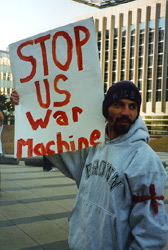
Emmanuel Ortiz protests in front of the Minneapolis Federal Building against the U.S. bombing of Sudan and Afghanistan - August 21, 1998 (http://www.cpinternet.com/mbayly/facesofresistance1.htm)

Emmanuel Ortiz protests in front of the Minneapolis Federal Building against the U.S. bombing of Sudan and Afghanistan - August 21, 1998

1. A must read: Tomgram: Rebecca Solnit, 9/11’s Living Monuments
http://www.tomdispatch.com/ (thanks Dr Ehtisham)

2. I remember reading this powerful poem before; thanks to Shahzad Nazir Khan
for posting it again

Photo from: Faces of Resistance

A MOMENT OF SILENCE, BEFORE I START THIS POEM

By EMMANUEL ORTIZ, 11 Sep 2002

Before I start this poem,
I’d like to ask you to join me
In a moment of silence
In honor of those who died in the World Trade Center and the
Pentagon last September 11th.

I would also like to ask you
To offer up a moment of silence
For all of those who have been harassed, imprisoned,
disappeared, tortured, raped, or killed in retaliation for those strikes
For the victims in both Afghanistan and the U.S.

And if I could just add one more thing…
A full day of silence
For the tens of thousands of Palestinians who have died at the
hands of U.S.-backed Israeli
forces over decades of occupation.
Six months of silence for the million and-a-half Iraqi people,
mostly children, who have died of
malnourishment or starvation as a result of an 11-year U.S.
embargo against the country.

Before I begin this poem,
Two months of silence for the Blacks under Apartheid in South Africa,
Where homeland security made them aliens in their own country.
Nine months of silence for the dead in Hiroshima and Nagasaki,
Where death rained down and peeled back every layer of
concrete, steel, earth and skin
And the survivors went on as if alive.
A year of silence for the millions of dead in Vietnam – a people,
not a war – for those who
know a thing or two about the scent of burning fuel, their
relatives’ bones buried in it, their babies born of it.
A year of silence for the dead in Cambodia and Laos, victims of
a secret war … ssssshhhhhhh…
Say nothing
we don’t want them to learn that they are dead.
Two months of silence for the decades of dead in Colombia,
Whose names, like the corpses they once represented,
have piled up and slipped off our tongues.

Before I begin this poem.
An hour of silence for El Salvador …
An afternoon of silence for Nicaragua …
Two days of silence for the Guatemaltecos …
None of whom ever knew a moment of peace in their living years.
45 seconds of silence for the 45 dead at Acteal, Chiapas

25 years of silence for the hundred million Africans who found
their graves far deeper in the ocean than any building could
poke into the sky.
There will be no DNA testing or dental records to identify their remains.
And for those who were strung and swung from the heights of
sycamore trees in the south, the north, the east, and the west…

100 years of silence…
For the hundreds of millions of Indigenous peoples from this half
of right here,
Whose land and lives were stolen,
In postcard-perfect plots like Pine Ridge, Wounded Knee, Sand Creek,
Fallen Timbers, or the Trail of Tears.
Names now reduced to innocuous magnetic poetry on the
refrigerator of our consciousness …

So you want a moment of silence?
And we are all left speechless
Our tongues snatched from our mouths
Our eyes stapled shut
A moment of silence
And the poets have all been laid to rest
The drums disintegrating into dust.

Before I begin this poem,
You want a moment of silence
You mourn now as if the world will never be the same
And the rest of us hope to hell it won’t be.
Not like it always has
been.

Because this is not a 9/11 poem.
This is a 9/10 poem,
It is a 9/9 poem,
A 9/8 poem,
A 9/7 poem
This is a 1492 poem.

This is a poem about what causes poems like this to be written.
And if this is a 9/11 poem, then:
This is a September 11th poem for Chile, 1971.
This is a September 12th poem for Steven Biko in South Africa, 1977.
This is a September 13th poem for the brothers at Attica Prison, New York, 1971.
This is a September 14th poem for Somalia, 1992.
This is a poem for every date that falls to the ground in ashes
This is a poem for the 110 stories that were never told
The 110 stories that history chose not to write in textbooks
The 110 stories that CNN, BBC, The New York Times, and Newsweek ignored.
This is a poem for interrupting this program.

And still you want a moment of silence for your dead?
We could give you lifetimes of empty:
The unmarked graves
The lost languages
The uprooted trees and histories
The dead stares on the faces of nameless children
Before I start this poem we could be silent forever
Or just long enough to hunger,
For the dust to bury us
And you would still ask us
For more of our silence.

If you want a moment of silence
Then stop the oil pumps
Turn off the engines and the televisions
Sink the cruise ships
Crash the stock markets
Unplug the marquee lights,
Delete the instant messages,
Derail the trains, the light rail transit.

If you want a moment of silence, put a brick through the window of Taco Bell,
And pay the workers for wages lost.
Tear down the liquor stores,
The townhouses, the White Houses, the jailhouses, the
Penthouses and the Playboys.

If you want a moment of silence,
Then take it
On Super Bowl Sunday,
The Fourth of July
During Dayton’s 13 hour sale
Or the next time your white guilt fills the room where my beautiful
people have gathered.

You want a moment of silence
Then take it NOW,
Before this poem begins.
Here, in the echo of my voice,
In the pause between goosesteps of the second hand,
In the space between bodies in embrace,
Here is your silence,
Take it.
But take it all…
Don’t cut in line.
Let your silence begin at the beginning of crime.
But we,
Tonight we will keep right on singing
For our dead.


Emmanuel Ortiz is a third-generation Chicano/Puerto Rican/Irish-American community organizer and spoken word poet residing in Minneapolis, MN. He currently serves on the board of directors for the Minnesota Spoken Word Association, and is the coordinator of Guerrilla Wordfare, a Twin Cities-based grassroots project bringing together artists of color to address socio-political issues and raise funds for progressive organizing in communities of color through art as a tool of social change.

(Note: This is the information that came with the posting I received – have been unable to find any more information on Ortiz; if anyone knows more eg a website or blog, pls do let me know. thanks)

Three ‘9/11’s…

9/11: Anis Mansoori of FM 103 in his live talk show today brought up the  significance of two 9/11s – Sept 11, 1948, when Mohammad Ali Jinnah breathed his last, and Sept 11, 2001 when two planes crashed into New York’s Twin Towers, catalysing a spiral of violence from which we have yet to emerge. My comment was that if successive Pakistani governments had not discarded Jinnah’s vision and headed down the ‘jihadi’ path at the behest of America in its fight against the USSR in Afghanistan, perhaps the second ‘9/11’ would not have happened.

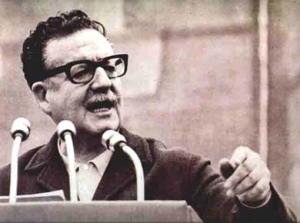
Another 9/11 to remember: Allende ousted

Another 9/11 to remember: Allende ousted

And Mohsin Sayeed reminds me about another 9/11, in 1973 – the US-backed military coup in Chile, that removed the world’s first elected Marxist government. “I don’t see why we need to stand by and watch a country go Communist due to the irresponsibility of its people,” said Henry Kissinger about the coup.

The deposed Dr Salvadore Allende was killed and Gen. Pinochet  unleashed a reign of terror and massacred between 32,000 to 80,000 people…

Kanak Mani Dixit honoured

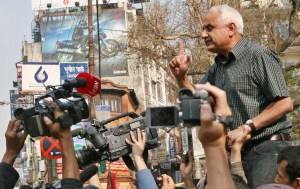
Kanak Dixit addresses a protest rally in April, 2006, Kathmandu, in support of the general strike by seven major Nepali political parties and Maoists (Photo: Shehab Uddin)

Kanak Dixit addresses a protest rally in April, 2006, Kathmandu, in support of the general strike by seven major Nepali political parties and Maoists (Photo: Shehab Uddin)

Those of us who know Kanak Mani Dixit, editor Himal Southasian are proud of him anyway for his outstanding editorial skills, vision and relentless activism, award or no award – but the recognition is always nice (and so is the prize money, with which he has already promised to help Film South Asia)

Kanak has always been an inspiration. We are thrilled. Watch this space for more about him.

For award details see Prince Claus Awards – Kanak Mani Dixit

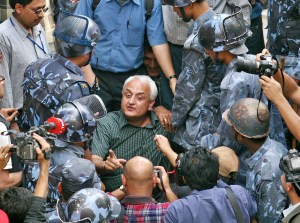
Kanak Dixit being arrested, April 2006, Kathmandu

Kanak Dixit being arrested, April 2006, Kathmandu

Prisoners’ anguish

A lifetime lost...Left with no speech, no memory, no family (photo courtesy The News)

A lifetime lost...Left with no speech, no memory, no family (photo courtesy The News)

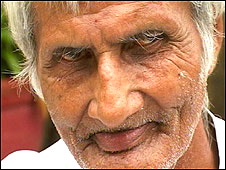
An 85-year old man acquitted after 38 years in prison has little to live for – he has lost his speech and memory, and is now being cared for by Christian missionaries at a shelter in Malir, Karachi.

See ‘The News‘ editorial 38 years .

The same day as news of Saeed-ul-Haq’s acquittal was published, newspapers reported that a Pakistani had been ‘tortured to death’ in an Indian prison. M. Nawaz Jamil had been a student of class 9 in 1991 when Indian troops arrested him along the Line of Control. He ended up serving far more than the six years he was sentenced for. This is what Indians regularly do to Pakistani prisoners and vice versa.

As I wrote in an article last December, ‘Media falls into old trap’):
Prison conditions and how the police treat prisoners in both countries are no secret. It is not that we treat Indian prisoners well, while they viciously torture Pakistanis. Sometimes a prisoner’s death results not from outright torture but illness arising from neglect — poor living conditions in a hostile environment, extreme temperatures, lack of medical attention, all compounded by lack of contact with loved ones back home.

There have been many instances of Pakistani prisoners dying in Indian prisons and vice versa. But what strikes me is the cruelty with which we treat our own prisoners, as the case of Saeed ul Haq shows. Not to mention all those other deaths in custody that periodically surface.

Jaspal Singh, former police commissioner, on Gujarat 2002 investigation

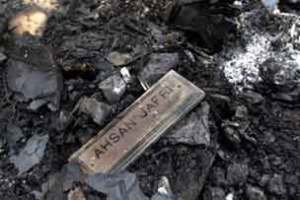
Name plate from the charred remains of murdered MP Ahsan Jafri's house

Name plate from the charred remains of murdered MP Ahsan Jafri's house

The fDi award to Narendra Modi (after outraged protests from around the world being given to the ‘state of Gujarat instead) has again spotlighted the Gujarat carnage of 2002.

Thanks to Badri Raina in New Delhi for forwarding this detailed letter of Sept 7, 2009 from Jaspal Singh (former Cabinet Minister, Government of Gujarat, Mayor of Vadodara, Commissioner of Police, Vadodara, Gujarat) to the Special Investigation Team (SIT). Singh terms the Gujarat riots “a thoroughly thought out elaborate and heinous strategy to communalise the society at large in Gujarat, with a view to derive political benefits”.

Crusading on: Zakia, wife of the murdered MP Ahsan Jafri

Crusading on: Zakia, wife of the murdered MP Ahsan Jafri

Ahsan Jafri with his daughter Nishrin Hussain

Ahsan Jafri with his daughter Nishrin Hussain

He also urges SIT to “go in to the series of circumstances indicating criminal motive of the CM, Gujarat and his collaborators in projecting the Godhra train fire incident as an outcome of conspiracy by ISI and a terrorist act. There is sufficient evidence to prove that even before the investigating or intelligence agency had any information about conspiracy behind the Godhra fire, the CM, Gujarat, a national leader of BJP, declared it to be a consequence of conspiracy.”

p.s. I wonder when we’ll get his counterparts in Pakistan to make similar demands about injustices to religious minorities here, including Shantinagar 1997 and Gojra 2009

7 September 2009

To: Dr. R.K. Raghavan, Chairman,

Special Investigation Team (SIT),

Dr.Jivraj Mehta Bhavan, Block-11,

1st Flr, Old Sachivalaya,

Gandhinagar

Sir,

Sub: Gujarat Riots of 2002 – Action thereon

Apropos my letter dated Jun 06, 2009, I write to compliment you for pursuing investigations in to the Gujarat riots of 2002 with vigour by recording statement of Mrs.Zakia Jafri, widow of late of Mr.Ehsan Jafri, a former member of the Parliament, Shri R.B.Sreekumar, IPS (Retd), former DGP of Gujarat, and Mr.Rahul Sharma a serving IPS officer of Gujarat cadre. While the progress of the case does bring some comfort to the victims of the genocide unleashed in Gujarat, lot more remains to be done as expeditiously as possible, so as to instil a sense of hope in the hearts and minds of Indians, that the rule of law would be respected and no one would be spared for flouting it. The happenings of 2002 have brought shame and disgrace of unfathomable proportions, and only investigation by the SIT under your command can redeem the honour of the country.

I list below some of the matters which need to be investigated in detail in pursuance of trust reposed in you, and your team by the Hon’ble Apex Court. Your efforts will assuage the terribly dented image of our great country, and hence your responsibility is immense. As a retired IPS officer I consider it a matter of pride that the job to redeem the honour of the country has been entrusted to the SIT headed by a IPS officer. The outcome of the SIT’s investigation and actions following it may prove to be a benchmark in the history of our country.

1.Communalisation of Gujarat: The mayhem in Gujarat was the result of a thoroughly thought out elaborate and heinous strategy to communalise the society at large in Gujarat, with a view to derive political benefits. Towards that end the exclusivist, fundamentalist and sectarian pseudo religious groups among Hindus and Muslims played a leading role, aided and abetted by those at the helm.

2.Examiniation of participants in the crucial meeting chaired by the CM – Narendra Modi:

Examination of the following persons is crucial for the purpose of the SIT:

a)Smt.Swarnakanta Varma IAS, the then Acting Chief Secretary

b)Mr.Ashok Narayan, IAS, the then Home Secretary

c)Dr.P.K.Mishra, IAS, the then Principal Secretary to the CM

d)Mr.Anil mukim, IAS & Mr.A.K.Sharma, IAS Secretaries to CM

e)Mr.P.C.Pande IPS, then Commissioner of Police Ahmedabad

f)Shri K.Chakravarty, IPS, the then DG of Police, Gujarat

g)Shri G.C.Raiger, IPS, the then Addl. DGP of Gujarat

h)Shri Nityanand, IPS, Secretary in the Home Department.

3.Representative of CBI: The SIT must examine Shri Rajendrakumar, the then Jt.Director, Central Intelligence Bureau (CBI) in charge of Gujarat who had insisted on the state DGP to deem the burning of the train at Godhra as a terrorist act mounted by the ISI.

4.Examination of Ministers: Examine all those ministers of Shri Modi Government about the details of the meeting held at the residence of the CM on 27.02.2002, including the then Minister of State for Home Shri Govardhan Zadapiya who had admitted in the State Assembly about the meeting convened by the CM. It may be mentioned that the State Assembly was in session on the day the tragic events took place at Godhra. This can be verified from the official records of the State Assembly. This will clarify that the CM had directed the officers to permit free play of Hindu revengefulness on the Muslims (Reference to June 03, 2002 issue of the weekly – Outlook).

5.Whether prompt action taken: Examine whether there was delay in requisitioning army and central para military forces with a view to give free hand to the anti Muslim rioters.

6.Law and order Review meeting minutes: Examine the minutes of the law and order review meetings chaired by the CM, the Chief Secretary, and the DGP jointly, or otherwise and subsequent follow up action by subordinate officers in the police department, and executive magistracy from District Magistrates to Mamalatdars. If minutes were not kept it would be obvious that monitoring of the implementation of decisions could not haven been done.

7.Follow up action: Examine how the monitoring of the implementations of the decisions in these review meetings was done by the CM to DGP without minutes of these meetings.

8.Media reports – sources: Conduct deeper probe in to the source of media reports about the meeting chaired by the CM, where the CM directed the officials to be soft on Hindu rioters.

Investigation on the above lines could provide evidence of extra judicial confessions.

Some further investigations that are necessary are:

a)Examination of documents on the communications between and among the CM’s office, CS Office, Home department, DGP Office and the Commissioners of Police of Ahmedabad, Baroda, and SPs of major riot affected districts in the period from 27.02.2002 to 31.05.2002. Similar correspondence from the relevant police stations to district / commissionrate level officers also be examined to find out whether there were major omissions and commissions to facilitate the Pogram against the Muslims

b)Examination of documents on communications between the DGP and the State Control room in Gandhinagar, and the Commissionarates, besides offices of the DSPs, Addl. DGP (Intelligence)

c)Examination of entries in the registers and log books of the police patrol vehicles in cities and important towns.

d)Examination of documents on various incidents and action reported by DGP and CP Ahmedabad and riot affected districts to their higher officers.

e)Examination of reports by DGP, Home department, Chief Secretary, ADGO (Intelligence) to the Central Government and to find out veracity of reports and efforts of anyone to suppress truth.

f)It is on record that the Gujarat State intelligence branch had sent daily reports to Shri B.K.Haldar, Jt. Secy, MHA, New Delhi from 13.03.2002 onwards. Besides, daily reports which were sent on various specific incidents that took place in Gujarat. A study of these reports will indicate that there was anti-minority prejudice explicit in the actions of the state police which prompted them to avoid arrest of Hindu rioters and concentrating on penalising the Muslims. Analysis of the statistics prepared by the Add. D.G., Intelligence, Gujarat in the form of daily reports will reveal that the casualties in the police action weighed heavily against the Muslims, as also the destruction and damage to properties.

g)Action must be taken to procure data regarding representations from the riot affected people and general public received through phone calls, written complaints and personal representations from 27.02.2002 to 31.05.2002. It is also necessary to examine the quality and character of response to these by the enforcing officers. In case responses are found to be inadequate, and unprofessional, an adverse inference can be drawn against the concerned officers.

h)Examination of documents on meetings held by CP, Ahmedabad and other police commissionarates and affected districts during the same period to find out the nature of instructions given and decisions taken thereon and the extent of their implementation.

i)Examination of concerned officers from DGP to field officers at the police station level on their failure to comply with the directions and instructions on handling of communal situation in Gujarat as per Gujarat State Police Manual Vol-III, Rule 21 to 31, and DGP Gujarat’s booklet on “Criminal Riots – Strategy and Approach” forwarded to all senior police officers by the then DGP Shri K.V.Joseph vide his letter No. SB/49/1050/1175 dated 19.11.1997, compilation of Government instructions captioned –“Criminal Peace”, and recommendations of Justice Reddy Commission and the Commission headed by Justice Dave.

j)Officers in charge of areas where large scale violence happened should explain the reason for their dereliction of duties in violation of the provisions of Gujarat Police Manual Vol-III, Rules 24, 134, 135 and 136. It is relevant to note that such culpable connivance by government functionaries with the rioters had prompted the Apex Court to portray the Gujarat bureaucracy as modern day Neros and the Hon’ble Supreme Court had actively intervened to correct the aberrations by ordering :

i)Transfer of Bilkisbano rape case to CBI in April 2004

ii) Transfer of Bilkisbano and Best Bakery cases to Maharashtra in April 2004.

iii) Review of 2000 odd closed cases (August 2004)

iv) Creation of SIT to reinvestigate 9 major carnage cases (March 2008)

v) Order of the Supreme Court to the SIT to investigate on all points contained in the complaint filed by Mrs.Jafre (April 2009)

k)SIT should go in to the series of circumstances indicating criminal motive of the CM, Gujarat and his collaborators in projecting the Godhra train fire incident as an outcome of conspiracy by ISI and a terrorist act. There is sufficient evidence to prove that even before the investigating or intelligence agency had any information about conspiracy behind the Godhra fire, the CM, Gujarat, a national leader of BJP, declared it to be a consequence of conspiracy. This is the starting point of anti minority carnage. The CM made a statement in the state assembly that the Godhra train incident was a pre-planned terrorist act and was a result of a conspiracy.

l)In fact the Gujarat police brought out the questionable conspiracy element only by the end of March 2002. The Apex Court had not supported the Gujarat State Government’s application of provisions of the then prevailing POTA on the accused of the Godhra train fire.

m)Revelations by some witnesses in the Godhra train fire case in the operation ‘kalank’ brought out by ‘Tehelka’ magazine about the Gujarat police bribing them to give false evidence. The then Home Secretary Mr.G.C.Murmu, and Government pleader Mr.Arvind Pandya tried to tutor the then Addl. DGP. Shri R.B.Sreekumar to support Government’s conspiracy theory during his cross examination by the Nanavati Commission. The then Godhra Collector Ms.Jayanti Ravi openly stated that the Godhra incident was criminal and she did not mention either about the conspiracy or it being a terrorist act.

n)In fact in my view the ill motivated declaration of ISI being behind this conspiracy was a part of the larger conspiracy to perpetuate genocidal crimes against the minority community for ensuring political consolidation of the majority community in favour of the BJP to procure electoral dividends. Simultaneously the Sangh Parivar could achieve their ever pursued hidden agenda of treating the Muslim minority as second class citizens. Having denied proper relief and rehabilitation in pre-riot vocations/trades, commerce and agriculture, many riot victims were forced to compromise with the perpetrators of the violence and consequently not even 25% of the cases reviewed on the Apex Court’s orders could end up in prosecution of accused persons.

o)Abnormality and impropriety in the following actions by Shri Modi government after the Godhra incident need to be uncovered, as they are linked to the plans to inflict maximum damage on the Muslims.

I.A condolence resolution was passed in the state assembly to condone those who were killed in the train fire, though no person for whom such resolutions are customary were killed.

II.No condolence resolution was passed to condone the death of Ehsan Jafri, a former MP as was customary. This was in total violation of legislative norms.

III.No discussion in the state assembly on the riots was held for over 10 days as the assembly remained closed during the period.

IV.The CM and BJP leaders supported the Gujarat Bandh call given by the VHP on 28.02.2002.

V.Neither the CM or any senior BJP leader made any appeal for peace on the eve of the Bandh on 28.02.2002.

VI.Parading of dead bodies of Godhra fire victims in Ahmedabad city was done in violation of all regulations in this connection. Please enquire in to how the dead bodies were handed over to unauthorised persons viz. VHP leaders and not the legally entitled kin of the diseased. SIT should procure all documentary evidence about the whole process viz. Which officer had released the dead bodies to the VHP. Please procure and confiscate the relevant records immediately. Who were the persons who received the bodies, why unidentified dead bodies were also handed over to such unauthorised persons. The concerned officers be asked to produce the details of Government order, if any, in this connection. In case relevant officers take the cover of non availability of records, they should be prosecuted for deliberate destruction of evidence.

p)Mr.P.C.Pande the then Commissioner of Police, Ahmedabad should be examined on the following fatal acts of negligence facilitating the blood bath in Ahmedabad city.

I.Non initiation of preventive measures as per numerous instructions including those in Gujarat Police Manual etc. from 27.02.2002 onwards when anti minority riots started.

II.Why imposition of curfew on 28.02.2002 was delayed up to 1300 Hours?

III.Why no redeployment of the SRP and additional police force was not done on 28.02.2002? The SRP continued to be at the same places as they were before.

IV.Please examine as to what follow up action he had taken on the state IB reports as cited in the affidavits filed by the then Addl. DGP Intelligence.

V.What further action did he take on his letters to the DGP, and the Secretary Home, about the role of VHP in fomenting trouble and extortion of protection money from miscreants.

q)Examine the officers of the state intelligence branch Ahmedabad City and other major riot affected areas as to whether they reported the anti minority stance of the police at the ground level during and after the riots resulting in non registration of FIRs by the riot victims. Misinformation of the intensity of crimes, clubbing of numerous offences as just one single incident.

r)Not arresting Hindu accused promptly, and not taking them on remand for collecting additional evidence, and recovery of looted or stolen property.

s)Prejudicial stand of Special Public Prosecutors some of who were office bearers of the Sangh Parivar.

t)Examine the officers in charge of the riot affected areas regarding the instructions given by them in response to distress calls from the riot victims, monitoring of the implementation of these instructions, any disciplinary action taken against anybody for non compliance etc. Examination of relevant documents in the CP or SP offices, Offices of Range DIGs/IGs and SDPOs, and police station officers absolutely imperative.

u)Electronic and print media had brought out graphically the pictures of parading of dead bodies, ghastly scenes of riots etc. These be procured and analysed, and further probes be done like arresting those found indulging in violence.

v)Many Sangh Parivar leaders and accused in anti minority carnage had boasted about their active involvement in the riots to Shri Ashish Khaitan, the Tehelka correspondent in the video. Make further inquiries about the information brought out in operation ‘kalank’. These revelations are extra judicial confessions. The forensic test of all these persons is also necessary.

w)Please examine state home department officials and DGP, Shri K.Chakravarty about follow up action initiated by them on the state IB reports regarding prejudices of the state police against the riot victims. Please examine Home Secretary Shri Ashok Narain, as to what action he had taken on the demand by the National Minority Commission about highly inciting and incendiary speech of the CM in 2002.

x)Please examine the Secretary, Law Department for appointing supporters and office bearers of the Sangh Parivar as Special Public Prosecutors to present cases against the accused belonging to Hindu community.

y)Please examine the District Magistrates of relevant districts as to why they recommended supporters and office bearers of the Sandh Parivar for appointment as Police Public prosecutors to the state law department.

z)Please examine the Chief Minister Shri Narendra Modi, about the details of instructions given by him to the Chief Secretary, Home department officials and the DGP during the riots and subsequently. Did he notice any acts of omission or commission by such officers, if so what action he had initiated to correct the system and discipline those who derelicted their duties. Did the CM initiate any curative measures to redress the grievance of the victims before the intervention by the NHRC, the Apex Court, and the national level bodies. If no such action was taken, then this must be deemed as part of a conspiracy to perpetuate violence on the Muslim minority and subversion of criminal justice system. Please examine Mr.Modi on the action taken by him about malicious role of one of his cabinet ministers, Mr.Bharat Barot in inciting anti minority violence as reported by the CP, Ahmedabad.

It is quite likely that the Government functionaries who collaborated with the CM and the Sangh Parivar in executing anti minority violence will refuse to provide relevant evidence to the SIT. Therefore the SIT will have to depend on the documentary evidence in Government and police records heavily. Once clear picture about planning and execution of conspiracy emerges, the relevant culprits should be confronted and their forensic test be carried out.

I strongly feel that a few officers known for their competence, professionalism and integrity need to be inducted in to the SIT from the Gujarat Police. The supervisory officers in the SIT at present are handicapped by their lack of knowledge Gujarati language. To overcome this problem I would strongly recommend the induction of the following officers in to the SIT.

1. Mr.Satish Verma, IPS 1986

2. Mr.Rahul Sharma, IPS 1992

3. Mr.Rajnish Rai, IPS 1992

4. Dr.(Mrs) Neerja Gotru Rao, IPS 1993 and

5. Mr.Hasmukh N. Patel, IPS 1993

For probing points contained in the complaint filed by Mrs Jafri.

Any failure by the Indian Judicial system to bring under the clutches of law, the real planners and executioners of anti-minority genocide in 2002 would further energise anti Indian forces internationally and particularly those jihadi groups who have been denigrating the Indian State authorities for their failure to protect the minority community. The Islamic terrorists who had claimed responsibility for explosions and terror acts throughout India since 2002 have declared their dastardly acts as revenge and retribution for Gujarat genocide. These groups will fully capitalise on any situation which will provide immunity from prosecution to the CM, Shri Narendra Modi and his aides and attract frustrated riot victims to their camps to the detriment of our national interest.

Praying for expeditious actions on the above suggestions/requests.

Yours sincerely,

Jaspal Singh IPS (Retd)

4,Green Park, Akota, Vadodara 390020


Honouring Zaheer Kashmiri and the PWA

Dr Farrukh Gulzar, the progressive minded medical practitioner from Lahore who was the driving force behind the Reference for Dr M. Sarwar and the 1950s student movement on Aug 8, has now thrown his energies into helping organise a remembrance for the late poet Zaheer Kashmiri. Friends in Lahore, please do attend. Here is the invitation he sent:

Zaheer Kashmiri

Zaheer Kashmiri

AHL-E-DIL MILTAY NAHEENH, AHL-E-NAZAR MILTAY NAHEENH
ZULMAT-E-DAURANH MAI, KHURSHEED-E-SEHR MILTAY NAHEENH
–ZAHEER KASHMIRI

(Translation:
Gone are the sensitive hearts or insightful visionaries
In this oppressive darkness, no morning sun arises)

Remembering the life and works of the legendary Marxist, progressive poet and activist, a literary critic, and a strong influence of and upon
Progressive Writers Movement (Anjuman-e-Taraqi Pasand Musanafeen)

ZAHEER KASHMIRI

Hailing from Amritsar, Zaheer Kashmiri spent his life in Lahore, and was a very popular and respected figure in the liberal, progressive youth and seniors alike. When Faiz Ahmed Faiz headed the editorial board of ‘Sawera’ PWA’s monthly magazine devoted to socialist and progressive thought, the other board members included Ahmed Nadeem Qasmi and Zaheer Kashmiri. Please join his friends, family and followers to pay tribute to him at this occasion. His poetry and articles compiled in his book “Ishq-o-Inqilab” will be available for sale at discounted rates.

SEPTEMBER 9, 2009
ALHAMRA HALL NO 3, THE MALL, LAHORE
4-8 PM

SPEAKERS: HAMEED AKHTAR, ABID HASSAN MINTO, I. A. REHMAN, HUSSAIN MAJRUH, ASLAM GURDASPURI, SHOUKAT PEERZADA (BROTHER), MERAJ MUHAMMAD KHAN, RASHEED MISBAH, NASREEN ANJUM BHATTI, ARSHAD BUTT
POETRY: DR TAHIR SHABBIR
MUSICAL RENDERINGS: NASIR KHAN, MUHAMMAD JAWAD
MODERATORS: ABID HUSSAIN ABID, RASHEED MISBAH

ORGANISED BY:
PROGRESSIVE WRITERS ASSOCIATION (ANJUMAN-E-TARAQI PASAND MUSANAFEEN) PUNJAB
YOUTH VISION

HAMAINH KHABER HAI KAY HAM HAINH
CHIRAGH-E-AAKHIR-E-SHAB
HAMARAY BAAD ANDHERA NAHEENH
UJAAALA HAI!

— ZAHEER KASHMIRI

(translation:
We are acutely aware that
We are like flickering candles in the dying night
There is no gloomy dark after us
Only bright light will prevail)

Hey Ram, the Things the Financial Times Group Does!

From Counterpunch, Sept 2, 2009

Narendra Modi’s Fanatic Heart

By VIJAY PRASHAD

A city, burning
Smoke billowing through the holes
Spreading into every eye
Every dream.

Adil Mansuri (1936-2008).

Things are at a bad pass for the Indian far right. Its political party, the BJP, is in disarray. At their last “chintan baithak,” (introspection meeting) in Simla, the leadership went at each other for their poor showing in the general election earlier this year. Expulsion followed expulsion, as formerly revered men and women were found guilty of one kind of infraction or another. A book by a former head-man of the party, Jaswant Singh (one time foreign minister and close confidant of Strobe Talbott), on Pakistan’s “father of the nation” Mohammed Ali Jinnah provided the opportunity for more blood letting. Singh gave credence to what the history profession already knew (from Ayesha Jalal’s useful biography of Jinnah), which is that Jinnah was hardly the clownish bigot so carefully portrayed in Richard Attenborough’s Greatest Hits of Gandhi (1983). Singh was shown the door. The Hindu right cut its teeth singing songs against Jinnah. He was always the “bad Muslim.” There are not many “good Muslims” in the Hindu Right’s cosmos.

With Jaswant Singh went Sudheendra Kulkarni, onetime Leftist and journalist turned intellectual bagman for the Hindu Right’s leader, L. K. Advani. A few days later, another former journalist who had done so much to burnish the credentials of the Hindu Right, Arun Shourie, went apoplectic on a television show. He accused the rump leadership of ineffectiveness, and went so far as to quote Mao, asking the cadre to “bombard the headquarters.” In the party of the far right, a call to arms is not made lightly. The fellows often take the thinkers seriously. Fortunately, Shourie’s writ runs in the chattering classes alone, and they were too busy locking up the silver to rush out and throw candelabra at the BJP’s citadel. Shourie is the former Minister for Disinvestment, a surreal post whose portfolio was blocked by massive protests. He was discomforted by the current boss, Rajnath Singh, whom he called Alice in Blunderland. Nothing in the ideology of the far right came under criticism from him, or from others who were on the way out.

The RSS, which operates as a sort of Reichsleitung (party directorate) of the Hindu Right, hastily tried to take charge of the collapse of its parliamentary arm. Mohan Bhagwat, the Sarsangchalak or headman of the RSS, told a press conference that the BJP would “rise from the ashes,” an indication of how bad things had become for the movement. BJP leaders rushed to the RSS headquarters to get the blessings of Bhagwat and to prove their Saffron bonafides. Gujarat’s Chief Minister Narendra Modi played a crucial role at the Simla introspection meeting. Some accused his prime ministerial ambitions of scuttling the BJP’s electoral chances in this go-around. Modi has a terrible reputation as an extremist of the far right, which gives pause to a population that was fortunately distracted by matters of the stomach to concentrate on jingoism. The murmurs of the BJP dissidents were not taken lightly. Modi is ambitious and has built a strong following among both the RSS and the party’s base. They like his clarity: no wavering from the hard right’s aversion to Muslims. Few contemporary politicians in India have their face on t-shirts. Modi is the far right’s Obama.

As all this transpired before the television cameras, the investigative moles of the Indian State gathered up their paperwork and went before various high and supreme courts, seeking permission to open an investigation against Modi. In April, Mrs. Zakia Jafri, whose husband Congress Member of Parliament Ahsan Jafri was killed in cold blood during the pogrom of 2002, and human rights activist Teesta Setalvad moved the Supreme Court to investigate the Modi government. In June, the Court ordered the Special Investigation Team (SIT) to “take steps as required by Law.” The wheels of justice had finally been wiped of their rust. The BJP tried to stop the process in the Gujarat High Court, but the state court declined and moved the SIT to continue its work (which would include the registration of a First Information Report against those whom it would accuse, including, perhaps the Chief Minister, Narendra Modi). There is ample evidence of Modi’s role in that pogrom, engineered as it was by his state apparatus and party (Human Rights Watch has a very clear report on this, chillingly called We Have No Orders to Save You, 2002). Two thousand people were killed in this state-engineered campaign. A virtuous police officer, Rahul Sharma, at the Ahmedabad police control room taped the calls coming from local Hindu right leaders to the Chief Ministers’ office during the heat of the riot. Modi is said to have egged them on. Now the government has finally taken notice. The boiling oil of legality was set to pour on Modi.

To divert attention from all this, Modi went ahead and banned the book on Jinnah written by his erstwhile comrade-in-arms (or put together by him; my teacher, C. M. Naim wrote a piece in the Indian Express showing several instances of plagiarism). Once expelled from the BJP, Jaswant Singh has let loose. He revealed that after the Gujarat pogrom some in the BJP leadership wanted to remove Modi. They were overruled at that time. Modi had too much support in the party, and besides his views had been given credence by the BJP’s then leader, Atal Bihari Vajpayee (on April 12, 2002, when the pogroms fires had only just begun to simmer, Vajpayee told a gathering in Goa, that Muslims, all Muslims, “tend not to live in co-existence with others, not to mingle with others, and instead of propagating their ideas in a peaceful manner, they want to spread their faith by resorting to terror and threats” – this is the sort of rude ideology of the far right, shared by its most eloquent and well-regarded leader, Vajpayee). Singh tried to hide behind Vajpayee in this, saying that the grand old leader had been distressed by the Gujarat massacres. No such evidence was given in public. At any rate, Singh’s breach of faith could not be tolerated. Modi struck back by banning the book in his state. The Supreme Court stepped in to prevent the banning, just as the RSS chief Bhagwat is to be in Gujarat to discuss the book and the fallout with Modi. The nadir for Modi is on the horizon.

Personality of the Year

Then comes FDI magazine, a five year old publication devoted to foreign direct investment and owned by the Financial Times’s parent company, the Pearson Group. Its editor, Courtney Fingar points out that her magazine investigates “issues that concern foreign investors,” talks to “leading corporate executives and government leaders” and highlights “the many opportunities and risks that await investors around the world.” It is a classic corporate magazine, little of interest to the general reader, a pretence of real journalism when it is actually filled with corporate and governmental press releases transcribed into better English. For that, FDI provides a real service.

As part of the press release culture, FDI picked Narendra Modi as the Asian Personality of 2009, citing in particular that he had attracted $2.8 billion in foreign direct investment to Gujarat (10.3% of the total FDI coming into India). This was in late August, just as the proverbial you-know-what hit the fan in the chief minister’s Gandhinagar residence. The FDI tribute was a boon to Modi. It was a nice way to take the spotlight off the 2002 investigations. The magazine is either ignorant of Modi’s checkered career, or else some mischief is afoot. It is probably the former. After all, in a manner of speaking, Modi makes the trains run on time.

What is remarkable about this award is that the Financial Times, the flagship of the Group, itself took Modi to pieces after the pogrom. Edward Luce, who was then the FT’s man in India and later wrote a very thoughtful book about India (In Spite of the Gods: the strange rise of India, 2007), put his case in a long piece on July 4, 2003 called “Faith, Caste and Poverty.” Luce didn’t hold back. When the BJP began its ascent in 1990, its leader L. K. Advani went on a national tour to garner support. Modi was his Gujarat man, and when Advani sailed through the state, Modi ran the organization, which included “a trail of anti-Muslim violence wherever [Advani’s cavalcade] went.” Calling Modi “India’s most hardline Hindu nationalist,” Luce described the 2002 pogrom which took the lives of 2000 Muslims and which cleansed Ahmedabad of 800,000 Muslim residents. “The riots followed a ruthlessly well-organized pattern,” Luce continued, “Armed with electoral rolls, mobs moved from one Muslim locality to another.” He quoted from Dr. Hanif Lakdawala, “They raped the women and the children. Then they poured kerosene down their throats and set them on fire. Their male relatives were forced to watch. Afterwards they were killed as well.” The police stood down. So did the other arms of the State. Luce went and interviewed Modi. When asked about the riots and the refugees, he prevaricated: “Your question is very loaded,” or “That is a myth peddled by vested interests,” or indeed, “Your question is factually incorrect.”

Courtney Fingar- fDi publicity photo

Courtney Fingar- fDi publicity photo

Courtney Fingar could have read this article on the FT’s website, where it is easily available, or else read the section in Luce’s book called “The Imaginary Horse.” It would have been instructive. She might even have run a quick google search and discovered that this is not yesterday’s news, but that the SIT investigation is set to go ahead and revisit the events that Luce so vividly described in the FT. Modi was denied a visa to enter the United States in 2005. This is remarkable, given how licentious the State Department is with visas to mass murderers who are otherwise given over to neoliberal capitalism. When Modi wanted to visit the US once more in 2008, the US Commission on Religious Freedom put the kibosh on the visit. He withdrew his application. It says a lot about the degeneration of standards at a magazine owned by a mainstream media conglomerate, with all the resources at its disposal, that it still wants to associate itself with a man widely regarded as responsible for leading the destruction of Gujarati society.

Then there is the small matter of how magazines like FDI calculate foreign direct investment. They typically look at the Memorandums of Understanding, which are often signed with a lot of hoopla and are not always acted upon. In fact, the MoUs signed by the government of Gujarat have only been acted upon 21% of the time (and a significant number of MoUs are written between government agencies). Modi likes to talk big about Gujarat’s economic development. Robert Kaplan did a cozy interview with him for the Atlantic Monthly (“India’s New Face,” April 2009) in which he did not deviate from the script. Kaplan went over the complaints about Modi, the comparisons with Hitler for example, and concluded, that Modi is really “part CEO with prodigious management abilities, part rabble-rouser with a fierce ideological following.” Modi wanted to talk about development, ducking questions about the 2002 riots. Kaplan ends his piece hoping that this “managerial genius” would pull it together, get rid of the extremism and inhabit his business side. But Luce had questioned that earlier, pointing out that Modi is not responsible for Gujarat’s take-off in the early 1990s. He simply took credit for it.

A few years ago, journalists Dionne Bunsha (for Frontline) and Salil Tripathi (for The Mint) went over the economic evidence and concluded, independently, that Modi is bad for business. In 1995, Gujarat drew in 14.5% of all foreign investment coming into India. Modi became Chief Minister in 2001. In 2002, the rate of investment dropped to 8.78% and then by 2005 it went to 7.67%. Tripathi joined Luce’s doubts, writing, “The sobering reality is that Gujarat had the lead in 1995 which it lost after the [2002] violence, and is trying to regain its erstwhile pre-eminent position. The fundamentals to attract investments-industrial peace, great infrastructure and ancillary industries-preceded Modi’s tenure. The Narmada dams were already under construction, workers polished diamonds in Palanpur, petrochemicals and cars were made in Vadodara, milk flowed from Anand, yarn churned out in Hazira and a refinery was being built in Jamnagar, much before Modi took office. Gujarat’s rural prosperity is substantially, though not entirely, due to significant remittances from overseas Gujaratis.” Human development figures for Gujarat are abysmal, with little improvement during Modi’s tenure.

Even the business community recognized this. The Confederation of Indian Industry (CII) offered its complaints in 2002. Three CEOs, Airfreight’s Cyrus Guzder, HDFC’s Deepak Parekh and Thermax’s Anu Agha went public with their criticisms. But hastily Gujarat’s business community stood behind Modi, afraid, in many ways, that any less than this would put them into a difficult position. At a Confederation meeting in 2003, historian Jairus Banaji questioned Modi for his blather on corporate governance, when justice was denied to the Muslims of Gujarat. “Why does the CII give credibility to a politician who has blood on his hands,” Banaji asked. When others wanted Banaji thrown out of the gala, Modi stopped them. He offered his defense and then, in speaking of the transparency in his state, smirked, “An individual can check where his file is taking a rest.” The barons of Indian industry smiled and apologized to Modi. In October 2002, a few industrialists formed the Group of American Businesses in Gujarat to promote their interests. Industry Minister Suresh Mehta addressed the founding meeting of this group, created to “re-brand” Gujarat after the 2002 pogrom. “Some doubts have been created in foreign countries,” said Mehta, as the group’s Vice Chairman Kaushal Mehta (CEO of Motif) noted, that industrialists would have to “create brand awareness about Gujarat in US.” FDI magazine has helped the Group of American Businesses in Gujarat “rebrand” Modi.

The head of the Pearson Group, which owns the Financial Times and FDI is Dame Marjorie Scardino. She also sits on the board of the MacArthur Foundation, which is devoted to peace and security. Mira Kamdar and I drafted a letter to her, asking her to act against this atrocity. I’m sure Edward Luce feels the same way as us, and certainly much of the newsroom of the Financial Times must be appalled. Hundreds of people have signed on to the letter which we sent to Dame Scardino. Modi thrives on this kind of naïve publicity. He must not be allowed to get away with it. Within a few hours of the email campaign and our letter to Dame Scardino, we got an email from Courtney Fingar. The FDI has found a way to nuzzle out of a fix. They now say that “the criteria of the award has always remained focused on rewarding a region in attracting foreign investment.” This could not have been all that clear, because Fingar also wrote, “FDI has also decided to highlight the geographic regions of all the other winners.” Now Gujarat will get the award, not Modi. This is something. But not enough. Modi will still take credit for this. He should not be allowed to do so.

Vijay Prashad is the George and Martha Kellner Chair of South Asian History and Director of International Studies at Trinity College, Hartford, CT His new book is The Darker Nations: A People’s History of the Third World,New York: The New Press, 2007, which was chosen for the Muzaffar Ahmad Book Award, 2009. He can be reached at: vijay.prashad@trincoll.edu