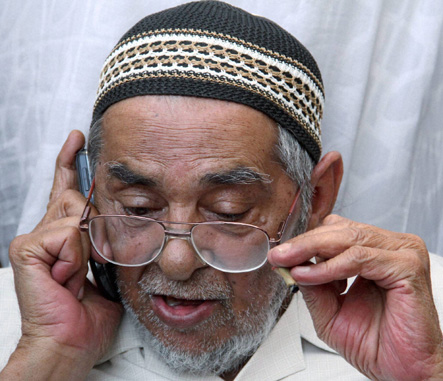
Dr Khalil Chishty is back home – three cheers for candle-light peaceniks

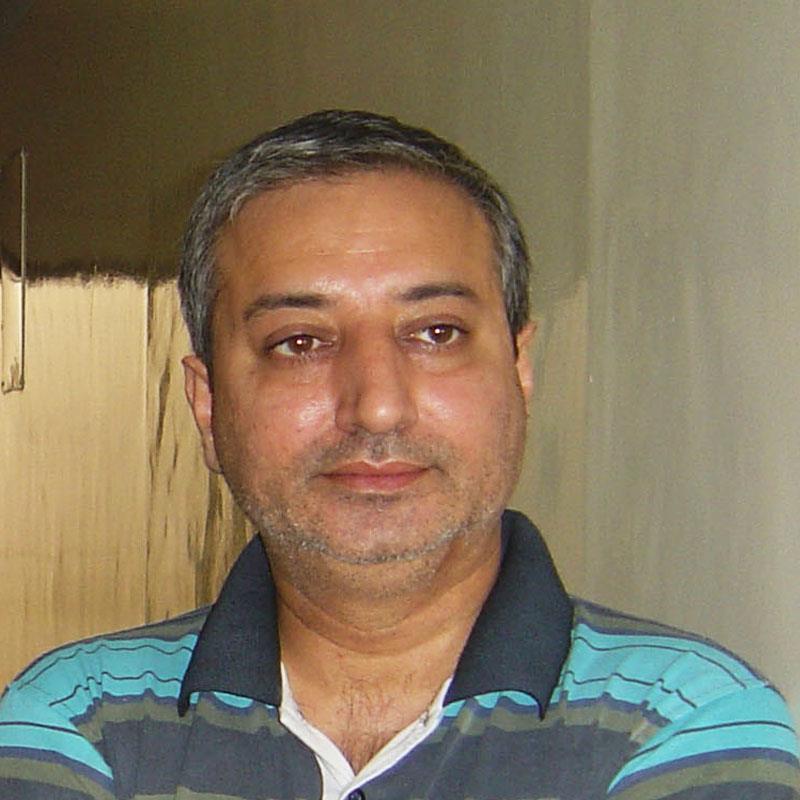
Ajmer: Dr Chishty talks with his family after his release from jail in Ajmer on May 9, 2012. PTI Photo

A post by my Delhi-based journalist friend Shivam Vij in Kafila but he modestly leaves out his own role in this – it was his idea to get President Zardari briefed about the Dr Chishty case before he left for Ajmer. Thanks to Farahnaz Ispahani for getting the information to President Zardari, following up via Bilawal Bhutto who accompanied the President, and ensured that the matter came up when they met Indian Prime Minister Manmohan Singh. It was after this meeting and their discussion of the case that things began moving forward. Perhaps that was what gave the Honourable Judges of the Supreme Court of India the confidence to make this unprecedented judgement – though not without cautioning that it should not be seen as a precedent! Shivam’s Kafila piece: Dr Khalil Chishty is back home – three cheers for candle-light peaceniks.

Beyond business

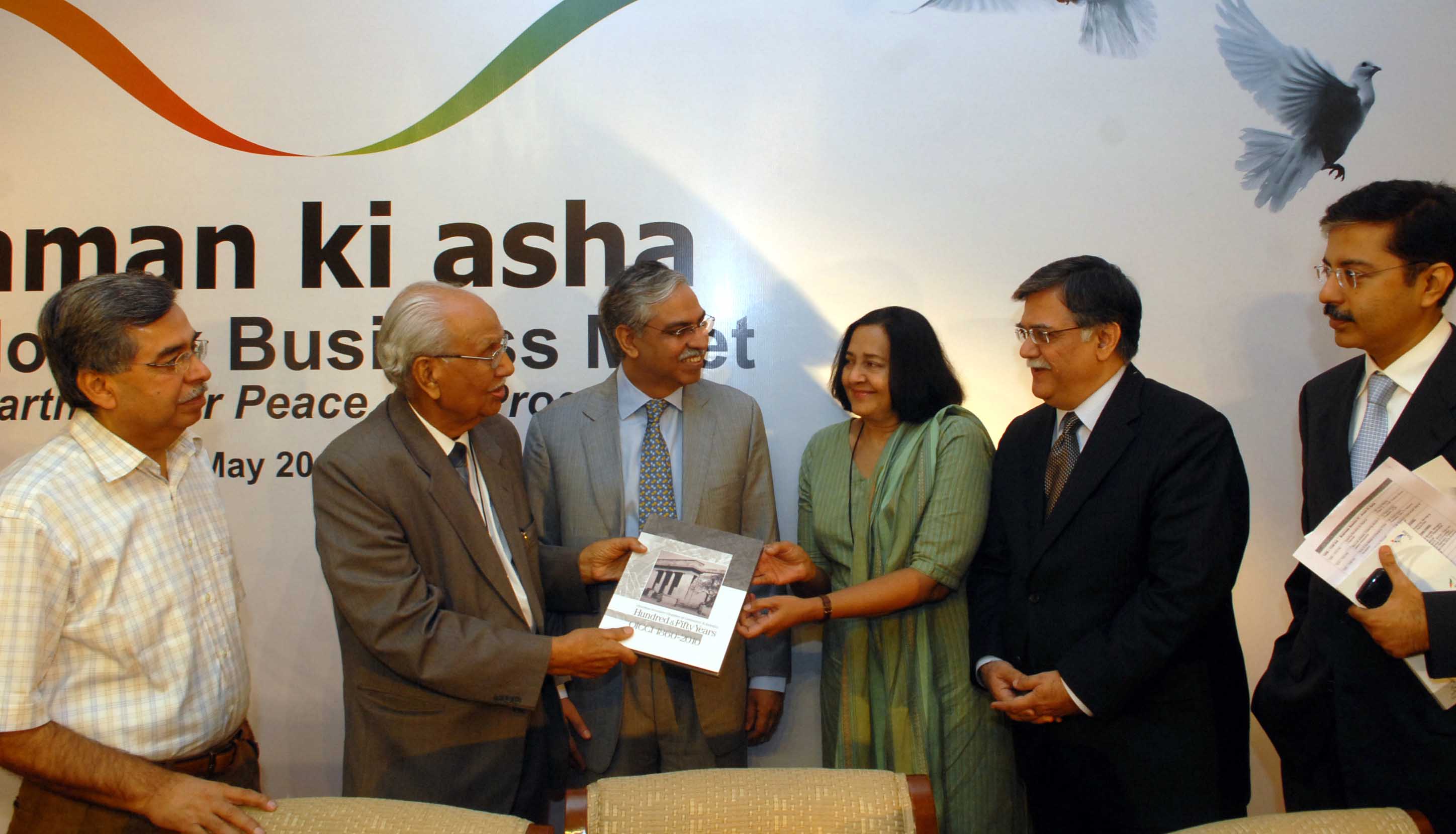
New Delhi, May 2010: OUP Director Ameena Saiyid presents Brij Mohan Lal Munjal of Hero Honda with a souvenir at the first Aman ki Asha Indo-Pak Business Conference. Photo: TOI/ Piyal Bhattacharjee

My article on how it all started for The News special edition published ahead of ‘Dividends’, the Aman ki Asha Indo-Pak Business Meet in Lahore, May 7-8, 2012, attended by several top Indian businessmen, addressed by the Prime Minister of Pakistan, the Chief Minister of Punjab, and the Foreign Minister of Pakistan. See Aman ki Asha website for more.  Continue reading

Soft power, woman power: Forging a new security paradigm

My article on the Amn-o-Nisa delegation’s visit to the USA, for Global Post, published  May 7, 2012: Soft power, woman power: Forging a new security paradigm in Pakistan

Women work to combat extremism by closing rift between Americans and Pakistanis.

Beena Sarwar

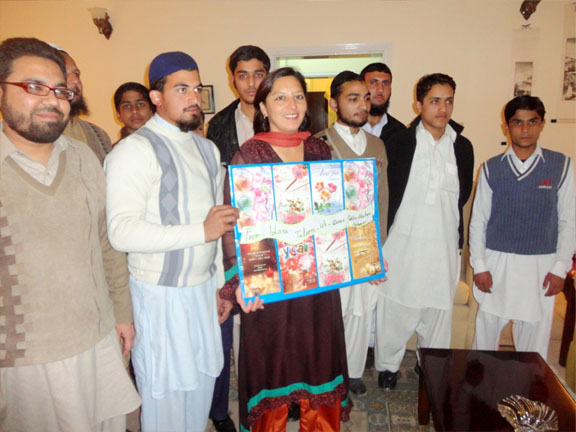
Peshawar, Dec 2011: Madrassah students and US embassy staff pose with one of the cards made by the students. Photo courtesy: PEAD

It was a unique Christmas party. Eight madrassah students in Peshawar, Pakistan took giant homemade cards, cake and flowers over to the US Consulate last year. The students and diplomats sat and talked for four hours, facilitated by teachers who provide English language and computer skills to the Islamic schools.

“This is the first time that these boys are connecting to and being exposed to a world outside the madrassah,” said Sameena Imtiaz, executive director of Peace Education and Development (PEAD), a non-profit foundation in Pakistan that has been working with madrassahs since 2005. “It wasn’t easy to build this relationship. It has taken a long time for them to trust us.” Continue reading

Bengali “Crossfire” reaches U.S.

This is a slightly longer version of my interview of Bangladeshi photographer-activist Shahidul Alam published in Latitude News, May 4, 2012, with reference to his exhibition at Queen’s Museum in New York. The exhibition is an attempt to internationalise the issue of extra-judicial killings. Thousands have been killed in such ‘crossfire’, allegedly at the hands of Bangladesh’s Rapid Action Battalion (RAB) that the U.S. and UK governments have been training and providing arms to.

Crossfire @ Queens

Crossfire launch at Queens Museum. Photo: Beena Sarwar

In “Crossfire,” an exhibition of photographs at the Queens Museum of Art in New York that closes on Sunday the 6th, acclaimed Bangladeshi photographer and activist Shahidul Alam chronicles the extra-judicial killings allegedly committed by Bangladesh’s Rapid Action Battalion, or RAB.Over a thousand victims have been ‘cross-fired,’ or executed by police without trial, in the last four years in the South Asian country, human rights activists claim. Many more people, perhaps thousands in total, have suffered similar fates, they say. Continue reading

Pakistan: A Thousand Separate Worlds

constable.jpg

Constable cradles Apache, a dog she rescued while she was embedded with Marines in Fallujah, Iraq. Photo: Chris Borouncle

I wrote this book review for the Brown Alumni Magazine, Nov 2011 issue, and didn’t get around to posting it earlier. This is a slightly longer version than the one BAM published.

Playing with Fire: Pakistan at War with Itself by Pamela Constable (Random House, 2011).

When it comes to Pakistan, veteran journalist Pamela Constable certainly ‘gets it’. Her latest book, ‘Playing with Fire: Pakistan at war with itself‘ is readable, thoughtful and nuanced. A veritable ‘Pakistan 101’ with much to offer even insiders like myself. 

As Kabul bureau chief and then deputy foreign editor at the Washington Post, Constable travelled extensively around the country. Her interactions with ordinary folk and newsmakers yield empathy and human faces often missing from discussions about Pakistan. Continue reading

A voice for peace, and for the ‘ordinary people’

Murtaza Razvi. Photo by K. B. Abro. Sunny, we will miss you.

Published in The News on Sunday, my tribute to Murtaza Razvi who never wore patriotism on his sleeve

R.I.P. Murtaza Razvi, a voice for peace and the ‘ordinary people’

Beena Sarwar

It’s hard to write about Sunny, as friends knew Murtaza Razvi, in the past tense. Our association spanned over 25 years and although we didn’t meet or communicate very often, it was comforting to know he was there, part of our larger family of forward-thinking, progressive-minded, secular, humane, literature-loving and above all utterly decent human beings.

The first time we met was when he visited Karachi in 1987 or 88, with the Government College Dramatics Club (GCDC) of Lahore – a lively group of youngsters directed by the brilliant Shoaib Hashmi, an Economics professor at Government College. Continue reading

DSF Convention, Peshawar, April 29, 2012

Education is a right… Not privilege – DSF Pakhtunkhwa Students Convention, April 29, 2012, Peshawar

DSF Convention, Peshawar, April 29, 2012.

Pakistani women waging peace the world over

Amn-o-Nisa coordinator Mossarat Qadeem (left) hugs Rosalia Miller from Nicaragua, mid-career MPA at the Harvard Kennedy School, who flew to Washington for the Tuesday event. Photo: Beena Sarwar

My blogpost for Global Post, about a coalition of women affected by violence and war, on a mission to spread their message and highlight the unique roles of women in the struggle for peace. Also published in The News, Pakistan. 

WASHINGTON: It was when children began painting ambulances, hospitals and dead bodies in art class that Bushra Hyder decided it was time to actively work towards healing.

That was 2009, and there were almost daily blasts in Peshawar, a Pakistani city not far from the border of Afghanistan, where Hyder runs an elementary and high school. The whole city, including the students and teachers at her school, was traumatised by the conflict raging around them. Those who could, fled to the capital Islamabad, or abroad, or anywhere but where they were on the frontlines.

“The violence affected the people…socially and psychologically,” Hyder said, speaking at a seminar at the United States Institute for Peace (USIP) on Tuesday.

“People lost businesses and loved ones. Blood and death was brought to our doorstep. All this violence really took a toll on the children. Boys played war games, and parents told me their daughters were mangling dolls’ limbs like victims of bomb blasts.”

Hyder began holding counselling sessions for the children and developed a peace syllabus to be taught at her school. She also started a children’s club (Peace Angels) and a mothers’ club (Mothers of Change) for women and their children who were victims of extreme violence. Peace Angels visited hospitals and orphanages, “to meet those most affected by the violence and see for themselves the results of violence,” while the mothers come to Hyder’s school to talk to students about the their own experiences and “how to get rid of the hatred.”

Continue reading

Memories of an unassuming Marxist

Published in The News on Sunday, Feb 19, 2012

Memories of an unassuming Marxist 

The progressive movement of Pakistan has lost one of its best sons in the death of Dr. Manzoor Ahmed

By Shahid Husain

Memories of an unassuming Marxist

Picture this: World traveler takes photos that make us care

My interview for Latitude News, April 25, 2012 (Note: Latitude News is now defunct; some pix missing in this post)

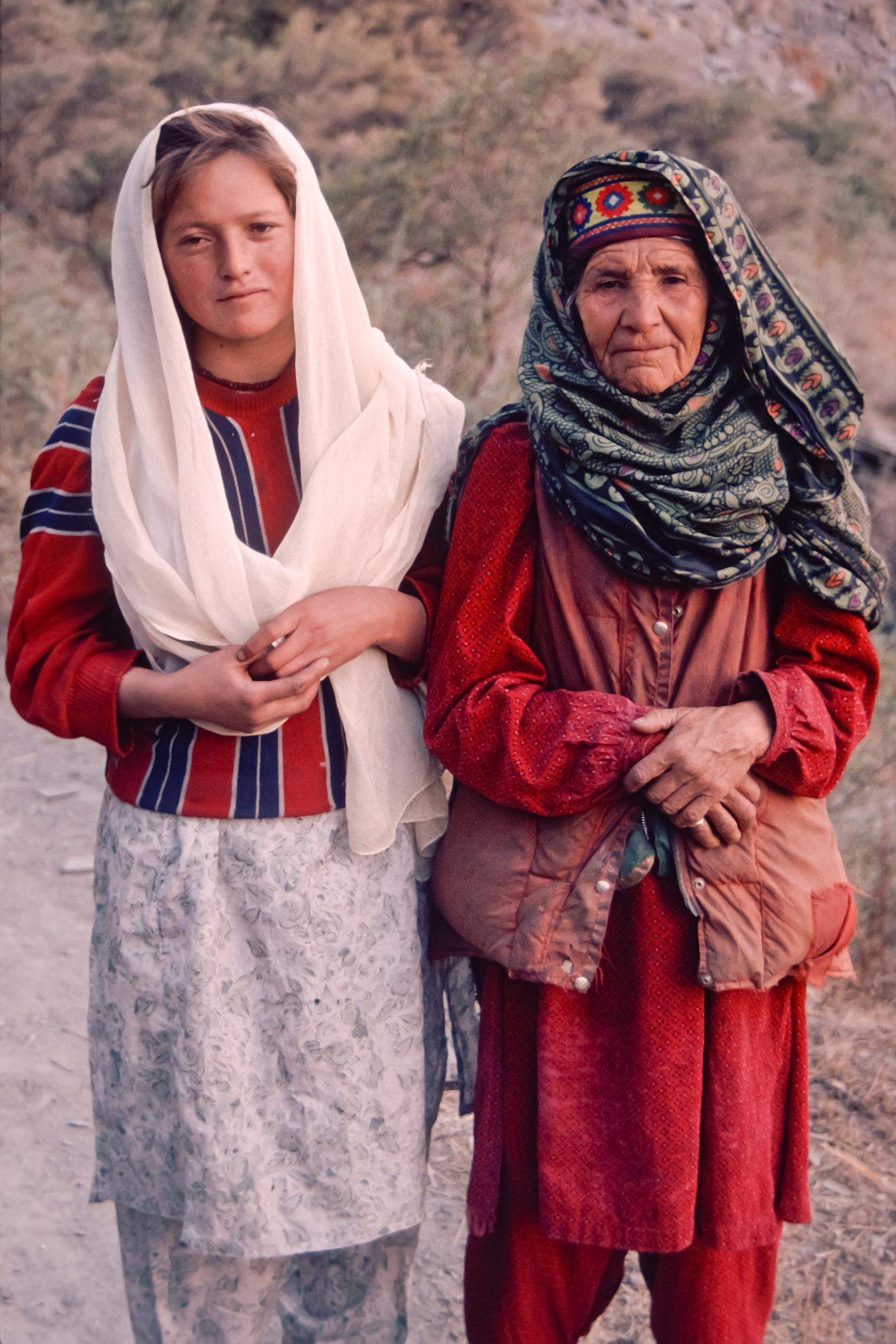
Hunza 1994

In Pakistan’s Hunza Valley in 1994, Perrault says, “I was amazed at the ethnic diversity of the people in this region. These women look like they are from Eastern Europe – and they have family living in New York City.” Because of a lack of health care, the mother had an untreated toothache. (Don Perrault)

Beena Sarwar

Tourists take photographs, but Don Perrault is the rare traveler who uses photography to give something back. I met Don Perrault at an Amnesty International get-together at an art gallery in South Boston. He fit the type of the optical engineer he is, unassuming, conservatively dressed and soft-spoken. But he spends his free time traveling and taking photographs, primarily in Africa and Asia.

He’s begun selling these to raise money for nonprofits working on health, education and gender empowerment. His highest-grossing photos, sold at a silent auction, went for a cool $5,000. Continue reading