Samina Quraeshi : Bridging worlds

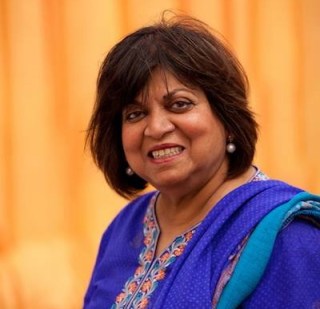
Samina Quraeshi: always dazzling. Photo by Andreas Burgess

Samina Quraeshi: always dazzling. Photo by Andreas Burgess

My article in The News on Sunday today about Samina Quraeshi (October 12, 1944-September 25, 2013), who will be treasured as a movie maker, photographer, designer, architect, writer, city planner, storyteller, and on and on…  See her introduction to

By Beena Sarwar

While in Pakistan nearly a year ago, filming for her documentary, ‘The Other Half of Tomorrow’ on the complexities and empowering aspects of the lives of Pakistani women, Samina Quraeshi suffered a stroke that doctors feared she would not recover from. Miraculously, she did. Her own indomitable spirit, the best medical care, and undoubtedly the love and prayers of countless friends and well-wishers pulled the vivacious, versatile writer, artist, and designer back from the brink.

Her right side was left paralysed, but she carried on with her characteristic zest for life, even though, as she said sadly, “I can’t even hold my granddaughter.” Continue reading

“Why are India and Pakistan at war?” asks 14-year old Kshitij…

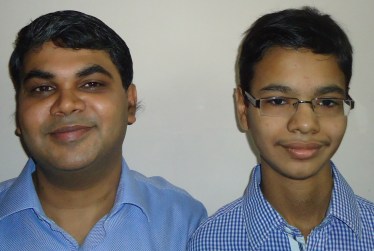
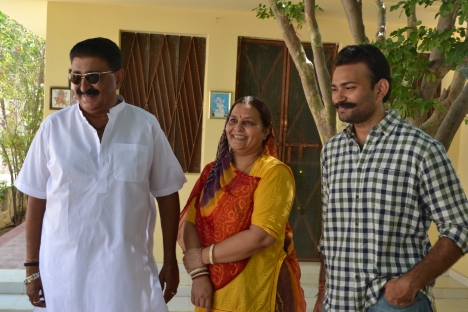
Like father like son: Samir and Kshitij Gupta

Like father like son: Samir and Kshitij Gupta

My article published in The News oped, TOI blogs and Aman ki Asha on Monday, Nov 4, 2013 

“Why are India and Pakistan at war?”

Beena Sarwar

Some days ago I got a call from my friend Samir Gupta, on his way home after picking up his son, 14-year old Kshitij, from a Delhi train station late at night. Kshitij was returning from a school trip with some 30 other students from Delhi Public School, Ghaziabad. They’d taken an early morning train to Amritsar and watched the flag-lowering ceremony at Wagah Border.

Samir, a passionate advocate of peace and good relations between India and Pakistan, asked Kshitij about the trip. Continue reading

Media (un)ethics, “Malala-phobia” and Dr Hoodbhoy

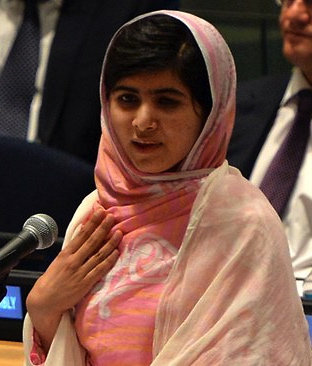
hoodbhoymalala-yousafzaiSad to see the polarisation and vitriol that passes for journalism in Pakistan. It may be so elsewhere too, but the manipulation and attempted humiliation of Dr Pervez Hoodbhoy in the name of religion and patriotism — for his defense of Malala Yusufzai — is low by any standards. Scroll down for his account about how the TV host withheld from him the identities of the other guests, the theme of the show and in the end, turned off his audio.

Regardless of Dr Hoodbhoy’s terming the Dunya TV anchor Kamran Shahid and his guest as liars, what’s clear is that Shahid smirkingly ‘allowed’ a guest on his show to shout down and abuse Dr Hoodbhoy, clearly enjoying the situation. In the end he announced (falsely) that Dr Hoodbhoy had ‘left’ the show. Not surprising. Shahid has a history of   untruths as well as encouraging such abusive exchanges (it’s all about ratings, innit?). Here’s something about his show on Express TV last year, that was (like this one) not only unbefitting to any respectable current affairs programme, but also fanning the flames of conflict in already-burning Balochistan. Continue reading

Towards a South Asian Union

Samir Gupta

By Samir Gupta

Published in Aman ki Asha, Oct 8, 2013… Justice Katju may be controversial but his sincerity to peace and humanity is unmistakable, finds a young activist at a breakfast meeting

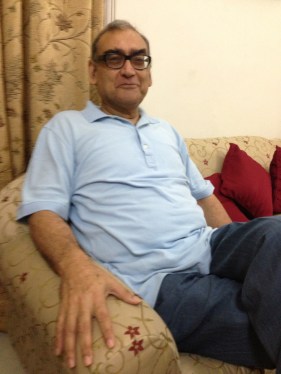
I was bit nervous when journalist Beena Sarwar invited me to accompany her to meet Justice Markandey Katju for breakfast in Delhi. Justice Katju had retired as a judge at the Supreme Court of India and was appointed Chairman of Press Council of India. He is known for his controversial statements, including his comment “Pakistan is a “fake” country “created artificially by the British” – that I had also ridiculed. He sounded like a retired person far removed from reality.

Justice Katju: A strong, secular, democratic vision. Photo: Beena Sarwar

Justice Katju: A strong, secular, democratic vision. Photo: Beena Sarwar

Beena, editor Aman ki Asha Jang Group Pakistan, insisted that he is a sincere friend of Pakistan and a champion of peace between India and Pakistan. She wanted to talk to him about his calls for re-unification that are causing unnecessary controversy and diverting from the real issues at hand. This was going to be interesting.

On the day, I met Beena outside his majestic bungalow near Parliament House in New Delhi. He was much taller than I expected, and very warm in welcoming us. As we sat for breakfast, he regaled us with stories of his days as a judge in Allahabad, meeting his counterparts from Pakistan in Delhi, his views of what ails India and his views on Pakistan.
Continue reading

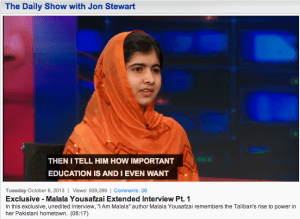
To Taliban: “I want education for you, for your children” – Malala on the Daily Show

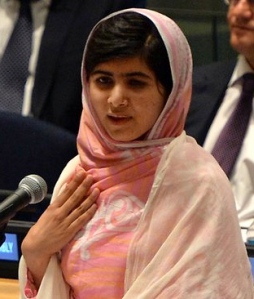
Malala on Daily ShowMalala Yousufzai’s conviction and sincerity shines as she speaks, even as the after-effects of the attack on her are still evident in the slight disfigurement of her facial muscles. And the youngest ever Nobel Peace Prize nominee recently speechless even the satirical TV host Jon Stewart when she talked about her thoughts about the Taliban. Asked when she first learnt she was a target of the Taliban, she says it was through a visitor who told her to put her name in Google search.

“I just could not believe it, I said no, it’s not true,” she said. “We thought the Taliban were not that much cruel that they would kill a child – I was 14 at the time.” She was initially more afraid for her father but when she began thinking about it, she thought that if  attacked she would hit the Talib with her shoe – a comment that raised a laugh. Continue reading

Malala and Absurdistan, Mazariland, Cuckooland… We are sorry, Bhooro Bheel. Taliban bhagao, mulk bachao

malala-yousafzaiMy two bits on the muddied narrative in Pakistan on Malala Yousafzai, a favourite for the Nobel Peace Prize being announced on Oct 11:  Those who so easily buy conspiracy theories about Malala being a “US agent” or who go against Malala are usually the same people  you will find justifying the murderous, criminal acts of the Taliban (who are fasadis not jihadis, in my mind) in some way, absolving them of responsibility by terming it a response to the US invasion of Afghanistan or the drone attacks. These people conveniently forget that the mindset that attacked Malala is the same as the one that was attacking women NGO workers and teachers and girls’ schools in the western border areas BEFORE 9/11. It’s the same mindset that was target killing Ahmadis and Shias since the 1990s. It was not just the Taliban’s bullets that targeted Malala and all that she stands for – it is this mindset that the United States, Pakistan and Saudi Arabia cultivated and developed in the 1980s in order to counter the Soviets in Afghanistan. Continue reading

A Southasian vision

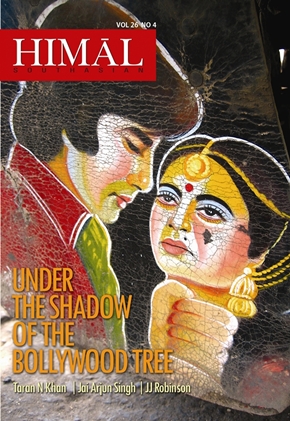
Himal Southasian: Under the Bollywood Tree - latest issue, launched at the Bangalore Literature Festival recently

Himal Southasian: Under the Bollywood Tree – latest issue, launched at the Bangalore Literature Festival recently

My article in The Friday Times last week (thanks to Raza Rumi for pushing me to write this, despite the tight deadline):

A Southasian vision

For regional peace, development and prosperity, it is imperative to improve India-Pakistan relations

Beena Sarwar

I like how the Nepali journalist Kanak Mani Dixit refers to the Indian sub-continent: Southasia. One word. Kanak explains why, in the respected magazine Himal Southasian that he edits, that I am proud to be editorially associated with since its launch in 1997. As a magazine “seeking to restore some of the historical unity of our common living space – without wishing any violence on the existing nation states – we believe that the aloof geographical term ‘South Asia’ needs to be injected with some feeling. ‘Southasia’ does the trick for us, albeit the word is limited to English-language discourse. Continue reading

India, personally…

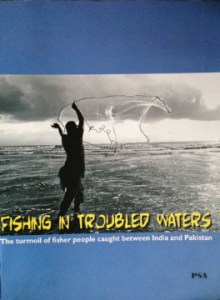
Fishing in Troubled Waters, launched in Delhi, Aug 13, 2013

Fishing in Troubled Waters, launched in Delhi, Aug 13, 2013

Update: See ‘A half-full glass‘ on the Singh-Sharif meeting at UNGA (and the ‘dehati aurat’ brouhaha), published in the Aman ki Asha page in The News on Oct 2, and in my column at TOI blogs.

This is a long-pending post, compiling articles, video and photo links (below) following my recent, brief trip to India at a time when tensions along the Line of Control (LoC) were running high. The Programme for Social Action (PSA) and the Pakistan India People’s Forum for Peace and Democracy (PIPFPD) had invited me to a seminar on Aug 13, where they launched two publications. (I took the direct Karachi-Delhi PIA flight both ways, which has since then been discontinued — apparently not enough traffic because it’s so difficult to get visas; credit where credit is due – PIA is the only Southasian airline to fly to all the regional capitals and more).

Continue reading

Devise a long-term strategy for dealing with terrorism: Forum for Secular Pakistan

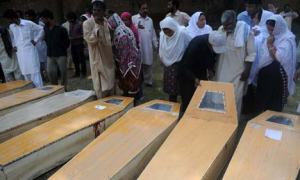
Peshawar-blast-78-Church-killing-suicide_9-22-2013_119340_lRead Omar Ali’s blogpost Three Layers of Confusion.. and their consequences” for a sound analysis of the vicious suicide bombing in Pakistan on Sunday targetting a church in Peshawar, killing at least 81 people, many of them women and children. Among them were six members of one family, including five women and a child.  As Dr Ali points out, “it is not that no action has been taken against them. ..but there is a curious disconnect between these operations and the national narrative being promoted by the same military”.  BELOW: a statement by the Forum for Secular Pakistan urging the government to Devise a long-term strategy for dealing with terrorism

Continue reading

Rajput appeal from Amarkot, Sindh

Rana Rani son-1

Rana Hameer Singh, Rani Nalini and son Karni Sodha at home in Amarkot. Photo: Maha Sarwar Shahid

Something I wrote for Aman ki Asha after a magical trip to Tharparkar last weekend… 

The Rana and Rani of Amarkot (Umerkot) urge a liberal visa regime between India and Pakistan

By Beena Sarwar

“The people-to-people contacts idea or vision initially came from the Indian side, when we were stuck, unable to move forward. My country had taken the position that Kashmir has to come first, that no dialogue was possible until that issue was resolved,” says Rana Hamir Singh, head of the Hindu Sodha Thakur Rajput clan in Pakistan, in Umerkot, former capital of Sindh. Continue reading