A social worker, an economist, and the legacy of Pakistan’s student movement of the 1950s

OBITUARY: The legacy of a decades-old connection between social worker Shahida Haroon (1937-2023) and economist Eric Rahim (1928-2023) endures through the ongoing struggle for student rights, economic justice and democracy in Pakistan
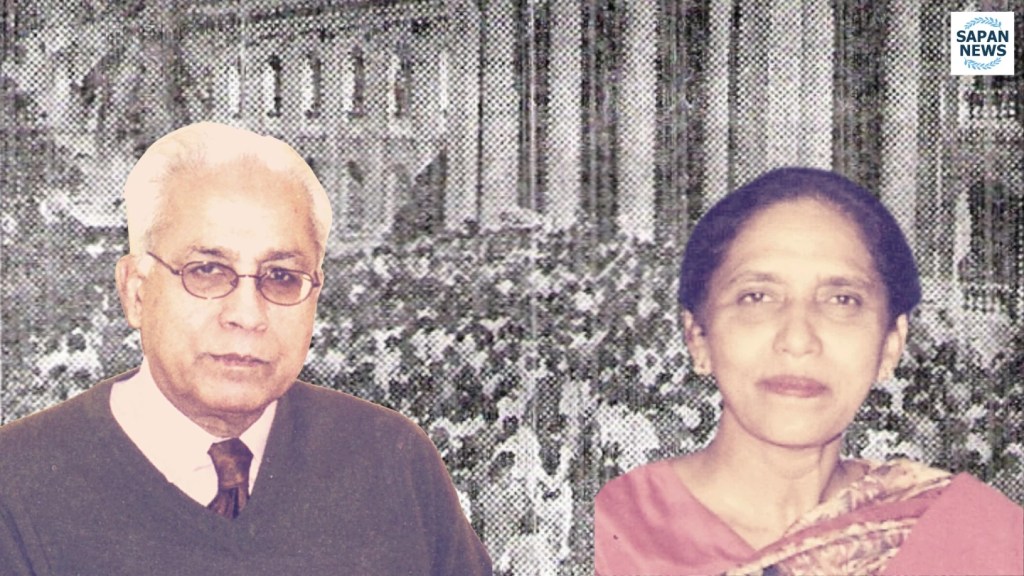
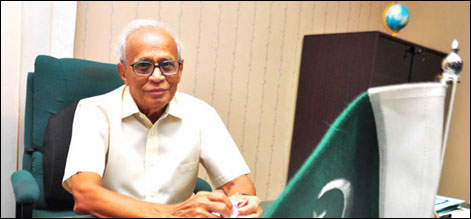
Demands Day at D.H. Science College, 07 Jan. 1953, Eric Rahim, Shahida Haroon Saad. Collage by Aekta Kapoor/Sapan News

PERSONAL POLITICAL

By Beena Sarwar / Sapan News

It was while trying to reach Eric Rahim in Glasgow this week to inform him of my aunt Shahida Haroon’s passing in Karachi that I learnt he too was no more.

A respected journalist and economist, Uncle Eric as I called him, had passed away peacefully at home on 2 May 2023, aged 94. He was a mentor to my father Dr M. Sarwar (1929-2009), and Shahida, who departed this earth on 25 June, at 87.

Shahida did her Master’s in economics from Karachi University in 1958, a subject she didn’t enjoy or do well in. When she went to Punjab University for a second Master’s in social work, encouraged by her brothers Akhtar, 11 years older, and Sarwar, eight years older, Akhtar asked his friend Eric Rahim to look after her. It was Eric, then a columnist at The Pakistan Times, who met Shahida at the train station after her overnight journey.

Continue reading

Lessons from journalism, tai chi, and life

Exploring a way of looking inwards, confronting my own demons, and competing with my own best self

My Harvard Commencement keynote speech at the first affinity graduation celebration for AAPIDA – Asian Pacific Islander Desi-American, Harvard University, 23 May 2022

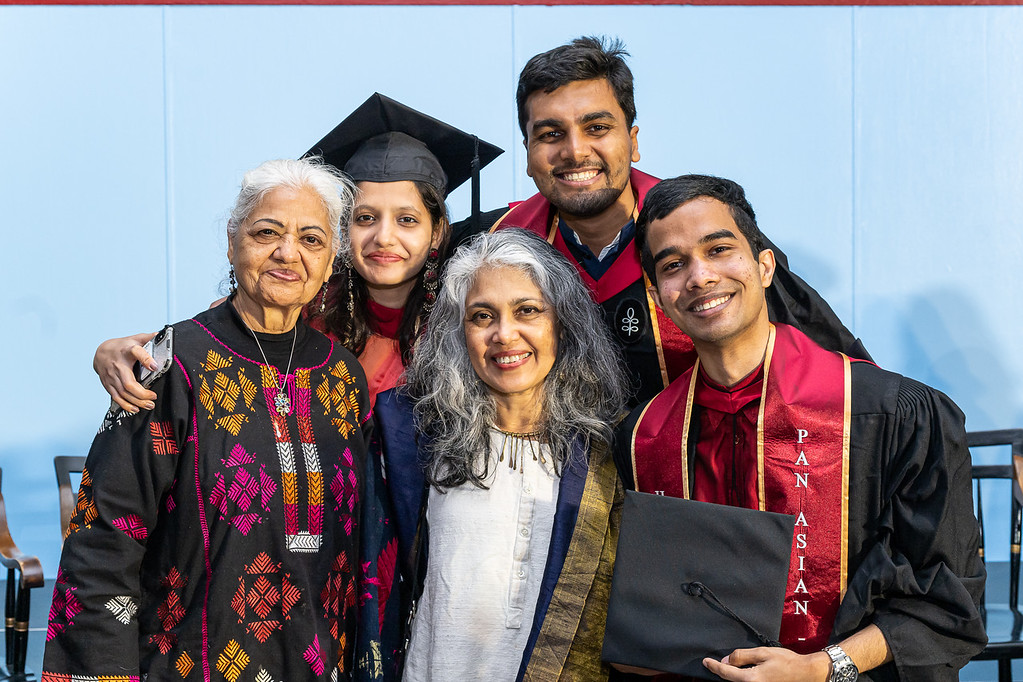
With my mother Prof. Zakia Sarwar, plus Harvard School of Education graduates after the ceremony: Najwa Maqbool and Nishant Singh from India, and Nigel Gray from Sri Lanka. Their families couldn’t make it so we were glad to be there for them. Photo: Lipofskyphoto.com

Beena Sarwar, video and text of speech below. Also published in Sapan News Network

Continue reading

Farewell Saleem Asmi: A quiet warrior slips into the night

Saleem Asmi, Nov. 29, 1934 – Oct. 30, 2020

First published in The News on Sunday, Nov. 8, 2020. Reposted here with more photos.

Saleem Asmi: Portrait by Sharjil Baloch, 2014-2015.

By Beena Sarwar

His old friend S. M. Shahid termed Saleem Asmi a ‘Marxist Sufi’ in his compilation of biographical essays, ‘Living Souls: Memories’. Asmi Sahib would typically brush aside the accolades that came his way, not because he didn’t appreciate himself but because he had no false pride, false humility, or a shred of hypocrisy.

I can imagine his chuckle at the couplet by his favourite poet initially chosen by family and friends to inscribe on his gravestone:

Ye masaail-e-tassawuf, ye tera byan Ghalib
Tujhey hum vali samajhtalay jo na baada khwar hota

The way you talk of philosophy Ghalib, the mystical way you explain it
You would have been considered a saint yourself, had your drinking been less.

Continue reading

A beloved jurist passes on

Fakhruddin G. Ebrahim (12 February 1928-7 January 2020) gained respect early on in his career for refusing to take oath under the military dictatorship of Gen. Ziaul Haq. Through his life he wore many hats — founder member Human Rights Commission of Pakistan, Pakistan Supreme Court judge, Governor Sindh, Chief Election Commissioner, to name some. But a little-known feather in his cap is his pro bono work for the imprisoned leftist and student activists of the 1950s, that he credited for his politicisation. Those, he would say, were “the best days” of his life. Here’s that story as I heard it from him and from my father Dr. M. Sarwar, published in The News on Sunday and The Wire a few days after Fakhru Uncle passed on.

Fakhruddin G. Ebrahim: A fine legacy (online photo)

By Beena Sarwar

As the debate on the much-delayed restoration of student unions in Pakistan gathers momentum, we celebrate and commemorate a beloved jurist who cut his teeth by taking on cases of detained student activists pro bono in the 1950s.

Continue reading

Remembering Doc: The importance of civil discourse and the art of listening

At a small gathering last year, our friend S. Ali Jafari read his essay in Urdu about my father, whom he called “Doc”. His son Salman videotaped the reading, which forms the basis of this 14-minute video I edited for 26 May 2019, ten years after Dr M. Sarwar passed away peacefully at home in Karachi, at age 79.

Continue reading

‘Blood on the streets’

Part one of a series I am working on. NOTE: Post later updated to add the other parts below.

Student mtg 1951 or 52

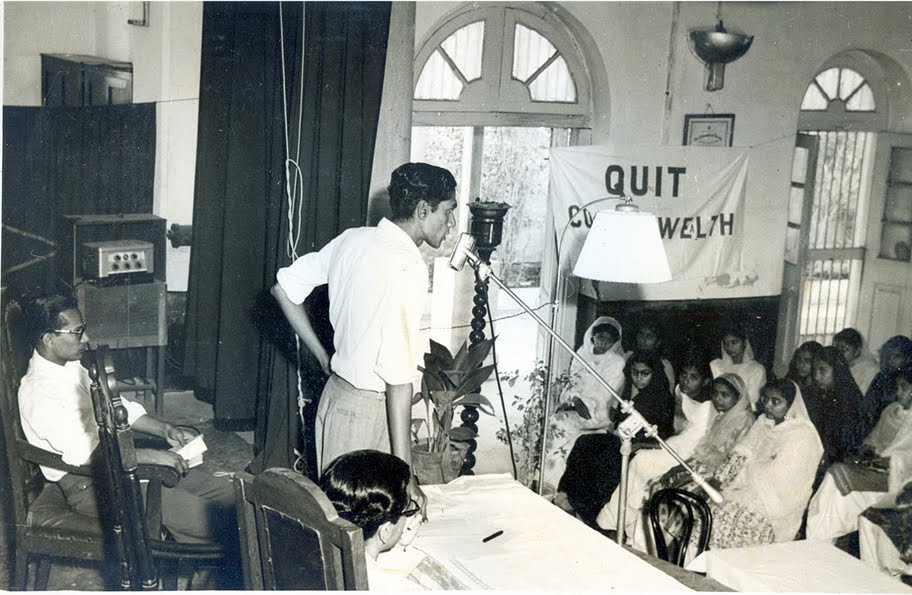
M. Sarwar addressing a meeting in Karachi, early 1950s, Khaliqdina Hall. Seated left: Rehman Ali Hashmi.

Looking back to look forward: The DSF-led movement of the 1950s eschewed party politics, was inclusive, and focused on student unity. Besides students from medical, engineering and and law colleges, it involved students from girls’ and boys’ high schools, and women’s colleges. 

Below, an extract from my forthcoming memoir on the struggle for democratic spaces in Pakistan. This is from the chapter about the student movement of 1953 that shook the country and laid the foundations for the University of Karachi, published in The Friday Times, Jan. 8, 2016. Thanks to Raza Rumi for pushing me to share this Continue reading

DSF Convention, Peshawar, April 29, 2012

Education is a right… Not privilege – DSF Pakhtunkhwa Students Convention, April 29, 2012, Peshawar

DSF Convention, Peshawar, April 29, 2012.

‘And there shall be more caravans of passion…’

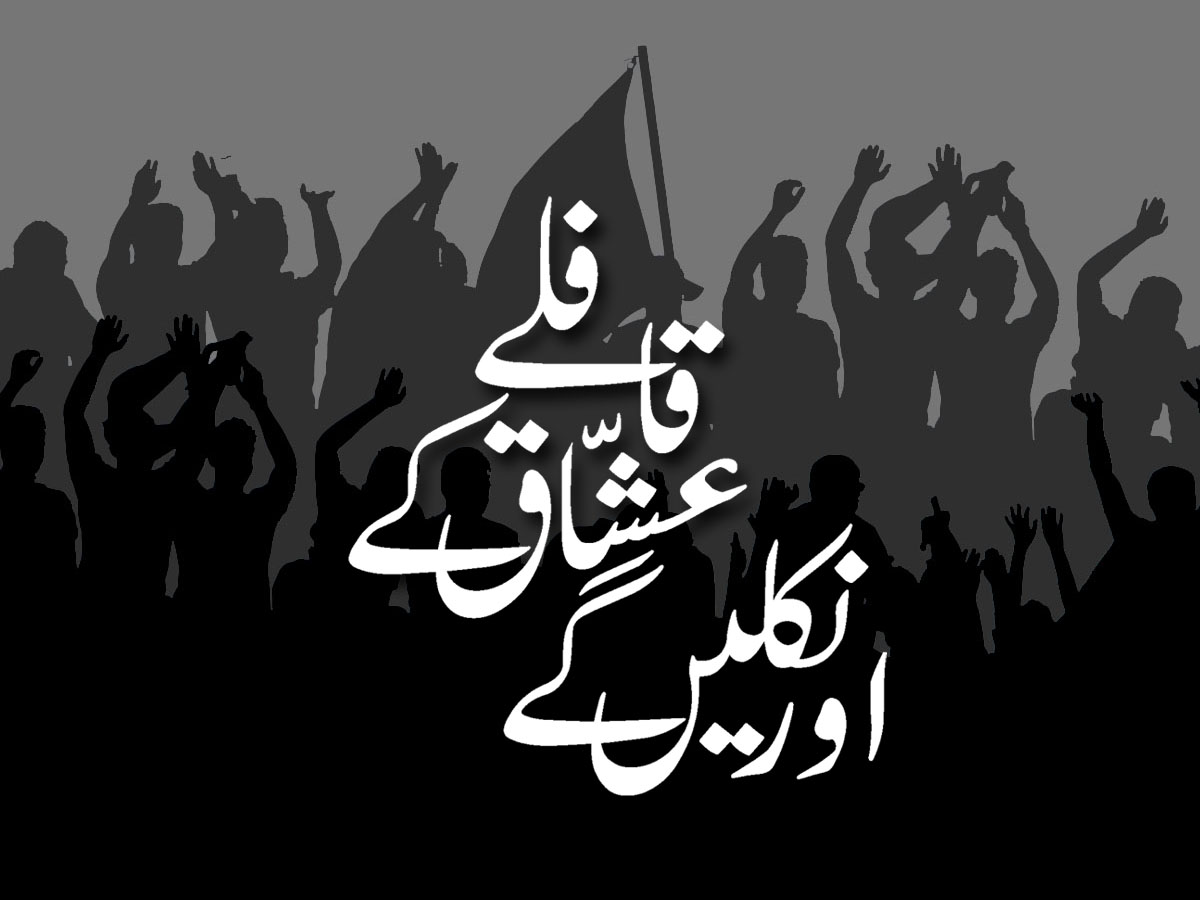
Title for documentary 'Aur nikleiN Ge Ushhaq ke Qafley' - design by K.B. Abro

Several items uploaded to the Dr Sarwar blog over the last month:

1. Learning from history in an age of bombs
– my article based on research done for the 30-min documentary on the 1953 student movement directed by Sharjil Baloch, that I produced (we are making some final changes after which it will be available for distribution upon request).

2. Articles specially written for the Jan 9, 2010 Event Book on the 1953 student movement:
Keep the fire burning – End Note by Zakia Sarwar
Continuing Stories: Social Action and Change – by Ruqaiya Hasan
The High School Students’ Association and my rite of passage – by Ghazi Salahuddin

3. Scans of the Event Book, Jan 9, 2010 – Copies available upon request

A theatrical production by, about, for, students

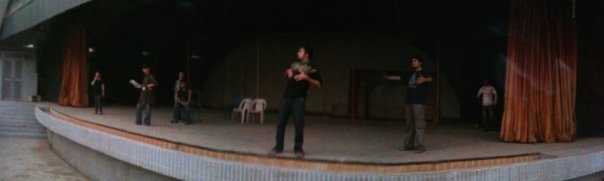
Students rehearse at Arts Council. Photo courtesy: Rukunuddin Aslam

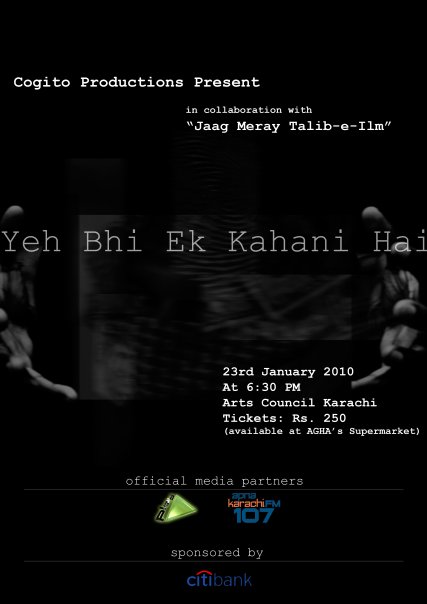
This is a unique theatre production – a combined effort written, directed and produced by students from various institutions in Lahore and Karachi, in collaboration with JAAG TAALIB E ILM a student organization promoting peace.

They promise “A theater performance the like of which Karachi has never seen. A story full of surprises, hilarity and personal tragedy. The story revolves a boy trying to find his identity in the conflicting ideologies facing our generation in this time of national turmoil.” (Tickets Rs. 250 available at Aghas and Shahbaz Subway). RSVP to the FB event.

The institutions involved are: Lahore University of Management Sciences (LUMS), National College of Arts (NCA), National Academy of Performing Arts (NAPA), Lyceum, National University of Science and Technology (NUST), Indus Valley School of Art and Architecture (IVSAA), College of Business Management (CBM), Shaheed Zulfiqar Ali Bhutto Institute of Science and Technology (SZABIST) and Sindh Awami Sangat.

Curtain raiser in The News, Jan 19: ‘Yeh Bhi Ek Kahani Hai’ aims at solidarity Continue reading

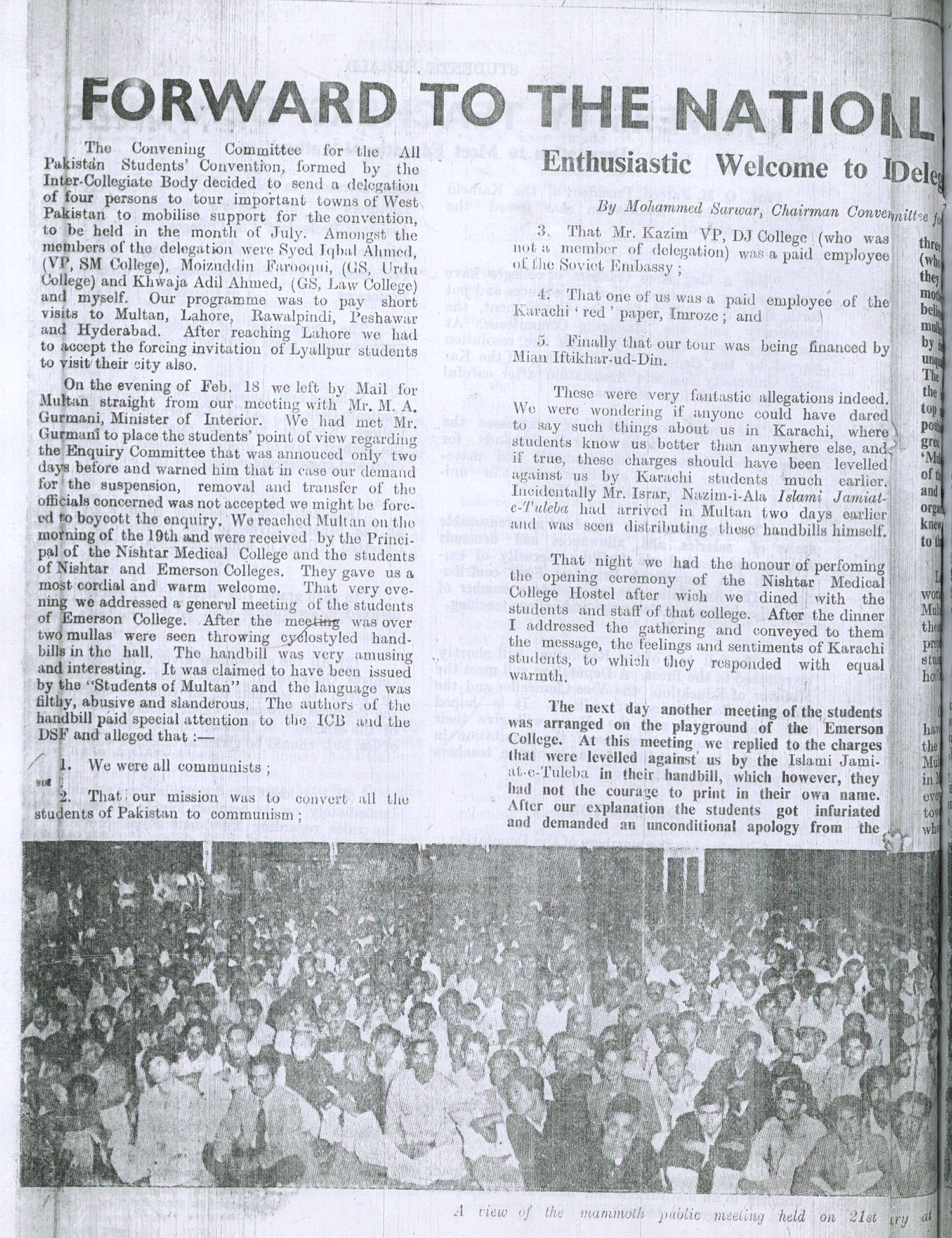
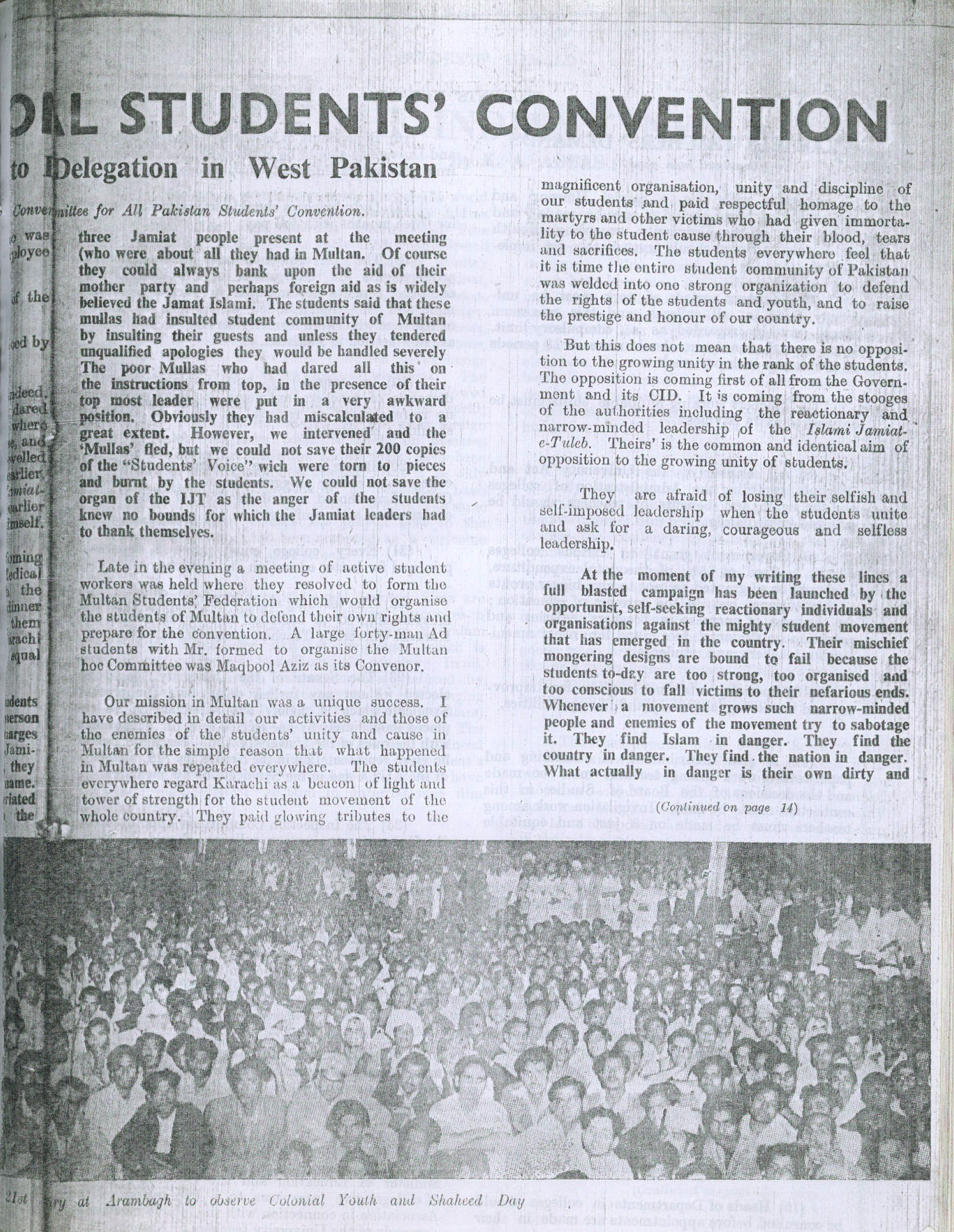
Commemorating the January 1953 movement and a story about Karachi students inaugurating a Multan hostel

Here is an interesting story from the 1953 student movement, about how they contacted colleagues and supporters in other parts of the country in an age when communication was far slower and more expensive than it is now. Continue reading