Our Pulitzer Center-supported documentary ‘Democracy in Debt: SriLanka Beyond the Headlines’ has just been selected by the Pune Short Film Festival 2025, June 2. It has also been selected for the Asian Talent International Film Fest 2025, Oct. 5, in Ahmednagar, Maharashtra, and was earlier screened at the Fifth Kerala Short Film Festival 2025, held in March.
Trailer: ‘Democracy in Debt: Sri Lanka Beyond the Headlines’
More good news
Our peace appeal for India and Pakistan to Stop Hostilities posted by the Southasia Peace Action Network or Sapan just after the war broke out reached more than 5,000 signatures in the first 48 hours. It had reached nearly 7,500 signatories but the number inexplicably dropped so now we are just over 7,000. In this vitiated atmosphere where jingoism dominates the airwaves and social media, this is no small number. Let’s keep on the pressure for these two nuclear-powered neighbours to talk.
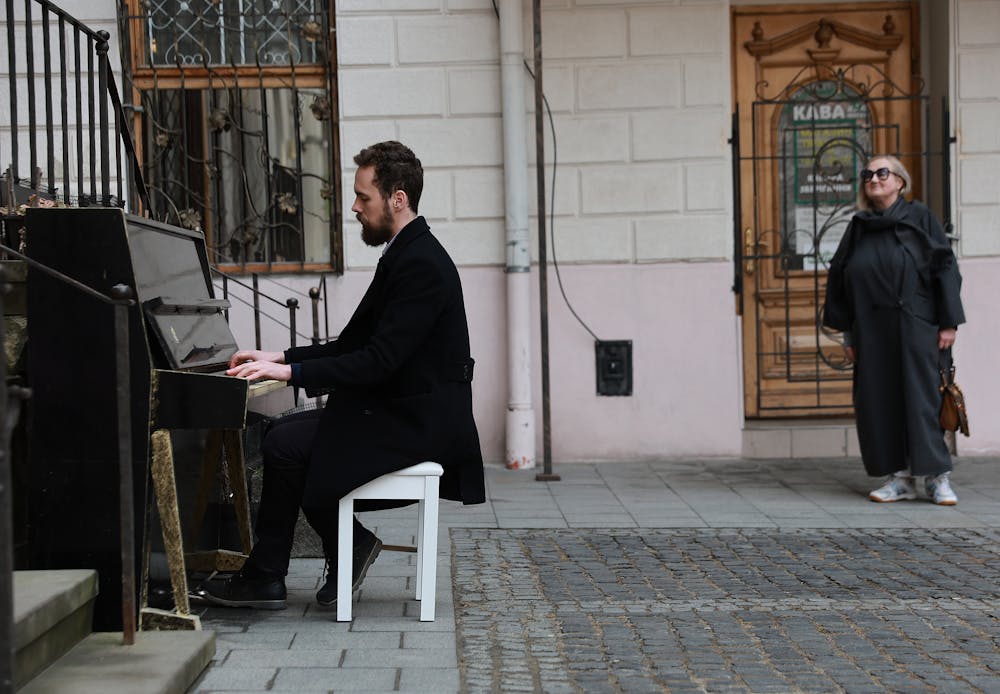
The “piano man,” a war refugee, became one of the symbols of resistance emerging from conflict. Photo by Joe Raedle/Getty Images, Lviv, Ukraine, March 29, 2022.
Sharing below a press release rejecting India’s continued violations of the constitutionally guaranteed rights of the people of Jammu and Kashmir – from the Pakistan India People’s Forum for Peace and Democracy (PIPFPD), the region’s largest and oldest people-to-people organisation, launched in 1994.
Also below – a PDF of the just-released report by the Forum for Human Rights in Jammu and Kashmir, an informal group of concerned citizens including retired Indian judges and armed forces personnel. The Forum aims to ensure attention to continuing human rights violations in the disputed region that both India and Pakistan claim. This is its third report.
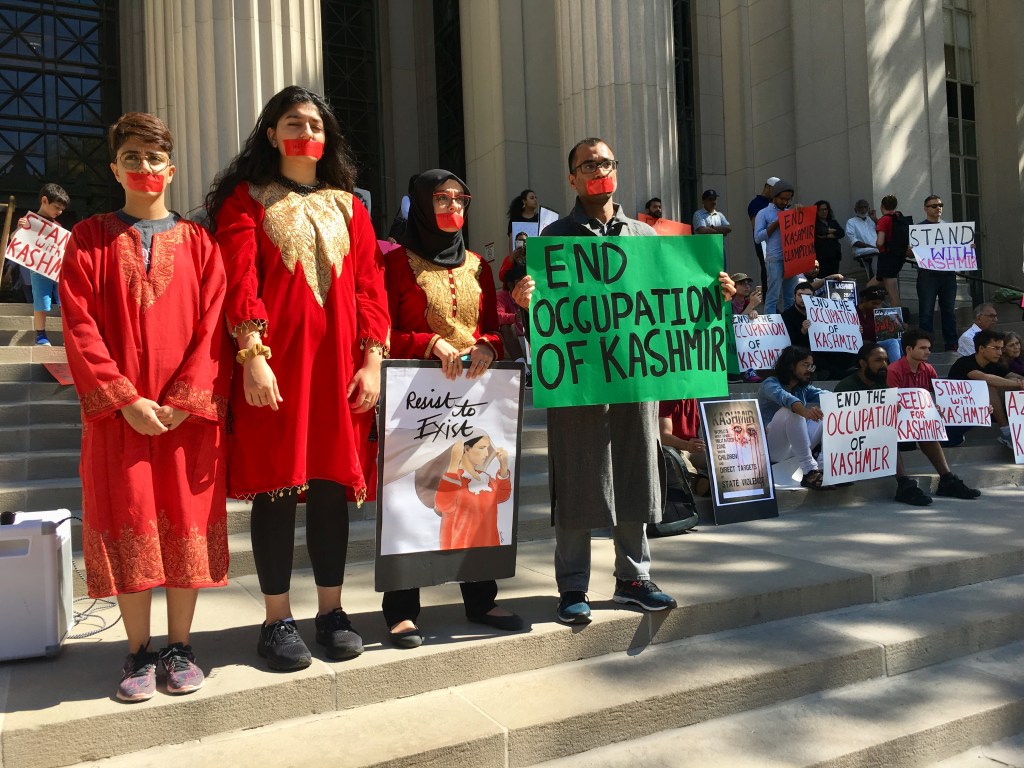
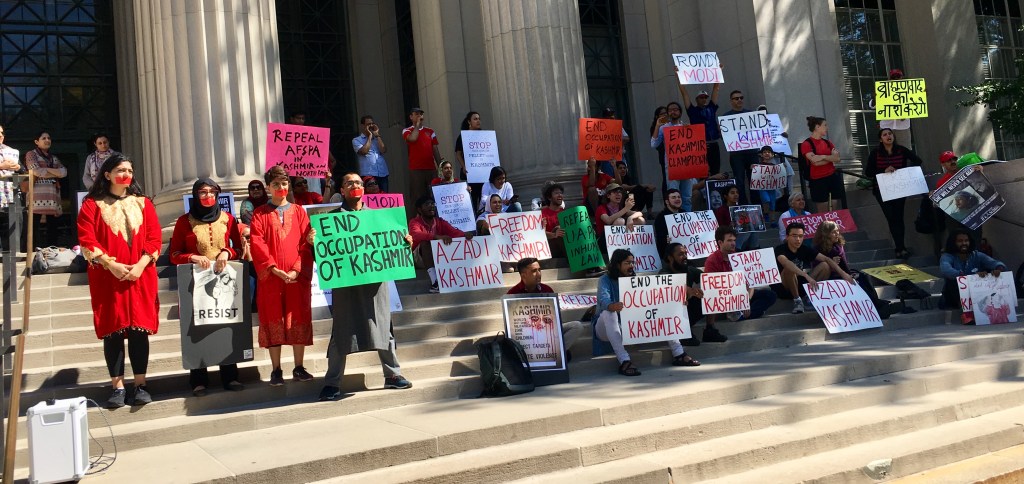
Demonstrators at MIT, part of a series of peaceful world-wide protests in solidarity with Kashmir on the weekend of 21 September, International Peace Day. Photo: Beena Sarwar
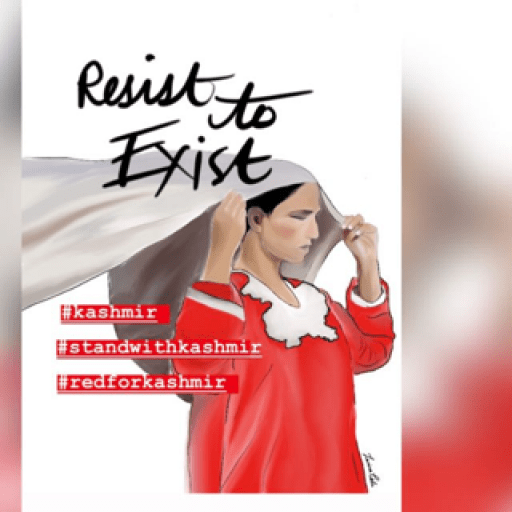
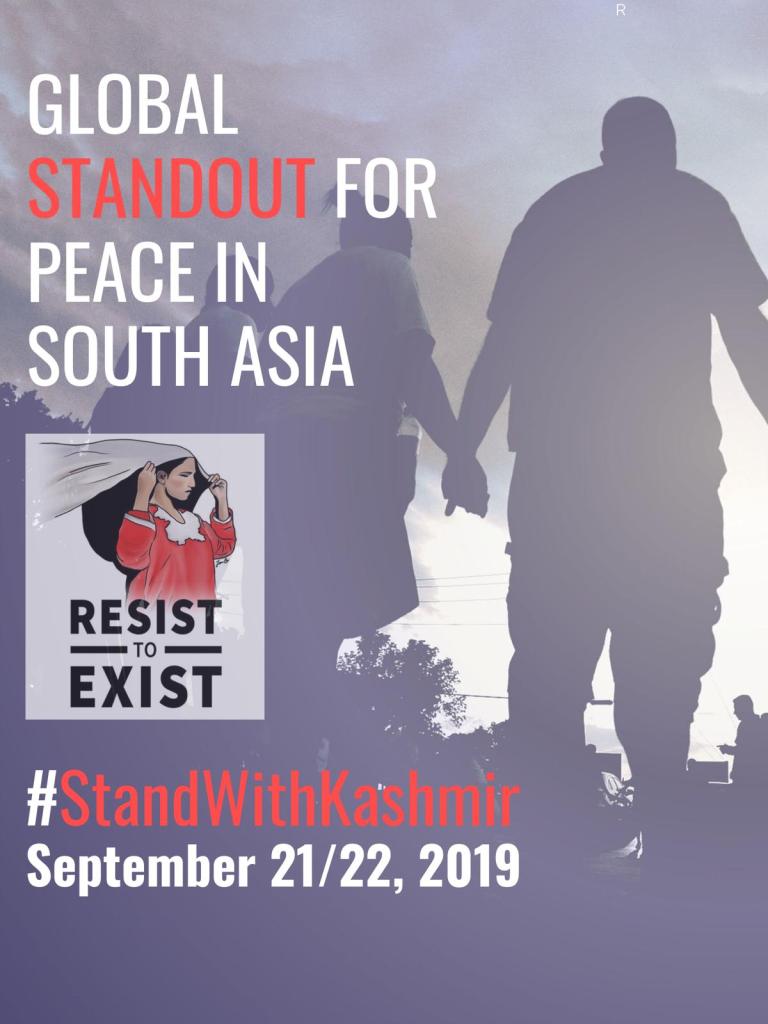
Sunday, 22 September, Cambridge MA: “Resist to exist” proclaimed a placard on the steps of MIT. The placard featured the picture of a woman in a red pheran, the long woolen tunic traditionally worn by Kashmiris from the Himalayan region in India’s north-west tip.
Visual by Zarina Teli, based on a photograph by Sumaya Teli.
The woman holding the placard also wore a red pheran, her mouth taped shut like the others in the pheran-clad group she stood with to symbolize the communications blackout in her home state since 5 August this year. The pheran reflects an iconic image that has become integral to the Kashmiris’ resistance movement, as covered by NPR news recently (Finding resistance in fashion, Kashmiri creator turns to the pheran).
The color red, taken up by thousands in their social media profile
images, has come to symbolize the Kashmiris’ spirit of resistance and defiance.
The woman and her companions stood with other peace-loving South
Asians and friends on the steps of MIT this past Sunday at noon, to demand that
the Indian government “immediately restore communication in Kashmir, remove the
draconian measures enforced in the name of security and order, and respect
Kashmiris’ right of self-determination”.
Boston event – Global Standout for Peace in South Asia. Photo: Beena Sarwar
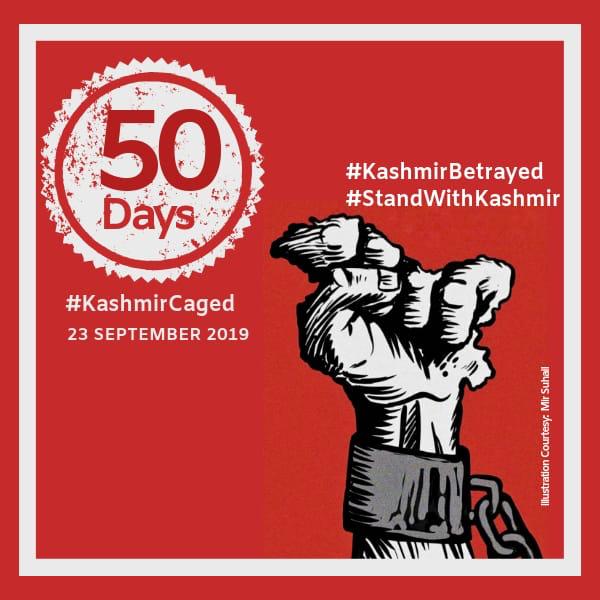
The next day, Monday 23 September, marked Day 50 of “the
unprecedented and total communications blackout for 8 million Kashmiris
enforced on them by the Indian government. Kashmiris, living in the most
militarized region on earth, now fear that the present communications blackout
is part of a larger plan to ‘ethnically cleanse’ Kashmir,” according to the
statement read out at the event.
The event at MIT was part of a series of peaceful protests that weekend in solidarity with the Kashmiri people, coordinated by a small coalition called the Global Standout for Peace in South Asia.
Besides Boston, the Standouts took place in the San Francisco Bay
area, Kolkata (India), Gotenburg (Sweden), Islamabad (Pakistan), and Kathmandu
(Nepal), on the same weekend as Indian Prime Minister Modi shared the stage
with U.S. President Trump in Houston. Solidarity with Kashmir protests took
place in Houston also, as well as Seattle WA.
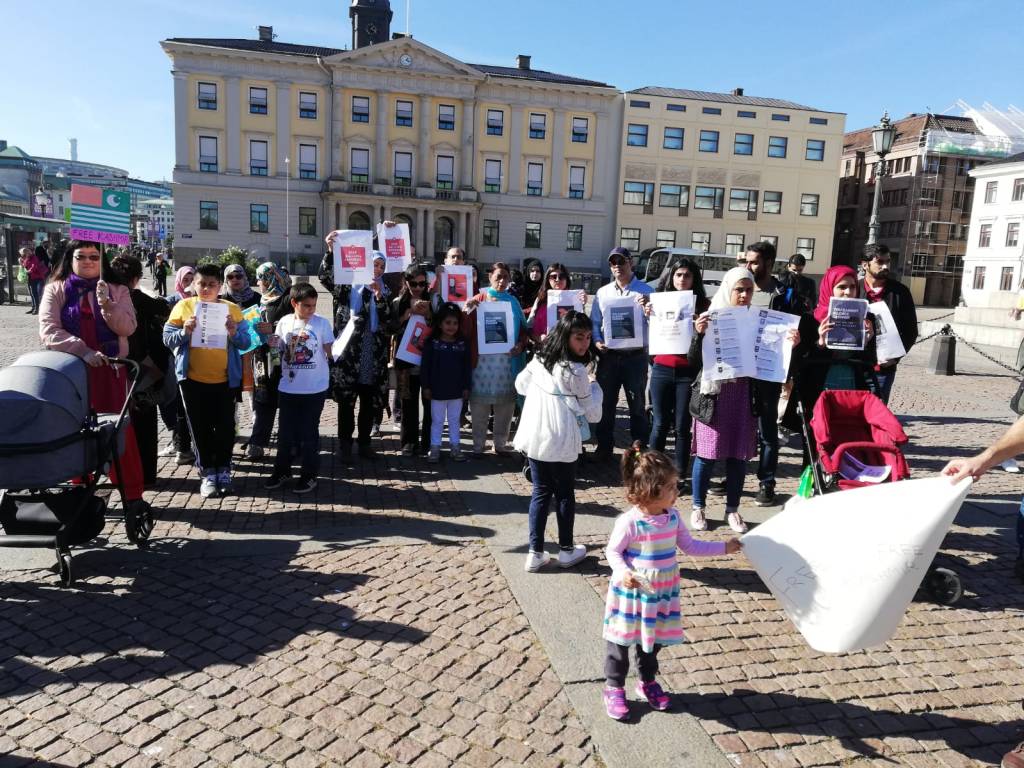
Standout for Peace in solidarity with Kashmir, Goteburg, Sweden
Nuclear-armed neighbors India and Pakistan both lay claim to
Kashmir. The Global Standout protestors showed their rejection of these
territorial claims by not carrying the flags of any nation or state.
Supporting organizations in Boston included Massachusetts Peace
Action, CODEPINK: Women for Peace, MIT Students Against War, Stand With
Kashmir, Coalition for Democratic India, Alliance for a Secular and Democratic
South Asia, and Boston University Students for Justice in Palestine.
Addressing the participants,
Cambridge City Councillor Sumbul Siddiqui encouraged them to keep ‘speaking out
for justice’.
The event ended with a drum sounding 50 beats, one for each day since the communications lockdown up to that point.
This weekend, starting with 21 September 2019, the UN International Day of Peace, marks a series of events taking place in cities around the world in solidarity with Kashmiris.
The largest people-to-people group in the region, the Pakistan-India People’s Forum for Peace and Democracy has since its formation in the mid-1990s been calling for India and Pakistan to see Kashmir not as a territorial dispute but as a matter of the lives and aspirations of the peoples of Jammu and Kashmir, who must be involved in any dialogue about their future. That seems even further from the table now. Continue reading →
There have never been as many media outlets and forms of media in India or Pakistan as there are today — or as much push for freedom of expression and information, and its counterpoint, various forms of censorship.
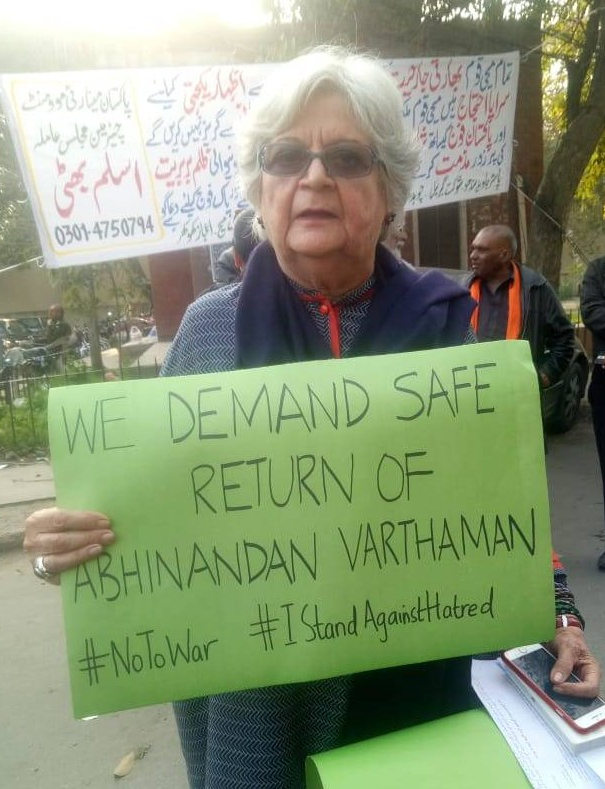
Lahore, 28 Feb: Salima Hashmi holds up a placard demanding that Pakistan return the captured Indian Air Force pilot – a step that Pakistan announced that day.
As tensions between India and Pakistan continue to keep the region hostage people everywhere are stepping up to urge the governments to resolve all issues through dialogue. They include:
27 Feb demonstrations in cities around Pakistan – Karachi, Lahore, Islamabad and Peshawar included the demand for Pakistan to return the captured IAF pilot. A few of the many calls to de-escalate tensions and stop the war-mongering include:





 Journeys to democracy