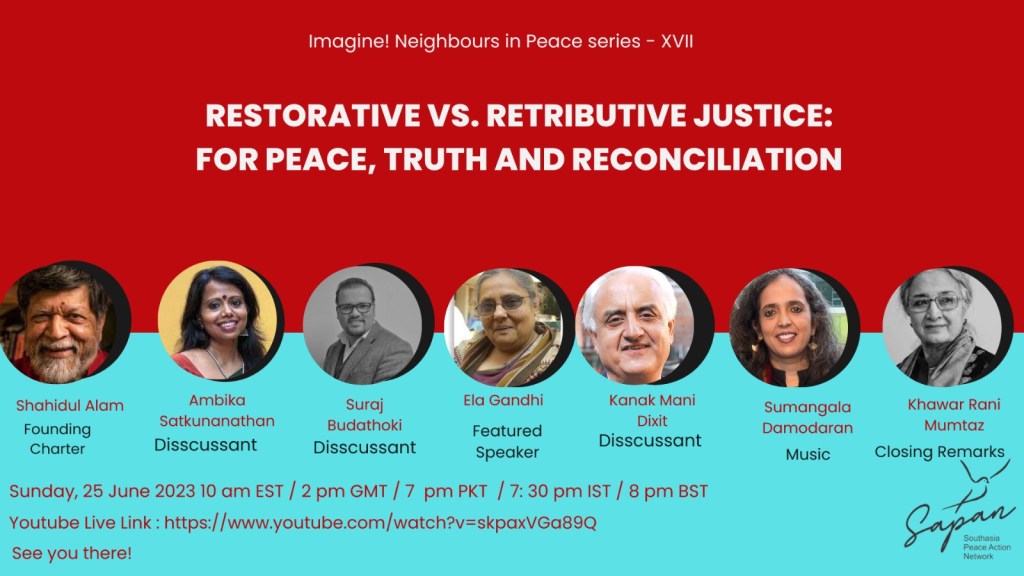
Hello all, I’m excited to be moderating this discussion on Sunday 25 June, 10 am ET/7 pm PKT
Register on Zoom, or tune into YouTube live to join us.
Look forward to the discussion and inputs from renowned photographer Shahidul Alam, Sri Lankan human-rights advocate Ambika Satkunanathan; Nepali journalist and democracy activist Kanak Mani Dixit; and Bhutanese human-rights activist Suraj Budathoki. Plus a cultural performance from Indian economist and musician Sumangala Damodaran and closing remarks from acclaimed feminist Khawar ‘Rani’ Mumtaz.
Hello all, check out the work we’re doing at Sapan News, providing behind-the-headlines information with context and nuance, and syndicating pieces out to a growing media network.
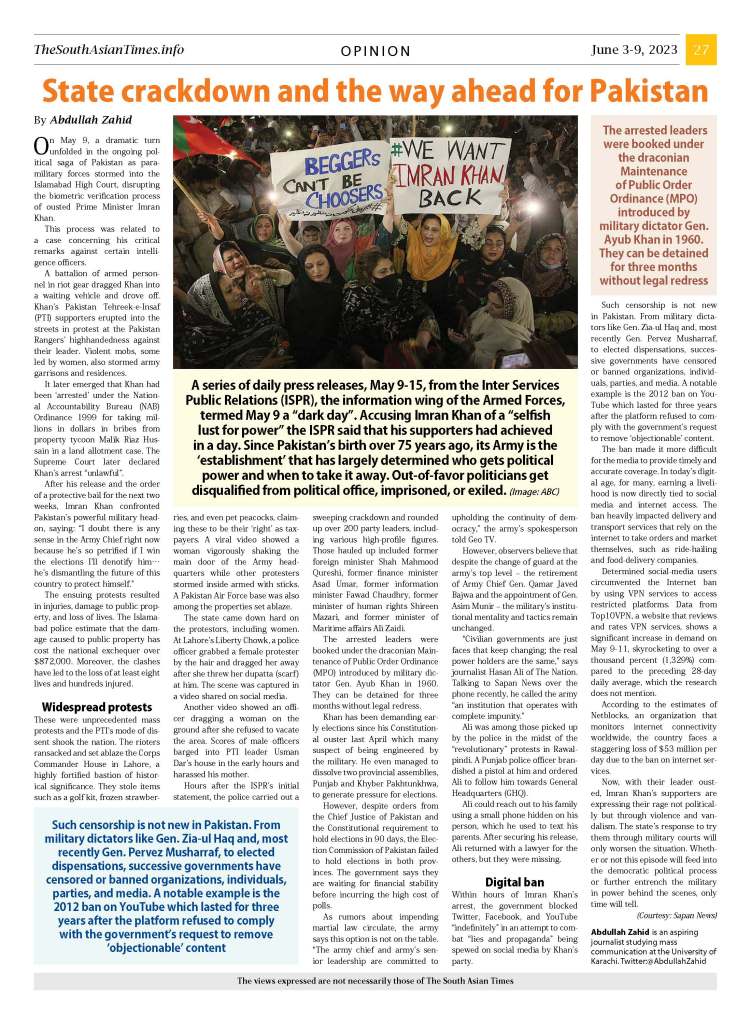
Sapan News syndicated feature in The South Asia Times, page 27, 3-9 June.
NOTE: If you like/support our work, please contribute what’s possible – no amount is too big or too small. Will be so grateful. We need to raise $15k by year end at a minimum. You can make tax-free donations at this link.
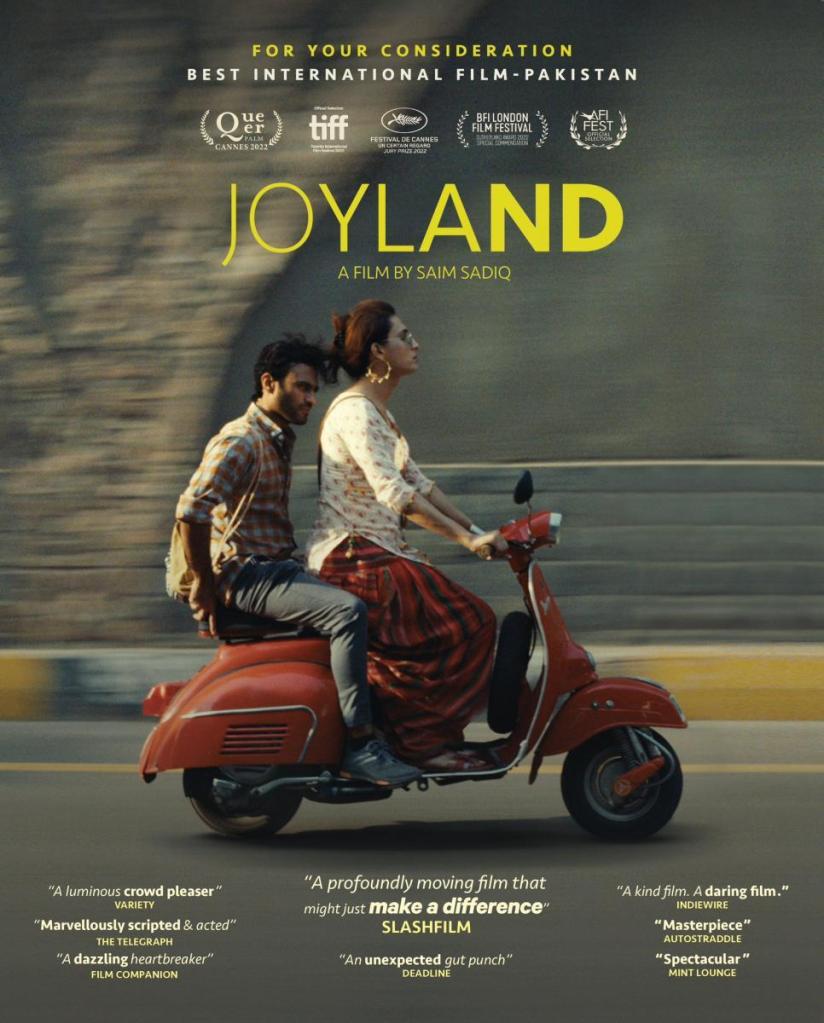
Joyland poster
On another note, I saw the banned-unbanned-censored (still banned in Punjab?) Joyland in Karachi a few weeks ago, and it haunted me – and my cousins who I saw it with – for days. This is the first feature film from Pakistan to screen at Cannes where it won two awards.
“What began as a small independent production among friends at Columbia University’s graduate film program became one of the year’s biggest success stories in world cinema — and a ground-breaking film about queer desire in a traditional Muslim society” reports NPR.
The film is showing at Coolidge Corner Theatre in the Boston area this week– writer-director Saim Sadiq has said the cuts made for the film’s showing in Pakistan were insignificant but I am curious to see the uncensored version.
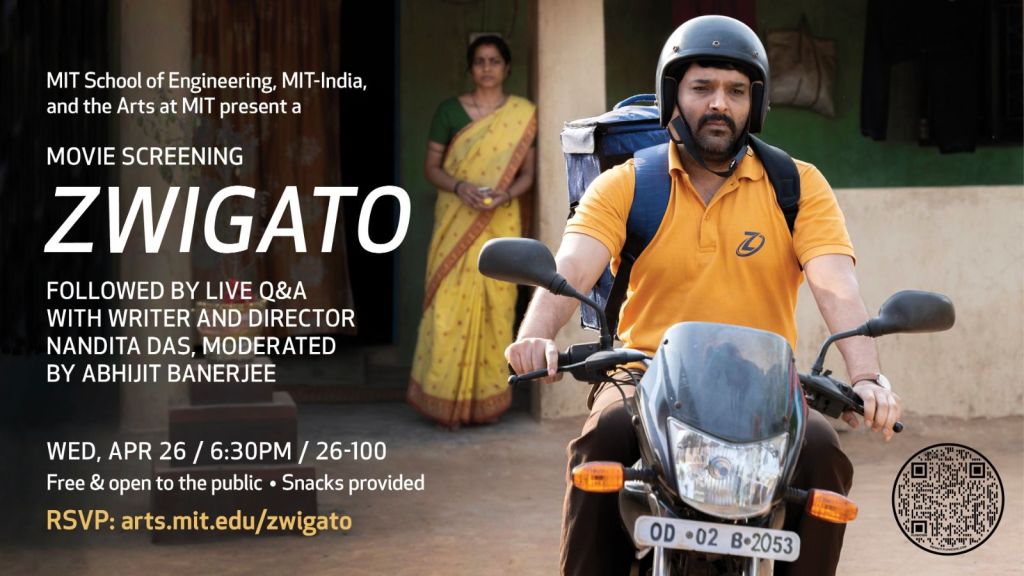
A film I saw recently and enjoyed was Nandita Das’ Zwigato, that she showed in person at various cities in the US.
Even on the small screen I found it thought-provoking and beautifully done, with many layers, a great commentary on the changing society, its challenges and opportunities. Sensitively depicted relationships, humanity, and aspirations. Great poetry and soundtrack, with many nuggets and vignettes sprinkled throughout. The end credits with animations are particularly creative and a story in themselves.
This is the third feature film by Nandita Das that I’ve seen, after Firaaq and Manto. Each of them a labour of love, executed with courage and clarity.
Interesting that the posters for both films feature two-wheelers…
Ending on a sad note – the triple train crash in India that has claimed nearly 300 lives. As expected, authorities are trying to pass it off as ‘human error’ rather than admit to the systematic problems with the railways or the government’s financial choices.
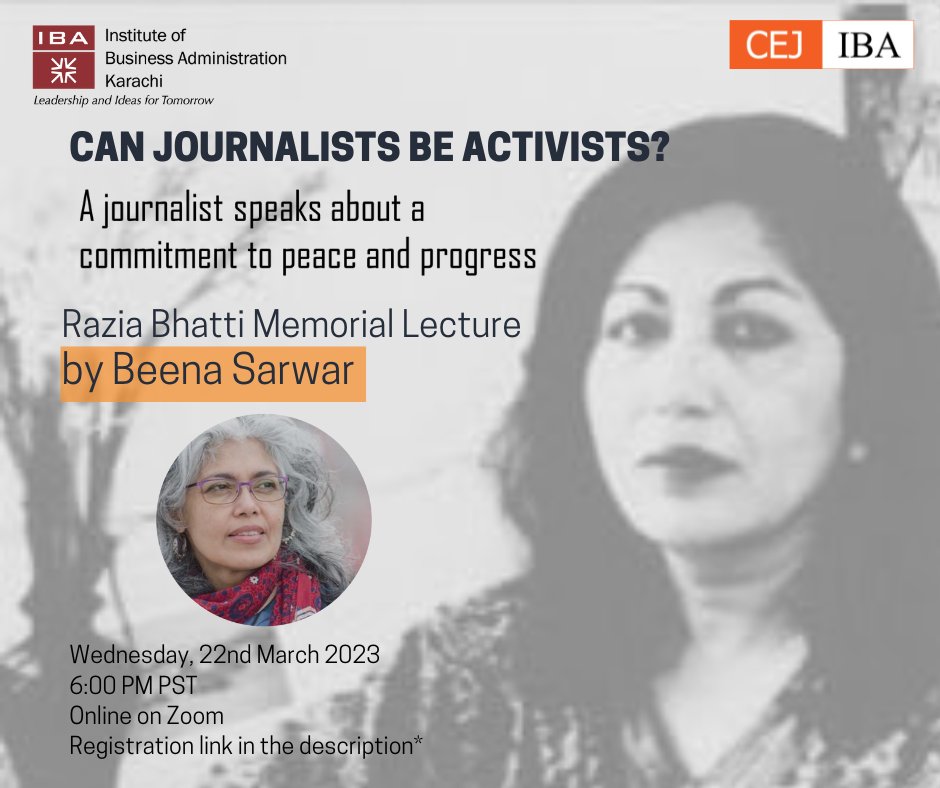
Honoured and humbled to be invited to present this year’s Razia Bhatti Memorial Lecture, named for someone who remains a role model for so many journalists and women, someone I knew personally and admired greatly.
Time: Wednesday, March 22, 2023 06:00 PM (Pakistan)
Agenda
5:50 – 6pm Producer at CEJ to admit registered attendees
6:00 pm: Amber Shamsie, CEJ director, – Welcome and introduction to Razia Bhatti Memorial Lecture lecture series
6:05 pm: Remarks by Dr Akbar Zaidi, IBA Executive Director
Some steps in a journey sparked by India and Pakistan’s nuclear tests in 1998
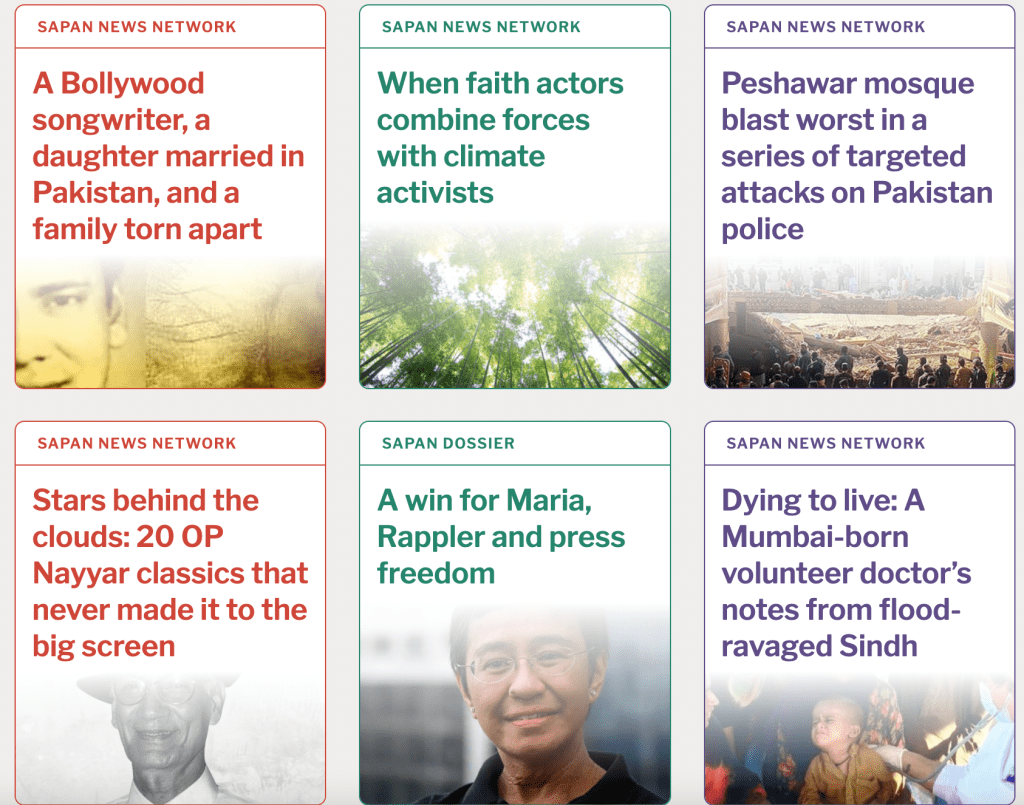
Screenshot from Sapan News site, designed by Aekta Kapoor.
Inspired by email updates from Isa Daudpota and Harsh Kapoor of South Asia Citizen’s Wire (SACW) after India and Pakistan tested nuclear weapons, I too had begun a bcc email list. This developed into my beena-issues Yahoo-group in 1998 but I had begun to post more irregularly after 2009 when I started a WordPress blog, Journeys to Democracy. Yahoo shut down its Groups platform a couple of years ago.
Now, as I work on developing a new media entity, Sapan News Network syndicated features which emerged from Sapan, the Southasia Peace Action Network (thanks to Aekta Kapoor for the beautiful website), SubStack seems like a good place to revive something like the Yahoo-group community feel. But then there’s also Medium where I have over 2.4K subscribers. All very confusing. Welcome feedback and suggestions.
Flood survivors and volunteers at Shahdadkot. Photo: Courtesy Rubina Chandio via the Flood Relief Work WhatsApp group.
It is moving to see how many on the ground, as well as across the region and beyond, are stepping up to help those hit by the floods in any way they can.
At our online Southasia Peace Action Network, Sapan, meetings and in personal messages, Indian friends in particular have expressed their anguish and desire to help. Many are frustrated by being unable to contribute financially as I mentioned in my last post, Floods in Pakistan: Many eager to help held back by restrictions.
The YouTube video below has friends Dr Amna Buttar and Dr Geet Chainani talking about the realities on the ground in disaster-hit areas and why as an Indian origin physician in the US, Geet wants to go back to Sindh to help with flood relief. Sabyn Zaidi remembers how Geet worked in medical camps during the 2010 floods. On the first day she saw 172 patients, without breaks. There were no restrooms, no food, no electricity; there were bugs and insects. When it got dark, she worked with the light from cell phone lights and torches brought by the villagers.
It’s a dream, and aspiration. To quote Gulzar’s beautiful poem, “Ankhon ko visa nahi lagta, sapnoN ke sarhad koi nahiN” (Eyes don’t need a visa, dreams don’t have frontiers)
So there’s this dream: Southasia is a region with soft borders, like the European Union, or like the Southasia region itself was, prior to 1965.
We’ve long been calling for dialogue to be uninterrupted and uninterruptible. The call for soft borders and allowing people-to-people contact takes this further. Letting people meet, travel, and trade will benefit the region economically, as well as reduce misunderstandings and violent extremism.
Check out the list of demands – we know it’s a long shot, but we desis are used to bargaining – sign and share this online petition, coordinated by the Southasia Peace Action Network or Sapan. As of today, over 36,000 signatures and counting. Help us reach 50,000.
Here’s a compilation of the organisations collaborating on this so far. More are joining. Each person counts, like the drops that make up the ocean.
We may not attain the dream in our lifetime but let’s not let that stop us from trying.
Logos of participating organisations. Being updated on the petition site as more join.
The petition is addressed to the prime ministers and foreign offices of India, Pakistan and Bangladesh. Nepal and Sri Lanka allow visa-on-arrival. This is how it starts:
“This August marks 75 years since India gained independence from the British colonists and was simultaneously partitioned as the new country of Pakistan was born. In 1971, there was further independence and partition as East Pakistan became Bangladesh. These momentous events are marked with much blood and pain.
“It is time to heal the pain. Let people meet, “milne do”. Let us ‘reclaim Southasia’, to quote the late journalist I.A. Rehman.
“It is essential to allow people-to-people contact in order to fulfil the objectives of SAARC, the South Asian Association for Regional Cooperation which aims to “promote the welfare of the peoples of South Asia” in all ways possible and to enable the peoples of the region to “live in dignity and to realise their full potential”.
Over 30 organizations around Southasia and beyond have endorsed a joint statement about cross-border prisoners initiated and coordinated by Sapan, the Southasia Peace Action Network, calling for the humane treatment of cross-border prisoners and to decriminalise inadvertent illegal border crossings.
All three had served their sentences but remained in custody on ‘the other side’. Compounding the tragedy, there are terrible delays in the repatriation of the bodies of such fisherfolk, notes the statement.
The statement also draws attention to some teenagers who remain incarcerated in juvenile centers in India, mostly without any contact with their families. One has already served his sentence but remains incarcerated. Details below – Statement text and endorsements:
Arrested fisherfolk in custody across the border, far from home, no consular access until after sentence is over, often kept in custody even after serving their sentences. File photo. Getty images
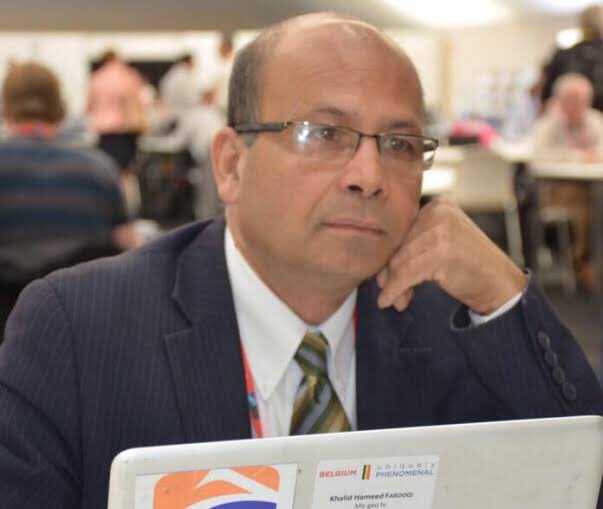
Two wonderful colleagues and friends departed this world rather suddenly within days of each other last month, leaving behind multitudes to mourn their loss — and celebrate their lives: Khalid Hameed Farooqui, Geo News correspondent in Brussels, 7 May, and Editor The News Talat Aslam, 25 May. We honoured both at the In Memoriam section of the Southasia Peace or Sapan event on the last Sunday of May, along with others.
Khalid Hameed Farooqui: A lifetime of politics, journalism, and activism in Europe and Pakistan.
Talat Aslam: His tweets @Titojourno gathered a fan following for his posts on politics, food, film, music and nocturnal wanderings in Karachi.
The tribute to Khalid by European Commission chief spokesperson Eric Mamer in a press briefing shortly after Khalid’s passing speaks for the respect he inspired amongst colleagues and political figures:
Tribute given to Geo’s senior correspondent Khalid Hameed Farooqui – who passed away last weekend – by European Commission. What brilliant praise. pic.twitter.com/xFZRZ3yDNX
Friend Saifullah Saify in Amsterdam organised a wonderful online tribute for Khalid, with tributes from personalities like Farhatullah Babar, and journalists Hamid Mir, Asma Shirazi, Munizae Jahangir, Amber Rahim Shamsi, Murtaza Solangi, Mazhar Abbas, Raza Rumi, Nazir Leghari – see video clips at this playlist on his YouTube channel.
Sharing below my piece on Tito, as friends and family called Talat, one of three articles carried by The News on Sunday in a full page tribute. The two other remembrances, by colleagues Zia ur Rehman and Gulraiz Khan, are online here. My piece includes a couple of my illustrations for Tito’s columns in The Star 1986-88.
: Remembering two gems, stellar journalists and old friendsContinue reading →
It was activist friend Kavita Srivastava in Jaipur who suggested focusing on ‘Labour Rights and Democracy’ for our April event ahead of May Day. Like all Sapan events since launch in March 2022 – the Southasia Peace Action Network – this was also on the last Sunday of the month.
As usual, we live-streamed the discussion on FB – video at this link. We truly appreciate all the ‘likes’, comments and shares that help ensure that our voices are heard amidst the din.
Thanks to old friend and talented musician Arieb Azhar in Islamabad for agreeing to sing at the last minute. DhonobadKhushi Kabir in Dhaka for transliterating the first verse of the workers’ anthem, The Internationale in Bangla for him. She knows them all by heart. Arieb also sang some of his own verses in Urdu, reflecting contemporary realities. He’s doing an English translation to add. Here’s the clip – thanks Priyanka Singh in Delhi for uploading it so fast.
Priyanka has a great affinity for music and poetry – she was reciting a poem at the online PIPFPD event in January 2021 where I first ‘met’ her. Not surprised she also took time out to post the extempore song by young Lucky Akter in Dhaka ended her presentation with. A former former student activist working with Bangladesh’s oldest and largest peasant organisation, Lucky’s stirring call for rights is lovely even if you don’t understand Bangla.
Rajdeep Sardesai: A stable Pakistan is in India’s interests. Screenshot by Tej Kaul from yesterday’s show.
Thanks to the Pakistan Supreme Court for the unanimous judgement upholding the opposition’s right to a no-confidence motion and declaring as void the ruling party’s attempt to dissolve the assembly and hold fresh elections. The situation had many of us on tenterhooks given its potential to disrupt the democratic political process that has only just begun taking hold in the country.
Since 2008, only two cycles of elected governments have completed their term and handed over power to the next one without the assemblies being dissolved. Imran Khan was the third political leader to grasp the baton of this relay. If he passed the baton on to the next elected government that would be a historic hat-trick in Pakistan’s history and hopefully strengthen the process and pave the way for it to continue. He can still redeem himself by doing that after losing the no-confidence move on Saturday and stepping into the opposition.
Of course elections aren’t the be-all and end-all of a democratic political process. But as the wise know, the process is crucial. As a sportsman, Imran Khan should know that the game is only an event that needs an ongoing, continuous process of rigorous, consistent training.
Unfortunately the former captain of the Pakistan cricket team has turned out to be a sore loser. My commiserations to his supporters, many of whom had placed their hopes in him to improve the system. They need to recognise that an individual can’t do this alone. He has to work with others, and needs to pick the right people for his team. And stay in the game.






 Journeys to democracy