Finding lost heritage: Pakistan’s Sikh legacy

My Personal Political column in Himal Southasian, Aug 3, 2016, published also in Aman ki Asha and TOI blogs, posted here with additional links and visuals.

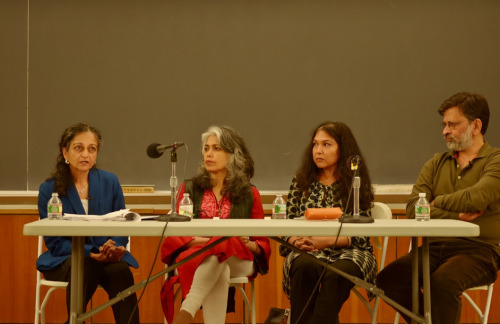
Author Amardeep Singh shares a story from his travelogue. Photo: Beena Sarwar

Author Amardeep Singh shares a story from his travelogue. Photo: Beena Sarwar

Finding lost heritage

“If you could visit any place in Pakistan, where would you go?” asks Amardeep Singh whenever he gives a talk to introduce his recently published travelogue Lost Heritage – The Sikh Legacy In Pakistan.

The question, aimed primarily at Sikh members of the audience, invariably elicits two answers: Sikh holy places. Their ancestral village.

It was the same in Boston on June 18, 2016 at the E-5 Center where Amardeep Singh gave his 42nd such talk. He understands the response all too well. After all, he too once had the same “myopic” reasons, as he says, for wanting to go to Pakistan, which he considers his “homeland”, being the land of his ancestors and also where Sikhdom’s holiest sites are located, like Nankana Sahib, birthplace of Guru Nanak, the first Sikh Guru. Continue reading

Call me unpatriotic, or even a traitor…

Respect to and solidarity with those who refuse to fall in line with the oppressive narratives peddled by hyper nationalists and security establishments. Sharing a post here by senior journalist Saleem Asmi, former Editor of Dawn and a dear friend of my late father:

Call me unpatriotic, even a traitor if you like, but I must say this straight, without mincing words that we have no right, absolutely no right at all, to condemn what the Indian occupation troops are doing in Kashmir, as long as we are ourselves guilty of committing the same, even worse, crimes in Balochistan. Now look at this: 1) The Indian army has invaded and occupied Kashmir, 2) They brutally oppress the Kashmiri people, and call the freedom fighters ‘terrorists’, 3) We invaded and occupied Balochistan in 1948, 4) We brutally oppress the Baloch people, and call the freedom fighters ‘terrorists’. If anything, we surpass the Indians in kidnapping young Baloch by their thousands without trace. Then their brutally tortured bodies appear under flyovers, by the roads, anywhere.

Also see – by Hasan Raza in Pakistan: Kashmiris continue to be the biggest victims of the Indo-Pak tussle for Kashmir – and Nirupama Subramanian in India: Face the disillusion


An Indo-Pak tribute to Amjad Sabri

Nitin-Saami-PEM

Nitin Mitta and Naseeruddin Saami with the Saami brothers at Peabody Essex Museum. Photo: Beena Sarwar

My article for Aman ki Asha, “hope for peace”, the India-Pakistan peace initiative launched in 2010 by two media giants on either side, the Jang Group of Pakistan and the Times of India

The morning of Wednesday, 22 June 2016 dawned in New York with shattering news of the target killing of Amjad Sabri in broad daylight across the world in Karachi. The tragedy, devastating for millions of fans, was a personal blow for the legendary classical music maestro Naseeruddin Saami and his sons, on tour in the USA towards the end of their first ever visit to America.  Continue reading

Pakistani qawwals touring USA dedicate performances to Amjad Sabri

Saami-PEM-standing ovation

Standing ovation for the Saami Brothers after their performance at Peabody Essex Museum, Salem MA. Photo: Beena Sarwar

Wrote this news report the other day.; working on a more detailed report.

Pakistani qawwals touring USA dedicate performances to Amjad Sabri

Legendary classical music maestro Naseeruddin Saami and his sons, currently on tour in the USA, expressed grief at the target killing of their old friend and colleague the renowned qawwal Amjad Sabri in Karachi. Continue reading

Stifling dissent in Southasia

I earlier posted about resistance to the stifling of dissent in India, and why as a Pakistani it matters to me. The trend is visible in other parts of Southasia too, including of course Pakistan about which I’ve written a fair amount. Here’s an update from Bangladesh, where defamation, sedition cases and the attempts to silence the independent media are underway, as well as Chattisgarh, India.

article-jtuxsszald-1455534764

Smiles and sedition. Photo: Andrew Biraj, Reuters

Continue reading

When information and awareness leads to change

The Punjab government has directed the provincial Human Rights department to amend existing service rules (see scan of letter dated Nov 6, 2015) according to which “Only non-Muslims/ Persons who belong to Minorities” are eligible for the position of sanitary workers or sweepers (see attached scan of Service Rules below).

Punjab govt Order-Nov 6-2015Researcher and writer Asif Aqeel who emailed this update today thanks parliamentarian Mary Gill for bringing the issue to the notice of the government and pushing for the change. Continue reading
Amateur theatre group from Pakistan tours USA with Partition stories

My article on Islamabad-based group Theatre Wallay’s theatre project ‘Dagh Dagh Ujala’ (This Stained Dawn), that toured the US recently, published in Scroll.in today – Partition retold: A Pakistani theatre group dramatises survivor stories to shatter myths. Below, the unabridged version filed on Oct. 26.

DaghDagh Ujala-Isbd

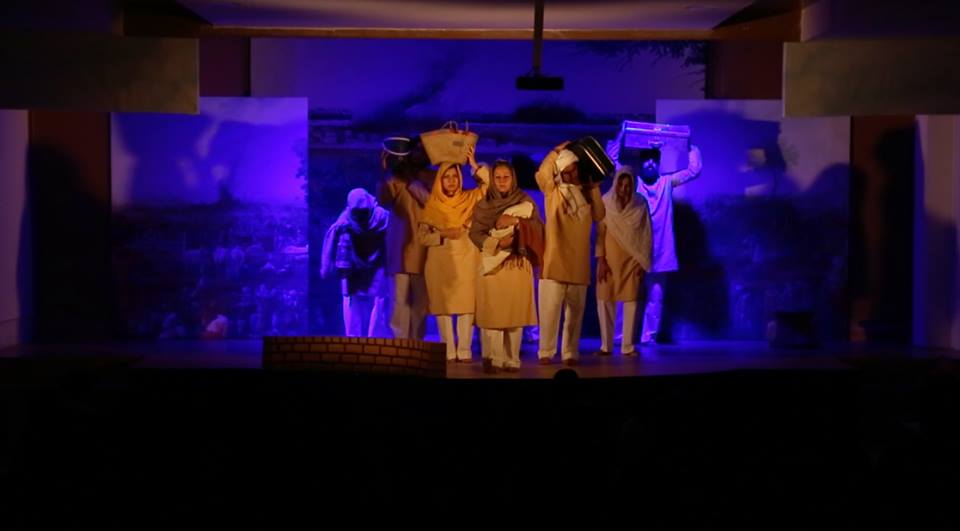
Scene from the play, Islamabad performance. Photo courtesy: Fizza Hasan

Beena Sarwar

An amateur theatre group in Pakistan has started its tour of the USA with a dramatisation of Partition stories based on interviews of Partition-survivors by group members.

The play’s title Dagh Dagh Ujala’ (This Stained Dawn) refers to the first words of the Urdu poem ‘Subh-e-Azadi’ (Dawn of Freedom) by the acclaimed poet Faiz Ahmed Faiz. Penned in 1947 on the eve of India’s Independence from British rule and its bloody partition, the poem is popular on both sides of the border. Continue reading

Lift the goodwill: Indians, Pakistanis find creative ways to protest hate, violence, bigotry

Dunkin' Donuts sign in Islamabad with the Pakistani and Indian flags: peace meals

Dunkin’ Donuts sign in Islamabad with the Pakistani and Indian flags: peace meals

The right-wing Shiv Sena’s recent vigilante actions targeting Pakistani musicians, sportspeople, and diplomats in Mumbai have led to embarrassment and widespread condemnation in India, and of course to the right-wing in Pakistan gleefully pointing fingers at India.

There have also been compassionate and creative responses from Pakistanis, who have all too often suffered the poison of bigotry and injection of religion into politics.  After a Pakistani family had to spend the night on the footpath in Mumbai because they lacked the requisite papers (Form C) allowing them to stay in a hotel, Pakistani entrepreneur Iqbal Latif responded by offering free meals to Indians visiting Pakistan at his Dunkin’ Donuts franchises. His gesture was widely reported and drew a massive response in India.

A friend in India points out that the hyped up anti-Pakistan protests are a predictable forerunner to the upcoming state elections in Bihar and Uttar Pradesh that are critical for the ruling coalition in particular. That may well be the case, but meanwhile, Indians are also finding ways to creatively and peacefully express their distaste for bigotry and hooliganism. After the Sena successful blocked respected Pakistani musician Ghulam Ali’s concert in Mumbai, one Indian made a painting that he tweeted:  Continue reading

Rahul Roy: Addressing “masculinities” through film

My blog post for Harvard South Asia Institute on Rahul Roy’s documentary film series on ‘masculinities’
Filmmaker Rahul Roy, right, captures in his films the nuances, masculinities and realities in a slice of urban life over the years.

Filmmaker Rahul Roy, right, captures in his films the nuances, masculinities and realities in a slice of urban life over the years. Photo: Ashima Duggal

By Beena Sarwar

Indian filmmaker Rahul Roy first met and began filming four young men in 1999 for his documentary film When four friends meet, interacting with them and filming for about two years in the Delhi slum where they live. He stays in touch with the four – Sanjay, Sanju, Kamal and Bunty – over the years and 12 years later, returns to do a sequel titled Till we meet again. Continue reading

Something to celebrate

Celebrating Indian and Pakistani Independence Days with Karachi Truck Artist Haider Ali and friends at Dover Rug (L-R): Ken Shulman, Hardeep Mann, Haider Ali, Mahmud Jafari, Jaspal Singh. Photo: Beena Sarwar

Celebrating Indian and Pakistani Independence Days with Karachi Truck Artist Haider Ali and friends at Dover Rug (L-R): Ken Shulman of Away Games, Hardeep Mann, Haider Ali, Mahmud Jafari, Jaspal Singh. Photo: Beena Sarwar

A friend points out that my last few posts have been about death and loss. Then with Pakistan and India’s Independence Days coming up (Aug 14 and 15 respectively) someone asked, ‘What’s there to celebrate?’ My response: Yes, there is much to mourn, and sometimes there doesn’t seem to be that much to celebrate. As Jimmy Engineer says, the fight between good and evil is an eternal one. Doesn’t mean we stop living. When Indians and Pakistanis jointly Celebrate India, Pakistan Independence Days for Peace, Aug 14-15, 2015, it symbolises the desire to own an occasion that has been appropriated by hyper-nationalist, jingoistic war-mongers. Through this joint commemoration and greeting and wishing each other, we defy our government and security establishments’ efforts to create a negative narrative about ‘the other’. That, surely, is something to celebrate. Continue reading