‘Memogate’ commission should examine existing evidence, not create new evidence

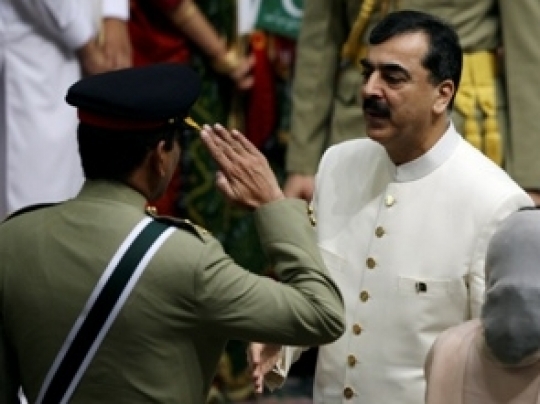
The equation as it should be: Army following policies set by the civilian elected government, not the other way round. (Reuters file photo)

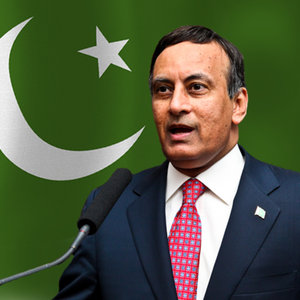
What is ‘Memogate’? The ‘memo’ in question is a letter allegedly written at the behest of Pakistan’s President by the Ambassador to Washington Husain Haqqani, asking USA to prevent a possible military coup in Pakistan after US Navy Seals killed Osama bin Laden in Abbottabad, Pakistan on May 2, 2011. Haqqani denied the allegations, sent in a letter offering to resign in order to facilitate an impartial inquiry, and returned to Pakistan to clear his name. Instead, he found his resignation letter accepted. The Supreme Court barred his exit from Pakistan. He has been forced for his own safety to confine himself first to the Presidency and then to the Prime Minister House. On Dec 30, 2011, The Supreme Court in response to a petition against the ‘memo’ formed a three-member judicial commission to look into the matter that the media has dubbed as ‘memogate’.

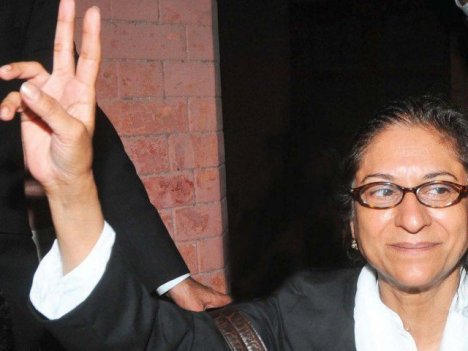
Asma Jahangir, counsel for Husain Haqqani and former Supreme Court Bar Association President, has refused to appear before the commission saying that she does not trust the judiciary. She has said that instead of forming a commission to create or produce new evidence the Supreme Court should have looked into the evidence placed before it to decide whether there was a prima facie case and whether the court could proceed to enforce any fundamental rights by making a binding order. Continue reading

‘Memogate’: The basic issue is the civil-military relationship

Asma Jahangir: Speak out for democracy

Husain Haqqani: scape-goated and threatened

Former Pakistan ambassador Husain Haqqani’s counsel Asma Jahangir sounds a sombre warning about the danger Haqqani is in from the military and intelligence agencies that are capable of picking him up and ‘twisting his limbs’ to make him say what they want to hear. Talking to Dawn TV’s Matiullah Jan in a detailed interview of Jan 1, 2012 she says that she took up the case because she found it a travesty that an individual was being condemned on the basis of a media trial without due process or representation. However, she will not represent him before the Judicial Commission that has been formed as she does not trust the process. The interview, posted in six parts (about 5-6 min each), is worth listening to in full as she makes some crucial points about the significance of this judgement to Pakistan’s politics. She sums some of these points up in this earlier brief interview with Al Jazeera English:

Continue reading

Zarteef Khan Afridi: The tribesman who showed the way

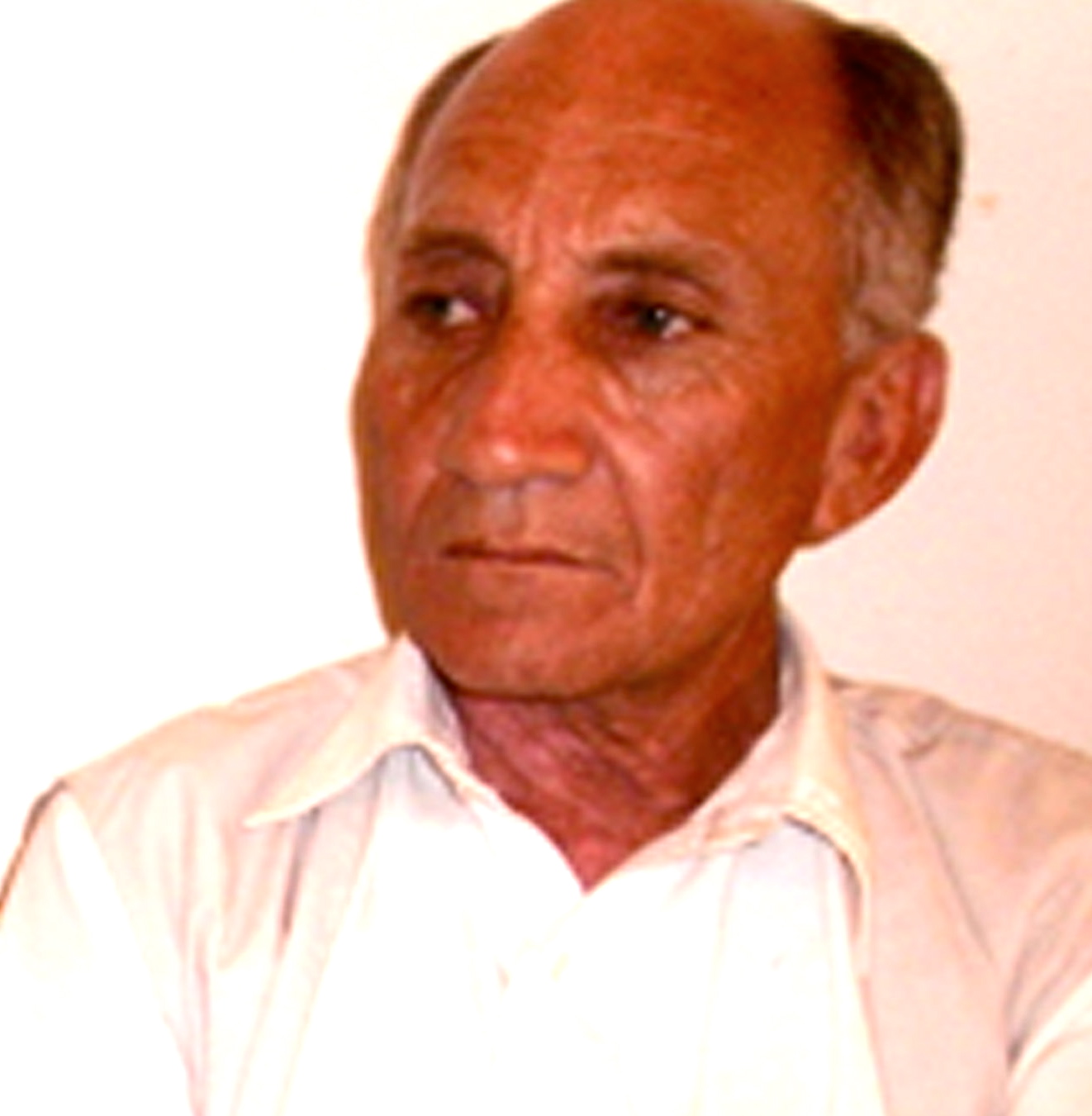
Zarteef Afridi's latest photo. Courtesy: HRCP

A tribute to the human rights activist Zarteef Khan Afridi who was shot dead recently – my article in The News on Sunday. Latitude News earlier published a shorter, different version titled In Pakistan, an unlikely hero dies for his cause. Also see my earlier article: Pakistan’s ‘enlightenment’ martyrs

The tribesman who showed the way

There was the letter from an anonymous writer saying he was going to hunt down and kill her. And then there was the letter from an Afridi tribesman offering to come down and protect her.

This was in the mid-1990s. The recipient of the letters was the fiery human rights lawyer Asma Jahangir, under threat for having taken on the case of Salamat Masih, the illiterate Christian boy sentenced to death for ‘blasphemy’ for having allegedly written sacrilegious words on the walls of a village mosque. Continue reading

An extrajudicial murder in a Karachi park

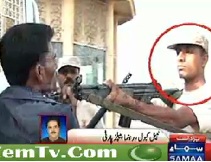
Television reports showing a young man shot in cold blood by the Rangers in Karachi are disturbing to watch (I feel physically sick after watching it). An unidentified cameraman filmed the episode and made the footage available to TV channels – it’s online if anyone has the heart to watch it but better to read this report about the incident by AFP reporter Hasan Mansoor: Five soldiers arrested after Pakistan park killing.

The extra-judicial murder of this young man, Sarfaraz Shah, at the long, coastal Benazir Bhutto Park opposite Boat Basin (a hub of food shops and cafes) in Karachi, is a reminder of the impunity that our security forces enjoy. They claimed he had tried to rob a policeman’s family. Even if he had succeed, they had no business shooting at him. What happened to due process of law? Why aren’t the Rangers and other security people given basic human rights and legal training? Continue reading

‘Pro-jihadi, anti-India’ policy #fail

“’Pro-jihadi, anti-India’ policy #fail” – my column Personal Political published in Hardnews, India, and in The News on Sunday. Many in Pakistan have been saying this for a long time, and been attacked and branded as traitors, Indian agents and kafirs for going against ‘the establishment’. Now, for the first time, this argument is in the public domain, being discussed on live television. Recently, Asma Jahangir Chairperson Emeritus of the Human Rights Commission of Pakistan and President of the Supreme Court Bar Association of Pakistan, lashed out at the Pakistan army’s self serving policies and demanded that they stay out of politics – in words that one would never have heard on television before. Her view reinforces what I wrote a few days earlier, below (predictably, efforts are afoot to portray her as ‘anti-national, pro-Hindu, pro-India’. These efforts too, will #fail). Continue reading

Pakistan army should butt out of politics: Asma Jahangir says it like it is

Clip from Crossfire in which Asma Jahangir, the indomitable Chairperson Emeritus of the Human Rights Commission of Pakistan and President of the Supreme Court Bar Association of Pakistan, says it like it about the Pakistan armed forces, in a talk show with the  ever sensationalist Meher Bokhari, on Dunya TV on May 26, 2011. View the full programme at the PkPolitics website. The clip posted here starts with Meher Bokari summing up the current discussion – the demands on one hand to support the army, and on the other for army accountability.  Continue reading

Egypt police then and now – remembering May 25, 2005

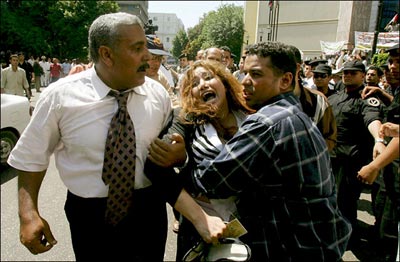
Egypt is the second biggest recipient of American aid and military hardware, long used by the Mubarak regime to brutalise the people. The Egyptian police are even more brutal than in Pakistan. Watching the situation now on Al Jazeera livestream, when the police have been forced to retreat before the might of the people, I remembered the time some years back when they humiliated and stripped women protestors in public – I posted a message out to my yahoogroup back in May 2005 Eyewitness testimonies: Molestation of Democracy in Egypt. Around the world people observed solidarity with the protestors in Egypt, responding to a call to wear black on Jun 1, 2005. I later wrote this article, posted to my yahoogroup as Personal Political: Women, public space, Cairo and Lahore – copied below. Imagine if there had been twitter and facebook then… Continue reading

Asma Jahangir: setting the record straight re: SCBA ‘resolution’

asma-lawAsma Jahangi has denied reports published in several papers today that the SCBA passed a ‘resolution’ condemning any efforts to discuss, debate or change the ‘blasphemy law’ (Lawyers to lawmakers: Supreme Court Bar wants no changes to blasphemy laws)

This is to deny that the Supreme Court Bar Association (SCBA) in its second executive committee meeting held on 18 December 2010 unanimously passed any resolution regarding either section 295 C of the Pakistan Penal Code itself or any case related to it. The facts are that a resolution to that effect was presented by a member of the executive committee but only apportion of it was passed unanimously, which paid reverence and commitment to honour and respect the name of the Holy Prophet (PBUH), while the rest of the resolution regarding 295 C, the case of Aasia Bibi and its consequences was deferred with consensus. The Supreme Court Bar Association regrets the attempt made by one of its executive members to mislead the press and the public. The SCBA is a responsible body and its resolutions will be fully debated before being passed especially unanimously.

From Asma Jahangir
Dated 19 December 2010


Conversations 8: Clap with both hands

Dilip and my ongoing weekly email exchange (archives at the Aman ki Asha website, published in The News on Sunday Political Economy section, Aman ki Asha page on April 18, 2010:

April 15 2009

Dear Beena,

Rejuvenated by a few days tramping in the hills, I return to our fray, if that’s the word. Continue reading

Hope for young Ateeq, a real life ‘Ramchand Pakistani’

Below, a report I wrote on Feb 23, published in The News aman ki asha page of Feb 24 (see accompanying report ‘Prisoners of archaic laws‘ by Rabia Ali), shortly before 12-year old Ateeq’s hearing in Amritsar on Feb 26 – which Asma Jahangir and I.A. Rehman of the Human Rights Commission of Pakistan managed to attend.

12-year old Ateeq from Lahore, currently in the Juvenile Jail in Hoshiarpur, India

Here is an update from Asad Jamal in Lahore on Feb 26:
Release orders were passed for the 12 years old Pakistani boy in Indian Juvenile (Hoshiarpur) Prison after Asma Jahangir appeared in the Juvenile Court in Amritsar today. Now the Pakistan authorities have to complete procedural matters and bring the boy back home. Asma Jahangir met the boy in Amritsar and found him traumatised. She had taken video film of the boy’s father as well some clothes for him. Local lawyers/activists arranged and distributed sweets after the court order. Continue reading