Pakistan: The ‘blasphemy’ issue | No shortcuts

Cartoon by Sabir Nazir | Viewpointonline.net

Originally published in Viewpoint Online, Nov 3, 2011

No shortcuts

Beena Sarwar

Watching Libyans celebrate the toppling of their dictator two things come to mind. First, Gaddafi’s apparent extra-judicial murder after being captured must be condemned. Secondly, a cautionary reminder: don’t expect the death or removal of a dictator to mark the end of the struggle. It is just the beginning of another struggle, an even messier one — the political process known as democracy. We in Pakistan know this all too well. Dictators die or get toppled but their legacies live on. Their creations like Zaid Hamid may lose, even as the creator Gen Zia wins (see Anas Abbas’ de-construction of this phenomenon at his blog) Continue reading

Update and info: The Great Nepal-India-Pakistan Spinal Beetle Fund-raising Drive

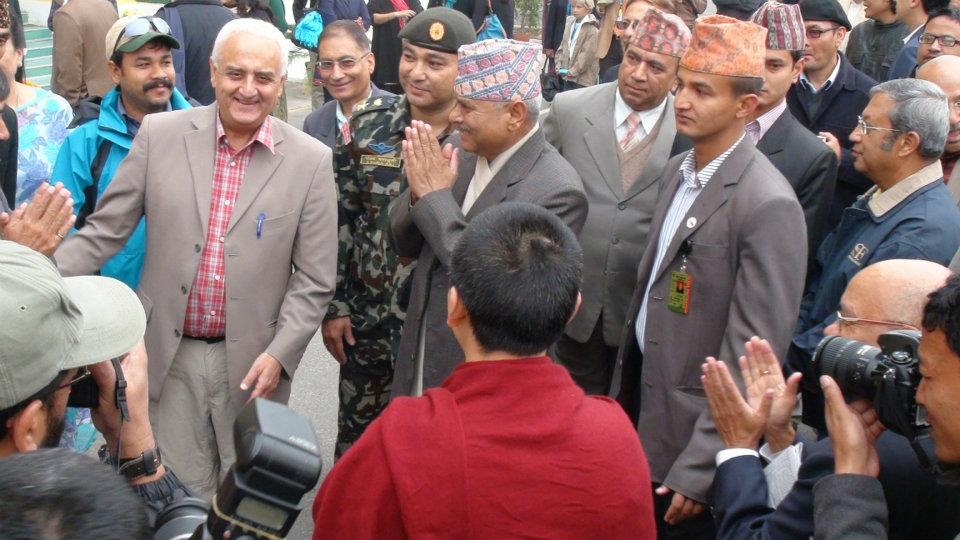
The President graciously comes down to meet the people who came to see the Beetle off / SpinalNepal fb page

Nepal President Ram Baran Yadav flagged off the Spinal Beetle on its journey this morning. Great photos here. Below: the press note with planned itinerary and local contacts in India and Pakistan:

After his near miraculous recovery from a spinal  injury in 2001, Kanak Mani Dixit, a prominent journalist and civil rights  activist in Kathmandu started Nepal’s first Spinal Injury Rehabilitation  Centre, together with friends and family. The Centre, inaugurated by the late  Sir Edmund Hillary in 2002, runs entirely on private funding. It now needs to increase its service from 38 beds to 51. “The Great Nepal-India-Pakistan  Spinal Beetle Fund-raising Drive” (1100 miles)  – and all for a good cause – is being made on a 1973  Volkswagen Beetle, raising funds at USD 100 per mile. Continue reading

This Eid, donate a goat for women flood survivors: Indus Resource Centre

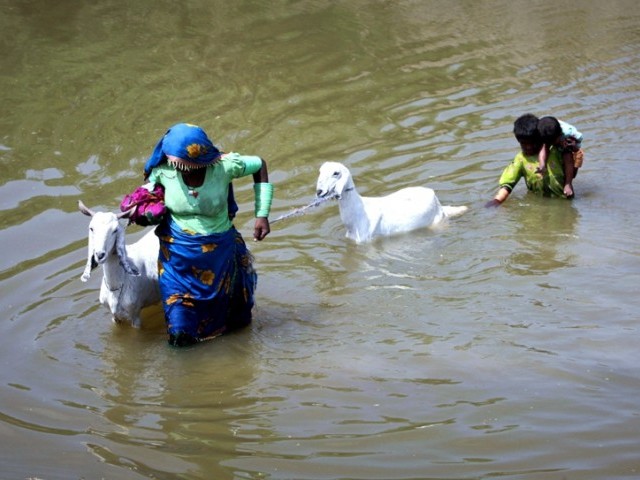
Saving precious livestock in Badin / Photo: Reuters

I had earlier circulated an appeal from Sadiqa Salahuddin, the well known educator, whose Indus Resource Centre is doing exemplary work in Sindh regarding girls’ education and also working since last year for flood relief. She sent out the following update on Oct 24, requesting people to donate a goat rather than sacrificing one this coming Eid:

Dear all,

You may recall that around this time last year, I requested you to complement or divert your qurbani (sacrifice) budget for donation of animals to those poor rural women who had lost their animals in the floods of 2010. I am making the same appeal this year as unfortunately, the situation is not any better. According to Provincial Disaster Management Authority Sindh, 115,586 animals have perished during this monsoon. Besides, thousands of villagers from the rain affected districts sold their animals at throwaway prices as they had no money to feed themselves or animals. Continue reading

The Great Nepal-India-Pakistan Spinal Beetle Rally: A SouthAsian fundraising drive (literally)

A small car with a big task

Calling all those interested in post-disaster care, spinal injury, Southasian connectivity, people-to-people contact, VW Beetles…! 

Kanak Mani Dixit, a journalist (Editor of Himal Southasian) and civil rights activist, made a near-miraculous recovery from a spinal injury received during a trekking accident in Nepal.

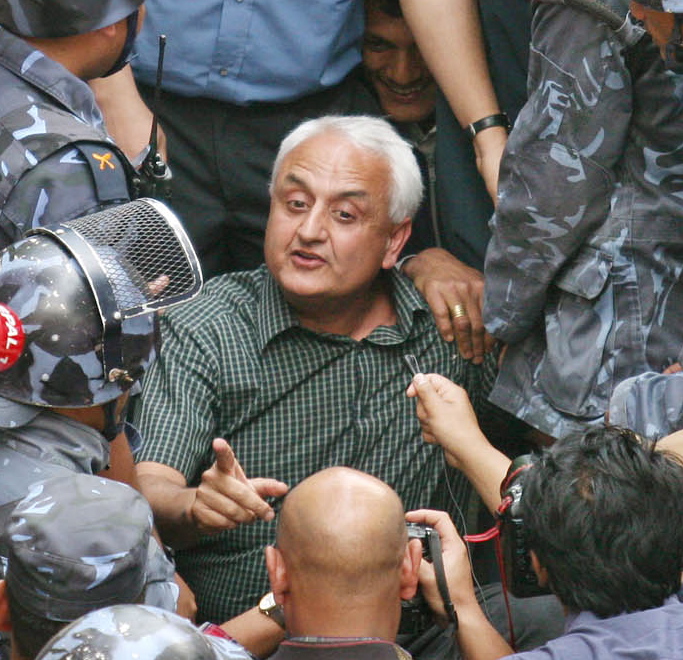
Kanak being arrested at a pro-democracy rally in Nepal, 2006. Photo by Shehab Uddin

Being Kanak, he threw his considerable energy and vision to launch a Spinal Injury Rehabilitation Centre in Nepal, inaugurated in 2002 by none other than the late, great Sir Edmund Hillary (facebook page SpinalNepal; twitter: @spinalnepal).

Kanak’s latest attempt to raise funds for the project as well as build linkages with like-minded institutions in Southasia is: The Great Nepal-India-Pakistan Spinal Beetle Rally
A fundraising drive across SouthAsia for spinal injury rehabilitation
USD 100 per mile, a journey of 1100 miles
Starting Nov 4, 2011: Kathmandu-Lucknow-Delhi-Amritsar-Lahore-Rawalpindi-Peshawar

Details >>… Continue reading

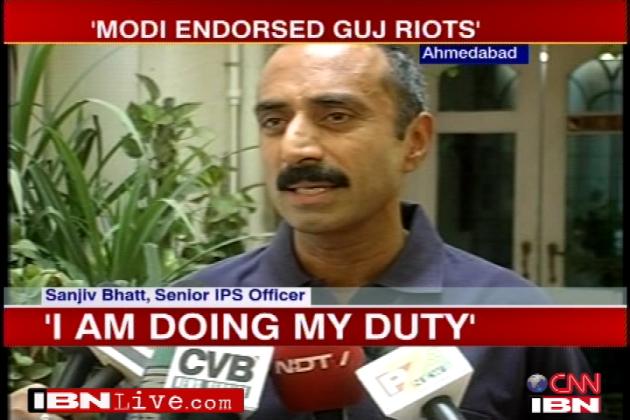
Email exchange: Sanjiv Bhatt (day before his arrest), Badri Raina and Siraj Khan

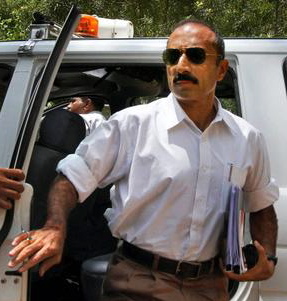
Suspended IPS officer Sanjiv Bhatt was on Friday detained in connection with an FIR filed against him by a police constable. File photo/PTI

Badri Raina’s poem on Sanjiv Bhatt posted to my yahoogroup and to this blog  on Sept 27 led to an inspiring and informative email exchange, on which I am privileged to have been copied. While compiling extracts for this post (with permission), I heard that Sanjiv Bhatt had been arrested (update: A court in Ahmedabad sent him to judicial remand on Saturday, to be be lodged in Sabarmati jail till his bail hearing comes up on Monday)

“Sanjeev Bhatt’s arrest proves how frightened his detractors are,” tweeted @reenasatin.

Film producer Mahesh Bhatt (@MaheshNBhatt): “If there is one man who is fearlessly living the Gandhian creed in Gujarat it is Sanjeev Bhatt. Will our courts protect this Whistleblower?”

That, time will tell. Meanwhile, below, the correspondence, which began with Siraj Khan’s prescient email to me on Sept 27th: Badri Raina’s poem is awesome. Sanjiv Bhatt needs to be protected. Unfortunately, he will not be allowed to walk away to get a hero’s status and have a fan club.”

My reply: “Thanks and I hope you are wrong about Sanjiv’s fate. Cc’ing to Prof Badri Raina, the poet, because I think you guys should know each other.” (See Bhatt’s last email of the series, just posted at the end). Continue reading

Salute to Sanjiv Bhatt

A poem by Prof. Badri Raina in New Delhi, honouring Sanjiv Bhatt, the IPS officer (Gujarat Intelligence) “who spilled the beans on Modi, revealing how at the meeting of Feb.,27, 2002 Modi had instructed the police to let the Hindus vent their anger; you can imagine what travails he is facing, having now even written an open letter to Modi on the subject of the riots.”

Sanjiv Bhatt’s response to Badri Raina: “Thank you very much for writing to me. Your poem has truly humbled me and further strengthened my resolve to ensure that Gujarat Riots of 2002 is never repeated anywhere in this country.”

Thank you Sanjiv Bhatt. We need officers like you in Pakistan also. There are some mob violence murders disguised as ‘religious riots’ that could do with some whistle-blowing too. Here’s the poem: Continue reading

Princeton Seminar Series: “Reporting South Asia”

Princeton University, series of talks about media in South Asia: a series that I kick off on Thursday Sept 29th at noon with Pakistani journalists – Standing tall, against all odds. Details for the rest of the series here, including other speakers later on: Zahid Hussain, journalist and senior editor, Newsline (Oct 13); Imran Aslam, president GEO Television, (Oct 27); Pankaj Mishra, novelist and essayist, London (Nov 10); Christophe Jaffrelot, Centre d’etudes et de recherches internationales (CERI-Sciences Po/CNRS) (Nov 17); and Steve Coll, journalist and president, New America Foundation (Dec 1)

Pakistan floods: Want to help?

Dr Geet Chainani in the field: NEED food, medicines, water, tents

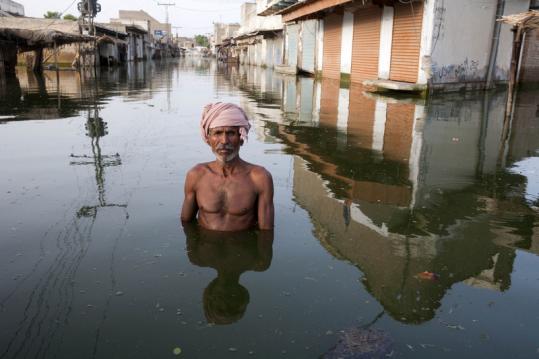
Pakistan was still reeling from the devastating floods of last year when fresh disaster struck.

The situation is worse than reported,” messaged the journalist and activist Aslam Khwaja, back in Karachi after a recent five-day visit to six rain-hit districts of Sindh. Many others working in the affected areas have relayed similar obervations as they scramble to renew their efforts.

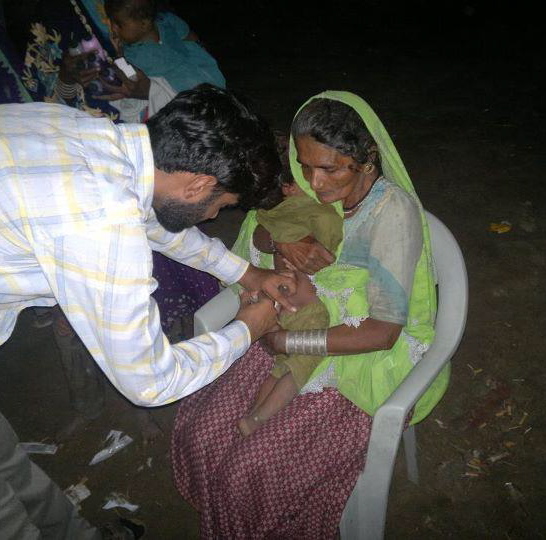
Young Doctors Assocation volunteer at Mirpurkhas relief camp: URGENTLY NEED MEDICINES

8.1 million people are homeless, with less than a quarter of them (approx 0.71 million) accommodated in about 3,000 makeshift relief camps set up by the Sindh Government. Conditions are appalling, with severe shortage of food, water and medical supplies. Some 370 people have died, hundreds more injured, and some 6.1 million acres of land and 1.5 million houses underwater or severely damaged, according to the National Disaster Management Authority (NDMA) of Pakistan. The estimated loss to the cotton crop is estimated at a staggering Rs 75 billion.

YOU CAN HELP by sending money and relief goods to the organization of your choice. The most urgent needs are: tents, food, clean water, medicine. Continue reading

General observations about Pakistan floods

Some general observations from the floods of 2010, which are sadly relevant again:

  • People affected by the floods (last year as well as now) were already among the poorest begin with although they do include some well-off farmers and trades-people too, in areas where there was already little access to education and healthcare.
  • The relief camps set up last year brought an unexpected silver lining in the opportunity to many flood affected people who had access to a doctor or a teacher – for the FIRST time in their lives – at the relief camps. This indicates the level of underdevelopment in Pakistan, the huge percentage of the population that lacks access to healthcare and education. Continue reading

Sindh floods – update and appeal from Sadiqa Salahuddin, IRC

Khairpur, Sept 2011. Photo courtesy: The News

For those looking for credible organisations to contribute to or work with, here’s information about Indus Resource Centre’s flood relief work in Sindh, based on an email update from Sadiqa Salahuddin, the well known educationist who runs IRC. They have been working with girls’ education in the Khairpur area of Sindh for many years; Sadiqa Apa is also a very dear friend (IRC contact details are at the end of this post). The most urgent need is for dry food – basic essentials for ten days for a family of six cost around Rs 3,000 (details below). During the Eid holidays, she spent six days in Khairpur and then in Hyderabad while her colleagues assessed the situation in Khairpur and Mirpurkhas districts. Immediately after Eid, she went to Badin (which was then accessible by road from Karachi). She writes: Continue reading