Malala and Absurdistan, Mazariland, Cuckooland… We are sorry, Bhooro Bheel. Taliban bhagao, mulk bachao

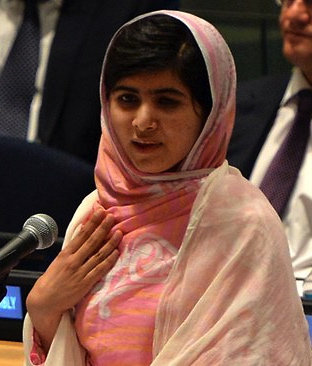
malala-yousafzaiMy two bits on the muddied narrative in Pakistan on Malala Yousafzai, a favourite for the Nobel Peace Prize being announced on Oct 11:  Those who so easily buy conspiracy theories about Malala being a “US agent” or who go against Malala are usually the same people  you will find justifying the murderous, criminal acts of the Taliban (who are fasadis not jihadis, in my mind) in some way, absolving them of responsibility by terming it a response to the US invasion of Afghanistan or the drone attacks. These people conveniently forget that the mindset that attacked Malala is the same as the one that was attacking women NGO workers and teachers and girls’ schools in the western border areas BEFORE 9/11. It’s the same mindset that was target killing Ahmadis and Shias since the 1990s. It was not just the Taliban’s bullets that targeted Malala and all that she stands for – it is this mindset that the United States, Pakistan and Saudi Arabia cultivated and developed in the 1980s in order to counter the Soviets in Afghanistan. Continue reading

A Southasian vision

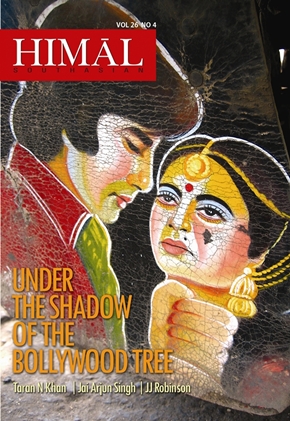
Himal Southasian: Under the Bollywood Tree - latest issue, launched at the Bangalore Literature Festival recently

Himal Southasian: Under the Bollywood Tree – latest issue, launched at the Bangalore Literature Festival recently

My article in The Friday Times last week (thanks to Raza Rumi for pushing me to write this, despite the tight deadline):

A Southasian vision

For regional peace, development and prosperity, it is imperative to improve India-Pakistan relations

Beena Sarwar

I like how the Nepali journalist Kanak Mani Dixit refers to the Indian sub-continent: Southasia. One word. Kanak explains why, in the respected magazine Himal Southasian that he edits, that I am proud to be editorially associated with since its launch in 1997. As a magazine “seeking to restore some of the historical unity of our common living space – without wishing any violence on the existing nation states – we believe that the aloof geographical term ‘South Asia’ needs to be injected with some feeling. ‘Southasia’ does the trick for us, albeit the word is limited to English-language discourse. Continue reading

India, personally…

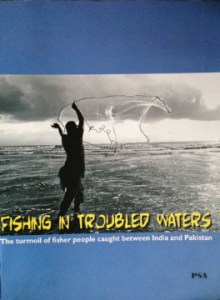
Fishing in Troubled Waters, launched in Delhi, Aug 13, 2013

Fishing in Troubled Waters, launched in Delhi, Aug 13, 2013

Update: See ‘A half-full glass‘ on the Singh-Sharif meeting at UNGA (and the ‘dehati aurat’ brouhaha), published in the Aman ki Asha page in The News on Oct 2, and in my column at TOI blogs.

This is a long-pending post, compiling articles, video and photo links (below) following my recent, brief trip to India at a time when tensions along the Line of Control (LoC) were running high. The Programme for Social Action (PSA) and the Pakistan India People’s Forum for Peace and Democracy (PIPFPD) had invited me to a seminar on Aug 13, where they launched two publications. (I took the direct Karachi-Delhi PIA flight both ways, which has since then been discontinued — apparently not enough traffic because it’s so difficult to get visas; credit where credit is due – PIA is the only Southasian airline to fly to all the regional capitals and more).

Continue reading

Devise a long-term strategy for dealing with terrorism: Forum for Secular Pakistan

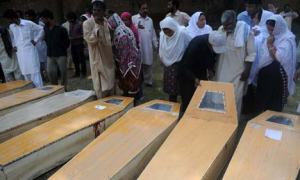
Peshawar-blast-78-Church-killing-suicide_9-22-2013_119340_lRead Omar Ali’s blogpost Three Layers of Confusion.. and their consequences” for a sound analysis of the vicious suicide bombing in Pakistan on Sunday targetting a church in Peshawar, killing at least 81 people, many of them women and children. Among them were six members of one family, including five women and a child.  As Dr Ali points out, “it is not that no action has been taken against them. ..but there is a curious disconnect between these operations and the national narrative being promoted by the same military”.  BELOW: a statement by the Forum for Secular Pakistan urging the government to Devise a long-term strategy for dealing with terrorism

Continue reading

Rajput appeal from Amarkot, Sindh

Rana Rani son-1

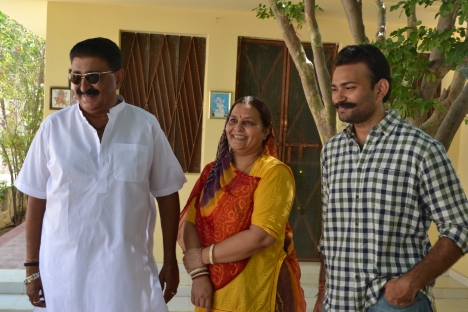
Rana Hameer Singh, Rani Nalini and son Karni Sodha at home in Amarkot. Photo: Maha Sarwar Shahid

Something I wrote for Aman ki Asha after a magical trip to Tharparkar last weekend… 

The Rana and Rani of Amarkot (Umerkot) urge a liberal visa regime between India and Pakistan

By Beena Sarwar

“The people-to-people contacts idea or vision initially came from the Indian side, when we were stuck, unable to move forward. My country had taken the position that Kashmir has to come first, that no dialogue was possible until that issue was resolved,” says Rana Hamir Singh, head of the Hindu Sodha Thakur Rajput clan in Pakistan, in Umerkot, former capital of Sindh. Continue reading

From India with love: Tribute to Hassam , Friend and Human Rights Activist from Pakistan

"You were the steady hand, now we must learn to fight the pain" - Haris Gazdar

“You were the steady hand, now we must learn to fight the pain” – Haris Gazdar

A moving and beautiful tribute to Hassam Qadir Shah, advocate of the Supreme Court of Pakistan, a principled human rights lawyer and decent human being with a million dollar smile and gentle manner, married to the filmmaker Aisha Gazdar. Thank you Kamayani for writing this #RIP – Tribute to Hassam , Friend and Human Rights Activist from Pakistan. Here’s a link to Hassam’s seminal booklet on criminal procedures, in easy to read Q&A format about gender violence in Pakistan, “There is no ‘honour’ in Killing – Don’t Let them Get Away with Murder’ (Shirkat Gah, 2002)

India, Pakistan: Cross-border cooperation against polio. “Failure is not an option”

‘Bowl out polio’: Pakistani cricketers Younis Khan and Imran Farhat give polio drops to a child at a UNICEF event in New Delhi, Jan 2013. Photo: PTI

‘Bowl out polio’: Pakistani cricketers Younis Khan and Imran Farhat give polio drops to a child at a UNICEF event in New Delhi, Jan 2013. Photo: PTI

Here’s something I wrote for Aman ki Asha recently, published in the June 5, 2013 edition:

India and Pakistan are working together against a common enemy. Pakistan’s new government must take up the baton

By Beena Sarwar

Over the past year, Pakistan has been studying how India dramatically eradicated polio, with the World Health Organisation striking it off its list of polio endemic countries in February 2012; the last case was recorded in January 2011. Continue reading

A Dutch journalist’s impressions of a Karachi dream turned reality

Babette-Cambridge-April-06I am proud of my old friend Ahsan Jamil for the work he is doing in Karachi, and delighted to have introduced him to another old friend Babette Niemel, who was inspired to write the following article about Aman Foundation, published in The News on Sunday, on March 10, 2013.

A Dutch journalist records her impressions of how Aman Foundation is changing the lives of Karachi’s underserved people

I have met Ahsan Jamil several times during my frequent visits to Karachi over the years. A modest, lively, kind man and a close childhood friend of my friend Beena Sarwar; when I met him once again a little over a year ago, he was positively beaming.

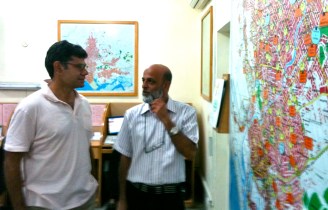
Engaged and committed: Aman Foundation CEO Ahsan Jamil and Manager Command and Control Center in discussion.

Engaged and committed: Aman Foundation CEO Ahsan Jamil and Manager Command and Control Center in discussion.

It was a cool summer evening in Karachi and we were out on the porch at Beena’s house. Ahsan was inviting her to come and checkout the new work he was doing. He could give us a tour of the facility, he said, extending the invitation to me as well. Continue reading

Quenching the thirst for peace

Tracing a peace sign together via a giant web-cam

Tracing a peace sign together via a giant web-cam

Here’s something I wrote about how a soft drink giant creatively connected Indians and Pakistanis with ‘the other side’, with a three-minute video that was easily the most shared link on the Aman ki Asha facebook group last week (not that it’s going to get me to start drinking Coke, or any other soda); published in the Aman ki Asha page in The News, May 22, 2013

Quenching the thirst for peace

An innovative idea connects Indians and Pakistanis with ‘the other side’

“It saddens me that we have neighbours that we can’t even go visit.”

“The perception is that they’re the bad guy. But when you actually meet them you realise they’re just like me.” Continue reading

Pakistan Elections: Democracy, Dichotomies, and Shades of Grey

Here’s the piece I wrote for the Economic and Political Weekly, India, published on the web today, copied below with minor changes, photos and added links.

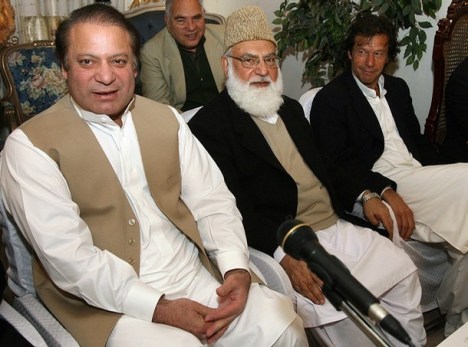
Lahore, Dec 9, 2007: (L-R): Nawaz Sharif. Qazi Hussain Ahmad and Imran Khan meet to discuss whether to boycott January 8, 2008 polls. "Boycott, and then what?" asked Benazir Bhutto who convinced Sharif to participate in the polls. The rest is history. Photo: Arif Ali/AFP/Getty Images

Lahore, Dec 9, 2007: (L-R): Nawaz Sharif. Qazi Hussain Ahmad and Imran Khan meet to discuss whether to boycott January 8, 2008 polls. “Boycott, and then what?” asked Benazir Bhutto who convinced Sharif to participate in the polls. The rest is history. Photo: Arif Ali/AFP/Getty Images

The recent elections in Pakistan show that the country is finally on the right track notwithstanding the rigging, the violence and the brutal prevention of women from voting in some areas by representatives of all the political parties. The huge turnout of women and first time young voters risking their lives to exercise their right to choose is something to celebrate and strengthen Continue reading