Southasian solidarity for flood-hit Pakistan

Flood survivors and volunteers at Shahdadkot. Photo: Courtesy Rubina Chandio via the Flood Relief Work WhatsApp group.

It is moving to see how many on the ground, as well as across the region and beyond, are stepping up to help those hit by the floods in any way they can.

At our online Southasia Peace Action Network, Sapan, meetings and in personal messages, Indian friends in particular have expressed their anguish and desire to help. Many are frustrated by being unable to contribute financially as I mentioned in my last post, Floods in Pakistan: Many eager to help held back by restrictions.

See Sapan’s statement of solidarity and appeal for Southasian nations to support Pakistan flood relief efforts – encompasses issues like the climate crisis and food security. We also compiled this list of initiatives people can donate to.

Also, love how a young Indian friend initiated this Sapan appeal to cricket boards ahead of Asia Cup to support Pakistan flood relief efforts – image below.

The YouTube video below has friends Dr Amna Buttar and Dr Geet Chainani talking about the realities on the ground in disaster-hit areas and why as an Indian origin physician in the US, Geet wants to go back to Sindh to help with flood relief. Sabyn Zaidi remembers how Geet worked in medical camps during the 2010 floods. On the first day she saw 172 patients, without breaks. There were no restrooms, no food, no electricity; there were bugs and insects. When it got dark, she worked with the light from cell phone lights and torches brought by the villagers.

Continue reading

A visafree Southasia? Really?

It’s a dream, and aspiration. To quote Gulzar’s beautiful poem, “Ankhon ko visa nahi lagta, sapnoN ke sarhad koi nahiN” (Eyes don’t need a visa, dreams don’t have frontiers)

So there’s this dream: Southasia is a region with soft borders, like the European Union, or like the Southasia region itself was, prior to 1965.

We’ve long been calling for dialogue to be uninterrupted and uninterruptible. The call for soft borders and allowing people-to-people contact takes this further. Letting people meet, travel, and trade will benefit the region economically, as well as reduce misunderstandings and violent extremism.

Check out the list of demands – we know it’s a long shot, but we desis are used to bargaining – sign and share this online petition, coordinated by the Southasia Peace Action Network or Sapan. As of today, over 36,000 signatures and counting. Help us reach 50,000.

Here’s a compilation of the organisations collaborating on this so far. More are joining. Each person counts, like the drops that make up the ocean.

We may not attain the dream in our lifetime but let’s not let that stop us from trying.

Logos of participating organisations. Being updated on the petition site as more join.

The petition is addressed to the prime ministers and foreign offices of India, Pakistan and Bangladesh. Nepal and Sri Lanka allow visa-on-arrival. This is how it starts:

“This August marks 75 years since India gained independence from the British colonists and was simultaneously partitioned as the new country of Pakistan was born. In 1971, there was further independence and partition as East Pakistan became Bangladesh. These momentous events are marked with much blood and pain. 

“It is time to heal the pain. Let people meet, “milne do”. Let us ‘reclaim Southasia’, to quote the late journalist I.A. Rehman. 

“It is essential to allow people-to-people contact in order to fulfil the objectives of SAARC, the South Asian Association for Regional Cooperation which aims to “promote the welfare of the peoples of South Asia” in all ways possible and to enable the peoples of the region to “live in dignity and to realise their full potential”. 

Details at the petition online at this link.

Need to promptly repatriate cross-border prisoners, especially if they die…

Over 30 organizations around Southasia and beyond have endorsed a joint statement about cross-border prisoners initiated and coordinated by Sapan, the Southasia Peace Action Network, calling for the humane treatment of cross-border prisoners and to decriminalise inadvertent illegal border crossings.

Titled ‘Release prisoners on completion of jail term, decriminalise inadvertent border crossings, especially for fisherfolk and minors‘, the statement draws attention to the death of two Indian fisherfolk in Pakistani custody this year, and the death of a Pakistani fisherman of Bengali origin in India’s custody last year.

All three had served their sentences but remained in custody on ‘the other side’. Compounding the tragedy, there are terrible delays in the repatriation of the bodies of such fisherfolk, notes the statement.

The statement also draws attention to some teenagers who remain incarcerated in juvenile centers in India, mostly without any contact with their families. One has already served his sentence but remains incarcerated. Details below – Statement text and endorsements:

Arrested fisherfolk in custody across the border, far from home, no consular access until after sentence is over, often kept in custody even after serving their sentences. File photo. Getty images
Continue reading

Solidarity with Sri Lanka

The situation in Sri Lanka is really dire. We at Sapan issued this statement 02 June – posted to website. Pls share widely: Southasians express solidarity with Sri Lanka, concern about economic and humanitarian crises.

Excerpt: “Amidst all the tension and uncertainty, it is important to note the undercurrent of hope enabled by the active engagement of individuals, organisations and civil society calling for accountability and good governance.” 

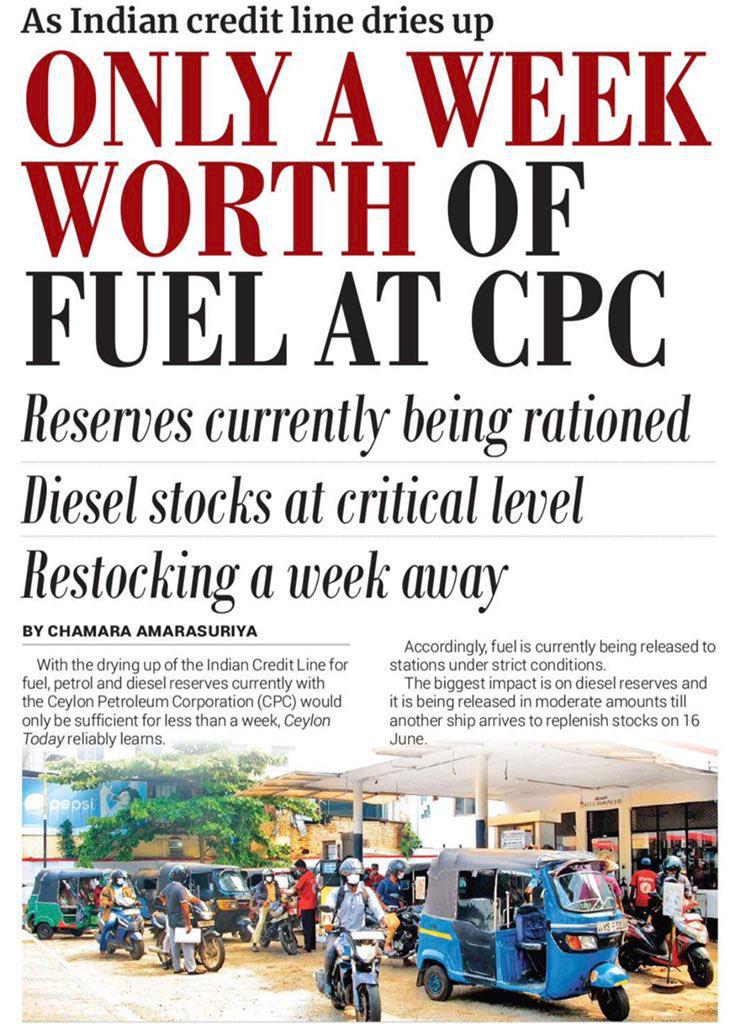
Here’s the scan of a report shared just now by a friend waiting in a petrol queue – the Ceylon Petroleum Corporation has only a week’s worth of fuel left:

She also shared a short piece from the Daily Mirror today. Excerpt:

“The people of Sri Lanka deserve to live their lives without these politically-triggered interruptions.  Towards that end, I implore international companies that Sri Lanka works with to not divert business from here when we need their support and partnership the most.  Hopefully tourists will return once the country finds stability.  The wonders of this country still remain as beautiful, unmarred by the constant disruption.”  – Paradise Disrupted

A 58-year old daily wage labourer who lives in a single room on the outskirts of Colombo with her husband shares how they’ve had to switch from cooking with gas, to kerosene, and now firewood. Her husband forages for vegetables and edible leaves on his way home from work. See her story at: Financial Pandemic: ‘Sri Lanka is not a country for poor people now’, The Fuller Project, 20 May, 2022.

Kabir festival in Boston this weekend

UPDATE 11 June: Due to rain Kabir Festival postponed to Sunday June 19,2022. Please inform everyone

Some friends have been working hard on the upcoming Kabir Festival in Cambridge MA. Excited for it and fingers crossed it doesn’t rain. Our weekly Wednesday meeting this time focused on Kabir, and they showed this documentary by Kashif ul Huda, TwoCircles.net

Details about the Kabir Festival in the press statement below:

Kabir Festival 2022: Celebrating the humanistic values of an ancient mystic

Event poster

BOSTON: A cultural event to commemorate the birth anniversary of Kabir Das, an ancient South Asian mystic and social reformer will take place Sunday, 12 June 2022, at Danehy Park, Cambridge MA.

The Kabir Festival 2022 honors the values propagated by Kabir Das, a 15th century poet whose message of humanism, fraternity, love, harmony and equality resonates today in a world that is in many ways much like his. Then as now, great and astonishing changes were taking place, causing anxiety, fear, strife and dislocations.

Kabir’s message of humanism, fraternity, love, harmony and equality resonates today in a world that is in many ways much like his. Then as now, great and astonishing changes were taking place, causing anxiety, fear, strife and dislocations.

Ahead of Kabir’s birth anniversary on 14 June 2022, several individuals and organizations of the South Asian community are organizing a Kabir Festival in Cambridge. The organizers hope to bring Kabir’s message of peace, harmony and love to people in our troubled times.

The festival includes performances by local musicians, singers and artists. The event is free and open to the public. All are welcome.

The outdoor gathering will observe Covid-19 guidelines as per the City of Cambridge.

Participating organizations include Learn Quest Academy of Music, New England Hindi Manch, Kabir Society, Sanjha Punjab, Southasia Peace Action Network, Subdrift Boston, Boston Study Group and Jago World.

Contact: Rupal Shah: Email – south-asian-center@googlegroups.com

Sapan News

The Wednesday discussion also shared this music video by the Kabir Cafe in Mumbai:

Sara Suleri bows out

Sharing personal memories of the brilliant Sara Suleri whose genre-defying book Meatless Days inspired generations of writers, feminists, memoirists and dislocated Southasians. Thanks Ailia Zehra at The Friday Times for asking me to write this piece. Published as a Sapan syndicated feature in TFT, The Wire, Geo TV blog, South Asia Monitor and The Print – shared here with additional pix and links.

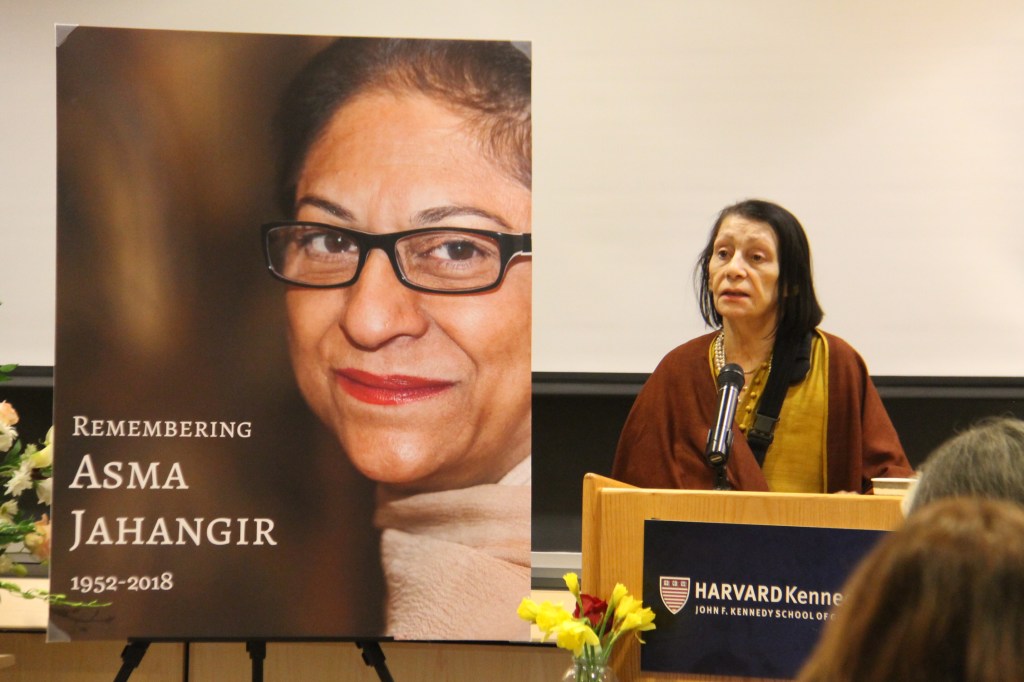
February 2018: Sara Suleri pays tribute to Asma Jahangir. Photo: Beena Sarwar.

PERSONAL-POLITICAL

By Beena Sarwar

March 25, 2022, Sapan News Service:

Aur bataiye” – tell me more, a polite invitation to keep talking. I can hear her voice, perhaps naturally husky, made deeper with years of cigarette smoking and perhaps more recently with pain and other medications.

She’d send her love to Pakistan whenever I’d call before flying out from Boston, where we had both ended up around ten years ago – she after retiring as Professor Emeritus of English from Yale University. I had transplanted myself from my home city Karachi where I was editing Aman Ki Asha, hope for peace – between India and Pakistan.

“Dream on!” I hear Sara say. And yet, she agrees, it’s important to keep going. She’s also a hundred percent supportive of our push for a regional approach – the South Asia Peace Action Network, or Sapan, the more recent endeavour, launched last year with a wonderful group of inter-generational, cross-border peacemongers.

Continue reading

Chakwalians, Rotarians to gather for “a tsunami of peace” reunion at Kartarpur Corridor

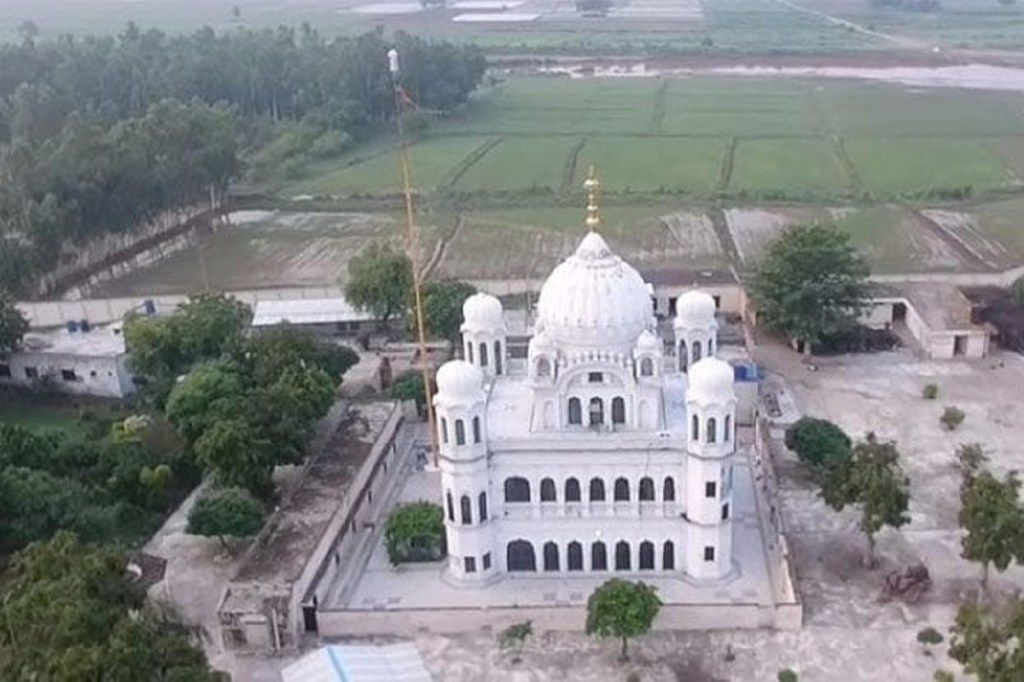
Gurdwara Darbar Sahib Kartarpur: Bringing people together. Image credit: Facebook/@syed.alli

Dozens of Indians and Pakistanis with ancestral roots in Chakwal will meet up mid-week at Kartarpur Darbar Sahib in Pakistan, taking advantage of the visa-free corridor inaugurated in November 2019 by Prime Minister Imran Khan for Baba Guru Nanak Dev’s 550th birthday celebrations.

Delhi-based Rotarian Anil Ghai, whose own family has strong connections to Chakwal since before Partition in 1947, will lead the Indian delegation.

The family had to flee with whatever belongings they could take, in a Dakota aircraft, remember area natives. Ghai’s visit to Pakistan in 1996 had led to rekindling those ties.

The establishment of Chakwal International Group about six months gave momentum to the upcoming ground-breaking meeting planned for Wednesday, 23 February.

“Everyone is welcome, they do not have to be Rotarians,” says Mohammed “Mo” Ayyaz, a Rotarian in London who is also from Chakwal and one of the driving forces behind the initiative.

Continue reading

Wanted: Adult behaviour in SouthAsia

The last Sapan – South Asia Peace Action Network – event of the year was titled “Growing up, growing together” with activists across the region resolving to continue working for a better tomorrow. It was wonderful to hear so many young people speak – most under 35 years old. Thanks to all those who worked so hard to make the event a success – including the poetry and music at the end. Sapan’s next monthly event on the last Sunday of January will have more music and culture.

The Facebook Live recording of the recent meeting is available at this link – video log online at this link. Here’s a feature report about the event.

Commemorating Human Rights Day, the founding of SAARC, and 50 years of Bangladesh’s independence, Sapan discussion highlights the commonality of human rights issues across the region

Some of the participants at the event – most speakers were under 35-years old. Screenshot.
Continue reading

“We will fight, we will win”

The spirit of South Asia and the power of the four-letter word love

Commemorating 16 Days of Activism against Gender Violence, remembering Kamla Bhasin

By Beena Sarwar

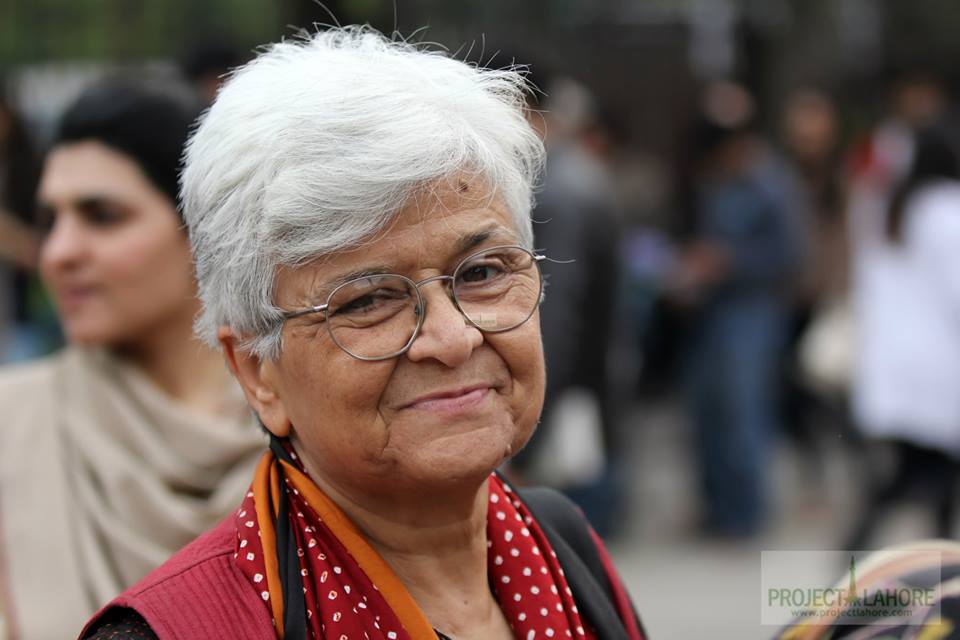
The annual international 16 Days of Activism against gender violence takes place this year without the pioneering feminist and poet Kamla Bhasin, even as her songs and poetry enliven events during this period and beyond.

Kamla Bhasin. Radical love. Photo: Kashif Saeed

The 16 Days are observed annually starting 25 November, the International Day for the Elimination of Violence against Women. They end 10 December, with international Human Rights Day. These are integrated issues that Kamla fought for all her life. And she did this with love, joy, music, poetry and compassion.

As she famously said, “I am a feminist, and I do not hate men. I am a feminist and I do not hate women who are not feminists. I am a feminist – and I laugh.”

Continue reading

A Southasia climate resolution

The Sapan Resolution on Climate Change ahead of COP26 is still relevant

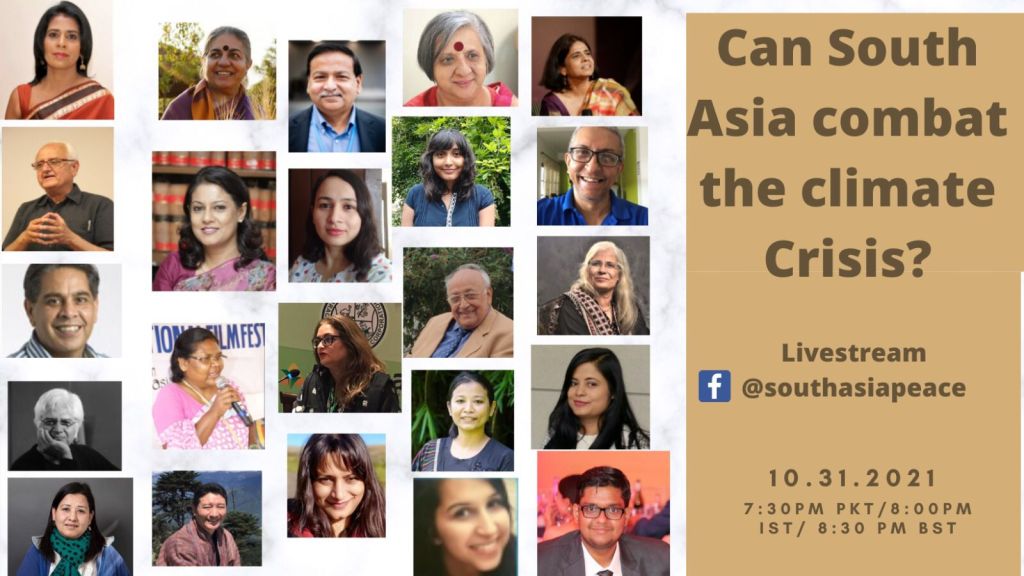
At the South Asia Peace Action Network, Sapan, event at the end of October, participants and speakers answered YES to the question of Can South Asia combat climate change? – and also suggested how.

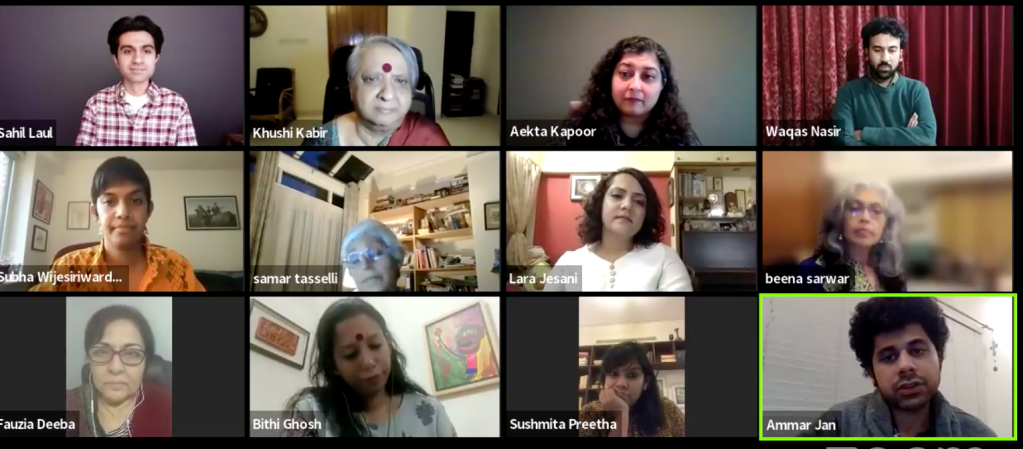
The informative and engaging session hosted by Khushi Kabir and moderated by Afia Salam was followed by breakout rooms focusing on Climate justice, Cross-border reporting, Water issues, Renewable energy, and Indigenous communities, each facilitated by expert moderators and rapporteurs. See details at this link.

At the end of the event, youth activists Disha Ravi of India and Durlabh Ashok Pakistan read out a Resolution that participants endorsed. Read the Resolution at this link.

Speakers, moderators and rapporteurs: Dilrukshi Handunnetti, Vandana Shiva, Saleemul Haq, Khushi Kabir, Sunita Narain, Nalaka Gunawardene, Afia Salam, Sarita Bartaula, Durlabh Ashok, Priyanka Singh, Pragya Narang, Kinga Tshering, Pratima Gurung, Kunda Dixit, Ali Tauqeer Sheikh, Kanak Dixit, Syeda Rizwana Hasan, Shilsila Acharya, Disha Ravi, Prem Shankar Jha, Rani Yan Yan Yoddha, Lubna Jerrar Naqvi, Dayamani Barla. Collage by Aekta Kapoor.