India /Pakistan – That elusive visa: You can’t just ‘Google it’

My article in The News’ weekly Aman ki Asha page today (also on the website and TOI blog)
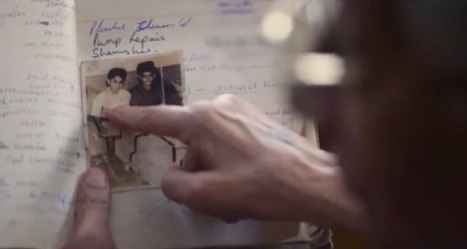
“Ye mein, ye Yusuf”… That’s me, that’s Yusuf… Still from Google’s “Reunion” ad

Google’s tearjerker “Reunion” ad released on the web has tapped into a rising groundswell for peace between the people of India and Pakistan

By Beena Sarwar

The internet search engine Google’s moving, beautifully made little video “Reunion”, released on November 13 has gone viral. In less than a week, the ad on Youtube has been played over four million times, and shared endlessly on facebook, twitter and blogs, and posted on other video sharing portals like Vimeo (over 70,000 views). Continue reading

Google’s tearjerker ‘Reunion’ ad, and the ‘Milne Do’ campaign

Reunion“, the moving, well made little video released by Google today is going viral. And it’s not just the one ad, there’s a playlist of five in the series – ‘fennel’, ‘cricket’, ‘Anarkali’, and ‘sugar-free’. If it doesn’t move you, you’ve got a heart of stone. And if oh, it was that easy.

A still from the Google ‘Reunion’; film’ ad

For Pakistanis and Indians to get visas to visit each other’s country is just short of impossible. Check out their visa requirements for each other’s nationals — Pakistan visa requirements for Indians, India visa requirements for Pakistanis – which includes the notorious Sponsorship Certificate “mandatory from 07/03/2011 for all visa applications”, to be signed and stamped by an Indian first class gazetted officer vouching for the Pakistani applicant. But let’s suspend disbelief for now, and  watch Google’s heartwarming Reunion video below. 

If you can’t access Youtube, here’s the Vimeo link.

AKA Logo

If the Reunion ad moved you, go to the Milne Do (Let people meet) petition link and sign (and share) the campaign against India Pakistan visa restrictions. Every voice counts.

UPDATE August 2022: The Southasia Peace Action Network or Sapan Alliance now runs the MilneDo online petition.

The text below has not been updated.

Continue reading

“Why are India and Pakistan at war?” asks 14-year old Kshitij…

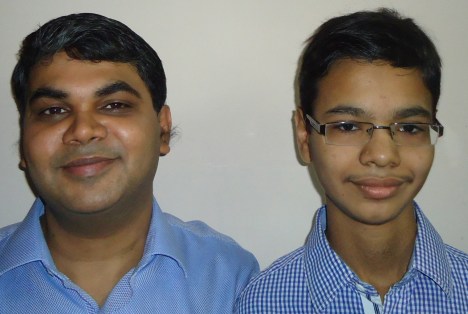
Like father like son: Samir and Kshitij Gupta

Like father like son: Samir and Kshitij Gupta

My article published in The News oped, TOI blogs and Aman ki Asha on Monday, Nov 4, 2013 

“Why are India and Pakistan at war?”

Beena Sarwar

Some days ago I got a call from my friend Samir Gupta, on his way home after picking up his son, 14-year old Kshitij, from a Delhi train station late at night. Kshitij was returning from a school trip with some 30 other students from Delhi Public School, Ghaziabad. They’d taken an early morning train to Amritsar and watched the flag-lowering ceremony at Wagah Border.

Samir, a passionate advocate of peace and good relations between India and Pakistan, asked Kshitij about the trip. Continue reading

Towards a South Asian Union

Samir Gupta

By Samir Gupta

Published in Aman ki Asha, Oct 8, 2013… Justice Katju may be controversial but his sincerity to peace and humanity is unmistakable, finds a young activist at a breakfast meeting

I was bit nervous when journalist Beena Sarwar invited me to accompany her to meet Justice Markandey Katju for breakfast in Delhi. Justice Katju had retired as a judge at the Supreme Court of India and was appointed Chairman of Press Council of India. He is known for his controversial statements, including his comment “Pakistan is a “fake” country “created artificially by the British” – that I had also ridiculed. He sounded like a retired person far removed from reality.

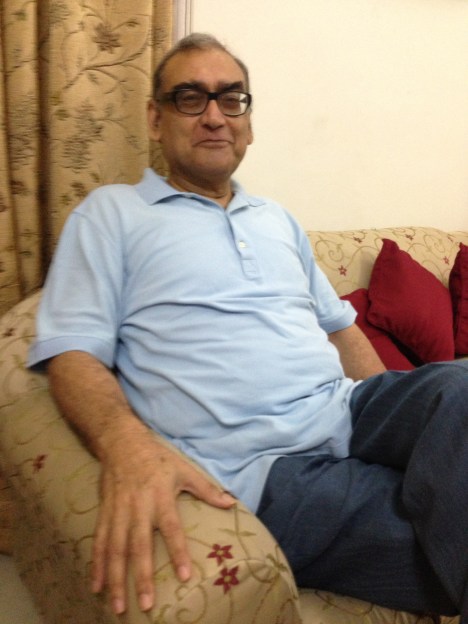
Justice Katju: A strong, secular, democratic vision. Photo: Beena Sarwar

Justice Katju: A strong, secular, democratic vision. Photo: Beena Sarwar

Beena, editor Aman ki Asha Jang Group Pakistan, insisted that he is a sincere friend of Pakistan and a champion of peace between India and Pakistan. She wanted to talk to him about his calls for re-unification that are causing unnecessary controversy and diverting from the real issues at hand. This was going to be interesting.

On the day, I met Beena outside his majestic bungalow near Parliament House in New Delhi. He was much taller than I expected, and very warm in welcoming us. As we sat for breakfast, he regaled us with stories of his days as a judge in Allahabad, meeting his counterparts from Pakistan in Delhi, his views of what ails India and his views on Pakistan.
Continue reading

India, personally…

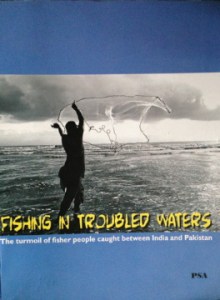
Fishing in Troubled Waters, launched in Delhi, Aug 13, 2013

Fishing in Troubled Waters, launched in Delhi, Aug 13, 2013

Update: See ‘A half-full glass‘ on the Singh-Sharif meeting at UNGA (and the ‘dehati aurat’ brouhaha), published in the Aman ki Asha page in The News on Oct 2, and in my column at TOI blogs.

This is a long-pending post, compiling articles, video and photo links (below) following my recent, brief trip to India at a time when tensions along the Line of Control (LoC) were running high. The Programme for Social Action (PSA) and the Pakistan India People’s Forum for Peace and Democracy (PIPFPD) had invited me to a seminar on Aug 13, where they launched two publications. (I took the direct Karachi-Delhi PIA flight both ways, which has since then been discontinued — apparently not enough traffic because it’s so difficult to get visas; credit where credit is due – PIA is the only Southasian airline to fly to all the regional capitals and more).

Continue reading

Rajput appeal from Amarkot, Sindh

Rana Rani son-1

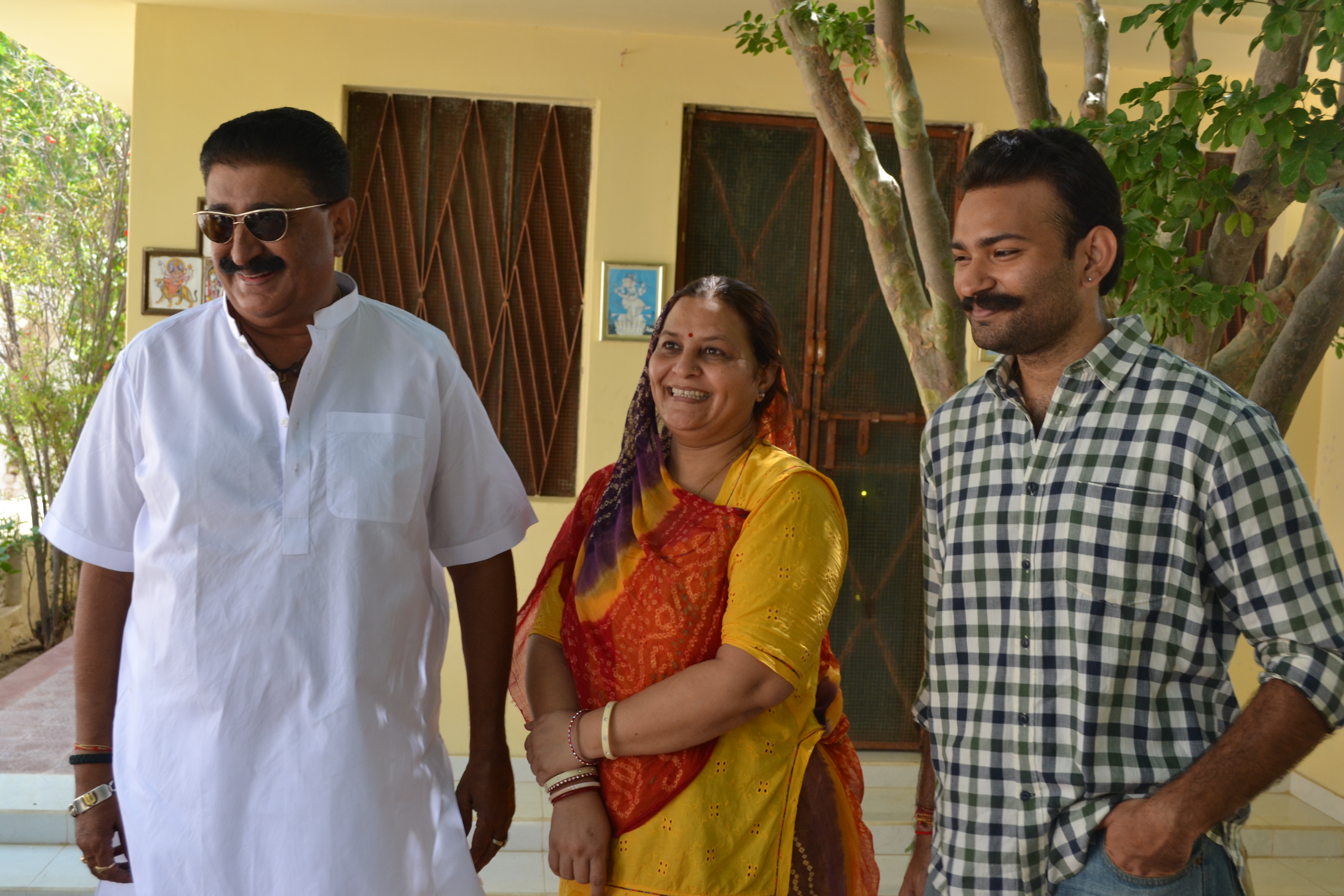
Rana Hameer Singh, Rani Nalini and son Karni Sodha at home in Amarkot. Photo: Maha Sarwar Shahid

Something I wrote for Aman ki Asha after a magical trip to Tharparkar last weekend… 

The Rana and Rani of Amarkot (Umerkot) urge a liberal visa regime between India and Pakistan

By Beena Sarwar

“The people-to-people contacts idea or vision initially came from the Indian side, when we were stuck, unable to move forward. My country had taken the position that Kashmir has to come first, that no dialogue was possible until that issue was resolved,” says Rana Hamir Singh, head of the Hindu Sodha Thakur Rajput clan in Pakistan, in Umerkot, former capital of Sindh. Continue reading

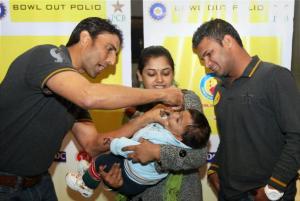
India, Pakistan: Cross-border cooperation against polio. “Failure is not an option”

‘Bowl out polio’: Pakistani cricketers Younis Khan and Imran Farhat give polio drops to a child at a UNICEF event in New Delhi, Jan 2013. Photo: PTI

‘Bowl out polio’: Pakistani cricketers Younis Khan and Imran Farhat give polio drops to a child at a UNICEF event in New Delhi, Jan 2013. Photo: PTI

Here’s something I wrote for Aman ki Asha recently, published in the June 5, 2013 edition:

India and Pakistan are working together against a common enemy. Pakistan’s new government must take up the baton

By Beena Sarwar

Over the past year, Pakistan has been studying how India dramatically eradicated polio, with the World Health Organisation striking it off its list of polio endemic countries in February 2012; the last case was recorded in January 2011. Continue reading

Quenching the thirst for peace

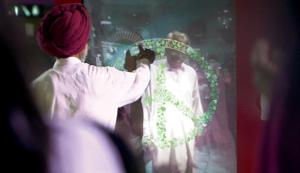
Tracing a peace sign together via a giant web-cam

Tracing a peace sign together via a giant web-cam

Here’s something I wrote about how a soft drink giant creatively connected Indians and Pakistanis with ‘the other side’, with a three-minute video that was easily the most shared link on the Aman ki Asha facebook group last week (not that it’s going to get me to start drinking Coke, or any other soda); published in the Aman ki Asha page in The News, May 22, 2013

Quenching the thirst for peace

An innovative idea connects Indians and Pakistanis with ‘the other side’

“It saddens me that we have neighbours that we can’t even go visit.”

“The perception is that they’re the bad guy. But when you actually meet them you realise they’re just like me.” Continue reading

Pawns and prisoners of manufactured hatred

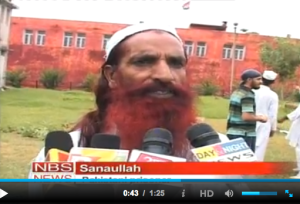
Screenshot of Sanaullah from a TV report last year, on Indian and Pakistani prisoners participating in a kite-flying festival together. "It's really nice, I feel like a child myself," Sanaullah told the reporter.

Screenshot of Sanaullah from a TV report last year, on Indian and Pakistani prisoners participating in a kite-flying festival together. “It’s really nice, I feel like a child myself,” Sanaullah told the reporter.

Tragically, Sanaullah, the Pakistani prisoner whom a fellow inmate had attacked in prison in Jammu in Indian administered Kashmir on May 3, succumbed to his injuries on May 9. The attack took place on the day of the funeral of Sarabjit Singh, the high profile Indian prisoner who died on May 3, after being in a coma following an attack by fellow inmates in Kot Lakhpat Jail, Lahore on April 26 — ironically, the day that Indian members of the India Pakistan Joint Judicial Committee on Prisoners landed in Pakistan to inspect jails and meet Indian prisoners. The Committee’s recommendations have been made public, and if implemented, will go a long way towards alleviating the plight of cross-border prisoners.

Here’s a link to the note I wrote, published in the weekly Aman ki Asha page in The News last week – Condemnable attack on unarmed prisoner. A followup note regarding Sanaullah was published in the AKA page of May 8. I sincerely hope this is the end of the series. (If you’re on facebook, feel free to ‘like’ the AKA page and join the AKA group – both managed on a voluntary basis) Continue reading

“It is essential for Pakistan and India to make peace” – Pervez Hoodbhoy

My article in the weekly Aman ki Asha page in The News today.

Speaking at MIT recently, invited by an Indian colleague, a leading Pakistani academic and physicist makes the case for peace

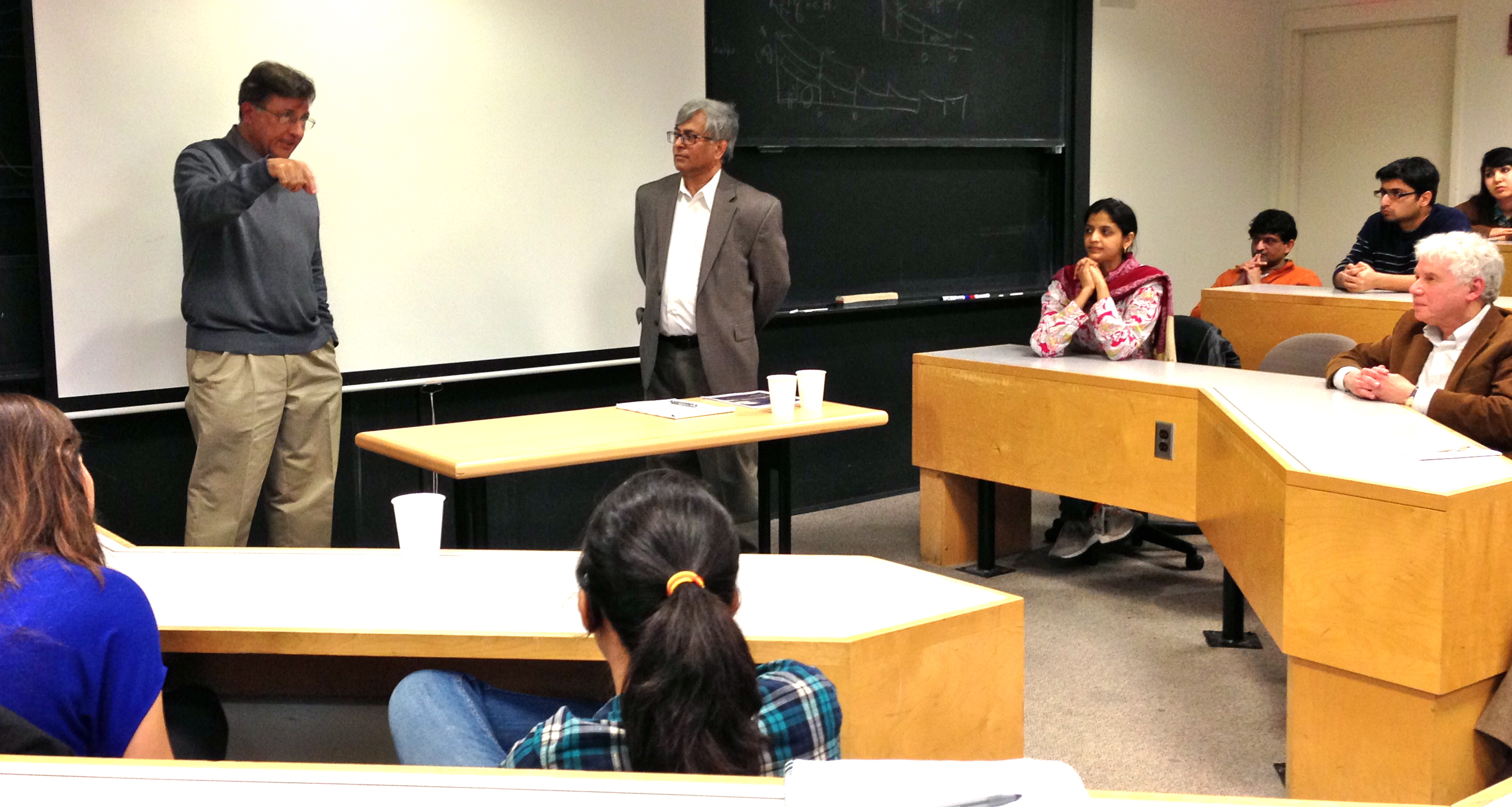
Indian and Pakistani scientists for peace: Pervez Hoodbhoy and Subrata Ghoshroy last week at MIT

Indian and Pakistani scientists for peace: Pervez Hoodbhoy and Subrata Ghoshroy last week at MIT

By Beena Sarwar

In the midst of ongoing tensions between India and Pakistan amplified by hyper media on both sides, an Indian scientist warmly introduces a Pakistani colleague at one of the world’s most prestigious universities – and that too for a talk on “Pakistan’s Bomb – Past, Present, and Future”.

The Indian scientist is Subrata Ghoshroy who leads the Promoting Nuclear Stability in South Asia Project at the Science, Technology and Global Security working group, Massachusetts Institute of Technology (MIT). The Pakistani scientist is Pervez Hoodbhoy, Professor of Physics, Quaid-e-Azam University, Islamabad, an alumnus of MIT where he obtained his BS, MS, and Ph.D degrees. Continue reading