Wrote this piece a couple of weeks ago, on one of Pakistan’s most versatile composers who continues to produce a genre embedded in Southasian traditional music, to get the younger generation to appreciate classical poetry and music — and provide a platform for new talent. A Sapan News syndicated feature also published in other outlets.
Personal Political By Beena Sarwar / Sapan News
Arshad Mahmud in Such Gup, PTV, 1970s. Screenshot.
Will there be singing In dark times? Yes, there will be singing About dark times
— Bertolt Brecht, Germany, 1939
Arshad Mahmud is one of Pakistan’s most prolific and talented composers, the man whose music launched singing sensations like Nayyar Noor and Tina Sani.
He made his debut with the children’s television show Akkar Bakkar, 1972, along with Nayyara Noor and the pioneering puppeteer Farooq Qaiser, produced by Shoaib Hashmi, then an economics professor at Government College (now University) Lahore.
Behind the ustad (teacher) Hashmi’s booming voice, gruff manner and handlebar moustache was a brilliant writer and satirist who went on to write and produce the groundbreaking, now legendary satirical television shows Such Gup and Tal Matol. We would use these as the titles of Shoaib Hashmi’s columns for The Frontier Post later and The News on Sunday that I edited in Lahore, starting in the 1990s. His daughter Mira Hashmi has uploaded many of the videos to her YouTube channel.
I began writing this piece some time ago, after watching Ava DuVernay’s ‘Origin’ at a friend’s place in Chicago – appropriate because that’s where Dr. King did a lot of his activism. Today seemed like a good time to finish it.
There is more awareness about systemic racism, caste oppression, and gender rights than ever before but we have a long way to go to achieve the dream of equality, justice and human dignity embodied by Dr. Martin Luther King. Those who fear change will continue to fight it. The struggle continues
Personal Political By Beena Sarwar / Sapan News
The third Monday of January, which falls this year on the 20th, is a federal holiday in the U.S., in honour of Dr. Martin Luther King Jr.’s birthday. Born on 15 January 1929, Dr King was assassinated on 4 April 1968. A bill passed by Congress led to his birthday being commemorated as a federal holiday on the third Monday in January since 1986.
The U.S. Presidential Inauguration also takes place on 20 January. This will mark the third time ever for a president to take the oath of office on the holiday designated for Dr Martin Luther King – the earlier two were President Bill Clinton and President Barack Obama.
Dr King’s children have urged supporters to hear what President Trump has to say, even if they do so later.
The ideals of equality, justice, human dignity, and peace that Dr King stood for remain relevant, opposed by those threatened by these concepts.
A photo of a photo from the Martin Luther King, Jr. Memorial Center in Atlanta, Georgia, by Matt Lemmon.Continue reading →
The day the popular Indian journalist Ravish Kumar spoke at Harvard, Oct. 2, happened to mark Gandhi Jayanti, Mahatama Gandhi’s birth anniversary. A day that social media users celebrated Gandhi-ji’s murder was and glorified his murderer on X, formerly Twitter, noted Kumar, talking in Hindi to students and community members filling the nearly 150-seater auditorium.
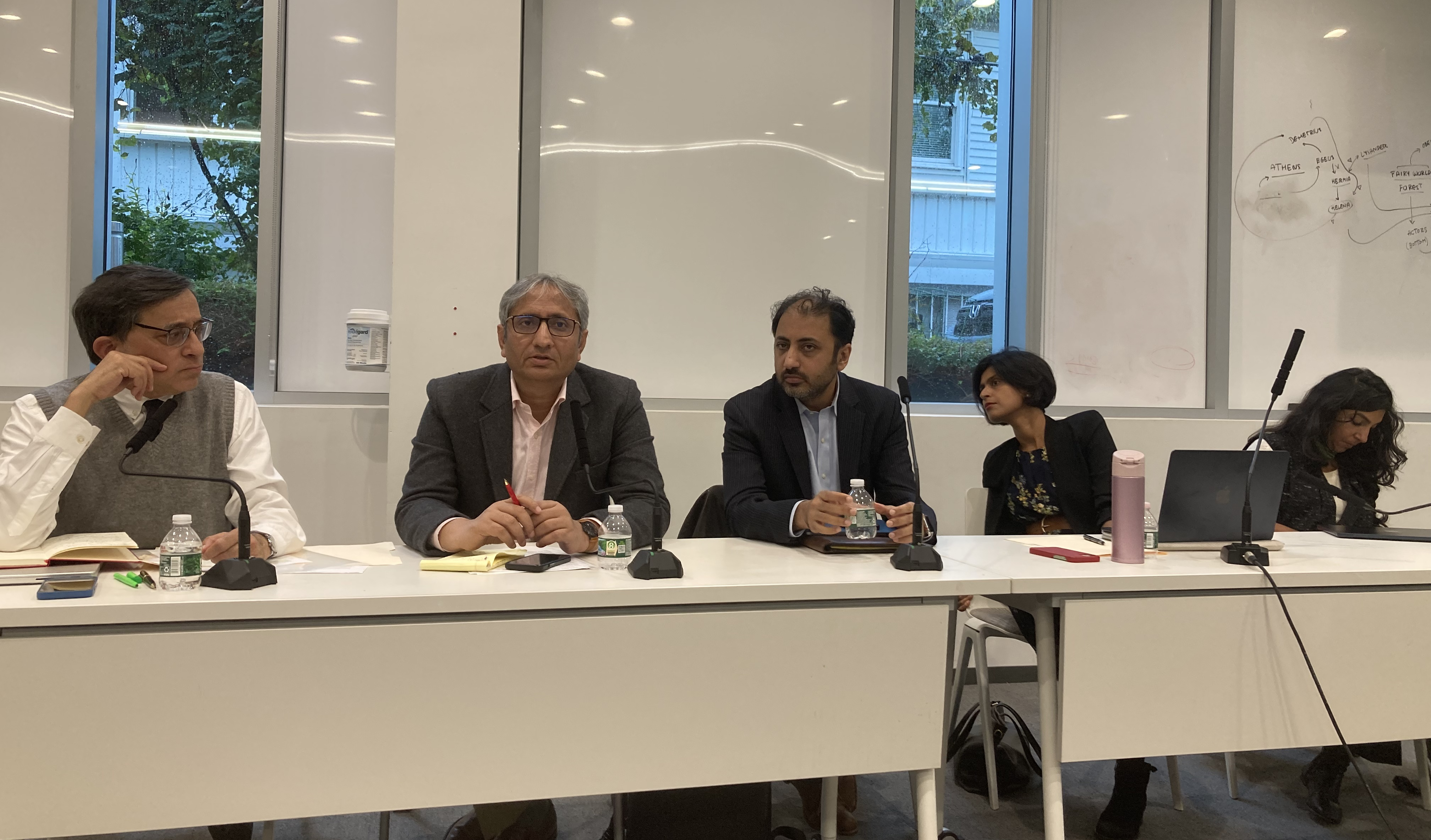
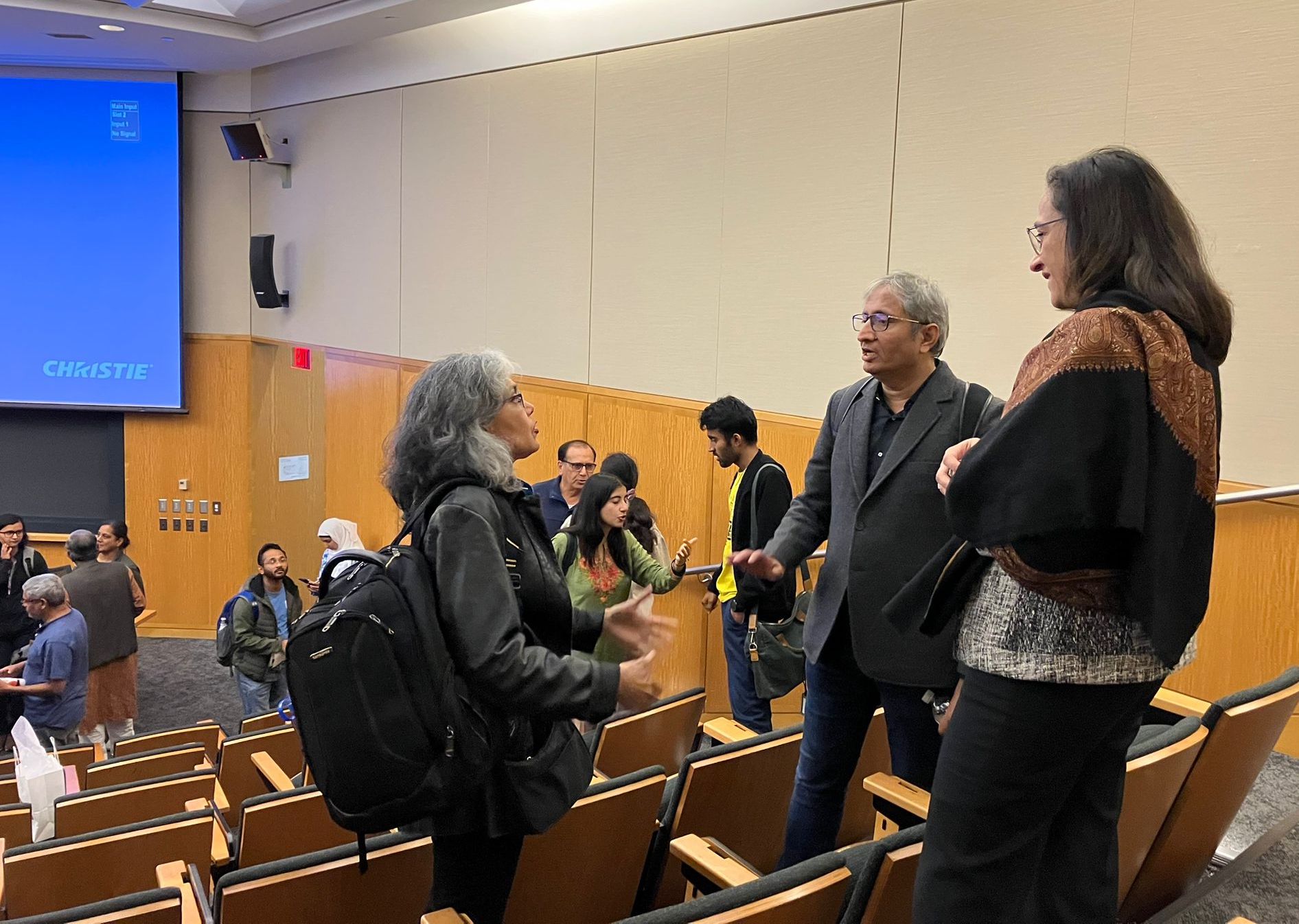
Ashutosh Varshney, Director of the Saxena Center for Contemporary South Asia at Brown University; Ravish Kumar; Wall Street Journal columnist Sadanand Dhume; Brown University faculty Poulami Roychowdhury and Prerna Singh. Photo: Beena Sarwar
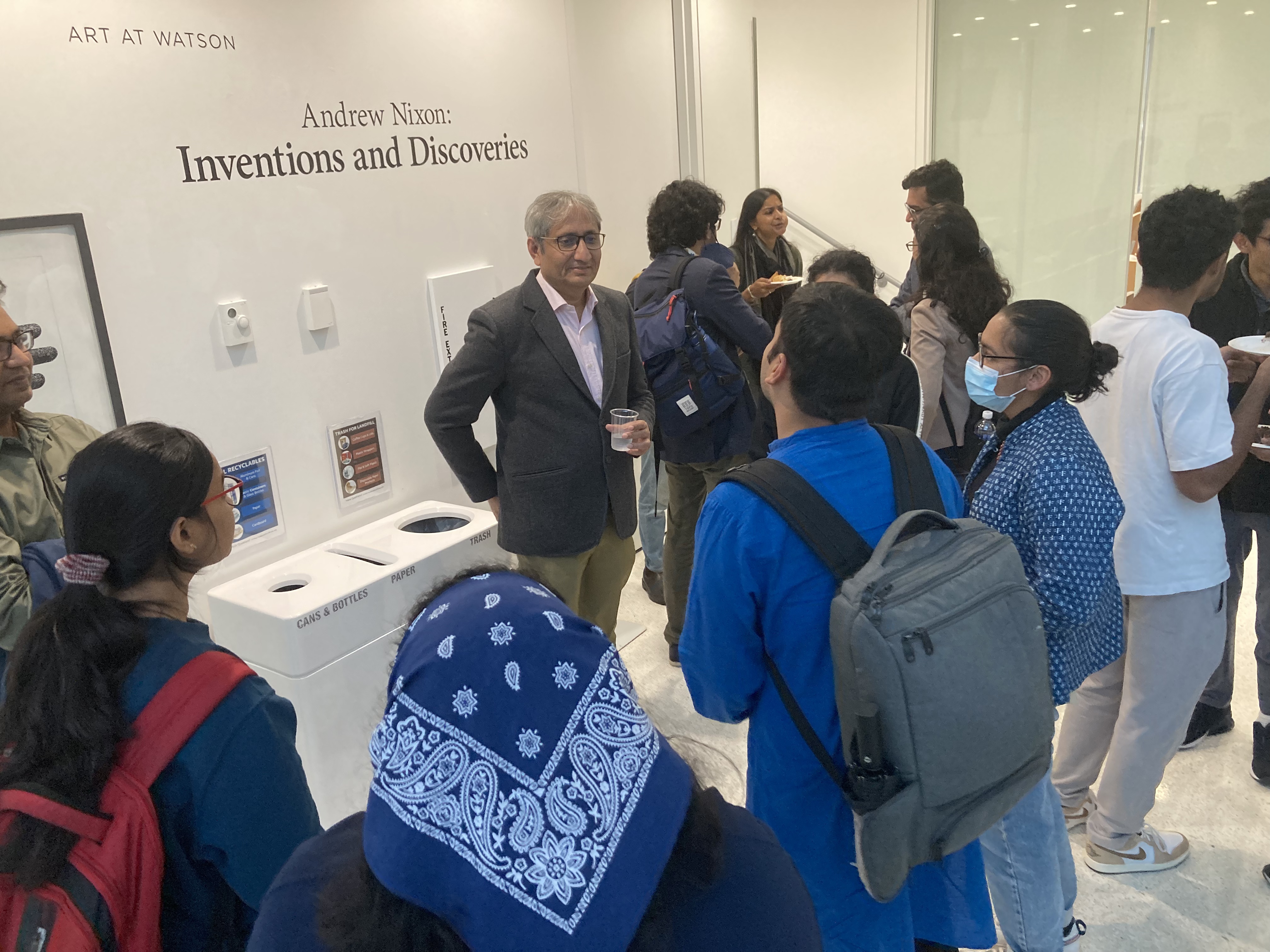
Students throng Ravish Kumar after his talk at Brown University.
Photo: Beena Sarwar
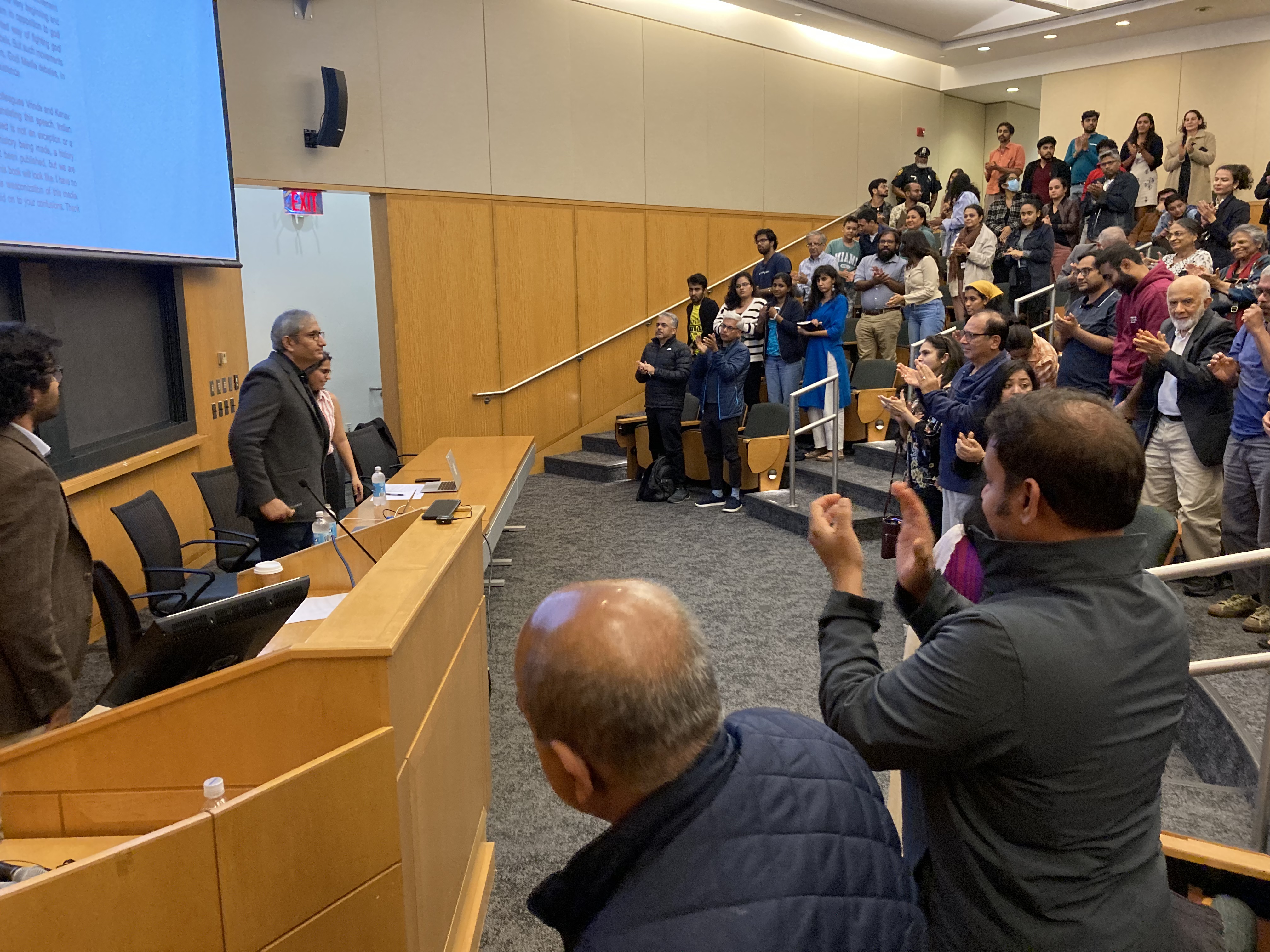
Standing ovation for Ravish Kumar after his talk at Harvard. Photo: Beena Sarwar
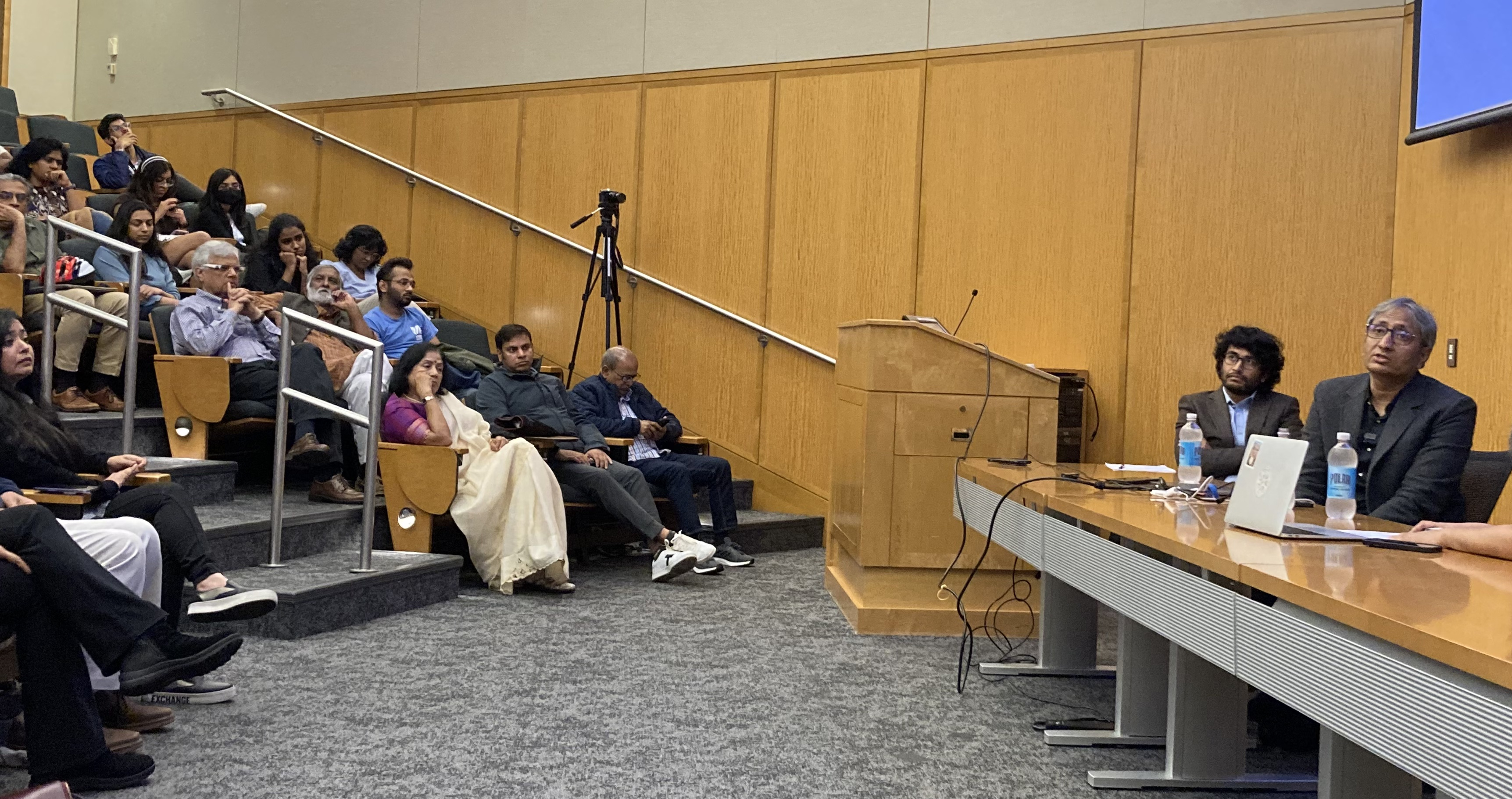
Discussion after the talk at Harvard. Not all questions were answered but as Ravish said, it’s important to ask them. Photo: Beena Sarwar
Talking to Ravish Kumar after the event, with Dr Deeba Husain from India. Photo: Rajeev Soneja
Ravish Kumar famously resigned from NDTV last November after its hostile takeover by Asia’s richest man Gautam Adani known to be close to Prime Minister Narendra Modi. While Kumar still has a huge viewership on YouTube – his channel has garnered over 7 million subscribers so far – it is an insecure platform, as he knows. The recently released documentary While We Watched (available on PBS) features Kumar, but as he also acknowledges, there are many others standing for journalistic values and ethics in India.
An FIR (first investigation report) was lodged against NewsClick in August, the day after a poorly-sourced New York Times report alleging that it had received funding from a network spreading “Chinese propaganda”.
The detained journalists included junior employees – and if they were being detained “simply because you believe that NewsClick is getting Chinese funds then a very wrong precedent is being set,” to quote prominent TV anchor Rajdeep Sardesai.
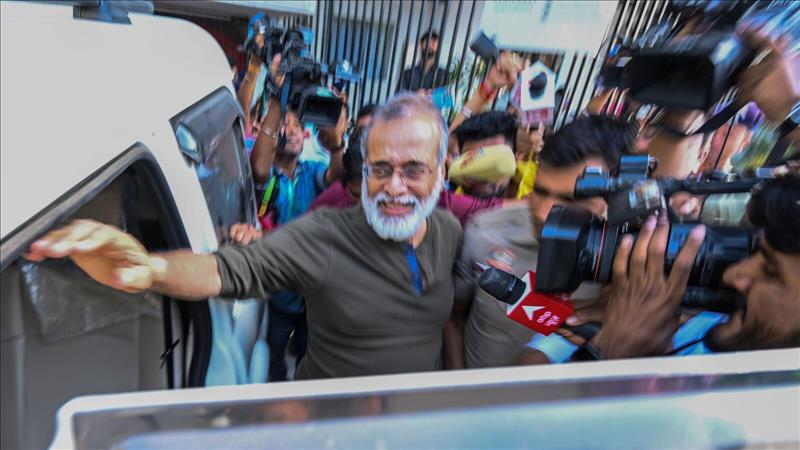
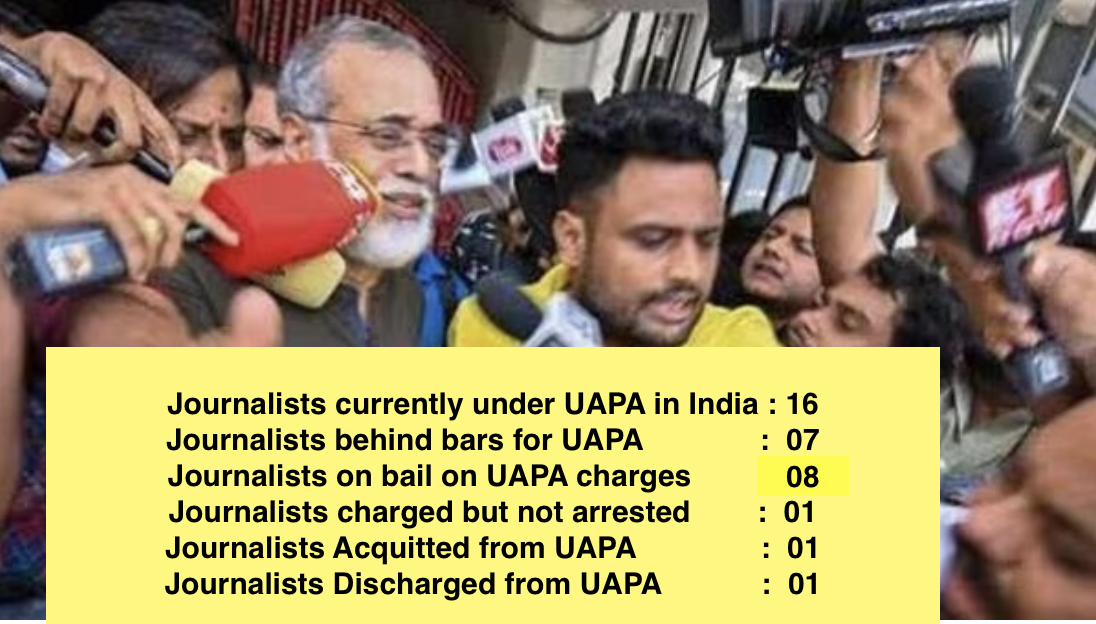
Newsclick founder and chief editor Prabir Purkayastha, and Amit Chakravarty, who heads the portal’s human resources section, were arrested under the draconian Unlawful Activities (Prevention) Act (UAPA). Since 2010, as many as 16 journalists have been charged under the UAPA, reports the Free Speech Collective, India, in a post that lists them, with details of those out on bail, the seven still behind bars, and others.
NewsClick founder and chief editor Prabir Purkayastha arrested. Photo credit: Raj K Raj/Hindustan Times via Getty Images, published by Amnesty International.
“In India, 16 journalists under UAPA ; seven behind bars” – image courtesy the Free Speech Collective, India
There is a huge pushback in India against these heavy handed tactics, which those in other countries are familiar with.
Below, the text of a joint letter by several journalists’ organisations to the Chief Justice of India:
A compilation of offerings from our Sapan network, including my latest venture Sapan News syndicated features. Together, we aim to further the narrative of regionalism, peace, and dialogue. What can you do? Read on
Visual: Aekta Kapoor/Sapan
Delighted to have acclaimed actor and director Sarmad Khoosat join us Sunday July 16 for Sapan’s first fundraiser, hosted by poet Dr Arvinder Chamak in Amritsar. Sarmad will be in conversation with the wonderful journalists Malinda Seneviratne in Colombo, Mandira Nayar in Delhi; and Lubna Jerar in Karachi.
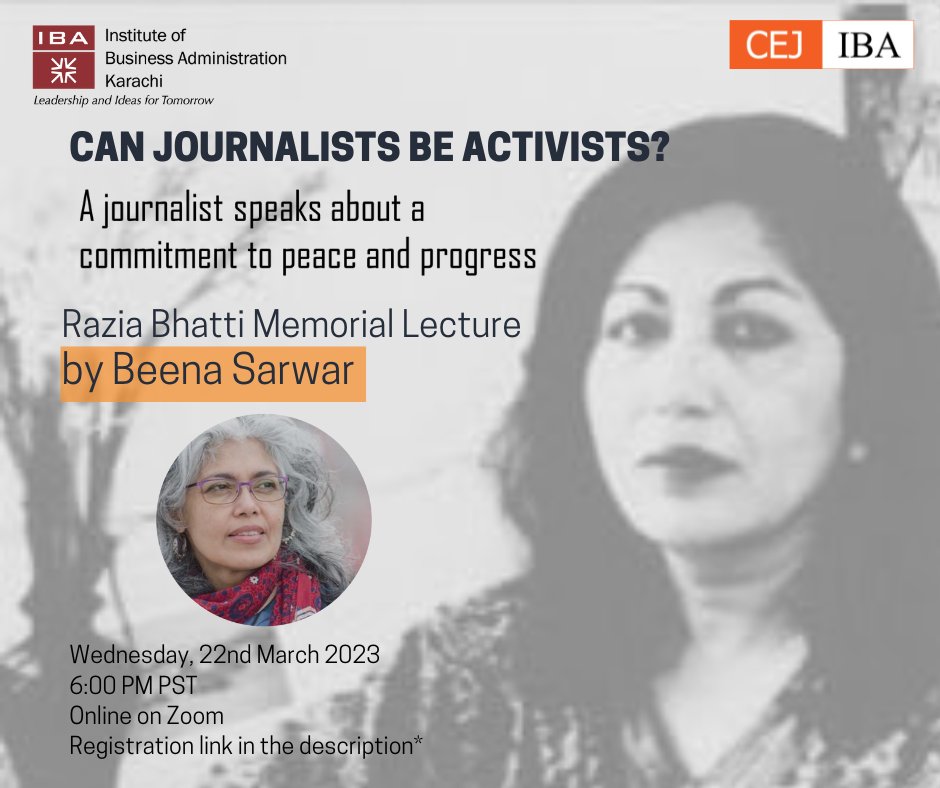
Following up from my earlier post, here’s the video recording of the Razia Bhatti Memorial Lecture 2023 I delivered online recently for the Center of Excellence in Journalism at IBA, Karachi.
Honoured and humbled to be invited to present this year’s Razia Bhatti Memorial Lecture, named for someone who remains a role model for so many journalists and women, someone I knew personally and admired greatly.
Time: Wednesday, March 22, 2023 06:00 PM (Pakistan)
Agenda
5:50 – 6pm Producer at CEJ to admit registered attendees
6:00 pm: Amber Shamsie, CEJ director, – Welcome and introduction to Razia Bhatti Memorial Lecture lecture series
6:05 pm: Remarks by Dr Akbar Zaidi, IBA Executive Director
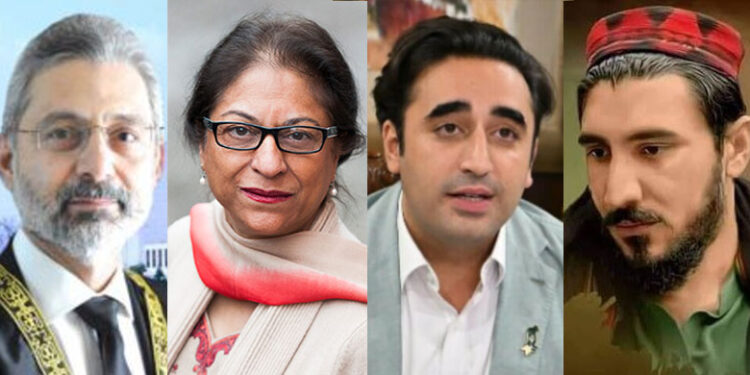
Justice Qazi Faez Isa, late Asma Jahangir, Bilawal Bhutto Zardari, Manzoor Pashteen: Collage by The Friday Times/Naya Daur
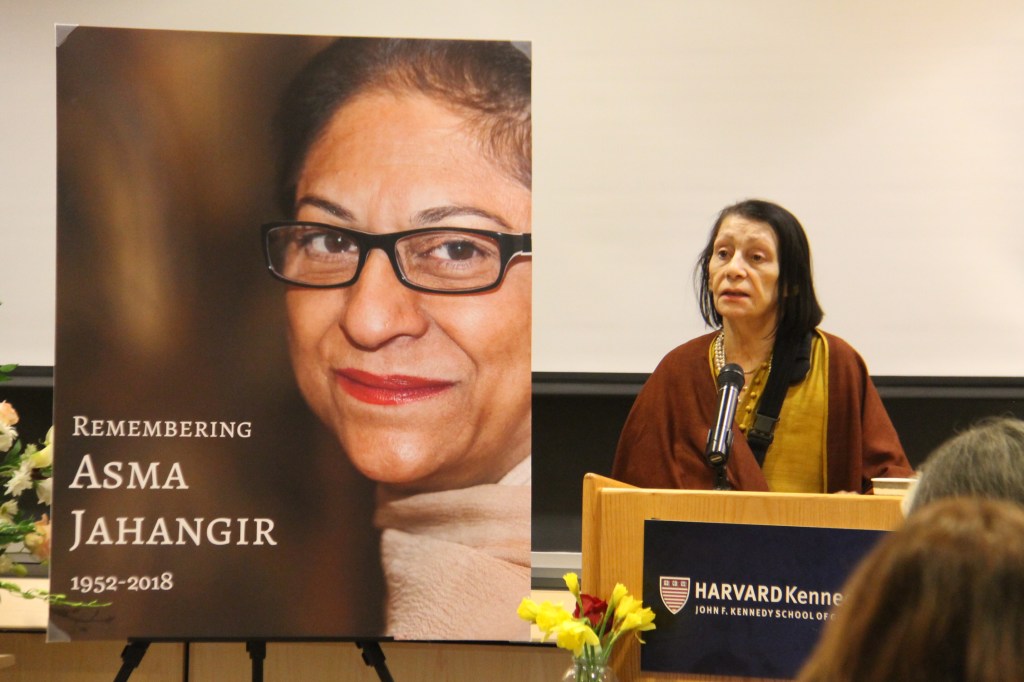
Sharing four recent offerings from Sapan News Network – the most recent one in full below, pegged on the Fourth Asma Jahangir Conference in Lahore, on the ‘ ‘Crisis of Constitutionalism in South Asia’, that I’m thrilled to have co-authored by aspiring young journalist Abdullah Zahid, published in The Friday Times/Naya Daur, South Asia Monitor and other media outlets. Plus three other recent syndicated features:
We cannot be at peace when our neighbours suffer. The main discussants on Sri Lanka’s ongoing crisis were not the ‘usual suspects’. A cautionary tale: Lessons from Sri Lanka’s cascading, multiple crises – report by Pragya Narang on a complicated issue with lessons for Southasian nations.
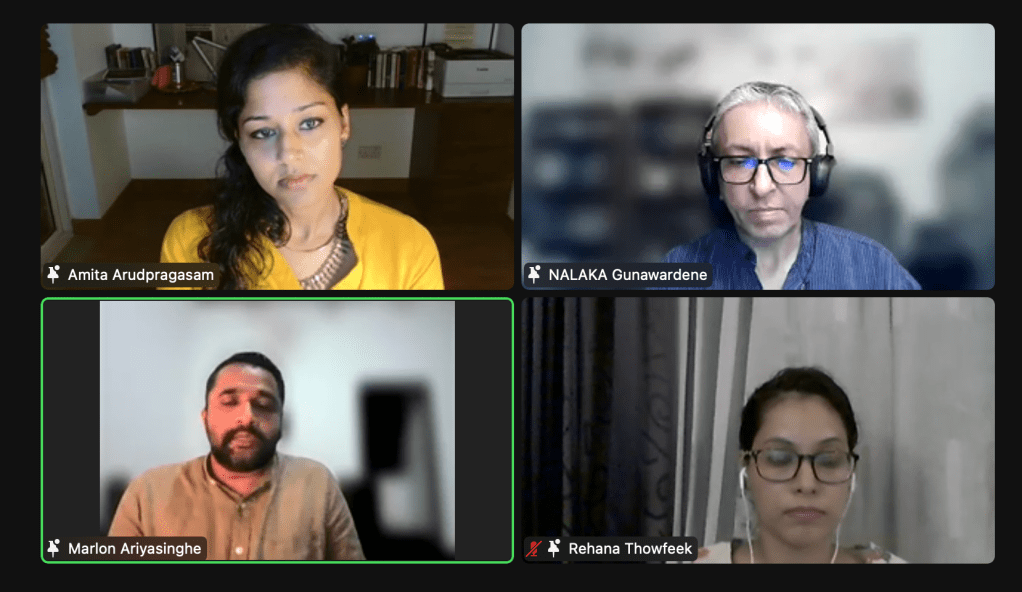
A teach-in on Sri Lanka’s ongoing crisis, with eminent thought leaders Amita Arudpragasam, Nalaka Gunawardene, Marlon Ariyasinghe, Rehana Thowfeek.
Sharing personal memories of the brilliant Sara Suleri whose genre-defying book Meatless Days inspired generations of writers, feminists, memoirists and dislocated Southasians. Thanks Ailia Zehra at The Friday Times for asking me to write this piece.Published as a Sapan syndicated feature in TFT, The Wire, Geo TV blog, South Asia Monitor and The Print – shared here with additional pix and links.
February 2018: Sara Suleri pays tribute to Asma Jahangir. Photo: Beena Sarwar.
PERSONAL-POLITICAL
By Beena Sarwar
March 25, 2022, Sapan News Service:
“Aur bataiye” – tell me more, a polite invitation to keep talking. I can hear her voice, perhaps naturally husky, made deeper with years of cigarette smoking and perhaps more recently with pain and other medications.
She’d send her love to Pakistan whenever I’d call before flying out from Boston, where we had both ended up around ten years ago – she after retiring as Professor Emeritus of English from Yale University. I had transplanted myself from my home city Karachi where I was editing Aman Ki Asha, hope for peace – between India and Pakistan.
“Dream on!” I hear Sara say. And yet, she agrees, it’s important to keep going. She’s also a hundred percent supportive of our push for a regional approach – the South Asia Peace Action Network, or Sapan, the more recent endeavour, launched last year with a wonderful group of inter-generational, cross-border peacemongers.
UPDATE 5.45 PST: Journalists Amir Mir and Imran Shafqat released on bail. Federal Investigation Agency says they were arrested for their alleged contempt against Judiciary, Army and some “women”…
FIA just announced that they released journalists Amir Mir and Imran Shafqat on bail. According to FIA press release both journalists were arrested for their alleged contempt against Judiciary, Army and some “women” but FIA never mentioned the names of the “women” pic.twitter.com/9WDBRkHxKd
Tweet from Amir Mir’s brother journalist Hamid Mir
————————-
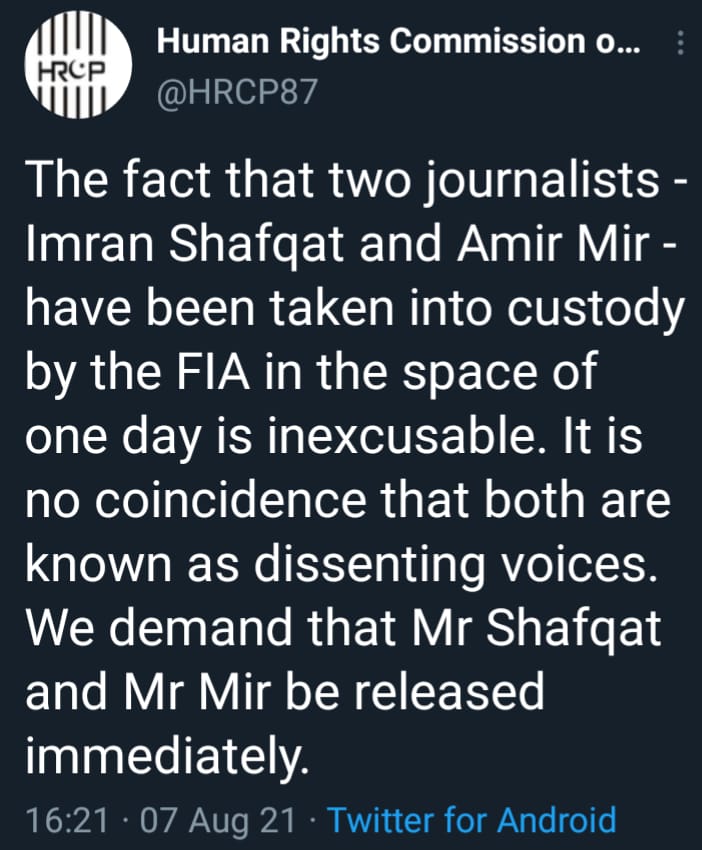
I don’t normally post back-to-back but the situation warrants it. Hours after my last blogpost Stand in solidarity with journalists, two more journalists have been picked up. What is this andher nagari, land in darkness…?
Image of HRCP tweet – Human Rights Commission of Pakistan
Pakistan Federal Union of Journalist (PFUJ) has strongly condemned abduction of two senior journalists Syed Imran Shafqat and Amir Mir from Lahore from their residences in Lahore on Saturday and demanded their immediate release.
The PFUJ also announced to hold countrywide protest from Monday against growing incidents of journalists’ abductions in Pakistan.
The abductors were reportedly from Federal Investigation Agency (FIA) which, PFUJ, believes is involved in taking actions against the journalists at the behest of the government.
As the newly-sworn in United States President Joseph Biden begins his tenure, he has a lot of salvaging to do from the wreckage left by his predecessor.
One of the more disturbing messages arising out of the attack by violent pro-Trump insurrectionists at the US Capitol on January 6 involved frightening threats to a free press. Scrawled on a door at the building were the words: “Murder the Media.”
That pithy, vile phrase represented the raw culmination of five years of rhetorical attacks by Donald Trump and his political allies against critical media coverage.
The doors to the U.S. Capitol right now, as members of the mob that stormed it a couple of hours ago file out, without police escorts or handcuffs: "Murder the Media." They don't like that we've been watching and reporting, and will continue to do so. pic.twitter.com/qtqNR26uMd






 Journeys to democracy