

‘Democracy in Debt: Sri Lanka Beyond the Headlines’ wins two awards at Jalgaon International Film Festival
The world is in turmoil. And we can still celebrate that our Pulitzer Center-supported documentary ‘Democracy in Debt: Sri Lanka Beyond the Headlines’ received two awards at the Second Jalgaon International Film Festival, in Aurangabad (now Chhatrpati Sambhajinagar), India. at a ceremony on Sunday, 1 March 2026, for Best Social Film (Outstanding Achievement), and Best Screenplay.
The 24-minute film explores the situation two years after the island nation’s economic collapse. We filmed at a remote, ancient village (puranagama) in Sri Lanka’s North-Central Province, talking to farmers, teachers, and school children, then to policy makers, economists and then Prime Minister in the capital Colombo.
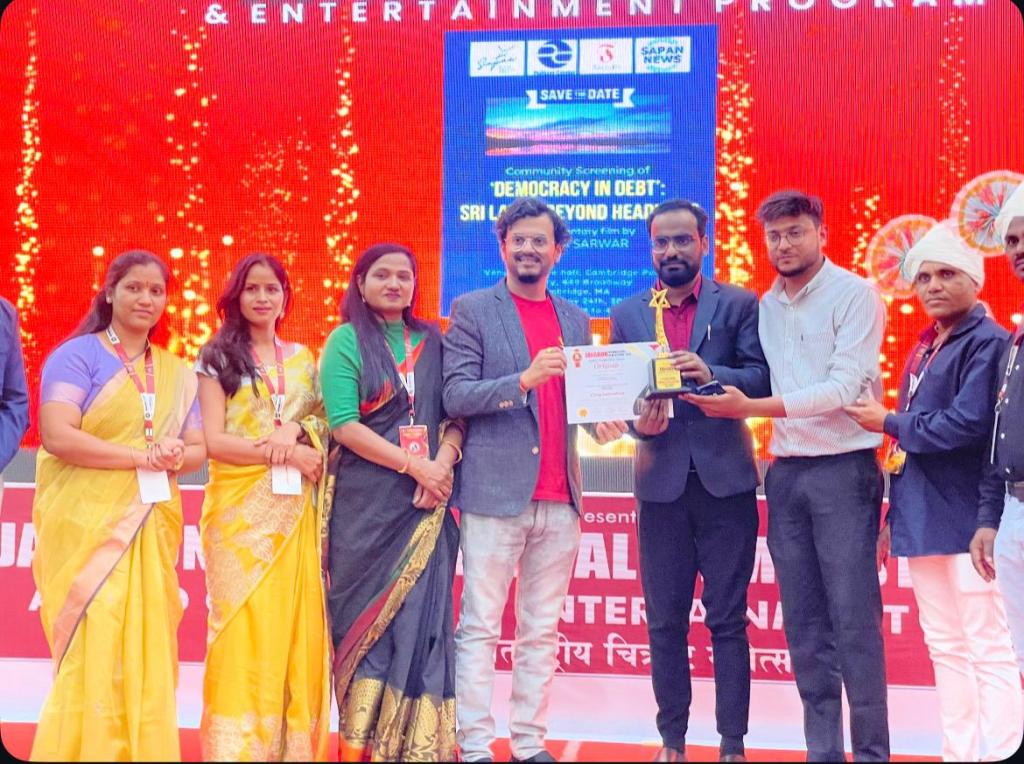
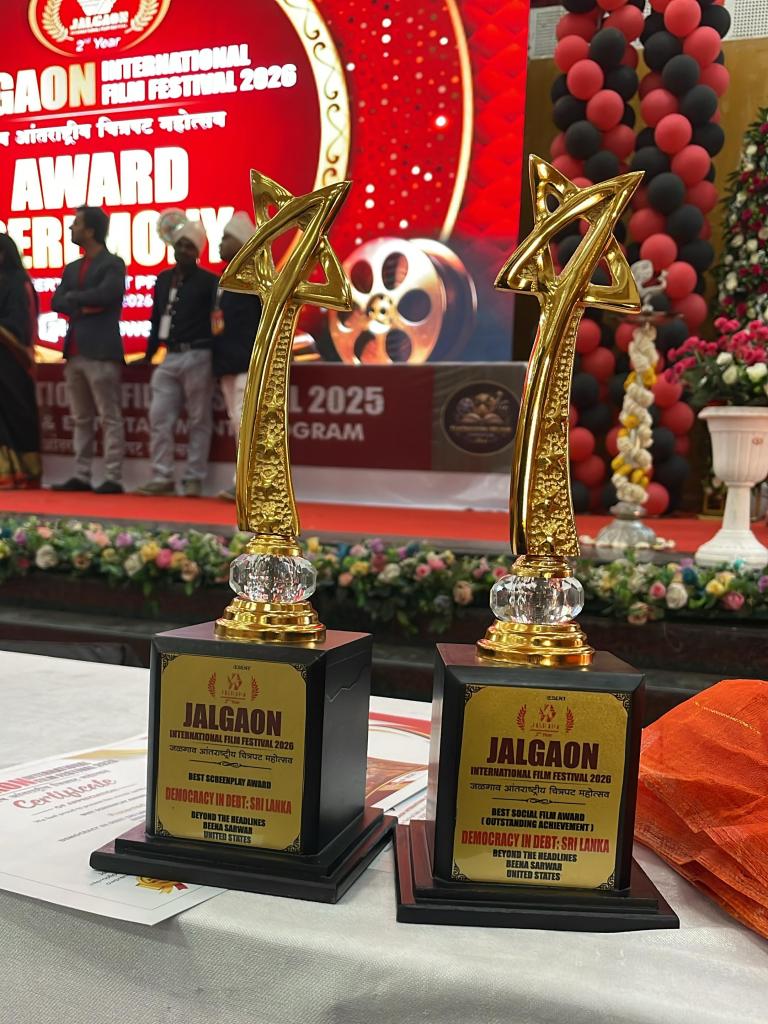
Some press coverage ahead of the event:
- Pulitzer Center: Sri Lanka Film Supported by Pulitzer Center Wins 2 Prizes at India Festival, 04 March 2026
- Gulf Times, Qatar: Documentary on Lanka to take 2 awards at Indian film festival, 26 Feb 2026
- United News of India, Pakistan-Sri Lanka documentary wins big at ‘Jalgaon International Film Festival’, 27 Feb 2026
- Press Trust of India report in NewsDrum: Pakistani-Sri Lankan documentary to receive two awards at Jalgaon film festival, 26 Feb. 2026
- Devidiscourse, A documentary triumph: Democracy in debt shines at Jalgaon film festival, 28 Feb. 2026
- Daily Star, Dhaka: Pulitzer-backed documentary ‘Democracy in Debt’ wins two awards at Jalgaon International Film Festival, 28 February 2026
- Prothom Alo, Bangladesh: Pulitzer Center-supported Pakistani-Sri Lankan documentary being awarded in India, 23 Feb. 2026
- Southasia Peace Action Network: Pulitzer Center-supported Pakistani-Sri Lankan documentary being awarded in India, 23 Feb 2026.
Filed under: Culture, journalism, Southasia | Tagged: covid-19, democracy in debt, farmers, history, jalgaon film fest, News, Politics, pulitzer center, Sapan, sapan news, Southasia Peace, southasia peace action network, Sri Lanka, teachers, writing | Leave a comment »




 Journeys to democracy