Guest post: A personal tribute to Karamat Ali (19 August 1945 – 20 June 2024) by Mandira Nayar in Delhi, for Sapan News
Karamat Ali was many things but for Mandira Nayar he was always the person who returned her grandfather Kuldip Nayar to Lahore, where he was born and which he considered home. The relationship between them defies labels but it has a bond that is deep and unbreakable, stronger than many relationships with names, she writes:
There are many words for friendship. Arabic has twelve. You can choose from friendships of different shades — the intense saqeeb, a true friend; sameer, someone who you like to have a conversation with, or the casual zameel, an acquaintance.
Announcement from Pakistan India People’s Forum for Peace and Democracy for an online memorial
Memorial meeting at Arts Council of Pakistan, Karachi, for Karamat Ali
Comrades at the Human Rights Commission of Pakistan in Lahore remember Karamat Ali
English has just the one — a bland ‘friend’. The short dost (friend) in Hindustani encompasses in its tiny frame a sort of bro-code for the intense relationship that Hindi film songs refer to, between Maana Dey’s ‘Yaari hai Imaan’ (My friend is my faith) to Sholay’s anthem ‘Yeh Dosti Hum Nahi toRe.nge‘ (This friendship we will never abandon).
‘Dost’
So I struggle to find a word to describe the relationship between Karamat Ali, labour leader, peace activist, revolutionary, lover of music, and my grandfather Kuldip Nayar, journalist, peace-activist and fellow dreamer. And by extension, my relationship with Karamat Sahib.
This relationship without a name has a bond that is deep and unbreakable, stronger than many relationships with names.
Karamat Ali was many things but for me he was always the person who returned my grandfather to the home he was born in.
Kathy Gannon shares an iconic photo by Anja Niedringhaus during a talk at Emerson College, Boston, 2022. Photo by Beena Sarwar
“If France and Germany can be part of the European Union, why can’t Pakistan and India be part of a Southasian Union?” asked Dr Mubashir Hasan, former finance minister of Pakistan, a hawk-turned-dove who co-founded the Pakistan-India People’s Forum for Peace and Democracy (PIPFPD). He had roped me into it when I was a young journalist in Lahore in the mid-1990s. When he said these words to me some years ago, and I replied that this was impossible, he responded, “Par hum baat toh kar sakte haiN” – but we can at least talk about it.
Years later, in 2021, during a time of renewed tensions between Pakistan and India, his words inspired the foundation of the Southasia Peace Action Network, Sapan, that we now write like a word, Sapan, rather than in all caps, conveys the meaning of a dream.
“This is a dream that connects millions, giving hope for solidarity, peace, and friendship in the region. The network, which encourages dialogue and connections amongst Southasians and across various issues, has managed to virtually overcome borders and build bridges between those who have historically been divided” writes young peacebuilder Mansi Chandna from Jaipur, who attended the event from her current base in Manchester.
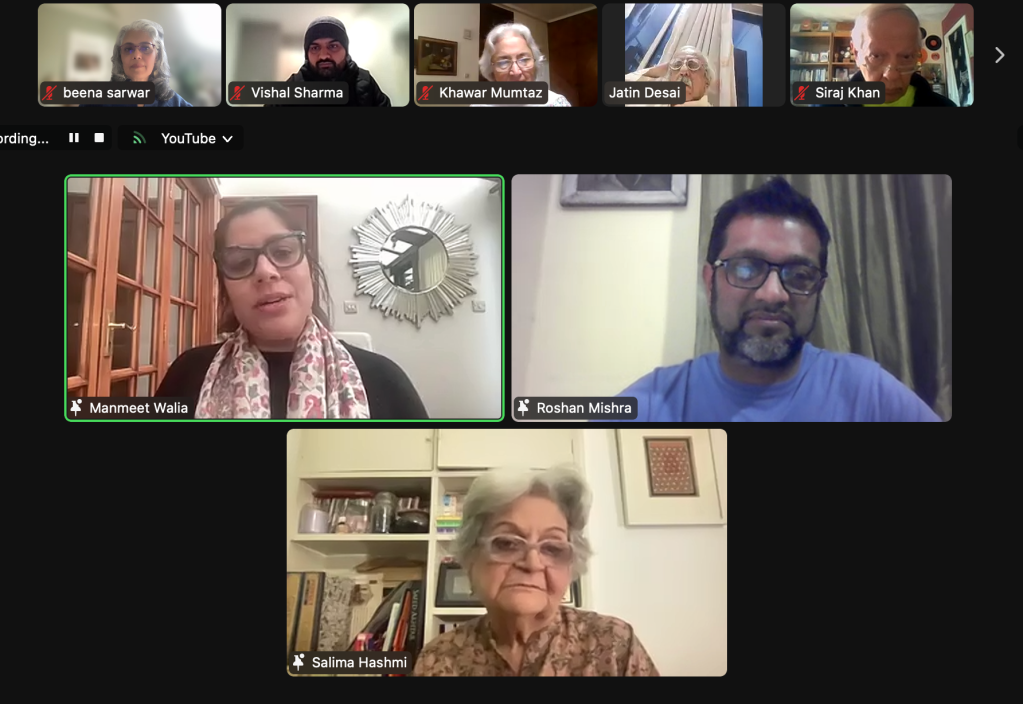
Art and Southasian Voices panel at the Sapan third anniversary event: Manmeet K. Walia, Roshan Mishra, Salima Hashmi. Screenshot from video recording.
Sharing my curtainraiser for Sapan News about a poignant photo exhibition opening at the Bronx Documentary Center in New York today, featuring the work of the acclaimed photojournalist Anja Niedringhaus. She covered Afghanistan and Pakistan at the height of the war between the Taliban and the USA, and was killed ten years ago, on 4 April 2014.
An Afghan police commander walked up to the car she sat in with Kathy Gannon outside a government compound in Khost, where they were covering the presidential election for the AP. Anja, 48, died instantly. Seven bullets shattered Kathy’s arms and shoulders. The Afghan doctor who initially operated on her saved her arm, using various ‘jugaRs‘ (improvisations). Doctors at the French military hospital in Kabul where she was later medi-evaced said they would have amputated it had she reached them first.
In all the years I’ve known Kathy, I’d never heard her complain or mention her injuries or trauma. When I hesitantly asked about it now, for this piece, she detailed the information matter-of-factly, even cheerfully, focuses more on Anja, her courage, and her spirit. All that applies to Kathy herself.
Kathy, who also on the Sapan News Advisory Council, has co-curated the show and its accompanying book.
Anja Niedringhaus’ photos showcased in a tribute posted by her colleagues at AP
The exhibition will travel to Cambridge MA, 9-10 May 2024, co-sponsored by the Nieman Foundation and the Shorenstein Center at Harvard University. Anja was a Nieman Fellow 2007.
Exhibition information: Bronx Documentary Center 614 Courtlandt Ave, Bronx, NY 10451 On View: April 4 – May 5, 2024 Gallery hours: Thurs-Fri 3-7PM, Sat-Sun 1-5PM
Book information: Anja Niedringhaus By Ami Beckmann, Kathy Gannon, and Muhammed Muheisen Hardcover, 80 pages, 44 images Release date: April 2024 Published by Fort Orange Press Price: USD 30
Note: We have been doing this work voluntarily for the past three years and need support of all kinds – like, share, encourage.
And donate – thank you to those who contributed to help Sapan News meet our NewsMatch goal by December 31. We made it!
We now need to raise $3,000 more in the next three weeks. Will you help? Here is the link to share with friends who might want to contribute – no amount is too small: www.sapannews.com/donate
Lahore, 1992: Dr Syeda Hameed with Dr Mubashir Hasan, uncle, comrade and mentor. Photo by Reza Kazim.
With the world in the grip of the novel coronavirus pandemic, it’s hard to find space for anything else. As horrors unfolded in country after country, exposing the hollowness behind military might, glittering capitalist facades, and exploitation, a gentle soul slipped into the hereafter at his house in Lahore. At 98, he had spent the last half of his life fighting for exactly the kind of egalitarian, people centered system that would have mitigated the ravages of Covid-19. There have been some wonderful tributes to Dr Mubashir Hasan. Two of the best I’ve seen are by his old friend I.A. Rehman and Indian journalist Nirupama Subramaniam in Indian Express, also published in Aman Ki Asha.
Below, my tribute to Dr M. in The News on Sunday last weekend, a follow up to my piece in The Wire earlier. Also below, two previously unpublished pieces I am honoured to present here — a powerful, poignant poem in Dr M’s memory by his niece in Delhi, and a lively little remembrance by a 12-year old based on her memories of the Chaukas collective meetings she attended with her mother, that led to A New Social Contract published by Dr M, 2016. Also linking here this tribute in Mainstream Weekly magazine, Kolkata, founded by Dr Mubashir’s friend Nikhil Chakravartty — “one of the greatest journalists of the subcontinent” as Dr M called him — now edited by his son Sumit Chakravartty.
The largest people-to-people group in the region, the Pakistan-India People’s Forum for Peace and Democracy has since its formation in the mid-1990s been calling for India and Pakistan to see Kashmir not as a territorial dispute but as a matter of the lives and aspirations of the peoples of Jammu and Kashmir, who must be involved in any dialogue about their future. That seems even further from the table now. Continue reading →
My piece on several memorial meetings held for the late Asma Jahangir in New York and Boston over the past couple of weeks. Published simultaneously in The News on Sunday and The Wire, 8 Oct 2018
Lyse Doucet moderating the panel at Asia Society. Screen grab from video.
Honouring Asma Jahangir’s legacy
Beena Sarwar
At a time when universal fundamental human rights values are under attack from fascist forces everywhere, an enduring lesson from Asma Jahangir remains: do your homework, stand your ground, and carry on. Continue reading →
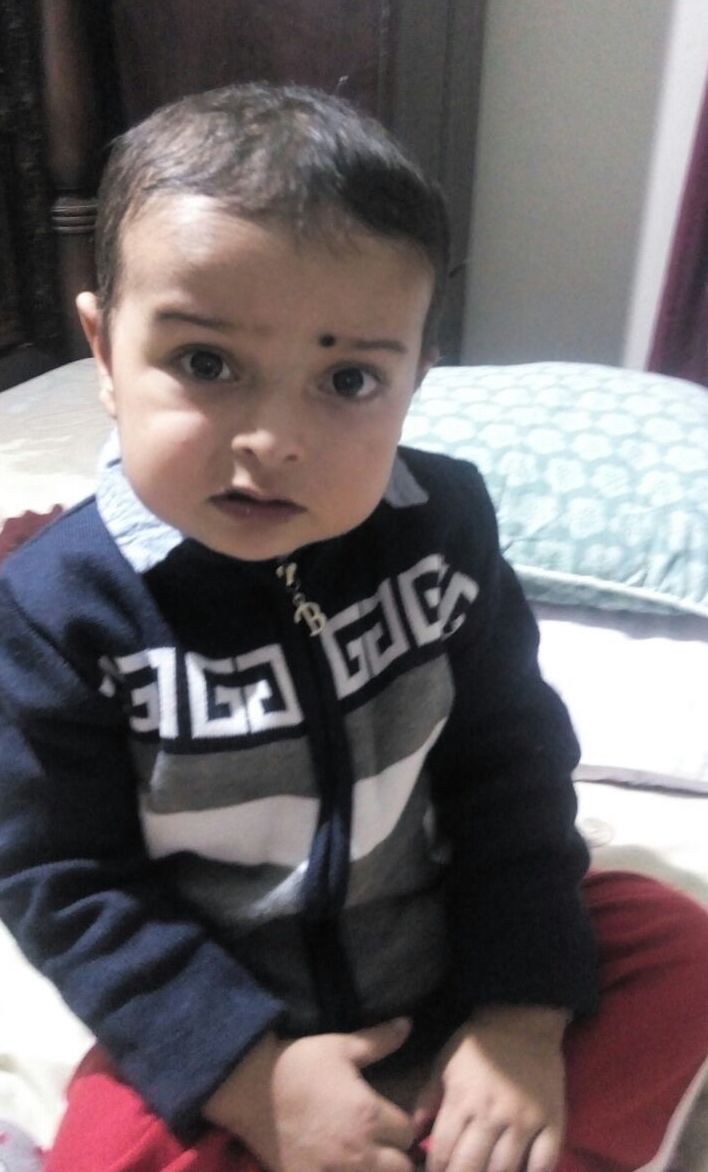
Two-year old Maier Jawwad needs urgent heart surgery in India.
Wrote a piece on a glimmer of hope regarding India Pakistan relations that needs to be built upon. Published in The News and in The Wire; original text below.
The best news in some time is that India and Pakistan are rising above their differences and joining hands for a humanitarian cause – they have agreed to exchange vulnerable prisoners (women, the elderly over 70 years, and those with special needs), as well as revive the Joint Judicial Committee on Prisoners that has not met since 2013. They will also allow medical experts from both sides to meet and examine mentally challenged prisoners in preparation for their repatriation. Continue reading →
Haroon Khalid, author of Walking with Nanak, will participate in a live Youtube discussion on Monday, 7 August.
As Pakistan and India commemorate 70 years of their existence as independent nation states, what is striking is the people’s desire for peace and how those who govern them continue to thwart these aspirations. As media highlight the tensions what goes largely unreported is people on the ground continuing their efforts to push for peace. Below: a few on-the-ground upcoming happenings I compiled that seek to further understanding between the two nations. At the very least, they are all expressions of the desire for normal relations.Continue reading →
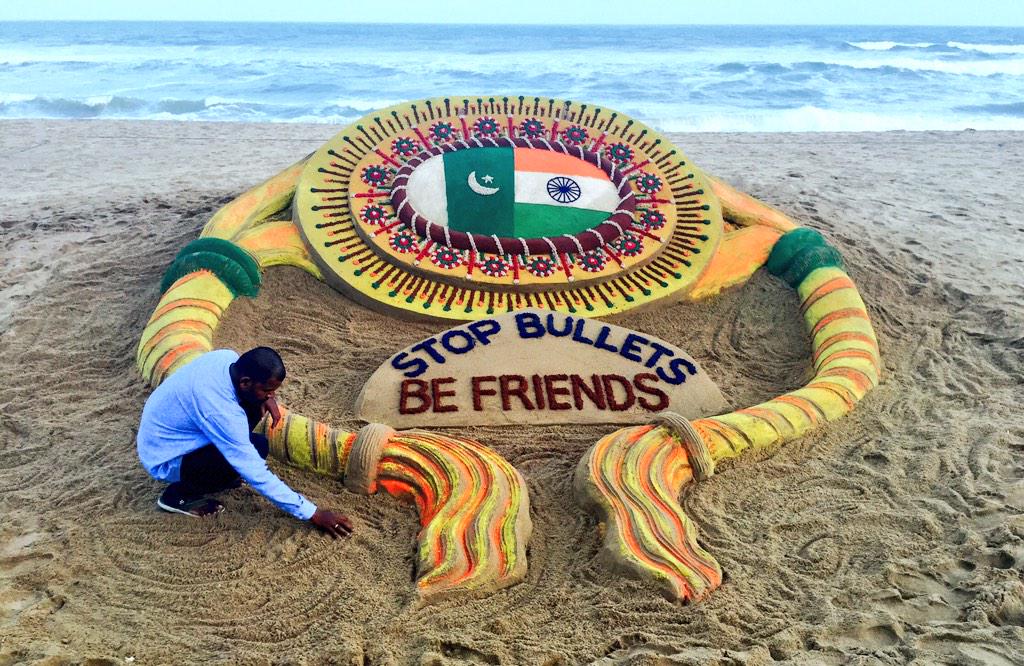
Sand artist Sudarsan Pattnaik’s piece for Raksha Bandhan at Puri beach, Odisha, with a message urging India and Pakistan to “Stop Bullets, Be Friends” (file photo, 2015)
Nice to see the mainstream media take note of this privately shared resolution urging India, Pakistan to resolve tensions through dialogue. Some pretty big names on board – check the updated list at the Aman ki Asha website at the end. Over 100 people endorsed it today, bringing the number to over 350 in just 48 hours.
Music legend Shubha Mudgal is among the signatories
A valiant effort by concerned citizens of India and Pakistan to stem the tide of hatred, bigotry and violence, this Resolution has hundreds of endorsements listed alphabetically below. The Resolution is nowonline at this link. Please sign and share.
Peacemongers call for India, Pakistan to resolve differences through dialogue
With tensions between nuclear-armed India and Pakistan on the rise, some concerned citizens from India and Pakistan have come together to formulate a statement expressing their deep concern at “the current rise in animosity and antagonism between India and Pakistan”. The resolution urges “both governments and their security establishments to take all steps possible towards improving relations”. Continue reading →
Sharing a piece I wrote with Dr. Partha Banerjee about our friend Haider “jigar”Rizvi, published by PRI on October 28, 2016, a year after he died in Lahore. Reproduced here with photos that we weren’t able to get to PRI in time.
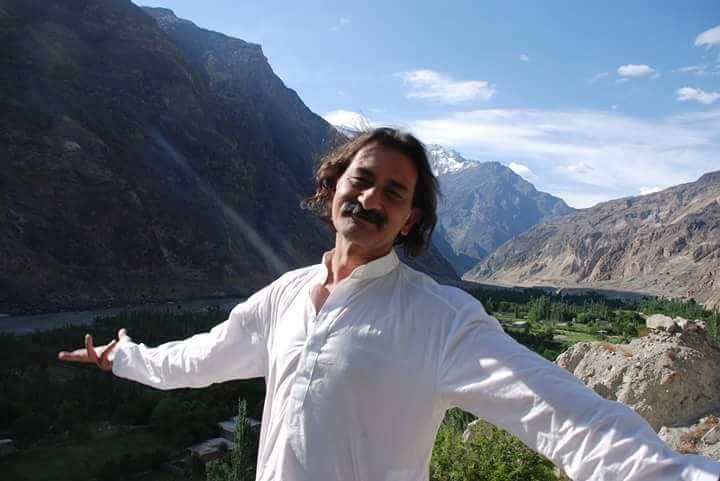
Haider Rizvi celebrating life and love at Ghizar District, Gilgit, 2015. Photo by Qamar Abbas.
Last year around this time, we were saddened by the death of our poet and journalist friend Haider Rizvi in Lahore, Pakistan, on Oct 29, 2015. Haider had lived in New York, and was for many years a correspondent for the Inter Press Service (IPS), based at the United Nations.
With Haider’s untimely passing, we lost someone who loved to make friends irrespective of religion, color or caste — someone who believed firmly in peace. Continue reading →







 Journeys to democracy