Amateur theatre group from Pakistan tours USA with Partition stories

My article on Islamabad-based group Theatre Wallay’s theatre project ‘Dagh Dagh Ujala’ (This Stained Dawn), that toured the US recently, published in Scroll.in today – Partition retold: A Pakistani theatre group dramatises survivor stories to shatter myths. Below, the unabridged version filed on Oct. 26.
DaghDagh Ujala-Isbd

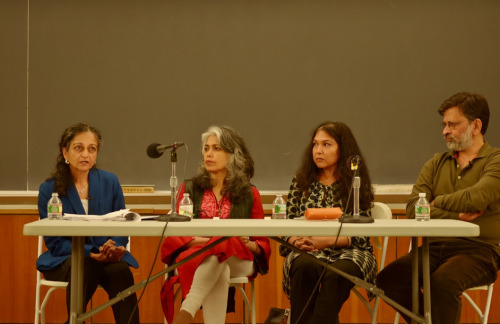
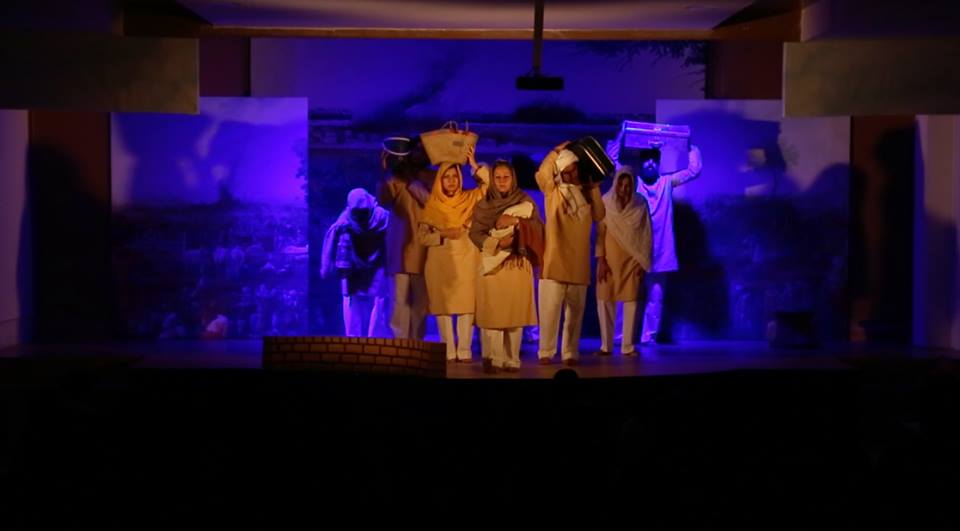
Scene from the play, Islamabad performance. Photo courtesy: Fizza Hasan

Beena Sarwar

An amateur theatre group in Pakistan has started its tour of the USA with a dramatisation of Partition stories based on interviews of Partition-survivors by group members.

The play’s title Dagh Dagh Ujala’ (This Stained Dawn) refers to the first words of the Urdu poem ‘Subh-e-Azadi’ (Dawn of Freedom) by the acclaimed poet Faiz Ahmed Faiz. Penned in 1947 on the eve of India’s Independence from British rule and its bloody partition, the poem is popular on both sides of the border. Continue reading

Lift the goodwill: Indians, Pakistanis find creative ways to protest hate, violence, bigotry

Dunkin' Donuts sign in Islamabad with the Pakistani and Indian flags: peace meals

Dunkin’ Donuts sign in Islamabad with the Pakistani and Indian flags: peace meals

The right-wing Shiv Sena’s recent vigilante actions targeting Pakistani musicians, sportspeople, and diplomats in Mumbai have led to embarrassment and widespread condemnation in India, and of course to the right-wing in Pakistan gleefully pointing fingers at India.

There have also been compassionate and creative responses from Pakistanis, who have all too often suffered the poison of bigotry and injection of religion into politics.  After a Pakistani family had to spend the night on the footpath in Mumbai because they lacked the requisite papers (Form C) allowing them to stay in a hotel, Pakistani entrepreneur Iqbal Latif responded by offering free meals to Indians visiting Pakistan at his Dunkin’ Donuts franchises. His gesture was widely reported and drew a massive response in India.

A friend in India points out that the hyped up anti-Pakistan protests are a predictable forerunner to the upcoming state elections in Bihar and Uttar Pradesh that are critical for the ruling coalition in particular. That may well be the case, but meanwhile, Indians are also finding ways to creatively and peacefully express their distaste for bigotry and hooliganism. After the Sena successful blocked respected Pakistani musician Ghulam Ali’s concert in Mumbai, one Indian made a painting that he tweeted:  Continue reading

Rahul Roy: Addressing “masculinities” through film

My blog post for Harvard South Asia Institute on Rahul Roy’s documentary film series on ‘masculinities’
Filmmaker Rahul Roy, right, captures in his films the nuances, masculinities and realities in a slice of urban life over the years.

Filmmaker Rahul Roy, right, captures in his films the nuances, masculinities and realities in a slice of urban life over the years. Photo: Ashima Duggal

By Beena Sarwar

Indian filmmaker Rahul Roy first met and began filming four young men in 1999 for his documentary film When four friends meet, interacting with them and filming for about two years in the Delhi slum where they live. He stays in touch with the four – Sanjay, Sanju, Kamal and Bunty – over the years and 12 years later, returns to do a sequel titled Till we meet again. Continue reading

Something to celebrate

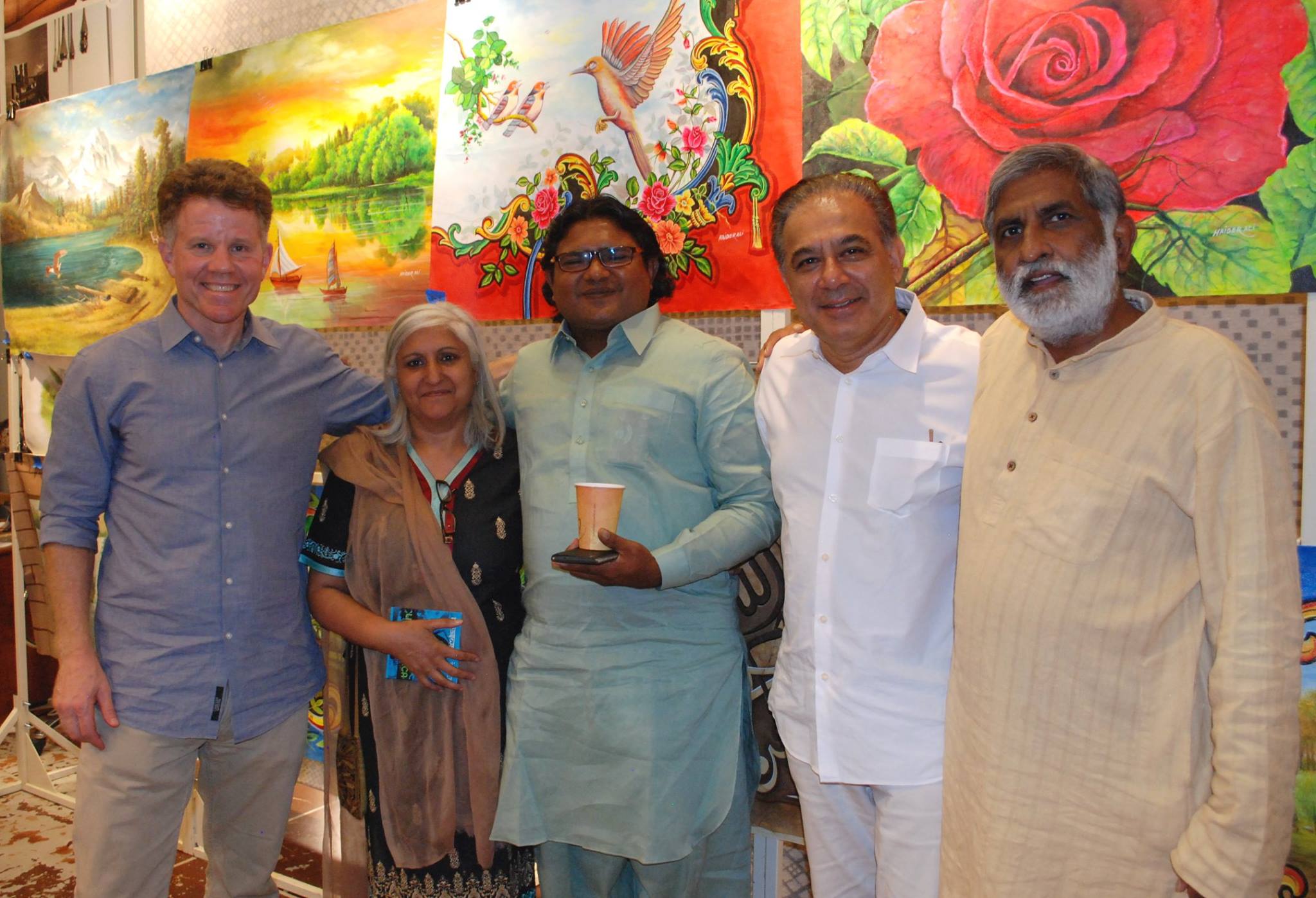
Celebrating Indian and Pakistani Independence Days with Karachi Truck Artist Haider Ali and friends at Dover Rug (L-R): Ken Shulman, Hardeep Mann, Haider Ali, Mahmud Jafari, Jaspal Singh. Photo: Beena Sarwar

Celebrating Indian and Pakistani Independence Days with Karachi Truck Artist Haider Ali and friends at Dover Rug (L-R): Ken Shulman of Away Games, Hardeep Mann, Haider Ali, Mahmud Jafari, Jaspal Singh. Photo: Beena Sarwar

A friend points out that my last few posts have been about death and loss. Then with Pakistan and India’s Independence Days coming up (Aug 14 and 15 respectively) someone asked, ‘What’s there to celebrate?’ My response: Yes, there is much to mourn, and sometimes there doesn’t seem to be that much to celebrate. As Jimmy Engineer says, the fight between good and evil is an eternal one. Doesn’t mean we stop living. When Indians and Pakistanis jointly Celebrate India, Pakistan Independence Days for Peace, Aug 14-15, 2015, it symbolises the desire to own an occasion that has been appropriated by hyper-nationalist, jingoistic war-mongers. Through this joint commemoration and greeting and wishing each other, we defy our government and security establishments’ efforts to create a negative narrative about ‘the other’. That, surely, is something to celebrate. Continue reading

PAKISTAN: CAPITAL PUNISHMENT: It’s not just about Shafqat

My oped in The News, Pakistan below. Also see my earlier piece on the issue in in Scroll – Clamour to hang Shafqat Hussain reflects vengeful mood in Pakistan after Peshawar attacks

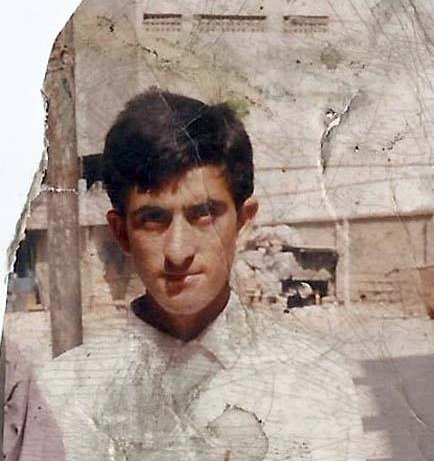
Shafqat Hussain - more than 10 years ago, before he left his village in AJK

Shafqat Hussain – more than 10 years ago, before he left his village in AJK

PAKISTAN: CAPITAL PUNISHMENT
It’s not just about Shafqat

by  Beena Sarwar

Shafqat Hussain is due to be hanged — for the seventh (not fifth, as I wrote earlier) time — at 4.30 am on August 4, 2015. His ‘black warrant’ was issued on July 27, despite a comprehensive 12-page report by the Sindh Human Rights Commission (SHRC) on July 16 that urges the Sindh government to move to stay the execution, and approach the Supreme Court of Pakistan to “consider the evidence which could not be produced at the trial by defence”.

The SHRC’s recommendations cannot be taken lightly. This is a government-appointed statutory body set up in 2013 under the Human Rights Act of 2011 passed by the Sindh government. A respected retired judge of the Supreme Court heads it. At stake is a human life.

Continue reading

For Insha Afsar… Ski is the limit

Ski is the limit

Insha Afsar: A champion skier from Muzaffarabad.

Thanks to the Association of Pakistani Physicians of New England (APPNE) for the opportunity to meet an inspiring young lady, 14-year old Insha Afsar of Muzaffarabad who lost a leg in the earthquake of 2005 but has risen to become a champion one-legged skier, enabled by her supportive host parents in the USA. My piece in The News on Sunday

Some weeks ago, I happened to sit at the same table as a bright-eyed, long-haired young girl with a wide smile. The only non-desis in the room were the white couple with her. I assumed they were doctors or medical representatives in that hall full of physicians and their families.

But a pair of crutches resting on the table indicated that the girl was Insha Afsar, the 14-year old from Muzaffarabad who lost a leg in the 2005 Kashmir earthquake but has become a skiing sensation as she dominates the slopes — on one leg. Continue reading

Jimmy Engineer: The artist, his inner voice, the lion story and a dream

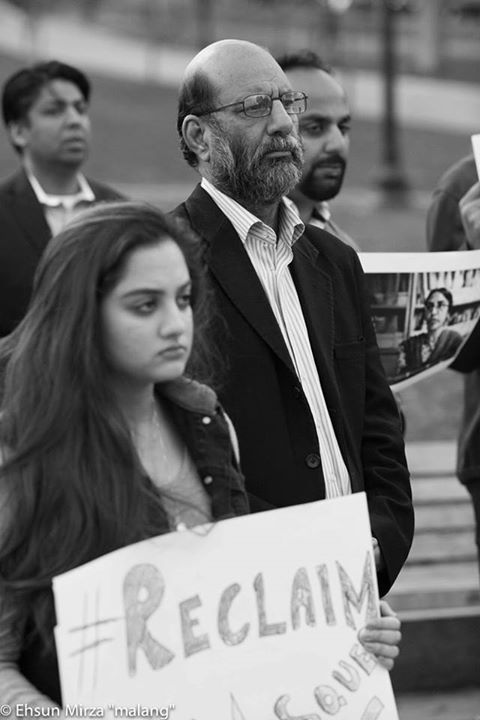
Jimmy Engineer stands with protestors at the 4th monthly remembrance for Peshawar school massacre, in Boston. Photo: Ehsun Mirza

Jimmy Engineer stands with protestors at the 4th monthly remembrance for Peshawar school massacre, in Boston. Photo: Ehsun Mirza

An article I wrote for The News on Sunday about the artist, humanitarian and peace worker Jimmy Engineer, The artist and more, May 3, 2015. Reproduced here with additional links and photos.

“There is a long list of people who are activists and who take up causes who get killed. It’s an endless list, and it’s a senseless list,” says Jimmy Engineer.

I’m talking to this Pakistani artist and philanthropist on the phone, having him met a few times in the Boston area. Based in Karachi, he’s visiting the USA, currently in Houston where his parents live. I’ve called to ask if he heard about the murder of activist-entrepreneur Sabeen Mahmud in Karachi.

He puts the tragedy in perspective as part of the perennial struggle between good and evil. “There will always be those who try to improve things and raise a voice to create awareness. There will always be those who want to destroy them. This happens everywhere in the world. Nature also takes its toll. Along with all the positive, there’s always a negative, like the Nepal earthquake.”

Sabeen herself well understood herself and exemplified this philosophy, accepting that negativity and evil exist but yet continuing to strive to do what is possible on a personal level. Life is a never-ending struggle and we each need to do what we can. Continue reading

Pakistan: Protest curbs on academic freedom, freedom of expression and public debate

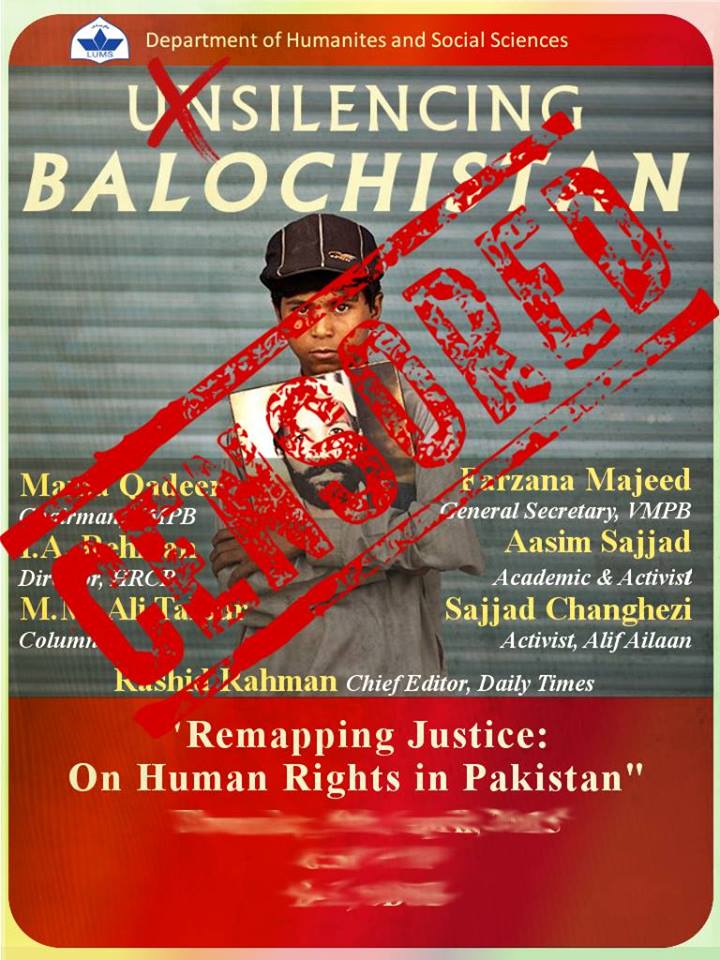
Censored- unsilencing balochistanSTATEMENT OF CONCERNED FACULTY MEMBERS AND STUDENTS OF LUMS REGARDING THE DECISION TO CANCEL THE TALK ON BALOCHISTAN IN KARACHI UNIVERSITY SCHEDULED TO BE HELD WEDNESDAY 6 MAY, 2015:

We, concerned students, alumni and faculty members of LUMS, deeply deplore the decision by the Karachi University administration to cancel the talk on Balochistan titled “Baloch Missing Persons and The Role of State and Society”, planned tomorrow Wednesday 6 May 2015 at Karachi University. This decision comes on the heels of the cancellation of the LUMS roundtable on “Un-Silencing Balochistan”, scheduled to be held on 9 April, and the tragic killing of Ms. Sabeen Mahmud, director of the café T2F in Karachi, right after a debate on the very same issue on 24 April on the premises of T2F. Continue reading

#Rise4Sabeen: Keep the dialogue going

Protest4Sabeen-28April2015

Below, some of the widespread condemnation and protest vigils against the cowardly murder of human rights activist and upholder of free speech Sabeen Mahmud, shot dead in Karachi on the night of April 24, 2015 after she hosted a conversation on human rights violations in Balochistan. Just published: Tanqeed’s partial transcript of the discussion. No, Sabeen was not a separatist, nor did she condone violence by anyone, whether in the name of nationalism, ethnicity, religion, or honour. She was a firm believer in open, civil dialogue. The best tribute we can pay to her is to keep her legacy alive by continuing to speak up and keep the dialogue going.

Statement by Malala Yousafzai on the killing of Sabeen Mahmud, April 25, 2015

LUMS STATEMENT on Sabeen Mahmud’s murder, April 25, 2015

HRCP shocked at T2F director’s murder, demands justice, April 25, 2015

Target Killing of Sabeen Mahmud: WAF Statement, 25 April 2015

SAHR Statement of Concern on the killing of Sabeen Mahmud, South Asians for Human Rights, April 27, 2015

Karachi citizens press release, April 28, 2015

Report from Lahore rally for Sabeen, April 28, 2015  Continue reading

Pakistan #Intellecticide: Vigils for Sabeen – who was she and why was she killed?

Sabeen-Hero-Karachi-Mohsin Sayeed

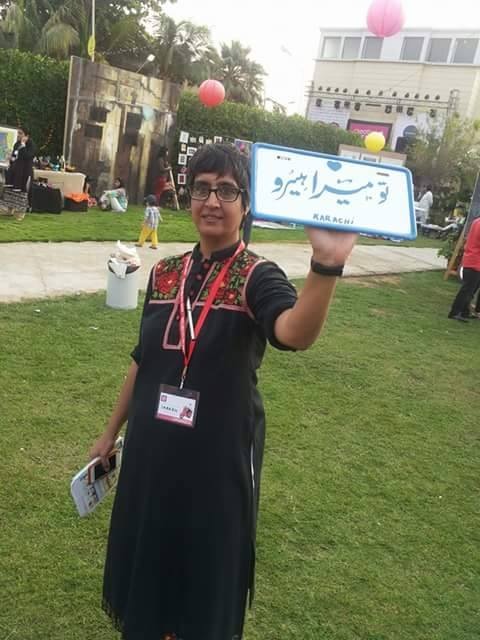
Sabeen: delighted to find an old Karachi car number plate reading, “Tu Mera Hero” (you’re my hero) at the “Creative Karachi” festival, fund-raiser for T2F, 2014. Photo by Mohsin Sayeed

Vigils and protests for our slain comrade and friend Sabeen Mahmud are taking place in different cities of Pakistan and around the world. Anyone is welcome to submit online responses to the blog Sabeen Mahmud: A Tribute.

In Boston, students have organized a vigil for Sabeen on Tuesday, April 28, 7.30 pm at the John Harvard statue in Harvard Yard (Facebook Event). In Pakistan, friends are meeting at Press Clubs in Karachi, Lahore and Islamabad to register their protest.

Bring an apple. Or a Beatles or Steve Jobs poster. Or Farida Kahlo or Farida Khanum, Faiz, Farid Ayaz… all the things she loved. Black armbands. She loved strong visual statements.

A lot has been written about who she was, what she stood for and why she was targeted. My offerings, with a heavy heart: Onpoint with Tom Ashbrook on NPR; in in Scroll: You refused to cower in silence’: A letter to a fallen Pakistani comrade; and In Pakistan, This Activist Was Martyred for Her Moderation in the Daily Beast co-authored with Asra Nomani.

Continue reading