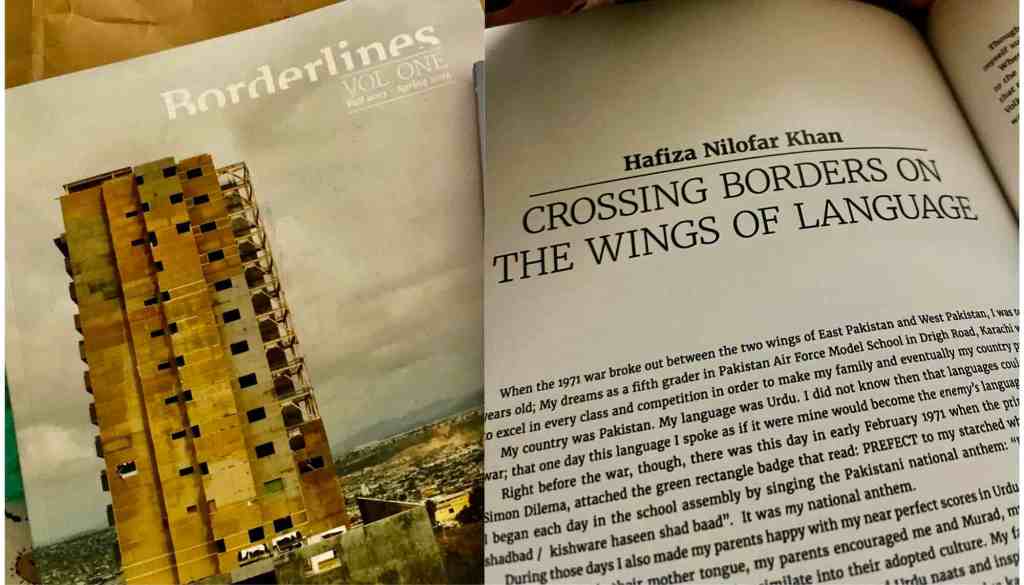
It was only as an adult long after 1971 that I learnt about the internment camps where Bengalis in then West Pakistan had been detained. My source was an essay titled ‘Crossing Borders on the Wings of Language’, by Hafiza Nilofar Khan, in Borderlines, Vol. 1 (2014), an anthology published by Voices Breaking Boundaries, my sister Sehba Sarwar’s nonprofit in Houston (now archived at the University of Houston).
The ten-year-old Hafiza whose father is in the Pakistan Air Force and proud of her prowess in Urdu suddenly finds herself and her family in the situation that Lahore-based historian Ilyas Chatta details in his recently published book Citizens to Traitors: Bengali Internment in Pakistan 1971-1974 (Cambridge University Press, 2025).
I began writing this piece some time ago, after watching Ava DuVernay’s ‘Origin’ at a friend’s place in Chicago – appropriate because that’s where Dr. King did a lot of his activism. Today seemed like a good time to finish it.
There is more awareness about systemic racism, caste oppression, and gender rights than ever before but we have a long way to go to achieve the dream of equality, justice and human dignity embodied by Dr. Martin Luther King. Those who fear change will continue to fight it. The struggle continues
Personal Political By Beena Sarwar / Sapan News
The third Monday of January, which falls this year on the 20th, is a federal holiday in the U.S., in honour of Dr. Martin Luther King Jr.’s birthday. Born on 15 January 1929, Dr King was assassinated on 4 April 1968. A bill passed by Congress led to his birthday being commemorated as a federal holiday on the third Monday in January since 1986.
The U.S. Presidential Inauguration also takes place on 20 January. This will mark the third time ever for a president to take the oath of office on the holiday designated for Dr Martin Luther King – the earlier two were President Bill Clinton and President Barack Obama.
Dr King’s children have urged supporters to hear what President Trump has to say, even if they do so later.
The ideals of equality, justice, human dignity, and peace that Dr King stood for remain relevant, opposed by those threatened by these concepts.
A photo of a photo from the Martin Luther King, Jr. Memorial Center in Atlanta, Georgia, by Matt Lemmon.Continue reading →
The event in India this afternoon represents a significant moment for Southasian solidarity. It also underscores the challenges in the region, including visa restrictions between Pakistan and India
I feel deeply honoured to be among the wonderful women being conferred the Saahas-e-Azim (Most Fearless) award by WISCOMP in Delhi today – Women in Security, Conflict Management and Peace, celebrating its 25th anniversary.
Sapan founder member Dr Syeda Hameed
It is amazing that three of the awardees are from Pakistan – but sadly unable to be there at the ceremony, thanks to the visa issues between Pakistan and India.
The highest award, the Saahas Shresta (Great Courage), goes to the journalist and activist Patricia Mukhim, Editor of Shillong Times and a Sapan News advisory council member. The jury termed Mukhim a “tireless advocate for communal harmony and gender equality” with “ceaseless positive energy in countering violence”.
Further delighted that our dear mentor Dr Syeda Hameed is a guest of honour conferring the awards, and that our lovely friends Kavita Srivastava and Mandira Nayar will be there to receive the honour on behalf of Saeeda Diep and me.
The large Sapan presence and contingent in this event includes four of the awardees, a guest of honour, and two accepting the awards, as Pragyan Srivastava wrote today for Sapan News
The Pakistanis besides myself are Sapan founder member Saeeda Diep, “peace activist and human rights advocate from Pakistan, championing the rights of religious minorities, especially Hindus through a gender lens” and Mossarat Qadeem, a university professor turned activist, being honoured for her work through her Paiman Trust which “empowers women and radicalised youth in conflict zones to become agents of peace and reconciliation”.
The fourth Saahas-e-Azim awardee is Ruchira Gupta, “globally renowned journalist, filmmaker, and activist, dedicated to eradicating sex trafficking and empowering women”, a Sapan member from India.
Thanks also to our great friends and Sapaners Aekta Kapoor and Sagari Chhabra for the nominations.
Guest post: A personal tribute to Karamat Ali (19 August 1945 – 20 June 2024) by Mandira Nayar in Delhi, for Sapan News
Karamat Ali was many things but for Mandira Nayar he was always the person who returned her grandfather Kuldip Nayar to Lahore, where he was born and which he considered home. The relationship between them defies labels but it has a bond that is deep and unbreakable, stronger than many relationships with names, she writes:
There are many words for friendship. Arabic has twelve. You can choose from friendships of different shades — the intense saqeeb, a true friend; sameer, someone who you like to have a conversation with, or the casual zameel, an acquaintance.
Announcement from Pakistan India People’s Forum for Peace and Democracy for an online memorial
Memorial meeting at Arts Council of Pakistan, Karachi, for Karamat Ali
Comrades at the Human Rights Commission of Pakistan in Lahore remember Karamat Ali
English has just the one — a bland ‘friend’. The short dost (friend) in Hindustani encompasses in its tiny frame a sort of bro-code for the intense relationship that Hindi film songs refer to, between Maana Dey’s ‘Yaari hai Imaan’ (My friend is my faith) to Sholay’s anthem ‘Yeh Dosti Hum Nahi toRe.nge‘ (This friendship we will never abandon).
‘Dost’
So I struggle to find a word to describe the relationship between Karamat Ali, labour leader, peace activist, revolutionary, lover of music, and my grandfather Kuldip Nayar, journalist, peace-activist and fellow dreamer. And by extension, my relationship with Karamat Sahib.
This relationship without a name has a bond that is deep and unbreakable, stronger than many relationships with names.
Karamat Ali was many things but for me he was always the person who returned my grandfather to the home he was born in.
A message from the journalist Amitabh Pal about a mutual friend, David Barsamian of Alternative Radio in Colorado reminded me of this piece originally published in The News on Sunday, 8 Oct. 2006, about an event with Noam Chomsky where I first met David. The article is still all-too relevant, but the link no longer works so I’m sharing the piece here without any changes; just added some hyperlinks and photos.
Essential reading – and doing: Eqbal Ahmad
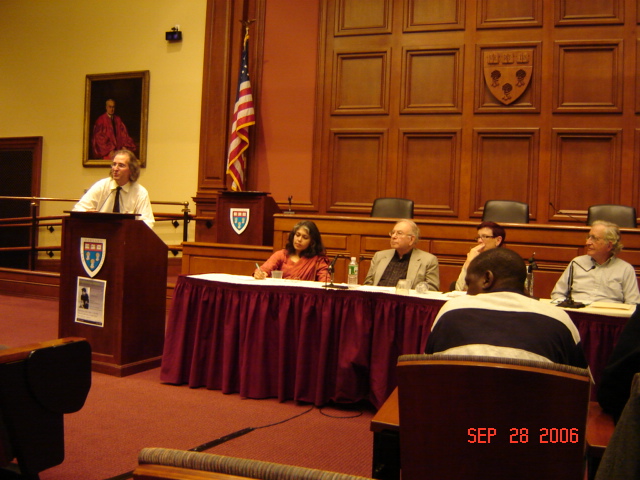
Book launch: The Selected Writings of Eqbal Ahmad, Cambridge, September 28, 2006.
Beena Sarwar
John Trumbour addressing the event. Panel: Beena Sarwar, Stuart Schaar, Margaret Cerullo, Noam Chomsky. Photo: Courtesy MAPA.
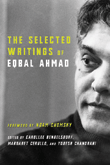
When Venezuelan president Hugo Chavez in his address to the UN on Sept 20, held up a copy of Noam Chomsky’s Hegemony or Survival: America’s Quest for Global Dominance (2003) and recommended it as essential reading to understand contemporary world politics, he could have been talking about The Selected Writings of Eqbal Ahmad, for which Chomsky, Eqbal’s long-time friend, wrote the foreword. Chavez identified “the hegemonic pretension of the North American imperialism” as “the greatest threat on this planet” to the survival of the human race.
The book that Jack launched (at HLS)
Chomsky also gave the main address for this collection of Eqbal Ahmad’s writings (Columbia University Press, 2006) at the book’s launch in Cambridge, USA, on September 28. John Trumpbour and Emran Qureshi of the Labor & Worklife Program at the Harvard Law School, who organised the event, didn’t publicise the event too aggressively because of the hype Chavez had generated for Chomsky.
The hall did get quite full, but they didn’t have to turn anyone away at the door. The venue may have had something to do with this. Chomsky, a linguistics professor now retired from the neighbouring MIT, is rarely invited to Harvard. Harvard Law School professor Alan Dershowtiz criticises Chomsky for being too “black and white” but often has to concede the basic truth of the points Chomsky makes.
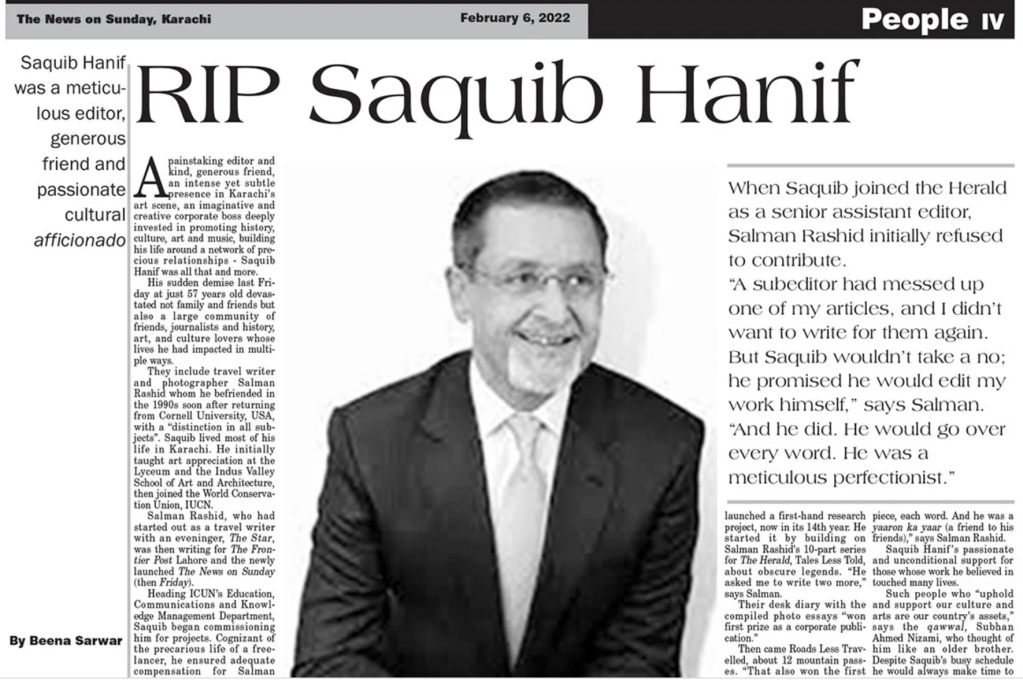
Death brings people together. I had known Saquib Hanif and his wife Nadia Chundrigar for years in Karachi without really knowing them. We spent a lot of time together when they came to Boston 2015 for the funeral of Saquib’s childhood buddy, the brilliant Nasser Hussain, younger brother of one of my old school friends. Now, it is Saquib’s sudden death, aged just 57, that brings us together again.
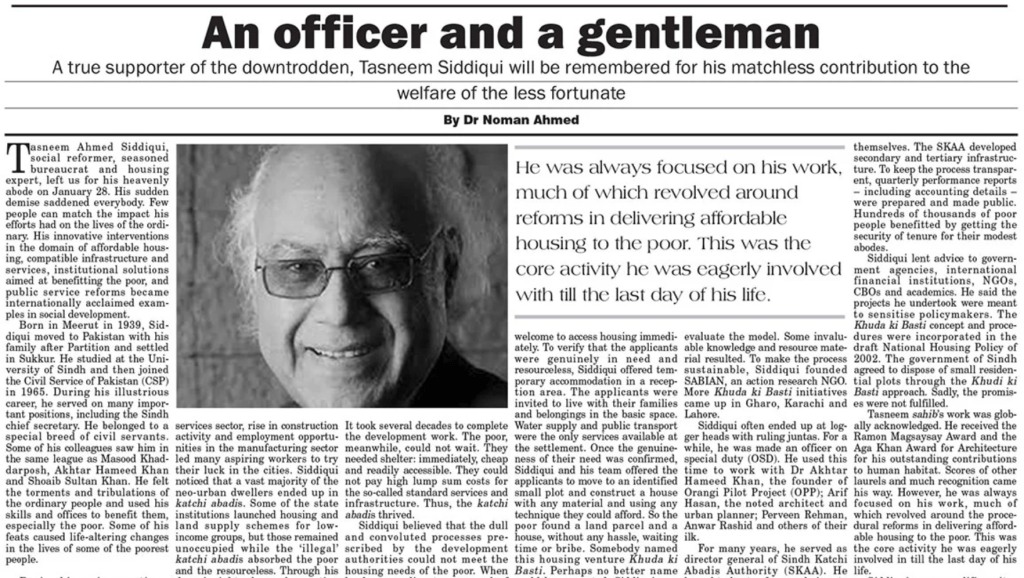
Thanks to The News on Sunday for asking me to write his obituary, published on the same page as another obituary, of Tasneem Siddiqui, the top former ‘pro-people” bureaucrat and social activist who died recently from a cardiac arrest, aged 82. We had run into him at the Karachi Gymkhana just a couple of weeks earlier. He had attended a meeting on the morning he died.
Screenshots from The News on Sunday’s People page, 6 Feb. 2022. So many losses.
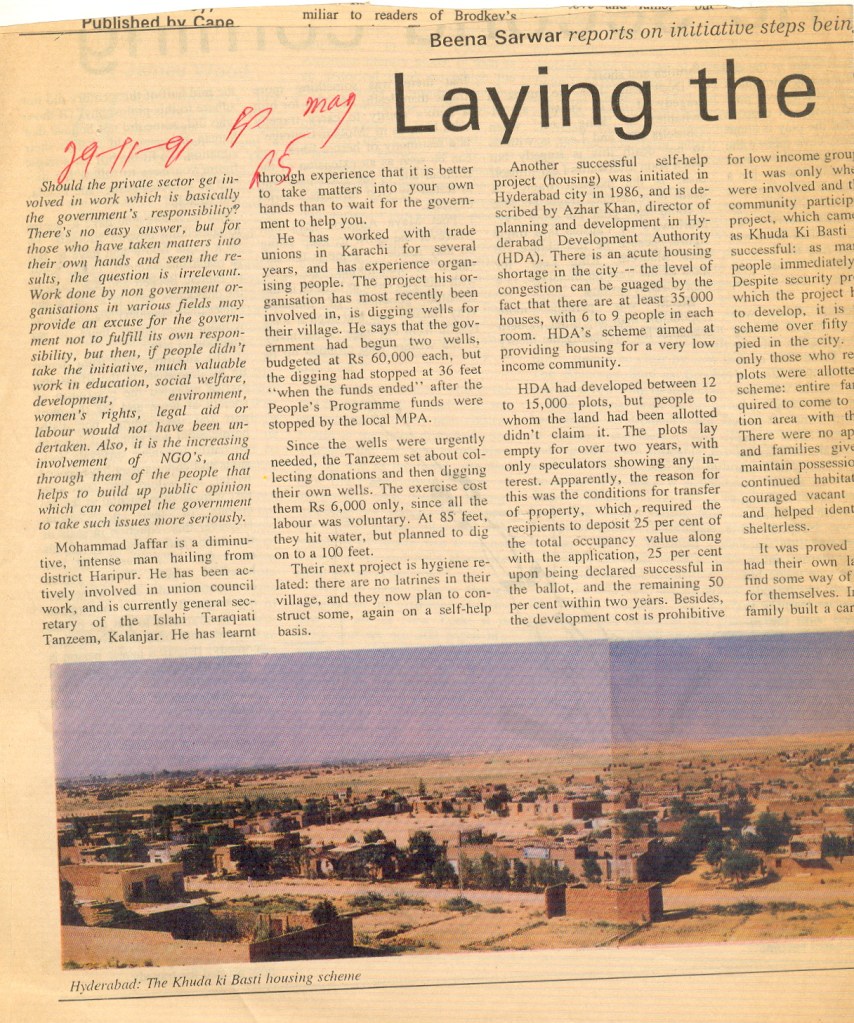
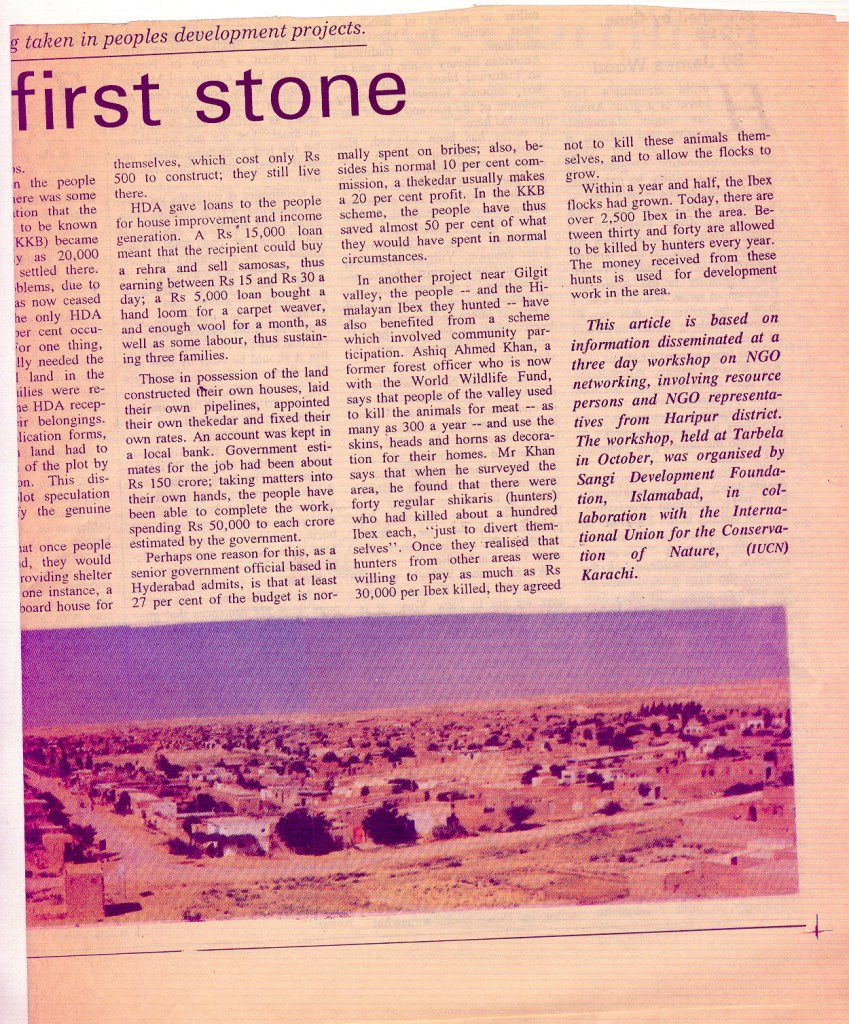
My 1991 piece in The Frontier Post about Tasneem Siddiqui’s groundbreaking affordable housing project Khuda Ki Basti, just being started at the time.
In the process of working on Saquib’s obituary, I talked to old friends Amra Ali and Salman Rashid – their contrasting views of Saquib would no doubt have amused him greatly. Also sharing Salman Rashid’s lovely video – he had talked to me about these aspects of Saquib the day before recording it.
I took the photos below the day Saquib and Nadia were leaving. There was intense grief, and yet we found it within ourselves to laugh.
I wrote this after attending the opening of a powerful group exhibition of Pakistani and Indian artists in New York; published in The News on Sunday and Aman Ki Asha. The show is up until 28 July; must-see if you’re in the area.
In New York, a unique India-Pakistan art exhibit
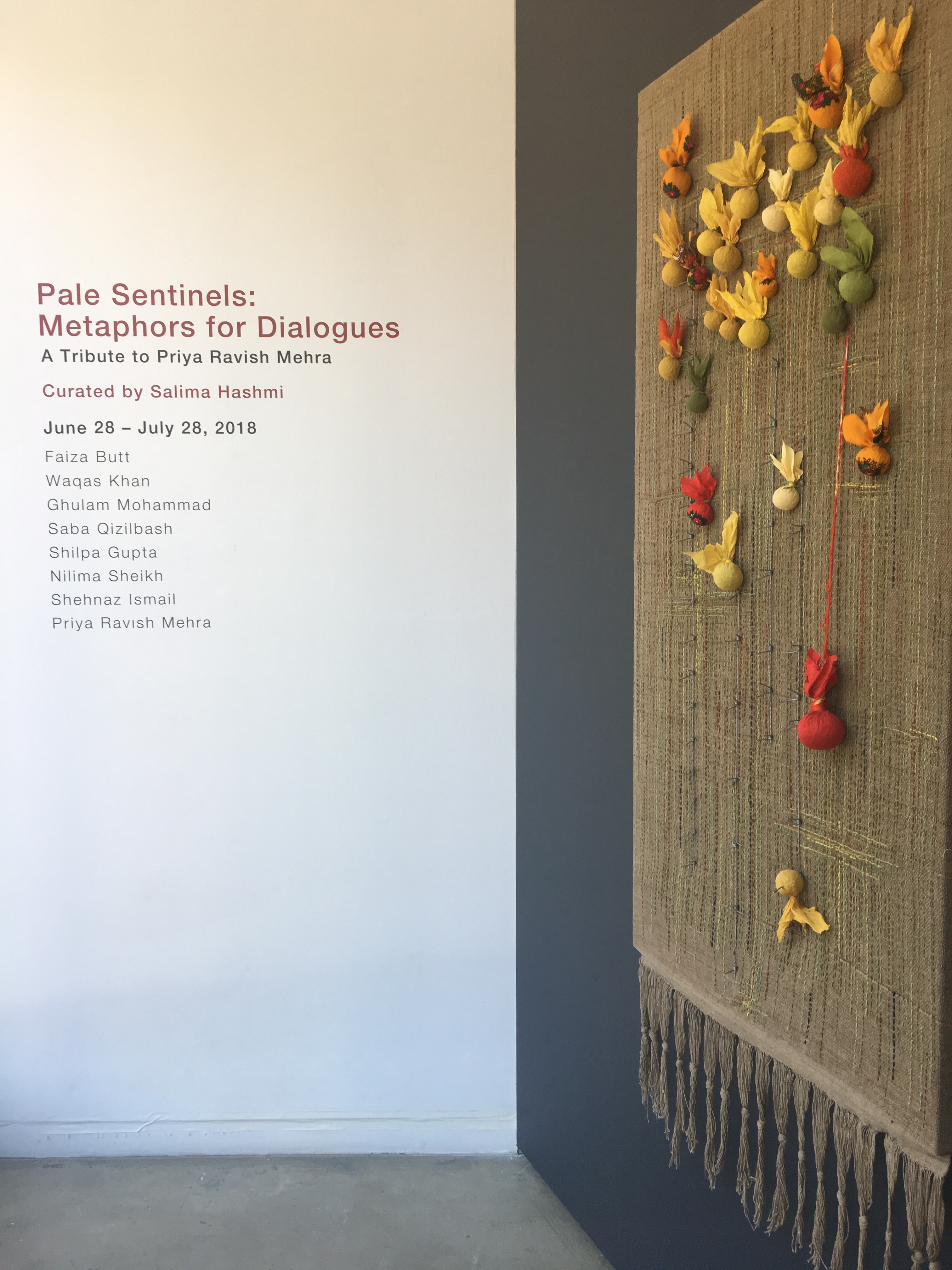
Exhibit entrance: Shehnaz Ismail: What have they done to my land? 2018, Natural dyes hand woven fabric embroidered with natural dyed yarn, lentils and Tulsi seeds. Steel barbed wire, 63 x 29 in
Pale Sentinels: Metaphors for Dialogues Curated by Salima Hashmi June 28 – July 28, 2018 Aicon Gallery, 35 Great Jones St., New York.
A thought-provoking Pakistan-India art exhibition that opened 28 June in New York City has its genesis in a conversation last year in Lahore, between an Indian origin professor in his avatar as an art gallery owner and a Pakistani artist.
We need to refute the idea that our nation is different from, morally superior to, the other imperial powers of world history.
We need to assert our allegiance to the human race, and not to any one nation.
From progressive.org, forwarded by Isa Daudpota. So relevant not just to USA and the time it was written, but today and elsewhere too.
Howard Zinn’s July 4th Wisdom
4-5 min read
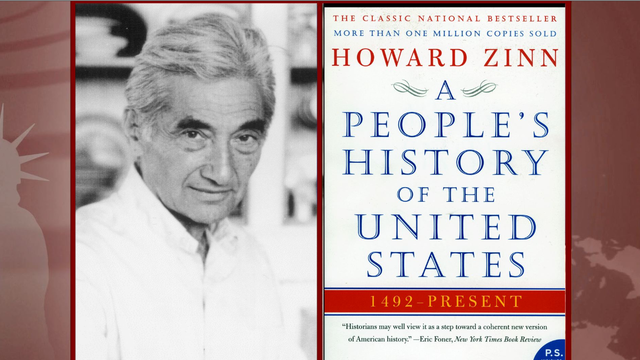
Editor’s Note: The late historian and Progressive columnist Howard Zinn shared these words with us back in 2006. His message is still just as compelling A World War II bombardier, Zinn was the author of the best-selling book A People’s History of the United States.
On this July 4, we would do well to renounce nationalism and all its symbols: its flags, its pledges of allegiance, its anthems, its insistence in song that God must single out America to be blessed.
Is not nationalism—that devotion to a flag, an anthem, a boundary so fierce it engenders mass murder—one of the great evils of our time, along with racism, along with religious hatred?
These ways of thinking—cultivated, nurtured, indoctrinated from childhood on— have been useful to those in power, and deadly for those out of power.
The eminent journalist P. Sainath, author of the groundbreaking collection of reports Everybody Loves a Good Drought, is headed to the USA from his base in India. He will give a series of talks at various campuses about his work and the unique, empowering, online journalistic endeavour he launched last year, the People’s Archive of Rural India – PARI. Worth going to hear him speak if you are in the area. See my article about him: Travels though history with a rural archivist.
Campus times and dates below, with some posters by a PARI volunteer.Continue reading →
Sainath at MIT, explaining the concept behind PARI. Photo: Beena Sarwar
Tracing the footsteps of rebels like Kartar Singh and Sita Ramaraju with a rural archivist, the iconic P. Sainath… Wrote this piece to mark his groundbreaking initiative PARI’s first anniversary; published in The News on Sunday, Jan 3, 2016. Text below with links and additional photos.