Pakistan: The ‘blasphemy’ issue | No shortcuts

Cartoon by Sabir Nazir | Viewpointonline.net

Originally published in Viewpoint Online, Nov 3, 2011

No shortcuts

Beena Sarwar

Watching Libyans celebrate the toppling of their dictator two things come to mind. First, Gaddafi’s apparent extra-judicial murder after being captured must be condemned. Secondly, a cautionary reminder: don’t expect the death or removal of a dictator to mark the end of the struggle. It is just the beginning of another struggle, an even messier one — the political process known as democracy. We in Pakistan know this all too well. Dictators die or get toppled but their legacies live on. Their creations like Zaid Hamid may lose, even as the creator Gen Zia wins (see Anas Abbas’ de-construction of this phenomenon at his blog) Continue reading

Update: Salmaan Taseer case hearing

UPDATE from CFD, Feb 6, 2011: The state prosecutor appointed to prosecute Mumtaz Qadri has been provided adequate security by the government and has agreed to conduct the trial, which will not benefit from any reaction or controversy that our letters might cause. We look forward to the trial commencing, and justice being done.

Note: On Feb 14, the Anti-Terrorism Court (ATC) is likely to formally charge-sheet Malik Mumtaz Qadri, who murdered Punjab governor Salmaan Taseer.

Withdrawal of public prosecutor in Salmaan Taseer murder hearing

Please endorse Citizens for Democracy letters to President, Prime Minister, Chief Justice and Bar Associations of Pakistan seeking justice for assassinated Punjab Governor Salmaan Taseer – yesterday the public prosecutor refused to appear in court, reportedly because he was not given adequate protection. He must be provided security and those threatening him dealt with according to law.  “This is an utterly unacceptable situation. It is indeed a sad day when a victim cannot find legal representation but many lawyers offer to represent a murderer, gratis.We demand that the assassinated Punjab Governor be provided appropriate legal representation by the State. We demand that both the Punjab and Federal governments immediately provide the prosecutor the requisite protection to enable him to appear in court and discharge his legal duties…”

Expecting justice to be done and the rule of law to be followed…

Shadow boxing with imaginary blasphemers in a ‘republic of fear’

Shadow boxing with imaginary blasphemers in a ‘republic of fear’:

An analysis and chronology of recent moves to amend the controversial, man-made ‘blasphemy laws’ of Pakistan – Nasim Zehra in Citizens for Democracy blog

PERSONAL POLITICAL: Manufacturing a ‘hero’

Article published Jan 30, 2011 in The News on Sunday – and in Hardnews, India (‘Blood upon the altar‘)

PERSONAL POLITICAL
Manufacturing a ‘hero’
By Beena Sarwar

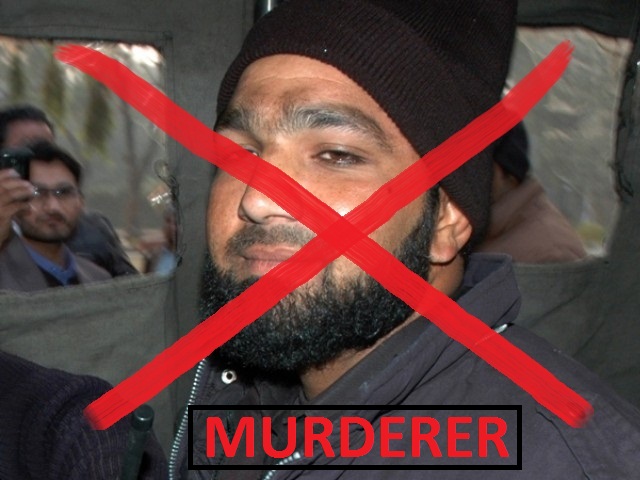
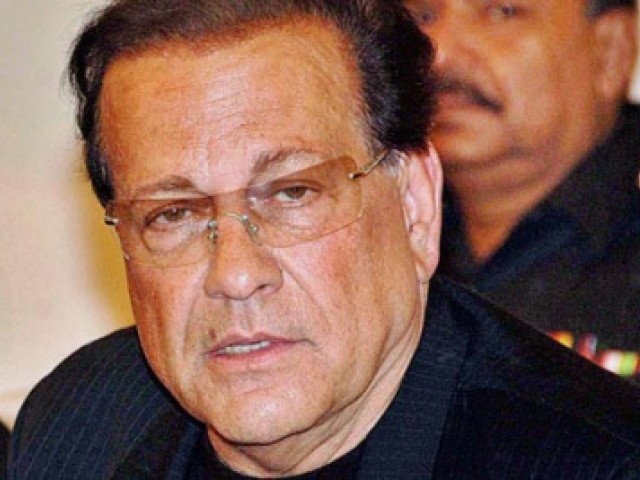
The assassination of Punjab Governor Salmaan Taseer has been termed a ‘watershed moment’ for Pakistan — not just because a sitting governor of the country’s wealthiest and most populous province was murdered in broad daylight by one of his own security guards. Perhaps the greater shock was how the murderer, Mumtaz Hussain Qadri, was allowed to commit this crime and how many hailed him as a hero for having killed someone perceived (falsely) as being guilty of ‘blasphemy’. Continue reading

Moving out of the downward spiral

@salmaantaseer: I was under huge pressure sure 2 cow down b4 rightest pressure on blasphemy. Refused. Even if I'm the last man standing

I wrote this on Jan 5, 2010 for Tehelka (published today as ‘Salmaan Taseer’s death is liberal Pakistan’s loss‘), the day after Salmaan Taseer was gunned down in cold blood by his own bodyguard whose cowardly action of firing at the Governor’s back has deprived us of a man of courage and conviction, wit and wisdom. ST, you are not “the last man standing”.

Moving out of the downward spiral

Beena Sarwar

“There are no less than 24 groups as of now supporting Qadri on FB and 1 against what he did, that says it all. #salmaantaseer”.

So went a tweet from a fellow Pakistani early morning on Jan 5, the day after the assassination of Salmaan Taseer, the governor of Punjab who took a courageous stand against religious extremists in Pakistan.

The facebook pages cropping up don’t quite say it all. Facebook is usually quite slow to take action against pages that users consider abusive (unless they have to do with Israel). In this case, many of those pages (mostly started by young men who like western shows like Sex and the City, support Pervez Musharraf and say they follow Islam – any contradictions here?) were taken down within 24 hours – which means that enough people reported them as abusive.

When it comes to religion, there is confusion in people’s minds in Pakistan. This confusion has been building up over the years, particularly since America, Saudi Arabia, Pakistan and their allies took up cudgels against the Communist threat in Afghanistan and injected religion into the Afghans’ war of liberation against the Soviet invasion. Calling it a ‘jihad’ or a holy war enabled them to draw in Muslim fighters from around the world. The late Eqbal Ahmad warned against this long before the horrific events of 9/11 and US President Bush’s immature response sent the world into a downward spiral of violence, especially Pakistan, the frontline state in America’s war first against the Communists and then against extremist Islam.

The questions arising from Taseer’s assassination indicate that some forces in Pakistan are continuing along the old trajectory.  The assassin, 26-year old Malik Hussain Qadri, was assigned to the elite force guarding the Punjab Governor. It now emerges that he had been removed from the Special Branch because he was perceived as a security threat – so how did he end up on the security detail of a Governor who was already receiving death threats?

According to the post-mortem, he fired 41 bullets into Taseer’s back while the Governor was getting into his car. He then threw down his weapon and raised his arms in surrender.

Standard operating procedures in VIP guard duty require the other guards to immediately open fire even if the assailant is one of them, explains my military analyst friend Ejaz Haider. So why did the other guards not follow the SOP?

Chillingly, Qadri has revealed that he had told his colleagues what he was going to do and asked them not to open fire, as he would surrender. Which means that he was confident of getting away with it.

“Now the judicial process will take over,” predicts Haider. “The judge/prosecutors will be threatened, and the murderer will be declared a hero.”

This is of course already happening, as the facebook pages show. Some of them have referred to him as a ‘ghazi’ (conqueror) and are justifying and glorifying his murderous act – including several religious organisations. In fact, some have gone so far as to say that because he was ‘guilty’ of ‘blasphemy’, no Muslim should lead or attend his funeral prayers.

Qadri’s smiling face was flashed on television channels, along with his comments that “Salmaan Taseer is a blasphemer and this is the punishment for a blasphemer”. He is reported to have told interrogators that the Governor had called the blasphemy laws ‘black’ and had defended Aasia Noreen, the Christian woman sentenced to death for ‘blasphemy’.

Taseer’s role in highlighting the Aasia Bibi case, as it came to be known, was significant although some have criticised his high-profile visit to her jail cell and his promise to obtain a presidential pardon for her, which circumvented due process. According to due process, the President’s pardon would have been sought after the Supreme Court confirmed the death sentence following the High Court’s confirmation of it.

The Pakistani state has not executed any blasphemy convicts because so far, the High Courts or the Supreme Court have acquitted those accused under this law (295-C, imposed by Gen. Ziaul Haq to add to 295-A that existed since British times). Yet the mere allegation of ‘blasphemy’ has been enough to incite the murder of over 30 people so far. Taseer’s is the most high profile such murder.

Given the current climate, it is unlikely to be the last. For things to significantly change, ‘deep state’ will have to change its policies of support for ‘jihadis’ and jihadi mind-sets.

Meanwhile, those who have been opposing the blasphemy laws and other injustices perpetuated in the name of religion will continue to protest, as they have been doing for decades.

(ends)

Support Diep; Massacre in Lahore, some thoughts & responses

Posted to my yahoogroup yesterday, with a very heavy heart:

WE MOURN. A man weeps at the death of a relative killed in the Friday attack, after a funeral in Rabwa, May 29, 2010

I signed this Petition to Stop Constant Harassment and Mental Torture of Diep Saeeda Indo Pak Peace Activist – pls read and sign also. I hope they’re going to take it to the authorities and stop this harassment of one of our most courageous, spirited and committed activists.

Meanwhile, we are reeling with the massacre of some 100 Ahmedis at two Friday congregations in Lahore. This was not an isolated incident but cold-blooded murder, conducted by trained gunmen with suicide vests. (Only one was caught alive – wonder how much he’ll be allowed to reveal).

The incidents brought together various strains that have been tearing apart Pakistan in the bloodiest way. Several recent incidents are part of this continuum, all of which claimed many innocent lives: Continue reading

‘Blasphemy laws’ – Stopping the rot

My recent article on the ‘blasphemy’ laws, slightly edited version published in Dawn, Aug 29, op-ed as  ‘A misguided mindset’ – http://tinyurl.com/lzx6ux

Karachi, Aug 26

Stopping the rot

Beena Sarwar

The introspection, debate and outrage generated a month ago by the attacks on two villages in Gojra on July 31 and Aug 1 may be out of public sight, as happened all too often in the past, but the nine people murdered and the homes and churches gutted are not out of mind. Neither is Najeeb Zafar, the young factory owner in Sheikhupura, Punjab, killed on August 4 for allegedly desecrating Quranic verses when he removed a calendar from a wall. The following day, police in Sanghar, Sindh, saved a similarly accused 60-year old woman, Akhtari Malkani by taking her in protective custody.

On the surface, these incidents were motivated by passions aroused by allegations of blasphemy or disrespect to the holy Quran. These criminal charges can be punishable by death – but this is a punishment for the state to administer, not private citizens. The real motivation remains settling scores, a pattern identified over twenty years ago when the first ‘blasphemy murder’ took place – that of the Punjabi poet and teacher Naiamat Ahmar in Faisalabad in 1992.

The pattern involves one party targeting another, alleging blasphemy while the real motives are personal enmity or economic rivalry as Zubeida Mustafa noted in a recent column. The accused tend to be poor people who have improved their lot in life, triggering jealousies. Accusations of blasphemy are used to justify the violence. Ms Mustafa also pointed to (mis) education as a factor that makes it easy, when such an allegation is levelled, to rabble-rouse a mob into violence.

The three recent cases bear out these observations. In Gojra, evidence points to a pre-meditated plan aimed at clearing out the village from the area, while the administration turned a deaf ear to the warnings and pleas of observers. A disgruntled employee accused Najeeb Zafar of disrespecting the Quran; the unarmed police sent to protect him could only watch as the mob set upon him. Akhtari Malkani had a monetary dispute with her accuser – he disappeared without registering an FIR. She says she threw a book of accounts on the floor, not the holy Quran.

Last April, there was the horrific case of Jagdish Kumar, the young Hindu factory worker in Karachi, lynched by co-workers for alleged blasphemy. The real reason appears to have been personal enmity based on Kumar’s reported association with a Muslim girl.

Such cases have been taking place since the option of life imprisonment under Section 295-C of the Pakistan Penal Code (“Use of derogatory remarks, etc., in respect of the Holy Prophet”), the ‘blasphemy law’, introduced by Gen. Ziaul Haq in 1985 was amended by default in 1992 to make death the mandatory punishment for anyone convicted under this law. Certainly, the law does not provide for these extra-judicial murders. However, it is equally true no such murder took place until death was made the mandatory punishment for 295-C convictions.

People of all faiths, including Muslims (remember the Muslim religious scholar lynched in Gujranwala, 1994?), have been accused and attacked since then. Investigations into blasphemy accusations indicate pre-meditation rather than the heat of passion. Those who commit the violence may be arrested but none has ever been punished. Even the Inquiry Commission Tribunal headed by Justice Tanvir A. Khan of the Lahore High Court examining the destruction of Christian homes and churches in Shantinagar, 1997, was quashed (the Punjab Chief Minister then too was Shahbaz Sharif; will he rise to the occasion this time?).

The public defamation of blasphemy victims is a key tactic preceding such attacks – posters and mosque loudspeakers are routinely used for this.

Naimat Ahmar was killed after posters cropped up warning people that a Christian teacher (Ahmar) was leading their children astray. A hand-written copy in Urdu that I saw at the time warned Muslims that Ahmar was misleading students, telling them that the Prophet (pbuh) ‘stole’ goats – ‘bakriyaN charaya kartey thay’. Replace ‘churaya’ (stole) with ‘charaya’ (grazed) and it’s apparent what Ahmar probably said.

A youngster from the militant outfit Anjuman-e-Sipah-e-Sahaba (later changed to Sipah-e-Sahaba Pakistan) accosted Ahmar outside the Education Department in Faisalabad and knifed him to death. Investigations revealed that the murderer’s uncle wanted Ahmar’s job in the Education Department. The allegation of blasphemy alone was enough to ‘justify’ the murder. Policemen at the lockup housing the murderer, garlanded by his ASS (sic) mentors, embraced and kissed him. The ASS was, in fact, behind just about every ‘blasphemy case’ during the 1990s – the SSP, now banned, is believed to be behind the Gojra carnage as well.

Blasphemy accused are attacked and murdered even in prisons and police lock-ups, sometimes by the very people who are supposed to protect them. In 2004 a police constable attacked Samuel Masih, 27, an under-trial prisoner at Kot Lakhpat jail with a brick-cutter. Samuel had been charged with spitting at the wall of a mosque (Section 295, “defiling a place of worship with the intent of insulting the religion of any class”, maximum sentence up to two years). He succumbed to his injuries the following day. “I wanted to earn a place in heaven by killing him,” Ali reportedly confessed.

The fanatical and misguided mindset cultivated over the past few decades will not disappear by simply repealing 295-C, although this must be done. Embarking on a sensible education policy is also a long-term step that must be taken to stop the rot. What must be an immediate priority is the strict enforcement of law and order.

Those inciting violence and murder from mosque loudspeakers and public accusations, true or false, must be held culpable, charged, tried and punished according to law. This also goes for those who desecrate a holy book or symbol of any religion. There must be accountability for those who allow these murders to take place. The political leadership is responsible for providing police with the training, means and the orders to prevent such violence. Finally, religion cannot be used or allowed to justify murder.

The writer is a freelance journalist and documentary filmmaker

(ends)

Simply repealing 295-C will not stop the rot

Since it was introduced by Gen. Zia, the ‘blasphemy law’ 295-C has been used to settle scores, including financial rivalries, as umpteen fact-finding missions have recorded (included several I have participated in), much as the Zina laws have been used for revenge.

Now, simply repealing 295-C will not stop the rot. That must be done, but along with it we have to demand strict enforcement of law and order.

Those who incite violence and murder (eg mullahs who used loudspeakers) must be held culpable as well, charged, tried and punished in accordance with the law.

Ditto those who desecrate a holy book or symbol, no matter of what religion.

Below, links to some reports that provide a perspective on the issue:

PAKISTANI CHRISTIANS-THE VICTIMS OF HALF LAW IN GOJRA, by Brigadier Samson Simon Sharaf (Retired), Aug 5, 2009

http://chowk.com/ilogs/73055/47736

An Eyewitness Account from Gojra – Faris Kasim.  August 7, 2009

http://www.chowk.com/articles/an-eyewitness-account-from-gojra-faris-kasim.htm

Edited version in The News Op-Ed, Aug 8, 2009

http://www.thenews.com.pk/daily_detail.asp?id=191978

HRCP press releases, Aug 4 & Aug 1
http://hrcpblog.wordpress.com/2009/08/06/gojra-admin-knew-about-pre-planned-attacks-hrcp/

http://hrcpblog.wordpress.com/2009/08/06/hrcp-press-release-on-gojra-and-korian-incident/

Lethal Law, Newsline Sept 2001
http://www.newsline.com.pk/NewsSept2001/newsbeat.htm