India/Pakistan: Sedition and blasphemy – Southasia’s déjà vu

Something I wrote last month about how sedition and blasphemy are the two sides of the same hyper-nationalist coin in India and Pakistan. Updated after the tragic bombing at a park in Lahore on Easter Sunday, published in Himal Southasian on March 30, 2016. 

People vote in the February 2008 elections in Lahore Photo: Wikimedia Commons / boellstiftung - Flickr

People vote in the February 2008 elections in Lahore Photo: Wikimedia Commons / boellstiftung – Flickr

From Pakistan there is mixed news. Recent headlines on the country juxtaposed with news from India prompts the thought that the kind of fascism that Pakistanis have been fighting against is now erupting across India. The encouraging news from Pakistan includes its second award at the Oscars, the execution of convicted killer Mumtaz Qadri (arguments against the death penalty notwithstanding) despite the militant rightwing support for him, and the recovery of the kidnapped son of Qadri’s victim Salmaan Taseer, killed for alleged blasphemy. The bad news includes the horrific suicide attack, allegedly by Tehreek-i-Taliban Pakistan Jamaatul Ahrar, on Gulshan-i-Iqbal Park in Lahore on 27 March 2016.

Continue reading

Two disappearances… and a suicide

Zeenat-%22Quaid and daughter of Quaid%22 2014

Zeenat Shehzadi: “Quaid and daughter of Quaid” – her own caption, 2014.

Tragic news from Salman Lateef, brother of the young Lahore-based journalist Zeenat Shehzadi who was trying to help the Indian national Hamid Ansari in detention in Pakistan — and herself has been missing since the morning of 19 August 2015. Zeenat and Salman’s younger brother Saddam Hussain, 18 years old, who had been pining for his ‘Api’, killed himself last night – hung himself from a tree near their house. They’ve taken him to their village Sheikhupura / Manawan for burial after Friday prayers. Can’t bear to think of the parents.

image

Another tragedy: Zeenat Shehzadi’s beloved younger brother Saddam Hussain, 18, missed his Api terribly. He took his own life last night.

Salman was beside himself, couldn’t stop crying. He said that Saddam often asked about Zeenat – he was her special favorite and she would never let anyone scold or hurt him. ‘Humarey paeron taley zameen nickal gayi hai, ham barbad ho gaye…inn logon ko kab sharam aye gi…’ (the earth has gone from under our feet, we are destroyed… when will these people feel any shame). He said the police had come to the hospital and taken the family’s statement that Saddam killed himself in despair about Zeenat ‘but who knows what report they’ll make’  Continue reading

The return of Salmaan Taseer’s abducted son gives Pakistan another ray of hope

Very happy to be able to write about some good news – the recovery of Salmaan’s Taseer’s son Shahbaz Taseer, kidnapped nearly five years ago. Wrote this piece on March 8, 2016, for Scroll.in

The return of Salmaan Taseer's abducted son gives Pakistan another ray of hope

The best news coming out of Pakistan this week was about the recovery on Tuesday of Shahbaz Taseer, the abducted son of slain Punjab Governor Salmaan Taseer. The businessman, in his early thirties, had been kidnapped in August 2011 as he drove to his office in Lahore. Continue reading

Stifling dissent in Southasia

I earlier posted about resistance to the stifling of dissent in India, and why as a Pakistani it matters to me. The trend is visible in other parts of Southasia too, including of course Pakistan about which I’ve written a fair amount. Here’s an update from Bangladesh, where defamation, sedition cases and the attempts to silence the independent media are underway, as well as Chattisgarh, India.

article-jtuxsszald-1455534764

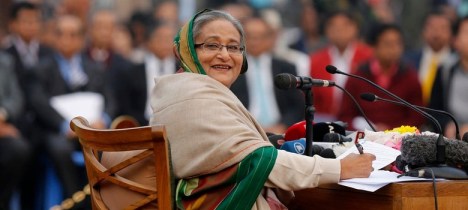
Smiles and sedition. Photo: Andrew Biraj, Reuters

Continue reading

Ways of seeing: Imagine, South Asia

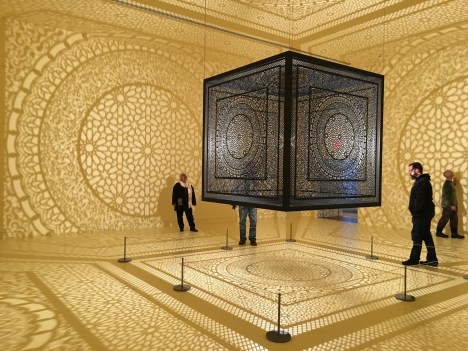
Something I wrote for The News on Sunday, published Feb 14, on a thoughtprovoking series of discussions and Anila Quayyum Agha’s stunning installation ‘Intersections’ at the cornerstone of ‘Imagine, South Asia’ at the historic Peabody Essex Museum

Intersections

Intersections by Anila Q. Agha: an immersive, mesmerising experience. Photo: Beena Sarwar

In an age of divisiveness and conflict, with media attention focused on power politics and high profile acts of violence, Imagine, South Asia, a weekend-long series of events at the Peabody Essex Museum was a welcome reminder of the healing and inclusive power of the arts.

Continue reading

#StandwithJNU… “But what about Pakistan?”

I wrote this piece a couple of days ago for Scroll.in on why I, as a Pakistani, am bothered about what’s happening in India – and also what people like me have to deal with from hyper-nationalists on both sides of the border. Also see this post from New Pakistan raising the question of whether the applause in Pakistan for political dissent in India means that such dissent is acceptable in Pakistan too – with reference to the young cricket enthusiast Umar Daraz in Pakistan, arrested for raising an Indian flag. Also see this excellent piece by Rubeena Mahato in Nepali Times raising alarm bells about South Asia’s constricted freedoms.
JNU crisis: But what about Pakistan?

JNU crisis: But what about Pakistan?


For the past few days, the row between those who stand for free speech and those who don’t has intensified in India. As a journalist from Pakistan, I stand unequivocally with the students and journalists in India who are being vilified and targeted by hyper-nationalists. In the process, I am getting more than my usual share of nasty comments from Indians – and Pakistanis – on social media. Continue reading

India/Pakistan: ‘Peace is a process, not an event’

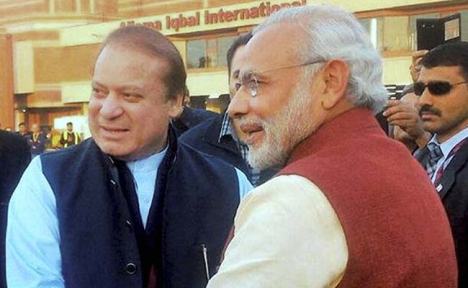
My first monthly column for Himal Southasian (Feb 2016 issue), a Kathmandu-based magazine I’ve been associated with since its launch in 1997. The headline derives from something I remember a Naga woman from India saying at a conference I attended in Colombo, Sri Lanka many years ago. I focus my piece on what links the Pathankot and Bacha Khan University attacks, Modi’s Christmas Day visit to Pakistan and beyond – the issue may have died out from the headlines, but remains relevant. Article below with additional links and photos.vxtvfzk
By Beena Sarwar

If Indian Prime Minister Narendra Modi’s stopover in Lahore to meet his Pakistani counterpart Nawaz Sharif on 25 December last year came as a surprise, the subsequent militant attack in India barely a week later on 2 January did not. Continue reading

Death of an activist: The courage survives and so does the message

pia-afp

Rangers personnel baton charge on PIA employees near Jinnah International Airport, Karachi, February 2, 2016. PHOTO: AFP

Three Pakistan International Airlines (PIA) employees protesting against the privatisation of the national carrier have died as the Singh Rangers countered their peaceful demonstration with water cannons, tear gas, baton charge, and bullets. The victims include PIA Assistant Manager Inayat Raza and engineer Saleem Akbar while a third victim, Zubair, succumbed to his wounds in hospital yesterday. The knee-jerk response of the administration to citizens exercising their right of peaceful assembly and protest is not new, and it has always backfired.

Instead of condoling with the families of those killed, Prime Minister Nawaz Sharif (who is believed to have a vested interest in privatising the airline), has suspended the PIA employees’ right to protest under the Essential Services Act, and threatened the them with loss of job and incarceration.

Killed by a bullet to the chest, Inayat Raza was a former student union leader with the National Students’ Federation (NSF) in Karachi in the 1980s. He is survived by his wife and three daughters. Below, a moving tribute to him by activist and researcher Mansoor Raza in Karachi:

Continue reading

Farewell, Aslam

Aslam-2013-photo beena

Aslam Azhar, Islamabad, 2013. Photo: Beena Sarwar

My personal tribute to a giant of progressive politics in Pakistan, published in The Friday Times on Jan 15, 2016, posted below with links that didn’t make it into the TFT copy. 

By Beena Sarwar

Aslam. That’s what everyone, junior or senior, in the theatre group Dastak called him. He insisted upon it. That was just one aspect of Aslam Azhar, the founding father of Pakistan Television and already a legendary figure in the late 1980s. That was when I joined the theatre group that he had started in 1982 with his close friend and comrade Mansoor Saeed – who also insisted on being called Mansoor. Continue reading

In wake of Pakistan university attack, the voices grow louder – stop glorifying the dead

Screen Shot Hamid Mir-Geo TV

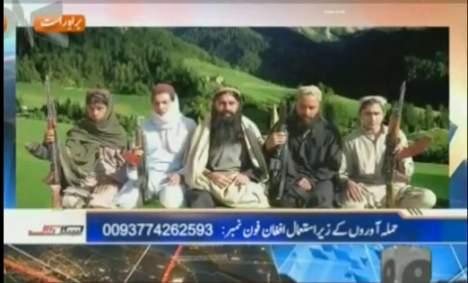
Screenshot from Hamid Mir’s Capital Talk, Geo TV, Jan 20, 2016

I wrote this piece on Jan 20, 2016 on the barbaric attack on Bacha Khan University in Charsadda. Published in Scroll.in on Jan 22, 2016.

As Pakistanis look for solutions, a consensus is emerging that people killed in such attacks should not be called ‘martyrs’ or ‘heroes’.

By Beena Sarwar

There is now a numbing familiarity to the kind of news that broke on Wednesday morning from Pakistan.

This time, heavily armed militants in suicide vests scaled the walls of a sprawling university campus near Charsadda, a picturesque town in Khyber Pakhtunkhwa (formerly known as North West Frontier) province near the Afghan border. Gunfire and explosions starting at about 9 am resounded through the dense fog enveloping Bacha Khan University, set idyllically amidst sugar cane fields some 13 km from Charsadda.

The four assailants killed at least 19 students and teachers before themselves being killed by the police and army in a three-hour long gun-battle.

The casualty rate was far lower than the attack on the Army Public School in nearby Peshawar just over a year ago on Dec 16, 2014 in which militants killed some 150 school children and teachers.

The relatively low casualties, pointed out Senator Rubina Khalid of the Pakistan People’s Party, is not a basis for self-congratulation.
Continue reading