Wrote this curtain raiser a couple of weeks ago together with a colleague in India, published in Aman Ki Asha 20 September 2019.
By Neel Kamal and Beena Sarwar
The world’s largest India-Pakistan golf tournament will take
place in Los Angeles early October, even as relations between nuclear-armed
South Asian neighbours India and Pakistan sink to a dangerously low levels.
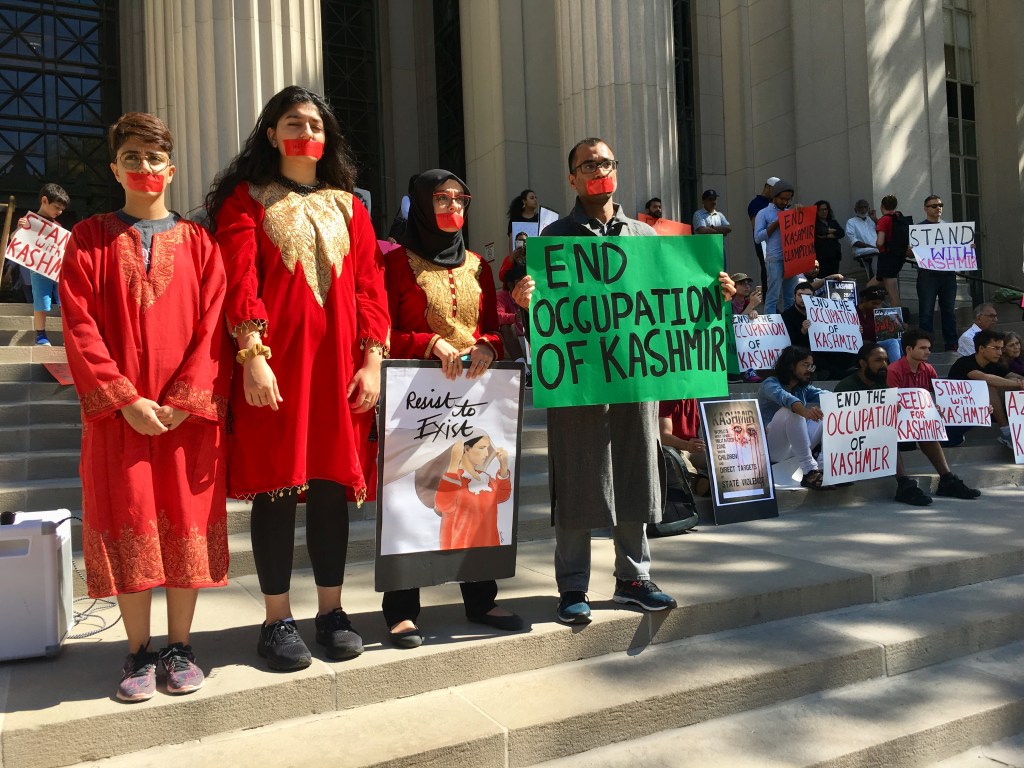
Demonstrators at MIT, part of a series of peaceful world-wide protests in solidarity with Kashmir on the weekend of 21 September, International Peace Day. Photo: Beena Sarwar
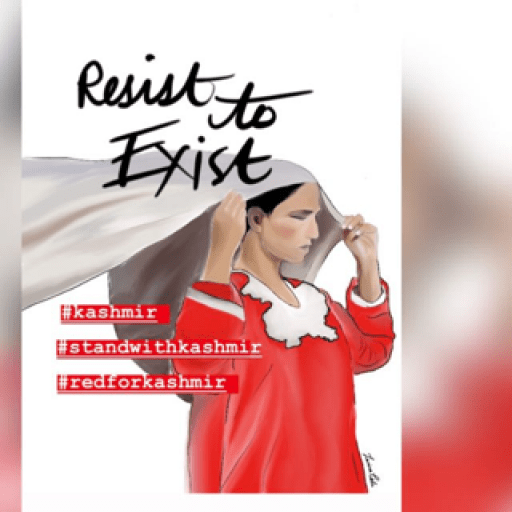
Sunday, 22 September, Cambridge MA: “Resist to exist” proclaimed a placard on the steps of MIT. The placard featured the picture of a woman in a red pheran, the long woolen tunic traditionally worn by Kashmiris from the Himalayan region in India’s north-west tip.
Visual by Zarina Teli, based on a photograph by Sumaya Teli.
The woman holding the placard also wore a red pheran, her mouth taped shut like the others in the pheran-clad group she stood with to symbolize the communications blackout in her home state since 5 August this year. The pheran reflects an iconic image that has become integral to the Kashmiris’ resistance movement, as covered by NPR news recently (Finding resistance in fashion, Kashmiri creator turns to the pheran).
The color red, taken up by thousands in their social media profile
images, has come to symbolize the Kashmiris’ spirit of resistance and defiance.
The woman and her companions stood with other peace-loving South
Asians and friends on the steps of MIT this past Sunday at noon, to demand that
the Indian government “immediately restore communication in Kashmir, remove the
draconian measures enforced in the name of security and order, and respect
Kashmiris’ right of self-determination”.
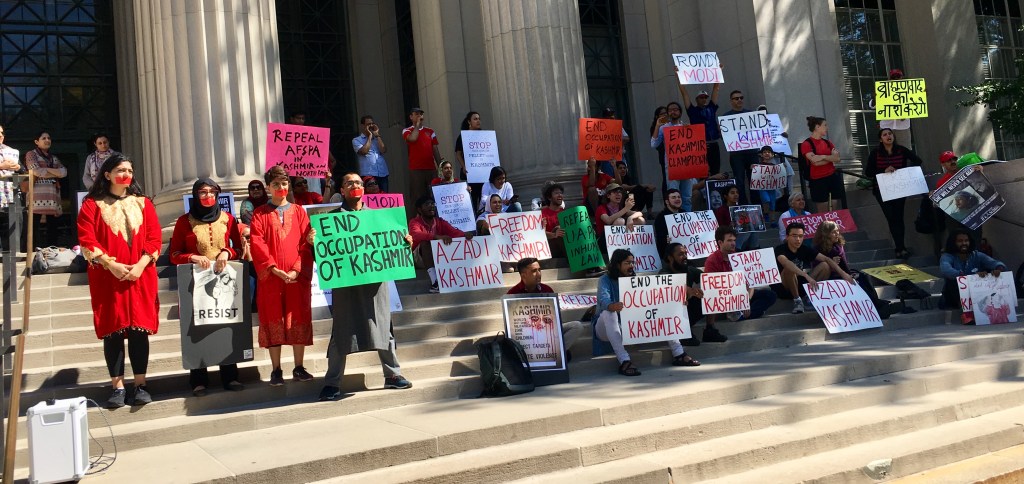
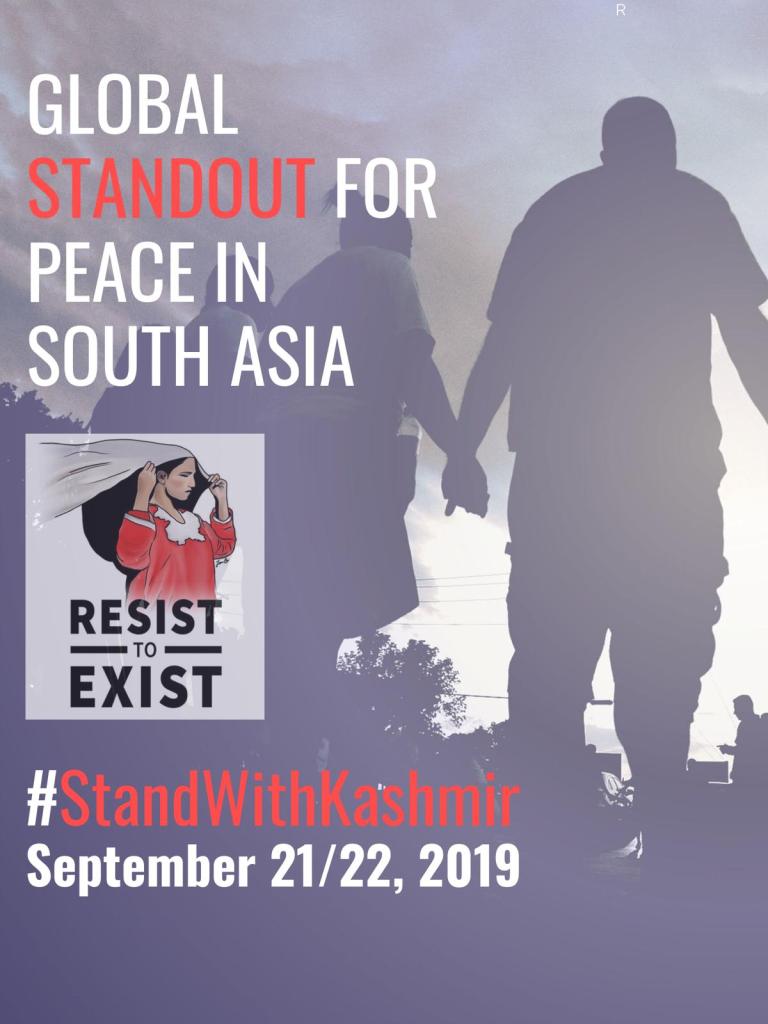
Boston event – Global Standout for Peace in South Asia. Photo: Beena Sarwar
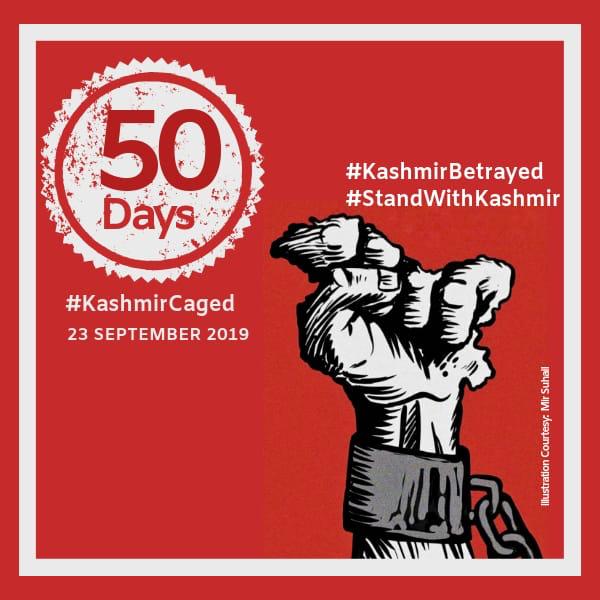
The next day, Monday 23 September, marked Day 50 of “the
unprecedented and total communications blackout for 8 million Kashmiris
enforced on them by the Indian government. Kashmiris, living in the most
militarized region on earth, now fear that the present communications blackout
is part of a larger plan to ‘ethnically cleanse’ Kashmir,” according to the
statement read out at the event.
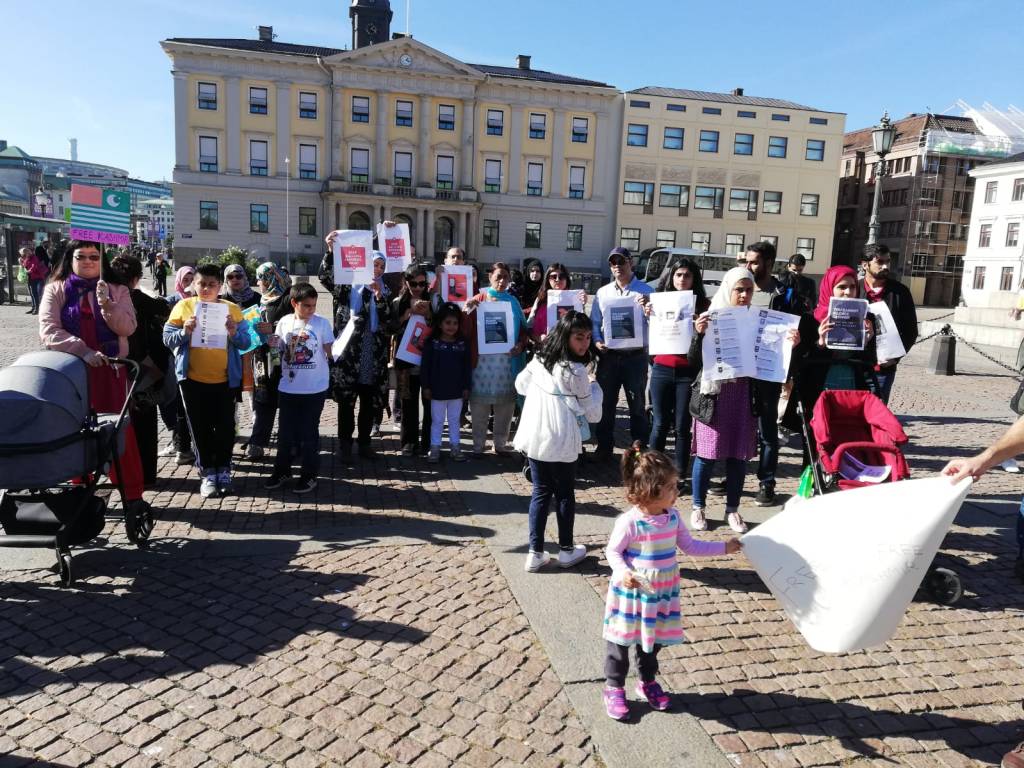
The event at MIT was part of a series of peaceful protests that weekend in solidarity with the Kashmiri people, coordinated by a small coalition called the Global Standout for Peace in South Asia.
Besides Boston, the Standouts took place in the San Francisco Bay
area, Kolkata (India), Gotenburg (Sweden), Islamabad (Pakistan), and Kathmandu
(Nepal), on the same weekend as Indian Prime Minister Modi shared the stage
with U.S. President Trump in Houston. Solidarity with Kashmir protests took
place in Houston also, as well as Seattle WA.
Standout for Peace in solidarity with Kashmir, Goteburg, Sweden
Nuclear-armed neighbors India and Pakistan both lay claim to
Kashmir. The Global Standout protestors showed their rejection of these
territorial claims by not carrying the flags of any nation or state.
Supporting organizations in Boston included Massachusetts Peace
Action, CODEPINK: Women for Peace, MIT Students Against War, Stand With
Kashmir, Coalition for Democratic India, Alliance for a Secular and Democratic
South Asia, and Boston University Students for Justice in Palestine.
Addressing the participants,
Cambridge City Councillor Sumbul Siddiqui encouraged them to keep ‘speaking out
for justice’.
The event ended with a drum sounding 50 beats, one for each day since the communications lockdown up to that point.
This weekend, starting with 21 September 2019, the UN International Day of Peace, marks a series of events taking place in cities around the world in solidarity with Kashmiris.
I wrote this piece a few days back – the second of my occasional syndicated columns. Published in The Wire, Naya Daur, Mainstream, The Citizen among others.
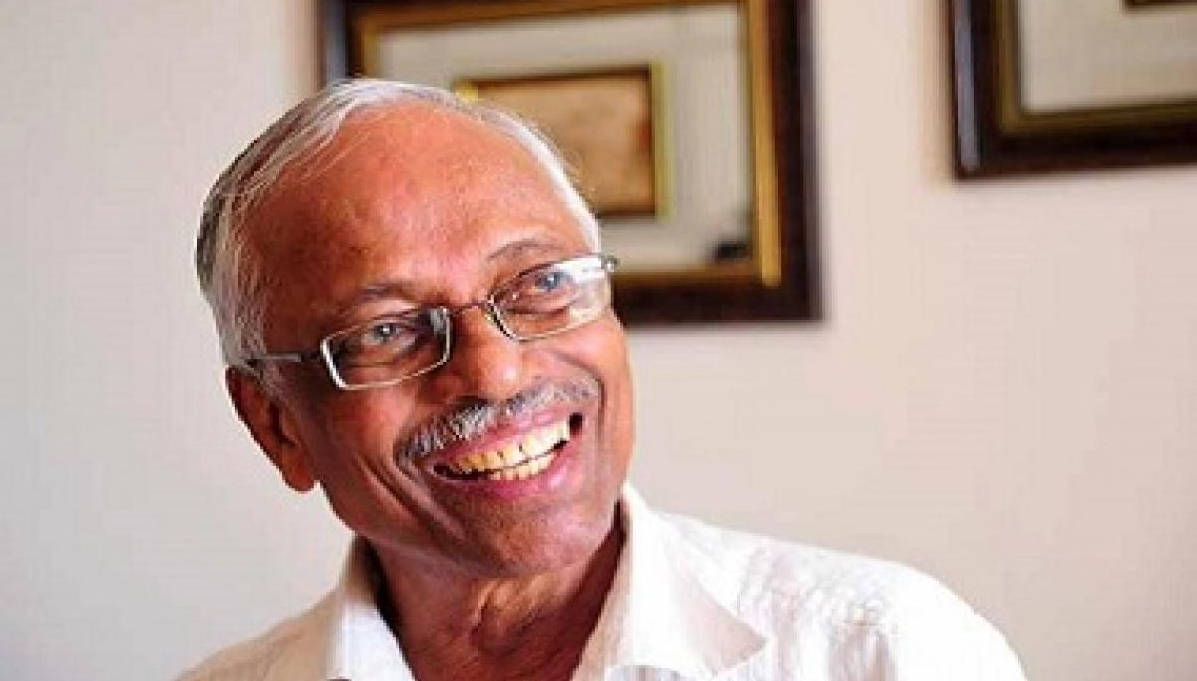
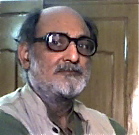
Early Sunday morning in Karachi, a little over a month after his 89th birthday on 18 July 2019, B. M. Kutty slipped into the ever after. Lifelong activist, trade unionist, political worker, peacemonger, humanist. I like to remember him as I last saw him in Karachi – his big smile, deep voice with its powerful timbre, intense gaze behind the glasses, dapper as usual in bush-shirt and trousers.
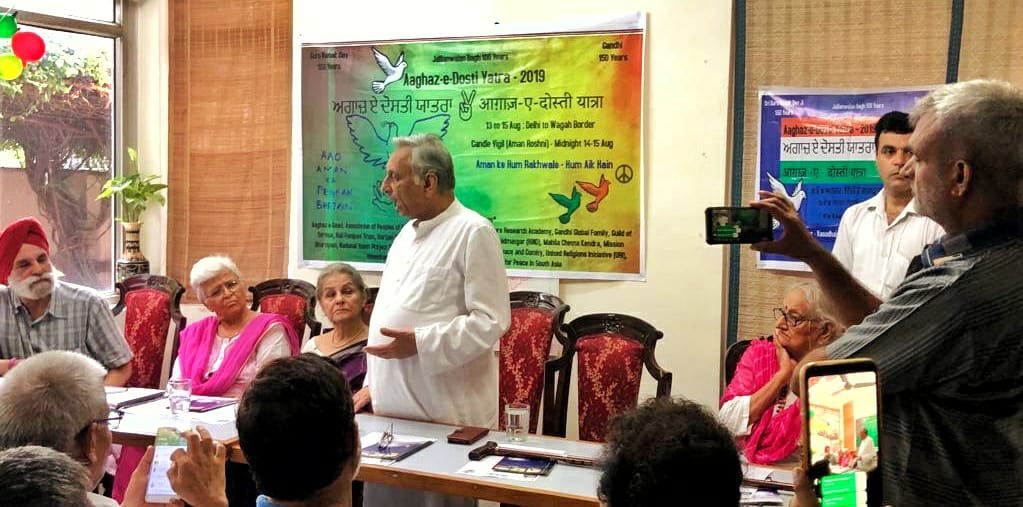
Delhi, 12 August 2019: Mani Shanker Aiyer addressing the flagging-off ceremony. Photo courtesy Ravi Nitesh.
Wrote this piece yesterday, published in Aman Ki Asha, about the annual joint Independence Day Celebrations by Indians and Pakistanis. The Aman Dosti Yatra (Peace Friendship March) reached Amritsar from Delhi yesterday. Friends in Pakistan were prevented from going to the border but they held a seminar in Lahore. There’s a piece about the Yatra in The Indian Express:
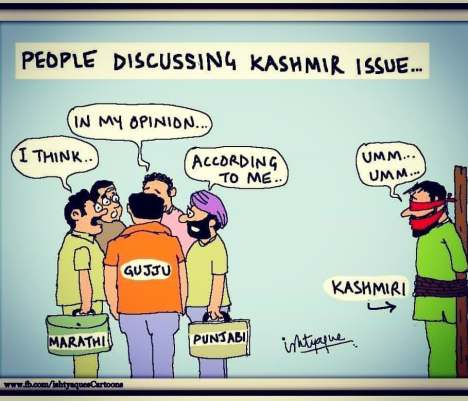
The largest people-to-people group in the region, the Pakistan-India People’s Forum for Peace and Democracy has since its formation in the mid-1990s been calling for India and Pakistan to see Kashmir not as a territorial dispute but as a matter of the lives and aspirations of the peoples of Jammu and Kashmir, who must be involved in any dialogue about their future. That seems even further from the table now. Continue reading →
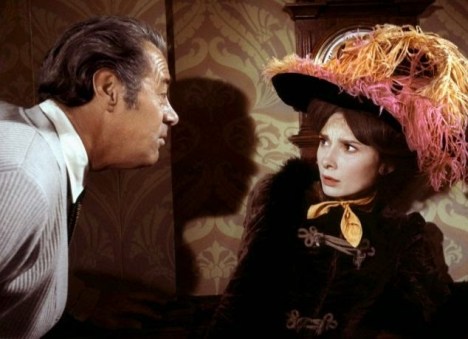
Another marvelous poem by Badri Raina in Delhi, published in ZNet, referencing Prof. Henry Higgins’ famous line in the musical My Fair Lady based on George Bernard Shaw’s Pygmalion. I will differ from Badri ji only to humbly offer that far from being dead, the ‘Equality idea’ is alive and kicking. It is in fact the growing prevalence of this idea that so threatens the beneficiaries of oppressive systems that they feel compelled to churn up fascism and bigotry, that get amplified in the news and social media. Am I wrong?
Remembering Professor Higgins
By Badri Raina
We raised eyebrows when Higgins asked
“why can’t a woman be more like a man?”
Look how whole nations now build upon
That thought in the Professor’s brain. Continue reading →
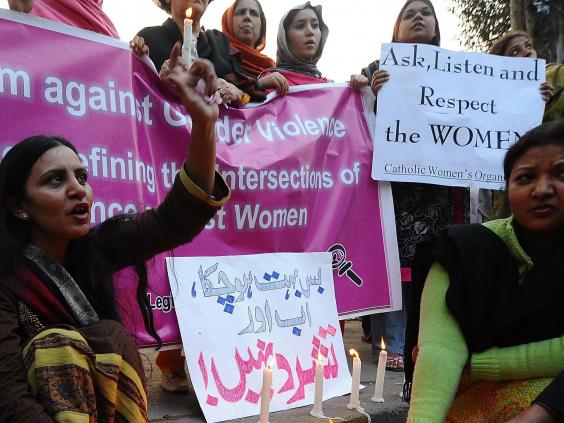
Women mark the International Day for the Elimination of Violence against Women, Lahore, November 25, 2010. (Getty)
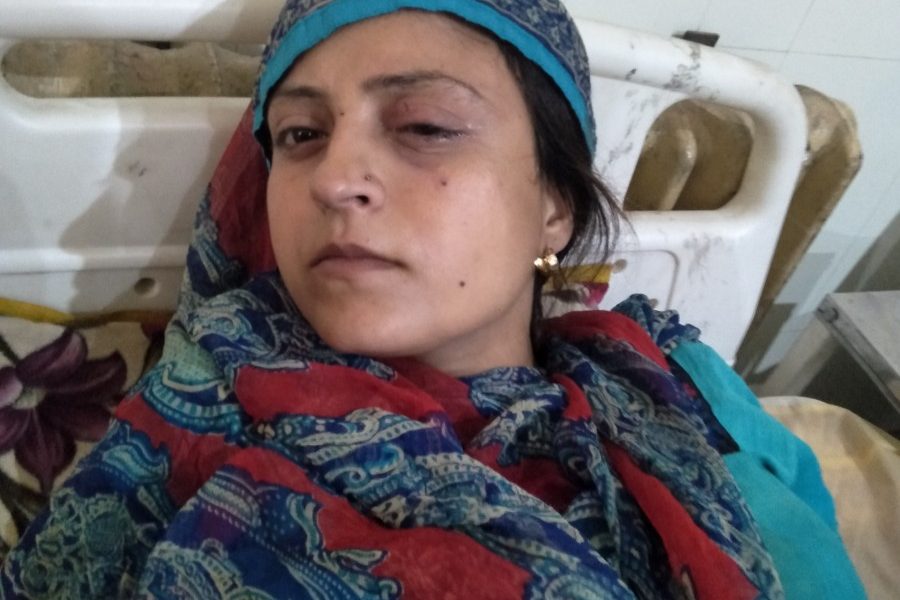
Found this old report I wrote about a young woman who miraculously survived horrific domestic violence, published in The News on Sunday, 18 January 2004. What has changed in Pakistan since I reported on it and what hasn’t? Posting it here as I couldn’t find it online. Continue reading →




 Journeys to democracy