You know it’s India-Pakistan when… (The sad case of Idrees Alam, ‘The Nowhere Man’)

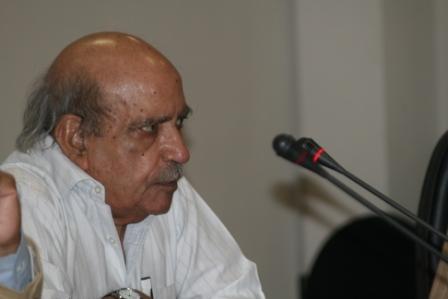
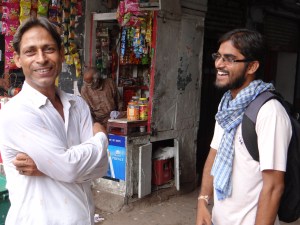
Kanpur: Idrees (left) shares a laugh with K. M. Yadav of IPFSA...but...

Kanpur: Idrees (left) shares a laugh with K. M. Yadav of IPFSA…but…

My article in Aman ki Asha today, re-posted here with links and more photos/documents. I’ve since been informed that Idrees is living in the compound of Police Administration (Police Line), Kanpur, under constant surveillance by two officers. He last communicated with his family over a year ago. 

You know it’s India-Pakistan when… overstaying a 15-day visa after a family tragedy leads to ten years in prison and a man’s continued 13-year separation from his wife and four sons .
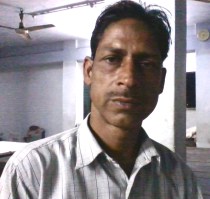
Idris Alam - Mahesh Pandey

…but his eyes reflect the bleakness of his existence without hope, without family. Photos: Mahesh Pandey

By Beena Sarwar

The case of Mohammad Idrees Alam is a prime example of how people suffer due to the bureaucratic wrangling between India and Pakistan.

Stuck in India, he has been unable to meet his wife and four children in Pakistan for the last 13 years. Pakistan and India both refuse to verify his citizenship. He is, as the BBC termed it in a radio report of Oct 22, 2012, ‘The Nowhere Man’.

Originally an Indian citizen, he went to Pakistan in 1986 to visit relatives. While there, he got married and opted to stay on, obtaining Pakistani citizenship. In 1999, his father Ahmed Jan in Kanpur became seriously ill and in May, Idrees went to India on a 15-day visa. His father passed away, and Idrees, embroiled in last rites and legalities, overstayed his visa by a couple of months.
Continue reading

Local Opposition Rises Against Fracking Infrastructure Proposal

Tom Salamone of Minisink, New York addresses a rally in front of the Federal Energy Regulation Commission on Nov 15, opposing a natural gas compressor station being built in Minisink. Credit: Asha Canalos

Tom Salamone of Minisink, New York addresses a rally in front of the Federal Energy Regulation Commission on Nov 15, opposing a natural gas compressor station being built in Minisink. Credit: Asha Canalos

My article for InterPress Service a couple of days ago:  Local Opposition Rises Against Fracking Proposal

By Beena Sarwar 

BOSTON, Massachusetts, Nov 27 2012 (IPS) – Efforts to promote the use of hydraulic fracturing, a controversial method of obtaining oil and natural gas, face stiff opposition from researchers and citizens who say that in its present form, the technology’s risks far outweigh its worth. Continue reading

Milne Do: Online petition urging India, Pakistan to let people meet

The people of Pakistan and India, people of Indian and Pakistani origin around the world, and friends of India and Pakistan, are fed up of the visa restrictions that prevent them from visiting families in the other country. There isn’t even a tourist visa protocol between these two biggest neighbours of South Asia. People in the region want the right to travel and to trade, to walk along coastlines and roads that represent their collective past, to seek and spread harmony across a subcontinent not divided by politics and propaganda. In this modern age of interdependence, it is a tragedy that the citizens of India and Pakistan are left peering over a border made indomitable and intimidating. There is little space for the hand of friendship to be extended across this border. This must change. Sign the Aman ki Asha Milne Do petition at Change.org . Let’s get a thousand signatures in time to present to the Foreign Ministers when they meet in Islamabad on September 8 2012.


Forum for Secular Pakistan: lecture on “Mohammad Ali Jinnah’s Political Career and Vision” by Dr Ajeet Jawed

Invitation from Javed Ahmed Qazi Secretary General, Forum for Secular Pakistan:

Forum for Secular Pakistan has organised a lecture on “Mohammad Ali Jinnah’s Political Career and Vision”  by  renowned Indian research scholar, Dr Ajeet Jawed, on Saturday 30th June, 2012, at 4:30 PM, at Jinnah Medical and Dental College, Shaheed-e-Millat Road, Karachi. You are cordially invited to have your input in the interactive session with the author of the book “Secular and Nationalist Jinnah”, a book which had raised a lot of debate especially in India. Continue reading

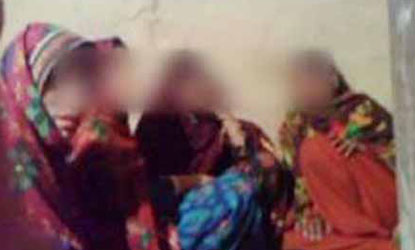
The Kohistan ‘video scandal’ in context

Screenshot of the video: the women sitting on the floor clap and sing a song… a man dances. Kohistan, Pakistan.

My article in weekly The News on Sunday published on June 10, 2012. I wrote it to meet their June 7 deadline, before the fact-finding team submitted its report. One of the members of that team was the activist Fouza Saeed who wrote about her experience in this article of June 8, A tipping point?: Real concerns in Kohistan.

Kohistan in context

The ‘religious’ militancy is adding to the social conservative values that weigh down women

By Beena Sarwar

Over the past few months, Kohistan has hit the headlines for reasons that symbolise much of what’s wrong in Pakistan: short-sighted policies that have given a boost to ‘religious’ extremists, poor law and order and prosecution systems that allow people to get away with murder, and conservative social values that reduce women to the status of chattel who can be killed for the sake of ‘honour’. Continue reading

Pakistani women waging peace the world over

Amn-o-Nisa coordinator Mossarat Qadeem (left) hugs Rosalia Miller from Nicaragua, mid-career MPA at the Harvard Kennedy School, who flew to Washington for the Tuesday event. Photo: Beena Sarwar

My blogpost for Global Post, about a coalition of women affected by violence and war, on a mission to spread their message and highlight the unique roles of women in the struggle for peace. Also published in The News, Pakistan. 

WASHINGTON: It was when children began painting ambulances, hospitals and dead bodies in art class that Bushra Hyder decided it was time to actively work towards healing.

That was 2009, and there were almost daily blasts in Peshawar, a Pakistani city not far from the border of Afghanistan, where Hyder runs an elementary and high school. The whole city, including the students and teachers at her school, was traumatised by the conflict raging around them. Those who could, fled to the capital Islamabad, or abroad, or anywhere but where they were on the frontlines.

“The violence affected the people…socially and psychologically,” Hyder said, speaking at a seminar at the United States Institute for Peace (USIP) on Tuesday.

“People lost businesses and loved ones. Blood and death was brought to our doorstep. All this violence really took a toll on the children. Boys played war games, and parents told me their daughters were mangling dolls’ limbs like victims of bomb blasts.”

Hyder began holding counselling sessions for the children and developed a peace syllabus to be taught at her school. She also started a children’s club (Peace Angels) and a mothers’ club (Mothers of Change) for women and their children who were victims of extreme violence. Peace Angels visited hospitals and orphanages, “to meet those most affected by the violence and see for themselves the results of violence,” while the mothers come to Hyder’s school to talk to students about the their own experiences and “how to get rid of the hatred.”

Continue reading

Picture this: World traveler takes photos that make us care

My interview for Latitude News, April 25, 2012 (Note: Latitude News is now defunct; some pix missing in this post)

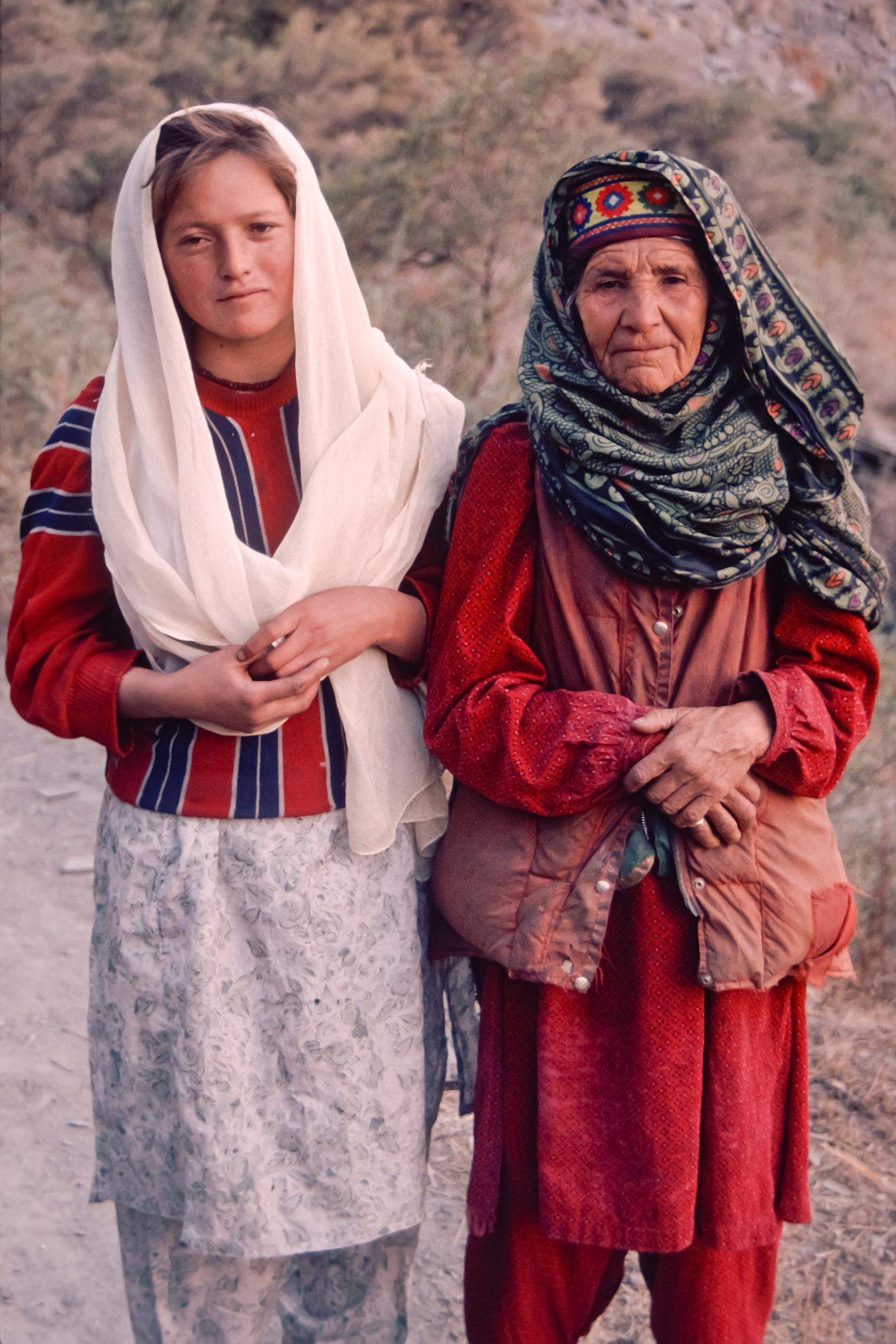
Hunza 1994

In Pakistan’s Hunza Valley in 1994, Perrault says, “I was amazed at the ethnic diversity of the people in this region. These women look like they are from Eastern Europe – and they have family living in New York City.” Because of a lack of health care, the mother had an untreated toothache. (Don Perrault)

Beena Sarwar

Tourists take photographs, but Don Perrault is the rare traveler who uses photography to give something back. I met Don Perrault at an Amnesty International get-together at an art gallery in South Boston. He fit the type of the optical engineer he is, unassuming, conservatively dressed and soft-spoken. But he spends his free time traveling and taking photographs, primarily in Africa and Asia.

He’s begun selling these to raise money for nonprofits working on health, education and gender empowerment. His highest-grossing photos, sold at a silent auction, went for a cool $5,000. Continue reading

Pakistan: Media and Balochistan – Citizens for Free and Responsible Media statement

Tuesday February 21, 2012: 

Citizens for Free and Responsible Media statement on the Media and Balochistan

To: All TV channel heads, producers and directors, newspaper editors, DG PEMRA, Minister of Information, Prime Minister Pakistan

Summary:
1. We urge the Government to facilitate dialogue by lifting curbs on the media in Balochistan.

2. We call upon the media in Pakistan to address the situation in Balochistan with sensitivity, empathy and fairness and to facilitate a civil discourse.

3. We demand a public apology from Kamran Shahid, the producers of Frontline, Express TV, Barrister Saif and APML and all channels to boycott Mr Saif until he apologises publicly for his remarks. We also urge the APML as a responsible political party to apologise for his excesses.

Continue reading

‘Any attempts to dislodge parliament will be resisted’

I. A. Rehman, Director HRCP:

National Dialogue on Challenges to Democracy and Role of Civil Society in Pakistan

Joint Declaration: Any attempts to dislodge parliament will be resisted

LAHORE, January 23, 2012: Civil society representative  and concerned  citizens (Intellectuals, legal activists, journalists, women, students trade union activists, religious minorities and academia) of Pakistan from all over the country shared their deep concerns over the current political situation and crises, while talking at a national consultation held in Human rights Commission of Pakistan’s office in Dorab  Patel  Auditorium, Lahore today. Continue reading

“Better green than gas stations!”

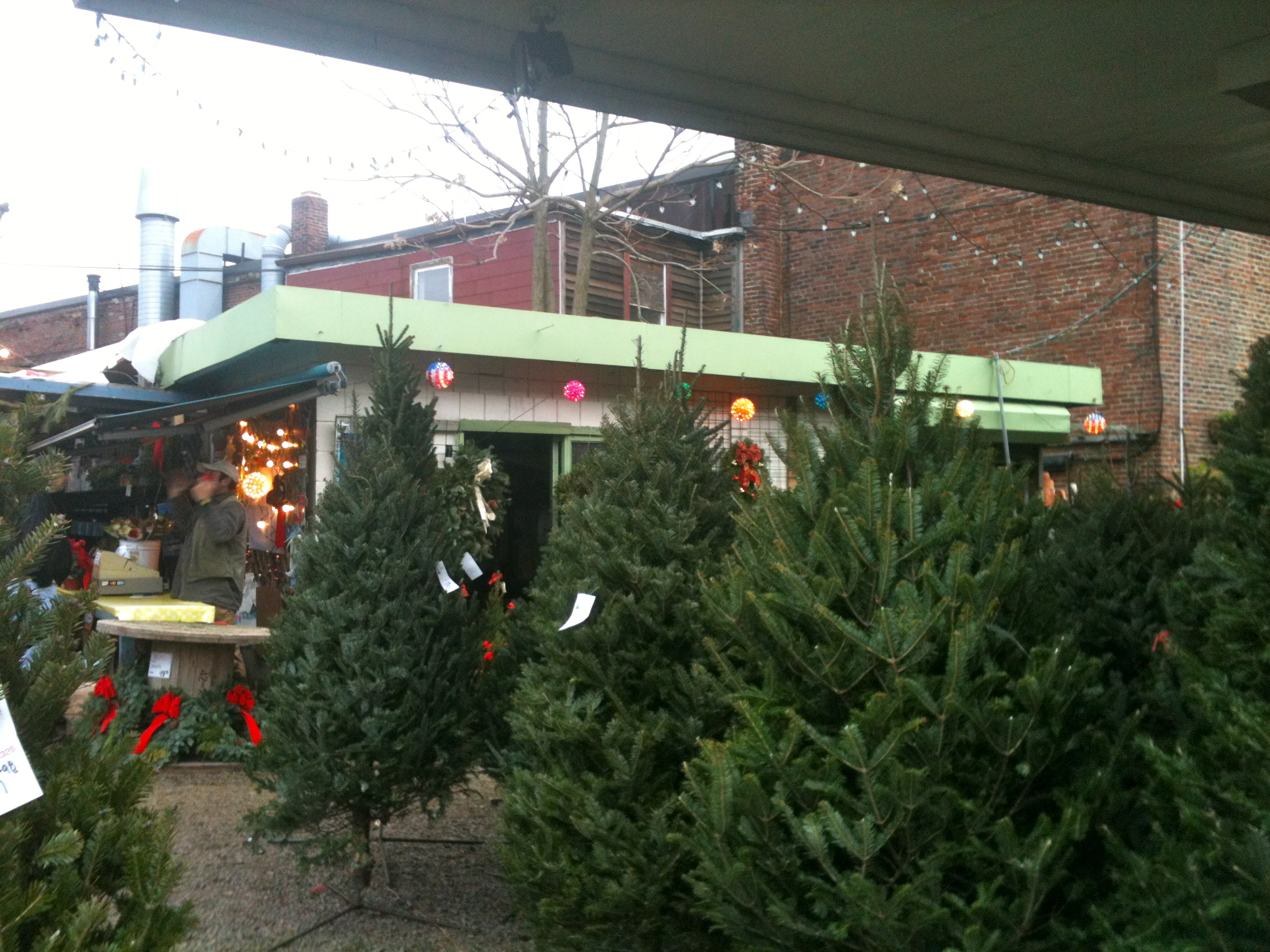
Christmas trees instead of cars. Yeah.

We’re not exactly into the whole commercial holiday scene but it seemed like a good time to get a little tree to decorate for the season and put out to grow for the rest of the year. So we got ourselves to Ricky’s Flower Market. We’d often passed this inviting looking urban nursery, bursting with flowers and potted plants in warmer weather, incongruously tucked between two heavily trafficked roads at Union Square, Somerville, MA. Now it’s full of Christmas trees. We pulled into the parking spot (bonus) and after some deliberation and discussion with Ricky, the owner, chose a sweet little Dwarf Alberta Spruce (a hardy species indigenous to the New England and Canada area, we learnt), in a pot. Here’s part of our conversation with its surprise tidbits: Continue reading