Fact sheet on Kanak Dixit’s arrest

Fact sheet on Kanak Dixit’s arrest – used as the basis for an online petition to CIAA Nepal Lok Man Singh Karki

Opposition to the current investigation by the CIAA into alleged corruption by Mr Kanak Mani Dixit is based on the grounds that the process has been flawed as demonstrated by facts:

1. Mr Kanak Mani Dixit had opposed the appointment of Lokman Singh Karki as the head of the CIAA (Commission for Investigation of Abuse of Authority) at the time of the appointment in 2013 on the grounds that Mr Karki had been indicted by the Rayamajhi Commission for suppressing the people’s movement: Under well-established principles of jurisprudence a judge or investigator with a personal bias or interest in a case should not be carrying out an investigation or pronouncing on a case, and in fact should recuse himself or herself from such a case to prevent prejudice. However though Mr Karki himself was the individual criticised by Mr Dixit, in a public campaign, Mr Karki continues to drive the investigations. Continue reading

Media figures call for release of Himal Editor Kanak Mani Dixit

Kanak 03

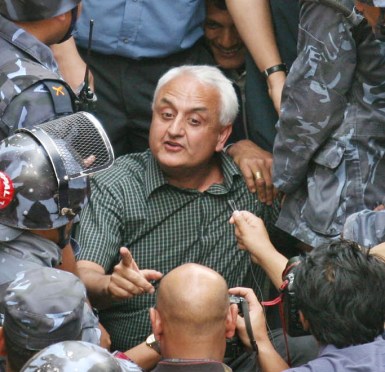
Kanak being arrested at a pro-democracy rally in Nepal, 2006. Photo by Shehab Uddin

Press Statement: media figures call for release of Himal Editor Kanak Mani Dixit

New Delhi, April 23 — Editors and media figures as well as intellectuals and scholars from India, Nepal, Bangladesh, UK, US, Australia and Sri Lanka have called for the release of Himal editor and prominent Nepali journalist Kanak Mani Dixit who was arrested yesterday in Katmandu by anti-graft officials.

The following is the text of the statement:

Continue reading

Stifling dissent in Southasia

I earlier posted about resistance to the stifling of dissent in India, and why as a Pakistani it matters to me. The trend is visible in other parts of Southasia too, including of course Pakistan about which I’ve written a fair amount. Here’s an update from Bangladesh, where defamation, sedition cases and the attempts to silence the independent media are underway, as well as Chattisgarh, India.

article-jtuxsszald-1455534764

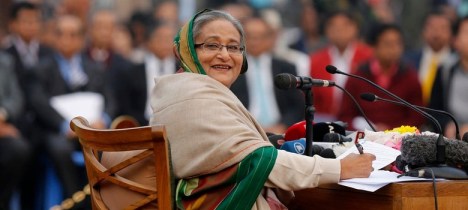
Smiles and sedition. Photo: Andrew Biraj, Reuters

Continue reading

Ways of seeing: Imagine, South Asia

Something I wrote for The News on Sunday, published Feb 14, on a thoughtprovoking series of discussions and Anila Quayyum Agha’s stunning installation ‘Intersections’ at the cornerstone of ‘Imagine, South Asia’ at the historic Peabody Essex Museum

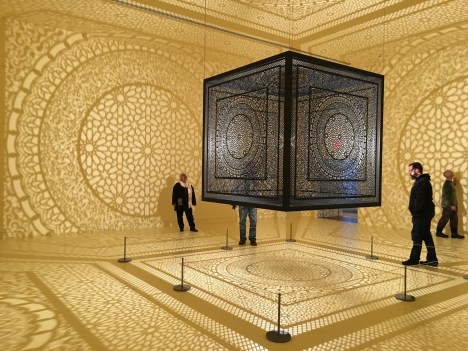
Intersections

Intersections by Anila Q. Agha: an immersive, mesmerising experience. Photo: Beena Sarwar

In an age of divisiveness and conflict, with media attention focused on power politics and high profile acts of violence, Imagine, South Asia, a weekend-long series of events at the Peabody Essex Museum was a welcome reminder of the healing and inclusive power of the arts.

Continue reading

#StandwithJNU… “But what about Pakistan?”

I wrote this piece a couple of days ago for Scroll.in on why I, as a Pakistani, am bothered about what’s happening in India – and also what people like me have to deal with from hyper-nationalists on both sides of the border. Also see this post from New Pakistan raising the question of whether the applause in Pakistan for political dissent in India means that such dissent is acceptable in Pakistan too – with reference to the young cricket enthusiast Umar Daraz in Pakistan, arrested for raising an Indian flag. Also see this excellent piece by Rubeena Mahato in Nepali Times raising alarm bells about South Asia’s constricted freedoms.
JNU crisis: But what about Pakistan?

JNU crisis: But what about Pakistan?


For the past few days, the row between those who stand for free speech and those who don’t has intensified in India. As a journalist from Pakistan, I stand unequivocally with the students and journalists in India who are being vilified and targeted by hyper-nationalists. In the process, I am getting more than my usual share of nasty comments from Indians – and Pakistanis – on social media. Continue reading

The Southasian penumbra

IMG_5208

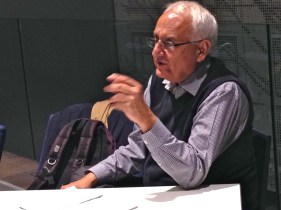
Kanak Dixit: thought-provoking

My PERSONAL POLITICAL column in The News and in Hard News, India, last week

Beena Sarwar

I was curious when my old friend, the Nepali journalist Kank Mani Dixit proposed the topic “To be Desi or Southasian” as the topic of a talk that another journalist friend, Aseem Chahbra from India, was setting up for him in New York.

Continue reading

Google’s tearjerker ‘Reunion’ ad, and the ‘Milne Do’ campaign

Reunion“, the moving, well made little video released by Google today is going viral. And it’s not just the one ad, there’s a playlist of five in the series – ‘fennel’, ‘cricket’, ‘Anarkali’, and ‘sugar-free’. If it doesn’t move you, you’ve got a heart of stone. And if oh, it was that easy.

A still from the Google ‘Reunion’; film’ ad

For Pakistanis and Indians to get visas to visit each other’s country is just short of impossible. Check out their visa requirements for each other’s nationals — Pakistan visa requirements for Indians, India visa requirements for Pakistanis – which includes the notorious Sponsorship Certificate “mandatory from 07/03/2011 for all visa applications”, to be signed and stamped by an Indian first class gazetted officer vouching for the Pakistani applicant. But let’s suspend disbelief for now, and  watch Google’s heartwarming Reunion video below. 

If you can’t access Youtube, here’s the Vimeo link.

AKA Logo

If the Reunion ad moved you, go to the Milne Do (Let people meet) petition link and sign (and share) the campaign against India Pakistan visa restrictions. Every voice counts.

UPDATE August 2022: The Southasia Peace Action Network or Sapan Alliance now runs the MilneDo online petition.

The text below has not been updated.

Continue reading

A Southasian vision

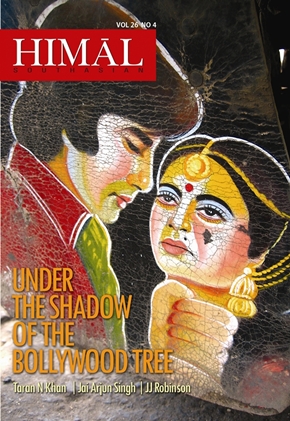
Himal Southasian: Under the Bollywood Tree - latest issue, launched at the Bangalore Literature Festival recently

Himal Southasian: Under the Bollywood Tree – latest issue, launched at the Bangalore Literature Festival recently

My article in The Friday Times last week (thanks to Raza Rumi for pushing me to write this, despite the tight deadline):

A Southasian vision

For regional peace, development and prosperity, it is imperative to improve India-Pakistan relations

Beena Sarwar

I like how the Nepali journalist Kanak Mani Dixit refers to the Indian sub-continent: Southasia. One word. Kanak explains why, in the respected magazine Himal Southasian that he edits, that I am proud to be editorially associated with since its launch in 1997. As a magazine “seeking to restore some of the historical unity of our common living space – without wishing any violence on the existing nation states – we believe that the aloof geographical term ‘South Asia’ needs to be injected with some feeling. ‘Southasia’ does the trick for us, albeit the word is limited to English-language discourse. Continue reading

Once more for the Spinal Beetle and Southasia connectivity

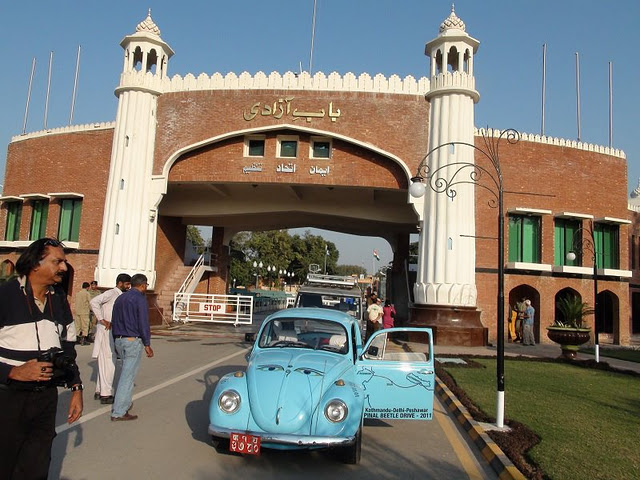
Spinal Beetle with its Nepali eyes arrives in Pakistan

Here’s the latest report of the Southasian journey undertaken recently by my friend, civil rights activist, writer and journalist (editor Himal SouthasianKanak Mani Dixit, his wife Shanta (a teacher) and son Eelum (an actor, and yes, his name derives from ‘ilm’ which means knowledge, named by his dada, Kanak’s father who is a prominent writer).

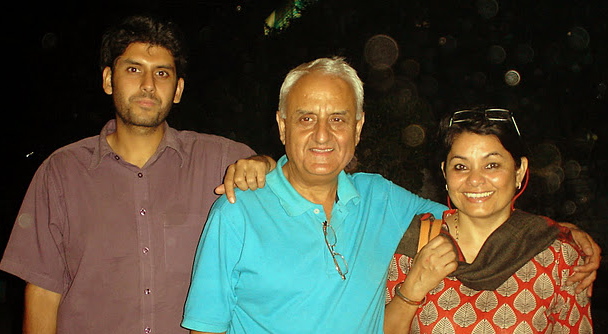
Eelum, Kanak and Shanta Dixit: A great drive

The family started their 1100-mile odyssey in Kathmandu, Nepal, ending in Peshawar, Pakistan, to raise funds and awareness about the need for spinal injury rehabilitation. Those who have been following this issue would know that Kanak injured his spine in a trekking accident a decade ago. He survived, making a near miraculous recovery, and started the Spinal Centre Nepal in 2002, inaugurated by the late Sir Edmund Hillary. The coverage they’ve got on this journey has helped publicize their drive tremendously but the required funds have not arrived, and they are well short of their target. This is a personal appeal. Please donate what you can for this important cause. And do read this riveting account of their journey, includes important insights and information… Continue reading

A Spinal Beetle update: striking a blow for Southasian land connectivity

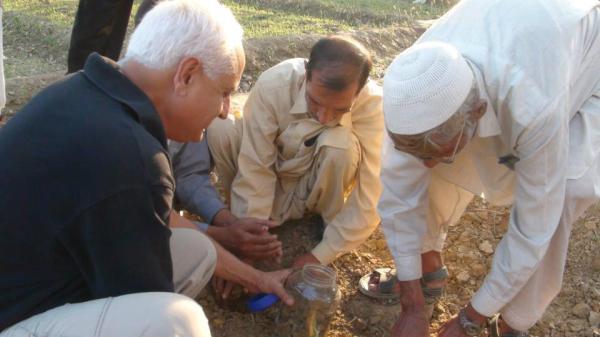
Kanak collecting the earth from Fatehgarh Sahib outside Sialkot, the childhood village of 96-year-old Barkat Singh 'Pahalwan' of Jalandar, India at his special request.

I’m sure the Dixits – Kanak, Shanta and Eelum – have soon share photos, video and stories about their Spinal Beetle fundraising drive from Kathmandu to Peshawar but meanwhile, this brief update.

Many things about their journey were striking and moving. There’s the romance of driving from Kathmandu via Lucknow, Delhi, Agra, Amritsar, Lahore and Rawalpindi to Peshawar, much of it along the ancient Grand Trunk Road that dates back to the Maurya Empire (3rd century BC), later extended by Sher Shah Suri in the 16h century, from Calcutta to Kabul. Continue reading