

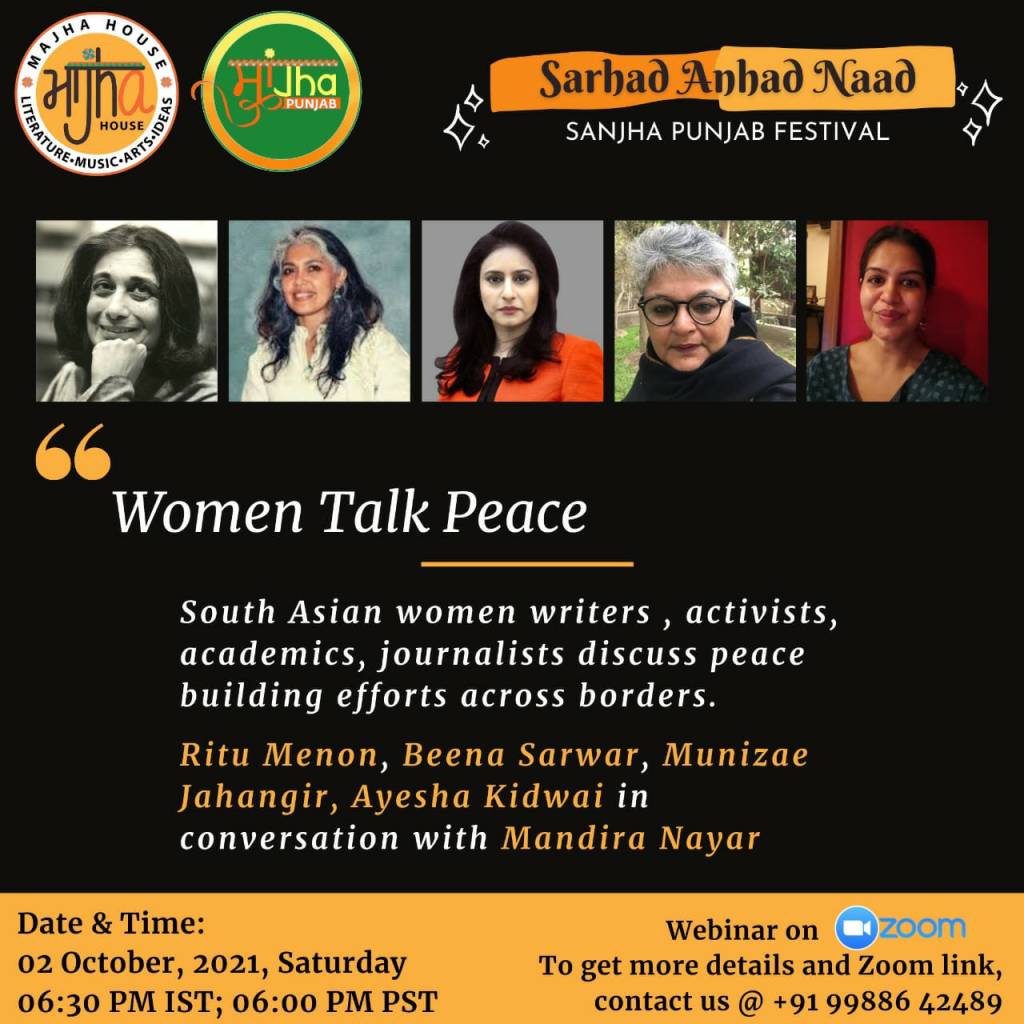
Thrilled and honoured to be part of two peace building events with some awesome women this weekend, Saturday and Sunday. Tune in.
Filed under: Art and activism, Human rights, Pakistan-India, Southasia | Tagged: south asia | 2 Comments »
Thrilled and honoured to be part of two peace building events with some awesome women this weekend, Saturday and Sunday. Tune in.
Filed under: Art and activism, Human rights, Pakistan-India, Southasia | Tagged: south asia | 2 Comments »
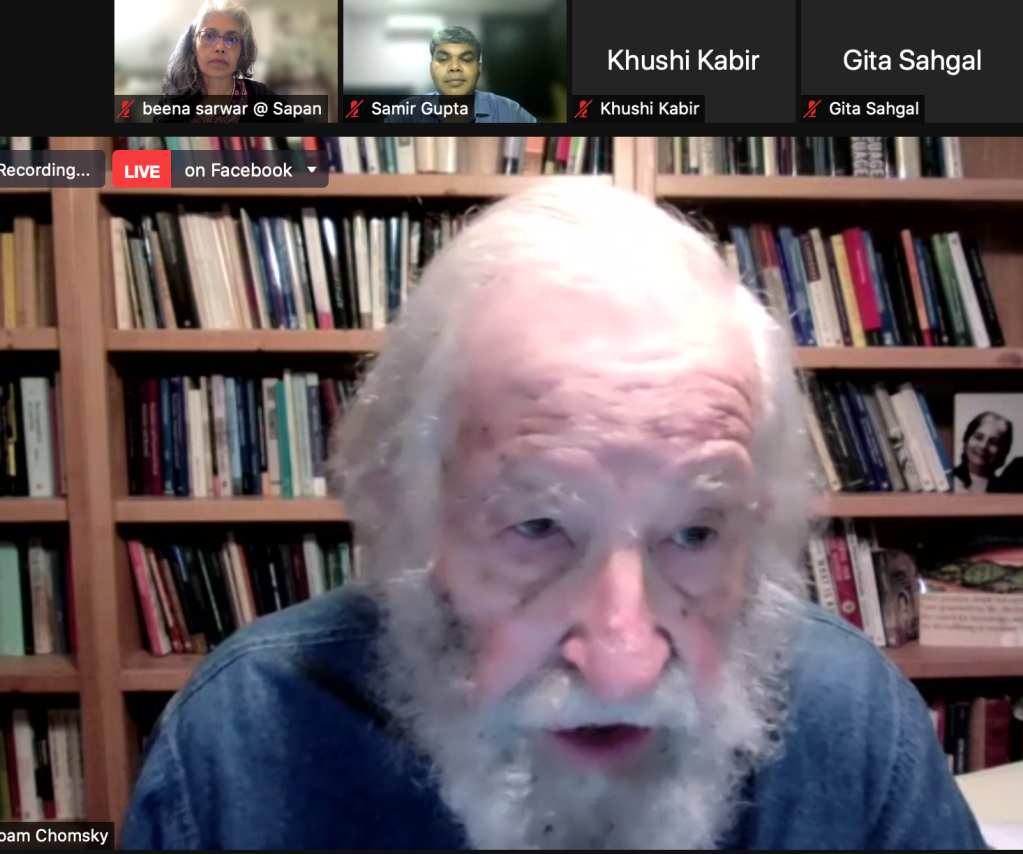
BOSTON, 27 September: Prominent academic Noam Chomsky has urged the United States and India to engage with the Taliban, work towards overcoming differences with other regional powers, and help the Afghan people rather than blocking ”the best of the options that are available”.
He was speaking last Sunday at the tail end of a webinar titled “20 Years After 9/11: Impact on South Asia and South Asians” organised by the recently launched South Asia Peace Action Network, Sapan. Speakers shared stories of hope and inspiration, besides those of distress and challenges.
Filed under: Afghanistan, Human rights, Progressive politics, Southasia, Terrorism | Tagged: 9/11, Chomsky, hatred, love, restorative justice, violence | Leave a comment »
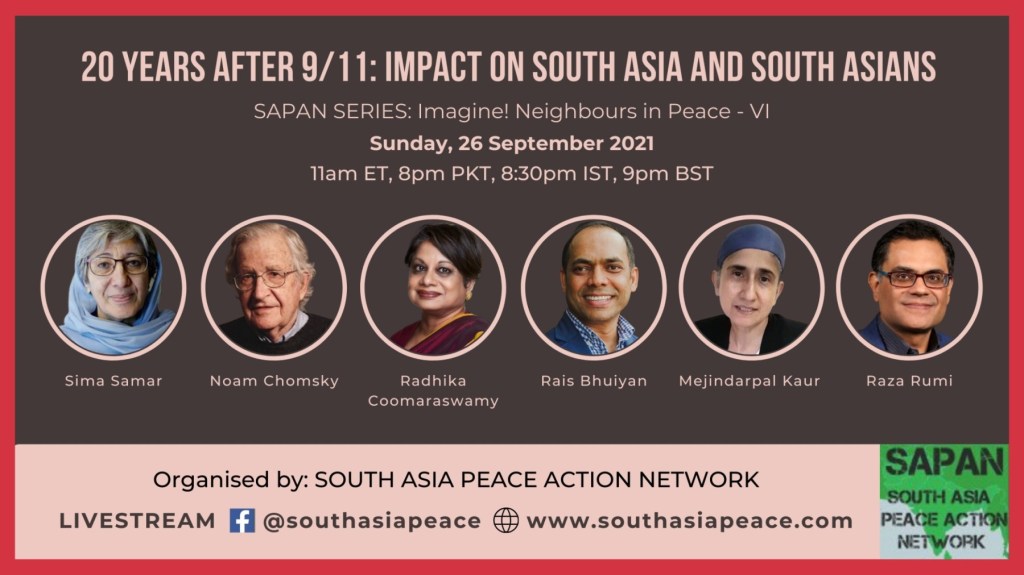
Marking two decades of the September 2001 attacks on New York City, global thought leaders and activists from across South Asia and the diaspora will meet across time zones this Sunday to discuss the impact of “9/11” on the region and its people.
The online event also commemorates the global International Peace Day, September 21.
Continue readingFiled under: 'War on terror', Afghanistan, History, Pakistan-India, Southasia, Terrorism | Tagged: 9/11, Afghanistan, Chomsky, Chomsky in Pakistan, eqbal ahmad, Human rights, Islamophobia, Muslims, radhika coomaraswamy, Raza Rumi, sima samar, Southasia, world without hate | 1 Comment »
I wrote this piece recently about someone I was honoured to consider a friend although we never met. Hal Gould came to mind when we launched Sapan, the South Asia Peace Action Network, earlier this year. I knew he was over 90 by then, a few years older than my late father Dr M. Sarwar, who Hal had felt an affinity with. We’re in a pandemic and I hadn’t heard from him in a while.
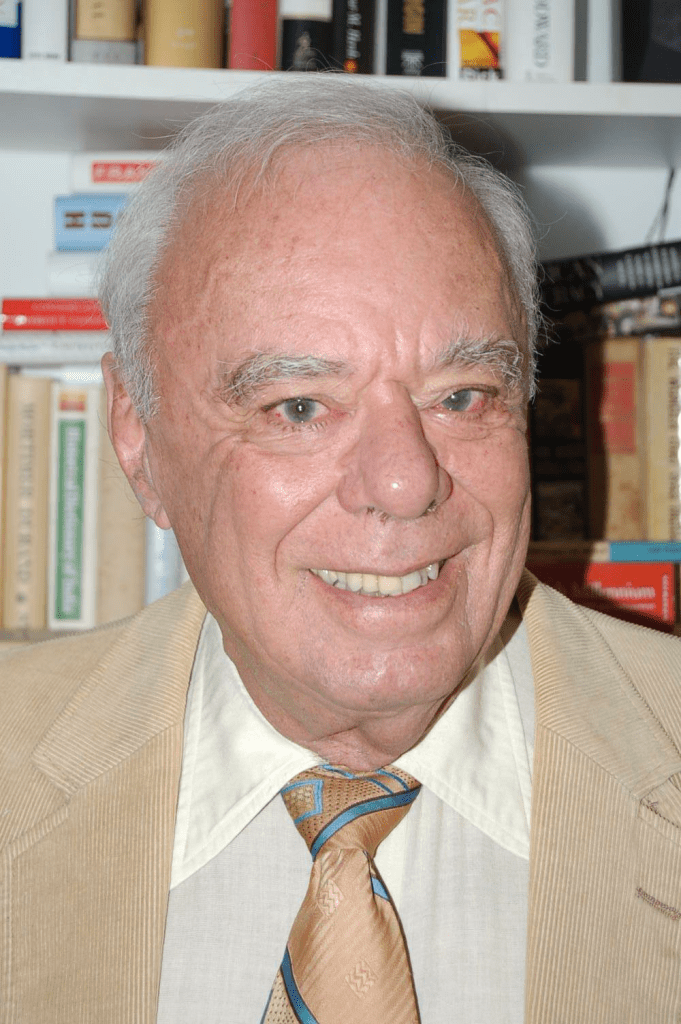
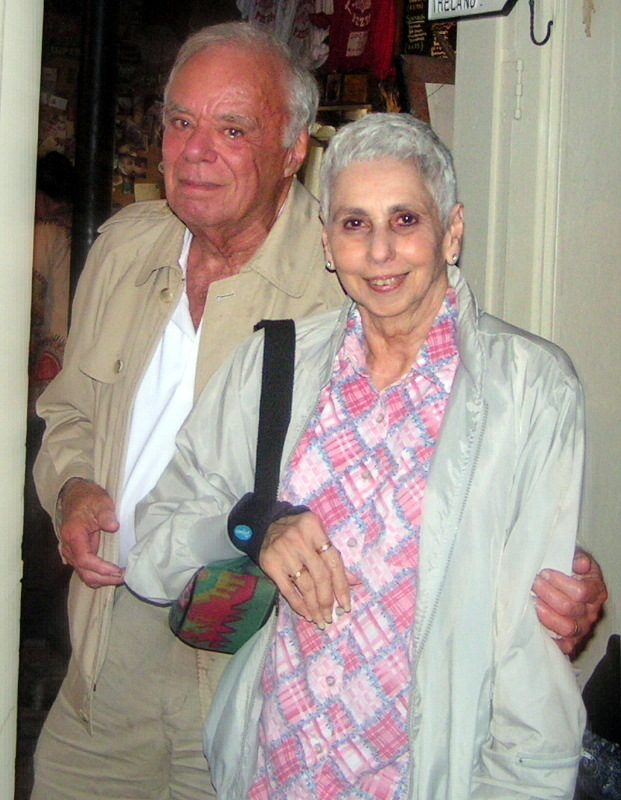
Hal and I had been in touch since early 2008 after he read my op-ed in Dawn, “An inconvenient truth” (Feb. 22, 2008) about Pakistan’s ‘return to democracy’, marking the country’s first-ever peaceful electoral transfer of power. He had quoted from it in his column for the then newly launched online magazine South Asia Monitor, in which he urged America and the world to allow democracy to take root in Pakistan without outside interference.
My piece had emerged in response to an American friend’s outraged comment: “What kind of democracy is it that puts the fate of the country in the hands of a Nawaz Sharif and an Asif Zardari?” Trying to put the issue in context, I had written: “It’s surely not worse than a democracy which puts the fate of America – and the world – in the hands of a George W. Bush… TWICE!” I added that India had twice elected a right-wing BJP government-backed by religious militants. This was, of course, before Trump and Modi.
Interesting times, these. As a scholar who has done seminal work on caste in India, I am sure Hal would have had something to say about the Dismantling Hindutva conference taking place this weekend that is under massive attack from those who refuse to distinguish between Hindus and Hindutva…
Then came the sad update about his stroke, followed by news of his passing – shared by his son to the Friends of Hal email list that Hal used to post to. I found it hard to put the piece together in the middle of all that was going on but I felt Hal deserved a proper remembrance.
Hal’s son Armeen eventually sent around an obituary which I’ve drawn from, including a list of the books Hal authored. For the photos I’m indebted to historian Richard Barnett – who I had interviewed years ago for The Frontier Post – who connected me with another friend of Hal and of South Asia, Philip McEldowney at University of Virginia who dug about and sent some.
Obituary on Hal Gould in South Asia Monitor, cross-posted to our recently launched Sapan website. Rest in peace Hal. We will keep learning from you.
Here’s the full piece:
Continue readingFiled under: Dr M Sarwar, Human rights, Pakistan-India, Southasia | Tagged: Activism, Caste studies, democracy, Dismantling Global Hindutva, Dismantling Hindutva, Hal Gould, Harold A. Gould, Hindutva, south asia, University of Virginia | Leave a comment »
Meant to share this earlier – great discussion last weekend on the rights of the incarcerated in South Asia, organised by Sapan, the South Asia Peace Action Network. Besides human rights advocates and experts, there were testimonies from those who have suffered incarceration, and presentations from Sapan volunteers about prison conditions and best practices in the region. The issues raised are relevant beyond the region. Hope we can keep the momentum going – and we need help to do that. Please like, comment, share and post about this issue that affects all of society. Thank you.
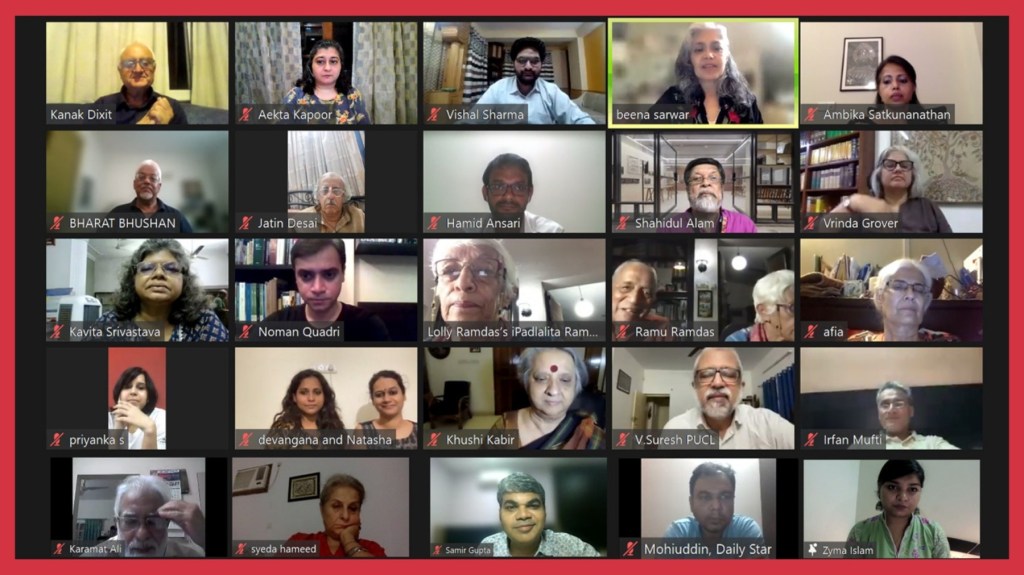
29 August 2021: “If the government becomes the monster that it can be, then the belly of the beast contains the people in jail”, said Nepali journalist Kanak Mani Dixit, speaking at a regional session on the rights of the incarcerated in South Asia, particularly in light of the ongoing Covid-19 pandemic.
He was among the prominent activists, legal experts, concerned citizens, and formerly incarcerated persons across the region who came together online to discuss the issue on Sunday, 29 August 2021, under the umbrella of Sapan, the South Asia Peace Action Network, of which he is a founding member.
Held a day before the International Day of the Victims of Enforced Disappearances, 30 August, the meeting underlined the need to recognise enforced disappearance as a distinct crime. The recent commemoration of World Humanitarian Day on 19 August also pegged the need for compassion and empathy for vulnerable communities. The tragic situation in Afghanistan further highlights the need for solidarity in the region and to insist on upholding human rights principles.
The event featured gut-wrenching testimonies in various languages from those who have experienced incarceration in the region, including those who were picked up but not produced before the courts for months or years. Those who fill the prisons tend to be the poorest of the poor as many pointed out.
Continue readingFiled under: enforced disappearances, Human rights, Pakistan-India, Southasia | Tagged: Bharat Bhushan, Covid19, Father Stan, Hamid Ansari, incarcerated, Jatin Desai, Kavita Srivastava, Khushi Kabir, Natasha Narwal, pandemic, prisoners, ramu ramdas, Sapan, Shahidul Alam, Southasia, Vrinda Grover | Leave a comment »
Glad to report that Ajeet Kumar Nagdev and his children are on the train headed to Amritsar, and will hopefully cross the border on Saturday along with some 50 other Pakistanis who had been stranded in India due to the coronavirus pandemic. Thanks for all those who helped Nagdev and his family, especially Samir Gupta, Shishir Arya and others, including the helpful folks at the Pakistan High Commission, New Delhi, operating under stressful conditions. Salute to all of you.
Meanwhile, need help getting the word out about this upcoming regional event Sunday, on the rights of the incarcerated with legal experts and human rights activists from around the region. Pls subscribe, join, share, post, comment, like, tweet, whatever you can. Much appreciated.
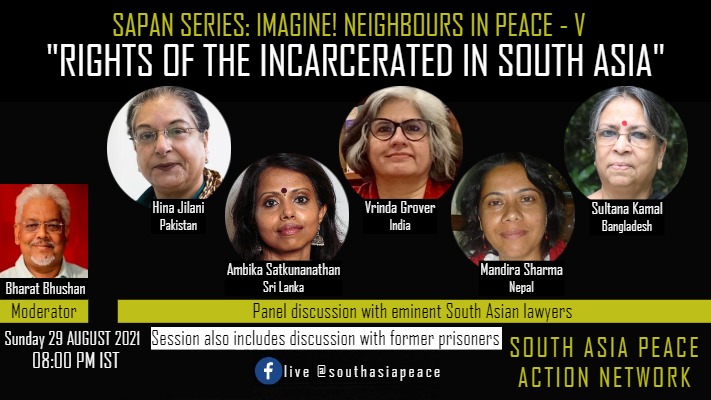
The main panel is coincidentally all women…. (Read more)
Continue readingFiled under: covid-19, Human rights, Pakistan-India, Progressive politics, Southasia | Tagged: Human rights, incarcerated, prisoners, Southasia | Leave a comment »
This is a followup report to a piece I did in May about a Pakistani Hindu family that migrated to India but wants to go home to Pakistan, made more desperate after a personal tragedy. This not about patriotism or religion but humanity. p.s. I sent this report to several media houses. It’s been published in The News, NayaDaur, South Asia Monitor, The Wire, Aman Ki Asha, Pakistan Today, Vibes of India, and its Gujrati portal and others. Note the credit at the end — Sapan News. This report may be a soft launch for syndicated service I’ve long dreamt of. Sapan News is linked with the South Asia Peace Action Network, Sapan, recently initiated by some of us. Check it out! Grateful for your support.
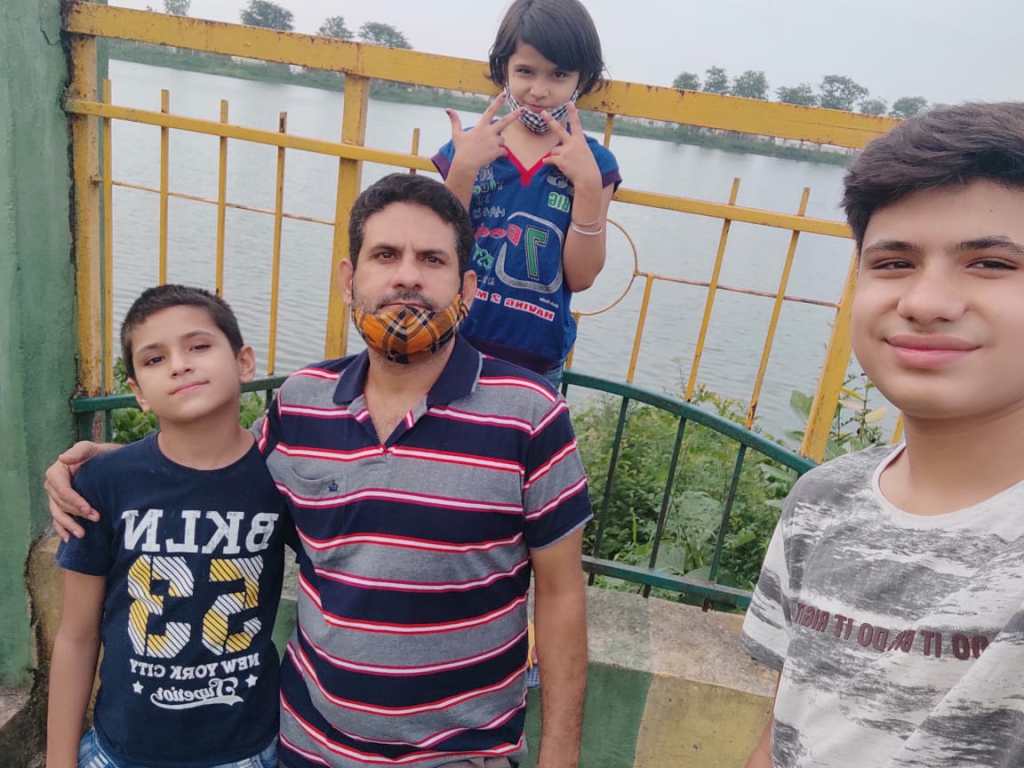
A Pakistani Hindu stuck in India with three children after his wife died in April is pleading with the authorities to let him return to before Independence Day, August 14.
“Mein TooT gaya huN – I am broken,” says Ajeet Kumar Nagdev, 41, speaking on phone in Urdu from Balaghat, Madhya Pradesh. His wife Rekha Kumari, 38, died on April 22, a day before the last Attari-Wagah border opening. “What can I do? The children break me, but I have to get up and keep going.”
Struggling to look after them, fearful of what will happen if one of them gets sick or if something happens to him, Nagdev feels trapped. He worries about their schooling. They miss their mother.
Continue readingFiled under: covid-19, Health, Human rights, Pakistan, Pakistan-India, Southasia | Tagged: #BringNagdevHome, Covid19, Pakistan, Pakistani Hindus, pandemic, Southasia, temple attack, visa free south asia | 2 Comments »
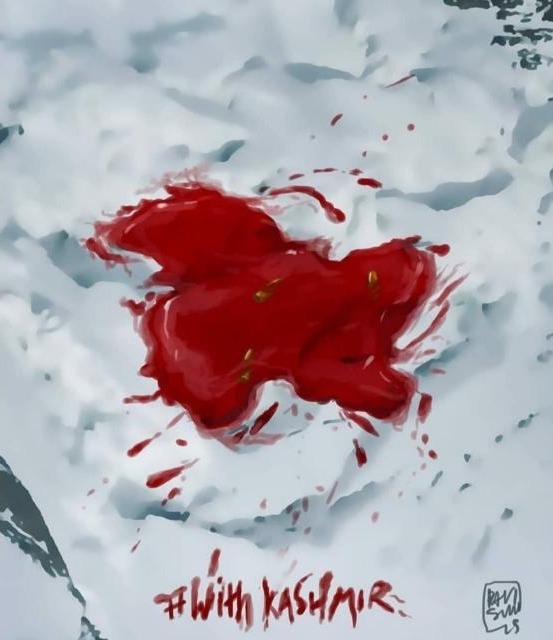
Sharing below a press release rejecting India’s continued violations of the constitutionally guaranteed rights of the people of Jammu and Kashmir – from the Pakistan India People’s Forum for Peace and Democracy (PIPFPD), the region’s largest and oldest people-to-people organisation, launched in 1994.
Also below – a PDF of the just-released report by the Forum for Human Rights in Jammu and Kashmir, an informal group of concerned citizens including retired Indian judges and armed forces personnel. The Forum aims to ensure attention to continuing human rights violations in the disputed region that both India and Pakistan claim. This is its third report.
Filed under: Art and activism, Kashmir, Pakistan-India, Progressive politics, Southasia | Tagged: Activism, democracy, Human rights, India, Kashmir, Pakistan | Leave a comment »
“I’ve been attending online events for the past two years, and this was the best, most engaging by far”, a young activist in Delhi after the South Asia Peace Action Network event on Sunday, featuring sportswomen from around the region and their stories.
This was the best feedback ever, especially with the tech issues we had behind the scenes.

Filed under: Cricket, Pakistan-India, Satire, Southasia | Tagged: khalida popal, noorena shams, sana mir, Southasia, sports, women, women in sport | 3 Comments »
The South Asia Peace Action Network webinar Neighbours in Peace and Health, June 27, 2021, was the third in the SAPAN series: Imagine! Neighbours in Peace, a title borrowed from an unpublished Chowk.com volume, 2005
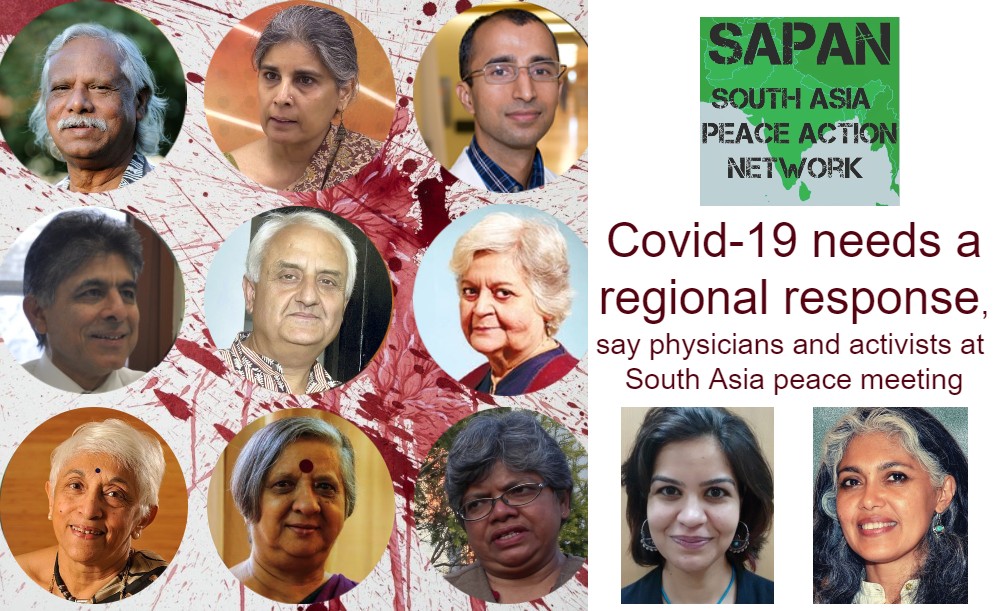
Sunday’s event included prominent physicians like Dr Zafrullah Chowdhury, Dr Anup Subedee, Dr Vandana Prasad, and Dr Hamid Jafari of Pakistan (led the team that eradicated polio in India). Speakers included Salima Hashmi, Khushi Kabir, Kanak Dixit, Lalita Ramdas, besides journalists Beena Sarwar, Mandira Nayar and others. Activist Priyanka Singh conducted the event.
“South Asian countries cannot go it alone, that’s irrational,’’ said Dr. Zafrullah Chowdhury, renowned public health activist and Ramon Magsaysay awardee from Bangladesh.
The hard lockdown in his country will lead to furthering the inequalities in society, he warned, emphasizing that it is irresponsible to impose lockdowns without providing food. “Poverty has increased. There are 25 million more poor without food.”
Dr Chowdhury was among the physicians and health right activists across countries who came together on Sunday 27 June at a webinar organised by the South Asia Peace Action Network (SAPAN) to emphasize that the coronavirus pandemic must be fought collectively.
Continue readingFiled under: covid-19, Dr M Sarwar, Health, Human rights, Pakistan-India, Southasia | Leave a comment »


 Journeys to democracy