Wiki & Pakistan Quashing Net Freedoms, Citizens Speaking Out

Quick update from Delhi – from where events in Pakistan look even more bizarre:

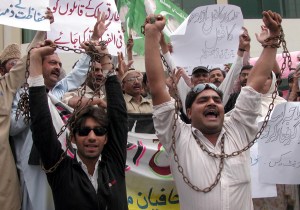
1. Pakistan Quashing Net Freedoms, Citizens Speaking Out: http://bit.ly/976TxU – updates and debates

2. Update from Abdur Rahman in the Bay area:
… regarding the Internet Censorship Wiki that several of us launched in the immediate aftermath of the ban on facebook by PTA (Pakistan Telecommunications Authority, following a court order). It’d be great if you could cross post it to your list asking people to update the site with any relevant information that may have. They need not worry about formating, one of the editors is continually pruning the content – http://pakistan.wikia.com/wiki/Internet_censorship

Media scandalising… Meera; Jack Lew’s briefing on Pakistan

Filmstar Meera - blitzed by hypocritical, misogynistic journalists (courtesy Open magazine)

Filmstar Meera - blitzed by hypocritical, misogynistic journalists (photo courtesy Open magazine)

Many journalists in Pakistan appear to have forgotten their responsibility to fairness and ethics. In one ongoing drama, they are going overboard about the ‘scandal’ of film actress Meera’s ‘marriage’, with anchor persons relishing her lack of sophistication and Geo going as far as to broadcast her interview AFTER she’s asked for the camera to be turned off. She may be lying but should anchors sneer? And should producers allow the camera to continue rolling after the subject has asked it to be turned off? But then, she’s a woman, she’s a film actress, she’s considered fair game… Is that fair? Here’s a sound antidote to all the drivel about Meera – A Girl Called Meera by Faiza S. Khan.

Continue reading

Dr Sarwar blog; my ‘Media Matters’ chapter in new book on Pakistan India divide

Hello all, it’s been a while since I last posted anything to this list. Have been caught up in a bit of a backlog.

Have uploaded new material, including photos, to the Dr Sarwar website – www.drsarwar.wordpress.com

Please do check it out. Suggestions, comments and inputs welcome

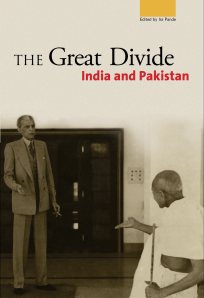
Cover 'The Great Divide'

Cover 'The Great Divide'

Recently received a copy of the India International Center quarterly to which I contributed a chapter (excerpt below), published recently by Harper Collins, India. I dipped into it – loved the chapter by Sonia Jabbar & was happy to see that Mukul Kesavan, one of my favourite writers, also has a chapter, besides other luminaries like Urvashi Butalia, Amit Baruah (former The Hindu correspondent in Islamabad),and Pervez Hoodbhoy plus a short story by Danial Muinuddin.

‘The Great Divide: India and Pakistan’ (Hardback, 360  pages)
Edited by Ira Pande
ISBN: 9788172238360
Cover Price: Indian Rs. 495.00

http://www.harpercollins.co.in/BookDetail.asp?Book_Code=2313

BOOK SUMMARY
At a time when India and Pakistan are both reeling under terror attacks and hysterical talk of an impending war, it is important to take stock of where we have reached, individually and as part of the Indian subcontinent; sixty years after the two nations were carved out as two distinct entities.

This volume of essays by writers from both sides of the border attempts to do just that. As the editor, Ira Pande, says in her introduction, ‘There is a balance here between the ‘hard’ topics (politics, economy, diplomacy, religion et al) and ‘soft’ (music, crafts, language, cricket, cinema) to bring out the full range of our engagement with each other.’

Below: Excerpt from my chapter

‘Media Matters’

Beena Sarwar

(excerpt begins)
Ask anyone what they think the major problems in society are, and chances that the media will figure somewhere in the answer. Ask about possible solutions and the answer again will include the media in some way. So is the media part of the solution or part of the problem? Or is it, as some think, the problem itself? Do journalists simply mirror society – reflect the good and the bad — or do they actually shape perceptions and agendas? Equally crucially, do they act independently or do they ‘manufacture consent’ for their governments and corporate owners? Have the media contributed to rising tensions between South Asia’s nuclear-armed neighbours, or are hostilities between the countries contributing to tensions between their media? Has the media boom brought people closer, or is it driving a greater wedge between them?

The answer is ‘yes’, to all these questions.

The ‘media’ of course are not a monolithic entity. The news media includes print, television, radio and more recently the ‘new media’ – websites and web logs or ‘blogs’ posted on the Internet. The ‘popular’ or ‘entertainment’ media includes film and advertising. Crucial to the role of the media is the continual blurring of the line between the news and entertainment media.

The media boom has on the one hand brought the people of India and Pakistan closer together and contributed to shattering stereotypes. On the other hand, it has done just the opposite, reconfirming prejudices and old suspicions.

The 24/7 news media boom has also spawned a beast that thrives on 30-second sound bites and shrinking attention spans around the world. It is not big on in-depth analysis and prefers speculation. It tends to bypass contextualisation for quick updates. The race to be the first to ‘break’ the news often leads to misreporting and inaccuracy. Peace talks and negotiations which would be more effective away from the media spotlight are routinely sabotaged by leaks and overreactions to those leaks.

Broadcasting belligerent statements by one politician or other is damaging anyway, but worse when these are cross-border taunts and challenges. The media has a duty to report, but giving weight to negative statements and events contributes to the hardening of stances and reinforcing of negative stereotypes. Of course, it also exposes the belligerent nature of those making such statements for all to see.

(excerpt ends)

Arundhati ‘Pakistani’ and right-wingers ‘patriotic’

The FMP panel in Delhi, April 15, 2009

The FMP panel in Delhi, April 15, 2009. Photo: FMP

Panel members Arundhati Roy & Aniruddha Bahal. Photo: B. Sarwar

Panel members Arundhati Roy & Aniruddha Bahal. Photo: B. Sarwar

PERSONAL POLITICAL

Beena Sarwar

“Shouldn’t Arundhati Roy come from Pakistan?” sarcastically asked a Delhi freelance journalist, commenting on the Facebook posting about a panel discussion, ‘Does Media Jingoism Fan India Pakistan Tensions?’ The cynical remark stemmed from his annoyance, shared by many, at Roy’s consistent exposure of India’s ‘warts’.

The panel, organised by the recently formed Forum of Media Professionals (www.fmp.org.in ), included four journalists from India besides the celebrated writer and activist Arundhati Roy as well as four Pakistani journalists and The Hindu’s Islamabad correspondent Nirupama Subramanian.

Delhi is far cleaner and greener since I was last there nearly five years go, thanks to laws (that are actually implemented) banning diesel and making CNG compulsory. On a more intangible level, another kind of pollution remains, reminiscent of a phenomenon we face in Pakistan: right-wing jingoism fuelled by emotional appeals to religion and nationalism.

The jibe about Arundhati Roy, disguised under an urbane sarcasm, is just one aspect of bigoted nationalism. Going by that logic, those in Pakistan who fight for justice — a struggle that necessitates exposing wrongdoings, or ‘washing dirty linen in public’ according to our critics — should represent India. Another aspect of such thinking is evident in the comments back home when I show my documentary ‘Mukhtiar Mai: The Struggle for Justice’, in Pakistan: “Why don’t you make such films about violence against women in India? Women there have these problems too.”

I wonder at this competitiveness that makes us feel self-congratulatory when we can point out how much worse the other is in some way.

Thankfully, not everyone takes this myopic view. In Allahabad, at a crowded meeting of the Pakistan-India People’s Forum for Peace and Democracy (PIPFPD), there was none of this one-upmanship or finger pointing. The audience immediately saw the commonalities of the issues raised in the films I showed, on Pakistan’s flawed and discriminatory Hudood Laws and Mukhtiar Mai. They understood that the phenomenon in Pakistan of Taliban ‘punishing’ women for alleged transgressions is not much different from those who rape, kill or lynch women and couples for the sake of ‘honour’ in India itself or indeed in traditional communities in Pakistan.

The difference is that most of these ‘honour crimes’ are committed by relatives of the women who ‘transgress’, as opposed to the Taliban who are taking it upon themselves to enact these punishments as part of the imposition of their own criminal justice system that flouts the writ of the state.

Another difference is that the family in Haryana who hanged their daughter and the man she eloped with (in their own home) will be charged, tried and probably punished. In Pakistan, the ostensibly Islamic Qisas and Diyat (retribution and blood money) laws imposed by a military dictator in the 1980s allow the murder victim’s family members to ‘forgive’ the perpetrators who are often their own relatives.

As for the Taliban and their sympathisers, none have ever been charged for their criminal transgressions, ranging from blackening women’s faces on billboards, to disrupting public events in that involve women (remember the Gujranwala marathon?), to blowing up schools, killing teachers and dragging women out of their homes and murdering them for alleged ‘immorality’.

At the Allahabad meeting, the tone was set by senior advocate Ravi Kiran Jain in his introduction when he stressed on the need for a stable government in Pakistan, and the desire to remove misunderstandings. His words reminded me of Nirupama Subramanian’s appeal at the panel discussion in Delhi urging Indians to “be sensitive to Pakistan as a country that has problems and show moderation in we respond to these problems.”

Many Indians already understand this, but we don’t hear their voices in the media very often. For instance, Utpala, a women’s rights activist during the discussion in Allahabad talked about the need for Indians and Pakistanis to be allowed to visit each other’s countries. Her own visit to Pakistan many years ago, she said had expanded her ‘angan’ (literally, courtyard). She ended by asking, “How can we in India be happy until there is a pro-people, pro-women government in Pakistan?”

The Delhi panel was disrupted for a minute or so by one man at the back of the auditorium who stood up and shouted anti-Pakistan, pro-war slogans. The organisers threw him out. He turned out to be from the Sri Ram Sene, one of the faces of India’s right-wing ‘Sangh Parivar’, who . Three or four others were outside, whom the organisers had refused to allow entry as they were not signing their names in the register. The SRS, which does not otherwise have much presence in Delhi, later claimed it had sent ‘thirty’ men to disrupt the meeting.

True to form, illustrating the very issues we had been discussing, most media hyped up the disruption which then overshadowed the discussion itself. Pakistani journalists were ‘roughed up’, ‘attacked’, the meeting disrupted for ’15-20 minutes’ and so on. The incident set off a chain reaction across the border, giving right-wing forces in Pakistan the opportunity to condemn the ‘anti-Pakistan feelings in India’. A ‘human rights’ organisation held a demonstration against the ‘attack’. Jamat-e-Islami’s recently elected chief Munawwar Hasan promptly issued a statement saying that it should serve as an eye-opener to those who talk of friendship with India and they should refrain from visiting India (‘ba’az ajana chahiye’).

For such people, obviously the anti-Pakistan slogans raised by one miscreant are paramount over the dozens of people in the IIC auditorium who listened respectfully to the discussion and engaged in a dialogue with the speakers later. The people in Allahabad and at the Delhi Press Club a few days later who came to hear a Pakistani journalist and express their support for a democratic order in Pakistan also don’t count, even if some of them were prepared for a rough time, like Zafar Bakht in Allahabad who had lent his school’s auditorium for the event. “After hearing of the Delhi incident, we rolled up our sleeves and were prepared,” he said later.

In the end, the anti-Pakistan slogans raised by one miscreant hogged the media limelight rather than those who filled the auditorium, heard the speakers respectfully and engaged in dialogue later. This is the nature of the media beast. Who is going to tame it?

MEDIA-PAKISTAN: Pondering Risks Covering Conflict, Crime, Corruption

Journalists in Lahore protest reporter's murder in Rawalpindi. Photo: Rahat Dar

Journalists in Lahore protest reporter's murder in Rawalpindi. Photo: Rahat Dar

By Beena Sarwar

KARACHI, Mar 28 (IPS) – The main issue before the Pakistan Federal Union of Journalists (PFUJ) meeting over the weekend in the central Punjab city of Faisalabad is the threat faced by journalists in this conflict-ridden South Asian country.

The cold-blooded murder of yet another journalist in Rawalpindi, twin city of the capital Islamabad, on Mar. 26, underlined the gravity of the situation.

Unknown assassins shot and killed Raja Asad Hameed, a reporter with the English-language daily ‘The Nation’ and its Urdu-language television channel Waqt, as he reached home that evening and was parking his car. His family rushed out on hearing the gunshots and found Hameed lying in a pool of blood.

The bullets, fired at close range, had pierced his neck and shoulder. Doctors pronounced him dead on arrival when he was rushed to the Benazir Bhutto Hospital, named for the late twice-elected prime minister who was herself assassinated in Rawalpindi on Dec. 27, 2007.

Hameed is the third journalist to be killed in Pakistan since the beginning of this year.

Days earlier, Tariq Malik, 30, a reporter with Dawn News TV, Lahore, died after being shot as well as stabbed in an apparent street crime while resisting a cell-phone robbery on Mar. 23.

In February, Musa Khan Khel, a correspondent for Geo TV and its affiliated English-language daily ‘The News,’ was kidnapped and killed in the restive Swat Valley just as the government concluded a peace deal with Sufi Mohammed, the elderly hardliner they hoped would influence the Pakistani Taliban.

“This is the main issue before us,” senior Islamabad-based journalist C.R. Shamsie told IPS on the phone from Faisalabad where he is attending PFUJ’s biannual delegates meeting.

“We are already facing economic murder because the media owners have not yet implemented the seventh wage board award. Now our lives are threatened because of our reporting.”

“We are provided no life insurance, no training on how to deal with conflict situations, and no defence kits or other life-saving materials like journalists in the international media, the European journalists,” added Shamsie, a member of PFUJ’s federal executive council, former PFUJ secretary-general, and editor of the Urdu daily Azkaar’s Islamabad, Karachi and Lahore editions.

Asked whether the prevailing lawlessness provides a cover for attacks on journalists, Shamsie said, “Tariq was apparently killed in a street crime. But the real reason is possibly something else.”

Since the explosion in the number of private television channels over the past few years, the media has, Shamsie noted, “become a party to the fight” between political players – an activist role that many observers have commented on.

In his recent column for Dawn, respected analyst Irfan Husain commented on “the extent to which our media has become an active player in Pakistani politics and society”.

He listed several examples to prove his point and concluded that far from being a liberating force as many had hoped, the private channels have “worked to serve the opposite end by reinforcing existing prejudices, rather than challenging them. Owners of channels have their own concealed agendas, and poorly educated producers and hosts do little to separate opinions from facts”.

His observations tie in with Shamsie’s contention that “it is the young journalists who are being targeted and killed perhaps to send a message to the big TV anchors who have become players in the political field, stepping beyond their role of journalists… There is a need for democracy in the media also.”

Pakistan ranks 10th on the Committee to Protect Journalists’ (CPJ) ‘Impunity Index 2009’ in its report ‘Getting Away with Murder,’ that provides a list of countries where governments fail to solve journalists’ murders.

Murders make up more than 70 percent of work-related deaths among journalists, says CPJ. The index does not include cases of journalists killed in combat or during dangerous assignments such as coverage of street protests.

The Index, for which the media watchdog “examined every nation in the world for the years 1999 through 2008,” calculates the number of unsolved journalist murders as a percentage of a country’s population. It includes only those nations with five or more unsolved cases. In 2008, 14 countries met these criteria.

Compiled for the second year running, this year’s Impunity Index report was launched Mar. 23, in Manila, “to mark the fourth anniversary of the murder of Marlene Garcia-Esperat, a Philippine columnist who reported on corruption in the government’s agriculture department’’.

She was gunned down in her home in front of her family “in a case that has become emblematic of the struggle against impunity,” says CPJ.

“Philippine journalists are clamouring for justice in at least two dozen unsolved cases, and they need government protection from the murderous thugs who are killing their colleagues year after year,” said Elisabeth Witchel, CPJ’s impunity campaign coordinator.

Iraq, Sierra Leone and Somalia top the Index in the first, second and third place respectively, but the report takes special notice of the worsening situation “in places such as Sri Lanka and Pakistan”.

Other countries on the list are Sri Lanka (4), Colombia (5), the Philippines (6), Afghanistan (7), Nepal (8) and Russia (9).

Last but not least, at number 14, is India, where Anil Majumdar, editor of daily newspaper ‘Aji,’ was shot dead in March in Guwahati, capital of the northeastern Indian state of Assam.

Last November, another Assamese journalist, Jagjit Saikia, was shot dead at point blank range. Saikia worked as a district correspondent for the vernacular daily ‘Amar Asom’ in Guwahati.

Daily newspapers in Imphal, capital of Assam’s neighbouring state of Manipur, ceased publication in protest after ‘Imphal Free Press’ sub-editor Konsam Rishikanta was shot dead on Nov. 17.

Journalists in Manipur are vulnerable to pressure from both local insurgent groups and state officials according to CPJ – a situation that journalists face in most conflict areas.

The failure to solve journalist murders perpetuates further violence against the press, noted Joel Simon, CPJ executive director in the report. “Countries can get off this list of shame only by committing themselves to seeking justice.”

South Asian journalists face particularly severe risks, with the region’s nations making up the bulk of CPJ’s Impunity Index: Sri Lanka, Afghanistan, Nepal, Bangladesh, Pakistan and India.

There have been some particularly horrific high-profile murders in the region over the last few months, including the gunning down of Lasantha Wickrematunga, editor-in-chief of ‘The Sunday Leader’ on Jan. 8 in Colombo.

Three days later, some 15 assailants stabbed to death print and radio reporter Uma Singh, 27, at her home in Janakpur in the south of Nepal.

The CPJ index notes that “even in wartime, journalists are more likely to be targeted and murdered than killed in combat. In Iraq, for example, murders account for nearly two-thirds of all media fatalities.” Conditions in Iraq improved in 2008, but authorities there have yet to solve a single murder case involving a journalist, notes the media watchdog.

Worldwide, the vast majority of victims are local reporters covering sensitive topics such as crime, corruption, and national security in their home countries, says CPJ.

http://www.ipsnews.net/news.asp?idnews=46304

SOUTH ASIA: Terrorists Aim for Destabilisation, Media Attention

SOUTH ASIA: Terrorists Aim for Destabilisation, Media Attention

Analysis by Beena Sarwar

KARACHI, Mar 4 (IPS) – South Asia seems to be caught in a vortex of violence as the countries that form this region – from Sri Lanka at the southern-most tip, Bangladesh to the east, Nepal crowning the north, Pakistan along the west and India in the middle – deal with internal nightmares that their governments routinely blame on neighbours.

Tuesday’s armed attack on the Sri Lankan cricket team in the historic city of Lahore in Pakistan has sent shockwaves through a country already racked by regular suicide and other attacks.

Eight Pakistani policemen died and several were injured saving the Sri Lankan cricketers, six of whom were wounded in the attack.

At the other end of the sub-continent, Bangladesh is still reeling from the shock of a border guards’ mutiny over pay and working conditions, resulting in soldiers massacring over 70 officers, including some of their wives.

Some analysts fear that the horrific incident might elicit copycat responses elsewhere too, where soldiers are unhappy with the tasks they are made to do.

Meanwhile, India has yet to recover from the horror of the attacks in Mumbai that claimed some 180 lives. New Delhi had, as a direct result of the attacks, called off participation of the Indian cricket team in the Pakistan tests.

Sri Lanka, in the last stages of a heavy-handed army operation against the Tamil separatists who have been fighting a guerrilla war against the state for over two decades, could hardly have imagined that its cricket team would come under fire in Pakistan, a friendly country.

Still, as the Sri Lankans told journalists after the Lahore attack, they had come here “well aware of the risks”.

Analysts point out that Tamil separatists are unlikely to be responsible for the attack, given the back foot that they are operating from.

The Sri Lankan team, in Lahore for a five-day test match where they already played for the first two days, were en route from their hotel to the stadium early in the morning on Mar. 3 when the gunmen attacked.

The firing reportedly began from three directions as the van slowed down near a roundabout close to the red-brick cricket stadium. Shaky television footage showed men with guns and backpacks taking position and firing. Their first target was the police escort.

According to the van driver, one of them flung a hand grenade which rolled under the van without damaging it. He said that the cricketers flung themselves to the floor of the van as he accelerated to escape the gunfire, managing to get the bullet-riddled van with the cricketers to the stadium.

There is universal condemnation for an act which many believe is an attempt to further discredit and isolate Pakistan. Many are praying for the quick recovery of the injured cricketers who were airlifted to Sri Lanka.

“They were our guests, they came to Pakistan when most people were not willing to come,” one man in Peshawar told a television journalist.

“We are a friendly and cricket-loving nation,” said another passer-by. “Now no cricket team will want to play here.”

The incident has more or less put paid to Pakistan’s aspirations of hosting the next World Cup in 2011, say observers.

The attackers struck at a sport that is hugely popular across South Asia, a quick throwback to a common colonial past (for all the countries except Nepal which was never under British rule), a legacy that includes the English language, administrative systems and railways.

In normal times, India and Pakistan’s cricket teams on the wicket pitch elicit responses akin to surrogate battlefields. A Pakistan-India game is referred to in parts of India as ‘Qayamat’ (doomsday).

Despite the keen rivalry, love of the sport is a unifier. ‘Cricket diplomacy’ has featured among the permissible people-to-people contacts that have grown immensely over the past decade or so.

“Cricket is not the bone of discord between the two countries,” Gul Hameed Bhatti, group editor sports of the country’s largest media group, Jang told IPS. “Basically the problem is the tensions between both countries, and cricket becomes the casualty. This incident has thrown cricket and other sports back into the dark ages. I don’t see anyone agreeing to come and play here now.”

Bhatti added that he had long “feared that this was a disaster waiting to happen because the situation in the rest of the country is so volatile. It was unrealistic to think that sportsmen could remain isolated from it’’.

Nor, say analysts, can other areas of society, like culture. In early November, explosions on the penultimate night of a major international performing arts festival in Lahore caused panic. There were no casualties although some people sustained minor injuries. Artists, foreign and local, defiantly rallied around to make the festival’s last day a resounding success.

Ironically, the festival was held in the cultural complex next to the Gaddafi cricket stadium where the Sri Lankans were headed when they were attacked.

Most people, said Bhatti, “had become complacent, thinking they would never target sportsmen.”

They included Pakistani cricket hero turned politician Imran Khan who shortly after the Mumbai attacks categorically told an Indian newspaper, “There is no problem about the security of cricketers in Pakistan. The terrorists will never target cricketers knowing that they will then lose the battle of hearts and minds of the people. Cricketers are safe in Pakistan.”

The audacious attack in an upmarket Lahore locality is now being compared to the Mumbai attacks, where ten gunmen targeted symbols of national strength. Police are saying that about a dozen gunmen were involved in the Lahore attacks.

Cricket is an area where Pakistan has traditionally shone as a global power with a huge fan following around the world.

Security fears have, however, massively dented enjoyment of the sport as many foreign teams have over the past years cancelled tours, including India after the Mumbai attacks that similarly cast a shadow over ‘India shining’, raising doubts about internal security.

Pakistan, already beset by multiple political problems, has for some time been facing a deadly threat from the ‘jehadi’ forces – regional players like the Taliban (from Afghanistan and Pakistan), the international al-Qaeda, and local militant outfits like the banned Laskhar-e-Tayyaba and the Jaish-e-Mohammed, many of whom with roots in the southern Punjab and links to Pakistan’s intelligence agencies that nurtured them during the Afghan war of the 1980s.

Following the events of 9/11, these forces have converged, to emerge as a greater threat than ever before, not just for Pakistan, but for world peace, say analysts.

Their agenda is not just to enforce what they consider to be an Islamic system, but to overrun and destabilise the state itself. Pakistanis have suffered heavily under this agenda, paying a heavy price for the policies of military rulers – who have run the country for more than half its 60 years of existence – that civilian governments have been unable to change.

These policies include cultivating ‘Islamic warriors’ to fight against the Soviet occupation in Afghanistan during the 1980s, supporting the Taliban in order to create ‘strategic depth’ in Afghanistan (citing the threat of a hostile India on the eastern border), and using some of these elements to bleed India in the disputed region of Kashmir.

No elected government in Pakistan has ever completed its tenure. They are routinely overthrown either by the army or dismissed by various Presidents using the powers invested in that office by the military dictator Gen. Ziaul Haq who also got himself appointed as President.

The current elected government, say analysts, is the first that is actually serious about fighting the jehadi threat which it recognises as endangering the country’s very existence. “But it appears that various elements within the establishment are still bogged down in the old policies and are unwilling to give democracy a chance,” said an observer.

Just as enraged Indians had “jumped on the blame Pakistan bandwagon” immediately following the Mumbai attacks of November, “some here are now blaming the Indian hand,” says Bhatti.

Many see the attack on the Sri Lankan team as an attempt to take ‘revenge’ for Mumbai and an attempt to isolate Pakistan internationally.

Lt. Gen. (retd.) Hameed Gul, former head of Pakistan’s shadowy Inter Services Intelligence (ISI) and a known hawk, was on television saying that “India wants to declare Pakistan a terrorist state”. The attack on the Sri Lankan team, he declared, “is related to that conspiracy.”

The Pakistan government itself has been more circumspect as have other analysts, including retired army officers like Maj. Gen. (retd) Jamshed Ayaz Khan who cautioned against such accusations “without a full investigation”.

The Sri Lankan government’s response has been conciliatory. “Pakistan’s cricket team was willing to visit our country when others weren’t because of security worries,” said Palitha T.B. Kohona, Sri Lanka’s foreign secretary, “and his government was pleased to reciprocate. The game must not be affected by a lunatic fringe”.

Ironically, media proliferation, particularly the 24/7 television news channels, has increased the intensity and probability of such dramatic high-profile attacks, say analysts. Terrorism thrives in the media spotlight which terrorists successfully attracted in Mumbai last November and now with the Lahore attack.

Ultimately, those who suffer the most after such incidents are ordinary people in India and Pakistan, say observers. The Lahore attack is bound to generate further tension between the two countries which have still not resumed the composite dialogue process stalled after the Mumbai attacks in November.

Rather than cooperating to solve a common problem, India and Pakistan remain prisoners of their hostile pasts. The ultimate winners in this game, note analysts, will only be the terrorists whose aim is destablisation and creation of tension around the world.

(END/2009)