

The day the popular Indian journalist Ravish Kumar spoke at Harvard, Oct. 2, happened to mark Gandhi Jayanti, Mahatama Gandhi’s birth anniversary. A day that social media users celebrated Gandhi-ji’s murder was and glorified his murderer on X, formerly Twitter, noted Kumar, talking in Hindi to students and community members filling the nearly 150-seater auditorium.
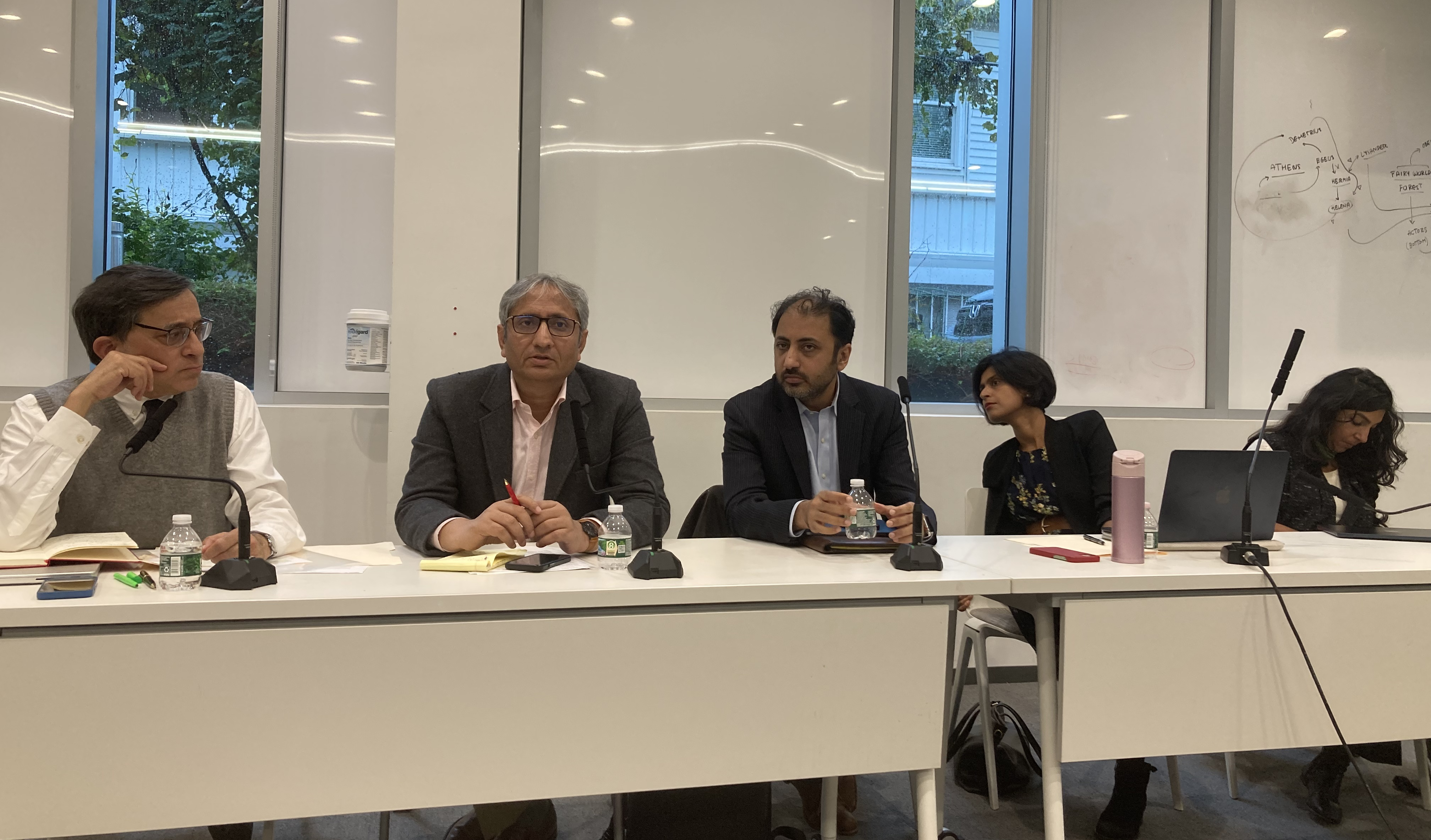
Ashutosh Varshney, Director of the Saxena Center for Contemporary South Asia at Brown University; Ravish Kumar; Wall Street Journal columnist Sadanand Dhume; Brown University faculty Poulami Roychowdhury and Prerna Singh. Photo: Beena Sarwar 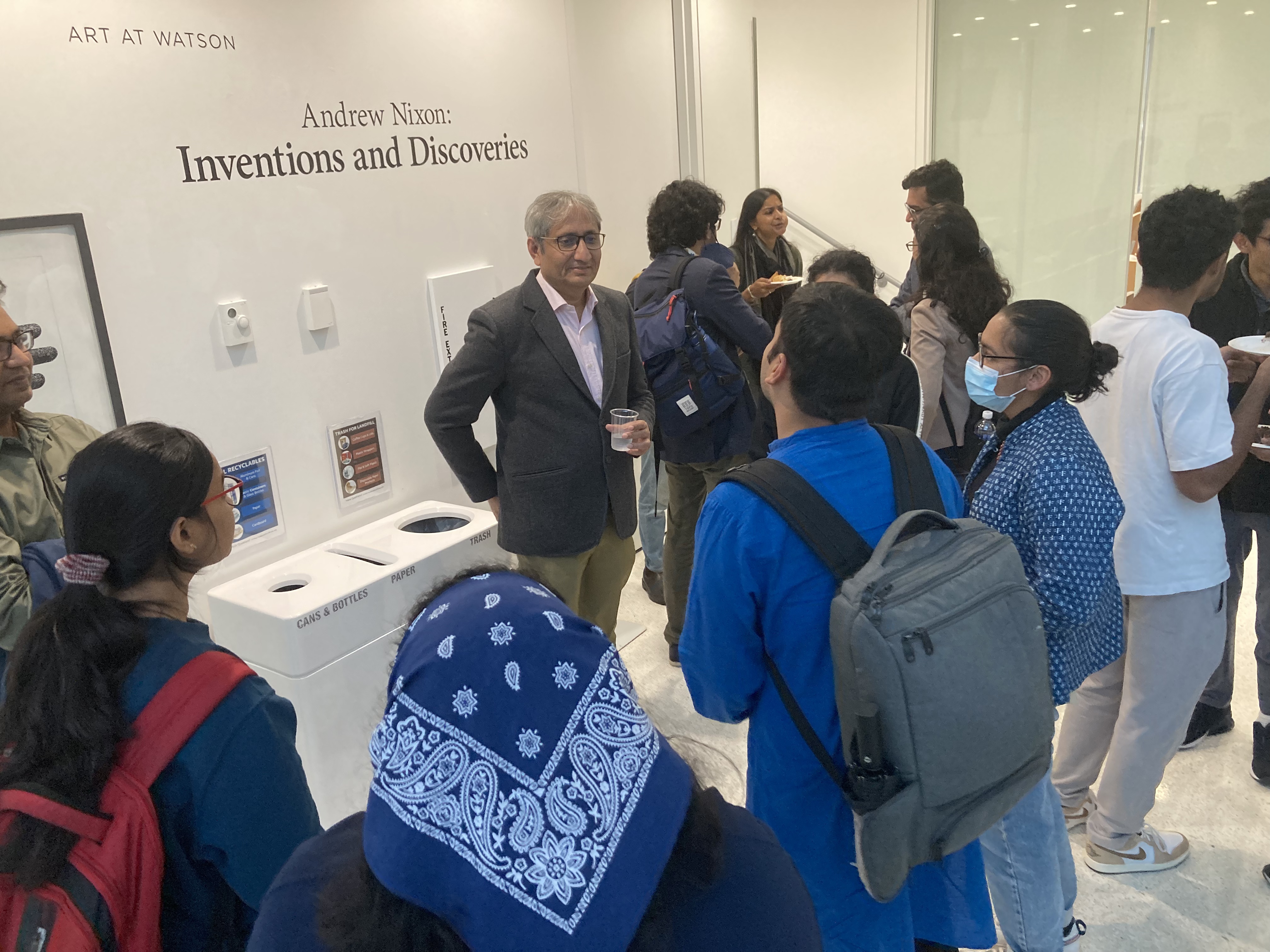
Students throng Ravish Kumar after his talk at Brown University. Photo: Beena Sarwar 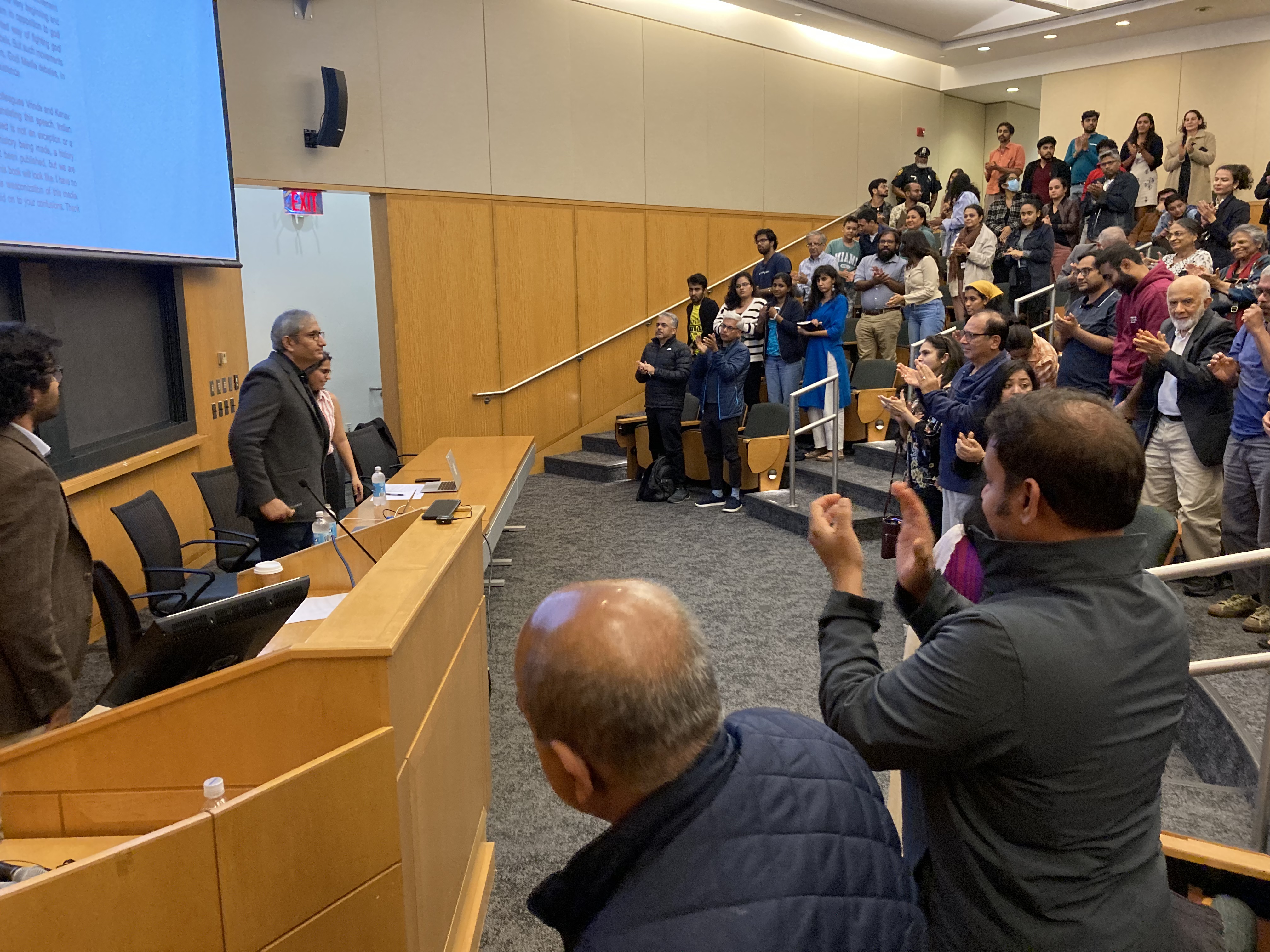
Standing ovation for Ravish Kumar after his talk at Harvard. Photo: Beena Sarwar 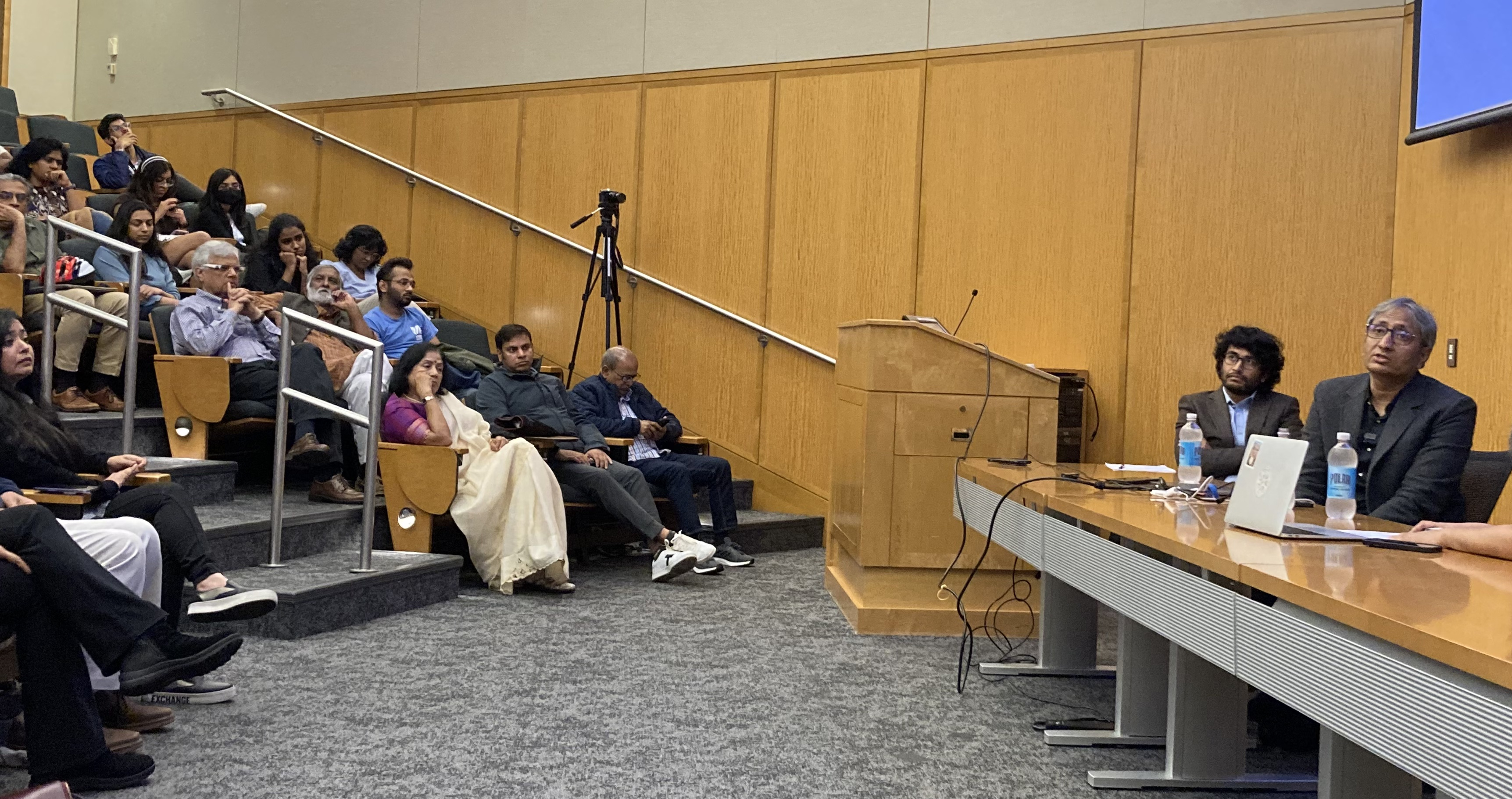
Discussion after the talk at Harvard. Not all questions were answered but as Ravish said, it’s important to ask them. Photo: Beena Sarwar 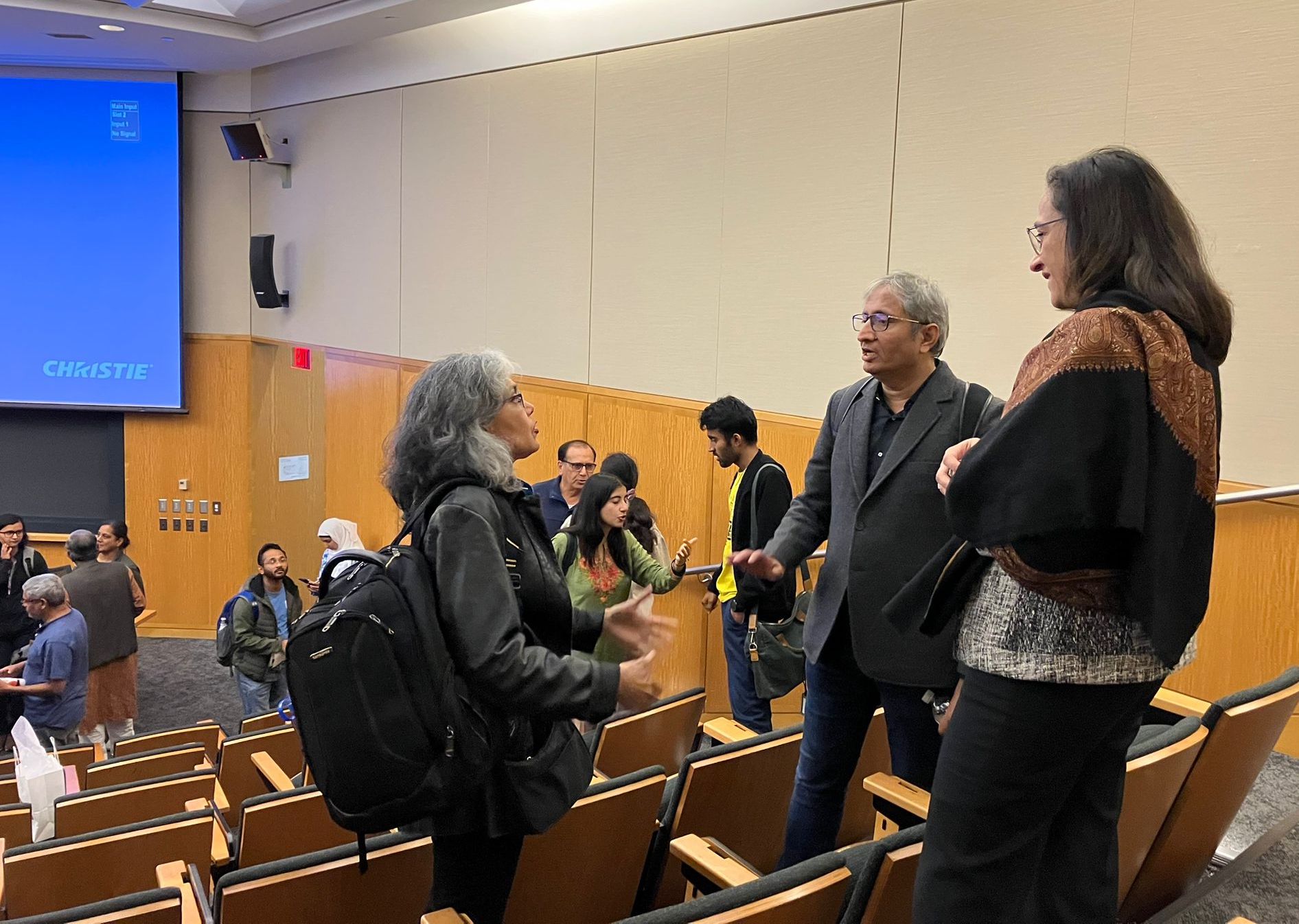
Talking to Ravish Kumar after the event, with Dr Deeba Husain from India. Photo: Rajeev Soneja
Ravish Kumar famously resigned from NDTV last November after its hostile takeover by Asia’s richest man Gautam Adani known to be close to Prime Minister Narendra Modi. While Kumar still has a huge viewership on YouTube – his channel has garnered over 7 million subscribers so far – it is an insecure platform, as he knows. The recently released documentary While We Watched (available on PBS) features Kumar, but as he also acknowledges, there are many others standing for journalistic values and ethics in India.
Many of these colleagues were picked up on Oct. 3, the day after his Harvard talk, as Delhi police conducted raids at the homes of dozens of journalists and researchers associated with the digital news site NewsClick. The researchers are with Tricontinental Research Services, which provides materials to Tricontinental: Institute for Social Research.
An FIR (first investigation report) was lodged against NewsClick in August, the day after a poorly-sourced New York Times report alleging that it had received funding from a network spreading “Chinese propaganda”.
The detained journalists included junior employees – and if they were being detained “simply because you believe that NewsClick is getting Chinese funds then a very wrong precedent is being set,” to quote prominent TV anchor Rajdeep Sardesai.
Police interrogated them for hours, repeatedly questioning whether they had covered the farmers’ protests of 2020-21, the anti-Muslim violence of February 2020, and the Indian government’s response to the COVID-19 pandemic. Here’s an account by one of the detained individuals, award winning journalist Abhisar Sharma – how could journalists and researchers not cover these events, which are “part of the great processes of our time” as Vijay Prashad comment in his article, My Friends Prabir and Amit Are In Jail in India For Their Work in the Media.
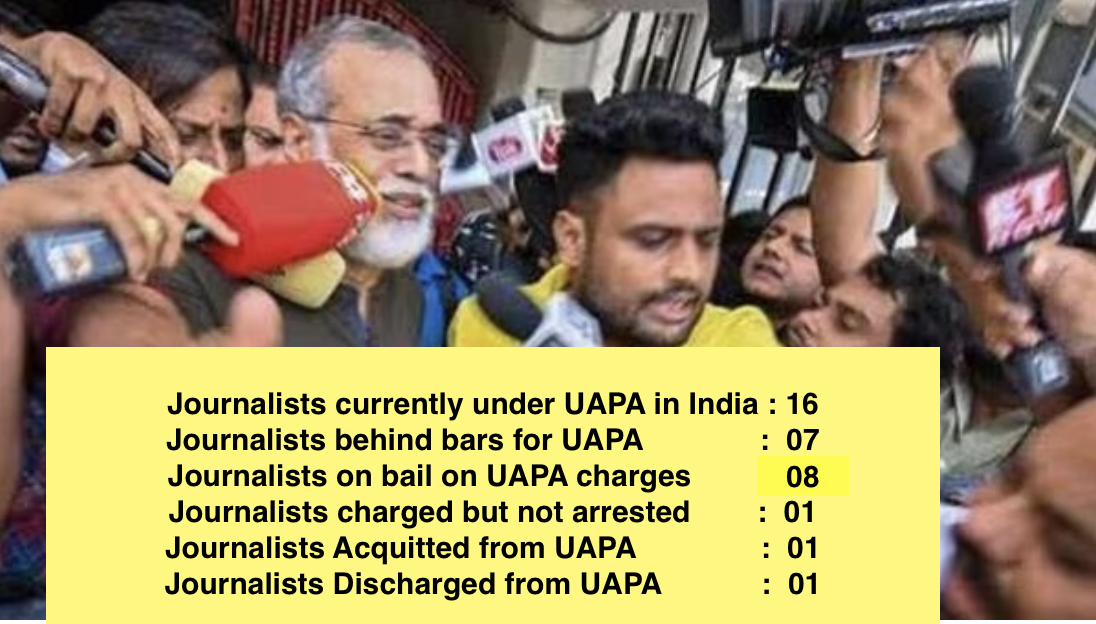
Newsclick founder and chief editor Prabir Purkayastha, and Amit Chakravarty, who heads the portal’s human resources section, were arrested under the draconian Unlawful Activities (Prevention) Act (UAPA). Since 2010, as many as 16 journalists have been charged under the UAPA, reports the Free Speech Collective, India, in a post that lists them, with details of those out on bail, the seven still behind bars, and others.
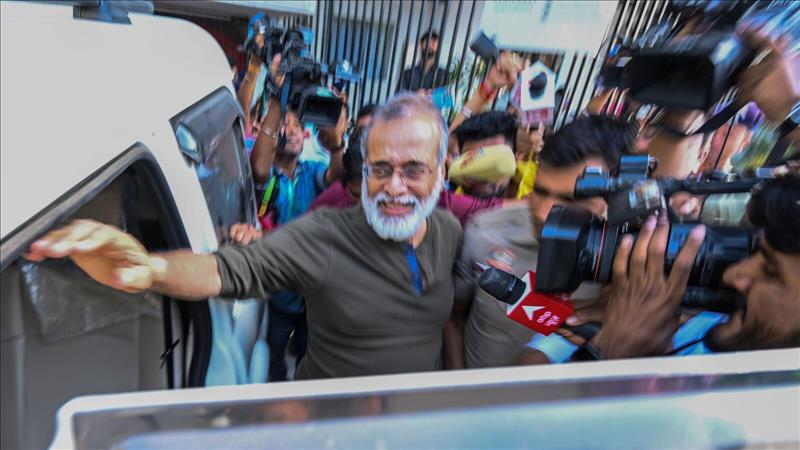
There is a huge pushback in India against these heavy handed tactics, which those in other countries are familiar with.
Below, the text of a joint letter by several journalists’ organisations to the Chief Justice of India:
Continue readingFiled under: Freedom of expression, Human rights, journalism, Pakistan-India, Resistance, Southasia | Tagged: gandhi jayanti, glorifying gandhi's murder, india china, journalists arrested, journalists arrested india, Newsclick, Prabir Purkayastha arrested, Rajdeep Sardesai, ravish kumar, Ravish kumar brown university, ravish Kumar harvard, sanjay rajoura, sohail hashmi, tricontinental, vijay pratap | Leave a comment »


 Journeys to democracy