Moving out of the downward spiral

@salmaantaseer: I was under huge pressure sure 2 cow down b4 rightest pressure on blasphemy. Refused. Even if I'm the last man standing

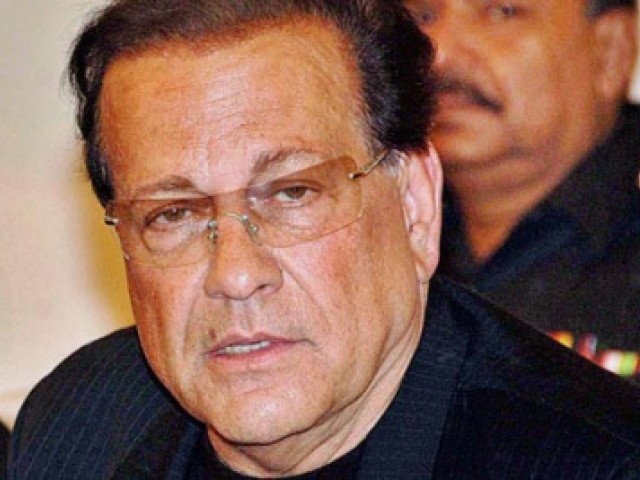
I wrote this on Jan 5, 2010 for Tehelka (published today as ‘Salmaan Taseer’s death is liberal Pakistan’s loss‘), the day after Salmaan Taseer was gunned down in cold blood by his own bodyguard whose cowardly action of firing at the Governor’s back has deprived us of a man of courage and conviction, wit and wisdom. ST, you are not “the last man standing”.

Moving out of the downward spiral

Beena Sarwar

“There are no less than 24 groups as of now supporting Qadri on FB and 1 against what he did, that says it all. #salmaantaseer”.

So went a tweet from a fellow Pakistani early morning on Jan 5, the day after the assassination of Salmaan Taseer, the governor of Punjab who took a courageous stand against religious extremists in Pakistan.

The facebook pages cropping up don’t quite say it all. Facebook is usually quite slow to take action against pages that users consider abusive (unless they have to do with Israel). In this case, many of those pages (mostly started by young men who like western shows like Sex and the City, support Pervez Musharraf and say they follow Islam – any contradictions here?) were taken down within 24 hours – which means that enough people reported them as abusive.

When it comes to religion, there is confusion in people’s minds in Pakistan. This confusion has been building up over the years, particularly since America, Saudi Arabia, Pakistan and their allies took up cudgels against the Communist threat in Afghanistan and injected religion into the Afghans’ war of liberation against the Soviet invasion. Calling it a ‘jihad’ or a holy war enabled them to draw in Muslim fighters from around the world. The late Eqbal Ahmad warned against this long before the horrific events of 9/11 and US President Bush’s immature response sent the world into a downward spiral of violence, especially Pakistan, the frontline state in America’s war first against the Communists and then against extremist Islam.

The questions arising from Taseer’s assassination indicate that some forces in Pakistan are continuing along the old trajectory.  The assassin, 26-year old Malik Hussain Qadri, was assigned to the elite force guarding the Punjab Governor. It now emerges that he had been removed from the Special Branch because he was perceived as a security threat – so how did he end up on the security detail of a Governor who was already receiving death threats?

According to the post-mortem, he fired 41 bullets into Taseer’s back while the Governor was getting into his car. He then threw down his weapon and raised his arms in surrender.

Standard operating procedures in VIP guard duty require the other guards to immediately open fire even if the assailant is one of them, explains my military analyst friend Ejaz Haider. So why did the other guards not follow the SOP?

Chillingly, Qadri has revealed that he had told his colleagues what he was going to do and asked them not to open fire, as he would surrender. Which means that he was confident of getting away with it.

“Now the judicial process will take over,” predicts Haider. “The judge/prosecutors will be threatened, and the murderer will be declared a hero.”

This is of course already happening, as the facebook pages show. Some of them have referred to him as a ‘ghazi’ (conqueror) and are justifying and glorifying his murderous act – including several religious organisations. In fact, some have gone so far as to say that because he was ‘guilty’ of ‘blasphemy’, no Muslim should lead or attend his funeral prayers.

Qadri’s smiling face was flashed on television channels, along with his comments that “Salmaan Taseer is a blasphemer and this is the punishment for a blasphemer”. He is reported to have told interrogators that the Governor had called the blasphemy laws ‘black’ and had defended Aasia Noreen, the Christian woman sentenced to death for ‘blasphemy’.

Taseer’s role in highlighting the Aasia Bibi case, as it came to be known, was significant although some have criticised his high-profile visit to her jail cell and his promise to obtain a presidential pardon for her, which circumvented due process. According to due process, the President’s pardon would have been sought after the Supreme Court confirmed the death sentence following the High Court’s confirmation of it.

The Pakistani state has not executed any blasphemy convicts because so far, the High Courts or the Supreme Court have acquitted those accused under this law (295-C, imposed by Gen. Ziaul Haq to add to 295-A that existed since British times). Yet the mere allegation of ‘blasphemy’ has been enough to incite the murder of over 30 people so far. Taseer’s is the most high profile such murder.

Given the current climate, it is unlikely to be the last. For things to significantly change, ‘deep state’ will have to change its policies of support for ‘jihadis’ and jihadi mind-sets.

Meanwhile, those who have been opposing the blasphemy laws and other injustices perpetuated in the name of religion will continue to protest, as they have been doing for decades.

(ends)

Overcoming ‘blasphemy law’ hype

Transporters have endorsed religious parties’ nation-wide strike Dec 31 and there is huge pressure on the Pakistan government to make no changes to the controversial ‘blasphemy laws’. I believe the government wants to make the changes (though there are some within it who don’t) that all progressive Pakistanis want  but is up against the wall; it is weakened and attacked on all sides. The ‘religious right’ has been organising massive demonstrations (they may not win at the polls but they have street power), and there is a country-wide shutters down strike tomorrow.

We have to take it one step at a time. First work together to stop the abuse – whether it’s through procedural changes or amendment to the law (and there are many among the religious right who agree); ensure enforcement of law and order any way we can (ie not allow vigilante action & not allow those involved with it to go scot free).

Meanwhile, prepare the ground and keep working towards the goal of repeal or at least substantive amendments that will now allow injustice. There’s a demo in Islamabad today, a seminar in Karachi. Another seminar in Karachi is planned as well as a demo in the second week of Jan, 2011. It is a long term struggle, there are no overnight solutions. Governmentt doesn’t have a magic wand it can wave. It may take years but it will happen one day, if there is a sustained struggle and the political process continues.

Strategising to counter ‘blasphemy law’ hype

We had a good meeting yesterday in Karachi, convened by the newly formed Citizens for Democracy, to strategise about developing a long-term strategy to counter the ‘blasphemy law’ hype that has been created in Pakistan.

Some press reports this morning that used the info we sent them.

1. The News – lead story on City page today by Shahid Husain – ‘Tough struggle needed to reform blasphemy law

2. Express Tribune: ‘Citizens for Democracy’ alliance formed to amend blasphemy laws

3. Daily Times used the info like a press statement: Citizens For Democracy meet at PMA House

Email sent to Citizens for Democracy e-group about the meeting yesterday: Continue reading

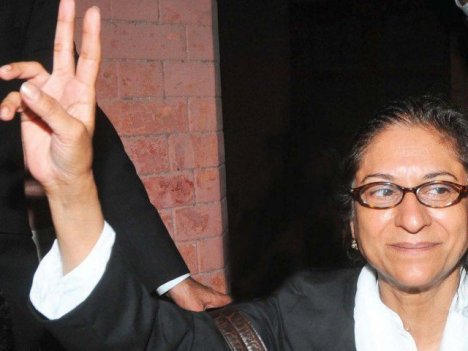
Asma Jahangir: setting the record straight re: SCBA ‘resolution’

asma-lawAsma Jahangi has denied reports published in several papers today that the SCBA passed a ‘resolution’ condemning any efforts to discuss, debate or change the ‘blasphemy law’ (Lawyers to lawmakers: Supreme Court Bar wants no changes to blasphemy laws)
This is to deny that the Supreme Court Bar Association (SCBA) in its second executive committee meeting held on 18 December 2010 unanimously passed any resolution regarding either section 295 C of the Pakistan Penal Code itself or any case related to it. The facts are that a resolution to that effect was presented by a member of the executive committee but only apportion of it was passed unanimously, which paid reverence and commitment to honour and respect the name of the Holy Prophet (PBUH), while the rest of the resolution regarding 295 C, the case of Aasia Bibi and its consequences was deferred with consensus. The Supreme Court Bar Association regrets the attempt made by one of its executive members to mislead the press and the public. The SCBA is a responsible body and its resolutions will be fully debated before being passed especially unanimously.

From Asma Jahangir
Dated 19 December 2010


Sherry Rehman’s Proposed Bill to amend Offences Relating to Religion

Please read advocate Asad Jamal’s article ‘Some called-for changes‘, published in The News on Sunday, Dec 12, 2010, commenting on Sherry Rehman’s bill seeking amendments to blasphemy laws Pakistan. Below, his summary of the proposed bill in tabular form making it easier to understand:

Proposed amendments to punishments under Pakistan Penal Code (PPC)

Section Offence Existing punishment Proposed punishment
295-A Use of derogatory remarks, etc. in respect of holy personage— punishable with Imprisonment of either description up to ten years or with fine or with both Imprisonment of either description up to two years or with fine or with both
295-B Difiling of copy of Holy Quran Imprisonment for life Imprisonment of either description for 5 years or fine or both
295-C Use of derogatory remarks, etc. in respect of the Holy Prophet Death or life imprisonment[1] and fine Imprisonment of either description for 10 years, or with fine, or both

Proposed addition of words to blasphemy provisions in PPC. Continue reading

PPC provisions against those inciting violence, hatred, murder

The mindset promoted by the ‘blasphemy’ laws is again highlighted by the recent case of a doctor in Hyderabad arrested for ‘blasphemy’ because he threw the visiting card of a medical representative (Pfizer employee) named Mohammad Faizan into the dustbin.

I have been in correspondence with Asad Jamal, Advocate Lahore High Court, on possible action against those who make false accusations of blasphemy and incite to murder or violence — we were specifically discussing the Maulana who announced a reward of five lakh rupees for killing  Aasiya Noreen, the Christian woman sentenced by a lower court for blasphemy, whose case is going into appeal before the Lahore High Court. (Asad reminded me that in 1995, a similar ‘reward’ (it was then a million rupees, the value has obviously gone down for such murders, given that people are willing to commit them for free) had been offered for killing the minor Salamat Masih. The Lahore High Court acquitted Salamat and his two co-accused but Manzoor Masih, a co-accused in that case, was shot dead outside the court). He writes: Continue reading

Brief update; my Secularism and ‘Blasphemy’ articles & others

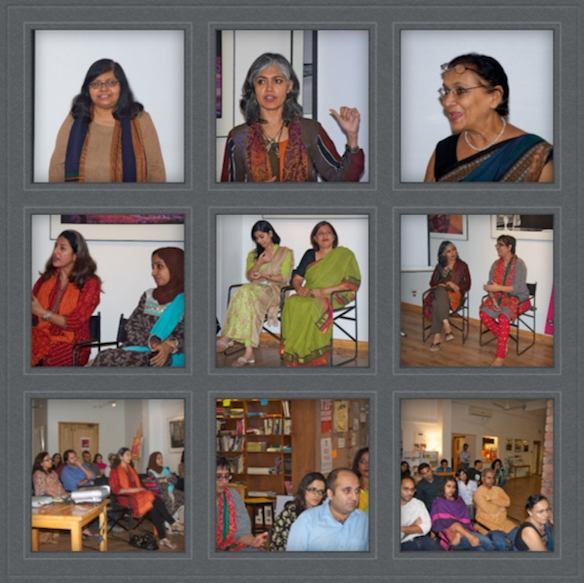
Pix from Take Back the Tech at T2F. Courtesy: Newsline

I posted this to my yahoogroup today, along with a note from Avaaz on taking action against the Wikileaks crackdown (posting that separately)

Links to some of my recent articles, including about the ‘blasphemy law’ and secularism in Pakistan.

A brief update from me: I recently showed the film on DSF (Democratic Students Federation) that Sharjil and I made to a rapt audience in Islamabad at Kuch Khaas, the wonderful space set up by my old friend Poppy (Shayan Afzal Khan) – they hold film screenings, seminars, book launches; hold classes in dance, music etc (with a percentage of the admissions being reserved for underprivileged children who attend on scholarships).

My Mukhtiar Mai film was part of a couple of events held to commemorate 16 Days of Activism against Gender Violence. It was screened at the `No Honour in Killing‘ exhibition curated by Niilofur Farrukh now in Karachi at V.M. Art Gallery till Dec 20th (has been to other cities including Larkana and Jamshoro). It was also part of the Take Back the Tech event linked to 16 Days, at a discussion (Newsline report here) held at The Second Floor in Karachi.

Below, links to my recent articles & others on the ‘blasphemy laws’ and on secularism

BLASPHEMY in Pakistan: time to repeal a flawed law – my OpEd in Common Ground News Service

Also see the other articles on the blasphemy law in Pakistan that I compiled at this link

SECULARISM PAKISTAN: My article “Secularism – Not a dirty word‘ for The News on Sunday’s series on the issue. Shorter version for Hard News, India – my monthly column Personal Political ‘Deep down in our hearts…

Also see the other articles in that series, compiled at this link.

Thanks.

Proposed amendments to the Blasphemy Laws

PPP Parliamentarian Sherry Rehman’s proposed AMENDMENTS TO THE BLASPHEMY LAWS ACT 2010 – posted by Marvi Sirmed at her blog

Aasiya blasphemy case: Field notes, petitions and a press release

The death sentence that a district court handed down to Aasiya Bibi, a poor Christian woman in Punjab, is not the first of its kind except that this is the first time a woman has been so sentenced (but not the first time one has been so accused). Since the ‘blasphemy law’ was promulgated, there have been many such convictions – that the higher courts have always over-turned. District courts have also shown sense: I remember a woman district judge in Karachi acquitting Chand Barkat, a bangle seller who had been accused by a rival). However, vigilante violence (cold-bloodedly orchestrated by extremist organisations) has claimed the lives of some 20 charged under this law or publicly accused of this ‘crime’. Continue reading

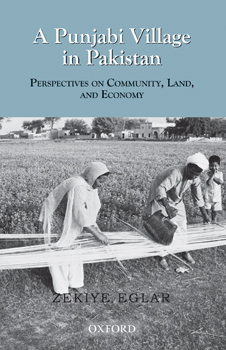
Zekiye Eglar’s Punjabi Village in Pakistan (with my intro, epilogue & bio)

Thrilled to receive my copy of  A Punjabi Village in Pakistan – Perspectives on Community, Land, and Economy by Zekiye Eglar, for which I wrote the IntroductionConclusion, and Bio-note about Eglar, a Russian-Turkish anthropologist, protegee of Margaret Mead at Columbia University. Eglar provides a fascinating account of village life in Punjab, Pakistan, in the late 1940s and early 1950s, when she lived in Mohla, a village not far from Gujranwala.

The OUP publication has compiled her out-of-print award-winning book (A Punjabi Village in Pakistan, Columbia University Press 1960) and its until-now unpublished sequel, (The Economic Life of a Punjabi Village), from a manuscript that Eglar’s friend and protege Fazal Chowdhry brought to the attention of Mary Catherine Bateson (prominent anthropologist, Mead’s daughter).

(I worked on the project for two years under Mary Catherine Bateson’s supervision, recommended to her by our mutual friend, the Iranian anthropologist Shahla Haeri).

From the OUP website: “This volume contains relevant insights into Pakistani society, particularly women, which are still pertinent today, as well as a more holistic and humanistic view of village life in South Asia. Eglar’s study is useful for precisely what she focused on—the patterns of ritual service and gift exchange which underlay every facet of life in a village.”

Hardback 473 pages ISBN: 9780195477238 Price: PKRs.1,295.00