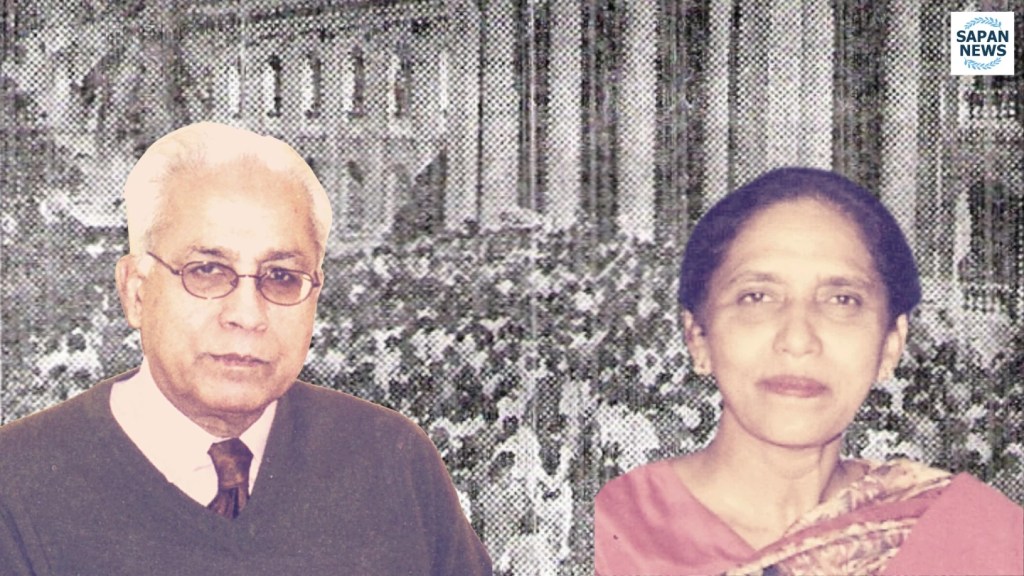
Guest post: A personal tribute to Karamat Ali (19 August 1945 – 20 June 2024) by Mandira Nayar in Delhi, for Sapan News
Karamat Ali was many things but for Mandira Nayar he was always the person who returned her grandfather Kuldip Nayar to Lahore, where he was born and which he considered home. The relationship between them defies labels but it has a bond that is deep and unbreakable, stronger than many relationships with names, she writes:
There are many words for friendship. Arabic has twelve. You can choose from friendships of different shades — the intense saqeeb, a true friend; sameer, someone who you like to have a conversation with, or the casual zameel, an acquaintance.
Announcement from Pakistan India People’s Forum for Peace and Democracy for an online memorial
Memorial meeting at Arts Council of Pakistan, Karachi, for Karamat Ali
Comrades at the Human Rights Commission of Pakistan in Lahore remember Karamat Ali
English has just the one — a bland ‘friend’. The short dost (friend) in Hindustani encompasses in its tiny frame a sort of bro-code for the intense relationship that Hindi film songs refer to, between Maana Dey’s ‘Yaari hai Imaan’ (My friend is my faith) to Sholay’s anthem ‘Yeh Dosti Hum Nahi toRe.nge‘ (This friendship we will never abandon).
‘Dost’
So I struggle to find a word to describe the relationship between Karamat Ali, labour leader, peace activist, revolutionary, lover of music, and my grandfather Kuldip Nayar, journalist, peace-activist and fellow dreamer. And by extension, my relationship with Karamat Sahib.
This relationship without a name has a bond that is deep and unbreakable, stronger than many relationships with names.
Karamat Ali was many things but for me he was always the person who returned my grandfather to the home he was born in.
As news of Noam Chomsky’s failing health makes the rounds, I share some learnings from my interactions with a trailblazing public intellectual whose moral compass has impacted the world
PERSONAL POLITICAL By Beena Sarwar
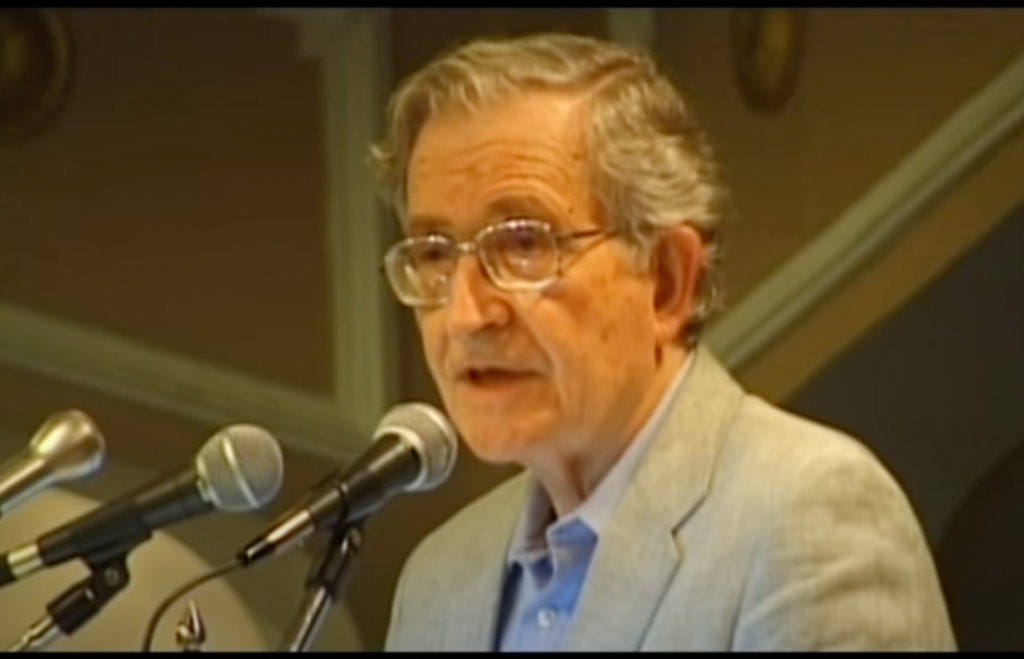
Noam Chomsky in Pakistan, 2001. Screenshot from VPRO news report by Beena Sarwar.
I once asked Noam Chomsky how he manages to remember so many facts and figures and hold audience attention. He replied that he didn’t convey any new information, that his talks are based on materials already in the public domain, and that he simply joins the dots – providing context – and repeats the information consistently and in different ways.
His response was typical of his humility as well as his courtesy towards a much younger person to whom he owed nothing.
Chomsky teaches us that it is not necessary to be loud and sensationalist in order to be heard. This, together with the clear and courageous moral compass he has provided over decades, is a most valuable lesson.
Noam Chomsky was already a legend when I first met him over two decades ago in December 2001 when he visited Pakistan for the inaugural Eqbal Ahmad Memorial lecture series.
A tribute to the spirit of Anja – and the courage of journalists
The story behind a poignant photo exhibition that opens at Harvard today featuring the work of the late photojournalist Anja Niedringhaus who covered Afghanistan and Pakistan at the height of the war between the Taliban and the USA. The show, and its accompanying book, are co-curated by the reporter Kathy Gannon who was injured in the attack that killed Anja.
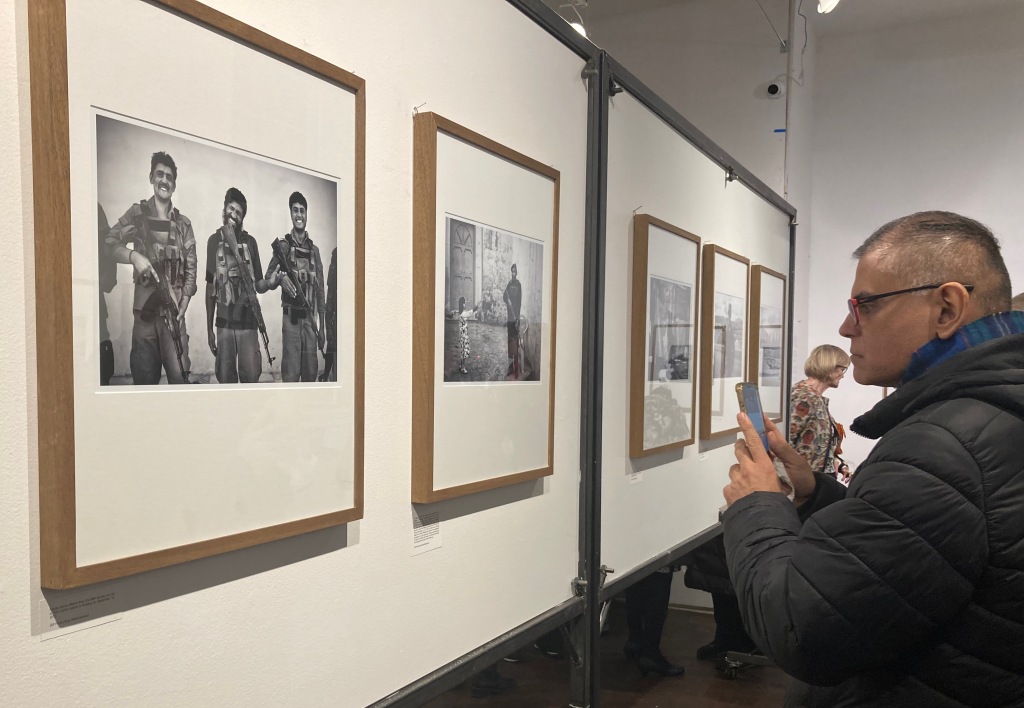
Pakistani journalist Raza Rumi at the exhibit opening at the Bronx Documentary Center last month. Photo: Beena Sarwar
PERSONAL POLITICAL By Beena Sarwar
An exhibition of powerful images from Afghanistan and Pakistan by the late Pulitzer-prize winning photojournalist Anja Niedringhaus opens in the Boston area today.
Kathy Gannon shares an iconic photo by Anja Niedringhaus during a talk at Emerson College, Boston, 2022. Photo by Beena Sarwar
“If France and Germany can be part of the European Union, why can’t Pakistan and India be part of a Southasian Union?” asked Dr Mubashir Hasan, former finance minister of Pakistan, a hawk-turned-dove who co-founded the Pakistan-India People’s Forum for Peace and Democracy (PIPFPD). He had roped me into it when I was a young journalist in Lahore in the mid-1990s. When he said these words to me some years ago, and I replied that this was impossible, he responded, “Par hum baat toh kar sakte haiN” – but we can at least talk about it.
Years later, in 2021, during a time of renewed tensions between Pakistan and India, his words inspired the foundation of the Southasia Peace Action Network, Sapan, that we now write like a word, Sapan, rather than in all caps, conveys the meaning of a dream.
“This is a dream that connects millions, giving hope for solidarity, peace, and friendship in the region. The network, which encourages dialogue and connections amongst Southasians and across various issues, has managed to virtually overcome borders and build bridges between those who have historically been divided” writes young peacebuilder Mansi Chandna from Jaipur, who attended the event from her current base in Manchester.
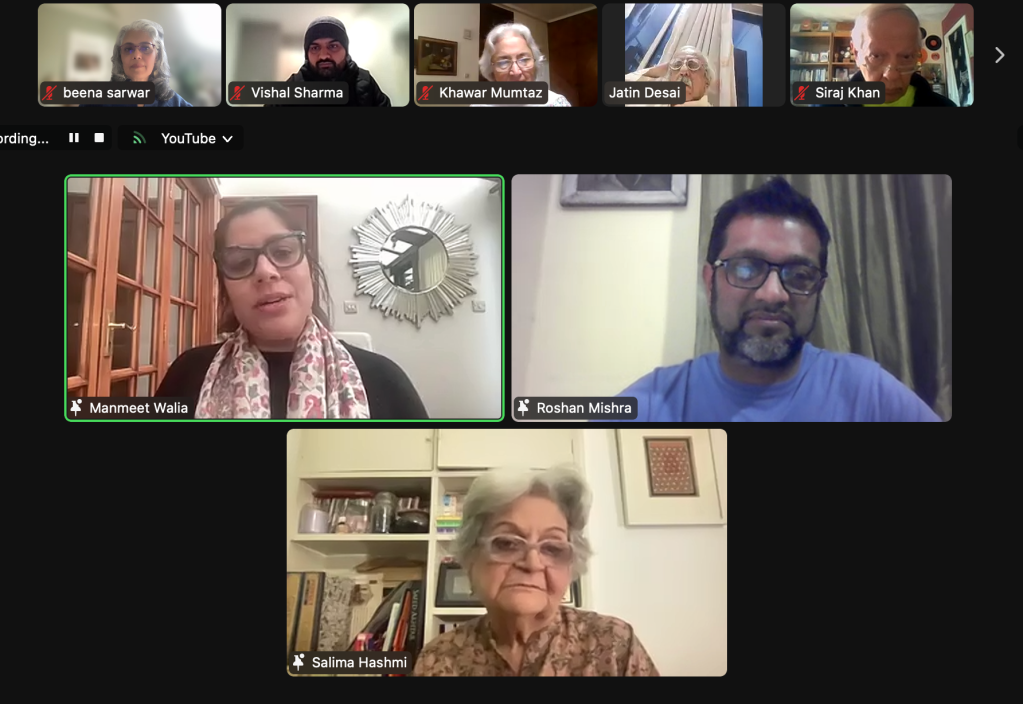
Art and Southasian Voices panel at the Sapan third anniversary event: Manmeet K. Walia, Roshan Mishra, Salima Hashmi. Screenshot from video recording.
Sharing my curtainraiser for Sapan News about a poignant photo exhibition opening at the Bronx Documentary Center in New York today, featuring the work of the acclaimed photojournalist Anja Niedringhaus. She covered Afghanistan and Pakistan at the height of the war between the Taliban and the USA, and was killed ten years ago, on 4 April 2014.
An Afghan police commander walked up to the car she sat in with Kathy Gannon outside a government compound in Khost, where they were covering the presidential election for the AP. Anja, 48, died instantly. Seven bullets shattered Kathy’s arms and shoulders. The Afghan doctor who initially operated on her saved her arm, using various ‘jugaRs‘ (improvisations). Doctors at the French military hospital in Kabul where she was later medi-evaced said they would have amputated it had she reached them first.
In all the years I’ve known Kathy, I’d never heard her complain or mention her injuries or trauma. When I hesitantly asked about it now, for this piece, she detailed the information matter-of-factly, even cheerfully, focuses more on Anja, her courage, and her spirit. All that applies to Kathy herself.
Kathy, who also on the Sapan News Advisory Council, has co-curated the show and its accompanying book.
Anja Niedringhaus’ photos showcased in a tribute posted by her colleagues at AP
The exhibition will travel to Cambridge MA, 9-10 May 2024, co-sponsored by the Nieman Foundation and the Shorenstein Center at Harvard University. Anja was a Nieman Fellow 2007.
Exhibition information: Bronx Documentary Center 614 Courtlandt Ave, Bronx, NY 10451 On View: April 4 – May 5, 2024 Gallery hours: Thurs-Fri 3-7PM, Sat-Sun 1-5PM
Book information: Anja Niedringhaus By Ami Beckmann, Kathy Gannon, and Muhammed Muheisen Hardcover, 80 pages, 44 images Release date: April 2024 Published by Fort Orange Press Price: USD 30
Note: We have been doing this work voluntarily for the past three years and need support of all kinds – like, share, encourage.
And donate – thank you to those who contributed to help Sapan News meet our NewsMatch goal by December 31. We made it!
We now need to raise $3,000 more in the next three weeks. Will you help? Here is the link to share with friends who might want to contribute – no amount is too small: www.sapannews.com/donate
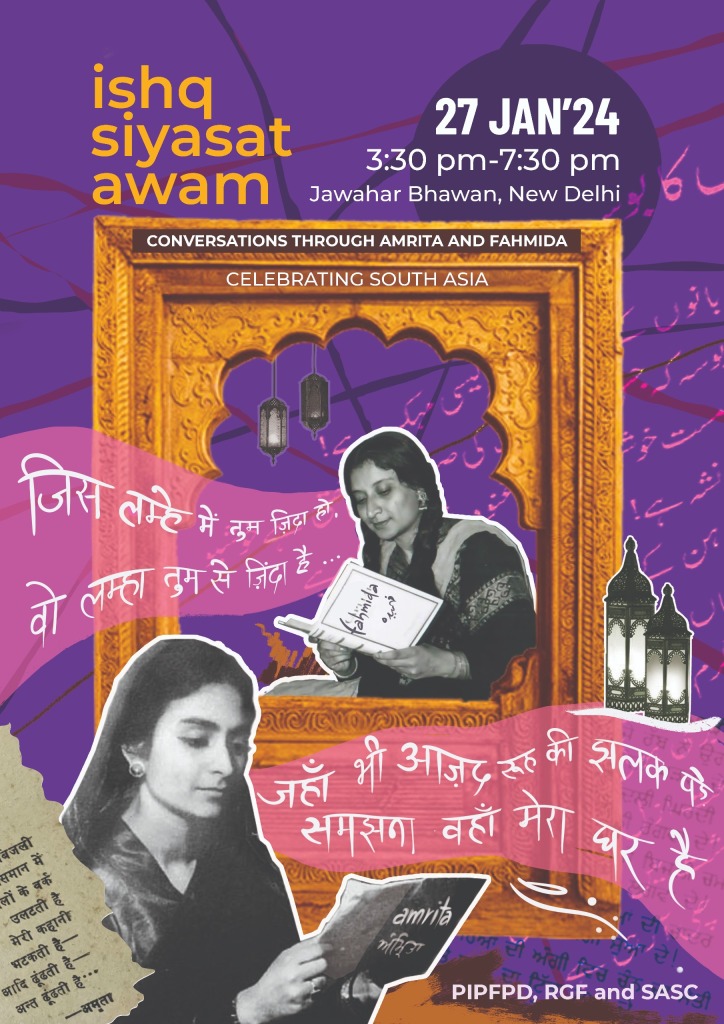
Radical love, epitomised by the late Amrita Pritam and Fahmida Riaz is ‘one of the seeds of the revolutionary thought process’, to quote the Pakistan India People’s Forum for Peace and Democracy (PIPFPD) stalwarts who organised the event – Vijayan MJ, Tapan Bose, and Dr Syeda Hameed. Their consistent work over the decades for peace and justice is truly inspirational, and I feel privileged to know them personally.
I was also privileged to know one of the late poets personally, Fahmida ‘Khala’ (aunt) to me, who was close to my father Dr. M. Sarwar. He led the Democratic Students Federation (DSF), Pakistan’s first student movement while at Dow Medical College in Karachi, 1949-54.
I’ve uploaded archives about the movement here: drsarwar.wordpress.com. Principles of that struggle continue to show the way, like the importance of coming together across divides for a minimum common agenda. For DSF, it was student rights. For Sapan, it’s Southasia Peace. We need it now, for the sake of the people of the region, and beyond.
The Videos section of the Dr Sarwar blog includes a playlist of video clipsfrom the event held at the Karachi Arts Council in January 2010 to commemorate DSF and the student movement, a few months after my father passed on.
Compered by the actor Rahat Kazmi, the event featured speeches from young activists, students, and academics like Amar Sindhu, Alia Amirali,Ali Cheema, and Varda Nisar, as well as veterans like I.A. Rehman, besides the singer Tina Sani, Taimur Rahman and his band Laal, and Fahmida Riaz.
Fahmida Khala recited her poem ‘Palwashey Muskurao’ (Palvasha, smile), dedicated to daughter of late Afzal Bangash of the Mazdoor Kissan Party (Workers’ and Peasants’ Party), and the followers of other late leftist leaders. They may no longer be on this earth, but their principles and aspirations for human rights and dignity continue to show the way.
Seasons greetings despite the sadness, and excerpts from a Sapan Alliance newsletter sent out a few days ago on Substack
Joy is also a form of defiance. Dancers: A greeting card I made some years ago (pastel and water colour), repurposed for Southasiapeace.com and Sapannews.com.
In times that can feel dark and dismal, some good news and exciting updates.
Meet Sapan News — a unique media outlet that aims to cover and connect Southasia, the Indian Ocean and diaspora. That goes behind the headlines, connects communities, academics, activists, and more. Creating space for understanding, empathy and nuance.
In November, Sapan News qualified for NewsMatch, a philanthropic fund helping nonprofit newsrooms like ours in the U.S. Contributions made by year-end will get matched up to $15,000. Gratitude to our community that has stepped up to meet this challenge.
Those wanting to chip in are welcome – here’s the donate link for tax-deductible contributions.
A 100 new donors will secure a $1,000 bonus, and monthly donations initiated this month will get matched x12!
Thank you for your support. It means so much – and together, we are stronger.
Collaborations: Hello, Central Desi!
Sapan News is proud to partner with Central Desi, a dynamic news portal that started as a newsletter to cover all things ‘desi’ (Southasian) in New Jersey. Kudos to journalist Ambreen Ali for growing her passion project into a news org that won a major grant, enabling them to hire reporting fellows. Sapan News has much to learn from this initiative.
A message from the journalist Amitabh Pal about a mutual friend, David Barsamian of Alternative Radio in Colorado reminded me of this piece originally published in The News on Sunday, 8 Oct. 2006, about an event with Noam Chomsky where I first met David. The article is still all-too relevant, but the link no longer works so I’m sharing the piece here without any changes; just added some hyperlinks and photos.
Essential reading – and doing: Eqbal Ahmad
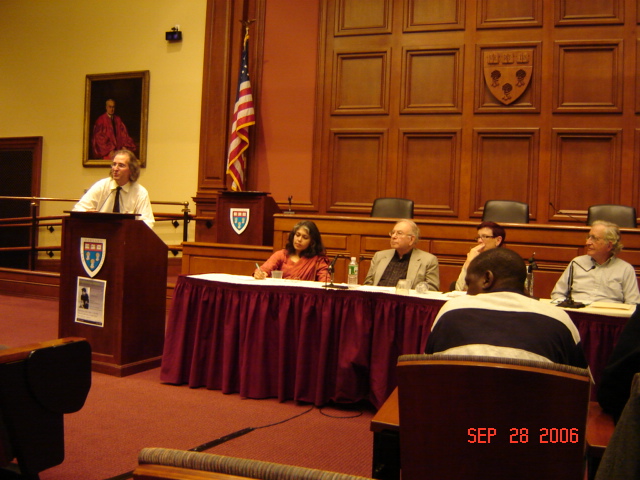
Book launch: The Selected Writings of Eqbal Ahmad, Cambridge, September 28, 2006.
Beena Sarwar
John Trumbour addressing the event. Panel: Beena Sarwar, Stuart Schaar, Margaret Cerullo, Noam Chomsky. Photo: Courtesy MAPA.
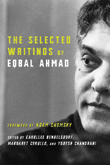
When Venezuelan president Hugo Chavez in his address to the UN on Sept 20, held up a copy of Noam Chomsky’s Hegemony or Survival: America’s Quest for Global Dominance (2003) and recommended it as essential reading to understand contemporary world politics, he could have been talking about The Selected Writings of Eqbal Ahmad, for which Chomsky, Eqbal’s long-time friend, wrote the foreword. Chavez identified “the hegemonic pretension of the North American imperialism” as “the greatest threat on this planet” to the survival of the human race.
The book that Jack launched (at HLS)
Chomsky also gave the main address for this collection of Eqbal Ahmad’s writings (Columbia University Press, 2006) at the book’s launch in Cambridge, USA, on September 28. John Trumpbour and Emran Qureshi of the Labor & Worklife Program at the Harvard Law School, who organised the event, didn’t publicise the event too aggressively because of the hype Chavez had generated for Chomsky.
The hall did get quite full, but they didn’t have to turn anyone away at the door. The venue may have had something to do with this. Chomsky, a linguistics professor now retired from the neighbouring MIT, is rarely invited to Harvard. Harvard Law School professor Alan Dershowtiz criticises Chomsky for being too “black and white” but often has to concede the basic truth of the points Chomsky makes.
Last month, another Indian fisherman incarcerated in Pakistan died while waiting to be repatriated. A young man in his thirties. Why he was held in the first place makes no sense to me, and to a lot of other people. India and Pakistan routinely detain each others fisherfolk. In doing so, they defy international law, deny the incarcerated men consular access in violation of their own laws, hold them in prison for months if not years (a costly enterprise), then take months to verify the identities of those who have served their terms, so that they remain imprisoned even after completing their sentences. I asked my friend Jatin Desai in Mumbai to write about this for Sapan News, the syndicated features I started a couple of years ago. We ended up doing the piece together. I’m sharing our article below, published in Sapan News, as well as in several other publications.Still relevant, and urgent for the authorities to take up. Please share widely.
The suffering continues: No relief in sight for Indian, Pakistani fishermen
Another Indian fisherman died while in detention in Pakistan. Such deaths in custody routinely take place on either side. Pakistan and India routinely arrest and imprison each others’ fisherfolk for crossing an invisible maritime border. This should not be happening. Meanwhile, both countries must urgently at least revive the Joint Judicial Committee for cross-border prisoners
By Jatin Desai and Beena Sarwar
Passport photo of Jagdish Mangal, who died while waiting to be repatriated. Photo: Courtesy Edhi Foundation
If 99 Indian fishermen incarcerated in Pakistani prisons had been repatriated last month as agreed, Jagdish Mangal might still be alive.
Mangal was among the several Indian fishermen arrested by Pakistan’s Maritime Security Agency in February 2020 and detained in Malir prison, Karachi. He was 35 years old from Nana Vada, Gujarat.
Pakistan was to repatriate 99 Indian fishermen on 3 July, but this never happened for unexplained reasons. Mangal died on August 6 of ‘natural causes’ according to the medical certificate.
The attacks on the Christian community in Jaranwala near Faisalabad (former Lyallpur) are among a long string of such violence instigated by extremist elements seeking power in the name of religion in Pakistan. I co-wrote this article for Sapan News with a young reporter in Karachi who was initially only reporting on Pakistan’s first Minority Rights March. Then Jaranwala happened. We now present a longish read putting the violence in context and tracking the trajectory of a turning point in the state’s responses, with a couple of inputs from India
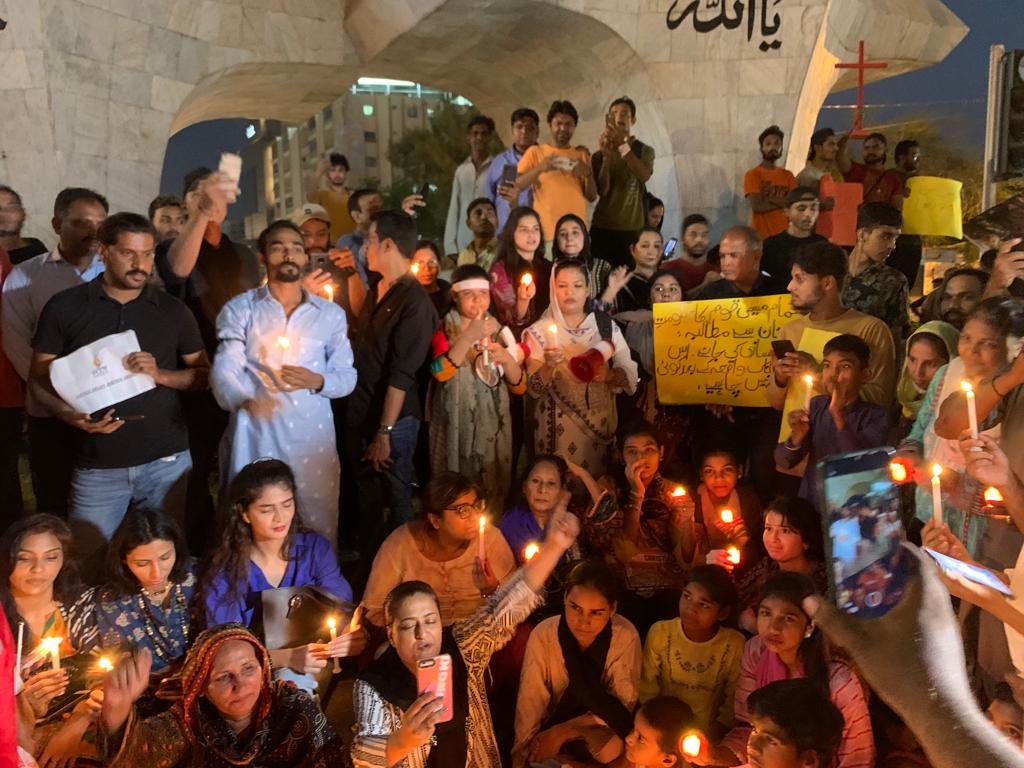
Karachi protest at Teen Talwar, 19 August 2023. Photo: Abdullah Zahid
Karachi protest at Teen Talwar, 19 August 2023. Photo: Abdullah Zahid
“Manzoor Masih – will be remembered!… The Christians of Shanti Nagar – will be remembered!… Rimsha Masih – will be remembered!… ”
Activist and dancer Sheema Kermani led the chanting, evoking the names of a long list of Pakistani Christian individuals and communities targeted by extremist elements in the name of religion over the years.
OBITUARY: The legacy of a decades-old connection between social worker Shahida Haroon (1937-2023) and economist Eric Rahim (1928-2023) endures through the ongoing struggle for student rights, economic justice and democracy in Pakistan
Demands Day at D.H. Science College, 07 Jan. 1953, Eric Rahim, Shahida Haroon Saad. Collage by Aekta Kapoor/Sapan News
It was while trying to reach Eric Rahim in Glasgow this week to inform him of my aunt Shahida Haroon’s passing in Karachi that I learnt he too was no more.
A respected journalist and economist, Uncle Eric as I called him, had passed away peacefully at home on 2 May 2023, aged 94. He was a mentor to my father Dr M. Sarwar (1929-2009), and Shahida, who departed this earth on 25 June, at 87.
Shahida did her Master’s in economics from Karachi University in 1958, a subject she didn’t enjoy or do well in. When she went to Punjab University for a second Master’s in social work, encouraged by her brothers Akhtar, 11 years older, and Sarwar, eight years older, Akhtar asked his friend Eric Rahim to look after her. It was Eric, then a columnist at The Pakistan Times, who met Shahida at the train station after her overnight journey.








 Journeys to democracy