‘I want India and Pakistan to make peace in my lifetime’ – Zehra Nigah

Some thoughts emerging from a chance encounter with one of Pakistan’s most respected and iconic progressive poets.

Indian and Pakistani writers and a filmmaker at the Faiz Festival, Lahore: (l-r) Dr Saif Mahmood, Atul Tiwari, Dr Arfa Sayeda Zehra, Dr Arvinder Chaman, Nandita Das and Zehra Nigah. Photo by Zarminae Ansari / The Joy of Urdu

Personal Political
By Beena Sarwar / Sapan News

“It’s the girls that give me hope,” says the celebrated poet and writer Zehra Nigah.

She leads a quiet life at her home in Karachi, without a mobile phone or email. Yet those who seek her are able to find her. Besides the school and college students who look to her for guidance, there are advertising companies looking for classy jingles. And there are organisers of literary festivals wanting to invite her.

These include Jashn-e-Rekhta, the three-day annual festival that celebrates Urdu — subtly countering the rightwing narrative that Urdu is a ‘Muslim’ language while Hindi is for ‘Hindus’.

When it started in 2015, Rekhta invited several prominent Pakistani poets and writers to participate. Its third edition in 2017 was the first time that there was no Pakistani participation in its sessions – due to the “prevailing atmosphere” in India, the organisers took “a considered decision” to not invite Pakistanis as “participants” but only as “guests”, reported Anita Joshua in the Telegraph, India. 

“Some see in this an instance of self-censorship to avoid trouble of the sort that has recently beset Bollywood films starring Pakistani actors,” commented Joshua.

The only Pakistani who accepted the invitation was Kishwar Naheed, then 77, another iconic Pakistani poet, for whom being invited as a ‘guest’ meant that she would at least be able to recite at the ‘mushaira’, the poetry recital session addressed by several poets, as she told me later. 

Continue reading

Sapan News updates, art and interfaith in Mumbai, Kabir Festival, two films, and a train crash tragedy

Hello all, check out the work we’re doing at Sapan News, providing behind-the-headlines information with context and nuance, and syndicating pieces out to a growing media network.

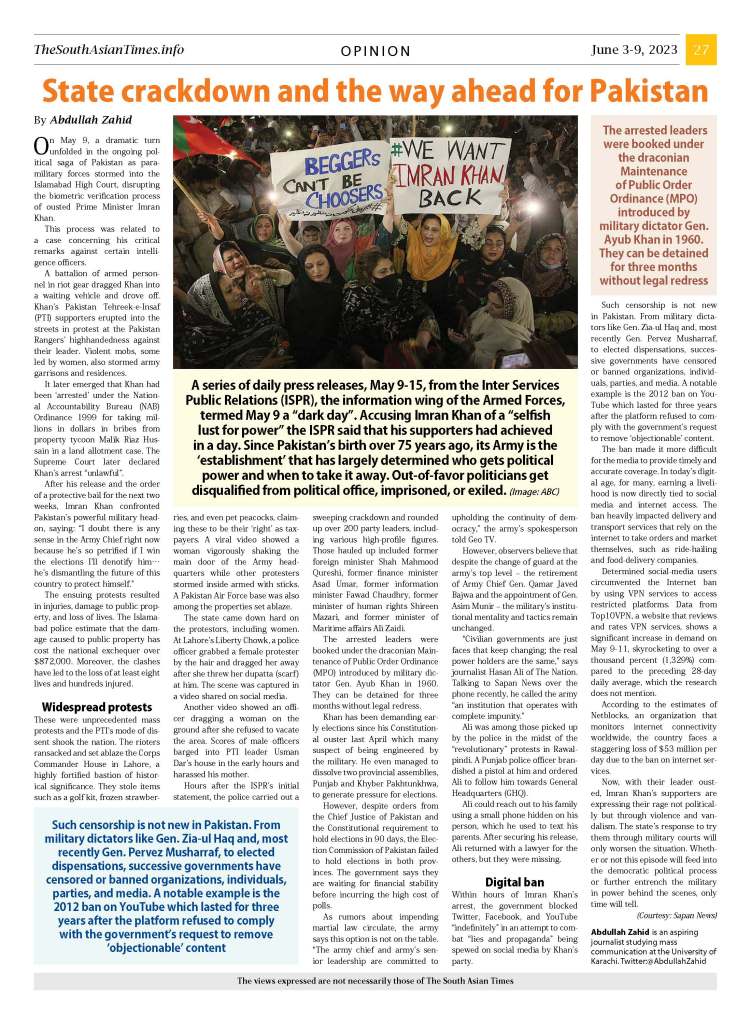
Sapan News syndicated feature in The South Asia Times, page 27, 3-9 June.

The latest Sapan News features include this explainer about the implications of the state crackdown on the violent protests following Imran Khan’s arrest in Pakistan – by Abdullah Zahid in Karachi, published in The South Asia Times (image from their New York edition here) among others. Read it online here.

Plus:

Please subscribe to www.sapannews.com to get our offerings directly in your email inbox.

Happening this Sunday in the Boston area, the second Kabir Festival, in Waltham, 4-7 pm – an event co-sponsored by Sapan, the Southasia Peace Coalition. For details see the Southasia Peace website.

NOTE: If you like/support our work, please contribute what’s possible – no amount is too big or too small. Will be so grateful. We need to raise $15k by year end at a minimum. You can make tax-free donations at this link.

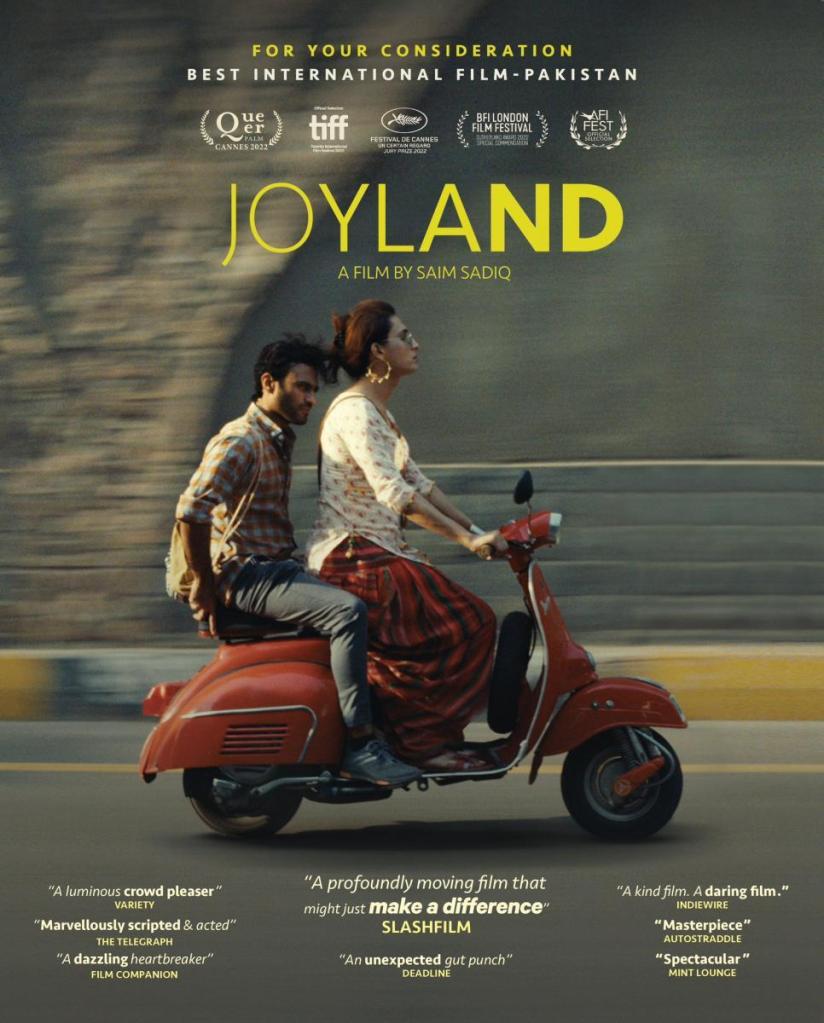
Joyland poster

On another note, I saw the banned-unbanned-censored (still banned in Punjab?) Joyland in Karachi a few weeks ago, and it haunted me – and my cousins who I saw it with – for days. This is the first feature film from Pakistan to screen at Cannes where it won two awards.

“What began as a small independent production among friends at Columbia University’s graduate film program became one of the year’s biggest success stories in world cinema — and a ground-breaking film about queer desire in a traditional Muslim society” reports NPR.

The film is showing at Coolidge Corner Theatre in the Boston area this week– writer-director Saim Sadiq has said the cuts made for the film’s showing in Pakistan were insignificant but I am curious to see the uncensored version.

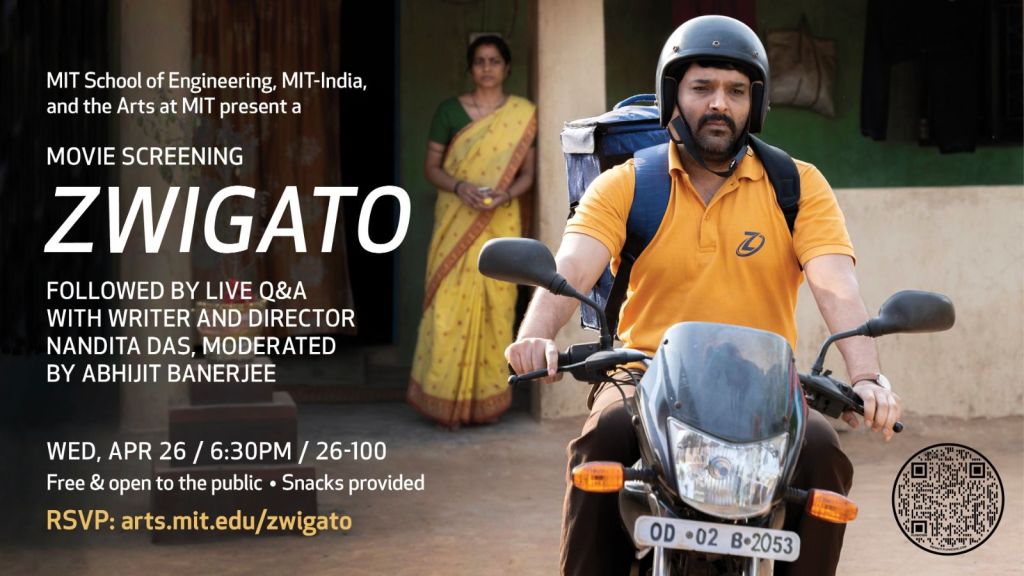
A film I saw recently and enjoyed was Nandita Das’ Zwigato, that she showed in person at various cities in the US.

Even on the small screen I found it thought-provoking and beautifully done, with many layers, a great commentary on the changing society, its challenges and opportunities. Sensitively depicted relationships, humanity, and aspirations. Great poetry and soundtrack, with many nuggets and vignettes sprinkled throughout. The end credits with animations are particularly creative and a story in themselves.

This is the third feature film by Nandita Das that I’ve seen, after Firaaq and Manto. Each of them a labour of love, executed with courage and clarity.

Interesting that the posters for both films feature two-wheelers…

Ending on a sad note – the triple train crash in India that has claimed nearly 300 lives. As expected, authorities are trying to pass it off as ‘human error’ rather than admit to the systematic problems with the railways or the government’s financial choices.

(ends)

Remembering Kuldip Nayar, journalist, activist, peacemonger

Kuldip, Nandita, Asma J

A precious photo: Kuldip Nayar, Nandita Das and Asma Jahangir at Wagah border. Photo: courtesy Seema Mustafa, The Citizen

I was sad to hear about the passing away of veteran journalist and peacemonger Kuldip Nayar, 95, in Delhi. His passing in general evoked great sadness — as well as a resolve to keep working for his values — not only in India but the land of his birth, Pakistan. I had got to know Kuldip ji over the years through the Pakistan India People’s Forum for Peace and Democracy (PIPFPD) that I joined as a young journalist from Lahore when it was launched in 1994-95, as the largest people-to-people organization between the two countries. The last time I met him was at Allahabad train station a few years ago. The lawyer S.M.A. Kazmi and our family friend Zia ul Haq — the comrade, not the general, himself now over 90 were dropping me off and picking him up. He got the surprise of his life. We didn’t have much time to chat as my train was about to leave but I treasure that memory.

Sharing here the two pieces I put together for Aman Ki Asha (hope for peace), the India-Pakistan website I edit. One is pegged on a tribute from Dr Syeda Hameed in Delhi his long-time friend and fellow-activist, former member of the Planning Commission of India and founder trustee of the Women’s Initiative for Peace in South Asia (WIPSA) and the Centre for Dialogue and Reconciliation. She aptly termed him the “gentle giant of India Pakistan peace” in her wonderful piece in The Citizen. See also her account of the Aman Dost Yatra (peace and friendship march) at the border. In the other piece, I put together other tributes paid to him by Pakistanis.

Here are links to both pieces: Remembering the ‘gentle giant of India Pakistan peace’,  and Pakistanis pay tribute to Indian journalist Kuldip Nayar.

SyedaH-KuldipN

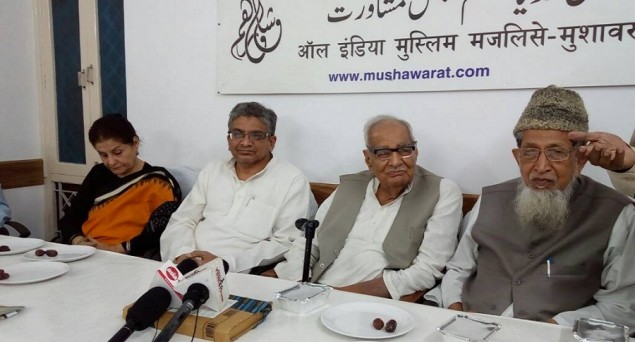
(L-R) Dr Syeda Hameed, Navaid Hamid, Kuldip Nayar, Maulana Syed Jalauddin Umari. File photo – Indiatomorrow.ne.

Salute to a stellar actor and courageous humanist: Farewell Om Puri (October 18, 1950 – Jan. 6, 2017)

I’m not a great film follower but this is something I felt compelled to write yesterday. Published in the Aman ki Asha website and crossposted here.

om-puri-ians

The legendary Indian actor leaves a legacy of humanistic and compassionate values and peace aspirations

Legendary actor Om Puri’s untimely death has saddened film and peace lovers not only in India but in Pakistan and around the world. Like his long-time friends and colleagues Naseeruddin Shah and Mahesh Bhatt, and younger colleague Nandita Das, he had a special relationship with Pakistan due to his desire for better relations between the two largest countries of South Asia. Continue reading

Pakistani, Indian citizens appeal: “Let’s talk peace”

Over 400 artists, writers, activists, academics, lawyers, businesspeople, journalists and students from Pakistan and India appeal to their governments, fellow citizens, politicians and media to strive for peaceful relations between the two countries

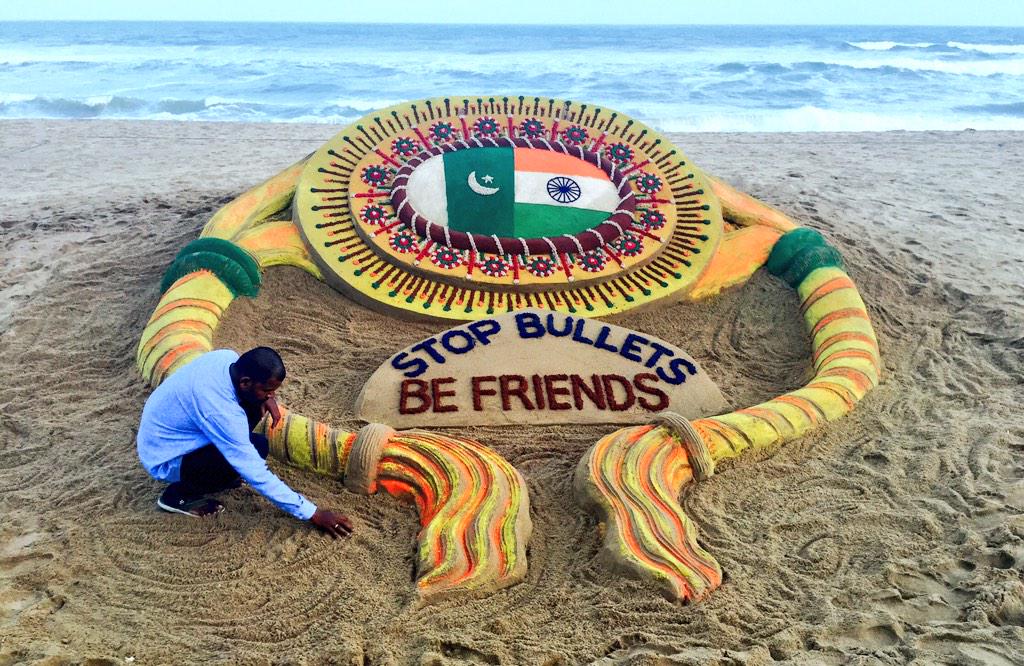
Sand artist Sudarsan Pattnaik’s piece for Raksha Bandhan at Puri beach, Odisha, with a message urging India and Pakistan to “Stop Bullets, Be Friends”

Sand artist Sudarsan Pattnaik’s piece for Raksha Bandhan at Puri beach, Odisha, with a message urging India and Pakistan to “Stop Bullets, Be Friends”

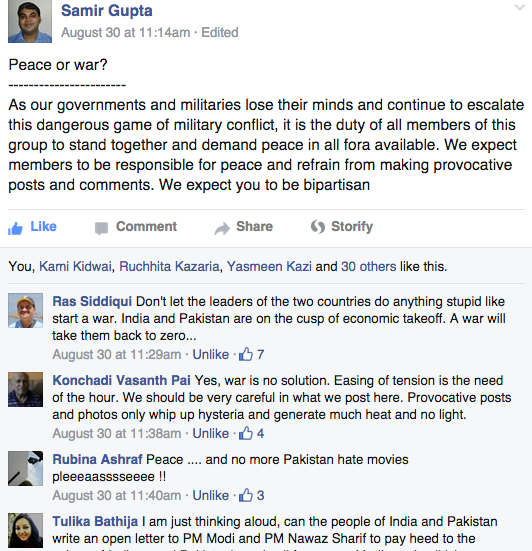
It started out as an admin note to members of the Aman ki Asha Facebook group, by volunteer moderator Samir Gupta on August 30, 2015. The pinned post he put up on the AKA group wall read:

Screen Shot 2015-09-01 at 3.23.14 PM“Peace or war?
———————–
As our governments and militaries lose their minds and continue to escalate this dangerous game of military conflict, it is the duty of all members of this group to stand together and demand peace in all fora available. We expect members to be responsible for peace and refrain from making provocative posts and comments. We expect you to be bipartisan”

Several group members commented there, expressing their support for the idea. Continue reading

“Art for art’s sake is fine, but with a social consciousness it’s even better” – Nandita Das

IMG_5338-Nandita I met Nandita Das for the first time at the World Social Forum in Mumbai, 2004,  introduced by our mutual friend, the activist Shabnam Hashmi, sister of the late Safdar Hashmi. Since then I have caught up with Nandita several times, most recently at Brown University in Providence where she talked about her life and work. Here’s my article about her for The News on Sunday – it includes bits they had to delete due to space constraints. Also published in Times of India blogs.
Continue reading

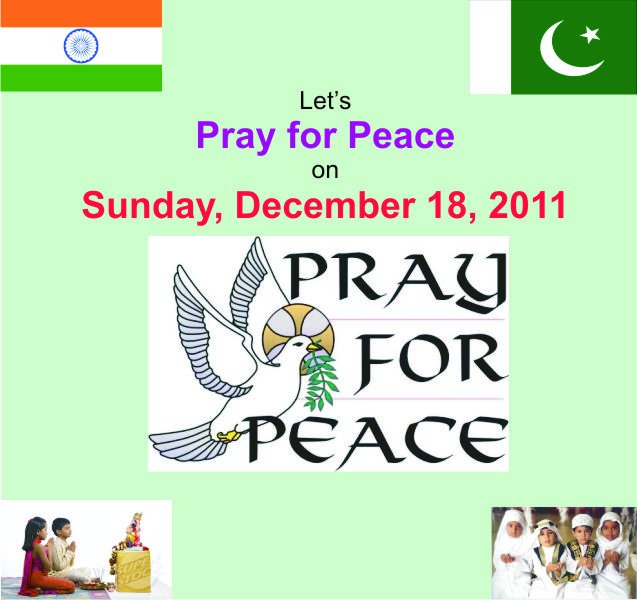
“Focus, and spread the message of peace to all” – Nandita Das | Thousands worldwide to Pray for Peace between India and Pakistan on Dec 18

By Beena Sarwar

From Indian actor Nandita Das in Mumbai, to peace groups and individuals all over India and Pakistan, and in countries as far away as Korea, Australia, Canada and America, thousands are supporting Pray for Peace Between India and Pakistan Day on Sunday, Dec 18, 2011.

Inspired by the idea of the power of collective prayer or meditation, Toronto-based Swati Sharan randomly picked the date several months ago. “These prayers can be done from anywhere on the globe by any one, of any nationality… the more people pray for something at a given time, the greater the difference it can make,” she wrote in an initial article in May explaining the idea, Continue reading