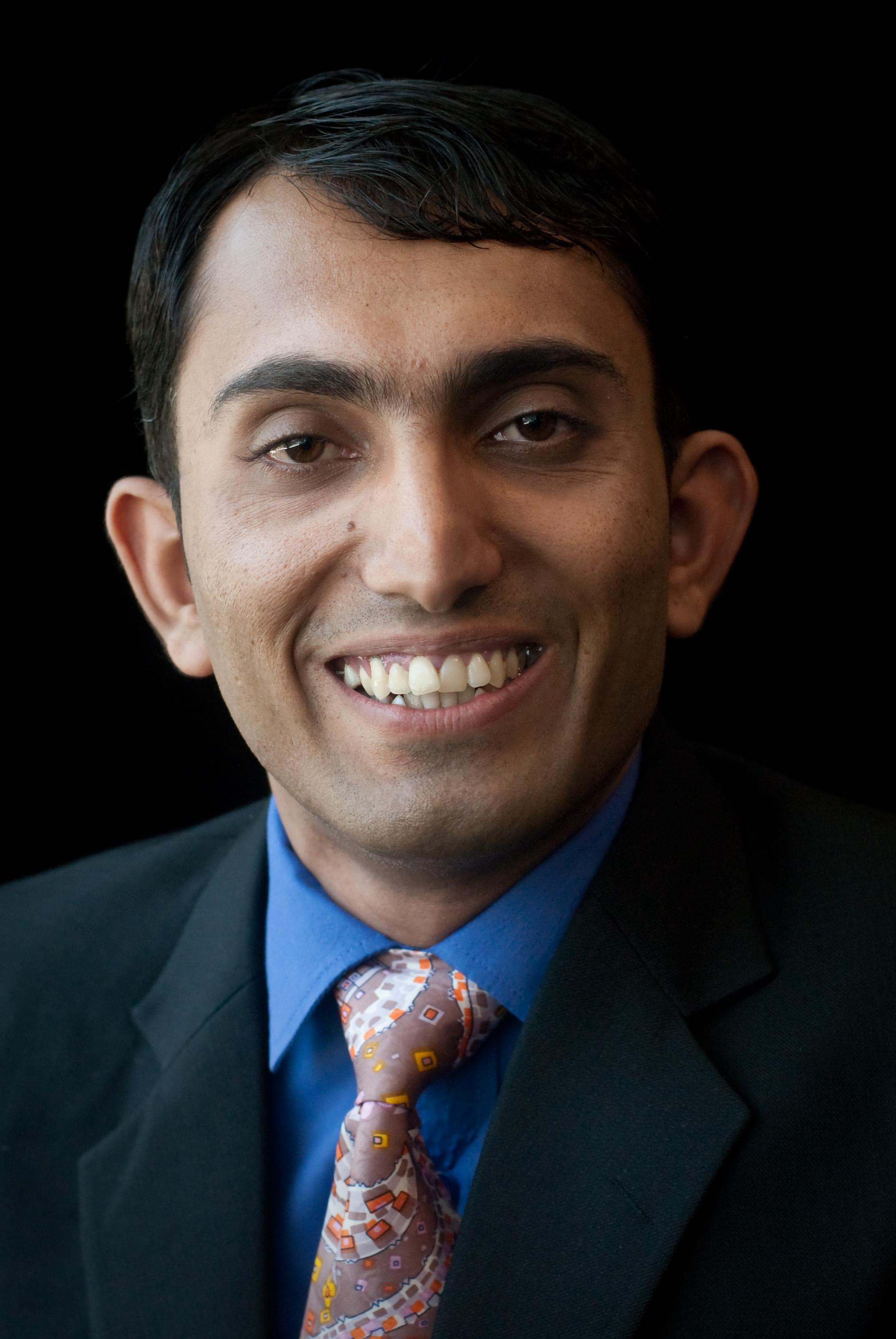
A much needed Special Report on Balochistan…

Malik Siraj Akbar: Let’s not shut the doors

The News on Sunday (Pakistan’s best weekly English language paper) took an unprecedented and much needed look at how the media in Pakistan is not covering Balochistan issues in its Special Report this week (this link has the entire report). It includes
Editorial – Outside the province, Balochistan is as neglected. There is no demand for an investigation for all bad news. Balochistan is not on newspeople’s agenda.
Shooting the messenger – Naziha Syed Ali on the risks journalists in Balochistan live with
Cautious and selective – Why is the otherwise hysterical electronic media unusually silent? By Nabeel Arshed
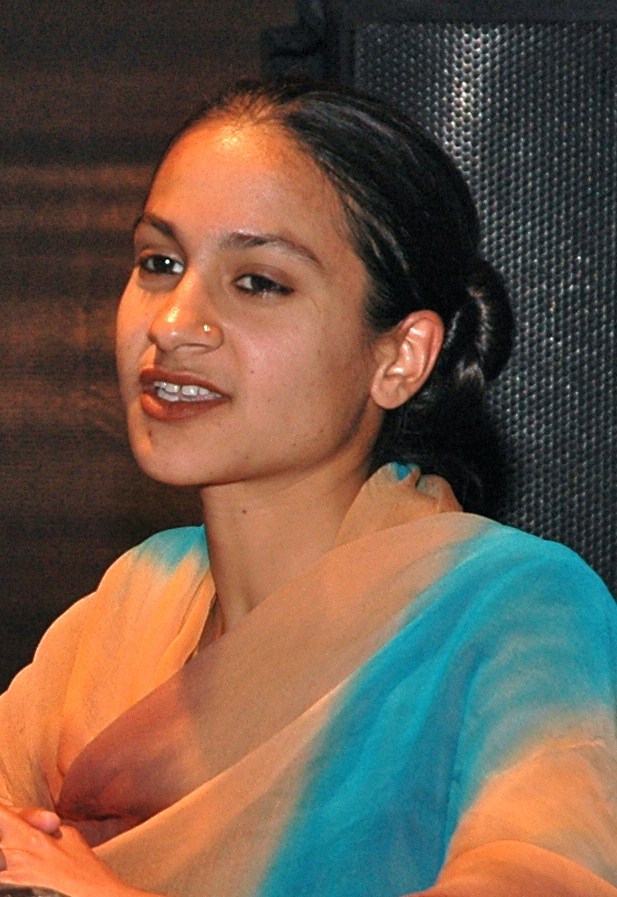
Alia Amirali“The initiative has to come from the centre” – Is it still possible to reach out to the radical nationalist elements and salvage the situation? Malik Siraj Akbar, Editor Baloch Hal believes it is (my interview).
The mainstream media is … defending the national interestsays Alia Amirali, a researcher on the Baloch National Movement and a lecturer at Quaid-e-Azam University, Islamabad, in an interview with Farah Zia (Read Alia Amirali’s article: “After Habib Jalib” – Balochistan appears in the media only after death and destruction – in The News on Sunday, July 25, 2010) And more…
Here is the link to the BBC Urdu report “Punjab Balochistan ke Barey mein Kitna Janta Hai” by Sharjil Baloch (March 1, 2011) that I refer to in my article, which is also the basis for another article in this special report, by Aoun Sahi, ‘Wana and Waziristan in Balochistan?

Ilyas Kashmiri, Saleem Shehzad and the media in Pakistan

“It’s amazing how things change here. The moment it was reported that Ilyas Kashmiri was killed the entire media began explaining that he was a mastermind of the Mehran attack. The only person who had reported this at the time of the attach was Saleem Shehzad, and look what they did to him.

“Up to the point of Kashmiri’s killing the media were busy peddling conspiracy theories with no clear view on who was behind the Mehran attack – or deliberately obfuscating, as one would surmise now. And the only person who was taking a clear view had to be silenced. Then, with the killing of Kashmiri in a drone attack, with cooperation from the Pakistani side, everything changes.

“Now a fully worked out CV of Kashmiri becomes available within minutes with every news outlet. A CV that is exactly what Shehzad had compiled and includes feats such as Mehran, GHQ and Mumbai. This rapid clarity following such intense confusion without any visible process of getting from one to the other needs to be explained”

— comment from a friend in Karachi

Free Dorothy; Osama; ‘agencies’; and some great links

Post sent earlier to my yahoogroup

Dear all,

I’m on the train to New York where Aman ki Asha has been nominated for an award at the International Newspaper Media Association (INMA) annual congress. Group Director Jang Group Shahrukh Hasan will be there and so will Laleh Habib, the Aman ki Asha coordinator.

The train left on the dot at the scheduled time, 11.13 am. And it has wi-fi, so I can catch upon things. This is a year of reunions for me. My 25th college reunion in two weeks, and this past weekend many many fellow Niemans at occasions honouring the outgoing curator Bob Giles. Many journalists requested everyone to keep the pressure on for the release of Al Jazeera journalist Dorothy Parvaz (Nieman ’09) who has been missing for over two weeks now, since she entered Syria… Continue reading

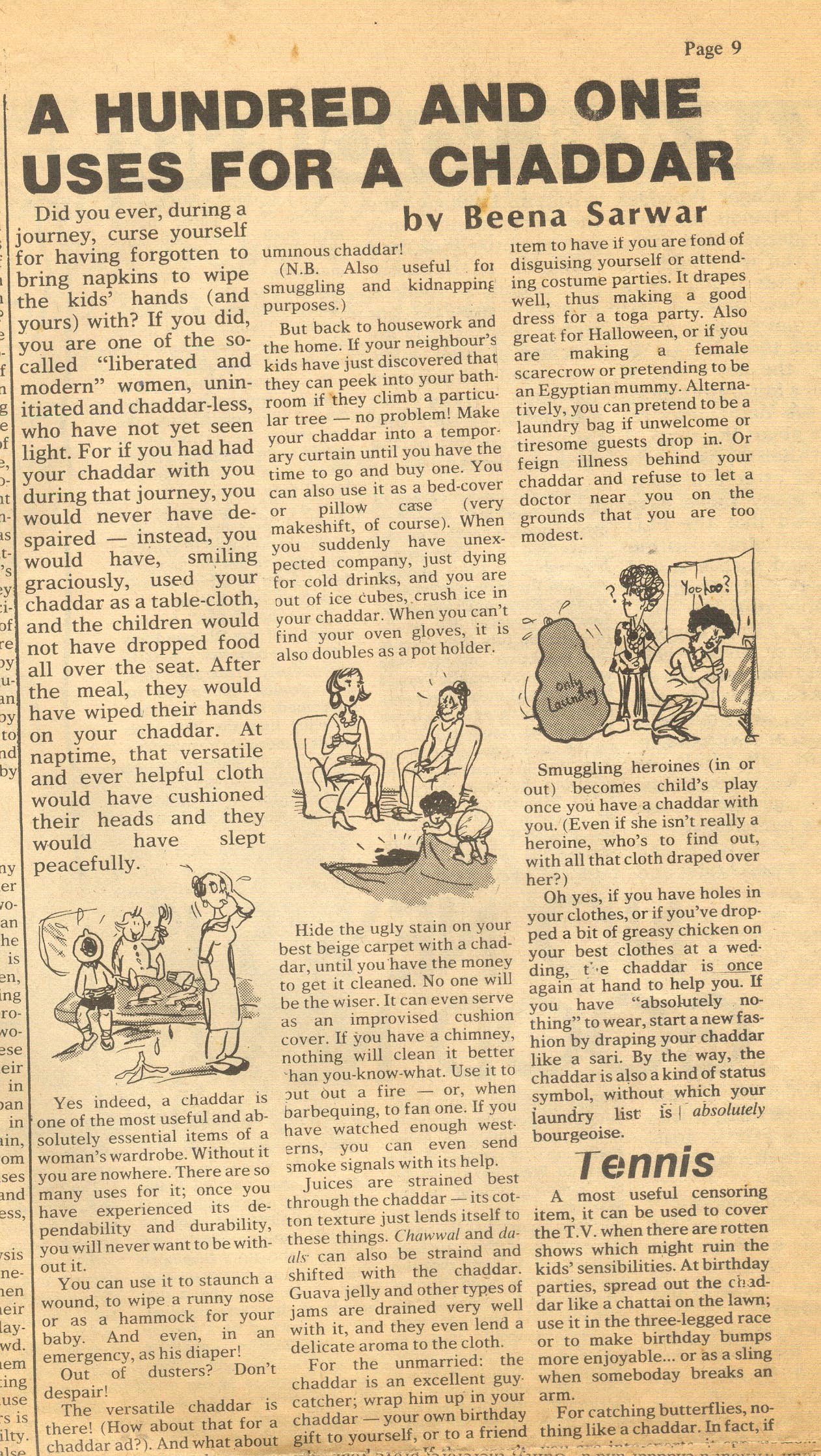
‘101 uses for a chaddar’ – my article in The Star, 1980s

Scan of my 1980s article in The Star, with my illustrations

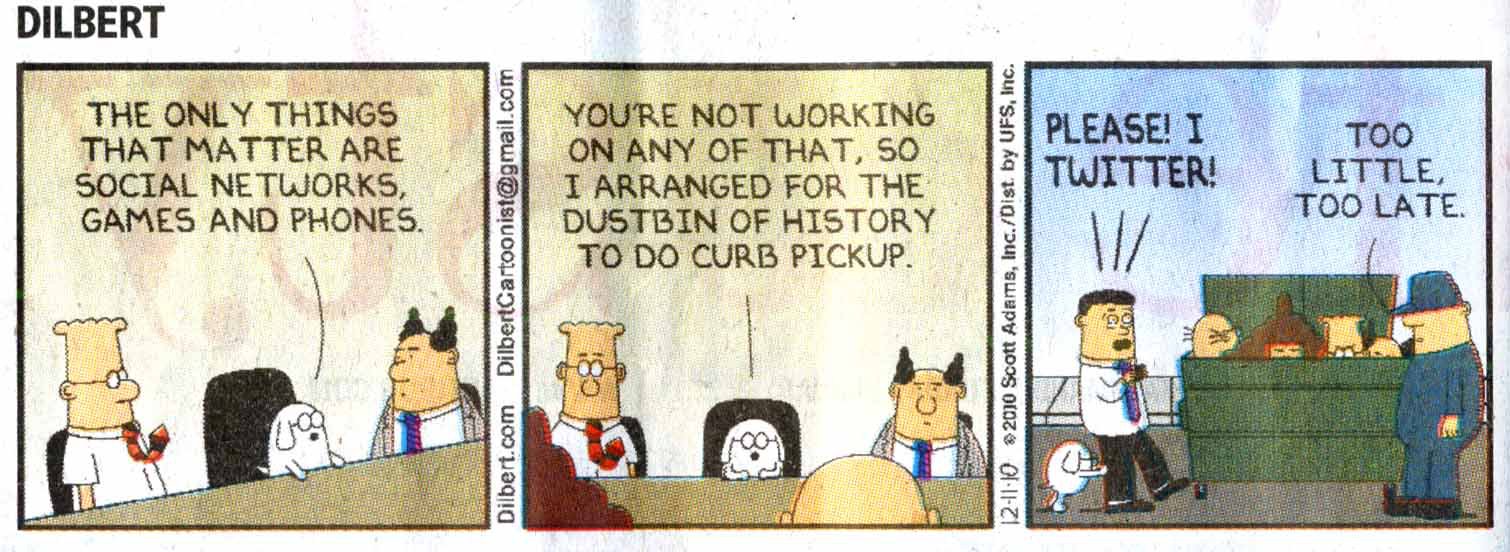
PERSONAL POLITICAL: Confessions of a tweet addict

My column Personal Political in Hardnews, India, written a couple of weeks ago. Was too caught up in event on the ground and forgot to post it. Still relevant.

Beena Sarwar

I admit it. I’m addicted to twitter.

Like many others, the first time I heard about this ‘social networking tool’, my initial response was, “What’s the point?”

It was in spring 2006, at the end of a journalism fellowship in the USA. “Try it,” urged Jeb Sharp, a radio journalist. “It’s cool. You can update friends about what you’re thinking or doing and you have to do it in 140 characters or less.”

Out of curiosity, I made myself a twitter account. The whole thing seemed a bit silly. The twitter icon is a little blue bird. The messages you post are called ‘tweets’. It all sounds very fluffy and twittery. And why create a twitter account if you have facebook? Continue reading

PERSONAL POLITICAL: Manufacturing a ‘hero’

Article published Jan 30, 2011 in The News on Sunday – and in Hardnews, India (‘Blood upon the altar‘)

PERSONAL POLITICAL
Manufacturing a ‘hero’
By Beena Sarwar

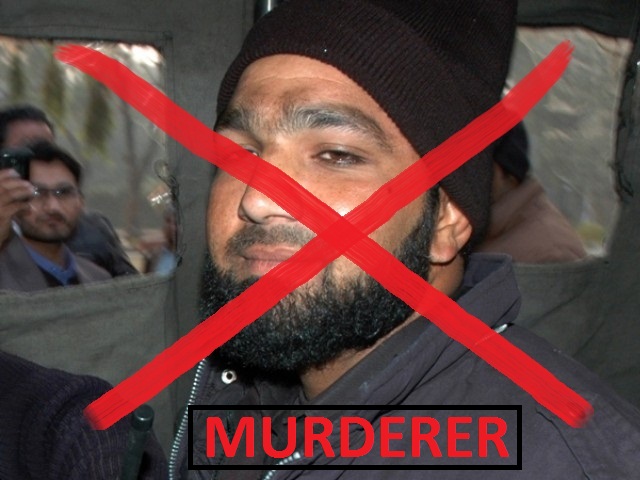
The assassination of Punjab Governor Salmaan Taseer has been termed a ‘watershed moment’ for Pakistan — not just because a sitting governor of the country’s wealthiest and most populous province was murdered in broad daylight by one of his own security guards. Perhaps the greater shock was how the murderer, Mumtaz Hussain Qadri, was allowed to commit this crime and how many hailed him as a hero for having killed someone perceived (falsely) as being guilty of ‘blasphemy’. Continue reading

ACT AGAINST WIKILEAKS CRACKDOWN – Avaaz.org

Courtesy: Avaaz.org

An appeal from Avaaz.org that I’m re-producing in full (followed by some links) because it’s not easy to find on their website, although the call to sign their campaign is on the front page:

Dear friends,

The massive campaign of intimidation against WikiLeaks is sending a chill through free press advocates everywhere.

Legal experts say WikiLeaks has likely broken no laws. Yet top US politicians have called it a terrorist group and commentators have urged assassination of its staff. The organization has come under massive government and corporate attack, but WikiLeaks is only publishing information provided by a whistleblower. And it has partnered with the world’s leading newspapers (NYT, Guardian, Spiegel etc) to carefully vet the information it publishes. >

India and Pakistan are stronger together

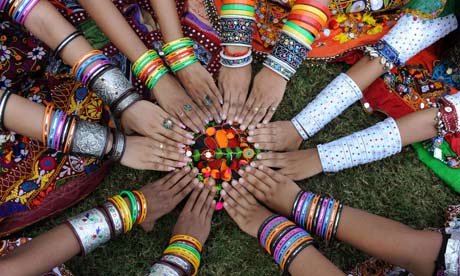
Indian dancers from the Rang Rasia Group traditionally touch their master's turban before the rehearsing Garba in Ahmedabad. Photograph: Sam Panthaky/AFP/Getty Images

My article in The Guardian recently prior to our talk at The Guardian Foundation:

India and Pakistan are stronger together

Loosening cultural, travel and trade restrictions is a vital first step to rediscovering our two countries’ shared heritage

India and Pakistan may be neighbours but it’s surprising how little they really know about each other. Their rich common heritage is easily forgotten amid mutual baiting and negative stereotyping, and it’s difficult to imagine them ever being truly at peace until these obstacles have been overcome.

“I’m really surprised to see so many women … I thought you would be all covered in burqas,” said a journalist at the Indian Women’s Press Club when the Pakistani contingent arrived last April on a visit organised by Aman ki Asha (a joint initiative for peace by the Times of India and Pakistan’s Jang media group). >

Fight The Flood – Bridge Our Divide. New blog.

Fight The FloodBridge Our Divide. New blog, check it out (via Wajahat S. Khan) compiling information about Pakistan floods, blogs etc.

The curse of living in ‘interesting times’

My recent column, published in Hardnews, India and The News on Sunday, Pakistan

PERSONAL POLITICAL

The curse of living in ‘interesting times’

Beena Sarwar

Visiting newspaper offices in Sweden some years ago, I was struck by the relative ease and routine manner in which journalists obtained information. Any envy was overtaken by the comforting thought that at least it’s never boring to be a journalist in Pakistan. Someone obviously threw the proverbial Chinese curse at us: “May you live in interesting times” and added, for good measure, “not just interesting, but downright dangerous”.

The roller coaster ride of Pakistan continues, with many passengers unsure whether the seat belts and the mechanisms are in working order. As I write this, speculations are rife about the ‘expected’ change of face in government. But then, if one were to believe the forecasts of newspaper and television pundits, this would have happened months after the first elected government in 12 years took over power in March 2008. Continue reading