Respect to and solidarity with those who refuse to fall in line with the oppressive narratives peddled by hyper nationalists and security establishments. Sharing a post here by senior journalist Saleem Asmi, former Editor of Dawn and a dear friend of my late father:
Call me unpatriotic, even a traitor if you like, but I must say this straight, without mincing words that we have no right, absolutely no right at all, to condemn what the Indian occupation troops are doing in Kashmir, as long as we are ourselves guilty of committing the same, even worse, crimes in Balochistan. Now look at this: 1) The Indian army has invaded and occupied Kashmir, 2) They brutally oppress the Kashmiri people, and call the freedom fighters ‘terrorists’, 3) We invaded and occupied Balochistan in 1948, 4) We brutally oppress the Baloch people, and call the freedom fighters ‘terrorists’. If anything, we surpass the Indians in kidnapping young Baloch by their thousands without trace. Then their brutally tortured bodies appear under flyovers, by the roads, anywhere.
My article on the symposium I attended last week at University of Texas, Dallas, published in Aman ki Asha
Peacetalks symposium: Raza Rumi, Pritpal Singh, Amitabh Pal, Nyla Ali Khan. Photo by Beena Sarwar
By Beena Sarwar
Born in the Rawalpindi area in 1943, Suresh Bakshi was about four years old when his family left their ancestral home after Partition in 1947. But he still remembers and has strong feelings for the place where he was born.
These feelings created a powerful conflict when, as an Indian Army soldier, he fought in the 1965 war against Pakistan. Continue reading →
Thanks to the Association of Pakistani Physicians of New England (APPNE) for the opportunity to meet an inspiring young lady, 14-year old Insha Afsar of Muzaffarabad who lost a leg in the earthquake of 2005 but has risen to become a champion one-legged skier, enabled by her supportive host parents in the USA. My piece in The News on Sunday
Some weeks ago, I happened to sit at the same table as a bright-eyed, long-haired young girl with a wide smile. The only non-desis in the room were the white couple with her. I assumed they were doctors or medical representatives in that hall full of physicians and their families.
But a pair of crutches resting on the table indicated that the girl was Insha Afsar, the 14-year old from Muzaffarabad who lost a leg in the 2005 Kashmir earthquake but has become a skiing sensation as she dominates the slopes — on one leg. Continue reading →
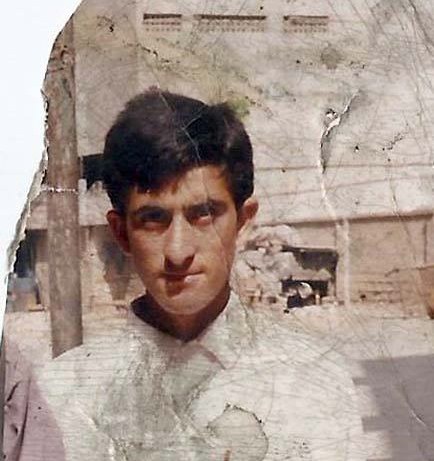
Huge, heartfelt thanks to all those who raised a voice to save Shafqat Hussain. The President of Pakistan has reportedly granted a 72-hour reprieve (originally reported as ‘indefinte’) for the case to be re-investigated. This young man has spent 10 years or more in prison already, since the age of 14 when he was first arrested for the murder of a little boy who had been kidnapped. There are many flaws in the case that led to Shafqat being sentenced to death at age 15 after a confession extracted under severe police torture. He has not seen his parents since he left his village in Neelum Valley, Azad Kashmir to come to Karachi for work after dropping out of school (has a learning disability). The execution has been stayed – for now. It’s a temporary victory for those who’ve fought for his life. The question remains, will the government re-examine the evidence and move to give him justice? And how many more Shafqats languish, poor, marginalised and resourceless, in our prisons and death rows?
Shafqat Hussain, photo taken before he left Muzaffarabad more than 10 years ago.
Who is Shafqat, why is he being hanged, and why should we care?What were you like when you were 14? Please watch this lovely little video(also embedded below) and act to save Shafqat Hussain, death warrant issued (again) for Thursday, March 19. Shafqat was 14 when he left his village in Muzaffarabad, AJK, to go to Karachi looking for work. He was dirt-poor and resourceless, tortured into confession for the murder of a child, tried under the Anti-Terrorism Act (because the murder ‘spread terror in the neighbourhood’). The government-appointed lawyer never provided proof of his age. He was 15 when the court sentenced him to death. He has now been on death row for 10 years. In January, his execution was stopped under pressure from people like us. Pakistan Interior Minister Chaudhry Nisar had promised a re-investigation into the…
DIG Khalique Shaikh and PPP leader Sharmila Farooqi negotiating with protesters outside CM House, Karachi. PPI photo
It all comes together. When the Sindh government agreed on Tuesday to the demands of the citizens observing a sit-in for over 30 hours in protest against the Shikarpur blast, probably everyone forgot about Kashmir Solidarity Day. It has been observed annually in Pakistan every February 5 since 1991 when the Nawaz Sharif government during its first stint in power demarcated it as a national holiday. Continue reading →
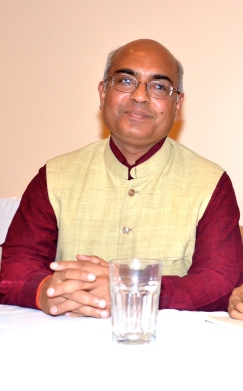
Akhilesh Mishra: humanity and poetry. Photos: Farhat Sadaqa
A short piece I wrote about a South Asian event I was invited to speak at in Toronto; I focused on the speech by the Indian Consul General Akhilesh Mishra. Published in the Aman ki Asha page in The News, September 3, 2014.
Speaking at an informal discussion organised by the South Asian Peoples Forum in the Toronto area in Canada on Monday, Akhilesh Mishra, the unassuming Consul General of India won many hearts with his soul-touching poetry, couplets of which were interspersed throughout his brief speech.
This, coupled with his humane and compassionate outlook, comes as a refreshing change from the kind of talk and posturing one usually gets from diplomats.Continue reading →
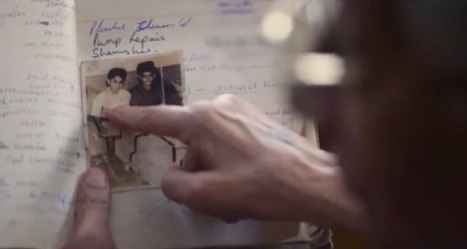
“Ye mein, ye Yusuf”… That’s me, that’s Yusuf… Still from Google’s “Reunion” ad
Google’s tearjerker “Reunion” ad released on the web has tapped into a rising groundswell for peace between the people of India and Pakistan
By Beena Sarwar
The internet search engine Google’s moving, beautifully made little video “Reunion”, released on November 13 has gone viral. In less than a week, the ad on Youtube has been played over four million times, and shared endlessly on facebook, twitter and blogs, and posted on other video sharing portals like Vimeo (over 70,000 views).Continue reading →
News about the death of two Indian soldiers at the Line of Control in Kashmir on Jan 8 triggered anger in India. Yes, a Pakistani soldier had been killed just two days earlier. But his body had not been mutilated. He had not been beheaded. For that is what Indian reports said, creating hysteria and leading to the beating of war drums: the bodies of their jawans had been mutilated, one of their heads was missing, and Pakistan was responsible (small mercy, authorities asked Indian journalists not to use the word ‘beheaded’ but ‘decapitation’).
India seemed to erupt in a storm of anger, outrage, and indignation, betrayal and hurt, and calls for retaliation against Pakistan. Understandable. Imagine the reaction in Pakistan had it been the other way around.Continue reading →
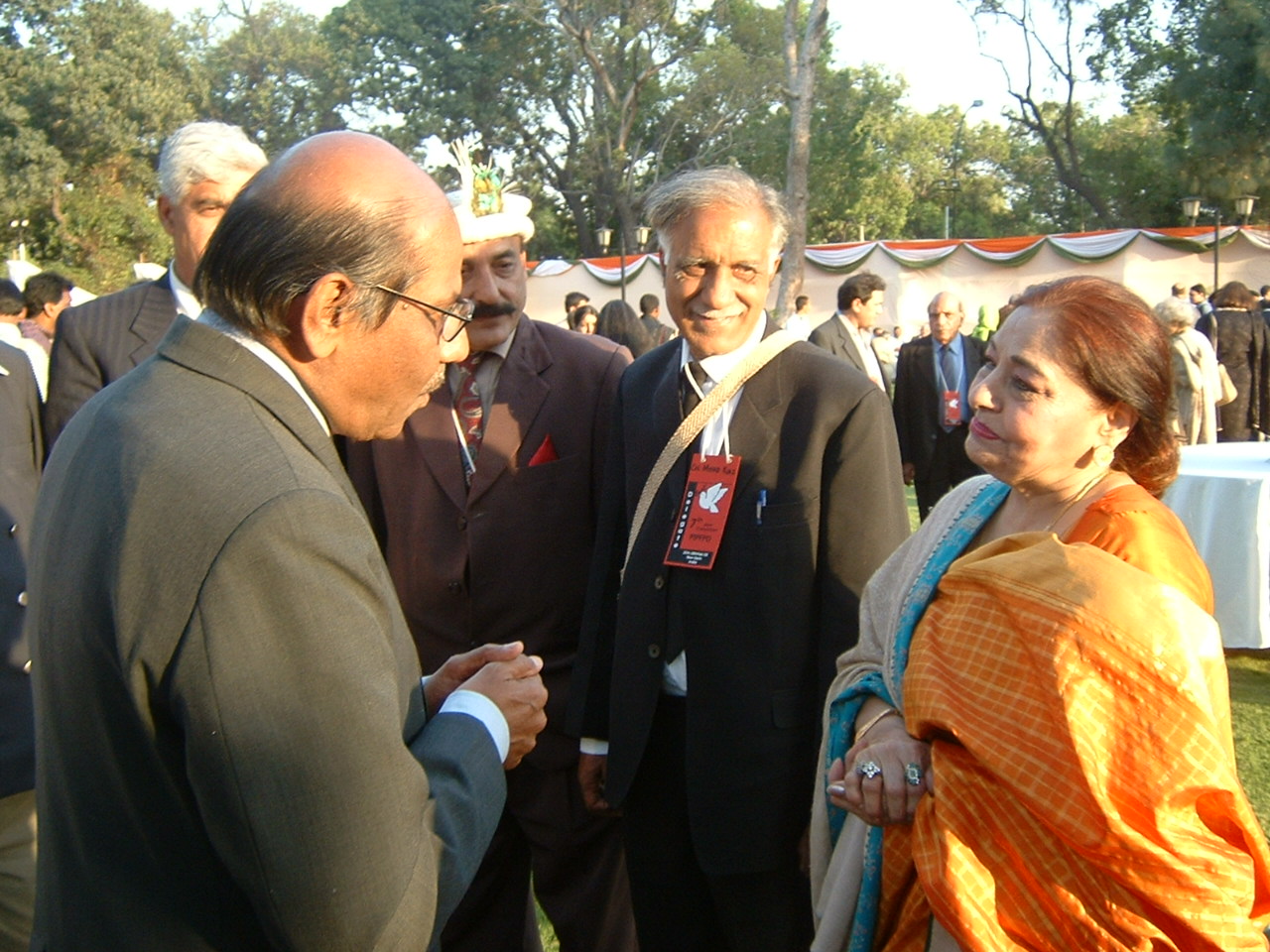
PIPFPD 7th Joint Convention, New Delhi 2005: Pakistani ghazal queen Farida Khanum with then Indian Foreign Secretary Shyam Saran at a reception at Hyderabad House. Photo: Beena Sarwar
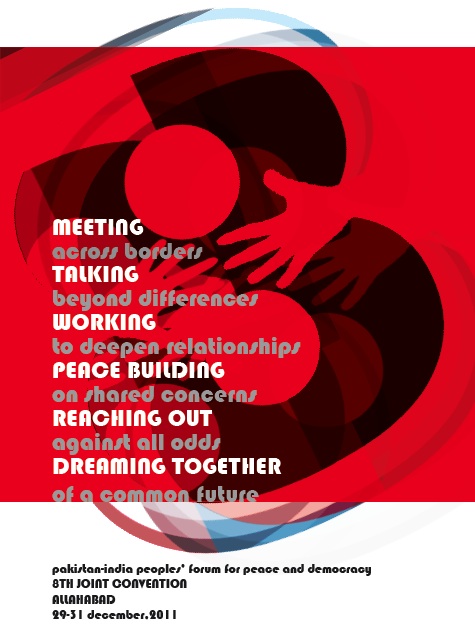
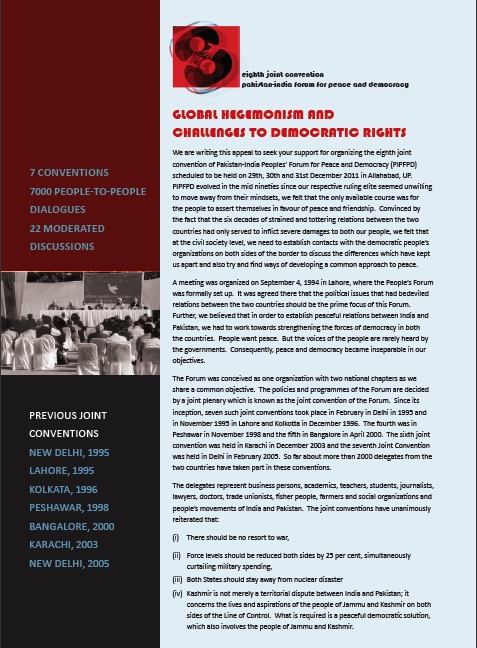
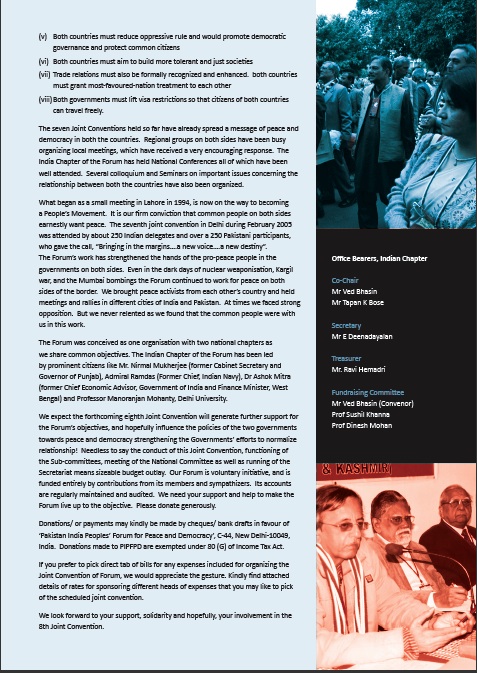
My curtain raiser on the Eighth Pakistan-India People’s Forum for Peace and Democracy (PIPFPD) Joint Convention being held in Allahabad, India, Dec 29-31, 2011 (slightly shorter version published as an op-ed in The News). When the name was being decided, the Indians insisted that Pakistan should be mentioned first, rather than the usual formulation that places India’s name first. This apparently trivial gesture typifies the PIPFPD’s cooperative spirit.
People for peace | By Beena Sarwar
The Indian government’s clearance of visas for 237 Pakistanis to attend a major peace convention in Allahabad, Dec 29, 2011 to Jan 1, 2012, is a welcome step, allowing the much-delayed Eighth Joint Convention of the Pakistan-India People’s Forum for Peace and Democracy (PIPFPD) to finally be held.
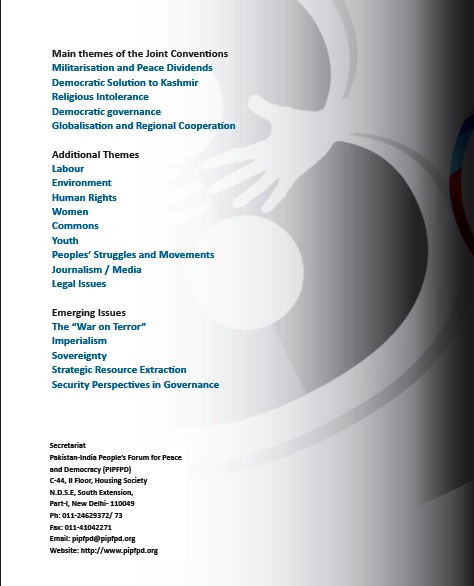
The PIPFPD is the largest people-to-people organisation between the two countries, formed in 1994 by eminent intellectuals, academics and activists from both sides. Discussions at the Joint Conventions revolve around issues ranging from ‘war, de-militarization, peace and peace dividends’, to ‘Democratic solution to Kashmir problem’, ‘Democratic Governance’ and ‘Religious intolerance in India and Pakistan’. ‘Globalization and Regional co-operation’ was added at the 5th Joint Convention in 2000 at Bangalore.
The principles laid out in the initial PIPFPD Declaration of 1994 are even more relevant today than they were then: that the “politics of confrontation between India and Pakistan has failed to achieve benefits of any kind for the people of both countries”, and that the respective governments should honour the wishes of their people who “increasingly want genuine peace and friendship”.
Better relations, said the Declaration, “will help in reducing communal and ethnic tension” and “will help the South Asian region to progress economically and socially”. The Declaration urged the Governments of Pakistan and India to “agree to an unconditional no-war pact immediately” and to recognise that “a democratic solution to the Kashmir dispute is essential”.
Over 200 Pakistani and Indian delegates participated in the groundbreaking First Joint Convention in New Delhi, 1995. For the first time, Indians and Pakistanis sat together to freely discuss the contentious issues of Kashmir, demilitarization, and the politics of religious intolerance. PIPFPD’s formulation about Kashmir is now part of public discourse: that Kashmir should not be viewed merely as a territorial dispute between India and Pakistan but as a matter of the lives and aspirations of the Kashmiri people, who must be involved in any discussion about their future.
The seven joint Conventions held since in various cities across the region, alternating between both countries, have involved hundreds of ordinary citizens. Delegates pay for their own travel expenses, while the hosts arrange inexpensive board and lodging. These Conventions have yielded not only lasting relations between individuals but also spawned dozens of Indo-Pak organisations and meetings between different ‘sectors’ – fisherfolk, teachers, students, journalists, doctors, lawyers, labour unions, rights groups and others.
It was PIPFPD’s First Joint Convention in New Delhi in 1995 that led to the first regular column by an Indian journalist in a Pakistani newspaper (The News on Sunday) since the 1960s. Today, most newspapers and TV channels in Pakistan have correspondents, stringers and resource persons in India, and vice versa.
Initial delays to the Eighth Joint Convention came from Pakistan, where it was supposed to be held in Peshawar in 2007, after the Seventh Joint Convention in New Delhi in 2005. The political situation provided justifications to deny the necessary permission: escalation in the ‘war on terror’, the lawyers’ movement, the return and then the tragic assassination of Benazir Bhutto, and escalating violence in Pakistan as the new government tried to tackle the militants unambiguously.
When it became clear that trying to hold the Convention in Pakistan would add to more delay, the organisers decided to move it to India. That took over a year and much negotiation. Conditions were verbally set out and apprehensions voiced about the possibility of ‘wrong speeches’ being made – not just by the Pakistanis but by Indians. However, those raising the objections were unwilling to spell out their apprehensions in writing.
In the end, persistence and people pressure paid off. Several Indo-Pak events have been held over the past two years, including by Aman ki Asha. Many were initiated by Indians, contrary to the perception that “Indians don’t care about peace with Pakistan”.
Significantly, some of the most inspiring initiatives have come from Mumbai, a city still reeling from the horrific attacks of Nov 26-28, 2008 that many Indians squarely blame Pakistan for. However, many Indians, including Mumbaikars, argue that all Pakistanis should not be held responsible for the actions of a few.
An extraordinary expression of this spirit was the 50-kilometre long ‘human chain for peace’ formed by some 60,000 Mumbaikars on Dec 12, 2008, urging the Government of India to show restraint in dealing with Pakistan — just days after the attacks that claimed 164 lives and left over 300 wounded. This hugely impressive event was overshadowed by the jingoism amplified by the media, but the Indian government did not (for several reasons) pander to those baying for action against Pakistan.
Earlier this year, students from Mumbai came up with a pioneering initiative they called ‘Ummeed-e-Milaap’ (hope for unity), a platform for Indian and Pakistani students to connect, in over 30 colleges in Mumbai, Lahore and Karachi. Last month, a 22-member delegation of journalists from The Press Club of Mumbai travelled to Pakistan to connect with colleagues in Karachi and Hyderabad, culminating in a joint Declaration of Cooperation.
The world is changing. The old paradigms and policies based on paranoia and hatred must give way to a realisation that it is only with cooperation with each other that India that Pakistan can fulfil their respective potentials. The Seventh Joint Convention articulated some visionary steps that both governments can take towards this end (see www.pipfpd.org). The Allahabad Convention will take forward these demands, foremost among which is easing the current restrictive visa regime.
We have seen what happens when thousands of cricket fans are given visas to attend matches across the border: nothing, except for goodwill and a reaffirmation that the people are ready for good relations and personal contacts. As the Allahabad Convention gets under way, do our governments have the political will and vision to follow the people to peace or will they remain mired in outdated security state paradigms?
In a press note released today, prominent Indian citizens have condemned violence in Kashmir on Eid Day and demanded an inquiry. Received from People’s Initiative on Jammu & Kashmir (c/o Confederation of Voluntary Associations, COVA, 20-4-10, Charminar Hyderabad, A.P. India; Ph:+91-40-24572984; Email: covanetwork@gmail.com
Violence in Kashmir on Eid Day: Condemnation and Demand for Enquiry
SEPT 13: We condemn strongly and unequivocally the incidences of violence and arson in Srinagar on the day of Eid by some miscreants.Continue reading →





 Journeys to democracy