Women rock the boat

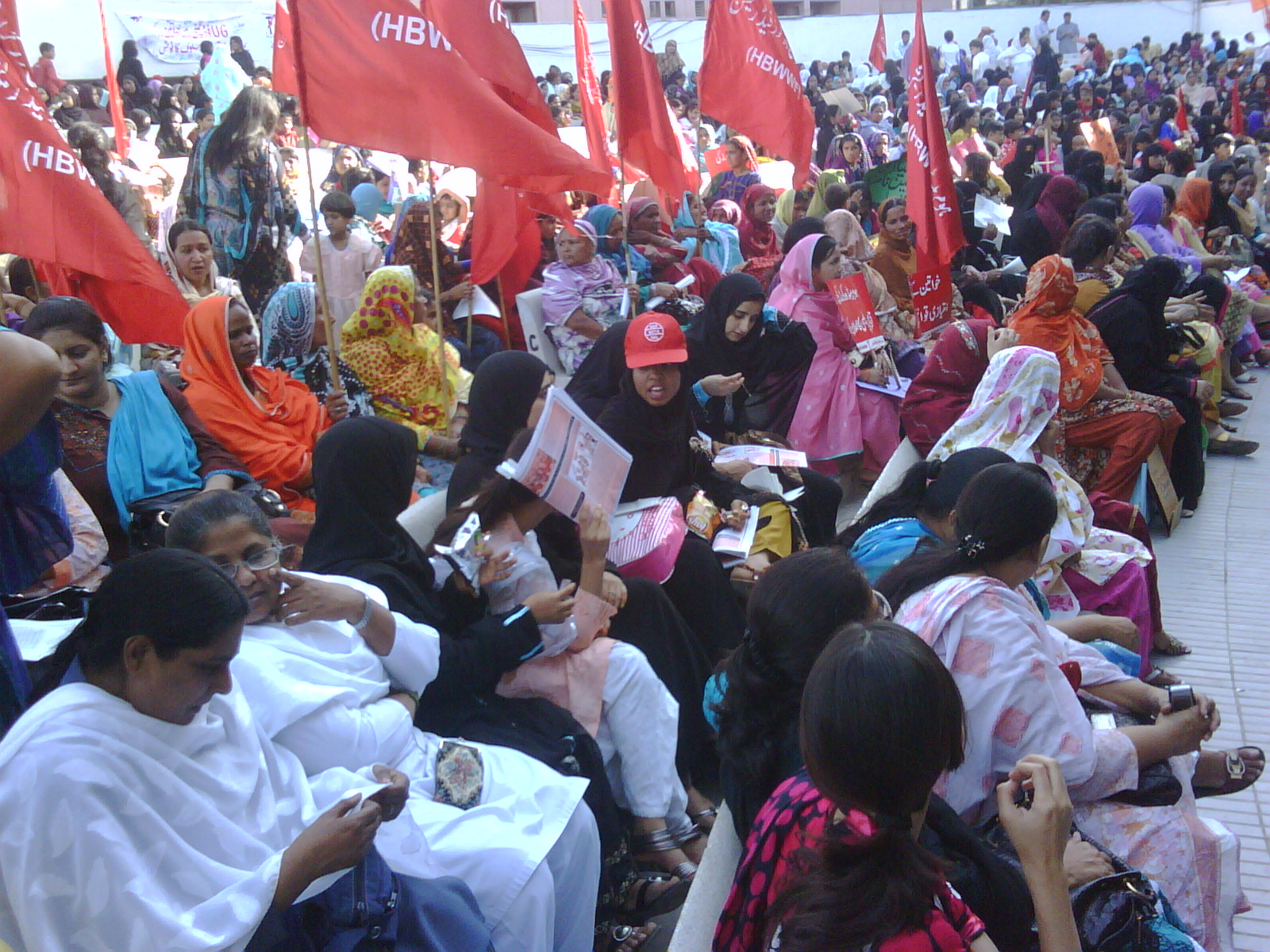
Pakistani women demand their rights. Photo: courtesy Nasir Mansoor, LPP

WOMEN’S DAY RALLY IN KARACHI: Thousands of working class women, many of them home based women workers, with red flags in their hands marched on roads of Karachi, chanting slogans against ‘mullahism’, religious extremism and for their democratic rights. The march started from Karachi Press Club and culminated at the Arts Council of Pakistan where a seminar was held in the open air theatre followed by songs, theatre and documentaries. They demanded: *End all discriminatory laws against women and minorities *End religious fundamentalism *Recognize home based women workers as workers in law, extend social security cover to them *Equal opportunity to women in all fields of life

Also see: Dedicated to Pyari Pakistanis: Happy Women’s Day, y’all! a delightful sum up of the situation of Pakistani women, with statistics and action points, by blogger and cartoonist Mehreen Kasana. Check it out 🙂

Karachi rally speakers and demands: Continue reading

Remembering Saneeya Hussain on her birthday

Here’s a note I sent out to the Saneeya Hussain yahoogroup yesterday, Aug 13th, her birthday – please do check out the link about the Saneeya Hussain Trust:Saneeya Homepage

Dear family and friends of Saneeya, scattered all over the world, this huge community of caring and committed people working in all kinds of ways to make the world a better place in their own ways

Here’s to Saneeya – we’ll always miss her. It is wonderful that the Saneeya Hussain Trust is up and running. Please do check it out at http://www.saneeyahussaintrust.com/ – The Trust has already done a lot of valuable work in terms of helping young girls obtain an education.

Several months ago I wrote a chapter for a forthcoming book on environmental journalism being published (eventually, we hope) by Sage, India. It focuses to some extent on Saneeya and Nazeeha had it posted to the SHT website for those who are interested
http://www.saneeyahussaintrust.com/PakistanChapterforSageIndiaAug08.pdf

I finally made a blog (on which I post my own articles and other material that I also send to my issues yahoogroup) – have linked the SHT to it also. I’d encourage all those of you who maintain blogs or websites to do the same.

That’s all for now from hot and muggy Karachi

beena

Peace please, musically

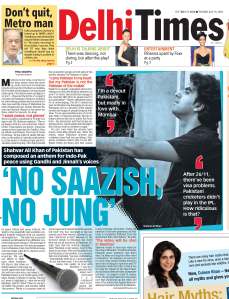
No Saazish No Jung - Times of India, July14-09-

No Saazish No Jung - Times of India, July14-09-

Shahvar Ali Khan: “No Saazish, No Jung”

In January I posted out information to my  yahoogroup about a joint signature campaign between Indians and Pakistanis, and also a note from a Lahori who loves Mumbai, Shahvar Ali Khan

(A Lahori’s love for Mumbai; Pk-India joint signature campaign – http://groups.yahoo.com/group/beena-issues/message/1028)com/

Recently, Shahvar wrote, composed and sang a song “No Saazish, No Jung” (no conspiracy, no war) – which you can download at – http://www.shahvaralikhan.com/

I’m thrilled that it’s getting some media attention even without a video. There was a piece in Instep, The News on Sunday, Pakistan on July 06, 2009, and this piece in Times of India, July 14, 2009 – ‘Now a song for Indo-Pak peace’ –
http://tinyurl.com/TOI-Shahvar

Below, text of the Press Trust of India report of July 7, 2009 published in Indian papers:

Pak singer puts Gandhi, Jinnah together in appeal for peace

Islamabad (PTI): A Pakistani singer has combined the voices of Mahatma Gandhi, Mohammad Ali Jinnah, Benazir Bhutto and US President Barack Obama in a new song that makes an impassioned plea for peace in the region.

Shahvaar Ali Khan’s “No Saazish, No Jung” is a peace anthem that tells “mullahs” and “foreigners” to leave his country alone.

Mullayae na kar tung, oo guraya na kar tung, meino rahen dae malang, mein nach nach kai larni yae jang de nal jang (Don’t bother me mullahs/Don’t bother me foreigners/Let me remain a free spirit/I will dance away and fight your war),” goes the song in Punjabi that combines a hard rock guitar riff with a folksy backing.

Khan, 25, said he plans to make a video based on the song. “I plan to shoot the video in Mumbai so that it will be an India-Pakistan peace initiative,” he said.

He is in touch with several Indian directors and is also looking for sponsors and TV channels to back the video so that it can be ready for release by the time Pakistan and India celebrate their independence days on August 14 and 15 respectively.

The song combines excerpts from speeches by Gandhi, Jinnah, Bhutto and Obama.

The voice of Gandhi can be heard intoning “…in the midst of death life persists, in the midst of untruth truth persists, in the midst of darkness light persists”.

‘This wonderful Doc…’

NOTE: A slightly longer version of this article was published in ‘The News on Sunday’, July 5 2009 – http://tinyurl.com/tns-doc – also uploaded at This wonderful doc (2) at the Dr Sarwar website . The title is borrowed from Ali Jafari’s tribute posted at the Dr Sarwar site which also contains contributions by I.A. Rehman, Dr Badar Siddiqi, S.M. Naseem, Eric Rahim, Salima Hashmi, Drs Anwar and Abdullah Mangi and Dr Asif Ali Hameedi and others.

PERSONAL POLITICAL

Beena Sarwar
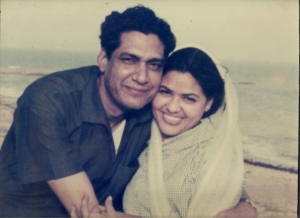
Newly weds circa 1962: Zakia and Sarwar at Karachi beach

Newly weds circa 1962: Zakia and Sarwar at Karachi beach

She is not the grave-visiting sort. A white-haired dynamo with luminous eyes she pioneered teacher training and teaching English as a second language in large classrooms with limited resources. The activism she brought with her from Pratapgarh in UP, India, to Pakistan in the late 1950s has remained, nurtured and encouraged by the life partner she found.

Zakia met Sarwar after moving to Karachi from Lahore in 1961. The unconventional, dashing, long-limbed Allahabad-born doctor was known as the ‘hero of the January movement’. He came to Karachi after Partition and joined Dow Medical College. There, he started Pakistan’s first student union, catalysing the first nation-wide inter-collegiate students’ body. When the government ignored their demands related to fees, lab and hostel facilities, the students held a ‘Demands Day’ procession on January 8, 1953. Confronted by armed police, Sarwar tried to stop the students from surging ahead. Police opened fire. Seven students died on that ‘Black Day’. Several, including Sarwar, were injured.

Sarwar and his even taller older brother Akhtar were jailed (Sarwar received his final MBBS results in 1954 while in prison for a year) during the crackdown on progressive forces, after Pakistan and America signed a military pact.

Akhtar’s sudden death (pneumonia) in 1958 at the peak of his career devastated his circle of progressive writers, poets, activists and journalists. Sarwar, who had been particularly close to Akhtar, insisted that everyone get on with their work and not sit around mourning.

Zakia’s older brother Zawwar Hasan was also close to Akhtar. They had played field hockey for rival college teams in Allahabad, re-connecting as sports journalists in Karachi. Some years later, when Zawwar’s young children were ill, Zakia would take them to Sarwar’s clinic nearby.
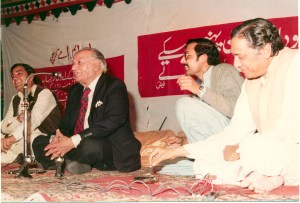
1983 mushaira at PMA House: Dr Badar Siddiqi, Faiz, Dr Tipu Sultan & Dr M. Sarwar (then General Secretary PMA)

Defying the dictatorship: 1983 mushaira at PMA House – Dr Badar Siddiqi, Faiz, Dr Tipu Sultan & Dr M. Sarwar (then General Secretary PMA)

Their romance included outings like seeing off the poet Faiz Ahmed Faiz to receive the Lenin Peace Prize. “As a comrade, his relationship with Abba was an unspoken clear bond based on a shared understanding of the universal struggle for a just human order,” says Salima Hashmi, Faiz’s daughter.

Sarwar and Zakia married in September 1962, overcoming parental apprehensions about religious differences (Shi’a, Sunni). Neither was religious. Akhtar would have approved, as Zawwar did.

As their eldest child, one of my earliest memories is Zakia and other college teachers on hunger strike, demanding an end to the exploitation of teachers. Sarwar supported her against the muttered disapproval (‘women from good families out on the streets’), as always, giving her the space to develop her potential.

He practiced as a general physician for nearly fifty years from a modest clinic in a low-income area, treating struggling workers, journalists, artists and writers free. He was contemptuous of doctors who charged high fees, prescribing costly tests and medicines where less expensive ones would do. He helped launch the Pakistan Medical Association and its affiliated Medical Gazette – platforms that have played a significant role in Pakistan’s progressive politics.

Diagnosed with cancer in August 2007 (‘stage four’, pancreas, metastasis to the lungs), he remained characteristically calm and good humoured. “Look,” he reasoned, “everyone has to die. If this is how I have to go, so be it.”

He refused to give up drinking or smoking, reminding us of friends who died early despite giving up such habits. When a cousin’s mother-in-law was diagnosed with lung cancer, he asked wryly, “And does she also smoke?”

He defied doctors’ predictions of ‘maybe six months…’. “To look into the eyes of  a killer disease, and yet not roll over is something that the bravest could envy,” wrote Zawwar in October last year.

Friends flocked to ‘Doc’, hosting parties at his home when he was too weak to go out. Emerging from anaesthesia after getting a blocked bile duct cleared this April, one of his first questions was about the Indian elections. At home, when his breathing became dangerously obstructed, doctors suggested suctioning out excess fluid in intensive care, with the risk of lung collapse and life support if the procedure failed. He waved his hand and pronounced, ‘No point, no point’.

He died peacefully in his sleep that night, half an hour after I kissed him goodnight. “Sleep well Babba,” I said.

“Goodnight,” he replied, clasping my hand back. “Go to sleep.”

Zakia now takes time out from her work to sit by his last resting place. It gives her peace.

This article was first published in HardNews, New Delhi – http://www.hardnewsmedia.com/2009/07/3060

1983 mushaira at PMA House: Dr Badar Siddiqi, Faiz, Dr Tipu Sultan & Dr M. Sarwar (then General Secretary PMA)

1983 mushaira at PMA House: Dr Badar Siddiqi, Faiz, Dr Tipu Sultan & Dr M. Sarwar (then General Secretary PMA)

`Pakistan: Chaos unto Order?’ and ‘syllabus of hate’

1. `Pakistan: Chaos unto Order?’ by Haris Gazdar in EPW (Economic & Political Weekly, June 6, 2009 vol XLIV no 23).

Extract: The Pakistani military finally appears to have embraced the war against jihadi militancy as its own. If so, an
important shift in perception and policy has taken place. Past experience, however, demands caution before coming to any hasty conclusions.
Comment by Shaheryar Azhar in the Forum: “this is an excellent article – cuts through the fog of confusion. Those who have denied it can perhaps now understand what the big deal was about the ‘deal’ bravely made by both parties –
PPP and General Musharraf, which is what put into motion where we are now. Million dollar question remains whether overtime there will remain the political will that will be crucially required on a sustained basis within the military, politicians and the general public to fight this to the bitter end?”

PakTeaHouse link: http://tinyurl.com/gazdar-epw

2. `Awaiting changes to a syllabus of hate’ by Nirupama Subramanian, Islamabad correspondent for The Hindu, June 09, 2009

Extract: In April, the federal Cabinet put off approving the draft indefinitely, …until the Education Ministry makes the policy “more comprehensive, covering every aspect of education sector which needs improvement along with an
implementable work plan.” But no urgency is visible in the Ministry to get cracking on this task. Another concern is that the Education Minister is not known for his progressive views, especially on gender issues.

http://tinyurl.com/syll-hate

Doc’s blog; Madrassas vs Pvt schools; Hoodbhoy on Pk; Cost of war and more

Condolences: Lourdes Joseph, longtime activist and office secretary of the Human Rights Commission of Pakistan (HRCP) passed away today in Dubai of a heart attack. Funeral on June 10, 4 pm, at St Anthony’s Church in Karachi; burial at ‘gora qabristan’ 5 pm.

1. New blog – www.drsarwar.wordpress.com – with photos and remembrances, including by I.A. Rehman, Salima Hashmi, Dr Badar Siddiqui, S.M. Naseem, Ali Jafari, Mohsin Tejani and others

2. The Madrasa Myth op-ed co-authored by Tahir Andrabi, Jishnu Das, C. Christine Fair, and Asim Ijaz Khwaja, published June 3, 2009 –  http://www.foreignpolicy.com

Extract: `Rather than focusing on madrasas and public schools, the donor community should take note of a striking change in the Pakistani educational landscape: the emergence of mainstream and affordable private schools.’

Note from Tahir Andrabi (Professor of Economics, Pomona College, Claremont, CA):
“Trying to inject some sense in the mainstream of the Washington policy debate on Pakistan. Would like for once to having facts as a basis for conversation on Pakistan”. (The other Pakistani co-author Asim Ijaz Khwaja teaches at Harvard Kennedy School). http://tinyurl.com/lxlbrs

3. `Whither Pakistan? A five-year forecast’ by Pervez Hoodbhoy in the Bulletin of Atomic Scientists, 3 June 2009. Article Highlights
• U.S. government officials and media outlets have exaggerated how close Pakistan is to collapse.
• That said, the speed of Pakistan’s societal decline has surprised many inside in the country who have long warned of the effects of religious extremism.
• The first step toward calming the situation–Pakistan’s political leadership and army must squarely face the extremist threat, something they’ve finally begun to do.
http://tinyurl.com/Pk-PH-5yr

4. The Women of Swat and `Mullah Radio’, Tuesday, 02 June 2009,
From a group of NWFP women, report published in http://khyberwatch.com
Extract: “Islam started as soon as we fled from Malakand. People outside Swat think we had Islam and Shariat. There is no Islam in Swat. The Taliban have finished it.’ -woman from Mingawera, Swat, in a Sawabai camp
Full report at – http://tinyurl.com/lrnvo4

5. HRCP report on the situation of the internally displaced, plus the Commission’s conclusions and recommendations at:  http://hrcpblog.wordpress.com
`A tragedy of errors and Cover-ups – The IDPs and outcome of military actions in FATA and Malakand Division’
The cost of the insurgency in the Malakand Division has been increased manifold by the shortsightedness and indecisiveness of the non-representative institutions and their policy of appeasing the militants and cohorting with them. While the ongoing military operation had become unavoidable, it was not adopted as a measure of the last resort. Further, the plight of the internally displaced people has been aggravated by lack of planning and coordination by the agencies concerned, and the methods of evacuation of towns/villages and the arrangements for the stranded people have left much to be desired….

Based on reports by HRCP activists in Malakand Division and other parts of NWFP/Pakhtunkhwa, visits to camps by its activists and senior board members, and talks with many displaced people and several Nazims and public figures
Direct link to report – http://tinyurl.com/mpy7et

6. From Isa Daudpota: Bill Moyers sits down with award-winning investigative journalist Jeremy Scahill to examine the human and financial costs of America’s wars.
http://www.pbs.org/moyers/journal/06052009/watch.html
Plus a new website he suggests checking out: www.whowhatwhy.com

Three cups of tea and hope in Pakistan

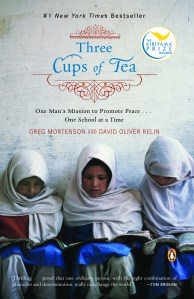
Three Cups of Tea_Mech.inddToday, March 23, Greg Mortenson will receive Pakistan’s highest civilian award, the Sitara-e-Pakistan (Star of Pakistan) for his work on education, especially for girls, in Pakistan’s northern areas.
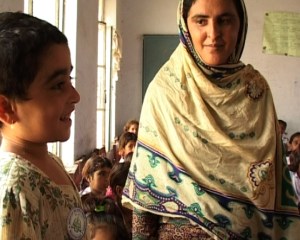
His book, Three Cups of Tea, is a must read for anyone interested in the area.
Here’s a note I found on Shahidul Alam’s blog:
Pakistan: Hope amidst the chaos
Salma Hasan Ali

Pakistan: Hope amidst the chaos

Focus on women – Pakistan, India, Afghanistan, a docu on Swat and more

Still from my film 'Mukhtiar Mai: The struggle for justice'

Still from my film 'Mukhtiar Mai: The struggle for justice'

A collection of articles published around March 8, including mine for IPS and The News, plus articles by Kalpana Sharma, Cassandra Balchin, Zofeen Ebrahim, Ayesha Khan (study on Lady Health Workers in Pakistan), link to a documentary on a Swat schoolgirl and more. Another post pending on issues around the attack on Rahman Baba’s shrine near Peshawar, will compile and post soon.

‘A new political context for Juliet’ – my article for The News on Sunday, about women speaking out all over the country, attempting to exercise their rights to personal autonomy – in a post-colonial age that harks back to medieval times when women were considered family property

Women Defy Militancy, Patriarchy – story for IPS outlining the twin threats of militancy and patriarchy that women face in Pakistan
http://www.ipsnews.net/news.asp?idnews=46024

In both articles, I refer to a documentary ‘Class Dismissed in Swat Valley’ (NYT) that focuses on Malala, an 11-year-old Pakistani girl on the last day before the Taliban close down her school. A must see – very moving and informative – profiling the great courage of ordinary people under adversity
http://tinyurl.com/avq4c9

I learnt of this film through an article that Shabbir Imam in Peshawar forwarded from the Anchorage Daily News by Shehla Anjum, a Pakistan-born writer based in Alaska, ‘Taliban wages war against girls’ education in Pakistan’. The writer followed up the story in the documentary by contacting Malala and her father.
http://tinyurl.com/dmxtld

The IPS website – http://www.ipsnews.net – contains a link to the other articles around Women’s Day –
http://www.ipsnews.net/new_focus/women/index.asp
This link includes other articles worth looking up, from Palestine and Afghanistan, and ZOFEEN EBRAHIM’S article about child marriage in Pakistan
http://www.ipsnews.net/news.asp?idnews=46022

KALPANA SHARMA in her column `The Other Half’ in The Hindu, Sunday Magazine, March 8, 2008, writes about the attacks women in India are facing – a chilling account of what looks like an Indian version of the Vice & Virtue dept of the Taliban that we are facing here in Pakistan…
http://tinyurl.com/bql9vg

CASSANDRA BALCHIN – a three-part series on the challenges faced by Muslim women around the globe and the debates within the Muslim world to deal with these challenges, the demand for equality within the family, and more, in Open Democracy – http://www.opendemocracy.net – I’ve shortened the three URLs for easy reference here:
Home truths in the Muslim family – The global pressure to reform Muslim family law is mounting
http://tinyurl.com/bxhf8v

Musawah: there cannot be justice without equality – Muslim scholars and activists from 48 countries launch a global initiative for justice with equality between men and women
http://tinyurl.com/akg2q8

Musawah: solidarity in diversity – a global initiative to reform Muslim Family Law finds solidarity in diversity and a growing convergence around human rights values.
http://tinyurl.com/bbvvhd

AYESHA KHAN’s recent study on LHWs and Women’s Empowerment in Pakistan can be accessed through the Collective for Social Science Research website
The study is at this link: http://tinyurl.com/cssr-lhv