Why arrest fisherfolk who cross an invisible maritime boundary, then hold them for years across the border?

Last month, another Indian fisherman incarcerated in Pakistan died while waiting to be repatriated. A young man in his thirties. Why he was held in the first place makes no sense to me, and to a lot of other people. India and Pakistan routinely detain each others fisherfolk. In doing so, they defy international law, deny the incarcerated men consular access in violation of their own laws, hold them in prison for months if not years (a costly enterprise), then take months to verify the identities of those who have served their terms, so that they remain imprisoned even after completing their sentences. I asked my friend Jatin Desai in Mumbai to write about this for Sapan News, the syndicated features I started a couple of years ago. We ended up doing the piece together. I’m sharing our article below, published in Sapan News, as well as in several other publications. Still relevant, and urgent for the authorities to take up. Please share widely.

The suffering continues: No relief in sight for Indian, Pakistani fishermen 

Another Indian fisherman died while in detention in Pakistan. Such deaths in custody routinely take place on either side. Pakistan and India routinely arrest and imprison each others’ fisherfolk for crossing an invisible maritime border. This should not be happening. Meanwhile, both countries must urgently at least revive the Joint Judicial Committee for cross-border prisoners

By Jatin Desai and Beena Sarwar

Passport photo of Jagdish Mangal, who died while waiting to be repatriated. Photo: Courtesy Edhi Foundation

If 99 Indian fishermen incarcerated in Pakistani prisons had been repatriated last month as agreed, Jagdish Mangal might still be alive.

Mangal was among the several Indian fishermen arrested by Pakistan’s Maritime Security Agency in February 2020 and detained in Malir prison, Karachi. He was 35 years old from Nana Vada, Gujarat.

Pakistan was to repatriate 99 Indian fishermen on 3 July, but this never happened for unexplained reasons. Mangal died on August 6 of ‘natural causes’ according to the medical certificate.

Continue reading

Need to promptly repatriate cross-border prisoners, especially if they die…

Over 30 organizations around Southasia and beyond have endorsed a joint statement about cross-border prisoners initiated and coordinated by Sapan, the Southasia Peace Action Network, calling for the humane treatment of cross-border prisoners and to decriminalise inadvertent illegal border crossings.

Titled ‘Release prisoners on completion of jail term, decriminalise inadvertent border crossings, especially for fisherfolk and minors‘, the statement draws attention to the death of two Indian fisherfolk in Pakistani custody this year, and the death of a Pakistani fisherman of Bengali origin in India’s custody last year.

All three had served their sentences but remained in custody on ‘the other side’. Compounding the tragedy, there are terrible delays in the repatriation of the bodies of such fisherfolk, notes the statement.

The statement also draws attention to some teenagers who remain incarcerated in juvenile centers in India, mostly without any contact with their families. One has already served his sentence but remains incarcerated. Details below – Statement text and endorsements:

Arrested fisherfolk in custody across the border, far from home, no consular access until after sentence is over, often kept in custody even after serving their sentences. File photo. Getty images
Continue reading

Prisoners’ anguish

A lifetime lost...Left with no speech, no memory, no family (photo courtesy The News)

A lifetime lost...Left with no speech, no memory, no family (photo courtesy The News)

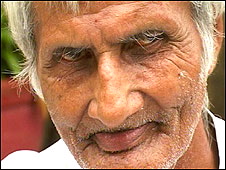
An 85-year old man acquitted after 38 years in prison has little to live for – he has lost his speech and memory, and is now being cared for by Christian missionaries at a shelter in Malir, Karachi.

See ‘The News‘ editorial 38 years .

The same day as news of Saeed-ul-Haq’s acquittal was published, newspapers reported that a Pakistani had been ‘tortured to death’ in an Indian prison. M. Nawaz Jamil had been a student of class 9 in 1991 when Indian troops arrested him along the Line of Control. He ended up serving far more than the six years he was sentenced for. This is what Indians regularly do to Pakistani prisoners and vice versa.

As I wrote in an article last December, ‘Media falls into old trap’):
Prison conditions and how the police treat prisoners in both countries are no secret. It is not that we treat Indian prisoners well, while they viciously torture Pakistanis. Sometimes a prisoner’s death results not from outright torture but illness arising from neglect — poor living conditions in a hostile environment, extreme temperatures, lack of medical attention, all compounded by lack of contact with loved ones back home.

There have been many instances of Pakistani prisoners dying in Indian prisons and vice versa. But what strikes me is the cruelty with which we treat our own prisoners, as the case of Saeed ul Haq shows. Not to mention all those other deaths in custody that periodically surface.